10 Rules to Building a Healthy Wellness Practice [Functional Forum, James Maskell, Sachin Patel]
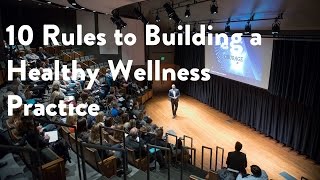
Sachin Patel outlines nine rules for building a functional medicine practice: live what you preach, communicate clearly to patients and staff, show compassion, stay clinically competent, collaborate with others, follow compliance rules, post content consistently, contribute to your field, and build community through Facebook groups.
Chapters
Interesting song, right? That was a song my wife and I walked into at our wedding. So today I'm going to tell you about my other wife, my clinic. Thank you so much for having me. I want to spend a moment. I have only 18 minutes to speak, but I do want to acknowledge James because James is somebody who puts in a lot of effort and his team puts in a lot of effort without us actually seeing it. So if we could just give him a short acknowledgement, You don't get to see all the amazing work they do. But thank you. I appreciate you and the profession appreciates you. So today we're going to talk about some very important things. Now, where this presentation stems from is a question that I got about two years ago that was actually Facebook message to me. And the question was, and I'm going to pose it to you as well, is what would you do if I wrote you a 250 million dollar check to advanced Functional Medicine? I literally got that message and it stopped me in my tracks because I really had to think about that. What would I do? Would I run a Super bowl ad? Would I build a or would I prepare practitioners for a tidal wave of patients that's headed our way? There is not a shortage of patients and I want you to get that out of your head immediately. There is not a shortage of patients. There is a shortage of practitioners that are ready to handle the patients and provide them with a service without them falling apart. Our practices have to be ready for what's coming. Because if somebody did write that check and we did run a Super bowl ad, what would happen to your practices? Do you have a business infrastructure in place to handle the millions of people that are sick? Who has that? Not very many people. I'm not a researcher. I don't build hospitals. I have people on my team that were building hospitals and now they're helping us build the future of healthcare. So I applaud you all for being here because I know it takes courage. It takes a lot of courage to leave what you were doing. It takes a lot of courage to take a quarter million dollar education and decide you're going to do something else. It takes a lot of courage to take a temporary pay cut from something that was comfortable, albeit you may have been getting paid to do something that wasn't congruent with your belief system. It does take courage. It takes courage to swim upstream. It takes courage to go against the naysayers, doesn't it? Takes a lot of courage for all of you and I acknowledge you for that. So we're all courageous people, and we're all walking on this proverbial tightrope. It's important for us to be successful. It's important for our patients and our communities for us to be successful in business. Okay? This is a business. It's a business of fixing people. It's a business of fixing communities. It's the business of transforming countries. That's what we're going to do. That's what we have the capability of doing. When I realized the actual magnitude of the problem, the solution became very apparent to me. The solution wasn't for me to get as many people as possible to come into my office. The solution was for me to keep as many people as possible out of my office. If all of us functional medicine practitioners became successful overnight and flooded our practices with patients, there would still not be enough of us. That's a drop in the bucket. The existing solution and the proposed solution cannot actually fix the magnitude of the problem. So we have to create a bigger solution, a solution that actually keeps people out of our office. So that's how I've built my entire business model, is to solve that problem. And that's why I create so much content, because I want to keep people out of my office. I don't want the sickest people in my community coming to see me after they failed. All these different practitioners care after they've taken all these drugs, after they've tried all the different surgeries, after they've been to many other, even natural healers. And one of the things that Dr. Christie talked about is that the solutions are based and grounded in lifestyle. So if we can get people to make these lifestyle changes and teach them how to make these changes, then we can give them the courage to heal themselves, because the body is capable of that. And we're proving that day in and day out. What we do as functional medicine practitioners is we find what's interfering with that innate potential. Okay? So I honor you for your courage. The next thing it takes to be successful in practice is to have congruence. And not just congruence in your diet, but in congruence with. With every single thing that you do. You gotta be congruent with the way you sleep. You gotta be congruent with your relationships and the people whose company you keep. You gotta be congruent with the way you exercise. You can't tell your patients to do something that you yourself are not doing. It's important as practitioners that we're also vulnerable with our patients. It makes us a lot more Relatable when we tell them what our struggles are. Everyone that I know in functional medicine didn't start off in functional medicine right out of school. You usually, for the most part, had some sort of health challenge of your own. So don't hide from that. Embrace that, because then you can meet the patient where they're at. And so our practice is called the Living Proof Institute. It's not called the I read about it in a book institute or the I just learned this on the weekend institute. You've got to live what you're preaching to your patients. You've got to be completely congruent in every aspect. Okay? So this is very important if you want to be successful in business. And this is why I love Facebook, because it allows me to show people that congruence. It's a free platform for all of us. Whether you like it or not. No matter how much you tell your patients to put their cell phones away and get off Facebook before bed, they're on Facebook and you could be there right there with them, telling them to get off their phones. Communication, we find, is also very critical and extremely important. You know, this idea that people like to be communicated with the same way that you like to be communicated with is actually very incorrect. They've identified four primary communication styles. Some people like you to be direct. Some people like you to be more empathetic. Some people like you to be more cautious with the words that you use and more analytical with the words that you use. One of the things that we do on our intake form, which is quite extensive, is we actually have a communication guideline questionnaire. It's one page. It's the first page I look at when I look at my intake form before I even look at their chief complaint. And the reason I do this is because I need to know what words to use to get this patient to change their life. And if I use the wrong words, no matter how well intentioned I am, that person's going to walk out of my office and we're going to fail them. So very, very important. We find that a lot of stress from relationships comes from poor communication. So I will review that communication intake form with my clients and have my staff review that as well. And I will have their spouse fill out that form as well. Because if we can get their spouse communicating more effectively with them, then guess what? My job is so much easier. Isn't your job so much easier when the patient doesn't have turmoil at home? You know, I don't believe there's bad people I believe there's bad communication and sometimes miscommunication. My wife and I are different communicators. I'm very direct. She likes to tell the whole story. So when she tells me a story, I already know what the punch line is and I tune out because I already know the end. And so she thinks I'm ignoring her when I'm really not. So now she knows. Because I'm a direct communicator, she just has to tell me the bottom line. And some of your patients are going to come in that way. They don't need to know all the details, you just have to tell them exactly what to do and guess what, they're going to do it. Some of your patients need everything step by step. So this communication guideline changed, transformed my life and it transformed our patients lives. Has anyone here ever done the five love languages? Wasn't that quite transformative? Yeah, it's amazing. So not only do you have to be a good communicator with your patients, but with your staff as well. Very important. If you want a well oiled machine, you have to know the communication style and even the love languages of your staff. Some people are not rewarded by you paying them more money. And if you have a well oiled machine, your staff is going to be there with you. If you speak their love language and reward them with their love language, they're going to hang around much longer. You're going to get way better outcomes and it takes a lot of stress off of you as a practitioner. So communication is very critical. It's this faculty of communication that separates us from virtually every animal on the planet. So use it to your advantage. Don't let it disrupt or destroy your practice. One way to build excellent communication is to communicate. Be human. Most of us have lost that ability to communicate because we delegate that communication to email and to text messages. Start communicating communication. Vocal communication especially stimulates the vagus nerve, which is one of the most important nerves in our body. If you want people to heal, get them to start talking, watch what happens. Compassion. Every one of you here is compassionate. Every single one of you here is compassionate. That's why you're in healthcare. You care about people, you care about your patients, you care about your community. How do you show that? How do you demonstrate that? I show my compassion for my community by teaching them how to stay out of my office. What's more compassionate than that? I can't think of anything more compassionate than that. I can't think of anything more compassionate than teaching somebody a life Skill so that they can keep their kids out of my office as well. And their grandkids. We're not all in this. Who's here for the Ferrari? Anyone here for the Ferrari? I didn't think so. Who's here to change the world? All of you. And we can change the world through communication, through compassion, by living our truth through congruency. Very important. And these aren't just esoteric things, these are extremely important. This is what I discovered over many years by making many mistakes, building two offices in two countries, coaching about 60 doctors and helping them do the same thing. So I love this message, I love propagating this message to as far and wide as I can. And of course, competency is very important. You have to have good clinical skills, right? When you build a practice, there has to be three things that are taken into consideration. First and foremost is patient outcomes. Your patients have to get better if this is going to work. If you're going to stay in business, the next thing is practice outcomes. You've got to stay in business if you want to stay in business. And the third one is practitioner outcomes. What's your health like? What time are you going to bed? What time are you waking up? What's on your mind when you wake up first thing in the morning? Does anyone here want to see a burnt out doctor? Does anyone here want to be a burnt out doctor or clinician? Nobody does. So competency is very important. But what I would encourage you guys to realize is that 80% of your patients outcomes are based on things you already know. And if you can effectively communicate change to your patients, 80% of them will get better. In fact, I would argue that 80% of the patients in your practice probably don't even need to be there if they took better care of themselves. It's the 20% that actually need to be there. So. So competency is very critical. But I don't want you to think that just because you learn about it, you're going to use it. We need to move away from this model as practitioners because we feel incompetent all the time. Don't you feel like there's always something new coming out? How many of you feel incompetent clinically? Just be honest, be vulnerable for a moment. Most of the hands are up and it's because there's all this new information that's constantly coming out. But here's what I'm going to tell you to do. We live in a digital age where you don't have to know everything. You just have to know where to find it. Okay, so there's a big difference between just in case information and just in time information. You're five minutes away from finding out any answer. So many of us will fill our heads with all this information that we may or may not ever use. And we live in this constant state of feeling incompetent. And that incompetent feeling prevents us from having the confidence that we need to get our message out there because we're afraid of what are people going to think? Just remember who your audience is. Your audience isn't Jeffrey Bland. Your audience isn't probably the people in this room. Your audience is that person that has no idea how to take care of their health because they've never been taught how to. Your audience is that person who's confused that's potentially looking for you and looking at you for information. Okay? So be competent, but don't be the resource. Be resourceful. Don't you all want employees that are resourceful? Your employees don't have to know everything. They have to know where to get the information from. And the same thing with you. You're an employee. You're an employee of the patient. Okay? So be resourceful. Collaboration is also very critical, collaborating with your team. So we have health coaches. My wife, she's also a photographer and filmer. She's a pharmacist. She works in our practice. We have chiropractors, we have nurse practitioners, we have medical doctors. We all collaborate. Each one of us brings something new and different to the table. But our ultimate goal is the same, which is to help providers. What we've done is we've figured out where in the timeline of treatment each provider fits in. And so it's important if you're collaborating with a team of people that you realize and recognize where each of these people fits into the team. But don't be afraid to collaborate. And if you don't have a team, build a network within your community. If you want referrals, the best way to get referrals is to be a good referrer. Refer other people in areas that you're not competent or where other people might have greater competency. You know, get connected with yoga studios, get connected with breathing coaches, with holistic strength coaches, with personal trainers, because guess what? They're working with the exact same avatar that you're looking for. So collaboration is very critical. You don't have to know everything. You have to know how to build a team so that you can know as much as possible and collaborate with your community. The next one is compliance. And here's why. Compliance is extremely important. Compliance equals results. Results for you and the patient equals confidence. Confidence results in referrals, and referrals results in organic practice growth. Anyone can market their practice and grow it. Okay? It's just a numbers game. At a certain point, anyone can do that. But when you're growing your practice organically, that's a sign that you're doing something right. Now, what I would say is the first 50 to 100 patients are the most important, because if these clients are compliant, you're going to get great results, you're going to boost your clinical confidence, you're going to start getting referrals, and your practice is going to start booming. But what I find a mistake that practitioners make initially is they just get excited that somebody's ready to work with them. And what they do is they'll bring anyone into their practice that's ready to swipe that card. Anyone guilty of that? I was. And so what happens when these patients are not compliant? They don't get results. So what do you do? Do you ramp up your marketing? Do you ramp up your messaging? Or do you start playing small? You start playing small because now you don't have that certainty that you need to scale and grow your practice. So those first 50 to 100 patients are the most important. Be sure you safeguard those seats for the right people. Extremely, extremely valuable. Okay. It's probably the most important thing I said today. The next thing is consistency. Now, if you follow me on Facebook. How many of you follow me on Facebook? Anyone here? Okay, great. A lot of you. Awesome. So you have to follow me. You can't add me. I've reached. Apparently you can only have 5,000 friends. So follow me on Facebook and you'll see that I'm consistently putting out as much information as possible. And I put up my best information. The reason I put out my best information is because the opposite of that is my worst information. My best information today will not be my best information tomorrow because I'm in a continuous state of growth, just like all of you. So six months from now, your best information will be new content every week. Your best information is going to get better and better. So never be afraid to give out your best information. That's what your community deserves. It deserves the best of you. If I can help 5,000 people by posting a two minute video, that's like magic to me. It's amazing. I did a video and 17,000 people saw it. It was five minutes long. That's 85,000 minutes of work I did. Can you imagine that? It's like four months of work in five minutes. That's the power of the Internet. So you've got some amazing content right up here. Don't be afraid. Be fearless. Go fearlessly into that night. Contribution is a big one as well. When your community wants you to succeed, when your patients and your customers want you to succeed, there is virtually nothing that can stop your business from growing. Nothing. But because you care about your community, you have to contribute within that community. So we have our team members participate in garbage pickups and cleanups. We go and clean beaches. We just finished building a clinic in Uganda. So we built about a 3,000 square foot clinic in Uganda. I don't even have my own clinic. I wanted to build one for someone else. So that's what I did. First, I want to contribute. I want to give as much as I can and as much of myself as I can every single day. I wake up every day with that icky guy, which is, what piece of myself am I going to give today? And if each of us watching this and each of you in here did that, think of how that would transform this world. Okay? So contribute as much as you can. And the last one, and certainly not the last one, I could talk for hours about this, but the last thing I want to talk about today is community. Community is extremely important. And the way we leverage our community is through Facebook groups. Anyone here using Facebook groups? Few of you. It's free. It's our patient incubator. So what we do is we put any prospective client into our community group because guess what? We've got our veteran patients in there who are ready to jump in, ready to help, ready to provide, ready to contribute. And we've got new people that feel welcome into a community. There's a big problem right now. James talked about this, which is social isolation. A prisoner would rather be surrounded by rapists and murderers and criminals than be in solitary confinement. And that's how your patients feel. They feel confined, they feel isolated. So communities are an excellent way for you to grow and scale your message and provide tremendous value to your patients and your prospective patients. Thank you.
More from Sachin








Your Doctor Won't Prescribe This… But It's the Most Powerful Medicine on Earth

