Doctors of the Future: How Lifestyle Medicine is Reviving Medicine
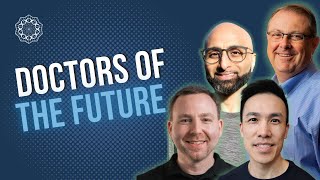
This content was created by Sachin Patel. This content was uploaded by Sachin Patel. This is a YouTube video titled "Doctors of the Future: How Lifestyle Medicine is Reviving Medicine" created on July 6, 2022. It features a conversation between Sachin Patel, Aaron, Dr. David Bennett, and Dr. Buddy Tishinsky discussing the future of healthcare, focusing on lifestyle and functional medicine. They share personal experiences and case studies highlighting the impact of lifestyle changes on health outcomes.
Chapters
Foreign.
This is Aaron here and Sachin with the Perfect Practice podcast. And today's session is Doctors of the Future. What is the future and the biggest opportunities in health and wellness and lifestyle medicine. How are you doing, Sachin?
Aaron, I'm doing amazing. I'm super excited, really thrilled for our conversation today and where it's going to take us and excited to invite our two guests, Dr. David Bennett and Dr. Buddy Tishinsky, both from Pennsylvania and both actually colleagues of mine, chiropractic colleagues, but also classmates. We went to New York chiropractic College together. So they're really kind of a cool full circle moment, I believe, for all three of us. And we're going to be kind of sharing bits of our journey and where it's led us and why believe, why we believe that really the doctors of the future are going to totally and radically transform healthcare. And we're here to kind of share what they've been up to over the last few years. Kind of reinventing themselves personally, reinventing themselves professionally and then reinventing their practices. I think it's such a cool conversation to have, especially right now after two years of what we've come through and really seeing only more opportunity to be of service. So welcome gentlemen. Thanks for being here today. Thank you.
Glad to be here.
Well, to kick it off, I love. Maybe we can start with David. Tell us a little bit about, you know, your background, what your practice looks like now and what we can expect in. In this conversation.
My background, as Sachin said, is in chiropractic. That was a second career for me after being an attorney. I went into practice in a physical office as all chiropractors pretty much have to do, and loved it, but also saw the need for myself to be a little bit more untethered to the physical office. So I went ahead and got a certification in functional medicine and then of course opened a second physical office and just started evolving my programs. I still do chiropractic in the office a couple days a week, but I but evolving what I was doing to more of an online and more of a lifestyle medicine. Lifestyle healthcare is a better way to put it model to help people just learn how they can take better care of themselves and not over complicate what they're doing and that's where I'm at now. I have two physical offices that I spend a couple days a week between the two of them and and then most of the time is spent with online coaching.
And making awesome tiktoks along.
The way and making tiktoks for sure.
Doctors of the future on TikTok.
A lot of them on there.
Yeah. Welcome buddy. How about yourself? What you know a little bit about yourself and what your practice looks like now?
Sure.
Yeah. So I got out of chiropractic college and I was just going to focus on neck and back pain. I came back to my hometown of Orwigsburg, Pennsylvania here in southern Schuylkill county, about an hour and a half northwest of Philly and very rural area, not a very progressive area. So we didn't have a lot of access to like wellness providers, integrated medical providers and stuff like that. So when I originally thought I'm just going to focus on that neck and back pain and do a great job there, what turned out that I had to go out and kind of learn extra stuff and help people with a variety of issues because most of people I saw didn't only have back pain or neck pain or muscle pain or all that stuff was because they were in poor health in general. So I really dove deep into. I'm not sure it was called functional medicine at the time, about 14, 15 years ago, but went on a journey since and I just want to bring that to my local community. So to that effect, we opened a health food store about 2008 and started offering different products there. And then most recently I expanded my chiropractic practice to include family medicine as well, health coaching and chiropractic and kind of all put it in one practice so that people that want to go for root cause stuff and the stuff we're going to talk about today, they can get that this type of practice versus having their care split up between their family doctor and then coming to see me for functional lifestyle medicine and health coaching and, and all that stuff. So we just started, we just launched that about three months ago and the, the demand has been, has been excellent for that. We've had a really great response even in a small rural community like this, which I wasn't exactly sure how that would turn out.
Yeah, your journey's been. You've been able to create many different services and, and practices around this idea of lifestyle medicine. I thought where we would take this and maybe start is I don't, maybe some people don't know what lifestyle medicine is or maybe defining it. Satya, maybe hop in and share how you would describe lifestyle medicine, functional medicine to maybe a practitioner who is not very clear or it's a relatively new idea to them. I take it for granted that each of us knows what lifestyle medicine is, but how can we define it just so we're all on the same page?
Yeah, great question. And I think it's important to create a working definition so I'll kind of share with a story instead and maybe a story about our practice. So we have a functional medicine practice, have had one for many years, have ordered hundreds if not thousands of lab tests and prescribed thousands and thousands of bottles of supplements. And a few years ago we asked a different question, which was, what if we couldn't do these things? What if we couldn't order labs? What if we couldn't, you know, prescribe people supplements? What would that look like? And you know, are people really even doing the most basic things? And we realized after, you know, didn't even take careful consideration, it just took some consideration, we realized that the average person isn't even doing the basics. And I know this because I get emails from people at 2 o' clock in the morning when they should be in bed. I know this because I see what people are eating. They're eating really healthy, but they may not be eating in a healthy way. So for example, they're not even chewing their food. They're eating healthy food, but they're not chewing it. And so we did a thought experiment and then an actual experiment, and we had a bunch of people start on, you know, lifestyle, self care, self awareness protocols. Really it's about self awareness. When you know how powerful your body is and you have that awareness, you take different action. And we started watching people's lives transform by simply making simple lifestyle changes and focusing on that first, doing the lab testing, perhaps later in the journey. And you know, they felt so empowered. They learned a tool that not only a skill set really that they could have and benefit from, but they also learned a skill set that their entire family could benefit from. So really, lifestyle medicine helps put health back into people's homes, back into their hands, helps them create more self awareness, environmental awareness, dietary awareness. And it brings health to where it really belongs, which is in people's homes. And they're doing that by leveraging their amazing bodies instead of outsourcing their health to somebody else. They're taking ownership over that, those elements of their health that are super important, which is how they take care of themselves.
Yeah, and this is something that I've also seen going. One of the biggest myths that I was telling myself going through naturopathic medical school, even if I understood this from a foundational point of view, I didn't think people would actually want it. You know, we were, we were told it would be an uphill battle to convince someone to take care of themselves. So I think right now is a very interesting time because maybe we are starting to see that tipping point. You know, 10 years ago, maybe intuitively I felt like this is what we need. But now it seems like there's an opportunity in the marketplace of market awareness around it has, has increased. Right. People are more aware that they don't want certain things and certain approaches. So I love to ask, maybe start with buddy, what are you seeing now that you've opened up your, your new brick and mortar practice? You know, some people might think, oh, is it opening a brick and mortar practice the way to go right now? Is it a direct primary care. Is it accurate to say that? Direct primary care model? So maybe you can share. What are you seeing in terms of, you know, having. Having had a health food store? What kind of things people are coming to you for? Like, what are they ready for? What are they not ready for? Where are they experiencing challenges in their health?
Yeah. The cool thing is that when I first expanded and started offering some lifestyle programs, even as early as probably 2006, 2007, it was, it was a, it was, it was, it was tough to get through to people and say, like, this is an option for you and this is something that you, that you need or want. Because there wasn't any awareness raised around that. People were just kind of stuck in the, the old way of thinking that, or if I have heartburn, I'm going to be on a medication for my heartburn the rest of my life if I get diabetes. There is no cure for diabetes. I mean, we even had a diabetes educator at R1. It was a Rotary Club meeting. And the diabetes educator RN stood up there and says, there is no cure for diabetes. And I'm thinking to myself, and I'd already educated the people at my table that, hey, you can actually reverse this. So when she said that, they all looked at me, of course. But. So we went from that to fast forward about five years when we opened the health food store and people said, you're crazy. You're opening a health food store in this area. Like the people. That's not like a Lehigh Valley, like where Dave is or Philadelphia or New York City where there is an awareness around lifestyle and healthy habits. And. But what I found was it was kind of like a lighthouse for people that were into that stuff. And, and every day with people coming in, it's like, oh, thank. Thankfully you open. Thank God you open this area. We've been looking for something like this. Or we have people that moved from outside the area into this area and so they were really happy we're there. Now fast forward to today when we opened Peak Integrative Medicine, our direct primary care model practice. And I'm getting phone calls, people. I set up free phone calls for people that are interested. And I'm hearing this stuff, they're saying it to me. It's like, I'm sick of being on these meds. I know there's got to be a better way. I asked my family doctor or my specialist, hey, is there anything else I can do for this? And they just kind of shrug their shoulders or just shake their head no, you're going to have to take these meds and people are, people are sick of it. And then couple that with the fact that the past few years, people. I think people are understanding, even though it wasn't really reported on a whole lot, that when you have secondary issues or you have comorbidities, that you're at a higher risk for lots of things. I mean, just the most recent stuff being one of many things. I think people are finally starting to get it and they're hungry for the information. So when you start putting yourself out there and start talking about it more, you attract these people. And believe me, there might not be, it might not be 90% of the population, but heck, there's more than enough. If there's only like 1% of the population that wants to stop, there's not nearly enough of us that do this type of stuff.
Right. I don't know if each of you has seen. The CDC did a study looking at like March 20, 20 to 21. They found like, of the people who were hospitalized and had the most severe cases, 9 out of 10 of them had some metabolic disease, some chronic illness. It was like blood pressure, cholesterol, obesity. So I think people are, are living that experience. And so it's been a wake up call for sure. David, like now that you're on TikTok more often, what are you seeing? What, what messages are resonating with the audience. Like, have you been surprised? You've been at this TikTok thing for short form video for a while. What are you seeing?
So what I think is follow up though, to what Buddy said. You know, they used to go to their doctor and ask a question and be like, oh, nothing, there's nothing. Just take this. There's nothing you can do. And then when, with the advent of social media, you know, people started to hear the opinion, the Opinions, the, hey, you can take this, you can eat this way, you can exercise this way, you can do this. And started to get the idea in their head that, yes, maybe I can do this because. And I'll. And I'll bet you every Buddy and Satchin and you, Aaron as well, will agree that the biggest issue is most times when they come to you, they say, nobody listens to me. They just sort of move me on. And you know, when you listen to them, they're saying, show me how, tell me how. Help me. And with social media that has given the platform to, you know, health coaches, nutritionists, chiropractors, MDS deals, you name it, are on there saying, hey, you can do this, you can, you know, watch me do this continuous glucose monitor and I'll eat this and watch what happens to this, you know, and you see this progression and, and I think it's bringing that realization to people that say that yes, they are, as Satchin said, their own best doctor. They know what is going on with their body and they know how now, how to go out and search for better information and say, hey, maybe I should call this person in London, or maybe I should send them an email and say, hey, what is this? Or pick up their free ebook or whatever it may be. And that social media aspect has really just expanded the opportunity for lifestyle healthcare.
Yeah, I think that's a, it's an excellent point. I'd love to hear from each of you, David and buddy, what's an example of a client who maybe has tried a lot of things under a conventional model, maybe not seen the results and then they come to you, what type of advice would you be giving them? And maybe what's a, what's a case study that could help illustrate that point of how much more powerful we are when we're in control.
The one I really remember off the top of my head is lady Diabetic type 2, you know, on medications and just struggling, still struggling. Blood sugar's unregulated. And you know, what we talked about was here you, here's what you need to eat. Here's what you need to think about when you're eating. Here's how you need to sleep, here's how the food you eat. Don't do this 247 grazing idea. Start to restrict your calorie intake to a window versus eating it constantly. And she comes back and medications are removed by her primary. Her blood sugars are then regulated and just that effect of her realizing it. And, and she tells everybody that, hey, you can do this. Hey, you can do this. Not on your own, but with some guidance. But you're in control of what you're eating, you're in control of what you're drinking, you're in control of your exercise patterns. So that's the case study. I mean, I. Off the top of my head, I don't remember the numbers, but it was like 150 point blood sugar drop in a few weeks when she was checking her morning readings. I mean, and those, those are lifelong learning. And she took what we talked about and she just keeps moving forward with it. That's the, that's the best feeling that you can have or see somebody's family affected by something.
Yeah. Awesome. Great chair, buddy. How about yourself? Any, any case study that you'd like to highlight?
Yeah, if you just gone through my head, but there's one in particular which I gotta like, watch. I don't start crying here live, but she sat across from me. I'm in my office now, in the consultation office. She just crying because she couldn't garden anymore. Because she'd gotten to the point in her life where her arthritis was just like, she had pain all over. Fibromyalgia, arthritis. And she had dealt. She originally came to me a couple years prior to that for IBS that she's had since. She's in her 20s, so she's 66 right now, I believe 67. So she sat across crying because she had to dismantle her hold guard. So fast forward about a year and actually it didn't even take that long. It was probably fast forward three months for the initial program. And she, her IBS was not an issue. Like she started having normal bowel movements on a regular basis. She'd lost like 75 pounds. That, that might have taken about six months, but now we're a good two years. So she started Memorial Day of 2020. We had our first big, big group reset. And then we've worked with her since. And she saw, she's. She set her garden back up again. A little bit different than the configuration before, but she set that up. She's outside, she's going on bus trips. So all that fibromyalgia stuff. The IBS that she had for decades is pretty much gone. And she's, she's kept the weight off. She's. I mean, she's happy. I mean, just her whole demeanor. Like she was like thoroughly depressed because she just couldn't do anything anymore. She couldn't travel because of the bathroom stuff. She couldn't enjoy physical Things because of the pain. So, yeah, that was probably one of my top, top case studies there.
And so I'm going to ask this question. How many labs did you run on her and how many supplements was she.
Taking to get that? So previously I did a gut test on her like going back a few years before this, and we kind of got her IBS straightened out, but then she fell off track. But when she came back into the practice because she was struggling again at nothing, like we did some kind of metabol, we did some metabolic support that, that, that a lot of us used and it was just a dropper, it was a homeopathic formula and dietary changes, lifestyle, a lot of mindset stuff and, but no labs that second time around.
Yeah, it's, it's amazing how powerful, you know, just strategic, simple, practical solutions are. But you know, I, I think a lot of practitioners are almost, and I can't speak for everybody, but some might be fearful that if I, if I, if it's this simple, then what role do I play? Right? So they almost like safeguard their methodology or they, they feel like I don't have much self worth as a practitioner if it's really this simple for me to help people or people can just help themselves. And the idea here is, in my opinion, this is my perspective on it, is that yes, you can. Like all the information that we acquired, we acquired it from somewhere, right? So there's nothing stopping a committed person from acquiring all the knowledge that we have. But what really helps human beings create permanent change is coaching accountability and then also identity change and identity transformation. And those things do not happen on their own. You can read all the books in the world, but the book isn't going to coach you. The book isn't going to hold you accountable and say, hey, you're doing great and coach you positively. It's not going to say, hey, like, let's fix this. What's going on? Let's work through this. And of course, the book or the knowledge is definitely in no way, shape or form gonna help you change your identity, right? That happens by surrounding yourself with the right people. It happens by other people seeing your new identity in you before you even see it yourself. So there's so much more that you know, so many different roles that we can play as facilitators of somebody's healing aside from being a prescriber of labs or prescriber of supplements. And there's nothing wrong with that, we still do that with our clients. But there's so much power in simply making the lifestyle changes and shifts and empowering people. And I'm sure she's super grateful. Right. And not dependent either. That's the thing. She's independently healthy instead of being constantly dependent on, on just getting her through the day.
Yeah. And she shares it all the time and she gets kind of frustrated because she shares it with her friends that are now are struggling, but they never set up that call with us where they just, they're probably stuck in their own heads. But I told her to keep it up and consistency will eventually get them there if they need it. But yeah, that's on all of us too. So we need to be out there sharing this message as much as we can. Not just with our patients or our leads or whatever. It's. It's our entire community. So that's what I really like about this, is being able to share this message with the entire community and help people. I've had people come up to me that never step foot my office or use me at all for anything and said, hey, that presentation you gave about lifestyle medicine and autoimmunity, I changed up some things and I've gone off my meds for RA and that, that's. That was a year ago and I'm still doing well. So it's really cool that we get to do this stuff.
Yeah. And you bring up a really great point. One of my best case studies was a gentleman who attended one of my presentations and lost £100. I saw him a year later in the sauna and almost. I literally didn't recognize him. He obviously recognized me and I'm like, Eddie. He's like, yeah. He's like, oh my God. Totally transformed him. Didn't pay me a single penny, so to speak. But to me that's priceless to be able to do that for somebody. And of course there's so many non measurable windfalls that come our way when we're doing good in the world. As we all know, just having that go giver attitude. The percentage of people that are going to be able to do it on their own is much smaller than the percentage of people that need our help and need our guidance and need the community and the safe space that we provide. It's amazing to hear what's possible for people, what's possible for their families and to be able to put that out there in the world and do good for people. The other thing that I really like about this approach is the learning curve. Right. So I love for both of you to speak as both chiropractors like myself, and going from a chiropractic practice to a functional medicine practice, every, every step of the way, there's so much more to know. So as you go through the journey, you feel as each day goes by, you actually know less and less and less and less, which kind of gets us into this imposter syndrome where or every month there's a new lab test that came out or a new supplement that came out. So we always feel like we're behind the eight ball in terms of our knowledge, and that can force us sometimes to play small. However, lifestyle medicine is so foundational, so basic, yet produces such fantastic results that it's easy for us to build our confidence without having to go through the steep learning curve. So I'd love for you guys to share your experience with that. Dave, you want to go first.
So the learning curve and that you said it perfectly, imposter syndrome. We all feel at some point in practice, whether it be as a chiropractor, an mdd, functional medicine practitioner, whatever it may be, health coach, we always want more information. We always want to do the best and keep learning, and keep learning, keep learning. But then you step outside of our little, our little cocoon, our little world, and you go do a presentation or you do a short video online telling somebody, you know, the, the three things you should do to help your blood sugars or sleep better, do some breath work and eat, maybe intermittent fasting. They're like, what are you talking about? Which would be root, you know, basics for us and basics for our communities. But not once you step outside the healthcare community. These, these people are like, what do you mean? Like, what do you mean I should sleep better? I, you know, I stay up and watch TV, I use my phone, I sleep from midnight to 4am I'm good, I'm ready. Like, whoa, wait a second, we need to get that back on track. Just like you said, you know, emails in the middle of the night. No, you should be asleep. I shouldn't be getting these. Or sign ups for a workshop in the middle of the night. Or a webinar. Shouldn't be on there doing that stuff. And that once you see that, I think the imposter syndrome starts to fade away and you start to step into your own and say, you know what? I'm going to tell people what I know and what I've learned. And now you don't stop learning. You continue to expand your knowledge base and you just keep bringing it to the general public that way, you know, and a lot of, and I know, all of us here have done it. We've expanded. Our knowledge base is not necessarily in lifestyle medicine, but in presenting, speaking so that we can get that message across better to the general public rather than let's Talk about your A1C and your glucose and some people eyes are going to glaze over with that rather than just saying, hey, we're going to talk about your sugar levels today and how you can help regulate them. Because we like to get lost in the weeds. We'd love to get down, but we don't have to.
Yeah, no, no sense in overcomplicating it. I think there's a system that already exists that does a great job at that. And as you all know, you know, one of my favorite quotes is the greatest sign of sophistication is simplicity. So you know, a sophisticated process is one that keeps things simple, keeps things accessible. And I feel like this is also scalable. That's the other thing is that we don't need to have fancy buildings. We've already got the fancy equipment which is a patient's body. And now we just need to teach them how to use it. And what's easier than that? It could scale on so many levels, it could scale online, it could scale in our practices, it can scale in corporations. And I feel like we could really take the world by storm, so to speak, with keeping it so simple. All right, buddy, how about yourself? How was your user experience learning functional medicine and simplifying?
Yeah, it kind of takes me back to when we were in chiropractic college and we learned all this stuff on diagnostics and movement screenings and things like that. And then at the end it had like this little two sentence thing on the treatment approach and it was like spinal manipulation, muscle work and exercise, rehabilitation. And you're always kind of like looking for more. Like you're like, okay, I know it says that, but what specifically what type of special adjustment do you use? Do you use like cold laser therapy to use like what's the specific maneuver technique that's these kind of the secret sauce to helping these people. But then you get out and you start practicing it and you realize like, oh, you just do standard chiropractic adjustments, manipulation and give them some exercises and do some muscle work and nine times out of ten that takes care of the problem. So same thing in functional medicine.
We.
The sexy part is all of the testing, organic acids testing. I mean if you're kind of nerdy in physiology and biochem, like that thing is awesome. It's like A playground for practitioners. But then you realize like, are we just trying to manipulate lab values like they do in conventional medicine? Which is often a pitfall because you start manipulating numbers with a supplement or a specific intervention, you're missing the reason why those numbers were abnormal in the first place. So when you're learning functional medicine, you learn that, that kind of, that sexy stuff. And then it boils down to like, lifestyle, get out in the sun, get out in nature, breathe properly, eat properly, manage your stress. And you're like, yeah, yeah, that's, you hear that over and over again, it can't be that simple. But then you start to realize like, no, it is that simple. And I learned that pretty quickly because when you order those functional medicine tests, it takes about a month to six weeks by the time you get it back in, by the time you have an hour to sit down and annual analyze them. So in the meantime, at least in my practice, we would start them on lifestyle changes, put them on like a paleo type of diet, gluten free, dairy free diet, and get them sleeping better, get them chewing more for their meals, sitting down and relaxing instead of eating while they're trying to drive their car, like basic stuff to us. And then nine times out of 10, these people would be doing like 90% better just within this first four to six weeks. So it's like, all right, do we really need to spend all this money on labs? And yes, we get a complex complicated case, chronic Lyme or something like that, that doesn't respond to the basics. Well then yeah, you need to do it, do a deeper dive. But on most of these people, we don't need more testing, we don't need, and most of them, we don't even need more practitioners, we need more coaches. And so then I kind of went down the other end of that curve and it's like, all right, I want to learn more about the stuff that really has the maximum impact and that's helping coach people in these changes because as you said, the information's out there. But human behavior, behavioral modification, that's not so easy for a lot of people. So where can I increase my skills there to help make that maximal impact? And the other thing too is, and we all learned this to a certain respect, I'm sure in naturopathy school, you learn this in chiropractic college, even in med school, it's the, what's I call, the therapeutic order of interventions, where it's least invasive, the most invasive. So if we're following that spectrum, we can Learn that early on, and then we kind of throw that out the window, start practicing. But if we're following that spectrum, it's lifestyle intervention first. Work on the basics first. And I always tell people that are new to our practice, it's like, do not underestimate that. Because people will kind of hear that and be like, yeah, I kind of tried that. But it's like, no. Did you really try that? For how long? Most people don't because it's hard for them to stick with it on their own. Same thing with practitioners. I tell other practitioners in the community, medical practitioners, here's what I do, and we see these profound impacts. And I'm, I know they're thinking like, that can't be that easy because a lot of times they gloss over it as well. It's a handout. Here's follow this exercise and diet program. But getting helping people to follow it is the tougher part. So, uh, that's kind of where I'm living at now is like, how do we help people change and coach them and, and to help make that maximum impact.
Yeah, you know, I love that. And one thing for us to realize is that all blood work, even if it's, you know, functional blood work or traditional blood work, is a lagging indicator. It's telling us what's happening or what's happened after it's happened. Whereas lifestyle is more of a, you know, present time function. And we can make radical changes in people's outcomes. Like, I almost felt guilty sometimes because I'd order a lab test on someone, they change or upgrade their diet, upgrade their lifestyle, upgrade their sleep, you know, all the things that we talk about. And three to four weeks later, when we were going over their lab results, I'm like, are, are these even you anymore? So I almost feel like it makes more sense to take people through the basics, get them to a certain point where we're making the changes that we'd want them to make. Regardless of what their lab tests say. People need to sleep well, they need to breathe well, think well, move well, all those things. But the lab test would actually be more indicative of what's limiting them from feeling their absolute best, you know, six to eight weeks after making these lifestyle changes, as opposed to starting right off the bat. So I'm a big proponent of lab tests. I think it can, it can add a lot of value when done in the right way, order for people as well. And a lot of people can get by without needing lab tests as well. Aaron, what are your thoughts?
A lot of things have come to my mind, like from an. From a naturopath, from my naturopathic training.
Right.
Just a little background. My mom's a pharmacist, a clinical pharmacist. Went to ucsf, went to Cal Berkeley. And then she was the one who told me, growing, like, as I was growing up, if I were to do it again, I would have studied naturopathic medicine. Because I find most of the time I'm consulting people at the window, asking them, are you drinking water? Are you getting sleep? So that really stuck with me that the pharmacist, the person who is trained to dispense medication, is telling me that there's a better way. So she just retired. She got tired. I mean, she did a lot of good in that setting, but she found it was very challenging because people were going there for a specific purpose of getting medications. As I think about my journey, we're trained to be family medicine practitioners in Washington state. Although we learned the vitalistic foundations of medicine, we were almost being trained to practice conventional medicine. That's what was required with licensing. And then as I went kind of going full circle as I started doing the organic acid tests, I found patients getting more anxious after getting the test back, or they become. So they'd have so much tunnel vision on one marker on the organic acid test, it was hard to zoom out. It was, like, too late. Once they saw that information, it was way too late to go back. So I know we've all kind of mentioned the reset. And it took me going through, like, doing my own reset, doing my own health experimentation to experience the learning and, like, to experience the reality of the foundations of health. Like, am I getting enough sleep? Am I avoiding inflammatory foods for me? And I, you know, as I saw my body change and I experienced more clarity of mind, then I was, like, I was convinced. I was more convinced by that and then also convinced enough to see it and encourage and reassure my clients and patients that this is a way forward, not the 90 supplements you think you need. Because I saw that even in naturopathic school, people will come in with a list of, like, 30 things they were taking. It's like, are you eating actual food? You're taking 30 supplements three times per day. And I knew something was wrong, but I. I just didn't have that awareness to be able to. Or the conviction to say, like, you don't need these things. So I. I'm curious for each of you, Is there something in your personal lives where you're like, you? I think it's easy to know something. But what was an experience for you personally to know that, oh, my labs are a lagging indicator. Or maybe I don't need these hundred supplements. Maybe just two or three targeted things. Uh, I mean, Sachin, for you, like each of us has a personal journey. What was maybe an experience where you're like, oh, this is, this is the way forward. Like that aha moment.
Yeah, I, I think for me the, the thing that really changed the game was the invention of wearable tech. And ver. Wearable tech, like the aura ring, for example, or a continuous glucose monitor really shortened the feedback loop so that people could make better real time decisions. So for example, if I have a continuous glucose monitor checking my blood sugar every 15 minutes, I can see in real time how different activities, choices, decisions I make are affecting me. So I can make immediate changes. Right. I can eat something and know, hey, this thing is not good for me. An example would be my favorite mushroom burger. It's organic, it checks off all the boxes, except when I eat it, my blood sugar goes through the roof. It comes back down. Of course, however, Deepa's doesn't. So there's something about that burger and how it interacts with my body that, you know, creates a spike. So knowing that I haven't had that burger anymore, so, you know, having that short feedback loop is for me super helpful in coaching myself, but then also seeing how people can coach themselves into knowing what to do and what not to do. We've seen amazing transformations because of wearable tech. And then I also think that, you know, when I became a breathwork facilitator, it opened up a whole new can of worms for me, so to speak. And I realize how powerful breathing correctly can be and how much it's overlooked. And it's because of my own biases where I used to think that it can't be this simple. Everyone, you know, if you do any meditation practice, any yoga practice, they. In mindfulness practice, it all comes down to breath work. And I poo pooed it for a long time until I had a transformational experience, almost a psychedelic type of experience using my breath. And then started learning about James Nestor's work. And like, man, we never learned any of this in chiropractic school. We never learned any of this in functional medicine. And now I'm learning about this, you know, almost 10 years too late because of all the people that I've helped in between. And so it opened up my eyes to say, hey, there are much, there are very powerful solutions that we are unaware of and nobody's bringing them to our attention because they, they're so simple. And that's really the next, in my opinion, the next renaissance in medicine is going to be in simplicity, not in complexity. We've tried matching the body's complexity and we're light years away from even fully understanding it. So we have to invent all these crazy computers to even pretend like we know what we're doing when instead we could, you know, follow the rules of nature, stop trying to negotiate with our body in terms of what it actually needs, be aware of what it needs, give it what it needs, and it's the most amazing thing. It knows how to take care of itself. It's self regulating. That's one of the premises of chiropractic is that providing the right, providing the right environment, the right auto suggestion, which is the right mindset and also the right nutrition. Your body is a self regulating mechanism and we've been so convinced that it isn't. So we're always looking for outside sources to, you know, to regulate the body instead of having the awareness that when we provide the right inputs, it becomes self regulating. A simple example is like people taking, you know, something to help them sleep in the evening and then something to help them feel energized in the morning. Right. So they take caffeine in the morning to feel energized and they take, you know, something at bed, at bedtime to help them fall asleep instead of making the necessary lifestyle changes to, to get their body to do these things naturally for them.
It's I, I love that the technology is catching up to the underlying principles that each of us received in training. Like that vitalistic, the, into intuition. We can confirm it with data. I think that's where a lot of our patients and clients struggle is like, is this working? Like that was just always the question, like, how do I know this works? Like I got my mom the Oura ring and she's like, oh, I actually, I do better if I don't watch news until midnight. It took her, you know, 60 years to, you know, maybe get to that point. But just as simple as putting that awareness in front of her. It was a wake up call.
Yeah, I think that's what it boils down to. I feel like. And Dave and buddy, feel free to jump in here. Is that when we empower people then they make better choices. They make more informed choices. Real quick, I'll share the story and I'll let Dave jump in. Is one of my friends, Lisa. She came up to me after a talk I did at Genius Network and she said, satchin, you have to help my dad. So. Well, first red flag is you're asking for me to help him instead of him asking me to help him. Second red flag is he doesn't have the self awareness that I feel. If he did, he would be able to self regulate. So I recommended a continuous glucose monitor. She went and got it, put him on him. Within five days, he was self regulating his blood sugar and was off of, you know, I think it was, he was off of a bunch of medications within the two weeks of wearing the blood glucose monitor because he had the self awareness to be able to make a decision for himself. He just needed to know and be coached in terms of what that information meant and what he could do with it. But now he's got a new identity. He's got an identity of somebody who's in control of their health, not somebody who's a victim of a lack of awareness of their health and how to take care of themselves. Dave, how about you?
So my personal was, you know, I was running all these tests and looking at my own blood work and my own organic gases like buddy and Buddy. That's the first time ever I've heard an organic acid test referred to as the sexy side of functional healthcare. But I was still struggling with my weight and my blood sugar and my blood pressure and you know, doing all these things and running all these tests. And then it just, it got to a point where, okay, let's simplify this and went back to, all right, we're gonna eat better, you're gonna do, you know, and you're gonna get better sleep and. And then you start to see, like you said with the technology. It wasn't the technology, it was me looking down at a scale in the morning or the blood pressure cuff that I put on myself. It's saying better, less and better, less and better, and getting that immediate feedback. And that right there just steamrolls the process for myself. And I've seen it with countless clients. The same way when you start to see results immediately and start to feel those results, you can get so far with. And there's a time and a place for all those tests. But you, you don't. I always use the analogy of an onion you peel off layer by layer. If you're doing it by testing, you're doing one layer at a time. If you're doing it by the foundations of lifestyle healthcare, you're just throwing off those layers. And in six to eight Weeks, you've gotten down to that core. And then you say, okay, maybe we do need to take a look at a stool test or a DNA test or whatever you want to do at that point. But for me it was just that, let's get back to the basics because I was getting lost in the weeds for myself and that's what really turned the light bulb on.
Yeah, buddy, how about yourself?
Yeah. What we're talking about here is kind of goes back to that, which a lot of us are familiar with, is that N equals one study trumps all population based data. Because we see research and we people post on TikTok or share video and then you'll have trolls saying like, oh, there's no evidence for that or research shows this or that or the other. And you look at the research and yeah, it might only work for say 7% of the people in a certain research trial. But I say, well, for the 7% it did pretty good job. So what if you were one of those 7%? So when we're looking at these things and yeah, evidence, I think it's an evidence based, which is kind of the dominated healthcare now for what, the past 20 years, certainly since we graduated. Evidence based should be evidence informed and outcomes based. I think outcomes trumps everything else. So yeah, you can use research to say, okay, for this situation, this is probably the best intervention or this is something that you can look at doing and trying with a person, but at the end of the day it's how that person responds to that intervention. So with wearable technology, you mentioned the Oura ring, you mentioned the continuous glucose monitors. It's like what is actually happening in that person person. And I think that's an absolute game changer because I don't care if it doesn't work for most people in this particular situation. If they've tried, and people are usually seeing us because they've tried all of the stuff that's supposed to work usually, but they're coming to see us. So maybe they're, they're a bit different and so we can look at things a little bit differently. But I love the idea of pre testing, applying intervention consistently for a period of time and post testing and the results are in black and white, they're in the numbers, there's no disputing it. And when you can see someone's HRV go up because they take a certain supplement at night, like a magnesium for instance, and nothing else really does that well, that's probably doing something good for their body. And same with everything Else if they're eating a certain way and their continuous glucose monitors giving them good data where that blood sugar curves a lot, a lot flatter than it was when they're eating whatever they're eating before. Well to me the proofs in the pudding and it's working for them. So that trumps everything else.
Yeah, I think that n of 1 is, is so important and it's so much easier to do with wearables and you know, the technology that's now available to us because we can take that person's bio individuality into consideration. And before we didn't have tools like that. Right. We didn't have real time access to their blood sugars or real time access to their previous night's sleep scores and HRV and heart rate and respiratory rate which are all, you know, very important vitals and markers that we could, you know, collect and then extrapolate that this is a sign that your body's health and wellness and self regulatory capabilities moving in the right direction. So there is really a renaissance taking place in healthcare. What's really cool is that all of us and we're not up against this multi trillion dollar system, we are here to complement it, we're here to provide value where we can. And I feel that that value is immense and it can prevent a lot of suffering, it can prevent a lot of frustration. And what's really cool about it is that it can, we can accelerate in this direction very quickly because the learning curve isn't as steep, the results are effective and impactful. There's a system that you follow. Right. So what that essentially means is you don't have to be an exceptionally gifted practitioner to be able to follow the system and it allows for scalability. So if you decide as a entrepreneurial practitioner, hey I want to take this system and scale it, there's actually room for that to happen versus in a traditional kind of very diagnostic and supplement centered functional medicine practice. Again, not to say that that isn't a viable business model, but it's very difficult to scale that because it heavily depends on an individual's specialty, knowledge and training versus a systemized approach. So I think the future that we're all kind of aiming for is an N of one. Right. We want to take a person's individuality into consideration. We want to have short feedback loops which allow us to know if what we're doing is working. It allows them to know if what they're doing is working. So there's validity, there's buy in the doctor of the Future will incorporate coaching and accountability. Okay. Along with measurable outcomes. And the doctor of the future will also have freedom for himself. So you know, or herself, right? In, in practice that's always not the case. You know, many times as we increase our impact, we become bogged down. So we, you know, our business, our practice starts creeping into our personal time, into our family time, into our travel schedules. And both of you have been able to do more of that as you've, as you've kind of incorporated systems into your practice. So before we close things out, I'd love to know how you know, setting up a lifestyle centered, lifestyle focused practice has created more freedom for you personally.
I'll go first on that. So even though I had the brick and mortar practice here, the lifestyle based practice allows me to travel, allows more free time because a lot of that stuff I can provide virtually like we're providing this now to your viewers and it's nothing to just kind of sit there. I do it usually Saturday mornings. I sit my table outside when I'm having my cup of coffee and kind of get, getting that morning sun in and I think back to the past week, like okay, what's the lesson I learned this past week? Or that I, that I, that I worked with a patient with that maybe the rest of our members could use. And I record that 5 to 10 minute video and then I share that with the whole, with the whole membership and then I get some interactions there in our, in our patient portal. So we strike up some conversations there. If anyone has a problem, they can send us messages. We can share stuff through practice betters our ehr and I know you guys use that as well. But you can set up protocols, you can easily share stuff. So if someone needs something like on breathwork you can write that up once, spend about 20, 30 minutes, make it like way more comprehensive than you would have just sitting there across from them during an office visit. Send that, you can include videos. So with technology these days you can really leverage that and really expand your impact and free yourself from all the time you would have to spend intensively with someone. I find finally hit, it was a couple years ago now three years ago, I finally hit my 10 new patients, functional medicine patients in a month. But that was like my goal and I didn't have time for anything else. It was so labor intensive, like three or four hours per case and I, so I knew there something had to change. So this is this, this new way of doing things is, has been so much more, more freeing.
I love that how about you, Aaron, you want to add some color here?
I'll, I'll add similar, similar experiences doing the functional medicine approach, you know, with the labs and the testing and the protocols. You know, once you realize how much work goes into bringing on a new client, you're my, my mind is like, how am I going to do with like five more people this week or you know, this month or. And it became such a constraint in my own mind. I'm like, how am I actually going to be helping people if I can only work with someone one on one, one hour at a time, 30 minutes at a time? And it was so freeing once we learned, you know, the perfect practice system of creating a program that I could deliver and be the guide. Right. I didn't have to recreate the, the vehicle every time is. With a functional medicine approach, one on one approach, concierge approach, you're recreating the, the protocol essentially for each individual. If like in my, I want to make something like from the end of one approach, I didn't want to give people the same cookie cutter thing. So I was putting thought into every case, their individual nature, their values. So having a program, I could just bring someone on, walk them through the process and guide them through a proven process of self discovery. And each person's goals are different. So I would put different metrics in front of them. If it was weight, it'd be weight. If it was blood sugar, it'd be blood sugar. For them it was sleep and stress, it would be like HRV with the ORA ring. And so once you realize that's an option and you can actually get results, it's like so much more freeing and so much more encouraging to know that you have a system that works.
So yeah, you know, as you're talking about this, I'm realizing that we are, our genetics are about 99% similar to apes. Right. So we must be at least 99.9% similar to 1 another. So it's really like the minutia, the very minute details that probably need to be individualized for each person. Whereas there's so much groundwork and foundation that we can do that doesn't need to be ultra individualized. And if we can move people to that, let's call it the 10 yard line, there's so much closer to scoring range. Right. Where it doesn't take as much effort to pull them over. The other thing that comes up for me as we're talking about this is again, like, how do we reach tens and tens of millions of People. And I think, and I feel like this is really the only viable, practical solution is to simplify healthcare, simplify medicine and kind of empower people. People, right? We don't need more doctors. We don't need more nurses. We don't need more hospitals. We need less sick people. And this is a way that we create healthier, more vibrant individuals. All right, well, thank you, gentlemen. This has been very enlightening. I love how this is something that's empowered you. I know that we've, we've got this event coming up, Perfect Practice Live, where you're both going to be diving a little bit deeper into, you know, very specific elements of building a practice. So thank you for sharing your knowledge and wisdom today. And Aaron, thanks for, thanks for co hosting today. Always a great conversation when we get to kind of get around the campfire and talk about what's working. So looking forward to this event coming up. And Dave and buddy, any last words you want to have before we sign off?
Thank you for having me on here. Thank you for, over the past eight years, 10 years, helping guide me to get that freedom that I was creating. One of the reasons I left the practice of law was because of the time constraints on me and office time and court time and, you know, and then now being able to do what I want, work the hours I want and do it from vacation or from another country. I mean, those are fabulous. So thank you very much. Thanks for having me on today.
Thank you.
Yeah, I like to echo Dave's comments there and add that we need more. We need more of us because there are a lot of people out there that are just dying, literally dying of this to see someone like us and to have that guide in their lives to help them. But we need more of us out there spreading more of our message. That's what I'm going to talk about this weekend is mastering your message and so that people are exposed to this information because people, a lot of people don't even know this is available to them. They just think they're stuck in the old model and that's it. There's no hope for them. There's nothing they can do. So we need to teach them that and then we need to teach them how to do it. And that's where our programs come into play. So, yeah, we need, we need more help.
Awesome. Great message. Well, thank you, gentlemen and thank you all for tuning in. Greatly appreciate you have an amazing.
More from Sachin








Your Doctor Won't Prescribe This… But It's the Most Powerful Medicine on Earth

