Dr. Kelly Brogan On Her New Book "Own Your Self"
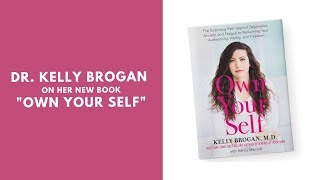
YouTube interview (Sachin Patel interviewing Dr. Kelly Brogan) about her book Own Yourself. Brogan discusses her transition from conventional psychiatry to holistic, lifestyle-based healing after personal recovery from Hashimoto’s, the importance of self-ownership and meaning in suffering, sensitive individuals (‘‘canaries/empaths’’) as agents of change, and practical approaches (diet, detox, meditation, tapering meds) including cases of severe psychosis responding to lifestyle interventions. The piece mixes personal narrative, clinical perspective, spiritual framing, and audience Q&A.
Chapters
What's up everyone? It's Satchin. And today I've got a very dear friend and special guest, Dr. Kelly Brogan. Kelly, welcome. Thanks for all your courage and your boldness and just your amazing, beautiful soul. I am so excited to dive into your new book, Own Yourself. And one of the first things I notice is how it's three words instead of two. So I wanted to acknowledge you for that. Maybe we'll talk a little bit more about that because that's a very important detail as part of the book. But first and foremost, thank you, thank you, thank you for being here and thanks for sharing your beautiful light and energy with the world.
It's really an honor. This is. I love speaking to you. It's always one of my favorite opportunities just to connect with you and share how much we have in common. Thank you.
It's truly an honor and a pleasure. So why don't we, for people who are maybe perhaps new to your work, why don't we start with a bit little, little bit more about you. So how did you. Where did you start? And how did you get to where you are right now?
Yeah, so it's probably an important point of context that I sort of came from the belly of the beast. Right. So I wrote a book in 2016 called A Mind of youf Own that was written from a place of really righteous rage that was induced by a confluence of factors including that I was able to heal myself from my first and only, really at that point, medical diagnosis of Hashimoto's thyroiditis through lifestyle medicine. And I had never been told in my very expensive, very stressful, potentially even traumatic medical training that this was possible. And I did so largely through nutrition. And I had had, as you well know, about an hour of nutrition training in my entire education. And then at the same time I had been given a book by a colleague called Anatomy of an Epidemic written by investigative journalist Robert Whitaker. And because of my healing experience, I was open to reading a book that I otherwise would have probably thrown in the trash. And I read this book and I decided that through this review of the non industry funded literature, I could never defend initiating another patient on psychiatric medication for the rest of my career. And so I put down my prescription pad. To this day I've never started a patient on medication. And it was really through the vector of science that I began to explore the holistic healing realm. It wasn't because, you know, I'm natively bohemian soul or some kind of like hippie chick or somebody who has any orientation around at that time, around spirituality. I was a belligerent atheist at the time and very much a materialist. You know, I had to see it to believe it, not believe it, to see it. And I wrote this book thinking, oh, well, if everyone has the information, no one's ever going to take medication again. So, here you go, and have a nice life. And so what I learned really became a part of the fabric of my spiritual awakening process over the ensuing years, which was that it's really not about information. So it's not even about science. Other than that science can be something like a bridge between worlds, right? Between the world that says we are, as Alan Watts would say, we're flesh robots on a dead rock in the middle of nowhere, subjected to the random forces of bad luck, bad genes, and bad timing. And it's a bridge, potentially, to a world that understands there to be this quantum entanglement, that we're all in this experience in a refined and exquisite balance. And that there's an emergent beauty, meaning and purpose to literally everything. And that nothing is random. Including your symptoms, right? Including your experience of despair. Nothing is random. And that world, frankly, is a more beautiful reality to inhabit. It feels better to live in that realm. And so, you know, as I began to understand, wow, this isn't about fighting the war, right? It's not what I thought it was. So I was going to raise my sword aloft and David and Goliath, the pharmaceutical industry, because I don't even have, you know, the weapon I thought I had, which is the scientific information that indicts, you know, this medical intervention. What I began to see is perhaps what I'm here to do is support the people who already are intuitively drawn to this other world, just to support their process, strengthen them for their journey, and to do what I can to empathize with the archetypal elements of that journey. And so, lo and behold, my own process began to deliver me many opportunities of contact with what is often called the dark night of the soul. So this book, Own Yourself, is really meant to be. It's what I needed to learn, essentially. You know, it's really meant to be something of a handbook for this process of awakening, coming into reunion with the body, dispelling fearfulness around symptoms in the ways that you do, of course, so poetically as well. And really to begin to reframe the experience of struggle as an invitation and to bring meaning where perhaps previously there was suffering. Because I'd like to say that suffering ends where meaning begins. So how can we begin to tell a different story about what's happening so that you are foregrounded as being in a position of authority over your body, over your mind, and ultimately the creator of your life experience. So some beautiful outcomes have come from this work. And that's really what I'm most passionate about sharing.
I love that. So poetic as always. It's such a beautiful way of putting everything into context for people. I did want to touch on one thing that you said, because this is where I feel people's guards are up often. And if we can get this guard down, then that beautiful awakening is on the other side of that guard that they've put up. And that is kind of taking that full ownership and understanding that, you know, your life is actually a three dimensional printout of what you think of and what you think of yourself. And so when people can own that, then they have this. They actually have full 100% ownership. But if they think things are random chance and it's. There's no explanation because that's what the doctors say, there's no explanation for this. And so then people, what do they do is they're blaming their bodies instead of realizing that it's them that has the potential to create this, but also uncreate it. And not even just uncreate it, but create something more beautiful. So what do you say to someone to really get them to open up to that idea?
Yes. I'm so glad that you brought this up because it's very nuanced and there's a lot of embedded paradoxes when we walk around the way that we do. I believe largely because of childhood experiences of conditional love. And that doesn't mean you had bad parents or even abusive parents. It doesn't mean any of that. It simply means that you had a human experience of childhood which set the conditions for you to curate and cultivate aspects of your personhood that might garner you love and attention and give you a feeling of safety and security. Right. So when we go through life in that way, we begin to experience, you know, a kind of splitting of our good and bad parts and we hold one or the other at any given time. Right. So either you are like myself, I'll take as an example, I've identified as a pretty confident person for the greater part of my adult life. But the truth is that I've only selected the parts of me that society, especially a productivity oriented, achievement focused society, finds acceptable. Right. And then this whole other catacomb of the parts of me that are lazy, ignorant, manipulative, you know, that lie. The parts of me that might do bad things, right? I never have to interact with that whole element of who I am. And so that's why so many of us are left with this feeling like we're a fraud, right? Or we're wearing a mask and something happens. I observe around mid-30s or later where we come to this kind of fork in the road and we're given an opportunity, no matter how we have related to ourselves previously. If you're on five psych meds or you've never been to a psychiatrist before, we come to this opportunity where we either need to really secure that mask, right? Like extra tape and strings and make sure it's really on tight, or we are invited to this process of self discovery and to exploring what all of us consists of, right? So if we are all holding this small voice that says, something's wrong with you, right? Sometimes the voice says you're broken, like for good, right? Sometimes the voice says you're sick, you're really sick, unlike everyone else. If we're all holding that voice, then if we show up in a doctor's office, right? And that doctor says, you know what? You're right, something is wrong with you. Here's the ICD10 code for it, and here's the medication you can take to feel in control of it. There is a validation that any individual would experience in that there's a little bit of relief, there's an experience of feeling seen. And so it makes so much sense that somebody would make that choice. Now remember, you're talking to somebody who not only so much understood that psychology, but so much believed in it, that I specialized in prescribing to pregnant and breastfeeding women psychotropic medications. So I get that deeply. And I would have made that choice hadn't my defenses been different, right? So if I didn't have these defenses, that really helped me to function in this particular version of society. So I understand the validation and that's why this is not a path for everyone, but it is a path for those who are, who feel something ignite inside at the prospect that there is personal meaning in their experience, no matter what that experience has been, that there is a journey that they are navigating and who might be interested in unpacking that, right? So 100% of the women that I have worked with made the choice in my practice, made the choice of taking medication. So there is no shame in that. That's the entire population that I work with, right? I haven't really had much opportunity to interact with people who are choosing to meet symptoms for the first time without medication. So this is. It's a psychology that has served us, I think, as a collective to understand the bad is out there and I'm the good, or maybe the bad is in me and everyone else is good. Right. This splitting. And so that's why so much of this journey is about adultification. It's about coming into a kind of consciousness that can hold, as psychology would say, the good and the bad object in all people, in all moments, all the time, everywhere. There is both. The polarities coexist at all times. Right. So that level of consciousness requires a death of the child consciousness and restructuring of who it is that you are and an understanding of who it is that you are as somebody who has shame and rage and grief and fear, in addition to the capacity for courage and compassion and strength and love and joy. Right. That we all are all of this. Right. And it's just navigating the reunion of those parts that becomes this self discovery process. And for whatever reason, it almost archetypally expected at this point, from my view, as you taper off of psychiatric medications, so I think many people are feeling interested in that. What would my life be like without these meds? And again, for whatever reason, it's simply not that easy for most people, at least the folks that I encounter. And the literature is suggesting, at least in 2014, that there are associated neurological, endocrinologic, immunologic phenomena that can only be characterized as withdrawal when we come off of these medications. And so to support these individuals whom I characterize as the canaries in the coal mine, like the most exquisitely sensitive beings on this planet, whose fundamental power has been misappropriated, misunderstood and marginalized. How do we initiate these individuals, individuals to themselves, potentially through the portal of tapering off of the medications that once made sense to them. And so that's really who I see myself most here to support.
You literally read my mind when you started talking about the canaries in the coal mine. And I was thinking, I wonder if that's. I know that's kind of a cliche terminology, but what's coming to me is empaths in the coal mine. Right. So they're highly sensitive to what we call, you know, this sick world. Yeah, of course they're gonna feel depressed and anxious and nervous and psychotic because unfortunately, that's what's being, that's what's emanating in our culture this day and age. Right. If you watch Movies, if you watch television, if you watch the news. So these people are highly sensitive, which is a gift, but it's kind of, as you said, being marginalized. And then, of course, they're being medicated, because I think it's these people, and it's hard, maybe hard for them to realize because of how sensitive they are, that they're the ones that are going to actually change the world. And by drugging these people, we're actually suppressing that opportunity. So, I mean, I know that sounds maybe a little bit too out there for some people, but it actually, to me, makes a lot of sense.
It's been my lived experience. You know, again, I wouldn't have. I didn't come to the practice of psychiatry with that psychology. You know, the practice of psychiatry, again, with the greatest of intentions, is really a coddling of the victim. It's kind of an experience of pathos, you know, for these individuals who have to struggle in this way for the rest of their lives. Right. It certainly isn't a framing of these individuals as being uniquely sensitive, let alone uniquely gifted, let alone uniquely powerful. And so I came to that perspective because one patient after another after another. And now that we've scaled with an online healing community where thousands of people are undergoing this very basic protocol, and again, where for the most part, what's happening is they're being validated in their felt experience of their own power that was manipulated, I have seen these individuals go on to become healers and visionaries and artists, I mean, literally of the highest order, and to contribute in ways that. That are so expanded relative to my kind of, like, narrow lines and rigid perspectives, that I thoroughly agree that they are the ones who will hold the next step. Because obviously we cannot resolve what we've created on this planet, as Einstein or whomever is credited with this would say from the consciousness that created it. So how is it that we are going to move into this wild unknown? And it was Krishnamurti who said that it's no sign of health to be well adapted to a profoundly sick society. Our society, our Earth, is on its deathbed. And so we need this creative consciousness to usher us into the new realm. And Even my mentor, Dr. Nicholas Gonzalez, helped me to understand the nature of the individuals who are most likely to be diagnosed with, you know, the things, the kind of labels that patients would come to me for, whether it was, you know, hypothyroidism or multiple chemical sensitivity or fibromyalgia or ADHD and depression and generalized anxiety, that these individuals have a Lot of character traits in common. So, like, they're night people. They tend to gain weight easily. They are not really interested or attracted to, like, rules and regulations. So they're not often doctors and lawyers, but they're more often kind of like trying to have in society and struggling. And he called these the parasympathetic dominance, that these are individuals who really require certain kinds of dietary interventions to heal their autonomic nervous system so that they can flourish. And, you know, this kind of separation of certain kinds of people, again, the polarity is, you know, Alan Watts would call them the goos. He said, there's the goos and the prickles. And Nick would call them the parasympathetic dominance and the sympathetic dominance. It's something like Type A's and B's also. But this is part of the template of coming into contact with understanding what your sort of personal healing path looks like. Because really, all that I offer is like, Primarily the first 30 days and then some tips and tricks from the trenches. But what I find is that after those first 30 days, there is a clear channel established amazingly in such a short time that helps you to step one foot in front of the other on your own path, which could look anything. It could look like homeopathy or essential oils or shamanism or plant medicine, or just continuing down the nutrition rabbit hole. It could look like anything. Ancestral healing or womb work. But only, you know. And so that's why I think we're in such an amazing time, and I know you would agree, where we're moving out of the kind of master, student, doctor, patient, Piscean perspective into this Aquarian model where we can really see that what Thich Nhat Hanh said and James Maskell has often trumpeted is the community is the guru of the future, that we don't need the expert authority because it lies within. This is an inside job. However, you get to do it with other people who can support you. It's that kind of one and all paradox.
I love it. So I basically had goosebumps for the last, like, five minutes straight. And that's never happened before. So that was an interesting experience.
I'm just speaking directly from your psyche, I think.
Seriously, I mean that so much on this. It's so interesting because when I talk to clients, that's usually my litmus test. If I should work with them or if I should even pay attention to what they're saying is if there's that resonance, right? So there's a deep resonance here to what you're saying, and you know, my understanding. And so it kind of begs me the next question, which is, you know, we like, so if somebody understands this path, how can they identify, like, what is it that needs to happen? I mean, hopefully it's this interview, perhaps another interview or whatever it takes for that to happen. But how can someone self identify, maybe even physiologically that, hey, this is my jam. Like, for me, it's goosebumps. Are there any, is there, are there any traits or things that people can look for that helps them understand, hey, this is the path I need to walk? Because these are highly sensitive people. So they're going to be. If they can tune into these things, then perhaps they can use them as clues and cues that, hey, you're moving in the right direction versus moving in the wrong direction.
Yes. There's a word I learned recently. It's a Greek word and it's an amnesia. And it roughly means the remembering of something once known. And there's a very signature experience I think that we all can intuitively relate to, but perhaps some more than others around what that even would feel like. Right? So what does it feel like to remember something that you once new. It's a kind of coming out of anesthesia. It's a kind of like, oh, that makes so much sense. I knew that. Right. It's, it's this, it's a, it's a reclamation of a truth. And so that I think is the sensation, you know, that we all feel. And certainly again, myself chiefly having been under such profound anesthesia that I operated in to such a level in a system that now feels like it would be a straight jacket, literally and figuratively, to operate in, you know, so that remembrance is something I recognize. And it's what I, what so many describe to me as being the process of coming into this reclamation, coming into this personal power and really just starting.
To.
Surround yourself with messaging that is, you know, with the intention of personal empowerment. And I love etymology and kind of word construction because, you know, I'm sure you get this two section that so many people when you say you have responsibility for your health experience, and I say, I joke. The good news and the bad news is that you're in control. It feels like blaming the victim. Right. It feels like kind of salt in the wound or finger pointing. I've been accused of shaming individuals. I've been. There's a whole. Been a whole website devoted to slandering me that actually calls me an ableist. And you know, I'm a big believer that there's always a kernel of truth in every criticism and there's a big, bigger than a kernel of truth in that one. Because I do believe, non pejoratively that, that people have the capacity to engage their experience in ways that they are conveniently not told is possible. And so if we look at responsibility, it's response ability, right? It's the cultivation of a capacity to show up clear of mind, open of heart and intending to break cycles, recapitulated trauma. That's reactivity, right? So if we're going to cultivate responsibility, then we have to start with a feeling of kind of like honoring the irresistible magnetism towards something more authentic, right? And I think these days it shows up like a feeling so many of us have. I still have 10 years into the health journey that I want to be stronger, you know, that I want to know more about myself and experience more mastery over myself. But not in the ways that I thought were important, right? Like not in the ways where I show up looking like I've got every box checked and you know, slaying my life left and right. Actually in the ways where I can practice, you know, courage, right? Like. Like is heart in French. Like a heart centered strength. Like how can I show up just owning the fact that I. There are so many ways that I don't know, right? In that maybe mind, in that I don't know mind and to experience that as a source of strength. So some of us are calling this the feminine, right, or the yin. And that's really been the surprising reveal, right? Is that there's so much deep strength in that. So how do you cultivate that? Well, it involves a certain kind of softness with yourself, a kind of reflexive self forgiveness and a kind of compassion. I remember the first time I heard that self compassion. I was like, what the hell does that mean? I literally had no idea what that meant or what that would look like. But there are ways to begin to commit to that being your first reflex when you feel you mess something up, when you feel you would judge yourself, when you feel afraid that somebody else might judge you. How can you not abandon yourself? How can you turn towards yourself and self parent so that you can enter into that adult psychology where you understand there's good and bad in everything and there's no wars to win. There's no wars to win because we all have it all. And the sooner we can get into intimate contact with that and own it, the more free we will ultimately feel.
Amazing. So people who are sensitive, for lack of a better Term, Right, yeah. Because that can be misinterpreted in so many different ways. But people who are. People who are in tune, let's say that people who are in tune with their sphere of influence or who they're influenced by, the news, the media, what have you, I find that those people, I don't want to say those people because I'm one of them. Right. At least I feel that way.
I was thinking that as you were saying, that people out there, or, you.
Know, that's me and maybe you as well. But, you know, these are the people that, like we said earlier, they're the ones that have the intuitive faculties and they're vibrating at a specific frequency that, you know, this world that we're in right now kind of throws them off.
Yes.
But that can also throw off like their passion, their motivation. And I see this a lot, especially in functional medicine practitioners. And so, you know, what's happening is a lot of functional medicine practitioners are, you know, moving into this, let's call it more progressive, for lack of a better term, into this more progressive root cause resolution type of approach. And of course, what we're talking about is the mind as the potential root cause of a lot of the physical manifestations of the problem. But what also happens is because these practitioners are highly sensitive, it's hard for them to fight this fight. I don't know if that makes sense.
Yes, it does.
That's clicking for you. So how do we help them so that they can kind of, you know, you're clearing, clearing. You're like the snowplow. You're clearing the snow for us and we're coming behind you. But we need to be able to step into that as well. So what would you say to practitioners who are watching this? Because many of them are empaths and that's why they're trying to find the light and find a better way. But you know, they come up against so much resistance, whether it's from the existing consumer or whether it's the existing medical establishment or big pharma, whatever it is, we come up against resistance. So what can we do to kind of break through some of that?
So this is where I literally have the same advice to every single human on the planet that I give myself, which is, you know, it's like the Zen say, first, you know, chop wood, carry water. Right. So it is the practice of, the practice of discipline without self judgment, which is very challenging. But so commitment, right. Exercising your choice towards prioritizing yourself, your self care is literally all you are here to do. So. What happens with empaths is what you describe. It's like the world is falling apart. It's painful, it's terrifying. I mean, the levels of grief that could be induced, whether it's, you know, what's going on legislatively in California or it's human trafficking, or, you know, what's happening in the Bahamas at the moment post hurricane. I mean, it's like the list is enormous of all of the causes that we feel we need to support and show up to, let alone, you know, the practice of conscious, intelligent medicine. Right? So that is a. It's a distraction if your commitment to yourself has not been foregrounded. So I am very susceptible to this where I feel. I wake up some days and there feel like 10,000 things I should be doing to help the world. Right? And at that moment, I've come to the understanding. No, actually, Kelly, today, since you thought that the first thing you do is make sure you did your coffee enema, that you ate a good breakfast, that you meditated, maybe it's time for a new meditation. This morning for me, that I danced, that I spent time playing with my kids, all of these things that fly in the face of and challenge and defy the expectation that we are here to save the world and that we are here to fix the world or even fix even one other person, even help one other person. First. First. First is your commitment to yourself. Because in that world, you don't have to make decisions. In that world, things become clear and all you have to do is be present to the unfoldment and exactly the opportunity that is your perfect match to what the world needs presents itself in neon lights, right? And sometimes all you need to do is simply be, maybe even live a joyful life, right? Maybe even have fun, experience pleasure, cultivate eros in your life. That may be your signature contribution, because when others are in your radiant field, they are affected on levels that don't recruit the mind necessarily, and their defenses, right where they begin to just kind of feel that something is possible just by being in a room with you. That is a level of service that has led me to believe that self care is the greatest form of activism today.
I love that. I love that. It's interesting because I actually did a video just yesterday answering that question practitioners have, like, I'm so busy in my practice or so busy trying to build my business or in life that I don't have time to take, take care of myself and the visualization I give people because I study nature as do you is the trunk of a tree. Right? Picture yourself, your health, your vitality as the trunk of the tree. The branches can never grow bigger than the trunk.
Yes.
And anytime you try to grow a branch bigger than the trunk, it's going to break off the tree. And so nature through millions of years has decided that, hey, we've got to grow the trunk strong and the trunk is you. And anytime you're working on you, you're at the same time working on all the branches.
That's right.
And so it's. Nature is like our perfect metaphor, you know, for that. And we see it everywhere. I mean, that's the, you know, the mathematical anatomy of everything you see in nature is that there's this central cord which, from which everything unfolds. And that cord in your life is you. So taking care of yourself really takes care of every other area of your life in some way, shape or form. And giving ourselves that permission is so huge and so overlooked. And even practitioners, right, so practitioners, you know, they're doing their best. So I'm not here to judge anyone, you know, I'm doing my best, you're doing your best. But sometimes we forget to give ourselves that permission and realize, like what you said, like somebody being in the same room as you with your light, you know, on full blast, I mean, maybe that's exactly what that person needs, not another supplement. Maybe they need you to show them what's possible and for them, for them to witness that and be like, you know what, whatever that is, it probably doesn't come in a bottle, but I want to know how to, I want to know, you know, how I can accomplish that. Right. That field. So I love that. Thank you for sharing that.
Yes, yeah, absolutely. I couldn't agree more.
So I had a question come in from one of our online followers, Ajumal. So thank you, Ajumal, for asking this question. She's a therapist and she does some amazing work in the world. And so her question is, what would your approach be to working with somebody with acute psychosis? And she just wanted your thoughts on that. And she gave a big heart too.
Oh, perfect. Yes. So I certainly have, I guess experienced a lot of criticism, if you will, around the potential for this type of approach to so called mental illness, you know, as being applicable to anything but kind of what we call the worried. Well, right. So this is really, it's fine if you have like a little bit of malaise or maybe, you know, some generalized anxiety, but obviously for serious mental illness, like, you know, bipolar disorder, diagnoses with, you know, expressed mania or suicidal depression or schizophrenia, this wouldn't be appropriate. And so I think because of my temperament, I took that as a challenge some years ago and set myself on the path of evidencing the capacity for this basic lifestyle protocol to heal even those, and perhaps specifically those diagnoses for which there is no hope of a cure in the allopathic model. So this isn't just a low adverse effect, low cost alternative, it's actually the only option. And not to say that this is the only way to heal, but that alternative medicine is the only option that offers the capacity for lasting remission and really transformation of symptoms. And I found that to be true. I have a staff of volunteers dedicated to writing up these cases and one of them is a young man out of Scotland who was on Clozaril in addition to a number of other medications. So the role of so called antipsychotic medications in inducing the symptoms of psychosis cannot be underplayed. I mean, this is very, very well evidenced. Robert Whitaker, who I mentioned earlier, has dedicated his entire platform to really exposing the literature that suggests it's the medications themselves that induce these states of chronic and recidivistic psychosis or really arrested relationship to an alternative reality that is not in any way graspable by the individual. Right. So they don't have any conscious command of it, they don't have insight into it. And it's a kind of a hell. And this individual I'm describing, who was not a patient, so I didn't treat him directly, this is a remote healing, as we call it. And he was so disabled and so symptomatic and so miserable that his mother was considering bringing him to Switzerland for euthanasia because she loved him and loves him that much. And in five weeks of, you know, basic detox and basic dietary change, he didn't even do the meditation component. He was asked his mom, you know, if he could get a job. So she signed him up for volunteering. They were going on walks in the woods. He hadn't left the house in I don't know how many years other than to go for his Clozaril blood draws. And now I think this is probably two years later, he's almost completed. His medication tapers. So when, when allopathic medicine interacts with these, they call it like, oh, well, he must have been misdiagnosed, or they call it some sort of an outlier and that's fine. You know, it's not of interest to me to convince or persuade anyone or you know, induce a disruptive wave in a system that perhaps is serving certain people in a certain level of consciousness. But I think it's important that we begin to reframe the capacity for these individuals to heal and where to start. So a big part, there's a whole movement, it's you know, hearing voices network and there's a whole movement that seeks to educate patients about how to interact with internal stimuli. So whether that's voices or sort of paranoid ideation or other kinds of intrusive thoughts and experiences. But I am a big believer in an order of operations that equipping a patient when they're in this kind of a state with those kinds of tools is just so much easier if we begin with the chopping wood and carrying water. So, so that's why I am a believer in this 30 day, specifically a dietary change. I am of the biased perspective that so many of these individuals are struggling with gluten induced neuroinflammatory processes because otherwise I can't explain the outcomes. Right. So they're just too dramatic and too rapid. And according to the psychoneuroimmunology and associated literature implicating gliadin proteins in brain based inflammation, that is explanation enough for how you could go from a state of psychosis. You know, one of the papers that early influenced me is a 37 year old. This is in the New England Journal of Medicine. She was so psychotic, this patient, that her family took out a restraining order on her. She was treated with, I believe, Risperdal and Zoloft, multiple hospitalizations. And it wasn't until they worked her up medically and found that she had gluten sensitivity and Hashimoto's and treated her with a strict clinical gluten free diet in the hospital setting that she returned to her pre morbid state. So you could pile medications on this woman all day long, you could derail her entire life experience and you could teach her how to talk to her voices and manage her paranoia. But why don't we just start with the low hanging fruit and see if she really has to go on that heroine's journey or if in fact it was just an evolutionary dietary mismatch.
Yes, thank you. And sometimes it is so simple that it's hard to believe.
It's hard to believe. Yeah, yeah, exactly.
So another question coming in from Lauren and she says, I feel called to share a personal story of health recovery with the purpose of helping others, but I'm held back by fear. Any suggestions on how to navigate this?
This is so common.
So.
A couple of, I don't know, maybe three years ago, I had a bit of many layers of an existential crisis. And one of them was, you know, what am I, what am I doing? What am I doing in this career? Why am I doing this? It's very hard work and it's, you know, I'm exposed to a lot of pain and suffering on the part of so many of my patients who are metabolizing these emotions that have been stored and stuffed and past trauma. And it's really the dark space to live, right? So I said, okay, how am I gonna. Oh, you know what? I read the book Essentialism and I thought, okay, how am I going to measure if I'm getting close to my goal, my service to the world, how am I gonna know, right? Because otherwise it's gonna slip away. Oasis on the horizon forever, and I'm never gonna know that I'm getting there. And so I said to myself, I want to collect 500 videos of dogma defying recovery stories that shouldn't exist according to my medical training. And of course I'll spend my lifetime doing that. But the reason that that became my goal, and not necessarily publishing in the peer reviewed literature, not necessarily, you know, amplifying my books and programs and all these things to the ends of the earth, but just trusting that the people who need these tools are going to find them and that I want to capture and put a megaphone to their stories that became more compelling to me because I believe that we are entering into a realm where the currency of authenticity surpasses all other forces of inspiration. And the way to connect to someone's heart is through your story. And so obviously in my realm, to ask people who have jobs and families and you know, potentially even been hiding elements of their medical and psychiatric history for years, if not decades to come on video and speak about this is a very, very tall ass. But now we've grown the community that owns this and says, you know what? That was me. I needed that experience. And now I am on this incredible magic carpet ride of a life and join me, right? So I think there is a framing of this kind of personal narrative and this kind of storytelling that actually positions you in the most human place where, you know, as Maya Angelou says, you know, when you know better, you do better. That's what you did. And now you do this. And here's what it's like, you know, and that I think that that signature authenticity is so felt that it's almost like the kind of strength, protection, and safety that you thought was going to come from curating story of you that other people might appreciate, love, respect, and pay attention to. It actually comes from the experience of owning the truth of your version of what your life experience has been. So I've gotten the feedback many, many times over that actually filming those videos was itself a fulcrum in the process of self ownership. Right. And that actually telling the story itself, regardless of who it impacts, which invariably it impacts many, telling that story was a part of this integration process that was highly necessary in order to step in to this next level of personal empowerment.
I love it. We'll take one more question and then I'm going to ask you some questions about the book because I want everyone who's tuned in to, to read it, to help spread the message and to support this message because I feel like more important, I mean, more people now than ever need to hear this. And this is something that can really be transformational. And I know you know that, but I want everyone watching this to know that, you know, Kelly has an amazing track record of helping people help themselves. That's what I love about her. She's kind of, as you can probably tell, a very loving, compassionate, but no nonsense type of person. And I think that's why we get along so well, because I like to think, like, that's how I am.
Yeah.
So we have a question from Krista Ramel, who's a nurse, just to give you some context. Amazing person. And shout out to point retreat. Actually, here, I'll show everyone. Here's Krista. Here's my mug. I drink from it every single day. And so we're actually going to be hosting a retreat there in May 2020, so I'd love to, perhaps.
Very cool.
And so she's asking. She's going to be presenting the concept of self care to a group of medical students at the university. You have m. So I'm going to say I'm Ms. Who's Minneapolis. And then that's going to be next month. And she's like, can I ask you what message you feel our new millennial medical students need to hear the most in regards to self care?
First of all, thank you for doing this incredible service literally to humanity by orienting these doctors of the future who would otherwise never, ever be exposed to this kind of messaging, you know, toward, toward this, you know, towards this mission. So, yeah, I mean, again, I am having come from the Matrix, you know, I'm a big believer that there is a path, like, you know, A moonlit path with pebbles of science that can lead people away from their fear, skepticism and dismissiveness into the promised land. And so I think it, you know, I think it makes sense to lead. So what is self care? Right? So first of all, we have to define that. And these days I see the definition as being quite varied, like as varied as there are humans on the planet. But maybe, you know, in terms of the medical literature, we could agree that, you know, it might include detox, right? It might include nutrition, it might include a contemplative practice or stress response commitment, and then you could branch out to other practices, movement related practices, dance, music, etc. But even if we just stuck with the first three, there is a surprising amount of literature which I've done my best to contribute to that supports these practices as having immeasurable, quantifiable impact on, let's say, neuroinflammatory processes, if not more, if not hormonal balance, etc. So maybe start there with what does the science say about these lifestyle choices and the ways in which you can fortify your resiliency? Because I think we can all agree that the medical school and medical training path takes a toll, right? So if you want to help your patients, which is probably what they're most oriented toward, you know, helping others, if you want to help your patients, then you need to have this resiliency or you're not going to be able to think in a way that's going to help them. You're not going to be able to show up for the hours that are going to be required of you and you're not going to be able to model what it is that they're looking for, right? So can you engage these practices not because I say so or because I do it, but because actually science suggests that they have a measurable impact on your resiliency and your performance, right? So I think as a medical student, if I think back, you know, that's the kind of thing that I cared about was like, you know, all the external elements of validating my worthiness, right? So my success and performance and achievement. And so I think you can speak their language and still tell our story.
Beautiful. I love it. Thank you. So I've got an advanced copy of your book here. Okay, There it is with your beautiful face on the COVID And so tell us a little bit more about this and who you wrote this book for. And also what was your favorite part about writing this book?
So it's funny, Sajan, because I was not on the first cover, and it had a totally different title. The book was called Get Real, get well, Get Free, which is now the contents are separated into those sections. And it became this very interesting process where I was first invited and then highly recommended to be on the COVID And I was so resistant. And then, of course, there's like, this meta layer of, like, this is my offering. How can I show up, you know, at a level of owning the material in here and not hiding behind some pretty graphic or something? So it's actually quite an educational process for me. Not a pleasant one, but, yeah, right.
You have to own yourself.
I need to own it. The same thing happened with the audio. When they asked me to record the audio, I was like, hell, no. I'm not gonna spend 26 hours recording an audio. I have things to do. Right. And plus, I don't know how to read professionally. Like, why would I do that? Just get somebody else to do it. Which is what I did with my first book. And then, of course, I had a moment where I was like, wow. I had a lot of charge around that. You know, it's a little more than logistics going on there. And I was able to see, you know, that I was afraid to do it, and I was resistant in this, like, very entitled, childlike way. And ultimately, I sat down and did it, and, man, was that challenging.
Wow.
So, yes, so I have owned this process. The book, I would say, particularly the third part, which is, I think, more kind of like the spiritual guidance section is really what I needed to learn. And so these are. I mean, it's almost like diary entries in a way. You know, it's what I have learned through my process of coming into an orientation of self healing and self discovery as being my principal, commitment and dedication every single day when I wake up. And I've seen, you know, there's an appendix also on parenting and relationships. And I've seen how, you know, the evidence of this and the ways in which it has transformed my relationships. You know, I went to pick up my daughter yesterday from school. She's seven. And this little boy in her class came up to me, and he's never talked to me before. And he came up and looked at me in the eyes, and he said, is it true that you don't yell at Lucia or put her in timeouts? And I was like, yeah, it is. It is. I mean, while his mom is standing there, I'm, like, causing all sorts of mayhem, probably in their family dynamic. And he walks over to her, to his mom, and he Goes, I'm mad at you. Funny. But, you know, it's a moment where I felt this kind of, like, complex but important experience of pride, you know, like, that my daughter gets to have this experience is not because I'm like, a good person. It's not. It's simply because I have committed myself to growing my capacity to hold my own inner turmoil, reactivity, and charge and to soothe myself and parent myself in the ways that were not available to me as a kid, that I can offer her the experience of being herself in a safe environment. So all of this is, like, what I've learned from the trenches, not only from my incredibly intrepid and courageous patients and online course participants, but really through my own experience, because we're all walking the same path. It's just our own, you know, signature process of deconstructing the defensive, you know, structures and that. That mask, like, really letting that personal mask slip. So it's my hope that, you know, this reaches the people, obviously, who need it, because I think it is effective in validating that intuition that there's more to life. You know, there's something more beautiful that must exist in order for this all to make sense. And I've gotten the feedback that it is potentially an effective vector for those individuals. And so that's really my rallying cry at this point.
Amazing. So, I mean, there's so much depth to what you're saying. So some people might have to watch this twice, even. And I'm going to go back and deconstruct the layers of the message because there's so much there, and I want people to realize that as well, is that if you watch this interview a month from now, it'll be a completely different interview because you've changed, right? Yes, the viewer has changed. Not necessarily the words that we're saying, the conversation that we're having, but the person has changed. And so I would challenge everyone to come back to this, process this again, because I'm hearing it from a certain perspective. And if I listened to this interview 10 years ago, or even five years ago or even a month ago, my conceptualization of it would be radically different as well. So this is one of those conversations that I think will. There's just timeless wisdom in here. And as time passes, the words become even wiser as we mature into this journey for each of us. So I love that. And I did. I did want to ask you, though, was there, like, when did this all, like, present itself to you? Because I feel like you're awake, right? And Is that. And just so, just so people can understand, like, is that a gradual process of, you know, maybe it's the yoga journey, the spiritual journey, the self care journey, or is it this realization then you step into it or do you step into it and then have the realization like which one? It's like the chicken and the egg, which one comes?
Yeah, yeah, right. I mean, I have to say, while on a three dimensional kind of, you know, materialist level, my awakening process began with my diagnosis, right? So that invitation presented by the prospect of chronic illness and I chose to walk down the path of self discovery rather than symptoms suppression. I mean, the truth is that my deeper healing, my deeper process of really owning all of who I am was instigated by love. You know, I fell madly in love with Sayer at a time in my life that I thought I had set up my postcard existence. You know, I had a happy marriage and two healthy kids and my parents helping to support me and my pretty house that represented untold amounts of Deb. And you know, I thought I, my practice was growing and I thought I had it all figured out and this meteor, you know, hit my soul. And that very, very painful, very confusing, very terrifying process of understanding how to build a life around that love was the defining, you know, characteristic of the coming five, six years, you know, now going on seven. So it's, it's the, it's embracing the unexpected as being meaningful that has led me to this practice and certainly would not call myself awake, but of awakening and really a commitment to coming into a kind of unconditional love for myself so that I can finally receive it from, from others.
I love that and I love that conscious awareness of the awakening. Right? It's like the flower blooming. It's like an infinite process. So once again, Dr. Kelly Brogan, thank you so much. I'm going to let everyone, I'm going to share a link so everyone can pre order this amazing, amazing book. Thank you for your amazing work, your heart, your courage, your boldness, and for speaking the truth for all of us that need to hear it and empowering us and giving us shining light on the path for all of us to follow, not behind you, but alongside with you. I really appreciate that and really appreciate all the work that you're doing and continuing to do. And thanks for your honesty and transparency. And you know, I know the best is yet to come, so we're going to leave the doors open for all possibilities to come our way. I'm hoping that there's more books in you because I know that was a powerful message you have to share. But we'll honor what time has in store for us. And once again, thank you.
Thank you, thank you, thank you, Sachin. Your support and endorsement is among the most meaningful to me in my lifescape. So truly, thank you. It means a lot. It means a lot.
It's my pleasure. And I'm going to encourage everyone to tag someone you love that needs to hear this message. Please share it. You know, many people are suffering in silence and you just never know who's going to hear this message. And it could be the most important message that they hear. They've been waiting their entire life to hear it. Thank you all for tuning in. Thank you once again, Dr. Kelly Brogan, and keep doing the amazing work. We love you and your work is very, very much appreciated professionally by us practitioners. But also I know that the people that we hopefully will never have to see because of your work also appreciate it as well.
More from Sachin








Your Doctor Won't Prescribe This… But It's the Most Powerful Medicine on Earth

