Finding Happiness and Purpose After Widowhood with Marie Scott and Sachin Patel
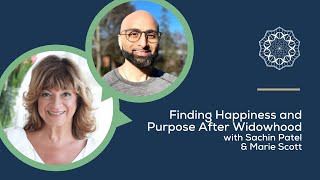
A recorded interview (YouTube) in which host Sachin Patel speaks with Marie Scott about her journey from chronic poor health and widowhood to recovery, authorship and service. Marie describes discovering functional medicine, resolving long-standing health issues through diet and lifestyle, the grief and choices surrounding her husband Dave’s esophageal cancer (he chose quality of life over chemotherapy), and the 12-chapter writing process that produced her book. She outlines her seven Steps to Healing (food as medicine; improved sleep; joyful movement; meditation; laughter; healthy relationships; finding new purpose), describes how cooking helped her physically and emotionally, recounts finding love again (partner Jeff), and explains her coaching work, book availability and community resources (retreat in Siesta Key, private Facebook group).
Questions this video answers
April 15, 2018.
Esophageal cancer (stage 4, with metastatic spread).
January 29, 2019 (they danced together that night).
January 9, 2020 (proposal occurred over a Zoom call).
How I Found Meaning and Humor in Widowhood. Firehouses and organic vegetables (subtitle: the seven Steps to Healing After Loss).
Chapters
Hello, my friend, and welcome to perfect practice. Today I have a special friend. Somebody who started off as a client in our clinic, then became not only a rock star patient who transformed her health, but then took it upon herself to become a health coach, transformed her life even more, and is now in service to many people around the world who are trying to overcome some of the challenges that that she faced by being thrust into a situation that many of us may not necessarily imagine ourselves being in. And she came out on the other side as a massive, massive success story, but also somebody who more importantly has served as a great inspiration. She is somebody who has not only become a best selling author, a transformational health coach, somebody who makes you smile. And you'll see in just a moment as we start this conversation, you'll instantly have a smile on your face. Somebody who's become a great inspiration to me and many of my colleagues in showing us and demonstrating to us what's possible with the power of love, dedication and commitment. So today I get to interview a dear friend, Marie Scott. Welcome, Marie. Thanks for being here today.
Thank you, session. It's an honor to be here.
Well, I am super excited to have this conversation because we are going to go through not only the personal transformation, but also the professional transformation that you have gone through and also the transformations that you are helping others create, using your life experiences, your journey as the bedrock for that. So let's start there. Tell us about what your life was like before you discovered functional medicine. I'd love to start there.
I discovered an osteopath who's working with Dr. Jimmerson. The year I tore my rotator cuff, he was the first person that ever sat down and asked me about a family history. It was just eye opening. I had been recently diagnosed with autoimmune hepatitis, and I had to ask Dr. Google what that was. And autoimmune diseases running rampant throughout my family. And I lived on Imodium. My guts were a mess. And I had carried around 30 pounds with me for 20 years. I thought, well, it's just because I quit smoking three times. So I was okay with that trade off. And then when I started getting into the root cause, it's like, why am I on blood pressure medication? Can I do something to get off it? Because when they give you a pill, they never tell you how are you going to get off it. There's no exit strategy, and you know that well. And high blood pressure medicine, cholesterol medication. My number was 299, which is just a number. I learned Many years later, I was on hormone therapy because that's what they do to women, antidepressants, because that's what they give to widows. And so I was a total health mess. I was a total mess. And all these diseases running through my family, I didn't want to part of celiac disease. My other sister had Graves disease, My sister Mark had breast cancer, Brothers hypothyroidism running throughout the family. And it gave me a curiosity to learn more about why I was feeling like this and why the fog wasn't lifting and the energy wasn't there. That's the state of Marie before discovering functional medicine and the power to. The power of just changing what I ate for six short weeks.
Wow. And you said something in there that I want to, you know, kind of amplify a little bit in your message is that you said that many of your siblings had autoimmunity. Were you able to trace back perhaps where this came from? I don't know if there was something that happened in childhood to, to you or something that you were all exposed to, or have you been able to dissect that or is that still a mystery?
Still a mystery. And you know, there's a. I personally believe that a lot of this is linked to food. And growing up, my mom cooking big vats of tomato sauce with the acid in aluminum pots and pans and cooking pasta two to three times a week. And I had been lactose intolerant since I was a teen. And they trace that back to Mediterranean heritage. So there's a link there. But I truly believe it was the diet of pasta and bread every single night that eventually caught up with all of us. And another thing, my brother passed away of auto als, which is Lou Gehrig's disease. And I never even knew that was considered an autoimmune disease. So one of the first things that when I joined the Essentials program is the homework was to read the biology of belief. And I am living proof that it is not your biology or your genes or your DNA. It's the environment. Or as Bruce Lipton would say, it's the environment, stupid. So that is one of the most powerful books I ever read.
Yeah, one of. One of my all time favorites as well. There's something else that you mentioned which was widowhood. So I'd love to have you speak about that a little bit and how much that's played a role in your journey. And of course, you've got a book all about it. And we'll get into that in just A moment. But tell us a little bit more about that.
My beloved firefighter husband was diagnosed around Christmas time in 2017. The interesting part about that is the esophageal cancer was also considered fireman's cancer. Because of his passing, he's recognized on three national firefighter walls, which is an incredibly proud moment for me, and it would be for him as well. So his name is etched on the wall in Toronto and on the wall in Ottawa as well as the National International in Colorado Springs. So he was diagnosed with esophageal cancer. And I'll never forget this. It started with the let's do an endoscopy. Because he couldn't is having trouble swallowing. He used to say to me, it feels like it's stuck. The food stuck. So they didn't endoscopy, and then they did a colonoscopy at the same time. And I've been with Dave through four brain surgeries, two hip replacements and two knees. And that day, coming out of the endoscopy, he was extra long in coming to. And when he did, he first thing he said to me was, I don't feel any relief swallowing. And so then the procession of doctors starts. It's the surgeon who says, okay, if it's a tumor, we can cut it out. Then it's the oncologist and learned it was just spread, stage four spread throughout his body. And then the oncologist says, you must do chemo. In the second opinion, you must do chemo. And Dave was like, for what? So you can shrink the tumor so you can eat. But Dave was like, yeah, but I'm not going to want to eat because it was a horrific cocktail of drugs. And he decided for quality of life over quantity because it was only six more months maybe, that they gave him to take this horrific protocol. That was the last time we saw the oncologist, the day Dave decided not to do chemo. So everybody said, chemo, chemo, chemo. But Dave said, no, and I want quality of life. Satchin. He would wake up every morning and say two things. I feel terrific and good morning, beautiful. Then towards the last couple of weeks, he couldn't swallow anything. And the outpouring of love in those last six months by his side was incredible. A depth that I'd never experienced before. And on April 15, 2018, the most beautiful yet most powerful moment in my life was when he took his last breath in my arms, in bed, at home. And I'll never forget that moment for the rest of my life. And I Remember whispering into his ear, and it's okay, Dave. I'll be all right. Because he was more worried about me embracing life again more than his imminent mortality. And it was an incredible, powerful moment in my life. And so I was just so happy to give him his wishes of dying at home and not taking chemo and having the best quality of life he could right to the end.
Wow, that's powerful. How was it for you to. Was it difficult for you to support him in that decision, or how did you come.
No, it wasn't actually because. And, you know, the best thing about it is it was totally his decision. He never asked my opinion, and I feel so good about that, that it was totally his. His decision. So that was. That was important for me and. And important for me to know that I didn't have a hand in, you know, prolonging his life with agony. We knew people that said, I didn't, you know, my. He didn't die the day they put him in the ground. He died the day he started chemo. So I learned so much more about cancer and, you know, the huge bazillion dollar moneymaker cancer and chemotherapy really is.
Yeah, I mean, hopefully that changes in our lifetime. But I know that you've acquired tools to help people not only deal with going through something tragic like this, yet beautiful at the same time. You know, there's a lot of emotion involved. There's a lot of mixed feelings, and there's a lot that comes up and bubbles to the surface, but what you've done is quite beautiful. You've learned to, you know, adopt and adapt and find love again and even write all about it in your book. So I'd love for you to tell us a little bit more about that process of writing a book.
Yes. So I remember the day shortly after Dave died, I was lying on the floor with open, empty arms on who I was going to take care of next. And the answer came back quickly, you silly. And I started journaling, and I wrote my heart out, because 30 years together with someone, we had a ton of travel adventures and stories and being in the fire department in Mississauga. There are a ton of funny stories from the firehouse because they were a family. That was the second family. And so I started journaling, and I would be on a plane traveling for work. I was in technology, and I would write on airplane napkins. And one time, I was the only piece of paper I had. So all four quadrants of this desk, delta napkin were written on and scribbled and thoughts and memories. And it was very therapeutic to me. And after a while, as I also began meditating because I'd learned that meditation was a tremendous grief buster. And I took, I said, if I can do this, commit to this for 30 days, then it'll become a habit. And it did. And it was magical. And through the. The initial stages of meditation have brought up a lot of emotion, a lot of tears, a lot of feelings, and I just kept writing my heart out. And after one meditation one day, I sat back and the 12 chapters came to me and said, there's a book here, there's a book here. And it's been so therapeutic for me. I bet this can help others. So the 12 chapters came out and I started finding this spots on the beach to go sit and write and not come out of the room. And. And it was a really almost a four year process for this to become a published, published book. And very, very happy that it's out now. And helping. The message is helping so many people. Everybody who reads it says this, you are such an inspiration. And that's, that's my purpose and passion in life part two. You know, to inspire widows and widowers that, you know, they too can live well through clean, laugh more by surrounding yourself with positivity and healthy relationships and perhaps even find love again.
Yeah, that's so beautiful. And, you know, one thing that comes up for me is paint a picture for us as to what happens to the typical person going through something like this, because they probably don't have the same coping mechanisms and tools and strategies that you did. So what does the average widower go through?
The widows and widowers that I've talked to, women and men are different. The widows that I've talked to, I met a woman standing in line while Jeff was parking down at Longbow Quay. And she started talking to me about being a widow. And her husband had been gone for two years. And I said, oh, my word, I'm a widow as well. Then all of a sudden, as if on cue, Jeff comes up and puts his arm around me. And she said, well, what have you done? And she goes, I feel so stuck. It has been two years. And that is what I hear so often. I feel stuck. I don't know what to do. I don't know how to embrace life again. And after becoming a health coach, it helped me articulate the seven steps to healing. And through those seven steps, that is how I overcame this tremendous loss. I mean, for a year and a half, I was a basket case, you know, just Collapsing in a puddle of tears in the closet. That was my favorite spot to grieve and never cried so much in my life. And just when the light started coming out and the light in the tunnel, I could see and then I started laughing again and started eating really good and the widow fog lifted and felt that I was finally unstuck. And it was about a year and a half later when I decided I've got so much love in me. I just want to find new friends and, and have new adventures and, and when I heal my mind, body and spirit, that's when my heart opened and in walk Jeff Gordon. So it's amazing love story, but a lot of widows don't get to that stuff because they can't get unstuck. And I just have this vision that they're standing in concrete boots. You know, not knowing you don't ever move forward. I still have my, my moments, especially this time of year. But you certainly, absolutely can march forward one step at a time, find new purpose and develop healthy relationships and unsubscribe to negative friends and family and you all know you have one. So it was just so important to my, to my healing and, and you know, the energy came back and the widow fog lifted and I am, I am well on my way to enjoying life. Part two.
I love that. You know, one of the challenges people face even when they're married and have a loving partner is cooking right. And self care, just as it is, is challenging for people. But when they, when they lose someone, then it's them on their own and their nutrition, their diet, their cooking, all those things can kind of take a backseat. So I know cooking can be very therapeutic. I'm sure it's something not only emotionally therapeutic for you, but also therapeutic for your body. Tell us more about that.
So I am so passionate about food. I've always been passionate about food. And when I changed my food preferences, which has now become a way of life, I lost those £30 I've been carrying around forever, and energy came back. Once you feel like that, you'll never go back. I won't go back. And what's interesting is people saw my health transformation, said, what did you do? What, what do you eat? And I said, just come over my house, I'll cook for you. And a lot of widows say, no, it's just me. I won't cook. I'll just have popcorn or cheese and crackers and all the things that increase the inflammation and help you retain widow fog. So I started the third book, which is called cooking with a side of Kleenex. And I learned that if I don't cook, I'm not going to eat well. Yes, you can always find a piece of fish in a restaurant, but the temptations are too great and it's probably not cooked in the best way that you would take at home. So I cook at home. I love cooking, even for myself, it was therapeutic. But I remember the first time I went shopping after Dave died, I was just in tears in the supermarket buying one piece of salmon, one piece of chicken, and, you know, one piece of. One piece of, of steak. And it was very hard for me, but I did it. And I just made sure that I cooked every night. And then I started inviting friends over to cook for them and they all wanted to see my refrigerator and wanted to see my pantry. And so it was really great. And this is where the cookbook is really coming into play. The recipes are totally natural and healthy. And what's interesting is people just started picking up on what I was eating and said, hey, I can do that. I can start eating organic. I can teach people how to shop, stick around the perimeters. And it's like I never knew that. And the biggest thing was, the biggest change was when I stopped eating things out of a box. I've been Gluten Free since 2015, but still eating gluten free pasta, gluten free bread, gluten free cookies, and realized that content wasn't that good for you. So cooking is a passion. Jeff and I have a YouTube channel. We're going to start a Jeff and Marie cooking show because he loves to cook as well. So it's been a passion of mine and I can't wait to get the word out. Food is medicine. It really is. You know, if I eat something that I know I shouldn't have, I'm going to pay for it immediately. And my body just says, you shouldn't have done that. And brings you back to the reason why you started this journey in the first place. And everybody around me now, even Jeff, has embraced. He goes, what is that? What are you putting on your salad? So it's turmeric. How come you're not putting it on mine? Because I put turmeric on everything. So now he's just picked up this whole way of eating and even stopped eating his four Oreo cookies after every meal. So it isn't anything that I said, you should do this. He just picked it up. So it's wonderful to be an influence.
Well, it's never too late to Pick up some good habits, right?
No.
Have you ever tried pickled turmeric?
No.
All right, I'm going to have to, I'm going to see if I can get my mother in law to make some and we'll ship some down to you. Oh my. Yeah, it's super delicious and super anti inflammatory and it's great to add on dishes or just even have it as a side.
Wow, sounds good. I love pickled anything.
Yeah, you know what I pickled? One of my patients made some pickled string beans for us and she dropped off a whole basket full of goods the other day and my son opened them up and he finished like half of a bottle and I'm like, these must be good, let me try some. And they were the most delicious beans I string beans I've ever had. I've never had pickled string beans before, so I agree. You know, pickled, pickled stuff is amazing and it's great. Loaded with healthy bacteria as we all know, and tasty as well to top it all off. So one of the things you talk about in your book is about laughing more. And while, while it seems obvious that that's good for us, releases endorphins and makes us feel good, how do you start to laugh again when you're going through a challenging time?
That's one of the seven steps to healing that I think is the most important. And I remember maybe about 7 or after Dave died, I was, I heard myself laugh and I had to do a double take. It's like, what is that noise? And you realize that laughter is so powerful. I mean, if you can find funny, hang around your funny friends and everybody's got, you know, a great funny friend. Can't find your funny friends and hang around them or watch a funny movie. One of my favorites is Major League, which I've seen like 15 times and it still makes me chuckle and, and so bringing laughter back in your life is so important. Joyce, widow Joyce Brothers wrote in her book Widowed a woman crying. A widow crying is about as popular as a case of the flu. And it's true, I mean as well. When you can't get rid of those tears, you can put a smile on your face and it makes you feel better inside and it makes the people around you feel better as well. And it's contagious. So you know, just smiling and being with positive people really, really helps your, your, your physical mood as well. And like you said, releases the endorphins, the feel good chemicals.
Yeah. And I would also add to that that laughing is a form of breath work. So it's a great diaphragmatic exercise and, you know, releases those hormones that make us feel good again. And what's beautiful about it is it's contagious. And you have to use that word carefully these days, but it's contagious in a positive way. Right. It gets other people laughing. And it shows, you know, it shows others that you're on your healing journey and lightens the mood up in any room. Yeah, exactly. One of the other things that we talk about, or you talk about, rather, in the book, is loving again. And tell us a little bit more about that. How do you open your heart back up and embrace the new opportunities of love that enter into your life?
Yeah, it's amazing. So I wasn't looking. I never dreamed I'd get married again, let alone find a second great love of my life. And my friend Lee says to me, he goes, how do you rate? He goes, not only did you have one great love because he knew Dave, but now you've got two. He goes, most of us don't even get one. So it was an incredible story. Once I healed my body, my confidence came back. And once I heal my spirit and mind, my smile came back, and that gave me more confidence. And I was attracting people around me, the kind of people that I wanted around me. Positive, happy people. And so one day I was having dinner at this fabulous farm to table restaurant in downtown Sarasota, where I had packed up and moved, too. And I was having dinner alone because my friend didn't show up. And I was looking, just, you know, looking around, had fabulous meal, and I saw this guy dancing with like a ton of different women, so knew he wasn't with someone and his big grin on his face. And he looked over and I smiled and he smiled, and we started dancing. Dance the night, the rest of the night together. And we have probably been attached at the hip since that day in January 9th and 29th, 2019. And on January 9th, 2020, he proposed to me on a zoom call because nobody could travel. I had no clue. So we're on a Zoom call at timeshare in Florida. And it was the funniest things. That's going to be part of the last book. From High Heels to Mud Boots, which is, you know, funny story. Two different realities, two different lives we lead. Maine, outside of our harbor, we have mud boots. And, you know, it's a totally country way of life. And here in Sarasota, it's high heels. So dancing and Dinners and two different realities. And it's awesome. So I believe that when my heart open in walk Jeff. I also believe deeply in my heart that Dave put the two of us there that night alone so that we would find each other. And, you know, Jeff said the F word first. He'd been divorced for 12 years and he often said, you know, David had all these relationships and they weren't the right ones. And he goes, I was just waiting for you. And we joke that what would have happened if we would have met 20 years before? And it's like, it wouldn't be the same. I wouldn't be as mature as I am and you wouldn't be the woman you are without Dave. So I truly believe that once your heart opens and you're smiling and a smile begets a smile, in walks love again. Totally unannounced, totally unexpected.
Wow. It's so beautiful. I get goosebumps just hearing the story and just seeing how much joy you have. It is radiating through the screen here. So it is so great to see that. Now not only are you an author, but you are also a health coach and you help people transform their health. So tell us a little bit more about that and what the process would look like if somebody were to get in touch with you.
Yes. So I am a functional medicine health coach because of an email that you sent back August 26, 2019. And I was about to just stop my career and join the September course, but I was cautioned. I settled down a little bit, Wait. And then I became a part of Manaz malik's class in 2019. So this incredible tribe of like minded coaches, accountability coaches. And we were coached and were coached the entire, we coached and were coached the entire year of the program and that was truly life changing. And I did it to learn more about food as nutrition. That's what I thought was going to be my learning path. And then it became a wellness coach and said, you know what, I can really help and coach other widows and widows to become healthy again through the seven steps to healing. And so the business came about. I branded Marie Scott Wellness all across social media. My website is Marie Scott Wellness. They can book a call with me one on one coaching and just have some inspiration and hope that, you know, I can help other widows and widowers embrace life again and help them shine a light in a very dark place. This is not something that you would wish on your, your worst enemy. It's not, it's, it's a horrible, horrible process to go through. Not just the Last, the first of everything but the last. And when you do and you find new purpose, you come out of it. And I never dreamed I'd be an author, let alone five books or hold a widow's retreat at the end of March and beautiful Siesta Key, which is a magical white crystal beach. And I can't wait to get the word out. And you can reach me on social media. Maryscott Wellness Allover.
I love that. And it gives you, you know, a new sense of purpose. It gives you the ability to be, you know, a empathetic to the challenges that people are facing, but then be, you know, be living proof that you can love again, that you can smile again, you can laugh again, that you can, you know, put yourself first finally. Perhaps for some people, you know, they've never had the opportunity to put themselves first. So they never know what opportunities lay ahead when they do that. What are some of your favorite transformations that have taken place?
Well, first my health transformation, just this, you know, this shell of a person I became. The biggest health transformation is learning about food and the power of food and then, you know, transforming my life by becoming a health coach and finding new purpose. So really two big ones, right? Health transformation, which allowed the life transformation to happen. And it's been an incredible journey and a great process, you know, out of the depths of pain and sorrow that, you know, could rise above that and write this book that's helping others and also be part of another best selling book, Wellness Wisdom. So that's the biggest part. And then finding functional medicine for me has been life changing. And I will tell you that if I didn't find functional medicine, I'd be depressed, I'd be on antidepressants, I was pre diabetic, I'd probably be a raging alcoholic because first thing you turn to is substance abuse to fill the void. So I owe my life to functional medicine and I'll never go back to allopathic and I'll never forget the last time I did see my regular doctor, sat there and looked over her bifocals of two things. Blood pressure, cholesterol, blood pressure, cholesterol. And every time I visited, I went away with two prescriptions. So that was life changing for me to find functional medicine and to find the Living Proof Institute and to find functional Medicine Coaching Academy. So lots of big changes.
Yeah. And with the book you're I see, I follow you on social media, of course, and you're doing all these book signings and you're getting a lot of media attention. What's some of the feedback that you're getting from people that you're encountering?
Incredible feedback. So one of my neighbors came. We did a book signing last night in our community center, the Amenity center here in Sarasota. And one of my neighbors has three widowed siblings. So she bought four books, one for each of them that I. She told me the story of each of them and then one for herself. So today she dropped off a beautiful basket, a Christmas basket, and she said, I have to tell you, I started reading your book. I read the jacket and I read the front, the endorsements and the foreword, which is. Which was written by Usach. And she said in the first chapter, she goes. And I said, I have to put this down, because this is the kind of book that you're going to sit down and you want to read the whole thing in one sitting. And, you know, from having that closet closed to this book for so long, nobody read it. My one friend, Linda, read it from front to back in the early. In the early days. But, you know, to come through this process and write a book that people are saying, this is really good. This is really good stuff. Whether you're grieving or not, you know, the seven steps to healing makes sense for anybody going through a loss, whether it's a divorce or if you're not feeling healthy, the seven steps make all the sense in the world. It's not rocket science. It's common sense. But until I became a health coach, I couldn't articulate these seven steps and things like meditation and improved sleep, all the things I learned in my health journey.
Well, why don't we go through the seven steps, if you don't mind, real quick? We can touch on them. And then let's give people the ability to get access to the book and learn more about your services.
So guess what the first step is.
Oh, my God. I'm going to say sleep.
Food.
Food. Of course.
Food is medicine. And there's just so many things that. So much knowledge that I can apply that I've learned, like how to look at a label and how to shop and what to keep in your pantry and how to cook simple, fast meals. So that's the first step. And the second one is to improve sleep, because if you're not sleeping well, the energy is not going to be there. So you really have to concentrate on how are you going to sleep well. And for me, you can see your breath in my bedroom. It's that cold. And if we forget to turn on the thermostat, we, we can tell the Oura ring is an amazing tool. You can tell that you didn't get a good night's sleep. So in electronics, turning off all the blue lights and wearing blue blocker glasses, there's a ton of tips to help people get a better night's sleep. And as a widow, one of the first things that suffers is your sleep. After 30 years sleeping with Dave and he's not there yet, he's not there anymore. That missing presence, you sleep like heck. It's not. You don't sleep well at all. So sleep is very, very important to overcoming grief. And then the next step of course is joyful movement. And I try to move five minutes every hour and I get little reminders and it doesn't have to be complicated and you don't have to go to the gym. Although as an older woman, I do like to go to the gym and lift weights. I think you should lift heavy things to keep your strength, your toned and also keep your balance because I don't ever want to suffer a fall again and tear my other rotator cuff. So there's many, many ways to move. And then the next step is meditation. And meditation to me has been a non negotiable part of my morning routine. And Even if it's 10 minutes in the morning, I just lie there or sit and I tend to do it a couple times a day or if I'm in lots of traffic and the road rage is starting to, because traffic here is crazy this time of year. And just breathing exercises and deep breathing and just calming right down and then increasing laughter is key. I've got a lot of tips on how you can get laughter back in your life and develop healthy relationships is the second most important thing to do. You know, unsubscribe to negative friends and family and everybody knows they have those family members that you want to unsubscribe from. Then finally find new purpose. Find new purpose. It's so important whether it's something you used to do when you were before you were widowed, or like painting or hobbies or in my case, writing. And finding new purpose is the final key in starting to embrace life again.
All right, I knew food was the first one. I don't know why I said sleep, but certainly food is medicine. I was listening to a podcast yesterday with Dr. Rangan and Mark Hyman, and just when you think you've heard it all, he just dropped some amazing nuggets of knowledge about, you know, the food system, you know, how it's all set up. I mean, it's quite tragic, you know, what happens with our food supply and how it's so adulterated and what these food manufacturers get away with and how food is designed to be so addictive and, you know, the most unhealthiest things can create challenges for us. And of course, when you talk about sleep, you know, one thing that many of us probably take for granted if we are in a relationship is that person's laying there next to us. We go to bed with them and then we wake up and they're right there. But this thought that you're going to wake up one day and they may not be there, that can be very, very challenging to overcome. So you did mention keeping the room cold at night, which a lot of people don't like to do. Like, they crank the heat up and keep their body nice and hot. But I love that you're keeping the room nice and cold because studies have shown, and your ring will show you as well, that the cold colder the room, the deeper you will actually sleep. Have you. Have you ever looked into a chili pad or anything like that to keep your bed cool?
I have. I haven't actually purchased one because, you know, we live in two places, so I'd have to have two of everything. But I've looked into that. But my sleep has been amazing. I'm averaging like 2 1/2 hours REM and 2 hours deep or vice versa. So my sleep has been awesome. Just really, really good. So right now, I did look at the chilipad, I think, a couple years ago when Ben mentioned it. I love listening to his podcast too, but I should look into that again.
Yeah, it's on my bucket list. So if you get one before me, let me know. And if I get one before you, I'll let you know. Deepa, who's my wife, she. She loves it warm. And just the idea of having a cold bed at night, freaks are out. So I'm going to have to get a unit just for my side and keep things nice and cool. You talked about movement, joyful movement, especially, and going to the gym. What are some other examples of joyful movement besides exercise, perhaps?
Yeah, the best is dancing. By far the best is dancing. And I remember when I started, I was alone in the old house in outside of South Carolina. I remember I just put the music on and start dancing around the house all by myself. And it was so therapeutic and that made me smile. So dancing, for sure. I love to do yoga. And part of the retreat at the end of March will Be. We'll do a morning sunrise walk, see the sunrise, watch the sunset at night from the rooftop, and do beach towel yoga and then meditate. So I don't know if I should meditate first and then do beach towel yoga, but that's going to be part of the retreat agenda.
I love it. I'm. I'm visualizing, you know, just obviously I won't be there, but I'm just visualizing how beautiful that scenery is and this idea of watching a nice sunset over the water and watching it rise, It's. It sounds quite amazing.
Yes. And hopefully, you know, after the five days, the women. I. I'm assuming it's going to be mostly women who join us will leave with a. With a smile on their heart. Just being around us is contagious. We both laugh all the time. And the first night, I envisioned Jeff and I cooking a beautiful welcome dinner from Recipes on the Cookbook and watching the sunset from the rooftop and everybody telling their story, because telling your story is very therapeutic as well. You know, saying their name and, you know, honoring that person who's no longer with you.
Well, speaking of honoring, you've done a fantastic job, you know, honoring your body, honoring your soul, your spirit, honoring Dave. I mean, it's beautiful to watch and, I'm sorry, grateful to play even a small role in the journey that you've gone through. And it's very inspiring. I'm looking forward to your continued growth. You know, you've. You've come so far and it. And I was. We were saying before the recording started that you're just getting started. You know, it. The impact that you're going to have in the world is huge. And I'm so thrilled for all the opportunities that are coming your way to serve people who are in a difficult situation and help them love again, laugh again, you know, and really find that sense of purpose as you described. How can people get ahold of you? How can they get the book? Where's the best place for them to get the book, and where's the best place for them to learn more about your services and what you have to offer?
Yes. So you can. If you're in Sarasota, you can stop by my house, knock on the door. I've got a stock of books here. And you can find the book on Amazon, Barnes and Noble, and doing a book signing there next month, which would be pretty exciting. And Amazon, Barnes and Noble, and even Target is carrying the book. And the book is called How I Found Meaning and Humor in Widowhood. Firehouses and organic vegetables and it's the seven Steps to Healing After Loss. So really proud of this. I love the COVID We had a cover contest and you can reach me at MarieRiescott Wellness. You can send me an email or you can click a link on my website to reach out to me. And if you're a widow or widower, join my private Facebook group, Widowhood to Wellness. And that probably is going to be the best community for like minded widows and widowers to connect, collaborate and help each other feel better and start to embrace life again. So Widowhood to Wellness.
I love that. We'll be sure to share those links in the notes so you can easily click on them. Marie thank you for the inspiration. Thank you for the goosebumps. Thank you for your continued vision and mission to serve the world and make it a healthier, happier place. It's inspiring to watch and I'm so grateful that our paths crossed and grateful to see the amazing growth that you've encountered and will continue to encounter. And hopefully one day here pretty soon we'll get to see each other in person. Give you a big hug. It was so great. I still remember the day you came to our house and you know, it's etched in my memory. So I'm looking forward to seeing you again in person. But until then, lots of love, lots of gratitude, big hug and here's to your continued success.
Thank you Satchin.
My pleasure. Thank you.
More from Sachin








Your Doctor Won't Prescribe This… But It's the Most Powerful Medicine on Earth

