First, Do No Pharm with Josh Rimany and Sachin Patel
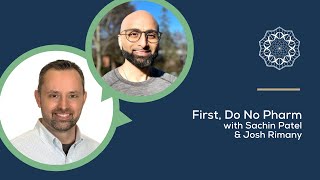
Josh Rimany survived leukemia at 16 through three-and-a-half years of chemo, then became a pharmacist and entrepreneur. He talks about the hidden cost of resilience, building a business culture, and why he moved into functional medicine and plant medicine work.
Questions this video answers
Leukemia at age 16; underwent three-and-a-half years of chemotherapy and radiation.
YouTube interview titled 'First, Do No Pharm with Josh Rimany and Sachin Patel' (uploaded by Sachin Patel, March 23, 2022).
dilworthdrug.com
Chapters
Hello, my friends, and welcome to Perfect Practice Today. With me, I have somebody who's become a dear friend over the last couple years, Josh Rimini. Josh is a pharmacist who is looking to change and transform the world. I'm so excited about this conversation because Josh and I have gotten to know each other quite well, and we share a lot of things in common, including some of our explorations into altered states of consciousness. So I'm sure we'll get into that during our conversation today. But most importantly, you know, Josh is a family man, just like me, and he's a passionate and enthusiastic functional medicine practitioner. And he's also just like me in the sense that he's looking to change and transform his profession and bring other pharmacists along for the ride. So, without further ado, Josh, thanks for joining me today.
I'm excited, thrilled, and privileged. This is awesome. Glad to be here.
Thank you. Thank you. And what I'd love to do is start by unpacking your journey. So what. What inspired you to become a pharmacist?
My journey started health care. I guess the best way is to say, how did I get into health care? You know, why would I choose that as a profession? And for me, it's my cancer story. I had cancer when I was 16. I had leukemia and went through three and a half years of chemo and radiation and got a really good bird's eye view of these wonderfully colorful poison drugs going into my body. And I really decided at that point, as my journey ended in that space, that I really wanted to give back to other people and learn more about what they were doing. To me, the clear moment on that was when I was being given an IV through my port. Really nice, clean liquid that was neon yellow. And the port pulled out, and all of a sudden it started spilling on the ground. And all the nurses and everybody were like, this is hazmat time. And they brought in all the suits and they were doing all the hazmat cleanup. And I was like, wait a second. This stuff's going in my body? And I was like, there's got to be more than this. So I just. That was. Started my journey of being curious about pharmacy and pharmaceuticals, and that transpired into being a health care provider and really wanting to give back to others that help. Help save my life.
That's. That's pretty insane to think that, right, that we're putting this inside somebody's body, but it. When it's not in their body, it's a hazardous material.
I still Remember it to this day. Like, I'm almost chills right now. It's like, at 16 years old, what are you supposed to understand about that? It was like, back away. We have to, like, call the real team to come in. And I was like, you're putting the stuff in me. What should I be thinking here? You know? So I got a really good, clear view of what, you know, for me, like chemotherapy, it's. They kill you before they bring you back. That's just how it is. It destroys the body. So I started my journey in the sickness side with. With without regard. On the wellness side, it was just keep. Keep me alive, which was okay because I learned what I needed to learn at that point, and I learned how to. How to get along in the health care system, but also learned that it was important to me that I wanted to make it part of my life. So I find lessons from that more.
Than trauma, that's so powerful. And it kind of reminds me of this quote, and I don't know how to attribute it to. But our mess is our message. So sometimes the things that we go through, the challenges that we face, we go through them so that others may not have to go through them. And we'll unpack some of those lessons that you've learned along the way in. You know, you're a serial entrepreneur. You've got two beautiful daughters, right. You've got a marriage, right. That all of us who are married know that there's, you know, challenges and there's beautiful revelations that come from being a father, being a husband, being a serial entrepreneur. So I'm sure there's many lessons that you've learned that you can share with us moving forward. But thank you for sharing and being vulnerable about your lesson, going through that challenge. And I'm glad that whatever was done helped you survive and come out on the other side. I'm sure you learned also the resilience of the human body. I mean, that's got to be pretty inspiring to know that you're going to the brink of death as you just described it as, and then you're coming back from that. It's quite the hero's journey.
I was. I think one of my core values that is so strong for me is that word resilience, like, from very early age, you know, working through Survivor, and then, you know, I agree with you. Like, your. Your life's journey, the things that have happened to you are all there for a lesson to learn. And so my life has brought me to where I am today, and this, what I call the 4.0 version of myself to say I'm unique in the world for what's happened to me and what I've learned from all of that. So it's really, for me, that's a good point, is like, I've learned resilience along the way, and now I'm learning there's a shadow to resilience. And what happens if you're too resilient? What are the effects of stress in the long term? Peace. And so my fascination with the stress response system probably was because of the trigger of getting cancer from a stressful event. And that search for my why has led me all the way through functional medicine and now beyond that, into consciousness medicine, really, really diving in. And so it's been. I love talking about this stuff because I'm getting more so recently than any other time in my life. I'm really getting that piece that all of this is connected in a reason and for a reason. I got cancer for a reason, so I could learn what it's like to go through cancer. You know, how you go through a trauma and you can't empathize with someone until you actually experienced it. And so coming home for this conversation today, literally ran into someone who's going through cancer and radiation, and I didn't even realize it because of COVID And I was like, come have a strategy call with me. Like, I want to help you. I want to make sure that we can work on that together. I have all these things that I can do, and it's like it hits the heartstrings every time. It's like, I'm happy to help people in that space.
You know, you used a few words that I want to, you know, just unpack a little bit as well, is the shadow side. So maybe you could talk about that. What exactly is the shadow side? How do you define that?
Well, from. From my perspective, what I'm learning more and more about myself and my inner work that I'm doing is, it's nice to say you're a resilient person and you can get through all these hardships, but there's a toll and attacks that that takes on the body. We know that as providers. Right. We know that as healthcare providers. And so working through my own piece of that, like my triggers, the things that really affect me, like I've got a hairline trigger to anger because of some. Some trauma issues that I've had along the way. And so learning more about the. The side effect or. Or the issues that come with being resilient or, you know, there's always, there's a, there's a, it's like the yin and the yang, right? There's always balance. So when somebody's stressed, there's a, there's a tax to that. Right. And so we always know we can't go all the way to burnout and stay there. And so I'm learning more and more that stress is a good thing, but we all have to realize that the limits have consequences. And so I'm learning to be a better person and do the things that I do today because I know that my resilience is probably, it's had some issues, you know, like we. Being resilient isn't just like you can push through anything, it's at what cost do you push through things? Like my first business, I'm the. One of the reasons I joined this mentorship was I was working on wellness programs. I had functional medicine training and I have a brick and mortar pharmacy. But I really wanted to start this next layer of my life. Like, you talk to us all the time about obtaining your five freedoms and having a business that's created around your life, not your life created around your business. And so I've learned those mistakes over time. And I didn't know what I was doing the first time around. And I told my wife, Jamie, she's a health coach. I'm like, we're creating a virtual online practice right now, right. And I'm like, we are not doing it that way. We're going to run this business around our lives and our children and our freedom and geographical and time. Like, I want to be there for my kids. I don't want to have two, three businesses running my life anymore. And so that's been a really, really eye opening space for me in this, this, this version of myself today.
So tell us about the difference between Josh 1.0, 2.0, 3.0 and 4.0. I'd love to hear that.
Yeah, it's kind of like my bio. It's like I'm a pharmacist by trade, but I don't practice as a pharmacist anymore. I like to say, like I'm kind of the anti pharmacist. So, you know, I'm cancer survivor turned pharmacist, you know, turned business owner because I came from the chain pharmacies and worked there from when I was 16 all the way up till I was in my 30s. And I got tired of that space. So I turned entrepreneur, business owner, which Kind of lit the fire under me because I didn't know about that, you know. And then it's like, well, then I'd learned clinical nutrition because they didn't teach us that in school. So I learned the science of supplements. And I was. Then I learned, well, what's next? What's more like, what am I learning? I've been this lifelong learner. And so, you know, version one is pharmacist, version two is business owner, entrepreneur. You know, version three was clinical nutritionist. And then that turned into functional medicine. And I was like, well, let's get certified in that. And I went through ifm and I think I was clocked as the ninth pharmacist to do that. So I'm kind of was like in this other category. But I'm always entrepreneurial minded. I'm like, how does this affect me? How does this affect my business? How does this affect my profession? And that version, I guess 4.5 of myself now is the consciousness explorer is really understanding the why. Why is all here. Like, understanding, like we can't change our behaviors until we understand ourselves. Like the, the relationship we have with food and how it's tied to our programming and, and really exploring that piece of it has been like. That's why I say it's like it all ties to me. And my lens of functional medicine runs through the pharmacist lens, but it, it also runs through these other lenses that becomes my, what you call zone of genius. Like, that's who I am. I'm. I can speak to the pharmacist because I've gone through all these things. I can speak to the cancer survivor or the person going through cancer because I've gone through it. My story. And so that 4.0 version is like the blend of all of that and how much of it all comes and creates together to become. I. Someone said, like, I'm integrative. It's not integrative health. I'm integrative because I'm bringing more and more modalities in. You know, that's why I'm so fascinated with learning breath work and learning these, these tools in our toolbox. And they're not just sharpening the tools. You're adding tools to create more value to ourselves. I always say, test you, do you first, and then how can that create the total package of what we create for our patients and who are helping? Like, you're different than me. We're very similar. But you come at it from the way that you come at it. And we can use each other's tools. But I've learned over the last couple years, especially, like, I am my own person based on all of these experiences, and I'm never. It's kind of like consciousness. You never reach, like, this enlightenment. Like, you're always going to the next level. Right. And so if you, you know, by the time if you reach the highest level, you're going to stop breathing and you leave the earth, right? Like, that's right. So you're always learning and growing. I'm a big personal professional growth. And it's like, well, what's next? Because I can add that to my toolbox, and maybe I can help somebody from that perspective. And so that's what's coming in full circle with getting out of brick and mortar and moving into the virtual cycle center is the reach has to be bigger. You know, the reach has to be. It's bigger than my little community. I want it to be. That's why I love talking to other pharmacists, because if I can get them to do small things and do what? Like share my journey with them in their community pharmacies or their practices, even out of pharmacy, then I'm getting. My reach is becoming bigger because they're reaching people, and then it just becomes exponential. And that's. That's the beauty of how this works, you know?
Yeah, it's. It's like kind of like the mycelium, right?
I was just thinking, like, when I said that, I was like, it's just like the mycelium. Like, the whole network can just grow and become its own thing. So that's what's exciting about life, and that's how you put a dent in the universe, I think. Like, it's like, it has to be bigger than you, you know?
Yeah. That's awesome. So what. What, like, was there an incident, an event, a book that you read, a podcast that you listened to that took you from 3.0 to 4.0 to explore consciousness medicine? How did. How did that come about?
Well, it was an interesting story. My experience with plant medicine started in college from a recreational perspective. I followed a little band called Fish around college for a little while. So I had experience with psychedelic medicine then. Then I kind of went through pharmacy school and, like. But I always had that realization piece. Like, there's. We all know proponents of plant medicine. Like, it's mostly. If not, yes, there's a recreational piece where things look and sound right, but the. The science in there is the synesthesia, everything molding and the neuroplasticity which we didn't really realize then. And so I kind of like left it and tabled it. But I had that experience. Right again. I had learned what it was to go through those experiences and having certain ahas and realizations. So I've. There was some therapeutic in there. And then fast forward a few years ago, it's like, you know, Poland's book was like, right in front of me, like, how to change your mind. This is interesting. Like, what's going on with the new. The new technologies and people are studying this again and there's this little resurgence. So I opened the book. I was like, oh, I got to really figure this thing out now. And then I read another book, Consciousness medicine by Francois. Yeah. And I was just like, I was hooked. I was like, again, it's like I had my experience and now I can bring the art and the science into it, but also have. I love Consciousness medicine. So we could talk for hours on that space. But, like, there's a way and manner in which to use the ancient wisdom that's come from that and the shamanistic perspective and the scientific perspective. And I think I do a good job of blending those two because I don't think it should be in a sterile environment for some people with headphones on only, you know, versus exploring nature and becoming one with nature. And there's always. There's. We all know there's different reasons for people to use them, but that, that's. That's how it's clicked. That was the book. And the book was like, I'm really very interested here. And it was like, it was natural for me to, like, now, this is my space. This is what I should be doing. And so I'm waiting for this, the laws to catch up to the science, so we can, you know, have. Have this space to really help transformational healing on people. It's amazing. People don't understand this. This. Well, I guess a lot of people don't, but I think there's this. This revolution that will happen in medicine that pharma can't really touch, like, in a way that they have touched before. Of course, there'll be pharmaceutical companies and this and that, but you can grow it and you can get a guide and do the integration and like 80, 90% efficacy on lots of things that we can't heal with years and years of therapy or drugs. It's like, amazing what nature has already brought to us now that we're realizing because our brains today have to have the science. This has been done for age and thousands of years. Right. But we need to hear the science piece, so that's catching up. And then, of course, the laws will catch up. So it's been a. It's an exciting. It's an exciting evolutionary time in our creation.
Yeah. You know, as you're. I'm getting goosebumps as you're talking about this because, you know, I think we both understand the power that is in inside us that the plant medicines can help us see and unlock. I know there's so many things that I unpack whenever I go on an exploratory journey. Was there a big lesson that you walked away from that that you care to share?
For me, it's. It's for me, I'm getting more and more in tune with why. Like the why piece of my existence. Like, why am I here? Like my, My. My inner being, my soul print on this world and like, connectedness to the Source and the One and how we're all connected in a way that is because I love the science piece of it and the quantum physics piece of it, which I never thought I'd ever, like, tell myself or anyone else. Like, I really like quantum physics. And it's like, no, it's the consciousness piece to that. So for me, it's. It's been this continued. It's almost like that the flower continues to bloom and bloom bigger and bigger to where you. You just. You're reaching higher levels. But it's not like an ego thing, like, I'm better than you. You're just realizing more and more of your why, more and more of the universal why, that there is this hyper connectedness like the mycelium with everyone. We use 10% of our brain. We know that. So it's like, well, if this thing opens us up in ways we don't need Zoom anymore. Right. We can figure this thing out. Like, we're not in that evolutionary space. But for me, that's. That was. That's been the biggest part of my journey, is I get to do things on a higher level that I never would have been able to before. And using them as, you know, appreciating these plants as gifts to opening our consciousness levels to help heal the world more. Right. Like, there's. There's been aha's all over the place. That internal stuff, for me, that's helped me move in directions I may not have thought of, you know, and having a very deep appreciation of the power of medicines as well, I've had some challenging journeys as well. That's not all, you know, beautiful and warm. It's like there's some challenging pieces because you got to deal with yourself. Like, if that's the fun part is really understanding and being that. That's why I say I'm a conscious explorer, because I love exploring those things that you can't. You can. It just takes a lot, a lot of training, right. Meditation and dispenza work or whatever that is. It's like that. That's also obtainable. But these are, these are very powerful ways to open up who you. Who you really are. Right. As Ram Dass would say.
I love that. And, you know, one of the things, simple analogy for people who are tuned in, like you said, you can get there, you know, through different methodologies, such as breath work, you know, fasting, vipassana. You know, there's different ways that we could get to these altered states. And I think of those as taking the stairs. And I think of the medicines in the right setting, you know, setting the right intention. That's like taking the elevator. So there's not so much work on your part to get there. The medicine kind of takes you like the elevator would take you up and you end up perhaps in the same place. And, you know, I know many people who have had extremely powerful, you know, experiences using simply their breath. So it's, you know, for those of you that are listening into this, you can get into these altered states using breathwork. And we've done trainings on this. And are you doing any breathwork training.
Right now, or are you. I mean, it's on my list. I am trying to get into that. That's my next fold is like doing, you know, the breath work because you, you know, Stan Groff's trainings and doing the things with Wim Hof, and there's people in the mentorship that are doing that. It's like, I just have to get my schedule in line with getting it there because that's. It's like, yep, it's on my list of things to do and it's gonna happen this year because that's the perfect piece for my fold right now.
Amazing. So, you know, let's, let's help some practitioners who are tuned in. What are some of the business lessons, maybe the top three business lessons that you've been able to, you know, look back at and, you know, Steve Jobs says you can only really connect the dots looking backwards. It's hard to connect them looking forwards. So what are, what are three dots that you've been able to connect looking Backwards that have helped you become who you are today.
The first one for me is really simple because it had. I had mentors earlier in my career, whether it was pharma, because I've been in mentorship. So I started a pharmacy mentorship a few years late. And then I always been playing a little bit of catch up because I've always been resilient, so I could do it myself, right? And so the first financial piece was, you know, find a coach and a mentor. Like, there's plenty of, you know, you're one of my best mentors I've ever had. And I found you at the time that I needed, right? Because there's always a time. But I think that first piece for me was don't hesitate that piece. Because the best of the best in the world have a coach and have a mentor, right? And so LeBron James has a coach and a mentor. Like they have trainers, they have coaches because they don't. The coaches don't do the work. We still do the work, but there are guides. And so had I had better mentors earlier, I think I would have just skyrocketed my timeline and my financial success would be there. The other one that I'm learning right now actually is really understanding that money mindset is very important. I've learned it through you, I've learned it through others. Like, pharmacists are the worst from that perspective because we've been programmed to get paid for the commodity and this all comes for free. And so untraining that mind, and because I'm a selfless person, I do lots for people. And so I feel bad if I have to. You know, I'm getting over that, that mindset space of charging for my time, charging for my experience, not just my time, because I have a unique personality perspective. And if the person's the right fit, I want to deliver the 5 to 10x value for them every time. And so learning a better money mindset as a practitioner, especially as a pharmacist, is, was, was really key for me. Another piece that I think is from a financial perspective is, is again is I have a brick and mortar now. I have a virtual wellness center and I'm working on the personal stuff, mentoring pharmacists into wellness. And so understanding that there's limits to you and limits to those things and learning what to let go of and accept so you can move and do on, go on to bigger things is really important because there is a financial component to this. And if, if we don't make, I Always say I'm a purpose over profit guy. That's how I started the pharmacy. And I got sick of big box big business doing profit first, health care second, purpose second. So I flipped that script, if you will, and I wanted to make sure that I continued that for my whole life. But profit is not a dirty word either because we can't help more people if we don't make money. And so it's learning that mindset is really important and of course getting the business side of things because a lot of healthcare practitioners, functional medicine, pharmacists, all of us, we're really crappy business people. We're not trained it. So it's not our fault. We didn't go to business school. If you got a double back major with business, you're in a pretty good space. But I've had to work really hard at understanding financial statements and P Ls and balance sheets and cash flow because I own a brick and mortar and I have a lot of moving pieces. But it took me eight years to get my books in order. So hiring people to help you understand that it's a business and if you can't, every managing your expenses is a 4 to 1 on your profit or your revenue. So if you can manage your expenses, it's a 4, at least 4 to 4 to 1 exchange on getting another customer. So I think really honing in on being lean and efficient, which is why I love the virtual side of things, is you don't have brick and mortar, you don't have all these constraints to deal with the expenses. So you can really leverage and scale up at that point. And so I think those are really, if I would have done it if I had Talked to myself five or 10 years ago, you know, get, get your mentors, invest in yourself there and then get either delegate the things you're not good at or get really good at them because they all, they all matter. I read a book, Traction by Gino Wickham and explains the entrepreneurial operating system. But it's not just operations that you're dealing with in your business. You have a financial component, you have an HR component, you shared services where you have to do things. And that, that, that's taken a long time for me to really understand at the level that I'm at now. And I'm still learning, I'm still not great at any of it, but I'm learning, you know, and I think having a having key, because you know how it is when you first start out, you got to do it all but you're probably not good at it all, and you can't hire it all away. So it's this whole balance of hiring at the right time, which is never the right time, and having a little bit of faith in your. Your intuition, but also knowing the data. And I think that's what's different now is data points are there. We have so much AI, we have so much data that we've collected that we can use this to our advantage, whereas 10, 15 years ago, we had to kind of work on other, like, lag measures, you know, So I think we can be way more proactive with our stuff now. Pretty cool. I know that's a ramble, so.
No, no, it's super helpful because you made a lot of good points. You know, that sometimes when we want to hire, it might not be the right time. So we've got to at least somewhat, maybe not master the skill, but get good at it. Good at it enough so that we could train or teach somebody else how to do it and train ourselves out of that role. And another thing that you said that I think is important for us to understand is tapping into our intuition. Going back to Steve Jobs, one of the things that he learned when he went to India is that people there lacked intellect, but they had something much more powerful, which is their intuition, which is that inner compass that guides us. And as entrepreneurs, we have an outer compass, which is our books and our numbers and the things that we see around us that are unfolding. But then there's this inner compass that, you know, we need to really tune into. And I feel a lot of us, because we've kind of externalized so much of life, and we're so connected with this outer world, which the word for that in Sanskrit is Maya, which is kind of all an illusion. We've kind of disconnected with what. With what is real, which is us at the essence of who we are. And that inner compass is really what should be guiding us. And one of the things that I learned very early on was that it's my job to be able to know where this business is going in six months. And I need to know who to hire in that window of time and who to bring on. Because if I don't bring those people on, then I'm not going to be where I need to be in six months. Because when people think 10x, what they think is I've got to do 10 times more work, or even when they think doubling their business, they think I've got to do twice as much work. But when you add the right people, put them on the right bus at the right time in your business, and they all want to go the same place you want to go, amazing things start happening, and one plus one equals five, and one plus one plus one equals ten. And by bringing on two of the right people to support you, that complement you, and allowing you to function more in your zone of genius, now your business truly takes off. And a lot of times people will say, I can't afford to hire someone. And for those practitioners that are saying that right now, I can't afford to hire someone. The math for me was really simple, and maybe there's a framework that you can share as well. But I said to myself, listen, if I hire someone, I pay them, let's say, hypothetically, $1,000 a week, and I'm charging, let's say, $4,000 per case. If I could free up 160 hours, which is what paying this person would do. If I can't more than make up for that and get one new client now that I've freed up all this time, then maybe I shouldn't be in this business, because now I've got all this time that I freed up. Maybe the problem isn't that I don't have enough employees. Maybe the problem is I don't have enough focus, and I'm kind of all over the place. So sometimes hiring people, we learn that about ourselves, and that it's not hiring more people that's going to solve the problem, but it's becoming more focused. And once we have that clear vision of what we want, then bringing on the right person becomes so much easier and so much more fruitful for us. So that's always the hiring method I've used is I ask myself, okay, where do I want to be in six months? Because if I'm there, I don't want to be hiring. When I'm there, I want to be hiring to get there. Because I'm going to be so busy at that point, I'm going to have to start thinking of the next six months and who I have to hire to get to that next plateau, or next level, I should say, not plateau. So, yeah. So I don't know if there's any framework that you've used to hire people, but I'd love to hear it.
I think you've made some awesome points, especially on the intuition stuff. It's like, that's partly the reason why we do the inner work we need to do, because it's the inner. It's Learning how to listen to ourselves and our opening that heart up, that heart centered space is, is very important from a business perspective of we all intuitively know the right thing. We just have to listen. Right. And so if we're stuck on that outer world, like you said, that's really. You can get dragged into that. I call it the whirlwind. So I stay at home two days a week now because I know when I go to the pharmacy and wellness center, the whirlwind will hit me pretty hard. You know how that works. And looking, looking in, looking always having that future, like I need to plan for this. It's like that visionary mindset. That's entrepreneur, right? Most entrepreneurs are visionary. They have a lot of harder time implementing the tasks and staying focused. So the way I look at it from a hiring perspective, when you get to a certain space is you're hiring for your weaknesses, so you're hiring for the things that you do. I always, there's four quadrants, the things you love to do, that you're great at and the things that you're good at and like to do. You should be doing those things 80% of the time in an ideal world, right. And so if there's things that you're not good at, I like to hire on my weaknesses. That's the beauty of if you want to call it a CEO, right? Like they, they, the people they hire, CEOs hire under them are much better than the CEO at doing certain things because that's how it makes it better from my pharmacy perspective is I always say if I want to get to here and my average ticket is here, then all I have to do is figure out how to make more of these things happen. And so with the wellness center, it's like how many, how many enrollments do I need in order to get to the next level? And I'm like you, I think from a quarterly, I always tell the staff I'm willing to, to bet on the right person in the right seat a quarter ahead each time. So if they can, if we hire someone and they can't do what we asked them to do, we didn't put the tools in the toolbox for them to succeed, that's on us. And so that 90 day period is, did we get what we thought? And of course it takes about six months to figure all those things out sometimes. And so for me, it's the same kind of ROI thought processes. If I can. What you said is it saves you time and time is priceless. So if you Took it. The math. And you say, all right, I charge 300 bucks an hour and I hire someone here. And that freed up five of my hours. I literally can now use my hours to do these. We say work at the top of your license, and whatever that means to you is work at the highest level you can work at. So if it's getting out and speaking to people or doing those things, it's that freeing up that time allows us to create what we're here to create. And so I have that same philosophy. It's like, it's an easy ROI for me as long as we get the result. It's not hiring bodies. You just have another chicken running around. That's not the point. The point is we want to make sure that that person is the right person in the right seat. And if we do that right. Cause there's tools to do that now to really kind of work on that. And I say we hire, fire and reward off culture. The hard skills can be trained, but people hire for. They generally try to hire off hard skills, but then they fire off the soft skills. So if, if they're not a culture fit, then it's going to be a problem at some point. And so we're coming up. We have the great resignation issue in our brick and mortar. We're having a really hard time attracting just hourly employees because of inflation and all these other things. And we're really holding true to our values that say if they don't hold our values, we're not going to. We're not going to compromise. And I feel like that one has really helped me in the long run to not compromise off of. Of culture and value.
I love that. And it's so, so vitally important, especially when we're not a business, but we're a movement and a mission. We want to attract people to where we're going. And, you know, yes, people have to get paid. Yes, there's realities of living in this material world that we have to pay attention to. But, you know, at the end of the day, you know, it's so important to have the right culture because it makes everyone's life so much better. Not just, you know, their. Your business better, but your life is so much better. People stick around, right? They. They want to see this thing through because they're there for the entire purpose that that business or that mission, they.
Pass the mission, right? They back your mission. And if, if, if they are the right fit, that's. That shouldn't be something that you have to, like, push too much. Right. Of course. It's a learning over time. I think some people, they, it's kind of like, I don't know if you can resonate, like they get me or they don't. Right. And if you don't get me, I'm not gonna, I'm not here to convince you. But at the same time, there's a period of time where they have to get to know you and they have to just like the know, like, and trust with your customers. It's the same thing with employees. It's like once they, they buy into your system, it's, it's magic. And when they don't buy into it, it's a, it's an energy suck and it can be detrimental to your organization. And so working on it from both perspectives of, you know, I think you tell me too, like, my evolution has changed. Like, my businesses have changed and we've grown into this wellness model and we've grown in scale. And sometimes when you do that, not all the people that have followed you in the beginning are going to follow you on the other side because things do evolve. And when you, Verne Harnish wrote the book Scaling up, and if you. There's different levels of organizations and sometimes your people won't follow you because it just doesn't resonate with them at that time. So I think that's been a nice learning lesson for me to understand that we always want to hold on to that person that's been there the longest and has supported us. But then they start to become the culture issues when they start to get resentful and this and that because of whatever reason. And so I always say people fire themselves and it's just usually never. I don't say right fit. I just think maybe they're meant to go somewhere else and do something else. And I love helping people find what's best for them, even if they're not in my organization or they need to leave. You know, it just, it's always that resonance.
Yeah. And it's important because, you know, I think a lot of practitioners and business owners get scared. They get scared of hiring someone and then that person leaps. And I know that, you know, this is, this is something that comes up for practitioners as well. They're like, you know, when I coach docs or when I coach coaches, they're like, oh, what if I hire someone and I train them and they leave? And so they never really share their secret sauce with that person. They never really share all of what they have to offer to this person because they live in this scarcity mindset. And Zig Ziglar says, well, what if you don't train them and they stay? That's far more catastrophic to your business than training them when they leave. And over the years, we've been in business for almost 11 years now, you're going to have people that are going to come and go. And I love what you said about how you always want what's best for them, even if it's not working in your organization, because they're people, after all, their moms, their dads, their sons, their daughters, their grandparents, in some cases their brothers and sisters. They're human beings. And just because that they're not the right fit at this time for your business, for where you want to take it, it doesn't mean that they aren't people anymore. And so I've always had and maintained very positive relationships with everyone who's come into our business and come into our life and still have them more for dinner, still consider them great friends and wish them nothing but the best. And so I think that's important for us as well is, is to recognize that, you know, there's going to be people that are going to come into our life, and sometimes they come into our life to teach us something. And once we've learned that thing, then it's okay for them to go. Or sometimes we come into their life to teach them something, and when they've learned that lesson, then we don't have to stop being friends with them. We can thank them for whatever it is that they taught us. So I think that there's. There's this evolution that you've, I can certainly say, have gone through to even think this way. And it's not by witnessing more hardship, but it's actually by witnessing what I would describe as pure love. And that's where I think consciousness medicine suits you so well, because you're speaking about the heart center, you're speaking about community and connection and collaboration and mission and vision. And these are not things that.
You.
Know, the average practitioner, pharmacist, business owner, this is not the framework that most people use. So it definitely sets you and your business apart. And to me, that makes it extremely attractive to somebody who's looking for that type of culture, that type of environment, and most importantly, that type of leadership. So kudos to you for my friend.
Yeah.
For truly leading with your heart. And I did have a question that that came up for me. I mean, I'm always curious about this. How do your colleagues and Friends receive and perceive this way of practice for you. Like, what's that been like?
It's funny when I'm in an entrepreneur group EO and we have forum, it's like a little mini like family and we go deep. And every month we do a four hour meeting and we go deep and we call it our 5% reflections. And we did this little workshop last week and we had to go through our personal core values. And there was like, mine was resilience and looking through. And then we all shared them with each other and then we gave feedback. And one of them was like, you're so heart centered, Josh. Like you didn't put that down. And it's like, because I don't feel like I am, but I know I am. And so they pulled it back out and it was like, so that's what resonated with me is I lead with my heart, you know, I'm a heart centered person. And you're right. I think a lot of pharmacists, people perceive me as just being a giver, right? It's just being. And I don't want to be known as a pharmacist or a health care provider. I want to be known as a healer and whatever I can do to help. You said it like, my job in this world is to learn how to love unconditionally. I work at it every day, right? That's what, that's what the world is about. It's about being at that level of vibration or frequency or feeling to really make sense of this world. Because all that low level stuff just doesn't do anybody any good. And so I think my wife would probably tell a different answer, but like, you know, she loves how I do that and I just, it's who I am. So it's really hard to explain. It's like I've learned more through the things I've done recently over the last few years of who I really am and who I should be working on. And so like retiring pharmacist is my next goal. It's like that's just who I was, not who I am. And we always say like your past, present self and your present future self. And it's like I see that. I see where I can be in this world and where I show up. And I think it resonates because I'm a relationship guy, just like you said. I don't burn any bridge. I want to make sure I maintain that, but it's not for an advantage. You know what I mean? We don't do it for selfish gain. I'm very intentional where I put my time and energy. Like if someone asked me to put money towards cancer, I will do it every day of the week. But if they're telling me to put it towards ms, it's not very intentional for me. I will help people when I can. But. So it's not that we don't have an intention to do something in this world, but I'm a very selfless person because it fills my love bucket to help other people. And I've learned that from a very early age. And I'm just really realizing that stuff now. Like it's, that's what, that's why I say it's like more and more levels and you just can't stop. Right. If you're into growth, you're into growth. But it starts with that awareness piece. You know, like you said, if we're all tuned into our outer world all day long, you won't ever get to that inner stuff. And so that's why look at all the science of meditation and breath work and parasympathetic tone and getting, getting that stuff and really working into that is you can learn it from the science space or you can learn it from this, you know, the art side of things and where whatever resonates with you. Right. That's why it's kind of like I like Discovery Venza because he can say the science piece, but he also has the woo woo and the mystical. And so it all blends together for me because I'm like right in the middle. But some people need to hear it from very, very scientific space. And we have practitioners like that and we have people that are kind of on more holistic side that are more in the ayurvedic and like the way that things have been done for, for centuries. They didn't have the science, but, but they figured it out a different way. And so I like learning from it from different perspectives.
Yeah, I love that. And I would say that the best way to really step into this type.
Of.
Medicine, this consciousness and self awareness, is through experience. And so I would invite anyone listening to this to if this fascinates you as much as it's fascinated, you know, Josh and myself, you know, explore, you know, put that intention out there that this is something that you want to explore. And what's amazing I found this, and Josh, maybe your experiences found this for you as well is that when the student is ready, the master appears and, or the medicine in this case appears so by simply Putting that intention out there. It's almost like the medicine, the universe kind of conspires and knows that it's our time to step through the veil and see what's available to us on the other side. And it's truly transformational. The way you look at the world, the way you look at yourself, the way you look at your children, the way you look at your spouse, the way you look at your business. For me, I can say for sure, and I know for you, just from your nods, I can tell that it's been a transformational journey. And I feel like every healthcare practitioner should go on a plant medicine journey. I also feel like every entrepreneur should go on a plant medicine journey because the information that you gather, the intuition that you start to develop, the heart centeredness is really what I feel can change healthcare and can change business and commerce. And so much of that is so necessary right now. What do you think?
Yes. No, it's really the way you look at. Because we get so analytical. I think that's been a real big piece for me is to my protectors come from my analytics brain. But that's not where love and all of the appreciation we have and that connectedness, like you said, when you. When you literally put your intention out there, it will find you. But if you don't in the. And you can learn those ways to do that, it's not like you just think it and it happens. It's like we both know that. Like, and I learned very early on in our mentorship together, I listened to one of the podcasts that you did, and we talked about intention and talking about putting that intention out there, whether you. In verbalizing and writing it down, but not worrying about the how, you know, it's. It's the what and the why. When you get those things down and you throw that out there. I always say the universe has a really interesting sense of humor. Right. These things come back in ways that you don't understand or never will again, but they come to you, right? They come to you in a way that was meant to happen. I got my cat that way. Like, my daughter, she. She was studying geodes in School. She's 7 years old, and she's like, daddy, we're going to go on a hike. I was like, yes, we're going to go on a hike. And she's like, I want to find a geode. We didn't find a geode. But when we went to go, our friend had rescued a cat and it got rehabilitated in Asheville. Where we were hiking and we went and visited this cat rescue place. And the cat that was there, that she had rescued, that was there. The cat's name was Geode. And my daughter, I said, bree, do you not understand? You found your geode. It was the cat you've been searching for. Because I didn't push to get the cat, but I knew we were going to adopt a cat at some point. I said, the cat will find you, Bree. We just have to work on it. And so she like, opened her eyes like, holy moly. Like, I wanted the rock, but it wasn't the rock. It was the name of this cat. And it found us in this way. And I was like, we have to, we have to adopt that cat because the universe brought it to us because we asked for it. And it came in a way we would have never thought, right? And that happened when you pay attention, right? Of course. This happens to you all the time. It's like when you pay attention, things where you put your intention and your energy, things will come back and also in a negative way, right? That's why having that heart centered space and being really intentional with what you do and where you put your energy really, really affects how things come back to you. It's been so much more clear to me over the last couple of years. It's like, it's so much more of a fun ride in life when you know that there is a connected web. You don't really understand. Some people call it karma, some people call it whatever you want to call it. Right. You know, it's like luck and like all those things, they're not just random. And we've all proven that. Again, functional medicine is great and conscious medicine because you can go to the science if somebody wants to refute that, or you can just go with what it is. And so that's why I love life. It's like it finds you where it needs to and that having that certainty in your life because it's an uncertain certainty. But you know, it'll all work out. Like, I have three technicians that are leaving my company and I'm loving my staff right now because my leadership team's like, it'll be okay, Josh. It's just going to happen. This is the way it was supposed to. I was like, that would have never. They must have learned something from me over the years because I would have never heard that four years ago, right? It's like, I was so proud of them to be like, don't. They're not panicking. It's just happens for a reason. But you don't, you know, this touch and it's like. But you don't sit back and wait either. You still have. The law of action still applies. You still have to put your foot forward. You can't just. It's not like the lazy. Like the universe just does everything for me either. But it's that intentional space of having that faith that I've enjoyed that ride. It's been fun. Makes life awesome, doesn't it?
Yeah.
I'm like. Got a little tear in my eye because it's great. It's just so much fun and joy in life because you can find it.
Yeah. And you kind of bring me this idea, this download that I got. As you said that it's the law of action, not the law of reaction. Because maybe Josh 1.0 would have reacted or even Satchin 1.0 would have reacted in a situation like that. But when you can receive what's happening and not react to it. But know that, okay, now I've got to put certain things into action to create a better future for myself. You're immediately conspiring with the universe, which we're all quantumly entangled with, and you're putting into action the result that you want. Because so many people would get stuck in the reaction part of it, and it might take them days or weeks. They're upset, they're frustrated. And guess what? You're attracting more of that. So guess what? More people might want to leave at that point if you're attracting more of that type of energy versus, you know, putting into action the. Not just the physical steps that need to take place, but the emotional resonance that you need to create to attract that right person. You need to be in that vibration in order to have that person raise their hand and say, what's going on over there? I don't know what it is because people can't always describe what it is. But I want to go there, I want to work there. Or this is a great place to work. This is a fantastic place that I should submit my resume to. And, you know, the universe starts putting the right people in the right place at the right time so that they can experience their next level of growth as well, which may be working with you.
And that's it, isn't it? It's like. Like attracts like. You know, there's a reason you and I are friends and we learn from each other and we're in the same circles, is because like attracts like. Like you're your mentorship. Has a bunch of heart centered people because they follow that passion and vision. And the same thing with energy is why we train to go mindful and get quiet before your appointment. Center yourself because your patients pick up on your stuff. Right. If you're in a bad place and you're projecting all of the bad stuff that's happening, how are we going to heal that person? How are you going to get them to. So raising our energy and our vibration up more and more, leveling up is super important. You know, it's so behind the scenes in our minds that we don't pick up on the nuances unless you're really trained to. But most of the time your patient won't know that or your employee won't know that. And, and really raising your vibration is really important. Again, these are things that I've just continue to learn on and continue to grow on. It's not like you can just learn this stuff and be done with it. You know, it's like your journey continues and I think having a growth mindset is extremely important in this world. It's, it's an, it's a non negotiable to work for me, like growth mindset is like you got to want to learn. I'm not going to force you. And so again we want to attract ourselves. And you know, it's like the five people you, you hang out with are who you are or who you want to become. Right. So that's why it's, it's like I love hanging with you because you've been in a different place than me. And it's like I aspire to these things but in my own way. And so that's what I can say, you know, to everyone listening here is like attract your like is alike, like who you want to become. Find those people, they're there and if they can't help you, they'll tell you. Right. But most of the time people are afraid to ask, they're afraid to join a group, they're afraid to the story in their head is too much. You know that imposter syndrome we always talk about and stuff like that. We all have it, but it's like start by starting and that's it. And that's how I've learned through you and others that done is better than perfect, which is extremely valuable when you're starting to create things because it just improves. It doesn't. There's never a done, you know.
Right. I love that. So you mentioned a couple books that you've read so Scaling up and traction. Are there any other books that you would suggest to people who are listening to this, practitioners who are listening to this, that have been impactful for you?
I think from an entrepreneurial side, those have been really impactful to me. I'm a business coach for small entrepreneurs looking to scale up in my EO organization. And so we learn the principles of burn harnish and scaling up. And then the EOS is more like an operating system. So those are really good business type books to read. I love Dispenza's work, the science of that. So I think how to become Supernatural is his ultimate book to. If you're a reader, I think has been a good one that we've alluded to from explaining the consciousness side of things without the psychedelics. If you're getting started in psychedelics, reading how to change your mind is an interesting book. And learning more about functional mushrooms is another big topic. I think is really important that you and I are both proponents of not just on the psychedelic world, but also the healing properties of all of these wonderful gifts that nature has given us and is re giving us has been. I think those are. Those are great books to read. You know, I've got lots of books we talked about Breathwork Breath with James Nestor's one Atomic habits is up there for me right now. I read one that was interesting. I don't know if you've read Vishen Lakhiani. He wrote a book called the Buddha and the Badass.
I haven't read that one yet.
I'll send you a copy. It's really kind of the entrepreneur but also the consciousness piece. So it kind of blends the two things we've been thinking about. It runs consciousness but from a business perspective. So that one's been an interesting one to. To dive into a little bit. I'll send you my copy. I'm in this. I'm in this stage now where books that are holding on, they're kind of like dead energy, you know. We both learned from Sid and she's another one of my spiritual mentors now and like. So my goal now is to like give. Gift my books away that I've read that I won't maybe not read again. If you like the book and you want to send it back. Great. Like it's just like I have this like book club thing now that I'm like trying to gift away all the books I've read rather than keep them on my shelf. For what reason? You know, I've got all these books and so anyone wants a book, just tell me. I'll send you a book.
That's hilarious. Because my wife and I were doing some spring cleaning this past weekend, and we have a huge bookshelf full of books that, you know, we've either read or we've picked up from conferences or are gifted to us because many of our friends are authors. And I'm like, oh, my God, what do we do with this? Because our shelf, we have this pretty big bookshelf, and it's, like, overflowing with all these books. And we have doubles and triples of some books because we like to support authors and actually buy their book, too. So they'll send us a copy, and then we'll buy one just so they can feel the love. And so I've got, like, now it's overflowing into my office closet, and my wife's like, we should just give a book out to. You know when you get on a call with somebody and you feel like, hey, this book really helped them, just mail it to them. And I'm like, oh, that's a good idea. So I'm hearing this from you, and that's confirming that I need to do this. And, you know, it's. It's paying attention to what other people are saying, because now that I'm hearing that twice, I'm going to adopt that habit as well. So thank you for that.
That's great. Yeah, it's like a book club. It's like, send me. Send me your three most important books that resonated with you lately. It's like, we can kind of share with each other. It's just. It's not doing anybody any good over here. You know, I've read it. You know, I'm not going to read it again, or maybe I will a long time from here. So that's something I've been thinking about. So I'll send you that book.
Okay. Awesome. I've got a book in mind that I'd love to send you as well. Cool. It's called Personality Isn't Permanent.
The.
Have you read that?
I have not.
Yeah, I think you'll love that. It's by Benjamin Harding.
I've heard of it, but I've never read it yet.
And this, I think, will get you from 4.5 to 5.0 version.
Sweet.
You'll enjoy it. Yeah. Nice. We'll trade out those books. Awesome. Well, Josh, this has been amazing. It's insane how fast time flies, and I'm so excited that we're walking this path. Together. And your thousand petal lotus is continuing to bloom, so it's amazing to witness it. And I'm excited to actually put this intention that we do another interview in a few months from now to see what's unpacked for you, because I know there's a lot of amazing things that are happening. So I'd love to invite you back. And what I'd also love to invite you to do is perhaps share some of your frameworks from the eos and, you know, sharing that within our mentorship group. I think that would be really awesome for practitioners to hear as well, because I can sense that there's a lot of value that you could add to the community in that regard as well. So thank you for everything that you've shared today. Being so vulnerable and being so forthcoming with your experiences.
It's an honor and pleasure. Like I said, I love unscripted passion, not talking with scripts and slides and stuff. This conversation flowed so well. We could probably spend another hour and a half and we'd still have a lot of good information. So it's been really fun. Happy to do it. Happy to contribute in the way that I can contribute in this world.
Well, thank you, my friend. Blessings to you. And if there's anything that you'd like to share with our audience in terms of how they can get a hold of you, how they can learn more about the work that you're doing, I'd love to give you the stage for that.
Sure. Well, right now I'm working on this stuff, and so there's some things that are moving and shaking. And so I am doing a virtual wellness pharmacist summit coming up soon. So I'll be linking that out to everyone that's participating and getting that out into the network. So I'm really hoping that that's going to be a really good thing for pharmacists to, like, collectively understand that there's more. And I'm so fired up to get that thing done, you know? Joshilworthdrug.com that's my email. It's d I l w o r-com dilworthdrug.com 1 l that's an easy way to get me or Facebook. There's two Josh Reminis in the world. I'm the one that's a pharmacist, the other one's a fireman and my second cousin. So don't, don't text him. But yeah, that's, that's what I'm working on. I'm. I'm I'm starting to mentor other pharmacists in this space to really show them my journey. It's kind of like getting them up to speed to then hand off to you and get them moving further. Right. It's just, like, really fun for me to be in that space of molding up this pharmacy thing. And, you know, and it's. There's many ways to do that. So I'm happy to have conversations with people on their journey and making sure that if I'm a right fit to help them, I'm happy to.
Amazing. Well, thank you, my friend. Lots of love to you. Send my best to the family. And again, an awesome conversation and so excited to see where the next few months take you on this on this journey towards enhanced growth.
Awesome. Sounds good. Stay well.
Thank you. Talk to you soon.
Bye now.
Bye.
More from Sachin








Your Doctor Won't Prescribe This… But It's the Most Powerful Medicine on Earth

