From Fitness to True Wellness with Vickie Laughlin and Sachin Patel
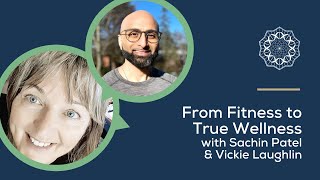
A conversational interview (March 12, 2022 upload) where Sachin Patel interviews Vickie Laughlin about her path from 1980s aerobics instructor to a holistic health coach trained with Paul Chek. Vickie describes her six foundational health principles (breathing, hydration, nutrition, movement, thinking, sleep), metabolic/primal-pattern dieting and food-rotation approaches, chakra-balancing using vibrational mantras and moving meditation, and business lessons from 2020–2021, including moving toward group coaching and reinventing at later age.
Chapters
Hello, my friends, and welcome to Perfect Practice. Today I have with me Vicki Laughlin. Vicki is a veteran in the wellness industry. She's been doing this way longer than I have, and I'm super excited to unpack what she's picked up along the way in building her business and reinventing herself and also in helping hundreds of clients along the way. Vicki, thanks for joining me today.
You're welcome. I'm so happy to be here.
Well, tell us where your journey starts. How did you get into wellness?
It starts literally a few years out of high school, when I was a dancer in high school, started working directly out of high school and was getting out of shape. And that was in the early 80s. So I graduated in 79. But in the early 80s, aerobics was, like, the big thing. And I thought, well, you know, I got rhythm. I could choreograph some moves and whatnot. And so I got into being a fitness instructor, a group fitness instructor, and loved it, and sort of did that with whatever else I was doing, which was regular work, you know, nine to five kind of stuff. So that's kind of where it started for me. And it branched on from there.
So tell us. You know, 1979, so I was a year old. And, you know, so you've learned so many things along the way. Started off in aerobics, as you mentioned, and then where did it go from there?
So back then I could say, so in 1986, I started my business. I was about two years married, and my husband just went, you are going to quit your job and start a business? And I said yes, because I loved fitness so much. And I felt like the missing component for most people's health was movement. And I was. I went into it. I got my certifications to be a personal trainer. And that was the direction I was going, was just to get people moving. I didn't have any formal education. You do learn about nutrition, but it was definitely the Western philosophy of nutrition, which is not what I teach today. And in the Western philosophy, if you're not a registered dietitian, you can educate on what a vitamin and a mineral is, but you can't prescribe any kind of diet. So I stuck to the fitness part and had lots of great results. But 20 years into it, I was seeing clients. I didn't know what was going on with them, but I could tell you today it was metabolic syndrome. In some cases, even though they were moving, they weren't eating well. And autoimmune, like early autoimmune, that I didn't know what it was at the time, but I had people getting sick, having surgeries, you know, their bodies were breaking down. And if I could put the me 20 years ago, I would be able to help them maybe take a different path and not have that, that kind of degeneration in the body.
Yeah, it's kind of disheartening. Right. And I wish we could time travel back and go and, you know, whisper things into those people's ears, even whisper things into our own ears that we could tell these individuals to help them live a better quality of life. But we live and we learn. Right. And we're always picking up new tools. And I know you describe yourself as a student for life of life. For life, really. And I would put myself in that same category. So we're always picking up new things, new techniques, new trainings, new understandings. And from what I Understand, at age 50, you continued to expand your education and your scope of practice and you became a holistic health and fitness coach. So what was that journey like for you?
So Paul Check of the Check Institute, which is here in California, down in San Diego, is my teacher for that. And it's interesting, I took classes from him and probably the late 80s, early 90s, one of his classes was called Phenomenal Abdominal because he was very into the deep core and was giving his message back then. But of course, unlike today, I, you know, I think people were looking for just the outward looking physically fit out on the outside, not from the inside. So he never stopped. And he developed his programs, Holistic lifestyle coaching, Czech practitioner, which takes you into the, the fitness coaching part of things as well. And I still have a couple levels I could, I could continue training with him, but I wanted to put his teaching and my education into practice. And that all started for me in 2011. And I was, well, you know, on the path, but I had a clientele who was still that original, as we call Avatar, that was, you know, I had them literally say to me, vicki, you're my exercise coach. I, you know, you're not a doctor. And I'd have to scale back and say, I'm not speaking doctors speak to you, I'm speaking holistic health to you. I can't just now have your body move and not address these other things. And so I've had to say bye bye to some clients. And a lot of that happened in 2020, partly because of what happened in 2020, but also it was time. And that is when I met you. So very timely.
Well, we got, we have to you know, in order for the tree to survive, it's got to understand the season is changing, and in preparation for the seasonal change, it's got to let go of the leaves and. And focus on going inwards. Right. So I think that's what 2020 represented for a lot of us. 2020, 2021 was a chance for us to recognize that in life our seasons are changing, and it's important for us to let go of the things that are no longer serving us so that we could come back in the next season of spring and really focus on our growth and showing up as our highest self. So not unusual for a lot of people, including yourself and those that are listening to this, including myself, to have gone through that transition. And I think that with Corona, I think the thing that did for all of us is it shook our tree. And, you know, the things that weren't serving us fell off the tree and the things that will serve us and continue to serve us moving forward, you know, stuck around. So I'd be curious as to, you know, how did your clients handle that when you kind of let them go?
Well, it didn't happen within that first year because I wasn't sure what was going to happen, but they were. They were all living in a state of fear, and it didn't matter what I said. And at that point, I, you know, I understood where fear sat in my body, in the root chakra, and I worked on all those things and it never once scared me also, because I know how I support my health. And this was not going to be a deadly thing for me. You know, this is. But no matter what, you can't. Some people, you cannot talk out of or, you know, down from that tree or down from that place of fear, because they're set there and they're going to believe every word that, you know, that the big guns are telling them. And. And unfortunately, if they're still looking at me as a little gun, I wasn't going to get anywhere with them. So I just had to cut ties. It was like, know, treading water and not getting anywhere. And so it was actually almost, well, maybe not quite a year to the date of closure, beginning of 2021. I refunded retainers on those people, which was tough because all of my business dropped. And I had to figure out, you know, where that was going to come from. And. And yet, oh, my gosh, I felt like this weight was lifted. And. And so, you know, as much as I love those people and I would welcome them with open arms, to help them. Again, I couldn't, you know, I, I need my energy for the people who are open to my message.
Yeah, you know, one, one important lesson I learned many years ago is you can only add value into the lives of people who share the same values as you. And so if people don't value not you as a person, but you as a coach and a mentor for them, you could have all this amazing knowledge. But they're unfortunately pigeonholing you into a very narrow category and they're not listening to all the other things that you might be saying as life saving and as life changing as they might be. So it's, you know, really, at the end of the day, it's their loss. But I know as a business owner, you know, I can understand that feeling because deep down inside, you know, you can help them, you know, you can impact them in a positive way had they given you the chance. And you know, for all of us who are tuned into this, I think the one thing we need to also realize is that we're up against, you know, classic propaganda, right? And propaganda is all about repetition. It's all about hearing the same message over and over and over again. And that puts people in a state of fear. And when we're in that state of fear, we're not thinking clearly. So we do what the masses do. And you know, the same, you know, applies to practitioners as well. You know, many practitioners, you know, you know, bought into the propaganda because it's so ever present everywhere we go, right. In fact, the other day I saw a sign, I took a picture of it and it was a gas station pump, right, Promoting a medical intervention. And I'm like, why do people need a medical intervention promoted to them at a gas station pump? This makes no sense to me, but this is classic propaganda. And so we're up against a multi billion dollar machine that's trying to convince people of one thing. And of course, when people are in a state of fear and panic that's been induced, they're going to want safety. And safety is in numbers. And so it's unfortunate. However, what has happened is those people who are awake, those are those people who are, you know, had the ability to see through the veil prevailed and they have a better understanding of what's going on now. And it's so interesting to be observant of what's happening, especially as business owners where, you know, marketers, or at least want to be marketers, right? That's one of the things that we have to do is get our message out there. And so we've been demonstrated kind of, you know, a classic play and observing it, we can see right through it. But people who don't have any education or awareness around how these things work, how the human brain works, how human psychology works, they're going to fall victim to it. And that's exactly what happened. And unfortunately, people made decisions for their health that many of them I know personally are now regretting. And there's no recourse, unfortunately. There's nothing that they can do. They can't go back in time. They can't take things out of their body that were placed there without the information that they probably should have had to make that decision. And now who's left to pick up those broken pieces? Many of them. They go to their doctor with health challenges, they're going to be dismissed. And perhaps we're the ones that are going to pick up the pieces. I'm so thrilled that you're welcoming or willing to welcome them back with open arms and perhaps the lessons that they've learned over these last two years are going to allow them to see the value in what you have to offer them.
Yeah, and my message is out there. Some of them are still friends with me on Facebook, so they're seeing. I think they're seeing my message. They may not comment, but, you know, I'm planting a little, little seeds back there. And I always say those that know me, you know, they know what questions to ask and what questions not to ask. And the more I don't blame those people for not knowing me because I was holding back. The things I. I talk about today are not the things I was talking about back then. It was. I was a little bit afraid. I'm quite, not quite as bold as you, Satchin, but I am getting there and love your message this morning. You know, that if the science says, why are we waiting? You know, I don't, you know, it's, it's. You're right. The people who can see through the veil, we are just sitting over here going, okay. Yet another way to, you know, maintain control. They're going to say it's okay, but not until. And so, but anyway, I come at it, you know, with a little more bold and, you know, a lot of that I'm learning from you. I have to, you know, be honest. I, you know, my, my whole world has broadened because of working with you, and I'm so grateful for that. And that's. I think it's made me stronger and, you know, still working on all the technique to get out there, but it's, it's working. So I, you know, I'm so grateful for you.
My, my body's buzzing with goosebumps. So thank you for, thank you for expressing that. And I, and I certainly appreciate that. And I'm sorry. So happy to be inspiring people like yourself to bring out and bring to the surface really, that inner voice, right, that's sometimes dormant in all of us. So what I'd love to do is maybe unpack that a little bit, because many practitioners face that challenge, right? They face that struggle, including me at one point, right? Until I realized that my message was the most important thing that I needed to get out there. And I tried to find ways to get that message out there that would help people kind of look at the challenge that we're all facing through a different lens, right? Switching their paradigm, looking at this world through a different vantage point, giving them new perspective. And sometimes I say things that can come across a little bit harsh, but that's my personality, right? So what you see is what you get. And so I'd love for you to maybe if, if you've done any work around this. You know, I know for me, you know, my parents have always, especially my mom has always said, you know, stay quiet, right? Like, she's not that I like confrontation. I mean, genetically confrontation is, is good for me because it raises my dopamine, okay? So I've identified certain things that draw me towards confrontation. But my mom is very non confrontational and so she's always like, oh, you shouldn't say that or you shouldn't do that. I'm like, but that's the truth, right? And I'm never directing anything at an individual personally. I'm directing it at the situation. But, you know, with that comes people that are going to attack you. With that comes people who are going to disagree with you. And you know, I think it's how we word things, it's how we express things. It's how confidently we stand in our truth. So people know that if they do come after us, that they're not going to be able to shake this tree, right? They know, like if you, if you ever walk up to a newly planted tree, you could shake the crap out of that thing, right? And you could see it kind of wailing. But if you try to shake a hundred year oak, like nothing's happening, right? Like if you try to crash a car into it, nothing's happening to that tree. So I think we've all got to learn how to become that hundred year oak, you know, and some of that comes with practice. Some of that comes with confidence and boldness. And sometimes that inner truth that we know needs to get out there can not be expressed adequately because we have this voice inside of us or this little voice that's sitting on our shoulder that says not to. Right. So was that. Is that the case, or was that the case with you? Did you have an experience in your. In your life where, you know, maybe it resulted in you being afraid to play big or needing to play small? Has that ever. Has that ever occurred to you or has that ever come up for you?
I think I'm still playing a little small, to be honest with you. And yes, my fear of speaking up to the people who I'm not seeing today was me playing small and not having the confidence to back up what I knew to be true. And as I remain a student and keep my eyes wide open and also witness with my eyes wide open what's happening, including what has happened in the past to clients that I know, I know why now I can speak a bigger, you know, as a bigger voice. So I'm learning how to do that. I do find that the people who have the impression on me, of me, of what I was when I came into their life, it's harder for me to break out of that mold that they have made me. And I still have a few clients that I see that I think. We will have to part ways. If I cannot help them in the way that I feel like makes the best sense for both of us. I can't just go there and babysit and count sets and reps, if that makes sense. And. And maybe every now and then inject a little additional wisdom. But, you know, I've put way too much into my education, into, you know, my toolbox. And I want to be there for them and know that, let them know that I'm there for them. But at some point, I'm going to have to cut ties and say, yeah, when you're ready, let's talk.
You know, and when they're ready, the master will appear. They know exactly who to turn to when, you know, everything else, you know, seems to fail them. I know there's. There's a few things that you like to focus on in your practice. So one of them is boosting immune function. The other one is metabolic typing. And the third one, which I love, is chakra balancing technique. So I. I'd love to, you know, that's a very unique combination of, you know, of things that you do. So I'd love to unpack that a little bit and give some of our practitioners who are listening some tools that they can walk away with. So what are some of the techniques that you recommend for your clients to build and boost immune function?
Well, it's following the six foundation health principles, which I learned from Paul Chek, which I call the six ways to wellness. And those are balanced in the Chinese philosophy of yin and Yang. So we have the yin principles of nutrition, hydration, and sleep. They're the very inward, comforting principles. And then we have the Yang principles of breathing, thinking, and moving, the very outward external principles. At any point, I actually have a rock, six rocks, three on each side, balanced on a piece of wood, balanced on an unstable rock, the way you'd see rock balancing out in nature. And that is my. That's my symbol of the six foundation health principles. And if you take. Remove a rock away from either side, that thing will not balance. If they are skewed just a little bit, it will not balance. And so that's how I symbolize. If you honor those six foundation principles, you, without a pill, you will be boosting your immune function. And that is the very beginning raw program with anybody I work with today. I don't do a physical assessment on them. I teach them the six foundation health principles, and then we grow from there. Because I can't help them if they don't, you know, if they're unbalanced on either even one of those, the rest of it's just not going to work. That's the thing I can tell you confidently I've learned in the last 10 or 11 years. And the first thing I applied to myself, which I can tell you right away, when something is out of balance, if it's movement, and it's not hardcore movement, but gentle movement, I tap into those things. And sometimes there's a yin and a yang to each of those principles within each of those principles, if that makes sense. So that's how I balance immune function. I get them on their way, and then we can dive deeper, you know, as. As once. Those are honored. And I know that they understand how the importance of them and that that is part of their lifestyle, just like brushing their teeth every day. Then we're good to go on from there.
Yeah. One of my mentors, many years ago, James Nestor, taught me a very important lesson, and he said that using a random controlled study or trial, you can prove that water is bad for plants if you don't give them enough sunlight or if you don't give them enough nutrients in their soil, and all you do is water them, they're going to die. The conclusion is going to be that water is bad for plants and. And the same thing for sunlight. You could say that sunlight is bad for plants if you don't give them any water, right. Or you don't put them in the right soil. And human beings are the same way. Right. This idea, this very myopic perspective that we have on health, which is kind of what, you know, and not to throw any system under the bus because it all has value. And I think, you know, sometimes, you know, holistic practitioners are guilty of this, and certainly, you know, pharmaceutical practitioners or allopathic practitioners are guilty of this, where a patient comes in with these imbalanced rocks, and they think to balance this rock is something that isn't even a rock, right? So they're using feathers to try to balance these rocks out, and it's just not going to work. So it's unfortunate, but the average person these days is looking for a comp. They think their problem is complicated, so they feel like they need a complicated solution in order for them to feel better. And so they're looking for complex answers to what you've just described as, you know, very simple interventions. And with that, I'm curious, what is the hardest of those six for people to balance? You said, you mentioned fitness for your. Not for yourself necessarily, but just gave that as an example. But is there one that people really struggle with? Is it overthinking, over moving, breathing? Which one of those six is the most difficult for people?
It might be thoughts or thinking in terms of negative thinking, of not either not believing that these principles have value or they're stuck somewhere. And actually, I teach these principles over six weeks, and I teach them two per week, two for every two weeks. And so I start with breathing, because we know that's the one principle out of breathing and hydration and nutrition, that actually we can only live minutes without breath. So days without water, weeks without food. So I start with breathing. I teach them breathing techniques, and then we go into hydration. Then the next two weeks, it's movement and nutrition and then sleeping. And I actually address thinking last, and I address sleep at that stage also, because. And I say to them at the beginning of it, I say, you're probably already sleeping better if you've nailed the first four principles because you're. Those two things are balanced. And. And I address the yin and the yang principle for the. Every, you know, every couple in there so they get kind of get that message of balance and probably for most it's true. Or they thought they were sleeping well, like they got to bed on time, but they were still waking up super tired. And whatever it was we found or discovered or maybe we hadn't discovered yet because it's the thinking that's going to be the last principle that they, you know, that'll take them well beyond six weeks to really change their thought process. And we know how that, you know, I think they have to feel it in their body and, and I try to turn them on to books like Breath by James Ester and other motivating, you know, books that will support what I'm teaching them. Then it gives me sort of like a faculty to, to back me up, you know, so, so that's so teaching it in that way, I would say thinking and I put it last because it's probably the toughest, the toughest one for people to nail.
Yeah, I mean part of it is because somebody's done so much thinking for us, right. Or you know, we delegate that thinking and thought process to other people. Whether it's our taxes, whether it's our health, whether it's even, you know, school, somebody is pouring into us what we should be thinking or the media, the news, whatever, marketing, whatever the case may be. So that's not an easy one to change. And I think when you get them, I like that approach because when you get them changing some of these other things, then their biology is working better and of course their brain chemistry is going to work so much better as well. So thank you. Appreciate you sharing that. You're welcome. Now the second thing that you focus on is metabolic typing diet. So tell us more about that.
Yeah, so that's something that the Czech Institute teaches. When I learned that Paul Check actually has his own adoptive name for that. It's called Primal Pattern Dieting. It's ancestral dieting. But the book Metabolic Typing is definitely dog eared and we're spicing out. You know, I've studied this, I go back to this. It's also based on a biochemical individuality by Roger Williams. Those philosophies are about our specific body chemistry. And I like to call it the no diet diet. It's like the way you will eat for the rest of your life. I'm not a vegetarian and so for vegetarians and vegans I have to get real specific with them. It's not the way I would teach a classroom of people this. I'm going to show you a plate that has meat on it and how you would portion your proteins, your fats and your carbs. The three macronutrients that are, are, are hugely important. And if we get the best quality of those foods, there's less need for supplements. Now I used to say that like with, with full on, you know, but we do have a world with tainted soil, even the organic soils. I mean, unless we're growing our own food that we know is 100%, you know, nutrient based, I think we still need to supplement. That's my personal opinion. I've, I've experienced it myself. I was eating the best quality food and I had my, my, my intracellular nutrient counts taken and I was deficient in a couple of things. And so not horribly, but and borderline on some. And I've, I actually have a retest coming to see how I did. But I supplemented the things I needed continued with my diet. But I, I find that that's something that unfortunately, because a lot of us are not going to be growing our own food, we just don't have the availability the, I think we could all get the knowledge for sure. But um, so anyhow, the, the primal pattern dieting or metabolic typing is I, I give a 14 question questionnaire. They fill it out and we kind of start them on that path. And that's the very beginning that in hydration are the two ways I get people to tune in to how they feel. And until they're able to do that, they, you know, it's like you just said, listening to what other people tell you to do. I'm trying to teach them that their body's going to tell them what they need. So in the case of not getting enough protein in a meal, you might have a headache within the first hour. And within that hour you can actually correct it. If you experience it sometime after that hour, you just try to make the correction for your next meal. And ultimately you end up learning. Wow. I had a big conference today. I was learning all these new things. Even if you're like a protein type where you end up eating more protein on your plate, you can store up on, on some good carbs, you know, healthy carbs, vegetables to try to, you know, get the glucose in the brain working for your conference, you'll find how you can balance for you. Even though you have the, the baseline where you start. There's situations in life that make us healthy. Have to change that a little bit. And if you know how to tune into your body, if you're reading those messages, you'll Know what to do. And that's what I teach with that.
I love that. What do you find is the most imbalanced macronutrient for people these days?
Well, it's probably still fat because people are afraid to eat it. I'd say my clients know the healthy fats. They know they could eat butter from a conventional cow or butter from a grass fed cow organically and you know, organically raised. And there's a difference. We want to get the healthiest fat possible. And, and then based on what your type is, if you're close to a carb type, you're, you're not eating those heavier fats. It's not that saturated fats are the demon, but, but you'll have more of a balance there. And again, everybody, it's that biochemical individuality. You could have a carb type that can handle more of the heavier saturated fats and one that can't. It just, you know, that's where you have to listen to your body. And of course we can always back up how we're doing with a blood test to make sure, you know, cholesterol's in a good range and those things that they want to know and most definitely micronutrients. I love that intracellular test. That's, I was turned on to that and that's like, that's been a great tool for me to work with people.
Is that the Spectra Cell that you're referring to?
Yes.
Okay, yeah, great test. So when you say listen to your body, I have a sense of what that might mean. But for our listeners, what, what, how do you explain that to your clients? Because many people are so out of tune with their bodies. So how do you, how do you describe that to them?
And I'm going to say I was out of tune with my body that until I. The first thing is you're tell you you bring awareness to them and you say these are the things you're going to pay attention to when you finish your meal. Probably something they've never done before. I hadn't really. And if you do not feel what we call in the power zone, which means good mental clarity, energy, not tired, just like, wow, who just gave me a shot of whatever in the arm. You know, you feel good from your meal. If you feel anything less than that, then you want to make a correction. And I give them a chart on how to make that correction. Soon they memorize that because we want the body to intuitively know what to do next or they're going to set up their Plate based on how they feel. And they just know. They know what to do. It's going to be, do you have a headache? Do you have a feeling of, I want to take a nap. And not because I have a light afternoon and I'm just going to take a break, but you really feel like, I need a nap. Then you did not consume what was right for your body. We look at that. That starts with charting it, keeping a diary. And until I see a couple weeks worth of maybe a pattern going with the person, then I can come back in and say, okay, let's try this, let's try that. But it's amazing how people, once you tell them about what to be aware of, and they do take it seriously and they tap into that, you know, their body. Because our bodies want to do what's right. You know, it's. That's a natural thing. It's when we tune out that we don't listen to those things that we get lost.
Yeah. One of my mentors, Diane Solano, says bodies never lie. So they're always telling us the truth. If they don't feel good, they're going to tell us. If they feel great, they're going to tell us. And, you know, what's coming up for me is. And I just want to pose this question because I know that we use wearable tech in our office to help people tune in a little bit more to their sleep or, you know, to their blood glucose levels, perhaps even to their resting heart rate. Have you incorporated any of that? I know you probably use it in your. For yourself, but do you do that with your clients at all, or has that come up in your conversations?
It has not, but I am interested in the continuous glucose monitoring. I think that could be a real good tool. The only thing I do right now is have them become aware and journal it and just get in touch with the body. I've had people say to me, gluten has never been a problem for me. And I said, well, have you been away from it long enough? And this particular person went on a food rotation diet with me at the beginning of last year, and she'd been a client for a while, and she took it serious and realized when I made them go 16 days, where they didn't repeat a food for 16 days and then reintroduce it, it was only until we stretched it out that far, which is hard, by the way. And talk about having the people who love me, who signed up and paid me, they're yelling at me, I'm going Oh God, what did I do? But they went the next round of 16 days, they realized, okay, wow, I had a reaction to that food. And voila. And so it, you know, sometimes it's. For some people it could be a, a four day rotation. And that's a, that's part of the, the nutrition part I teach is food rotation. When the person's ready to do that, it's quite a commitment. But instead of doing a food intolerance test, which you could also do and kind of know right away, food rotation is another way for them to tune into their body those signals that will give us when, when something's not right. And I think that's so important. If we don't do that, we just let the test do the work for us. We'll never really know. So.
And we never get them to build that muscle of self awareness.
Exactly. That's a great way to put it. Yeah.
Very cool. So the third thing that you focus on is chakra balancing. So I'd love to hear a little bit more about this and specifically use vibrational mantra. So tell me more about that.
Yes. And so I don't know that. Well, probably a little bit of Deepak Chopra, but David G. Have you heard of David G. No, I haven't. Okay. David G. He's also here in California, in San Diego. He was part of the Chopra center, was a meditation teacher there and went off on his own. I probably learned the most from him and I'm still a huge student for this. But there's a couple ways you can do vibrational mantras. And you know how we've talked about the buzz breath and that thing? It's kind of based on that. So you're gonna. And it's kind of on this. You could do. One way of doing it is. And the easiest way to teach people because they'll remember these is the scale for tuning up your vocal cords, which is, which is do, ro, do, re, mi, fa, so la, ti, do. And you take it up. So do. The first do is at your base or root chakra and then you move up and typically like say for men, they can get up to the fifth chakra, which is so. And then, you know, if they have a pretty deep voice, it's going to be hard for them to get into the much higher pitches. They can try. But you can get a lot of vibration. And if you don't want to do like yogurt coffee in the morning, you could do these vibrational mantras and literally wake up your whole chakra. System. And the idea then is to kind of hold the tune. And the more you tune that chakra, the more you will be able to. And I want to share, like, a story. This was. I was in. It was in 2018, and I was improving my education on the exercise, coaching, end of things. The Czech practitioner end of things. And we would have a session at the beginning where we would sit in a circle and, you know, and do some chanting. And you sit right hand overhand, left hand underhand, and you're linking the circle together. So we actually went through those vibrational mantras up to. So up to the fifth chakra. And. And she guided us so well, my. My teacher. But we sat there, and I felt this was probably the most intense thing I've ever felt in a meditation before. But I felt this wave go and, and, and we sat there and I kept feeling this wave. It was more gentle than what I'm demonstrating here. But at the end, she asked, you know, you know, talk about it. I said, did anybody else feel that wave? And nobody else did, but it was like this vibration between all of us. It was the most incredible thing. And I felt like it came from that, from the sound. You know, of course, everybody's participation collectively, that's important. But, oh, that was a beautiful moment. I'll never forget it. And I want to create that always, although I don't have people with me, but you can still get your body buzzing by doing that.
I love that. You know, I just recently did some breath work last week, and then I hosted a breath work for a group of people in Mindshare. And it's so powerful when you do it with Community. And these were, in this specific case, these were over zoom. So not the in person like you're describing, but the in person is like a whole different level when you connect with people's energies. And we learned a technique the other day called the power of eight. And how eight people setting a specific intention is so powerful and surrounding yourself with the right people doing the right things can make such a huge difference. So I love that you're incorporating this with your clients. And how receptive are they to these three different techniques?
Oh, very. And I use them sparingly. If, you know, not everybody's into the chanting, but. But I do other exercises. So the other chakra balancing exercises I do tap into each of the chakras I usually put them through. It's kind of like a moving meditation. We might make that their session, or I'll make it at the end of their Session or I give them a program they can do on their own and some music that they can follow too. But it's basically tuning into the colors of the chakra system with a gentle movement that always incorporates breath. And I do that kind of stuff before I go to bed. That's kind of my. My way to sort of settle in. And I always know if I didn't sleep well the night before, sometimes it means because I don't mouth tape, every night I'll have to mouth tape or note. I need to do my. My chakra balancing to really calm my body down and prepare myself for sleep. If you have a really busy day, it's a great way to end the day. So I do have a lot of clients doing that, more of the, more of the meditation than the chanting, and I'd love to do more of that. Maybe I can do that with our mentorship group. I'd love to try it over zoom and see what kind of a response we. We get. But that'd be fun. Yeah. And we, you know, everybody can turn off their microphones, but you'll try to hold that vibration as long as you can. I don't, I don't know how I would do it to get people to then do the next inhale. So we're all in sync. But there's a. There's probably a way, you know, they might have to pause if I'm holding my tune for a while.
But there's always a way. There's always a way. You could always use hand gestures.
Okay. Yeah.
Or little signs on your sign to inhale, exhale, hold. So that could work as well.
It could be like a maestro.
Yeah, there you go. That'd be fun. So, Vicky, as we wrap things up, I know that the last two years have been challenging for everyone, myself included, because life isn't just about our business. So sometimes our business could be thriving, but the world could be falling apart around us. Sometimes the world could be thriving, and our world could be seemingly falling apart or our business could be facing some challenges. Sometimes both of those things can be happening at the same time. And I think for a lot of people, especially people who are probably tuned into this, it was a combination of one of those three were in combination, affecting them. So what were some of the biggest lessons that you learned over the last two years that you would like to. To impart on practitioners who are tuned in right now?
Well, first of all, at 60, almost 61, it's never too late to restart and reinvent yourself in this way. I was already in the path of reinventing myself. I knew I had to, but it wasn't, you know, this is, and this is how the universe works. You put it out there. I, I, I actually was loving the beginning as much as my income dropped by 60%. I'm home. But I loved being home. I caught up on my sleep because I had quite a schedule before. Right. Every day I didn't have to wake up to an alarm clock. It was beautiful. And I knew I just had face that this next chapter for me was gonna happen. I didn't know how it was going to happen. And then In August of 2020 you had perfect practice live. And I, I had seen you probably on some health means different autoimmune type summits. Never though in the context of a business coach and but I mean I was one of those people. You did not nurture me along. I was not one of your people that was, you know, in your funnel for a long time. I just knew, I said I have to pull the trigger. I didn't have the money, but I had an angel that gave me three months to start and that's all I needed to, to get going. Now mind you still very much a student and not I really haven't. I've been working on all the things you teach but literally now just putting them into practice. You know, probably the hardest thing for me to learn from that was going from the mindset of one on one like how can I get to that, that dollar amount of income with coaching people one on one. I don't, there's not enough of me and just learning that the one to many model is, is the way and you know, you know that's kind of what took me a long time to get to but because I was 30 some years as a private coach, that's a long time to then change. But hey look, it's never too late.
Well, you know, to take the fitness analogy, it's kind of like a group class versus a one on one personal training session.
So you know, and isn't that funny? I've come full circle.
Yeah. And you can always like provide micro coaching.
Right.
You walk around the room and see who's struggling with the pose or the, or the movement movement and you give them that little micro coaching nudge and then they're looking at other people who are maybe at the front of the class doing all the movement correctly as a source of inspiration. And so it's, it's awesome to be able to you know, connect and collaborate with others. And for people who are kind of wondering about how group programs work, it's, you know, you take these foundational principles that you talked about, right, like the, the food and the dietary typing, right, the ancestral diet typing you talked about. We talked about the six important pillars for boosting not even just immune function, but just function overall. And then we talk about the breath work and the rebalancing through vibration. I mean, everyone needs that, right? And it doesn't need to be radically different for each of them. It just needs to be tuned in for their frequency, what their needs are. However, the foundational concepts and principles are the same.
Yes, exactly.
You save so much time, you save so much energy. In fact, Cleveland Clinic, it was interesting because when they set up their functional medicine office, they set up this 18,000 square foot clinic and they had this massive waiting list. And then they decided to put people with coaches into groups so they could manage the onslaught of people that needed help. And what they learned through that process was that most of the people, by the time they got through the group coach coaching didn't need to see the doctor anymore. So they did a study on it and discovered that group training and cohorts like that were actually more cost effective and produce better clinical outcomes in one on one care. And so, you know, who would have thunk, right, who would have thunk that this. Or thought, of course I'm being facetious, but who would have thought that this would actually work? You know, because, you know, especially in the functional medicine space and in the personal wellness space, we're so, we're priding ourselves on that individuality, but what we realize is that we're more the same than we are different. And if we focus on the things that make us all the same, right, and still leave room for that individual component, then we can run a very successful program. So, you know, what we do, and I think your practices run this way as well, is that there's 80% of what we offer is done in groups and 20% is offered in a one on one type of setting. So we can really get down to that granular detail that people need. However, some people are doing 100% one on one, and that eventually leads to burnout. You know, I know so many practitioners who have, you know, they pride themselves on their waiting list, but it's really a fuse is the way I look at it, right? They've got a two year fuse that's going to be burning until that bomb goes off eventually because they just explode, right? And then they take a major sabbatical or they close down their practice or they physically start, you know, going through their own personal health challenges because in looking after others, they couldn't look after themselves. So, you know, we're that million dollar racehorse. As my friend Joe Polish would say, it's important that, you know, we take good care of ourselves, but that our business allows us to do that. And what I found is that coaching people in a group type model allows us to be able to offer the best of what we can to our clients. And also the support that they get from being in that community is extremely powerful. Knowing that they're not alone in this journey, knowing that there's others that are facing similar challenges. And it's also inspiring to see them helping each other along the way and supporting one another. So thank you.
I definitely echo that. That's the thing that was in a big awareness, big aha for me was sometimes these people don't identify with us because we've. Not that we've. I don't feel like I've 100% arrived. I still work on myself every day. But. But we are far from where they're starting and it's better when they have people who are in the same boat as them. I mean, we could be the good coach and the good motivator, but yeah, to share, sharing the journey right where they're at is really valuable. That's where the group programming is. Great.
Awesome. Well, Vicky, thank you. This has been very enlightening conversation for me. I got to learn a lot more about you and how you run your practice and really enjoyed our dialogue today. And thank you for inspiring practitioners all over the world who are tuned in, letting them know it's never too late to follow your dreams and to be a student for life and to really follow your voice and follow your passion. And despite the turbulence in the world, it's important that we continue to put our message out there. So here's to your continued growth and success and putting the message out there in the world so that we can help people be happy, healthy and whole once again.
Thank you. Yes. Thanks so much, Satchin. I appreciate you.
Oh, I appreciate you too. It's such an honor to have this conversation. Thank you. Okay, bye for now.
Goodbye.
More from Sachin








Your Doctor Won't Prescribe This… But It's the Most Powerful Medicine on Earth

