Holistic Healing: Resolving Trauma and Recognizing Patterns with Dr. Olga Stevko
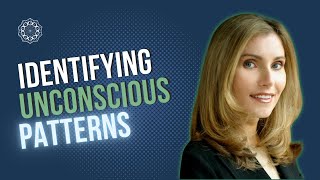
Dr. Olga Stevko describes a hybrid method combining medical training, NLP, and somatic observation to identify unconscious programs rooted in trauma, including epigenetic sources. She shows how neuromuscular locks and voice patterns reveal these programs, and shares cases where the approach reduced pain, changed voice quality, and reversed Hashimoto's antibodies.
Questions this video answers
February 22, 2024
DrOlga.com
The transcript states 'neuroscience has shown that 95% of our entire life experiences are shaped by unconscious programs.'
Chapters
Hello, my friends, and welcome to Perfect Practice. Today we're going to be discussing what I think is probably the most important topic when it comes to being an entrepreneur, especially a healthcare entrepreneur, which is our subconscious and unconscious nervous system and how it affects our health, how it affects our business, how it affects the way we show up for others, and even the way we show up for ourselves. My guest today is Dr. Olga Stevko. And her and I actually met at Mindshare just last year and we were introduced through a mutual friend of ours, Tom Arts. And one of the things about Tom, if you know him, is that he is really on the up and up on who's the best in the world at what they do. And during one of the lunch sessions, Tom introduced me to Dr. Olga. And he didn't say much about what we're going to talk about today. He just said, you simply have to connect. And that piqued my curiosity. And over the last few months, Dr. Olga and I have had a chance to connect several times and she's been helping me and supporting me through some of my own subconscious challenges and things that were holding me back from being the best version of myself. So we've been exploring my subconscious and what I decided to do and what we both felt would be great to do, is to discuss how the subconscious mind impacts practitioners, how it impacts perhaps even your patients and the people that you love and care about. So without Further ado, welcome, Dr. Olga. Thank you for taking time out of your schedule and being here and sharing with our community.
It's so great to be here.
Well, why don't we get right into it? You've developed a unique process and I'd love to know, you know, how you develop that process and where that stemmed from and makes you do the amazing work that you do today.
I develop this methodology. As a result, I combined several different modalities. First of all, my knowledge of medicine, because I'm trained as a medical doctor in Russia and I practice medicine there. And also very advanced neuro linguistic programming and language patterns of medical Dr. Milton Erickson, who talked to the unconscious mind, he used Transviock. And also my strong intuition and observation and curiosity. It's how my methodology was created.
Amazing. So what was something that jumped out to you as a medical doctor that made you realize I need to dig deeper, I need to explore below the surface or go beyond maybe the lab testing or the imagery that you're seeing? Was there a particular patient or case that jumped out to you that sparked that interest?
Yes, I Remember when I had a practice at some hospital during my medical school, I observed that a group of people with approximately the same age and the same protocols and the same health condition, they healed differently, some healed fast, some never healed completely. And some. And what I observed that something it's about their mindset, their psyche, their mentality did not allow some people to heal on a country they could heal very fast. And I because I'm so curious, I started to explore and research about that. It's how I found out the work of Carl Jung and also Sigmund Freud and Milton Erickson. And I realized that unconscious mind is so powerful and pretty much it creates our subjective reality. And what's related to that?
Yeah, it's something that I feel is we've known for many decades, but I feel like right here, right now, it's getting the attention that it deserves. I don't know if there's been like a switch that's been flipped or we've run out of solutions for things that we used to get results with and now we're not. Perhaps you could share with us from your experience because you've worked with. Well, I'll let you share if you feel comfortable the of people that you've worked with. But you work with some pretty famous people and people whose names that we would all know and recognize in the health and wellness space. And when we look at these people, we may not think, well, what unconscious patterns does this person have that's limiting them? They seem to be very successful or they seem to have reached that next level that everyone else is clawing for and reaching for. So maybe share with us what are some of the things, things that if we have subconscious blocks, how might that show up in our business? Or how might that show up in our life or in our health?
Thank you. Such, such a great question. First of all, unconscious programs, and we all have them. And some unconscious programs are really helping us. They are positively influence our life. And some are on a contrary stops us from having the best life and becoming the bestseller. And unconscious programs are formed as a result of stressful life events and trauma, including trauma passed genetically as transgenerational epigenetic inheritance and unconscious programs. Actually, neuroscience has shown that 95% of our entire life experiences are shaped by unconscious programs. And unconscious programs influence how we perceive ourselves, other people around us and the world around us. And we can talk more because many people don't realize what really perception is and how it can dramatically affect us. And unconscious. We pretty much live our life through filters of our unconscious programs. And unconscious programs affect our nervous system responses. And it's pretty much they trigger our nervous system to respond with flight or fight or freeze responses. And all of this phenomenon can create many different issues in many areas of our lives, in relationships, in business, health wise even can create premature. Premature agent for some people. And some people might ask how so unconscious programs can affect us in so many areas. Let's talk about perception. And perception is how we.
How.
How we perceive with all of our senses what we see, what we hear, what we touched. It's kinesthetic and olfactory and gustatory like smell and taste. And that perception is actually it's through our autonomic nervous system. And my theory is that our unconscious mind is our autonomic nervous system and much more. It's kind of intelligent wisdom in our body and intelligence in every cell. And a perception that can be the same situation. For example, there is a group of people and they are experiencing the same. They can talk about the same thing. And different people will respond differently and perceive differently how they imagine in the situation. Why? Because of unconscious programs. Because of unresolved genetic trauma, wound trauma and childhood trauma. That perception can be completely opposite to the same event. For some people, it can be fearful. For some, neutral for somebody can create anger. Because our perception is not our reality. Because our perception creates in us it's certain reaction. Because of our unconscious programs that can create fight, flight and freeze responses. And all of that can affect our body and our mind in a very big way. And I would like to mention. Are you familiar searching with the field of medicine it called psychoneuroimmunology?
Please tell me more. I'm familiar with it, but I'd love to hear your take on it.
And what in this field it's shown that how stress affects our immune system and even endocrine system. They showed that perception can create kind of how our brain and also peripheral nervous system and autonomic nervous system will react to shortened stimulus. And that will create changes biochemical in our biochemistry and physiological. And that can lead to our immune system response. And that can lead to health conditions. And they showed in this field that stress can lead to numerous health conditions, including cardiovascular diseases, autoimmune diseases, allergies, because it's linked stress response to inflammation, whatever health conditions related to that. And your perception can create stress response. And that stress response can be because of emotions like fear, sadness, grief, anger. And when I did my research about emotions, it's emotions are processed through our automatic nervous system. And it's unconscious. It doesn't matter how much you prepare yourself to not react in the same situation. When you have similar perception and response with certain emotions, your unconscious mind will win no matter how consciously you are preparing yourself to react differently. That's why it's so significant that emotions are created on the unconscious level and stress response. And that's why in order to change that response, you need to work on the unconscious level. You need to transform unconscious programs that created that response. And because of that response and perception, creating many issues in your life because even your business or relationships, it is about you, how you look at situations, how you perceive and your perspective of these situations. And also your thoughts, how your thoughts are forming and your ability to verbalize those thoughts clear. Or some people cannot do it. And also your emotional intelligence and your social intelligence and all of that can either create problems in your relationships and business, on the contrary, will allow you to be very good in business, in and in communication and in relationship. Does that make sense? Sachin?
Yeah. You know, as you're speaking and sharing this wonderful, wonderful insight, I'm curious as to what's the opposite of trauma? Because there, there must be people that have whatever the opposite of trauma is that works for them, right? Or does everybody, I'm sure everyone has some negative traumas and experiences that they carry with them. But what would you say is the opposite? Because there are people that have extraordinary levels of success and somehow they don't seem to have these challenges. Maybe they weren't transferred through their genetic epigenetics or perhaps they had a really beautiful and wonderful inspirational and aspiring upbringing. They had the right people and maybe trauma informed parents, if you will, who paid very close attention to these matters. What would, what would be the opposite of trauma? Is there a word or a. A visual for that?
I would maybe because I like precision. Words are very important for me. I say opposite of the consequences of trauma because I believe that everybody experience trauma. What I know what I observed that mostly trauma passes genetically. And because of that, for example, our parents or teachers treated us certain way that created childhood trauma. And opposite of the reaction and consequences of trauma. I believe it will be resilience. Sachin and why some people are so resilient no matter what they bounce or they, if they do not bounce, they find a new meaning kind of what happened and resources how to deal with what happened. And even I have a theory. Some people are so resilient because of their ancestors genetic experience. I believe so much trauma and the ancestors had resources, for example, at least Mental resources and also kind of learning experience about what was happening. That's why they became resilient. And that ability to be resilient can pass down genetically too. It's what I believe. And that's why some people are so strong, even something truly horrible happen in their life. And some people, they're not functionable because what happened does it make sense?
Yeah, it does. I guess. I guess it piques my curiosity in terms of how soon can somebody start working on this. So if it's generational, intergenerational trauma, and in a sense that means we're born with it, at what stage or at what point in somebody's life is it when they become verbal? Are there things that can do pre verbal? Or do they have to have a certain level of age or maturity in order to be able to process these things and work with someone like you?
I will answer your question in a moment. It's. First of all, I would like to let everybody know that people are born with certain set of genes. And that set does not change what can happen. Genes can express in the womb, and in this case, people are born already with certain symptoms because genes express for some genetic trauma. And for some people, genes can express during their childhood or even adult life for whatever is going on in the environment if it reminds trauma intriguer these genes to express. And to answer your question, With this methodology that I created, it's possible to do work even with small children, even they are several months old. Of course I want to work directly with them. I want you work with a parent or parents as a proxy or proxies and pretty much will guide first I will gather the information a parent or parents, they imagine they becoming their child and usually ask the child to be present in the room. And the child can even sleep or play or watch for example, tv, because that child's unconscious mind will be listening still. And I will guide through the process I created. And during that process, that trauma that created, that unconscious program that I'm working on will be resolved. And that unconscious program will be transformed. And as a result of that, there can be often dramatic shifts, not only for that issue even it can resolve some other issues or reduced symptoms of some other issues because some program, the same program, unconscious program, can create more than one issue. Did I answer your question?
Yes, you did. Thank you. So how does one identify these things? So if somebody's listening to this and they might feel like, you know, I feel like I've got something kind of running in the background that is in Some ways a battle that they're facing because we live in a society where we have to behave and operate and function a certain way. So I can only imagine how many people just on a daily basis are being triggered by the surrounding environment that they're in, or words that people say, or circumstances that they might find themselves in. And how much energy is being wasted on. On just trying to manage this, these, these unconscious kind of emotions that boil to the surface. And now they've got to spend all this energy to. To kind of push it all back down because they may not have a tool to express themselves. And to me it seems like it would be such an energy efficient process for people to. To not have to deal with these things on a constant and regular basis. And that could liberate them to think about other things, spend that energy a little bit more wisely or more productively instead of battling these, you know, these demons on a daily basis. So what are, what are some ways that somebody can identify that they're dealing with this or struggling with this?
First of all, you absorbed something very interesting that it's true because of some unconscious programs and how your mind and body react. It can be a lot of wasted energy. Can you imagine if some people every day they're on, they're in freeze and off light and. Or fight. Because how they react and feel, it takes a lot of energy. For example, if some people in fight state, what I noticed, they even feel hot temperature often. And can you imagine so much energy is produced in order to fight. But if you don't have to fight, it's safe, but it's produced, it's wasted or free state. When somebody is in a free state, they want to do something. What you mentioned, it's a battle because of their behavior. They don't want to help. It's a battle, they force themselves to do it. But guess what? Your unconscious mind will be no matter what. And it creates kind of a battle. Slow slowing down mentally, physically. And a lot of energy will be wasted. Many of my clients reported that they were tired, even younger people because of the unconscious programs, what they created. And to answer your question, to identify certain unconscious patterns and unconscious programs, I would look at things in system. I would, I would absorb even how people look. Because unconscious programs often create neuromuscular locks everywhere in body, in your face. It will be pretty much your expression of face. Even neuromuscular locks can affect eyes. For some people, eyes can be not open. I kind of squint all the time. Because such neuromuscular locks in muscles around eyes. And also can create asymmetry face, for example, crooked smile. Or one eye can be bigger, one eye can be smaller, can create deep lines and wrinkles such that's why by face observation, I will see in what places neuromuscular locks are also Neuromuscular locks can be in body. They can affect posture and can affect muscles that take part in breathing and voice production. And in this case, even I I will see how people breathe. Either it can be shallow or holding breath like how chest is moving. And also I will analyze the quality of voice for all characteristics. Because just one example. If the neuromuscular locks in muscles that create breathing and voice production. For example, diaphragm in between ribs. Often people's voice will be not deep, not chest produce kind of query. And there can be other neuromuscular locks for voice production that can be in that area kind of choked voice or kind of people explained as filling a lump or barrier. And it will affect dramatically characteristics of voices. And I know you do breath work that is powerful. And I had multiple clients who had panic attacks. And even their psychologists trained them to do short and maybe not the same what you do. Sutton just breathes more like deeply. But when they had panic attacks, what they describe there was such a strong neuromuscular walks. They could not breathe deeply because such a spasm in muscles. And because what unconscious programs trigger to have that lock. And that's why it's important to train your muscles. It's what you do. And it's also important to transform unconscious programs that create those neuromuscular locks. As an example, I had a client and on my website I have so many webinars and podcasts when people are talking what happened as a result of this work. And also multiple testimonials. And I had a client by transforming several of his unconscious programs his voice from. And he's a tall man, muscular man. And he had the voice very high, like high pitch, very like nasal. And by working on transforming unconscious programs now his voice like a baritone singer. It's a permanent change. What they do without crying, without doing any exercises for voice. And his breathing shifted dramatically because before it was more shallow and now more deep without trying to change it. Also I observe language patterns, what words and phrases people use. And nonverbal. It's all gestures and how people non verbally kind of entire body language. They're communicating. And also I ask people to do drawings. And they are not. It's not an art. It's Just thinking about the issue, expressing. It's kind of a mechanical drawings. They look like, like modern art can be lines and shapes and absorbing all of that, I will see unconscious patterns and also I will identify unconscious program what to work on during that session. I work one program at a time and even transforming one program can produce like truly dramatic shift for many people.
So maybe you can, you, you touched on a little bit, but perhaps you can walk somebody through the process. So if somebody's listening to this, they're realizing, listen, my subconscious programming is, is maybe running or ruining my life. It's causing me not to be the best version of myself. I'm projecting this trauma or these negative experiences into my life and perhaps even onto others. It's causing me anger, frustration. I just can't seem to, you know, the harder I work, the more frustrating it gets. Maybe these are some of the patterns that people are recognizing and you know, maybe they're turning to other solutions. Maybe they're turning to phys, you know, physical modalities like chiropractic or physio or myofascial release to get rid of some of the pain that they're experiencing in their body. Perhaps the overwhelm they're, you know, taking supplementation for that or even medications for that or perhaps the relationship challenges they're having, perhaps that's leading them to go seek counseling. Maybe there's addictive behaviors that are showing up in their lives. I mean, these are common patterns that are often associated to the pain that is often inflicted by trauma or the, you know, the, the discomfort that it causes in our bodies. We're just trying to find a way to, to put the pain out. Right? We're trying to put the fire out in some way, shape or form. What would be that next step? Maybe you can walk somebody through who's listening to this through that process. And you can feel free to use me as an example because I went through that process with you. What would that look like? Because it is very unique and it is very different than what people might be thinking. So I'd love for people to have a clear picture of what to expect.
Yes, we will talk about the process. You mentioned something so interesting, Sachin, how people are affected by the unconscious mind. And I completely agree with you because some people sabotage themselves all of their life, all of their lives because of unconscious programs. They're not taking actions or on a contrary, they like a hamstring. They are doing so much but not moving to the direction they want. And even, and also just wasting the energy because like doing. But it's not bringing the results they want. Because of unconscious programs and what you mentioned, even they can go to chiropractors or to use other modalities that can be very helpful. Only what I noticed, because some unconscious programs trigger such neuromuscular loss. And it affects muscles and joints. And even after adjustments it does not stay permanently like people need to go in order to get help. And some people often. And when you identify what cause some neuromuscular in certain areas and neck, back area, pretty much that reaction won't be there. It is unconscious reaction. And in this case pain won't be there. I had so many clients who had neck pain, back pain, bad posture and they don't have it anymore. I had one client, she. And she's participating in one of my webinars. It's on my website. For 20 years she had not just pain, severe pain all day long, every day, one session only reduce it 85% only one session. By working on what triggers it and what increases inflammation. And let's talk about the process I created after what I mentioned. That assessment and observation and looking at the drawing or drawings, I identify what unconscious program that person is going to work on during that session. And during that process. Most of the work your unconscious mind will be doing consciously. You'll be doing only maybe two or three steps of that process. Because that unconscious program, what that person will be working on creates shortened somatic experience and can be also emotional experience and somatic that will guide that person's unconscious mind to find all memories that created these unconscious programs. And that symptom of symptoms, what that program creates and even your unconscious mind will be working on. Actually can be even groups of memories at the same time, including genetic memories and or memories of that person's developing in mother's womb and childhood memories. And after your unconscious mind will find all these root cause memories. And your unconscious mind does not need to recall these memories. Actually it's for good reason. Because recalling some traumatic memories can recreate the trauma all over again. That's why there is no need to recall. For some people shorten, maybe glimpse of memories or certain concepts of memories, even genetic might come. And after I will ask your unconscious mind to do several steps. And during these steps, trauma or traumas that you experience during those traumatic memories can be resolved. And at the end of the process that unconscious program will be transformed as a result of that symptoms can be gone, associated with these programs or reduced if something else cause the same symptoms. And it will positively influence all areas of your life, whatever that unconscious program influenced.
Yeah, it's a, it's a lot to unpack. I, I hope that people are listening to this, realize the power of this work. And there's been like many people, including yourself, Dr. Olga, who have shed light on this topic and on Joe Dispenza talks about the power of the unconscious mind. I know we, we talk about this with our clients. Fortunately we don't have the tools, but thank, thankfully we have people like yourself that are doing this kind of work that we can refer them to. And I think it's something that is, is getting the attention that it finally deserves because I believe that we have better tools to be able to measure this. But you know, one thing I wanted to ask you is when you were practicing in Russia, was this type of medicine, like how, how did the medical system there compare to the medical system here? Like I know that in Russia, the mind, I feel like from the research I've done, the mind was very much a big part of the healthcare paradigm versus over here it's more focused on the body. I know Russian athletes were probably one of the first people to start doing visualization and again tapping into that conscious and unconscious mind. So how receptive were patients and the system that you were working into this type of work?
I did not do this type of work in Russia because my specialty was infectious disease. And only when I am actually grateful for all of my learnings in Russian medical school because it is different compared to American medical school. Both are amazing. And in Russia when they studied, it was more holistic approach and they can see the person's minds like stress reaction. What does it mean? As an example, if somebody has skin condition, for example psoriasis or eczema, they go to dermatologists. In Russia, I'm not sure how about now. But back then they did not just give you pills or ointments. No, because they knew some like its entire system, like your skin is not working separately from all other systems and something else creating it. For example, the poor digestion or something is happening with your liver that can create this condition. Or eating a lot of sugar or unhealthy foods or stress. And Russian doctors, they try to address that. Of course the dermatologists would prescribe ointments also they will figure out what exactly what is the root cause of that.
And read that so important, right? And in so many ways we're now starting to have a medical system here in North America that is more akin to that and looking at the root cause. And you know, certainly people like yourself, and I'm sure people who are listening to this as functional medicine practitioners and holistic healers, you know, we're. It seems so obvious to us that, know, looking beyond the symptoms just makes a lot of sense. And it's great to have, you know, a tool like this for people to be able to do that.
Yes. Sorry for inter. For interrupting you. I would like to mention, do not forget it. That is very important. Most people are not aware of the unconscious patterns and programs. They are aware of issues that are created because of their unconscious programs. And what is more important for everybody, it's first bring awareness to these unconscious patterns. And not necessarily people will become aware of programs because you identify what programs cause it during this entire process, but at least patterns what create issues bringing awareness. It's the first step for healing, transformation, and resolving issues.
You know, as you speak about resolving issues, I had mentioned this before we started the recording that I was trying to help a friend and helping in trying to help her, I was, you know, maybe not picking up on what was happening unconsciously for her. And it took us a little bit of while to. To get to that. So as somebody who, who loves and cares about the people that I work with and the people that I interact with, how can. How can we be more sensitive? Because you know, what, what people come to us with as. As clinicians and even as employers or, or problem solvers in people's lives, they come to us with the problem. Right? And. And sometimes we see the problem, we try to solve it at face value, and maybe we don't recognize that there's something unconscious that's going on. Should we assume that that's always present, there's some sort of unconscious issue? Or do we approach and solve the problem at face value? Like how. How would you help someone like myself navigate that?
Yes, I believe it happens most of the time that your unconscious mind, your unconscious programs cause the issue. I cannot say all this because never all this. It's better maybe not to use it most of the time. And what I wanted to mention that there are. Because not everybody has a chance to work on the unconscious programs. And there can be other things done that will make your life easier. We can talk about that and what people can do, because when they are having issues and reactions, they even do not see that they're kind of as if they are in the box dealing with that. And they cannot look outside of this box what is really going on. And you can imagine, because it can Be helpful. When you change your perspective, when you change the angle of how you look at things, it can shift how you feel. You can imagine as as if you are stepping out of this situation. Because in this situation you are associated, you are looking through your eyes and you are reacting feeling. And when you are stepping out and imagining you are becoming as a witness of looking at you who is dealing with this situation, it will be already a different perspective. You are dissociated. It won't be the same experience as if you are associated. Actually, when people are relieving trauma, having ptsd, they are always associated in this experience. Even trauma was in the past. But because they relieve the trauma, they are associated. And when trauma is resolved, people feel dissociated from the trauma. Even they can remember what happened. But they are neutral to what happened. That's why if you imagine you are stepping out for a moment, looking at you dealing with this situation, already you are not associated, you are dissociated. And you can become more neutral what's going on and also what you can do. Looking at you as an observer, you can observe how the person you is feeling the situation. And after interesting enough, being as an observer, you can imagine and it's better to change your position, move to one step to your right. For example, you can imagine you are becoming that person who you are dealing with that and being that person, kind of sense a perspective of the person in that situation and try to find a positive intention of the person for what reason the person is behaving this way. And after you can again become a witness of the situation, step to your left, one step to change a position and you can imagine yourself be becoming a wise person, kind of a teacher, wise teacher you had or your grandmother who is wise. And look at that situation from your point of view. And after you get got this information, you'll become yourself being a witness. After that it might shift how you feel in this situation and how you react and behave.
Amazing. I have one, one more question and I know we're coming up on time here. So maybe, maybe this is, maybe this requires more exploration. But sometimes we might feel like we're trapped in an environment that triggers us. So perhaps we live with a person that triggers us or maybe it's our parents or maybe the person that caused us harm or trauma that is in our periphery. How does one deal with that? I guess with this process, would you say it's possible for them to become neutralized to that perceived threat?
Absolutely possible. Sachin, it's not about A stressful situation. What triggers stress response? Because we are not living in a bubble. Unfortunately, stressful situations will be often, can be even every day. It's all about how you perceive that situation, how you react to the situation. And that all can be shifted by working on the unconscious programs and even changing your perspective. What I mentioned before. And when you work on the unconscious programs that trigger to react to feel, to behave that way, not resourceful. In this case, when that unconscious program or programs are transformed, next time you will be in the same situation situations, your reaction, your emotions, your feelings, your behavior will be different, can be neutral. Does it make sense?
Yes.
The situations will be the same. Because that won't trigger on the unconscious level you to feel and to behave that way. I will give you a quick example. In the past, I had a client who had Hashimoto's disease. It's autoimmune disease. When your own antibodies are touching thyroid gland and hormones of thyroid gland. And when she came to me, she was so overwhelmed. Even she did not have many things in her life. Because she could not function much. So lethargic, feeling cold all the time. She could not deal with people easily. And by working on her unconscious programs, not only all symptoms of Hashimoto's were gone completely. And also her doctor did test and they could not find antibodies in her blood anymore. And also her doctor took her off of several prescription medications completely. She, without trying to deal with situations, felt energy the same situations that created big stress and feeling overwhelmed. She did not feel overwhelmed anymore, did not feel cold anymore, all the time, almost of the time. And her relationship shifted and her business shifted. I love that even we on health conditions. But unconscious programs that created all of that physiological the nervous system response that led to health condition. These unconscious programs the same you are affecting your mentally, emotionally and on her behavioral level.
So true. It shows up in so many places and in so many ways. And such an important thing for people to address. So, Dr. Olga, how can people connect with you? How can they learn more about your process? And if they wanted to schedule a time to meet with you?
There is more information on my website, Dr. Olga.com, it's just an abbreviation D R and my first name, Olga.com and I would like to let people know even by watching some podcasts and webinars, Even by bringing awareness to your partner can already shift how you feel. I had some people who didn't become my clients. But that told me by watching those videos help them to feel better already.
Beautiful. I love that so we'll be sure to share the notes or the links in the show notes where people can learn more about your work and where they can schedule with you. And as we mentioned, this is something that I went through myself and experienced great benefit from. And if you check out the amazing testimonials, you'll see some very, very prominent figures in the functional medicine and health space that have also gone through this process. And Dr. Olga's work comes highly endorsed and recommended. And here I am endorsing it to you. So thank you, thank you, thank you. And here's to everyone who's listening to this, their highest healing. Let's get rid of those unconscious blocks and patterns that aren't serving us so that we can step up and live our best lives, but also help others live their best lives. And you know, if you're not equipped to handle this in your practice, then now you've got a great resource where you can refer your clients to as well. So thank you once again, Doc.
Thank you, Sachin, for inviting me.
It's my pleasure. Everyone have an amazing, amazing rest of your day. Thanks for tuning in. And here's to amazing health and happiness and wholeness for you personally and for you professionally.
More from Sachin








Your Doctor Won't Prescribe This… But It's the Most Powerful Medicine on Earth

