How health coaching is transforming healthcare
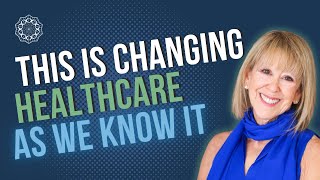
A recorded conversation (hosted by Sachin Patel) with Sandra Sheinbaum about the role and rising importance of health coaching and the Functional Medicine Coaching Academy (FMCA). Sandra describes why she founded FMCA, the 12‑month blended curriculum (functional medicine content adapted for coaches, positive psychology, mind‑body medicine, coaching skills), faculty collaborators (IFM faculty plus guest teachers), research collaborations to build evidence, common career paths for graduates, and enrollment/start‑date logistics. The discussion emphasizes coaching as the behavior‑change specialist on care teams and highlights personal transformation among trainees.
Questions this video answers
12 months.
September 1 and March 1.
Twice a month.
About 10–12 students.
Dr. James Gordon (mind‑body medicine), BJ Fogg (Tiny Habits), and Dr. Christy Hughes (IFM senior faculty).
Chapters
All right, looks like we're live. Welcome, my friends. Today I have a very special guest who I've known for several years. My dear friend, Sandra Sheinbaum. She is the founder of the Functional Medicine Coaching Academy. And we've met through several different networks that we've belonged to over the years. Mindshare, the mastermind. We've also belonged to CHS Consumer Health Summit. We belong to Genius Network. And we've worked together in the past in many ways helping people find a wonderful career in health coaching. So without further ado, Sandra, thank you for being here today. So grateful for our time together.
Well, thank you, Sachin. It is such a pleasure to be here.
Well, I love when I bump into you because it tells me I'm at the right event, surrounded by the right people. So you're a great validator of excellence because I know you have such high standards personally and professionally. I love to know, as we get into this conversation, is what led you to establish fmca. What was that spark? Was it a moment? Was it a download that you got? What really inspired you to embark on this journey? Because I know it's not easy. However, I do know it's very rewarding for you.
So I saw a gap in health coaching education. We had great programs that were focusing on nutrition theories. They were often. There were many courses that were shorter than ours, which is a full 12 months. But they were saying, oh, you can get your health coaching certificate in a few weekends and then you can make money while you're in your pajamas at home. And what I wanted to do was blend what people were asking for. And they were asking for really great experiential training in how to health coach. In the process of coaching, they were also asking about functional medicine. And I had just finished as a practitioner. I was a clinical psychologist for like almost 40 years. And I had trained in functional medicine through the Institute for Functional Medicine. And so these approaches, combining the coach approach, functional medicine, positive psychology, which is the study of what's right and not what's wrong with you mind, body medicine, these were all things that in my private practice as a health psychologist, I was helping people with and I was seeing them get better. And I was basically using a coach approach. So when I was 65 and my contemporaries were retiring, I decided, I have a really big mission. I want to train health coaches because graduates of other schools were coming to me and they were saying, I just don't feel prepared. And so collaborated with the Institute for Functional Medicine and the rest is history. Their faculty, their Senior faculty teaches for us. And the curriculum in functional medicine is basically what is taught at ifm, except at a level that is right for coaches. So these are powerful techniques. And I also felt that, that health coaching, the time was right for coaches to be the key to helping people create change in their lives.
Yeah, such a, such an important thing. And we really as practitioners don't learn how to be coaches. And so it's one thing to be a clinician, but there's a different psychology that needs to be applied when you're interacting with someone to create behavior change. And as we all know, our knowledge falls flat if somebody isn't creating behavior change or we're not creating the environment or the conversations that lead to that. So such an important role. And I truly believe that health coaching is the missing piece in healthcare right now because there are people who are passionate about being of service to others. And what FMCA does is it gives them a framework to create that behavior change so that whether they're working independently or working with a practitioner, the results seem to be so much better. And you know, we all need a coach. Right. In business, because that's important to us. However, what's more important than our health? And so, you know, I love this coaching model because as a coach, myself to other practitioners and clients, we see that it's not what we know, but it's what we can get people to do that actually produces a result for us.
Absolutely.
Yeah. And so tell me, what exactly does a health coach do? So what does kind of a health coach's day look like or process look like for somebody who's considering maybe shifting careers or looking for a different level of fulfillment like you were, and wants to get into this space, like, paint me a picture of what that's like so that, you know, I know it's awesome. I know you know it's awesome. But for somebody who doesn't have that experience, is passionate about health and wants to be of service to people this way, what would that look like for them?
Sure. So if you ask somebody, what a health coach, what do they do? Well, nine times out of ten they might say, well, aren't they like a nutritionist? Don't they help people choose the right foods, get on the right, like meal plans? Well, that is a nutritionist or a dietitian. Health coaches help people change when change is hard. They help people go from where they are to where they want to be. And the beauty of this deep relationship is that it is client centered. It's based on building trust. Rapport, honest communication, active listening, asking the right questions, like, what do you want your health for? What brings you the greatest joy in your life? What used to bring you joy and perhaps you've stepped away from in your life. And so what does a health coach's day look like? It is having these powerful conversations with people. It might be one on one. It might be in groups, and it might be with the physicians, with the practitioners, because there are so many of them that I talk to are stressed and burned out, as I'm sure you've seen as well. And so having a health coach on the care team as the behavior change specialist affects everybody in the practice, including the practitioners. So they are the behavior change specialists. And people often go from expert to expert and they still are stuck. Nobody likes to be told what to do. And it's implementing or deciding what's right for you that is the key. And that's what a health coach helps people with through these deep conversations.
I love that. Who makes a good health coach? So somebody is listening to this and they're like, hey, I love what I'm hearing, but do I have the skills? Like maybe, maybe there's certain things that they're already doing that can help them identify that this would be a great career for them.
Yeah, if you're somebody who people have said, you know, you're so easy to talk to, I can really feel comfortable with you if you're a good listener. That's what makes a health coach a good listener. You do not need a background in health care. In fact, sometimes it gets in the way. Let me tell you about Dr. Christy Hughes. She is senior faculty at IFM. She's on our faculty. IFM is the institute for Functional Medicine. She came to train in our program. She had been a doctor for many years and she was training to be a health coach. And in our program, people work in cohort groups. And in her group there were people who had no background in health care. And she said, I was struggling the most. I had the most difficulty stepping away from the doctor dictator role. And people who may have come from a corporate bank background, they may have come from a another wellness, like they've been yoga teachers, for example. But we have people who have been stay at home moms for years, stay at home dads. We have people who are farmers, we've have people in banking, in marketing, any industry, really, a lot of people in customer service. Why? Because they're trying to be really good listeners and often get burned out very quickly. And so they often Come to train with us. We do have healthcare professionals, though. I don't want to mislead anyone to say we don't, because we have nurses, we have doctors, we have dentists, hygienists, many people in all areas of health care.
What I love about health coaching is that for many people, they might be stuck behind a desk, maybe doing something that isn't as fulfilling as they hoped it would be. Maybe they had their own health journey, which was transformed through a coaching process, or having gone through functional medicine, and they're probably asking themselves, man, I wish I could do this for other people, but I can't go back to school for eight years, right? Maybe I don't have the qualifications to get into medical school or the timeline isn't quite right for me to do that. However, I love doing this. And people may not realize, but this is a very, I don't want to say a very short bridge. It's a year, but it's the shortest bridge for many people to be able to get into the healthcare movement, especially in the way that FMCA coaches coach their clients into lifestyle and wellness and vitality and environmental shifts and changes and empowering their clients. I mean, that's what the world needs more of. It doesn't just need more healthy people. It needs healthy people who feel empowered to be of service and of value to others. And so if somebody's listening to this and they're just kind of sitting on the fence about what can I do with my career? And that brings me joy and brings me passion, if helping others and coaching them through a similar journey that you've gone through, then that could be. This could be definitely something for somebody to take into consideration. That being said, where do, where do health coaches end up working? Where, where do they work with practitioners and practices, run their own businesses? What are the options that people have?
All of the above. And that list is growing so people can start their own business, become a health coach. And increasingly it's remote coaching as opposed to live in person. And then there are medical practices. There are functional and integrative practices who are hiring health coaches because of our collaboration with the Institute for Functional Medicine. They train doctors, so we as their collaboration partner, are training the coaches to work with those doctors. And those doctors seek out our graduates because they speak the same language. They know about the functional medicine principles and tools. But there's also increasingly a number of conventional practices. There are hospital systems hiring health coaches. There are also a number of companies who may have an app. They may have a Tracking device, monitoring devices, and they are hiring coaches to be support for their customers. We're also seeing corporations looking at health coaching as a way to increase the well being of their employees. They're concerned about rising healthcare costs, about burnout, about resignation. And health coaching is increasingly being offered, offered as a benefit to employees. So those are just some of the ways and then they can. We've had some of our graduates write blogs and books. In fact, let me tell you about Marie. Marie decided to enroll in FMCA because of you, Sasha. She got an email from you and she said, yes, I'm gonna take the leap. And she did. And she was. Her husband had passed away and she just didn't know what she would do with her life and would switch care. She was not from a healthcare background and she said this was life saving. She wrote a book about it and how that transformed her life. So it is that personal transformation element as well. People think they're coming because they want to learn functional medicine and functional nutrition and positive psychology, and they learn all those. But what they find when they graduate is they're personally transformed because they're applying all these principles in their own lives and helping their loved ones.
Yeah. And one of the things that coaching allows us to do is witness how simple it can be. And that's not to reduce this process because, you know, sometimes getting to that point of simplicity takes a sophisticated, you know, journey for us to go on. But people can leave a process of being coached and feel like, I can do this for others. And I love that because most of healthcare is not like that. Right. If we go see somebody who's an expert, nobody walks out of there saying, oh, I can do this. Because in their head they're listing off all the things, all the reasons why they can't. But this opens up the door for so many people to participate. And certainly, as you and I both know, unfortunately, people are not getting healthier. And it's going to require a paradigm shift like this to take place. And we can see that many smart organizations and even the hospital system and insurance companies are catching on and realizing this is powerful stuff. This can save us lots of money. This can make people actually get better results. I mean, it's really the holy grail of healthcare. Right? I mean, cheaper, better, faster. And also the barrier of entry is lower, which allows more people to participate and engage. Right. If we needed more Doctors, that's an eight year process. Not a problem we can solve in 12 months. Right. So I love that this even exists. And I wish Something like this existed many, many moons ago. But I'm glad you created this, you and your team, of course, to make this available to people.
Thank you. We're even getting younger people. We're getting those just out of high school. They're thinking about entering pre med. They want this first before they start college and embark on that road. We're also getting people who are retired and we have 80 year olds who have gone through our program. We have one graduate who did this. She's in a care fac and she was determined and she had a hearing loss. But undeterred, she used the transcripts and she so excited when she graduated. And she's helping people with cognitive decline.
Wow, I get goosebumps just hearing that. Because you're giving somebody a second lease on life right where they might feel like, okay, this is the end for me. But you're actually giving them an opportunity to have new beginnings. We actually just had a client who is an Ms. Sufferer who's working with us. So it kind of reminds me of that case where it gives you more hope and enthusiasm that you've created something that gives people this, this newfound hope in themselves and, and a deep sense of purpose that they can offer to others. You know, Sandra, getting into the nuts and bolts of this, I know some people are going to want to know this. What, you know, what's the curriculum, curriculum like for people to go through? How long does a program take? And then you know, what is in your opinion the most impactful part of the training?
Sure. So it's 12 months. And the training consists of what's called synchronous and asynchronous learning. So asynchronous would be. You get a webinar. Those are done by people from Institute for Functional Medicine faculty, people like you. Because we have a business track and Sachin is a prominent member of our faculty in the business track. And we teach the functional medicine principles and how you can help people feel better both physically and emotionally by addressing the modifiable lifestyle factors. So it's the content that comes from ifm. We teach functional nutrition, we teach all of their food plans, how to coach people through an elimination diet, for example. And we are also teaching what I think is so important is really foundational. That's for my training and that is in positive psychology. That's the study of what is right with you. How do people thrive? What is the, the character strengths that are inherent in all of us that will allow you to have a life well lived. So that's a big part of the program and we integrate that with Mind body medicine. The idea of what's real in the mind is real in the body. We're fortunate to have Dr. James Gordon, head of the center for Mind Body Medicine, as our featured faculty member who teaches most of that training. And then there's the coaching skills, the basics, the art and science of coaching. That's things like motivational interviewing and appreciation and acceptance and commitment Therapy we bring in because of my background as a psychologist, cognitive behavior therapy. These are all strategies, philosophies that health coaches can use. And then we teach the tiny habit method. How do you help people set goals? And you and I both have a mutual friend and colleague, BJ Fogg. He's on our faculty and teaches that tiny habit method. So we roll that into the curriculum to give people the training. But the most impactful part of the program is the experience to meet twice a month with a small group of 10, 12 other students and you get so close to those people. That's where over zoom, you can become a coach by practicing. I'll be coaching, you'll be coaching me. We get feedback and people grow. They become, as someone told me this morning, lifelong friends. And so they are lifelong friends and colleagues around the world because we have people from over 60 countries and growing in every state. So there's a growing international movement for health coaches as well.
Wow, what a beautiful brainchild of yours. And it's so wonderful to see, you know, the entire functional medicine world rallying around this. So valuable to see IFM rallying around this and getting it in front of as many practitioners as we can. And you know, I'm committed to trying to get what you're doing in front of as many people who want to be coaches as possible. I know there's some research that you're doing and I'd love to hear about, you know, some of the benefits that you're seeing from the research that you guys have done with ifam.
So we've known for years that this process work coaching is very powerful. But to the world it's important to have publications in peer reviewed journals, to have randomized controlled trials that look at the effectiveness of coaching. And so we're committed with that. We have a project that is with ifm, our partner, where our graduates are coaching their trainees, people who come to IFM for their initial training course. Our asked to do an elimination diet. It's voluntary and it's difficult to do an elimination diet. They're paired with a health coach. And we're comparing the effectiveness of working with a coach versus doing this on your own and just receiving some instructions. So this is something we're really proud of. We're supporting that research. We will have other studies ongoing as well with them and with some major medical center that is getting involved. So this is where I'd like to see more of, because this will allow health coaching to really make significant advancements so that you can wear that title. I'm a health coach with pride because there is that body of research and you can go into a medical practice and you can cite those studies that shows how effective health coaching will be for their patients.
Well, we, we love having that evidence, even if it seems so intuitively obvious. Right. It's important to have that data and be objective so that what you're doing stands up anywhere. Right. It stands up under any level of scrutiny. I know coaching's been valuable for me. I know it's been extremely valuable for our practice. I know we've had many people like Marie, as you mentioned, go through our program and be like, how do I do this? She was a software engineer, and going back to medical school was probably not an option for her. And the first thing I said is become a health coach, because it's really that that's going to allow you to dip your feet in the water, jump all in should you choose to, like she did, and again, have a second lease on life. And it's given her so much passion. And I know you know this, and I want that same passion for everyone. I want everyone to find a career that's as rewarding and as fulfilling as coaching has been for Marie. What would you say to somebody, Sandra, who's, you know, maybe. I always find that people don't move forward for a few reasons. One, it's because they have doubt in themselves or they have doubt in the process. And we know that your process works. You know, hundreds of coaches have been trained. You're obviously doing the research that's going to demonstrate its value. Insurance companies are recognizing it, Corporations are recognizing the value. So we know the process works. But maybe you can go through what is some self doubt that somebody might have that prevents them, if they are interested, that prevents them from taking that.
Leap of faith, this fundamental thought, this conclusion, which is not rational. I don't know enough. And they often find that they think they're afraid to go back to school because they're thinking what it was like perhaps in college, maybe they didn't do well on a midterm or Maybe there was a lot of pressure from their family to achieve certain grades. This is not old school in that sense. You get so much support and feedback and encouragement and what you have is enough. You all have the ability to listen, you all have the ability to learn. You have curiosity, love of learning because those are character strengths that we all have. You also have the ability to make good judgments, to say, well, this program is good, this one is perhaps not for me. And you know yourself best. If you're somebody who thrives on helping others, if you feel like you have a mission to serve, then this is the right choice for you. You also don't have to take a huge leap and jump off the deep end. Many people coach on the side. They may still be an accountant and then they are coaching a few people on the side and gradually transitioning. Or some people just take this to use coaching skills for their current career or for their life because it makes you, as someone had says to me, a better person. You are able to really engage in these deep conversations in, at a, at a level that is so satisfying for you. So the imposter syndrome is real, but it is something that is all in our heads. And I know people at the highest levels that still feel that way. And the sense of just being totally present, letting go of the past and also knowing that, as you've said, this is not going to medical school where you have to memorize and you have these strict exams. You will get support, encouragement, and the learning is intuitive, it comes naturally.
I'd love for you to share, in closing, perhaps a story that jumps out to you of somebody who went through the coaching program and transformed their health. Is there one that that jumps out to you? Because I can see that being. As a major collateral benefit of going through this process is our own kind of enlightenment and transformation that takes place.
Yes, the story of Laura. I met Laura when she was just entering our program. She had a very successful career in marketing. I met her actually in person. This was before our lockdowns. It was at the Integrative Healthcare Symposium in New York City. And she came to a meet and greet. She just started and she was so scared because she had no background in health care and she was sick. The reason she left her high level marketing job was because she had multiple chemical sensitivities. She had other issues that were she was dealing with. And so she was encouraged to become a health coach. And she doubted whether she could even do this, whether she can complete it. But she soaked up all the information and, and she started to make changes in terms of her own physical health. She started to get better. She also was brave enough. She got connected with experts in the field that I was connecting her with and others through our program. And so she started getting a lot of opportunities, like speaking opportunities. So not only did her career start to take off as a health coach, but also she was, was better. She, she was using everything that she was learning. And that is an integrative approach. It was the functional medicine and nutrition principles, it was mind body medicine practices that she was incorporating into her life. And first and foremost, it was positive psychology. It was having perseverance, having the ability to love because you love learning and you're going to go seeking, continuing to seek answers. So the combined of that was transformational for Laura.
Yeah, I, you know, I love this positive psychology component because how we speak to ourselves and how we allow others to speak to us makes such a huge difference in, in the conversations that we have. Right. Whether they're positive or negative. In fact, this morning I was talking to my wife and I said, you know, when my hip bothers me, instead of saying my hip hurts, I'm going to say my hip needs more attention, attention. It's trying to get me to notice it for a reason. Right. Or instead of saying I'm tired, I'm going to say I want more energy or I need more energy and speak it in more, in a positive way instead of a negative way. Because whenever we say the word I, whatever follows that is part of our identity. And so part of healing is creating a new identity for ourselves. And of course, speaking to a coach is so much more valuable than reading a book, for example, because they're going to hear through the words that you use, the language that you use, how you talk to yourself and what your beliefs and value system are. So that two way dialogue and conversation that you have with a practitioner is probably going to be different than the one you have with a coach. However, both are equally important. And sometimes, you know, probably in many cases, the coaching is even more important because the majority of conversations we have with ourselves are with ourselves. So lovely, lovely, you know, breakdown of, of the program. And I know that there's several times when people can enroll, so I'd love for you to share, you know, when those times are and what does the process look like if somebody's interested to take that next STEP?
Classes begin September 1st and March 1st, and they can go to admissionsounctionalmedicinecoaching.org for an appointment with an admissions Counselor can answer all their questions. Okay.
Amazing. Thank you. Sandra, this has been so awesome. Where are you tuning in from today? I forgot to ask you.
I am in. Yeah, I'm in the northern suburbs of Illinois. Northern suburbs of Chicago.
Okay. Are you at home or at your office?
Yeah, I am. I'm at home.
Changing the world from your home. I love it.
My home office.
Amazing. So we'll share a link where people can learn more about getting enrolled and yeah, set up a time. If this is something that you've had on your bucket list or you're looking for some new opportunities, you know, get in touch with an advisor from FMCA and, you know, become part of their ecosystem. Maybe, maybe it's September, maybe it's March, but start becoming familiar so that you're making an educated, informed decision. And there's multiple times where you can get on into the. Into the ecosystem and join their community. So, Sandra, thanks again for joining us today and enlightening us and sharing. I learned a few things and explains a lot about why I feel so good when I'm around you. It's because of your positive psychology. You're such a wonderful person and you're doing such great work in the world and so grateful to be able to support that.
Well, thank you so, so much. It's been wonderful to have this opportunity to talk to you and your audience.
Awesome. Thank you, Sandra. Have a wonderful, wonderful day. And like I said, my friends, I'll post the links below so that you can have access to the wonderful resources and opportunity that lie ahead of you and.
More from Sachin








Your Doctor Won't Prescribe This… But It's the Most Powerful Medicine on Earth

