How To Ethically Grow Your Functional Medicine Practice with Jay Abraham
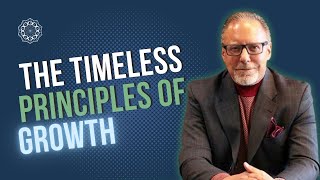
Jay Abraham talks with Sachin Patel about growing a functional medicine practice without sleazy tactics. He pushes preeminence—the idea that you have a moral obligation to serve—and concrete moves like partnering with local influencers, buying treatments for advocates, and teaching prospects to reach their own conclusions instead of selling them.
Chapters
Hello, my friends, and welcome to Perfect Practice. Today we have a very special guest, and no exaggeration whatsoever. We have one of the absolute OGs in business development, in marketing, in messaging, somebody who's helped thousands of companies all over the world, has generated billions upon billions of dollars of revenue, but most importantly, has done something to impact the lives of some of our most favorite entrepreneurs in the world. In fact, our guest today is Jay Abraham. And I met Jay at a Genius Network event many, many years ago, had the honor of actually meeting him in a zoom meeting just like this about six years ago. And recently, Jay and I were able to sit down and have a lovely dinner at an event that Giovanni Marcico is hosting in San Diego. So this is really a full circle moment for me, somebody who I had the honor of admiring from afar and somebody who I've had the honor of connecting with up close. And now we're having this time together so that we can hopefully inspire and enlighten, you know, those of you who are out there in the health and wellness space who want to create a meaningful business and do it in such a way that doesn't just create temporary impact, but really a ripple effect that can make many, many generations to come healthier and happier. So no better person than I can. That I can think of to speak to about this than Jay Abraham. Jay, thanks for joining me today.
It's my pleasure. And it's a nice buildup. I appreciate it. So I am here to serve. So, you know, point me in the right direction, ask me whatever questions I can address that might give some clarity and some. And some actionable strategy to people. And it's my. My honor to. To share it.
Absolutely. So some of the challenges that practitioners face, especially when they're starting out, is, in my opinion, and perhaps you can correct me based on your experiences. But the biggest challenge people face is not having an inferior product or inferior service than something else that's already out there, but they have an inferior mindset. And oftentimes they get tripped up in, you know, their own head, and they paint a, you know, disastrous future instead of painting a positive future. So I'd love for you to maybe shine some light on the impact that our mindset has, especially starting out in business. Sure.
Well, first of all, you know, I think that we all have within us enormously greater capacity to contribute to, you know, to transform people's lives. We just have to understand that, that. That what we can either master or already know. Most people don't. It's just a matter of really believing in your ability to contribute and then your necessity to contribute. The necessity means this goes to my work on preeminence, which is, you know, 25, 30 years old. But you have a moral responsibility and obligation and an opportunity and a privilege. If you have the ability, the knowledge, the capability to be a catalyst, a positive catalyst, sashan in somebody's life and make a profound, either short mid or in, in your cases, in the cases of the people watching, listening, a long term life, you can't deny them that access. So it's a driving force. So when you start with this, this sense that you have an obligation to do it and you have the knowledge to do it and you know that when you do it it has a profound impact. And you know that that impact, you know, deployed in somebody's life can enrich that life, elongate that life, elevate the quality of that life and all the other human beings that flow from that life. Then you know, you have to start by saying, you know, I have this moral obligation to utilize what I know and what I'm capable of doing for others. And I can't worry about, I can't be hung up on my, you know, my self esteem. That's like, that's not even relevant. I mean, you're not even part of the picture. It's all about them.
I love that it's all about them. And you know, our, our mutual friend Joe Polish would, you know, kind of frame this as what's in it for them. And when we remember what's in it for our actual clients, then it's, I find at least it's much easier to get out of our way. You know, you know, this day and age, social media and, and other ways, other platforms help us get our message out there. If you were to start all over again and you were in the health space, what would be some of the strategies or methodologies or platforms that you would recommend or be using especially for somebody in the health and wellness space?
The answer is not a general one because it would depend on whether I was operating local, you know, national, regional, know, one on one, virtual today. You know, there's so many more options than maybe if you'd asked this 10 years ago. But I'd start by saying, okay, I have, I have knowledgeability that can change somebody's life. But I have to be able to get it into their, their mind in a way that they embrace it, believe it, want it, want it from me. How am I going to do that? You can run ads which is fine. You can do, you know, pr, which is fine, or you can decide how to identify as many. And I'm going to use the word influencers, but influencer is a very, very misunderstood concept. We think of an influencer as somebody that's got a million followers and is on TikTok every minute and has got, you know, all these. And, and that is, that is an influencer. But if you're localized, the influencer could be, you know, the, it could be, they help the hair salon, it could be the, the nail salon. And what I always did with, with professionals and experts that I helped, that were starting out in the beginning was I would have them find the, the lowest common denominator of influencer. And by that I mean the ones that are going to be not prevailed upon by many people and go to them and offer to really buy them their services or their work with a reciprocal. So if I went to you and I said that I, I am one of the few or the only person in this community who understands, you know, this, you know, this form of, of, you know, of, of, you know, of permanent wellness, healing, etc, and I want to first of all introduce you to it because number one, I think if I do, you have the chance to help me help a lot of people that I could normally never reach. I don't have a big marketing budget. It's not really what I want to do. I want to spend my time, know, treating people, healing people, you know, enhancing their, their, you know, their quality of life. But if, if you will allow me, I would like to buy you and then depends on whatever the right, the right, you know, dissemination of your services. I'd like to, you know, buy you a treatment regimen. I'd like to, to buy you this or that. And I ask only I'll treat it as if you, you know, you paid me my full fee, 2,000, 3,000, $5,000. And I'll tell you a story that supports this in a minute. And all I ask in exchange is two things that you judge where you are before we start. First, where you are, how you feel, the energy, the focus, the vitality, the, the, the physicality, the, you know, the robustness that you've got, the positive comments you're getting, the concentration you've got, the stress relief you've got, the joy you get in life, how much better you sleep, how much weight you lose, everything like that. And assuming that I am successful and I wouldn't be offering to do this, I didn't expect to be, I would ask in return, only one thing in the course of your life which is long, and all the people you deal with in your business or profession, you meet a lot of people who in the course of conversation will share with you, wow, I'm tired, or wow, I haven't slept well, or wow, I can't lose weight, or wow. And if you believe based only on the impact that my servicing you and treating you has made, when that happens, you would feel comfortable suggesting that they, you know, they connect with me. I will always, you know, I will always. If they come from you, I will always buy them a, a comprehensive consult, but I'll never charge, I'll waive my fee. And if I don't think I can make a profound difference, I never will. None of that will happen. If I don't first of all transform your lives, I, I think you're going to be very profoundly impacted by what I'm going to do for you, with you, and how it will really alter for the better the trajectory, the trajectory of the rest of your life. Something like that I love.
It makes total sense.
Just to give you a little bit of a, of a confirmation of how powerful it is. Now. I was lucky. When I started really taking off, I already had sort of a de facto good reputation. I'd helped not a lot, but a number of prominent newsletter people and investment people. So my clientele was known. And I had the good fortune of meeting back then the number one publisher of audio publications and courses in the business and the expert sector. And they came to me and I helped them profoundly and made them a lot of money. And they were willing to introduce me to all of their authors. And it was the same offer. This man wants to buy you two hours of his time. He'll look at your business. He will identify all kinds of underperforming assets, overlooked profit opportunities, underutilized revenue sources. Under, under yielding revenue activities. He'll give you strategies and if they perform, he asks that when you have a chance to, you know, to talk to other entrepreneurs, that you think his work would also help you. Tell them maybe over the, in the future you could do, you know, promotions. Now that's one thing. Another thing you can do is become the recommended provider. You could, basically, it might not be ethical to share compensation or reward people in a direct way, but you can buy, you could buy my family, your services at an exchange maybe every, every three months, four months, six months. I introduce you to my total, whatever, my clientele, my, My audience, my database. There's, there's a multitude of things, but they all stem from first being being the one to invest in others, another element. And I'll be happy to get you. We have a couple of programs we've done on preeminence, and I'll be happy to, to get you one of them that's probably the most simplified and the most appropriate. You can put it on your website. I don't need to get anybody's email or anything. But one of the other elements of being preeminent is that, that anytime two people ever come together for any reason, one side is always asking the other to take on more than all of the risk now more than all the risk means it's not just money that's changed hands. If it doesn't work out, you know, you get a bad outcome, you might look bad in your friends, your family, you know, you might waste opportunity cost or your, your money. And I always felt like I want to be the one investing in the other side first because of two things. One, I know I can afford it. You may not be able to if you're starting from scratch, but if, if you invest in someone and it has a positive payoff, everyone may not turn into a future, let's call it a, a, a, a compensated patient or client, however you refer to them. But the numbers will work for you if you make a profound difference and if you choose wisely. I always want to be the investor. I always wanted to be the benefactor. I always want to be the one who's, who's giving and contributing first. And I want to choose wisely the quality of people I do it for, in terms of their values, their ethos, and very frankly, their probability of not just having a successful outcome. I could help any business grow. More profits, more buyers, clients, patients. But I want to choose people that I know will respect my methodology and do something with it, because everyone won't. I mean, I mean, you and I both know you can transform many people's lives. But will they follow the protocol? Will they take it seriously? I have so many situations in my life where somebody will say, jay, I did what you told me, and it generated literally millions of dollars of profit annually. And I will be happy and sad, happy for them that they applied, executed, implemented, and really persevered, but sad because I would have shared the same methodology in seminars and even private sessions with hundreds of other people that opted to do nothing with it. So you need to choose your shots, so to speak. And in the beginning, if you're trying to establish your, you know, your worth, whoever you Invest in, make sure there's somebody, everyone deserves it. But you know, everyone is not going to do as much with the, the, the profound knowledge you're going to share and the, and the, and the methodologies and the techniques and the regimens and the protocols. So choose people that have the highest probability of doing something with it and when they do, seeing the most, the most wonderful outcome. And I would also choose different people and, and I'd go to people and ask them to nominate people. I've done that too. I've gone to prominent entrepreneurs in the community and it was a, it was an ethical Trojan horse. I'd say, can you nominate a struggling entrepreneur that you know is a quality man or woman with a really noble product or service and an elevated and a really wonderful intention to make a difference in their people's lives, but they're struggling, that I can buy my time for. And that person I normally would have a great impact on because they were referred by somebody they respect, they don't want to let that person down. So they have a higher probability of doing things. When they do, it's profound. They tell the person who referred them to me, that person is impressed, that person gets more interested. That person is more receptive to doing more mass communication to their audience or introductions. And it's a process. But the process is best realized when you see yourself as an investor, an investor in other people first. Even if you're starving or even if you're struggling, it means the sooner you get people started in a trusted and a viable and a result, an impactful result based relationship, the sooner they will come back to you, the sooner they will refer other people. So if you're sitting there and you have available time and it's not being filled by people who are paying you big retainers or fees or, or booking with you on a paid basis, use the time to buy deserving people who, if you are what you think you are and your work produces the impact and the outcome you think will produce this positive tidal wave in a month or two months or three, where it'll all start building and converging and the critical mass of contribution you've created will produce this enormous future onslaught of referrals and, and people coming back to you. And I would actually try it in general. I try it for specific applications of whatever, you know, area of your, of your newfound specialty or subspecialty that you want to apply it to. I would, you know, I would maybe go to every, every small medium entrepreneur in your community or on you know in a geography and offer them that they can nominate a person that you will help gratis for the next whatever protocol is necessary. One week, two weeks, five weeks. And if you have all that amount of momentum in play, it's going to pay off in ways you can't believe in a month or two or three. And if you go, well, I'm going to starve. My attitude is you're going to starve anyhow. Wouldn't you rather starve for a little while building all this pent up, positive, compressed source of future business?
I love that. It reminds me of a philosophy that I adopt in alignment with your preeminence and investor mentality is I want people to receive more value than what they pay me in advance of that payment. So if I'm selling a $25,000 program, I want to know that I've done things up to this point that have exceeded that value from their perception. Because we can't add value into the lives of people who don't share the same values as we do. And you know, we're playing the long game here, right? So my philosophy is the hour, just like yours, the hour is going to pass. So you could. That hour can pass and you're adding no value into the world. And you're not living out your dharma or that hour can pass and you are, and you're building that karmic currency so that this person in the future has, you know, your top of mind awareness. They understand your process better, the referrals are much more genuine and you're, you know, you're lubricating the slide to get people to, and move them into action, especially if they're of influence. It's, it's going to pay in so many different ways.
That's beautifully stated. A couple of spins on this and, and this is something I would do in concert with this, pardon me, contribution investing. But I'd also make this a denominator of everything you do. And it's an integration of understanding how the mind works. And I guess you'd call it a little bit of nl whatever you want to call it, PC. But it's also tied to impact many people who have. First of all, half the people don't know what, what greatness is supposed to look like in many respects, most notably in good health. They've never had it so. Or if they had it so long ago, it's become hazy fazy. Number two, they don't know what it would mean to sleep all through the night, to wake up refreshed to have that cloud of confusion gone, to have energy and focus, to have the stress level either dramatically reduce or totally be eviscerated and, and, and eliminated. They don't know what it would be like to be able to change their lifestyle and eating and have their bodies feel better and look better. They don't know what it'd be like if their, their whites of their eyes were white. They really don't. And the first thing you need to do is what I would call a, a integration. I've never talked about this, so I'm going to try to conjure up something that's going to be a little bit, maybe a weirdly articulated, an integration of an impact sort of analysis tied to future pacing. So, you know, when you're sitting down with somebody, most people in any healing arts, you know, you say, okay, my arm hurts. Okay, let me fix it or let me figure out what's wrong. But I think there's another. What would it be like if you never had that arm hurting again? You know, if you've got arthritis or bursitis or soreness and you can't even shake somebody's hand, what would it be like if every morning, everybody you met, you could shake that hand? Or what it would be like if, you know, if you've never slept more than three hours and I'm older and when we get older, that's really hard. What would it be like to go to bed at 10 and not wake up until, you know, 6 or 7am and be so refreshed that, you know, that it's almost intoxicating? What would it be like if you didn't wake up exhausted? What would it be like if every hour of the day was wonderful because you didn't feel fatigued, you didn't have trouble, you know, concentrating and taking people into the future, but also helping them see the impact? Because a lot of times they don't reckon with the real, the real transactional goal thereafter, if that makes sense.
Yeah, I think we have to really paint a picture for what's possible for them because they may not even know what's possible possible for them.
And they don't know why they might even want something. I mean, if I tell you, you know, I'm tired, well, first of all, what would it be? What would it be like to not be tired? And I'd go, I don't know. And you'd say, well, let's. Let's figure out the game you want to play and why you want it. I mean, you want to just not be tired or you want to not be tired and have energy galore. You want to be. Not be tired and have focus galore. And I think if you help me see more clearly what I want it to provide for me, I have a lot more, I have a lot more leverage on myself to really do it.
Yeah, I think it's important for us to know, you know, what is the why behind the why. Right. They say that when somebody buys a drill, they don't want to drill and they actually don't even want a hole in the wall. They want to find a way to hang a painting on the wall. Right. There's a, there's usually a multi layered purpose to why people do what they do. And so, you know, if somebody's just sitting there and they have no energy, well, they're definitely not going to have any energy to get up and do things, play with their kids, you know, grow their business or, you know, go on a nice vacation somewhere where they have to be active and walking around. And so I think it's, yeah, it's vitally and crucially important that we help people understand the why behind the why behind the why.
I think so. Also I have, I found that you can do a little exercise with somebody and it's quite profound. If I said to someone, you know, John, who do you know in your life that you would like to have the energy of somebody your age that just is the personification of what you'd like your life to be? And then all of a sudden you've got a metaphoric or you've got a referential picture that's sort of indelibly embedded in your mind of a reference model you're going after.
Yeah, that's, that's a great reframe for people because then you're, you're showing them what's possible at their age or somebody who's their peer. Right. Versus somebody who's 20, 30 years younger, which can seem unrealistic. But who is someone your age or who else is. If you're comparing yourself to another business, who else in your community is successful at this and how can you replicate that success? And instead of being jealous or feeling defeated, you know, be curious to find out what are these people doing and how can we get there? What can we do to get there too?
And there's a spin even on that. And if most people go brain dead figuratively, and go, I don't know, then you might say, well, if you, you know, do you know the actor? This or this person or that do you know that they basically do this and, and give them examples if they don't have their own.
So tell me Jay, in a, in such a crowded, low barrier of entry marketplace that we have these days, I know, you know, Sally Hog said as well, and her message is, is to be different. What can practitioners do? What can coaches do? Let's say, let's assume for a moment they're in the online space. What can they do to stand out and differentiate themselves?
Well, I mean it's one of the things that I have been very successful getting a lot of my clients to do that are in, in one vertical area is understand the holistic aspect of somebody that, that we were talking a little bit about impact but that it's not just about this one thing. It's about there's all kinds of things going in people's lives, hopes, dreams, fears, you know, relationships. And when you're able to help them with other things, even if they're not just within the realm of your skill set, you have a value added advantage over your competitors. The other is that I've always believed that, you know, certainly showing is better than telling. But when you allow people to come to decisions and conclusions themselves and it's a different form of education. It's one thing to educate, you're talking about Ayurveda, about Ayurveda, but if you educate me and it, and you give me a, I'm going to call it a try this test, but a way that I can mentally validate what you're saying. So I come to the conclusion, conclusion myself. You're not just telling me, you know, with this is the way you're going to get your energy back. This is the way you're going to do this. And it's just sort of shoving an ideology down my throat that if you're the one person that says I, I want, I want to give you some, some, some data, I'd like you to think about this and see what your conclusion is because I have one. But let's see if you agree with me. And you. Well, I was in the gold, the gold and the rare coin and the silver market 40 years ago and we created a half a billion dollar a year company from scratch. And we did it by not telling people to buy gold or silver or rare coins. We did it by giving them a, a triple case for why the research was worth, was worth understanding. We'd show them historic correlations. We'd show them the mystical part of owning it and history in it. We'd show them how it usually ran. It was, you know, it was a preservation of value. We'd show them all kinds of things. And then we say, but you have to decide for yourself, you know, how, and even if it, feed it, what's the word I would use if I'm thinking the right word, if it really, you know, factors into your investment or your wealth creation or your, your financial security safety blanket, we can't tell you. But we gave them so much irrefutable ways to come to the conclusion themselves. And nobody was doing this. They were all saying you got to buy gold. And they didn't give them, they gave them, they gave them end game reasons, but they didn't let the person come to the conclusion himself or herself. There's much more power in a decision when I make it myself based on, on gaining knowledge that you provide me with. And, and, and it doesn't mean you don't provide me with knowledge where any, any well reasoned person could only come to one conclusion. But you want the person to come to that conclusion on their own rather than me tell you, because in the beginning you don't have my trust. You don't have my trust. That's why having endorsers, having, having advocates, champions, people in, in, in the community, influencers who advocate for you, they immediately ascribe and assign all the cumulative years of credibility and trust that they have, they have created with their audience and that immediately transfers to you. That's why I believe that's the safest short, short, short way to get yourself to build a practice or a clientele or a meaningful presence in your market is not to try to do it through advertising, but when you are in, in front of somebody, figuratively, literally, whether they're in your office and you're examining them or talking to them, or whether you're doing it in, you know, in a mass disseminated way, you want to have ideas nobody else does. You want to have perspectives no one else does. You don't want to do what everybody else does because then you're right and then it's very cluttered and busy. But if you do what nobody else does in ways nobody else does it, and that could go to Sally's, I mean Sally's is you want to be different, but you want to be positively different. If you're negatively different and you're arrogant and you're, and you're superficial, you're not going to work. But how can you be positively different? What can you do in a way nobody else does it, I mean, you know, can you, I mean, we used to. Just to give you an idea, I had a cosmetic surgeon I helped in Beverly Hills. Beverly Hills only has about, it's like one cosmetic surgeon for every probably 300ft. So how do you get a cosmetic surgeon to gain distinction? We created a wonderful book. There were like the secrets of a Beverly Hills cosmetic Surgeon. Me talk about all the things that he'd seen, all the techniques he did, what he tells everybody they need to know. And we didn't try to sell the book. We printed the book up and we hired people to go to every, every hair salon, every dental office, every other non competitive cosmetic oriented hair removal, you name it. You know, back when they had tanning studios, all that. And, and we would put it in the waiting room and we'd put it at every one of the, the hairdresser stations and we'd put it in every examination room. And, and, and it was credibility through implied endorsement.
Brilliant. Yeah.
So, I mean, there's just a myriad of ways that it can be done. But the first is, is what can you do to an education? Even the word educate has a misnomer because most people's idea of education is a litany, a data dump of factoids. And that's not what, what makes people, that doesn't animate somebody's spirit and electrify and ignite their willingness to want something badly enough to take action.
Yeah, it, it makes total sense. I love it. It's a, it's a very, you know, grassroots marketing strategy. Right. Very brilliant. You're putting it right, the right book in the right place at the right location for the right person to read it. And you know, some people write a book and they try to sell it. But I love what you did here, which is we want to get this book in front of the right people. And that's actually the strategy that I use with my book. I, I even moved away from a free plus shipping offer. And you can maybe tell me I'm crazy or not. And instead of having this barrier that people had to jump through and put their credit card information in and pay for shipping, I always scratched my head when I saw that because I'm like, I'm giving away the book for free, but I'm making people pay for shipping. So what I'm saying to the consumer is that shipping is more valuable than my book.
That's a distinction. Yeah, I love that. Yeah. I believe we're doing an experiment right now where I have created over my career about 15 full length books. None of them sold anything. We created them for all kinds of different slices and dices of my body of work. And half of them I never even published. I mean, I published them in terms of creating one, but I never sold them. I just wanted to see if I could articulate it. We just started a reading room where every month we give somebody the digital file graphs, we don't ask for a penny, no strings whatsoever. And it's, you know, it's designed to basically create a monumental connection to people, most of which are too small to justify paying me. But I can make a difference in their life and that's contributions. Some of them might grow to be clients, some we'll have friends, neighbors, relatives who are significant enough they'll tell about me. But even if nothing happens, just the gesture is so unprecedented. But I agree with you. I mean, and if you think about, here's a. This is going to get into Marketing 101. So people will run that, that offer a book for shipping and handling and they'll charge $9 or whatever. They're going to charge $10, $12 shipping and handling. And they're excited because it almost self liquidates. But if you just said as long as you satisfy, whatever the criteria, as long as you're a real business, as long as you're at least 40 years old and you've suffered any kind of health issue in the last, whatever that stipulation, which some will just lie, but most of them will comply. I would like to buy you this book. You don't need to give me shipping and handling. It means a lot for me to get it in your mind. It'll help you understand maybe why you haven't found relief. It'll help you understand paths that could really, you know, provide permanent solution to the issues you're struggling with. It'll tell you stories about people just like you who pursued it and how their life was transformed. If it makes a difference in your life and it gets you to a better place, I will be very, very grateful because that's, you know, why I'm on this earth and my life's work. If this, there's a reason the two of us might come together. You want any of my services, that's great, but it's not necessary. What's important is for you to know that your situation is definitely not hopeless or helpless. And that's a pretty powerful way. And so let's say it cost you $10 more to get that buyer than if you got the $9. But the quality was better. The psychology of the relationship was much, much multiple times better. The, you know, the convertibility was better and, and you felt just personally infinitely better because you didn't game them with a lie.
Yeah. So many, so many games that can be played in the, in the marketing world and, and I love, I love how your approach is very tactical, very ethical, very strategic. But also you do something so well that I want to acknowledge you for and it's something that I think many of us may even struggle with and that is the detachment from fruit. You do a really good job at kind of detaching from, you know, the financial reward that might come from being a value and of service to somebody and you just let it be. So where does that come from? Where did that, is that an unconscious competency that you have?
And I've thought a lot about it. Thank you. But here's the origin. When I got started, I never was obsessed with making money. I was very privileged. I came from very humble background. I got married at 18, no education, two kids at 20. The only people that would give me even opportunity were impressive but crazy entrepreneurs who would give you an eat what you kill. That's the bad part. The good part is I guess I self selected and I graduated. I gravitated towards a number of entrepreneurs who were on missions or crusades to either fill voids that nobody was filling or add more value to a segment of a market that was in their opinion, under. Under. Under contracted. It's not the right word.
Under. Serviced. Yeah.
Under service. Thank you. My brain is maybe I need your, your help or your colleagues, but, but I found, I found myself smitten with worrying more about the outcome for the end. The end consumer or buyer or prospect or client. And that just rocked my boat because I saw how you could enhance and improve and re. Reinvigorate somebody's, whether it's their, their career, their life, their finances, their relationship. Because I helped all kinds of people and I was always more about, about just being part of somebody who was making a big difference. So I am drawn towards that first and foremost. I always thought, I mean, and somebody told me this and it's become my mantra. You are rewarded in life in direct proportion to the quantity, quality and consistency of problems you solve and opportunities you make possible. And this is the key for others, not for yourself, for others. And when you shift your focus, I mean you probably know this if you're obsessed with making money, even if you do, it's anticlimactic, it's not satisfying, it's usually not going to sustain because you're driven for the wrong reason. It's very superficial, very short, short lived. But if you're driven not to make money, but to make people better off every time you're in their life, every time you have a chance to affect them, every time you interact with them, every time you interact with anybody who interacts with somebody you're trying to help and that's the driver of your life, the level of wealth, prosperity and richness that occurs is profound. And now the, the key to this, and maybe it's epilogue is that wealth and richness is not just denominated in economic terms. You can, it's, it's fulfillment, it's satisfaction, it's impact, it's, it's, it's meaning and it's on, it's denominated on such a, a, a portfolio or a multiple suite of different denominators.
So well put. So much wisdom packed into our time together. Jay I love to know, I think I know what the answer is going to be, but I'm going to ask anyways. How can our community be supportive of you? What can we do to take this message? Certainly we're going to try to bring this into the lives of our clients, but what would you love to happen with this interview, with this?
The greatest acknowledgment? This is, I'm in conflict with myself because you set me up to say, well, I got this course and you can buy it and we'll give you a discount and just go here. But the greatest acknowledgment or the greatest reward you can give me is if you are, if you are capable of transforming and catalyzing positively a multitude of people's lives over the next, you know, 10, 20, 30 years, then do it. I mean, I, I always say that when we used to do a lot of seminars and I did a lot of them when I was more like your age, I'd always say at the end, the greatest acknowledgment you'll do for me is not stand up and give me, you know, standing ovation or genuflex. I said the best acknowledgment to me is if you go out and do something meaningful with all that I have shared that, that rocks my boat. You know, if they're huge, tell them to call me. But I'm more interested in trying to, at my age and at my career, if I can shift the trajectory of somebody's career in a way that is, is meaningful and, and, and they can use nobility and capability and purpose driven passion and make a profound cumulative impact in the lives of. I mean, really, if you change one life, it's profound, but if you can change multiple ones. I, I used. I've got a couple of different businesses that I've helped and I recategorized and recontextualized and, and used a different form of semantics to help them see that what they were doing was transforming the lives of the people they served and the lives of all the people that, that flowed from the font of that person. My family, my employees, my employer, my co workers, my friends, relatives. And if you ask yourself how many, how many people's lives can I transform each and every day by what Jay said or what you're teaching, that that rocks my boat. That's, that's compensation enough for the time you've given me.
Wonderful. Thank you. Thank you. Thank you. So grateful for this opportunity, Jay, until our paths cross again. Wishing you much health, happiness, and continued contribution. I love how you live your life. I love how you share so openly, and I'm grateful that we got to spend this time together. Thank you.
It's my pleasure. I hope it had meaning to the people that it resonated with. Okay.
I'm sure it did. Thank you. Thank you, thank you.
More from Sachin








Your Doctor Won't Prescribe This… But It's the Most Powerful Medicine on Earth

