How to overcome and reverse Metabolic Syndrome with David Bennett and Sachin Patel
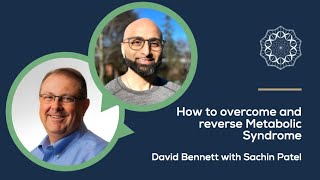
A YouTube interview (Perfect Practice) where Sachin Patel interviews Dr. David Bennett about his transition from law to chiropractic and functional medicine, building a virtual practice, and his patient-centered program 'Metabolic Body Reset' focused on reversing metabolic syndrome. They discuss practical tools (videos, tech, wearables), mindset/lifestyle strategies, family/fulfillment, mentorship, and making functional medicine accessible.
Chapters
Hello my friends, and welcome to Perfect Practice. Today I'm thrilled because I get to have a conversation with a dear friend and colleague. In fact, somebody that I actually went to school with many, many moons ago. Today we have Dr. David Bennett, who's going to be sharing his road to freedom and fulfillment as a functional medicine practitioner. David has played a key role in our mentorship program. He has played a key role in his community, and he is an amazing father and loves to coach baseball and softball as well. David has transformed his business, he has transformed his life, he has transformed his health as well. And we are going to be talking about all of those things. So without further ado, Dave, welcome. Thanks for being here today.
Wow. Thank you. I mean, you are making my head get bigger and bigger as you went. Thank you for having me. You know, I have fun having these conversations with you.
Well, thank you. You know, I always enjoy your perspective on things. What some people may not know about you is that not only are you a chiropractor and functional medicine practitioner, you're also an attorney. So I know when we were in chiropractic school, you were already an attorney and you went to chiropractic school. So I'd love to know, you know, the story there, what made you go to chiropractic school?
I was practicing, you know, 60 plus hours a week would be a good average. And then one day I recall waking up in the ER and the initial thought was, you know, had a heart attack. I was about 29 at the time, but I didn't went to see my father in law who was a chiropractor after the whole thing and said, and he did some, some work on me and said, you know, he actually ended up being a vagus nerve issue took care of that. I said, wait, you're sort of onto something here. But I'm 29 and I'm in the ER. I need to make some changes. And the opportunity arose to go back to school and I took it and I would never look back because I would probably be in a world hurt right now, you know, based on where I was at, you know, that's 20, almost 24 years ago at this point, you know, so that's what completely turned me around. And I said there's got to be something better. And you know, my wife and I were talking about kids and talking about family and I'm at 60 plus hours a week and that's not going to fly because I don't want to do that. I want to see my children. I Want to have a family life. So I took the opportunity and went and it was the best decision I ever made.
Yeah, you know, chiropractic school isn't easy, as we know. And having a law degree and practicing and then going back to school poses its own set of unique opportunities and challenges as well. What was your biggest takeaway from chiropractic school, would you say?
Biggest takeaway was how messed up healthcare was. Is the best thing to say of how we were mainly going after sickness versus going after health, even though it was preached wellness, wellness, wellness. But we weren't really going there. And that was the biggest thing, and that was the biggest thing that turned me onto it because my father in law and in his practice, that was the per. That was the whole purpose of the practice. But then school showed me that it was going the other way and I didn't want that.
Yeah, I mean, it's never easy, right, to go back to school, but it was certainly worth it and fulfilling. And I'm so grateful that you did because we had a chance to meet and you know, fast forward a few years after graduating school. Tell us about your practice. Where did it start?
I was working with my father in law, like I said, and we did nutritional work, a lot of applied kinesiology. And he was. We were there together about a year, and then he passed away of complications of Lyme disease. And then, you know, it was up to me and I was doing the nutrition work, doing nutrition work, loving it, but always missing a piece. And then the know as, you know, fortune, karma, however you want to say it happened. I think you got your functional medicine certification. And I was like, what's this? And I reached out to you and we talked about it, and you told me about the coursework and everything. And I was like, okay, sounds good. And I went and did the certification. And then after the certification, it was probably about a year, and I was waiting and waiting for all these magical things that happen and it wasn't and then popped up again that you showed up on something, Facebook, YouTube, whatever it was, and you were talking about the men. You're this new mentorship program that you were just starting. And I reached out again and said, hey, what's this?
Yeah. And. And here we are, right? And fast forward even a few more years. You've not only been part of our mentorship, you've implemented many of the trainings in your own special way that aligns with your core values, which we'll get into in a second. And now you're also coaching others in our mentorship as well. So really coming full circle, you know, not only with your own personal journey, going back to school, and then now going back to school again after going through even more school and then paying it forward to other practitioners. So I'm super grateful for your journey because our paths have intersected several times now, you know, in school and then, of course, through functional medicine and again through the mentorship. And we're kind of intertwined now. Whether, you know, whether we had anticipated that or not, here we are. So it's amazing how life kind of brings us full circle. So it's great to see you thriving, and great to see you healthier than ever. It's great to see you getting your message out there into the world. And I know some of the things that you've done over the years have been very centered around fulfillment. So let's talk about that. What does fulfillment mean to you?
Well, I mean, one of the things for me that's fulfilling to me is actually helping the other mentees. That is very. Teaching is essential, and I think everybody enjoys it. So fulfillment for me is being able to teach people, whether it's through a program or a course or a fellow mentee who. Okay, I remember being there three years ago. Let's short circuit this whole process and get them to step, you know, D and skip, B and C. Let's move them through that process. And that's. That's very fulfilling because. And, you know, fulfillment to everybody is a little different. You said something that was very, you know, about learning, going back to school. But when we stop learning, it's pretty much over, because you have to keep your mind open to something happening constantly. So everything's changing daily. So when you learn that the best thing to do is teach it and give it back, I mean, that's why I do it with baseball. That's why I do it with softball. That's why I do webinars. It's just that giving process. Whether you're getting paid for it or you're not, that's irrelevant.
Yeah. And that's the thing I love about you. So generous, such a kind heart, and so compassionate and empathetic towards others. So you can see yourself go back three, four years. You can see yourself facing similar challenges as to what practitioners are facing in their current state. Of course, the world is changing all around us, too, and we have to evolve and make sure we're staying abreast of what's working and what isn't working. However, we were talking about this Virtual practice, long before it was the cool thing to do. I'd love for you to maybe rewind the clock a couple of years and talk about what that was like, setting up a virtual practice, and maybe some of the initial thoughts that went through your head. Because we're both chiropractors, right? Like, the idea of having a virtual business never even crossed my mind. I still remember one thing that my mom said to me. She said, you've got to learn how to use your head instead of your hands. And I'm like, how am I ever going to do that as a chiropractor? The word chiropractor literally means by your hands, right? So, you know, of course we evolve. Our education evolves, our training evolves, opportunities evolve. But what was that transition like for you to go from physical practice to virtual practice?
Fun, scary, exciting, nervous. I mean, all of those emotions came into play. And it was probably when. When you and I first started talking about back in 2015 or 14. So it's been a while. And moving through that process, it was baby steps. I mean, I look back at some of the material that I have on my computer and some of the original videos that I cringe at when I look at them and feel like, what are you doing? But it's an evolution that slowly grows. And I think it was 2018. I was at. We were actually in person at Perfect Practice, and I hadn't said anything and done anything up to that point, but when I got up to speak about some automation things that I was doing at the time, I said, you know what? I'm really going to put this to the test. I'm going to go to Europe with the family for three weeks, and I'm only taking my phone and I'm going to run my practice. And then in 2019, we did that, and I did some videos off the back of a cruise ship in the Mediterranean, and I took phone calls and signed up clients while in France and while in Spain, you know, so that really brought it home to me that, yeah, this is absolutely possible, but I threw it out there, which forced me to take those final steps and do it. Because once you say it, it's got to happen.
Well, things are much easier to say than to do. So with that in mind, what were some of the initial challenges that you had to overcome?
Tech was one. But I find that pretty interesting to dig in and understand why. I'm the type of person who.
You.
Know, I'll happily give it to somebody else to do, but I have to understand it first to get a grasp of it, that was the biggest issue. Then the second biggest issue was what am I going to do? What am I going to do with clients virtually or from a, you know, a no physical, no brick and mortar office. And that's where the functional medicine came in. And the evolution of what I'm doing, evolution to what I'm doing now, which is again, still, you know, virtual in that respect. So those are the two.
Okay, and what were some of the, the tech like specifically tech obstacles? Was it the actual tech itself? Was it overcoming the anxiety of going on camera? Was, you know, I know there, there's so many things as practitioners are watching this, like tech is such a broad thing. So were there specific things that you felt for you specifically you had to overcome software?
Was one of them digging into the software and saying, okay, you know, I. What's a landing page? What is that? What do you mean? Funnel? What are we going to do with the funnel? And just going through that process, but also getting in front of camera. I mean, you and I did a conversation probably in the 2016, 2017, and I have this, I've seen that video fairly recently and I was like, what the heck? You know, because I was terrified. You could see it, my face. It was just crazy. And now like the funnest thing I do all day is do videos. I mean, I'd rather do a video than sit down and write this long explanation, you know, whether it be lab review or whether it be just a 15 second short video saying, hey, you know, one of the healthy eating tips is, you know, you know, chew your food. I mean, we take it for granted that that's a known commodity, but 99 of the world doesn't know that. We just heard it so many times. So, I mean, now I enjoy the video, like enjoy doing this. I enjoy doing social media, you know, tweaking different Facebook and those kinds of things just to, to do it, to get the message out there, whether it be for me or whether it be for somebody else. Because I may not be the perfect guy for someone, but somebody else may need to hear the message and go find somebody.
Yeah, Video, as we all probably know, is so key to getting our message out there. But we have to find what works for us. So for some of us, writing might be our forte. For some of us it might be audio. Some of us it might be video, like we're doing right now. The key is to find what works for us and experiment. Right. And explore. When you started, obviously you were nervous as I was when I first started, and I still cringe at some of the videos from back in the day that I watch of myself. I was like, what was I thinking? And what was I wearing? Like, it's all those things, right? We evolve over time, and that's a sign of growth, that if we can look back at something with a smile on our face and appreciate what we were going through and be gentle with who we were at that time and kind of fill in the gap to see how far we've come, it's such a great feeling to know that we didn't give up, we continued moving forward, we found our groove, and now we're helping and impacting even more lives.
The growth, like, hit me the other day because I was talking to a mentee, and mentee had a, you know, like, something didn't work right with the tech. And I was like, just. We'll just admit it. And, you know, send them an email and say, hey, sorry about that. Didn't work out. You know, hey, contact me here and do this. Where I remember five, six years ago, completely losing my mind. It didn't go live. It didn't work. It didn't do this, it didn't do that. I was just freaking out, so I know where the person is at, and. But I realized how much I'd grown because I was just like, yeah, okay, it happens. You know, let's roll with it.
Yeah, it happens to the best of us. You know, a few probably a couple months ago, I actually did a video, and it was broadcasting from Zoom to Facebook Live in one of my pages that I have, and I was muted the whole time, so here I am. You could see my lips moving, but obviously I wasn't saying anything because I was muted. So stuff happens, right? And then fairly recently as well, we had, for whatever reason, Facebook and Zoom weren't communicating, and we had a whole challenge with almost 100 practitioners that were part of it all waiting for that stream to come. And guess what? It didn't come because of a technical glitch. And we were able to come out on the other end with something even more positive for them. So we kind of roll with the punches, so to speak, and make it work. And the key is to keep our composure and to know that people are far more forgiving of us than we are of ourselves. So we tend to beat ourselves up not realizing that, you know, hey, it takes a lot of courage to put yourself out there. It takes a lot of, you know, it takes a lot of determination as well. To be consistent with it. So what were, is there, is there like a pre video ritual that you go through? Is there anything that you do to get yourself in a specific state or are you at a point now where you could just kind of go with the punches and off you go?
It. I usually just give, take a couple deep breaths and then let it fly and go with that. Because most, most people out there don't want the talking head. They can switch on the TV for that. They want somebody who, you know, kids run in the background or you know, something falls just like that. And you know, like you said, we're harder on ourselves and that's one of the things you need to learn is to yes, I'm human. It happens and roll with it.
Yeah, that humanization is so key. Right. We think we have to be perfect. We think that everything's got to be like perfectly spot on, but it's. When it's not, we actually become far more relatable to other people.
Yeah, absolutely.
So tell us a little bit more about your practice. What are the type of clients that you work with who comes to see you, what can they expect coming to see you?
Type of client we deal with is a metabolic syndrome client. Right. You know, with weight gain, usually a middle aged mom or dad who doesn't have a ton of time, doesn't want to, you know, have this complete exercise program design, doesn't want to be able to have to go to the gym constantly, doesn't want to, you know, do shakes and prepackaged stuff. They just want to live their life and they don't want to feel deprived. And that's who we work with because that was me. That was me. Didn't want to go to the gym, was 40 plus pounds heavier at the time, and then came to the realization that, hey, I got to do something. Yeah. And that's. And I know what that's like. So that's who I want to work with. And that's who we work with.
All right, so you were patient zero in this process, right?
Patient zero, yes, yes.
What did you learn through this process about metabolic health and even your. Because there's of course the hardware component which is our body, and then there's a software component which is our mind. And tell me a little bit more about that. What was that like going through that journey for you?
I really learned the interconnection between the two that when you know, your body can be whatever. And first off, first off, we all look at TV and oh, you know, I look at the ads. Oh, yeah, that would look good on me, but that's not me. That's that. That model over there. You know, I can't get away with that, those types of clothes or whatever, but I don't want to be that either. So getting that connection of, okay, I want to. I want to, you know, slim down, be better for myself, for my family, be more energetic, but also realizing in my mind that I don't have to be that picture on the screen. I have to be me and me. Comfortable is not the picture on the screen, you know, not, you know, the bodybuilder in the gym five, six days a week. That's. That's not where I want to go. And that's the. The big learning experience for me was the interconnection, because I get slimmed down all I want, but I'd probably be miserable and don't want that either.
Yeah. So when clients work with you, you know, I know that the approach that you take is very grounded in science, very grounded in foundational principles. What's the feedback that you get from clients initially?
Initially, they. They're sort of like, what? Like what? And a lot of them will say, like, you know what? I know this. And I'm like, I know what I'm doing is now forcing you to implement it. Not forcing you, but helping you to implement it and get the strategy, get the formula to make it work. Because you got this piece here and this piece here. You want to pull it all together and have a formula that works and then roll it forward so that you can implement that formula whenever you need to and not feel like, oh, I can't go out with my friends this weekend, or, I can't go out to dinner, this dinner party. Yeah, you can. You have to have the tools to be able to make the adjustments, you know, throughout the week before, the week after. And that's. That's very, very important.
So what are some of the results that people get working with you? What are some.
Weight loss is the primary. That's always the one that, you know, knocks. Knocks you in the face when they look in the mirror. But a lot of times it's, you know, wait, I went to the back of the closet and I pulled out clothes I haven't worn in five years, or, um, you know, some mother saying, you know what? She was on the program, but I cooked for the family. And doing that now, my high schooler doesn't his acne went away. Or another client that I remember, she lost, like, 22, 24 pounds. And her husband, who just was eating with her to support her, lost about 30. But the downstream effect of that was because of that weight loss. When he went for his physical, they found something they wouldn't have found because he was, he would have been heavier. It would not have been visible and got, you know, so you're not just affecting the person you're working with, you're affecting downstream the family, the kids, the grandchildren, whomever that they're in contact with, whether it's, you know, just the grandkids saying, grandma wants to go to the playground with me now. And it's a better moment than grandma wanting to sit on a chair at home and watch tv. I mean, that's, that's life changing for the grandkids, let alone not, you know, let alone for the grandma, but definitely for the grandkids as well because they're going to have that memory, they're going to want to do the same thing with their kids. You know, it's, it's the trickle down effect.
Yeah. That role modeling is so important and probably overlooked. We don't realize that how we show up each day is creating the blueprint for how our children or grandchildren can expect to show up. Right. So if we're tired and burnt out and run down, or their grandparents are, then that's what they think life looks like at that age. You know, one of the things that we've been surveying, people asking them, how long do you want to live or how much longer would you live if you could? And most people say they don't want to live longer. And it's because healthy aging has very rarely been modeled to people. People don't know what's possible when they take great care of themselves, how amazing they can feel not just for the first 30 or 40 years of their life, but really their entire Life. Now I'm 44, so I can't speak to what it's like to be 60. And I always honor people. Not that you're not, you're not, I'm not saying that you're successful, but you know, the, it's, it's amazing what we're capable of and how under leveraged the human potential is at any age. And that's something that you help people unlock. What are, what are. You know, obviously there's a nutritional component to your program, but what are some of the other things that you touch on with your clients to help them get such great results?
We touch on lifestyle, meaning the mindset behind it. And you know, I call them sort of like tips and tricks of how to handle situations. You know, like, you know, if you. I just did a short video on this earlier today, if you like. My kids and I, we bake cookies every Christmas. That's our. That's our thing. We've known it since they were small. We baked them on Sunday and I, you know, dozens of cookies lined up on the table and there's one cookie that's like 8 by 8 inches. And so my video talked about, you know, don't do take part in the family event. Do, you know, enjoy the day and do allow yourself to have a cookie. It's not. That's not a big deal, but one cookie. And then just, I sort of pointed out, like, not that cookie. You know, take a reasonable size one. Because you can, you know, you can mentally tell yourself, I'm gonna have one cookie and then make the cookie 8 inches by 8 inches. And, you know, that's the kind of thing that you have to get away from. You have to get away from the emotional eating. You have to get away from the understanding, but realize that the emotion is still there. I mean, cookies were always around when I was a kid. My grandfather was, if there was such thing as a cookie holic. He lived with us. You know, there was always cookies. Cousins came to cookies, cookies, cookies. So cookies for me remind me of my grandfather. So I don't completely push them aside. But now I know why I really want one. So I have one and enjoy it and think about him and think about, you know, family times, things like that, rather than I'm just gonna eat the whole box of Oreos, which, you know, wouldn't even waste my time on that stuff.
But we've all done that. I remember growing up, I almost cringe looking at what I used to eat. Growing up. My brother and I would come home from school and we'd eat a couple of sleeves of Oreos. We'd probably polish off half a loaf of bread and we'd make a frozen minute made juice and make almost a couple liters of it and then chug that back.
And you were saying, I'm drinking orange juice, I'm healthy.
Yeah, yeah. And you know, we didn't know any different, right? But when you know better, you do better. Hello, my friend, it's Sachin here. I trust you're enjoying this content if you haven't already. I wanted to let you know about my free book called Perfect Practice. This book is for entrepreneurial practitioners in the functional medicine space who want to help as many people as possible. Shared some of my best tools and resources in this book and it's absolutely free. Just click on the link below and we'll send it to you at no cost. And I think the same goes for our clients, right? When they know better, they do better. And it's ultimately up to us as practitioners to educate them. The word doctor is, as you know, means teacher. And that's not happening enough in our society. You know, it's unfortunate because, and I'm not here to point the blame or the finger at anyone, but many practitioners don't have the ability to educate their clients because of constraints of time, right? They have eight to 10 minutes or maybe 15 if they're lucky with their practitioner once or twice a year. And that's about it. That's about all the time that they get with the person who can probably help them the most. And I know education is a big part of your practice and a big part of who you are. So how have you leveraged technology to educate not only your prospective clients before they work with you, but also your clients after they start working with you, with you?
Just to step back a second, what you just said happened yesterday. The client came in to actually came in the chiropractic practice and we were talking and said, you know, my doctor called and I need to make, they said I need to make lifestyle changes. And that was it. So what does that mean? And so we went through 15 to 20 minutes of here's what you need to do and that kind of thing. But using technology allows you to really leverage your time. I mean, if it's just a two minute blurb to the Internet to social media about something that, you know, hey, did you know that chewing your food 30 times, we go back to that is better for digestion and allows your stomach to your gut to communicate with your brain. More time, you'll be know you're full before you're actually overstuffed. Most people don't know that. So even when you're just, you know, when you're just thinking in a car and say, oh, that, you know, you hear something, oh, that may be a good one. I mean, there's no harm in stopping the car and shooting the video and putting it out there because you're teaching, there are people who do not know it. We've been indoctrinated, we've heard it so much, we love it, so we keep listening to it. Most people don't know it. So social media has allowed that. And putting together videos to teach throughout my program has allowed that as well, and letting people really get. And then just you're streamlining the process. You may have to answer some questions, but you're not repeating the same 20 minutes of material every day.
Yeah. You know, having technology really can free us up if we can sometimes get out of our own way and lean into it. Right. There's so many different ways that you can take the same piece of content, repackage it either into your program itself or create a QR code, or put it into an email campaign that you send to your clients to educate them, or even put it into a Google spreadsheet or document that anytime that question comes up, you can simply forward that link over to them. What I love about videos is that some people need to watch the same video a couple of times for it to sink in. And if you're talking to them and they're not taking. Actively taking notes, or maybe their mind is scattered or they're distracted a little bit, or they've got a list of things they need to get from the grocery store that they're continuously replaying in their head, then they could miss important points of what you're trying to say, and that leads to more questions. Or even worse, it leads to them not even asking questions questions because they're too embarrassed. And it's also important for us practitioners to recognize that many people who are coming to us, their brains may not be as sharp as our brains are. Right. They're not three to four years into their healing and health journey. So we have to remember where we were at one point and how we were feeling perhaps before we reclaimed our health and full function of our capabilities. So having a tool like a video can be a powerful way to reiterate the message, save yourself from repeating yourself. And then also it could be something that they could bring home to their families. Right. So if you have a client and they watch that video and you have the link for them, then they can watch that video with their entire family, and everyone then benefits. So I love the collateral benefit potential of what videos can do when you bring them into people. People's homes.
And I, I sort of look back on that. And I. I used to, when somebody had a question like that, I go to YouTube and look it up, and I'd say, hey, go watch this video. Well, now it's like, hey, go watch my video. You know, because you want to be the authority. You want to be the person they come to with their questions versus going somewhere else, because that's where you sent them before. So let Me just start there instead of, you know, talking to you.
So you've had several positive influences in your life. I know you talked about your father in law playing such a huge role in shifting your perspective on health and helping you through a time that you were going through. You've got many people in our mentorship group that I know have helped you and supported you along the way. And I'd love to know who are your other mentors? Are there any specific authors or books or, you know, people that you follow that have inspired you as well?
So I'm, I'm all of. When I go to my physical office, I have an hour ride. When I go to one of my physical offices, I have an hour ride each way, two days a week. So those are podcast days. So, I mean, Marie Forleo, Colin Boyd with his stage speaking and presence. Rick Mulready for social media, Amy Porterfield for marketing. Because as much as we don't want to, unless you, you can make marketing teaching, you don't have to make it like, hey, come buy my car right now. That's just if you teach them and, you know, then they start to come to you with their questions and you're getting that, you know, what's no like and trust. Um, so I'm all over the place on those between copywriting and, you know, Facebook strategies and different things like that. Just to learn. Because you can't stop learning.
Yeah, the day you stop learning is the day you start dying. So it's, you know, important that we continue to evolve and learn and, and apply. And the world is changing so fast around us that it's almost a prerequisite that we continue to sharpen that sword.
And my, my go to is, I mean, I sort of, I went outside, but my go to is always going to the mentorship to ask the question first and see, you know, hey, even if I'm going to, to go take a course on something else, hey, did anybody take this course, give me a little feedback on it. And usually somebody in the group has done something with that group or that person and said, you know, hey, I think you're going to like this. You know, go take a look at it. Because it's, you're, you're right. You're constantly evolving. You know, today you may need X, tomorrow you need Y.
You mentioned earlier that you speak to practitioners and you're able to kind of see where they are now because it reminds you of where you were several years ago. What are some of the challenges that practitioners are facing These days.
I would say the number one probably challenge for practitioners is, is just like me, is getting out of their own way. Just the old Nike saying, just do it. Put it out there.
There's.
I mean, right or wrong, put puts. Put it out there. You know, whether it's perfect lighting or perfect this. Put it out there so people know what you stand for and where you're at. And then you know, the other things will come as you move through. But you have to be. You have to be able to get out there. And I remember I did not. I wanted to sit in my office and I wanted people to come to me without me telling them what I did. And that's fantasy land. That's fantasy land. I wouldn't go to somebody just by, okay, here, he's in the phone book. No, you know, I'd want to see, oh, what they do, how they do this, what they do online. They have a webinar. They have this. It's because you're making a buying decision just like you're buying a car. You shop around, you look at the ratings, you see what you like. You take it for a test drive. When you have a video on YouTube talking about something that's a test drive and they're taking you for a test drive to see whether they want to take the next step and the next step. So get out of your own way is really the biggest thing.
Yeah, I think that's a great metaphor for life in general. Right. In all areas, whether it's our business or even personal growth as well. You know, we are our own, potentially our own worst enemies or our own best friends. Right. If we can get on the other side of that equation.
And, you know, I heard a quote last, last year, and I don't remember who it was from, but it was. It really struck with me and stuck with me. It's. Perfect is never done. Done is never perfect. So, you know, you have to put something out there because if you're waiting to be perfect, it's never going to happen.
Yeah, yeah. And you know that that's so important, right. Because a lot of times people are waiting for the timing to be perfect, to be perfect. However, an example that I like to use is a company like Apple who's constantly updating their software, right? So they send out the hardware, but the software is continuously being updated and revised and upgraded so that it works better and performs better. If they had to release the perfect software, there'd be no company. And the cool thing about being in the tech space is that we're at the intersection of technology and humanities and healthcare all at the same time. And the cool thing is that we can always upgrade. We can continuously refine the process and we get better and better and better. And hey, if for whatever reason you don't like something you did, you can delete it and it doesn't exist anymore. And if the content is valuable, the lighting and all those things matter, the more you can humanize yourself, the better. What are some ways that you use. I know you mentioned, you know, having the kids in the background and things like that. Just, you know, and not that you're doing that intentionally. You're not telling your kids to run in the background while you're doing the video. You're keeping it as organic as possible, and that lightens things up. You know, there's been times where my son will come home and he'll be at my door and just wave at the door when he comes home, and I'll invite him in and say, no, come here, give me a hug, man. This is real life, right? And being in a virtual practice where we work out of the comfort of our homes, that's reality. That we don't work in a new studio or we don't work in a movie studio where everything is absolutely perfect. What have you found are ways that practitioners can make themselves more relatable?
Just seriously, be you, be yourself. Don't be somebody else. You know, there's that another saying, you know, that somebody else has already taken. Just be you. And, you know, everybody has stuff going on in their life, you, me, everybody in the world, and just be relatable versus that, you know, stand up talking, head on tv. You know, it's. It's very, very important because when you're dealing with a client, they want to talk to you. They want to hear what you have to say. And if you're just, I'll say, prophesying or preaching to them, they can get that anywhere. But you have to be genuinely talking and listening to what they're having to say, because they will tell you everything you need to know.
I love it. I see that you're wearing an aura ring as. As a mine. How do you use that personally and. Or do you use that in your practice at all with your clients?
I haven't implemented into the practice yet with clients personally. I use it to see how I'm doing. You know, just. I had some stressful events going on last weekend. You know, the HRV tanked, the sleep tanked everything. But it's come Right, back up. Because I corrected some of the things I was doing wrong. So it gives you that, that instantaneous feedback. I mean, I, I mean, I used to have the HRV with the computer and the strap and you'd have to lay down on a table for five minutes and. But you know, you're not doing that constantly with this. You get that immediate feedback of I'm doing things right. How's my heart rate? How's my hrv? How's. How's everything? How was my sleep last night? How many minutes was I in deep sleep versus, you know, light sleep and REM sleep?
So.
But we're moving that way to implementing it on some of the upper level course.
So what does David Bennett do when his stress is high? What are some of the things that you do to kind of course correct and get you back on track?
I. My go to is a meditation that Deepa did four or five years ago that I keep on my phone as my go to. And I'm looking at it right now. I don't even know the name of it, but see where it is here?
It's the Devi Player.
That's it. That's it. Yeah, that's my go to. And I'll do it in the morning, I'll do it in the evening. I'll. I'll sit down in the office, just close my eyes and let it just clear me, really is what it does. It's a very easy for me. And like I tell my clients the same thing. Like meditation is something different for everybody. You know, this may work and I'll share that with them. This may work for me, but it may not work for you. You have to find your thing, your go to. And honestly, I'll go out. Even though children most of the time are very stressful, I will go out with my kids and do something because they can clear away the world's problems in a heartbeat. And it's just, it's gone.
Yeah, they're good at kind of letting things go, aren't they?
Yep.
It's us adults kind of screwed that up somewhere, somewhere along the way. I don't know when that switch flips in us as humans, but certainly kids are, kids are really good at letting things go.
And I'm seeing that, I'm seeing that switch and I'm trying to pull it back in. My 15 year old who's starting to get more and more of the, like the news. I'm like, you got to put that aside. Yep. You can hear what they say, but you can't dwell on it. You can't let it bother you, you know, and the pressures of, you know, going through school and okay, what am I going to do after school? And that, that's slowly bringing that little boy into a man. Which, that and, and I'm seeing those changes that were, we were talking about.
Yeah, my little guy is going through some changes right now. He's 11 and he's in denial about the changes. My wife Deepa and I can, we can see it, we can see his behaviors changing. He's going into his room now and closing the door behind him and we're just like, where did that come from? Like he never did that before.
So want to play but they don't want to play. Yeah, like should I be a little boy or should I start be a teenager? Yeah, it's, it's fun. It's fun to watch and it's also fun to try to direct them in the right direction and don't let the world come crashing in around them.
Yeah. You know, I love how important your family is to you and how much you really leaned into creating a practice that allows you to spend more time with your family. Speaking of family, I'd love to know how your wife has kind of embraced your business and I don't know if she works alongside with you at all, but is she involved at all in what you do?
She is. We're getting her more and more involved. Had her. She's been doing some cooking demonstrations of some great recipes. But she is a lifelong prevention wellness because her dad was a chiropractor, you know, really focused on that. Her grandfather was a chiropractor who was taught by the Palmers and like that was always his style. I mean the stories I hear from my mother in law about her dad are just mind boggling of, you know, when he went to the hospital I think he was like 90 something. They were like, well who's your doctor? I don't have one, you know. No, I don't. Have you ever had this? No, I never had any of this stuff. So she is right on board with it. And what's beautiful and you probably see, see this with your son is watching the kids start to understand that and see that. And when your kids aren't coming home from school sick and you're, you're, they're like why? Why is this person doing this? And you know, and they start to say, well okay, those supplements are giving me, okay, now I understand why I'm taking them and why you're Saying, you know, don't eat all this junk. You can have a little, you can have it. I'm not going to keep you completely away, but you can be a kid but not go crazy. Not have the two sleeves of Oreos.
Yeah.
Not go that route, but learn it. And like just recently, both of them are in a conditioning and training class for some spring sports and they love it when they have to miss a day. It's a big deal. And where other kids are like, you know, sitting in front of a video game, they want to go be active, they want to participate. And that's the best reward of anything for a parent is to watch your kids start to understand wellness, taking care of themselves and that, you know, they're, they're going to be responsible for themselves. You can't count on anybody else being responsible. And when they get that picture, it's like there's no bigger reward.
Yeah. I mean you have such a strong lineage in chiropractic and wellness and health creation and vitality. Any chance that they'll follow in your footsteps?
I don't know. I'm not pushing, but I'd like that. It seems like in the family it's always a son in law who ends up in the practice, so. Well, we'll see where that goes. But I'd be happy to have both of them, you know, and that's like we talked about my 15 year old, Ryan. He, you know, we're talking about schools and he's talking about this job and maybe engineering or maybe this. And I'll be like, now you have to understand that's a 9 to 5, you know, you're punching a clock for somebody else. If you want to do what I do, you got to figure out something that's going to allow you that freedom to be able to say, you know, if this was summertime, we are way past my, I'm out. No matter what's happening, it's usually 2 to 3 o'.
Clock.
If I even go to the office, like I said to you earlier, I mean I put on a shirt to do this, you know, just because T shirt and jeans, it's phone calls today, it's computer stuff, it's, you know, the back end stuff. And maybe I have the shirt here in the office because if I have a, I want to do a video, boom, it's on, do it done. And it's good. But that's, that's something that my son has to start to figure out. Does he want to punch the clock or does he want to be in control and have the freedom of mope, you know, location. And so he's got to figure that out. That's where we're headed.
Yeah. That's great. So what's on the horizon for you and your practice? What's something you're excited about into the near future?
I'm excited about just more people making it more accessible for more people versus making it a lot of times, you know, I've heard this from functional medicine clients that, you know, they've been so many places and they've just. They've gotten X, Y and Z, and they've spent thousands and thousands of dollars. We need to make it more accessible to everybody. There still has to be an investment, because without an investment, people tend to stray. So you have a little bit of skin in the game, so to speak, but to make it more accessible to more people.
Yeah, you gotta have skin in the game, not an arm in the game. Right?
Yep, exactly. That's it. That's a perfect. Perfect analogy.
Yeah. And that's been my experience as well, you know, and maybe I'll even take some ownership, because we were probably guilty of that early on in practice. And, you know, we've been in practice for over a decade now. And you learn right in the beginning, you learn about all this cool testing and all these cool supplements and all these lab markers, like, I want to do this, this, this, this, and this. And. And then, you know, it starts adding up after a while. Right. Not just for yourself, but for your clients as well. And then it starts getting not only pricey, but certainly we can validate the value of the information that we're acquiring, but it can start getting really complicated. And comp. Complexity is what becomes very prohibitive, because even if you can afford it, the challenge is how complicated is it? Because then that takes up a lot of mental bandwidth, and that's where compliance starts to go downhill. So having a process that's simple, that's organic in the sense that it kind of flows with how your body works. You're doing things that feel right, that feel congruent, that feel in alignment. And the cool thing is when you compound all those things together, you get some pretty remarkable results, as you've been experiencing with your clients and, of course, have experienced firsthand yourself. It's great to see the work that you're doing, my friend, and so great to always connect in a conversation like this. I'm so proud and grateful for your contribution within our community, and thank you for always being a soundboard and showing Your leadership for our mentorship group and also for your practice as well. It's been amazing to witness from afar. I always pay attention to what you're up to, and it inspires me as well. So I want to honor you and thank you for that.
Thank you very much and thank the process. The opportunity to work with the other mentees has been amazing because it's so much fun because there's so many sick people out there that if we all were 100 at capacity, there's still sick people out there who need help. So, you know that maybe that video you post, somebody says one thing and they take an action step on it, because I, you know, you've had that happen, I'm sure. And you'll get an email or you'll get a message saying, hey, you know, I watched this video and I did X and I'm feeling better, you know, great. I don't. I don't even know who you are, but that's fantastic. So. But working with the mentees has allowed me to, you know, we all have a process, and we all had stumbling blocks and hurdles to. When you see that coming, say, okay, here's what. Here's what I did, and that was wrong. So let's. Let's do it this way, or here's what I did, and it worked. Go that way. But that's. That's been phenomenal. That's been absolutely phenomenal. It's just an enjoyable time.
Yeah, well, I'm grateful that you're enjoying it because, you know, I know how fun it can be. I just had a call earlier with the client, and it's always great to be able to light people's fires and see the light bulbs go off when you inspire them with some great guidance. So with that being said, where can people get a hold of you? Where can people learn more about the work that you're doing if they're listening and they want to work with you and learn more about what you're up to?
Easiest is my website. It's metabolicbodyreset.com all bunched together, one word. There's, you know, contact information on there. Schedule a call with me, you know, and a lot, if you want to talk, not about the course, you know, I'm on Facebook. My name or metabolic body reset, TikTok, YouTube, Pinterest. You name the social media platform, it's in there under Metabolic Body Reset. And you can just reach out. I'll be happy to point you in the right direction and help you out.
Amazing. Thank you, David. You've been so inspiring. I'm once again grateful for our time together. Keep up the awesome work. And here's to much deserved and amazing success ahead.
Thank you. And to you as well. Keep it up.
Thank you, my friend.
Take care.
Bye for now.
More from Sachin








Your Doctor Won't Prescribe This… But It's the Most Powerful Medicine on Earth

