How to Supercharge Your Practice With Video
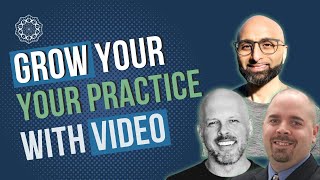
Sachin Patel, Bob Regnerus, and Brandon teach functional-medicine practitioners to use video marketing by targeting bottom-funnel prospects first. Use phone footage with good audio and captions, prioritize testimonials and case studies, and match video type to funnel stage. They offer a 6-video package for $2,997.
Questions this video answers
A 'Deep Funnel Video Solution' package (six videos, planning session, ~2-hour remote film session, video production, bonuses) priced at $2,997 (single-pay or 3-pay option).
They got their first patient within one week after running Facebook video ads; about 50% of viewers watch at least one ad all the way through (quoted result).
Chapters
Hello, my friends. It's satchin. Hope you're all amazing. Today we have a very special presentation. I'm super excited about this and I actually have my remarkable. If you don't know what a remarkable is, it's an e ink writer and I love this thing. I tried to hate it because it did come with a 30 day money back guarantee, but I fell in love with it and the more I used it, the more I love it. So I write my gratitude stuff in here. My gratitude journal is in here. I take notes on my clients and I've got a new notebook that I've created for today's special presentation. So before we get into that, what I would love to do is introduce these fine bald gentlemen. We had an interesting conversation. We got started. We're like, we have to. There's like this cult of bald guys that are into marketing.
Right.
And thankfully I get to hang out with both of you gentlemen and our awesome audience that's going to be tuning in and joining us as well. I want to share with everyone before we jump into the meat and potatoes, how we met. So I actually know Brandon first. In fact, Brandon was one of the last people I actually vacationed with. We met in Portugal in a place called faro and we actually were there doing a speaker training with Majeed and Brandon was a videographer there. And we were in Portugal while the entire world was being shut down. I still remember being woken up in the middle of the night and Majeed's like, dude, we have a situation here. And we had to figure out what we were going to do, if we were going to stay or if we were going to go. Some people left. We stayed and enjoyed the rest of our trip. And I know you stayed an extra day or two and enjoyed the rest of your trip as well. So that was the last time I was anywhere close to an airplane and anywhere close to going on vacation. So we have this kinship. I don't know if you've been traveling or not, Brandon, but we've got this kinship.
We do.
And so as part of one of the mentorships I belong to, I belong to a group of people or an organization, a mentorship organization called tribe for leaders. And tribe for leaders is. Let's see here. Make sure I can mute if you're not muted. Please mute yourself. So I was part of this mentorship called tribe for leaders. And at tribe for Leaders, I was introduced to Bob Regneris through Kevin Thompson, who runs this program. And so he said, satchin, you gotta meet Bob And I did. And literally, I kid you not, within a few minutes of interacting with Bob, I realized he was a genius. And I said, spare me all the details. I want you to share this with my community so that we can help other practitioners who also need to hear this. So that's why I'm coming into this as a student myself. As you all know, I like to learn from the best. And whenever possible, I like to share from what the best people in the world have to say. Brandon, I know you've written a book, and sadly, I don't have a copy of it just yet, so I'm going to order that today. But Bob literally wrote the book on Facebook advertising. Okay, so this is a bible for those of you that want to be marketing, marketing your services and products on Facebook. And so that's how we met. So this is. There's a great story behind how I meet most of my friends and partners in service, if you will. And so thank you both for being a part of my life. Thank you both for putting together and crafting a special presentation for functional medicine practitioners. Tonight, what you're going to learn is how to supercharge your practice with video. So one of the first things I tell all my clients is you have to learn how to communicate and articulate your message. And in addition to that, you also have to be able to make sure people see that message and have a visceral reaction to that message, because you could have, you could have amazing clarity with what it is that you do. You could have perfect public speaking skills and be amazing on video. But if you don't create a connection, a visceral connection with people, or if nobody sees your message, then what was the point of even doing it? You know, one of our mantras is that we only want to create content that's actually worth promoting and spending money behind, because you're already spending your most valuable resource putting that content together, which is time. It's a non renewable resource. So we want to then take that time that we've invested, create something that's visceral, that's meaningful, and then put a strategy behind it, give it some legs so more people can hear it. Right? Type in yes in the chat if you want more people to see your content. And I'll ask you to also type in yes if you feel the world would be a better place if people knew more of what you know in your head. Okay, so if that's the case, then we don't just have a job, we don't just have A business. We have a responsibility. We have a responsibility. When you were born, in this period of time, in all the times you could have been born, you were born now to hopefully make a difference and to have what I think is a chance to make a very, very positive impact on people's lives. And I know that if you're on this call that A, you have a powerful message and B, you want to have more people connect with that message. So thank you both for being here. I greatly appreciate it. And I know at the end of this, all of you will be thanking them for what they're about to share today. So I'll let you both beautiful men, bald men, take it away.
Thank you. Thank you, Sachin. Hey, some of us are shaving our heads. We're not just bald, okay? It's not, you know, there's a difference. Okay, there's a little bit. I shave, but it's a little thin. Okay, fine. But it's all good.
And Bren, I just want to make you heard. I know you for like 14 years and sin thought I was a genius within minutes and you were still like this. Still open for you.
It's still what?
Like, still open and like you're not really sure. We love that. I'm just going to take the clip and put that on session. Just Bob's a genius. So I'm just going to run that.
Yeah, love that. On repeat.
Well, good. Well, excellent. We got, we got a full call. I've been letting people in, we're talking, so. So I'm assuming to take over that job so we can present then.
Absolutely. Thank you. And Bob, I just sent you a quick message if you want to check that.
Okay.
Okay.
I'm not sure what's going on with this. Brandon. I'm going to turn on. Turn on presentation.
Okay.
And then I'm going to let you lead. Lead and change your phone.
Got a little echo going. Okay, awesome. There we go. All right, so let's dive in. Bob, can you switch as I talk?
Yeah.
Okay, cool. All right, folks, here's what we're going to do. We're really excited about this. Here's what we're going to do. We're going to a couple of things we're going to cover today. A case study on how a brand new dental practice got their first patient within one week after running Facebook video ads. And continually gets potential new patients to watch at least one of his ads all the way through for about 50 cents each. This is really fun. It's a really fun project. To work on and it's completely doable. We're going to talk about the five big myths that are stopping you right now from creating video. We've heard it all, we've been through a couple, I don't know, a few hundred clients in the last five years and trust me, and with video you can be your own worst enemy. And so we're going to help you get past that, help you get more comfortable, what it means to get comfortable, what you don't have to be and what people really want from you on video. Ooh, that was some movement there. That was nice. We're going to help you identify the type of video content needed at every point in the client's buying process. There are certain things you can sell with just one video that sells a product or service. But a lot of times people need time to think about this and then they need to see and hear different things at different times in order to make a, take a step towards you and make a decision. So we're going to talk about that today. Oh yeah. Deconstructing our number one video secret weapon. This is always fun. This is a secret weapon that we've kind of evolved over Feed stories and it involves a testimonial which we all know that testimonials how key they are for people to make decisions and to trust you. This one's a little, this is kind of a testimonial on steroids. We're going to show you that too. Oh, and one more thing we're going to learn. You're going to learn about a way to interact directly with Bob and I and turn any hesitation with video creation into a pain free experience. 80% of the work I do with clients is helping them get out of their own way, helping them get out of their head. That's 80% of the time I spend with them. And the rest 20% is just creating great content. So we're going to help you offer that for you. Testimonial from Amy Bliss. Some of you might know Amy, she came to our event in Portugal. I think video is so crucial, not just so important. It's crucial especially for those people like her that are in the coaching workshop, service based industries where someone is hiring a person, not necessarily buying a product. You know, the way I like to position this with people we work with is imagine your perfect patient is as they're researching a solution to their problem. They have about five tabs open and they're looking at different options from their Google search and they're looking for the reason why they choose you. And video. A well crafted video that resonates with people is going to cut the legs out from any competition and position you much higher. All right, who we are. I'm the bald one. Bob and I. Bob, why don't you tell your Facebook story?
Well, I'm gonna tell a quick story of how we met. So I've been in paid digital advertising for over 22 years. You hear me? All right, Brandon, I wanna make sure my audio.
Yep, all good.
Okay, cool. And my agency, the book that Sachin showed you, that was my fifth book. My first book I wrote back in 2007. And it really was a kind of a door opener for. Door opener for me. Allowed me to talk on about two dozen stages in the span of two years, Spoke on dozens of webinars, hundreds of podcasts, and my agency grew. And one of the people that I hired was Brandon. And the story of how we met was I put an ad out on Craigslist for a marketing manager, and Brandon didn't reply. Like all the other marketing managers. What Brandon did was he wrote me and built me a customized personalized website, basically selling himself. He wrote me a sales letter, a digital sales letter. Needless to say, I spoke to nobody else. I hired Brandon on the spot and had the opportunity to kind of get to know him for two years before I got to lay him off. During the. During the crisis of 2009, when a lot of people, a lot of our clients ended up going under, and of course, when you're serving clients and they can't pay you, then that's a really strain on as well. So I got to hire him, I got to fire him. But then we kept each other alive. I fed him work, he fed me work, and we kind of went through trials and tribulations together. And that led me to a place where I started doing Facebook ads in 2013. And I was in a meeting, there was about 100 advertisers in the room. It was an amazing experience. I was in Austin, Texas, in Facebook headquarters, and it was amazing what they shared with us. But the one thing that stood out, amongst others was this is back in 2013, they said, We're a video company now. And what that meant to me was that they were making a significant investment in video. And knowing that Brandon is a creative and a video guy, I went outside to the sidewalk, I called him and I said, brandon, like, this is where. This is where the future is going. And I said, we need to get on video. So this again, I got the year on. It was 2016. 2016. I called them, I said we need to get on the video bandwagon. And we started Feed Stories literally on the sidewalk of Austin, Texas. And we've been doing video ever since. We served probably now over about 1,000 customers in the last five years, either through courses or trainings and things like that. We are a unique combination. Brandon is a copywriter and he is a designer and a videographer. I am a digital strategist and a paid advertising expert. And so when we work with clients, we're able to take them from concept to production really seamlessly because we have such a vast skill set. And so between the two of us, We've got about 45 years of digital advertising experience and we happen to be really good friends. We get along and we've been through the ups and downs together and we really, really enjoy working with clients because we're both empaths and we love to get into people's stories. Brandon has this really unique gift of being able to draw the story out of people, not just the kind of the base level, it's a deeper level. And, and when you can get to a deep level and get that on video, it really makes you stand out amongst the crowd. How did I do, Brandon?
You did great, Bob. Thank you. That was beautiful.
I don't know if I took all your thunder, but that's, that's, that's how we are.
Get a little misty.
There we go.
All right, what do we got? All right, so Sachin, we had a call a while back and his. We were talking about his 90 day plan for a virtual practice. So I would imagine Sachin is at true that most people on this call are in some place on this plan right here.
Yeah, that would be the assumption. I mean you've got to be doing some or all of these things I think this day and age, if you have any hope of creating a virtual practice.
Okay, so I want to put this on our presentation just because I'm circling where we come in and we can help people get unstuck. Usually when a lot of these things may be easier for some or difficult for others, but probably true that most people get pretty stuck in. Oh my gosh, I got to get a camera in front of me and I got to talk and I got to say something reasonably intelligent that's going to resonate with my audience. Oh my goodness, what do I do?
And I think too, Brandon, what Satchin shared with us is this is a bottleneck for a lot of Practices.
Yes.
They're getting to this point and they're getting stuck. And there was just kind of the way the universe works is we kind of met each other at the right time to kind of come in and maybe help some of you out that are stuck in this place or maybe scared to get to this place. This is something that we're going to be able to help you out with tonight and looking forward to sharing some of those things. So what we really want to talk about is why you're not doing video right now. And we've heard it all, and we just want to see if you can identify with any of these things that we're going to share. Go ahead, Brandon. Let's talk about the five big myths.
All right, the big myths. So a lot of these are. People have these myths because we're trained by video in two different ways. One is we see the talking head, all right, that's the news anchor with the perfect smile and the perfect teeth and the tie and perfect hair and makeup. And we think that's what we have to come across like. And so we think, oh, my gosh, you know, I can never be that talking head. That's right. You shouldn't be the talking head. The other thing that can wreck us is that we have to. We look at actors, and actors are just simply people who pretend really well. And we think we have to have this certain charisma or perfect jaw structure or, you know, be beautiful people and all this. No, none of it. So we get trained by this, and we think that's what video's about, when actually the Internet has proved us way wrong. All of us have seen viral videos that have gone around, and they're all shot on phones, and usually they have some element of entertainment and authenticity and resonance, and that's why they get shared and they get washed. So the first one that we come up against a lot is I just simply. I don't know what to say. I need a script. Here's the thing. If you have sat down with anywhere from one to three to five people coming to your practice and inquiring about if you can solve their problem, then you already have, repeat, said, honed and repeated exactly what you need to say on video. You might need a little coaching, might need a little editing at the end, but you've already said this. These are things you've already said out loud to other humans, to other prospects to get them to hire you to buy your. To buy your product or service. So.
So what you're saying, Brandon, is most. Most people have already scripted out in their head. They've already had this conversation multiple times, right?
Yes, exactly. Exactly. And I can't think of one time in the years we've been doing this that we've ever handed a client a script. In fact, we don't, because a script can really trip people up. Everybody can tell when you're reading something, and that's not authentic. The only time we'd recommend a script, if there's something very precise, you need to say, maybe it's a statistics or it's a number or whatever or something that someone else said. That's really the only time you need to actually read something. But other than that, we don't use scripts.
Can I share something about that?
Yeah.
Because this literally happened to me yesterday. I recorded about six videos. And I'm so curious if I did. If I did follow the steps that we're going to learn today correctly. And I'm more than happy to rerecord them. But there was a part, was one of the videos where I was recording five things, and I knew these five things. I made up these five things. But I really felt like I had to have them written down so I could, you know, make sure I don't miss one. All my other videos, one take and done. This video was like 10 takes because I was overthinking it right. And I just got in my head and got stuck and got stuck in this loop. And thankfully my wife was patient and it was a beautiful day. So no harm, no foul, but it just goes. It just became so clear to me as you were saying this that, yeah, that literally happened to me yesterday. And I hate scripts because I always feel like I missed something or I said in the wrong order. I screwed it up. So I love that you're giving us permission not to be scripted.
Absolutely. Absolutely. The other scenario, not to. Not to take too long in this point, but imagine, you know, when you. When a lot of business is done, you know, at the coffee shop or the bar, and would you walk in with a. With a prospect or a potential customer, patient, pull out a script out of your pocket and start reading. You know, that would be kind of awkward. It's the same type of thing with video, is we're going to help you develop a conversational style that you've already done before.
Thank you.
All right, so I need to buy the latest equipment. We have certainly walked into plenty of clients offices for filming, and they open up a closet door and here's this beautiful camera equipment. I Mean the envy of a videographer. You know, they've spent thousands of dollars on this beautiful camera equipment. And there it is in the closet, hasn't been touched. And I asked them if they use it. Like, oh, yeah, we use it. They're great. Where's the footage? It's still in the camera. Oh, okay. So they haven't done a thing with it. You did not need the latest equipment. In fact, I film when I'm doing some of the filming. I film on about a 15 year old Nikon and I bought my second one a couple years ago off of Craigslist for $450 and that's what I use for filming when I'm doing the film. Otherwise we hire videographers or we use our phones. If you're carrying around an iPhone, you're carrying around some of the most sophisticated camera in the last 10 years that rivals anything that was out, you know, 10, 15, 20 years ago. You have a fantastic camera and all you need is just a microphone, a little bit of lighting, and you're off to the races.
Yep.
Have to be salesy. Oh, this is great. So everyone I know, oh, I've got to come off like a sham. Wow. Salesperson. I got to be an infomercial. That makes me feel icky. No, you don't have to be salesy. In fact, the videos we're going to help you create are going to be authentic to you. You're not going to have to say anything you're not comfortable saying. You're not going to say anything that's going to sound smarmy or icky or high pressure. Not at all. Absolutely a myth.
And really, Brandon, we don't like, we produce what people would consider commercials, but we really don't do that. Commercials are very heavily scripted, very polished type stuff. And that's just not what we're here to talk about today. That's beyond the production capabilities of us sometimes and certainly of everyone on this call.
And.
What we want to try to mimic is the conversations you're having with clients face to face. And most of the time you're not being salesy. Like you don't want to be somebody that you're not. Some people are more inclined to sell better than others, but we're just saying we want to capture the way you sell and you don't need to change who you are just because there's a video camera pointing at you. You don't need to change your personality. You don't need to change the way you do things. We can Certainly clean it up and make you look more polished. But you don't have to be sales and you don't have to change the way. You don't have to change who you are.
Exactly. That's a good one. I have to pump out content every day. You know, there's the. There's the. Gary Vaynerchuk and other of these, the marketing, we'll call them influencers or whatever. There's this idea that you've just got to be cranking out, you know, video after video content every day. And maybe, maybe if you have that much going on and you can deliver that much value on a daily basis, go for it. However, that's not something you have to do. Our methodology is about less is more that, you know, one or two quality pieces of video content a week or bi weekly, that people are going to stop what they're doing and watch it. Much more effective than cranking up stuff that, that you're just trying to make things up and you're not sure what to say, but you're just doing because you feel like you have to. So we are not of that belief that you have to pump out thousands of stuff, all kinds of stuff.
And quite frankly, all of us are too busy to be doing that.
Yeah, exactly.
We're working with clients day in and day out. We don't have time to make that much video.
Yeah, it's not perfect. So there's this again. And then we're trained by media, we're trained by movies and talking heads and all that stuff. There's this idea that your video has to be superly high produced, that you got to film it on the expensive camera. The editing's got to be perfect. You know, you had a, you know, again, you had to shave perfectly or the hair is very. No, too much production reduces trust, especially for the business that you're in. Is we don't want something overly polished. People are trained to distrust over polish. That does not excuse for low production quality. And we can talk a little bit about that later on what that looks like. But those imperfections, the humanity that comes through, that is actually going to endear your audience towards you way more.
When you first said that, it might have been a couple years ago, I was really drawn to that, Brandon, that when you try to appear too polished and overproduced, you lower trust. And when you said that and I started to have my eyes open watching other video, I could see videos I trusted and videos I didn't. When I say video, I mean people like, I'm judging the trustability or the character or the integrity of the person by how much like overproduction went into it. And it's just really profound. It's always stayed with me ever since I kind of heard you say that. And what I really like is we're all imperfect people and we're not looking to be imperfect on screen, but we're also not looking again, like someone we're not. And capturing who you are and not. We're going to minimize imperfections and you should minimize those, but not to the extent that you become somebody you're not. I think that's probably the thing that you've heard us say maybe more than anything in the first 15 minutes we've been together. We don't want you to be someone you're not when you turn on that video camera.
All right, so let's dive in. And Bob, I'm going to have you take over here in a second, but we're going to talk about how to supercharge your practice with video and using deep funnel marketing. And I want to give all kinds of kudos to Bob. This is something he developed and that's in the book that he wrote. It's a very, very powerful way to structure video and ads and to meet people where they are in the buying process.
Yeah, deep funnel marketing, I kind of fell into it. The first book I wrote back in 2007 was called Big Ticket E Commerce. And just by happen chance, a lot of the clients that I work with back in the day had a lot of high priced, complicated products and services that they sold. It wasn't just kind of like, hey, I got a tchotchke and it's an E commerce thing and it's click add to cart. They were selling like coaching. They were selling medical services, they were selling real estate. Things were complex, things were expensive. And I really learned early on that you have to do things differently when you are trying to sell something high priced and complex versus something that's cheap and understandable. And so I've always been drawn to working with people like you all who are professionals, who have credentials. You have a client base and you're trying to develop trust. You just have to do things a lot differently. And deep funnel marketing came about from kind of this thought that most people underestimate the lengths or the depths that they have to go to in order to woo a prospect. And those marketers, those professionals that are willing to go the mile with their prospects are going to win in the long run because they are as you're going to learn, you're meeting the prospect, where they're at. And so what deep funnel marketing really is is essentially this. It's delivering engaging content delivered at the appropriate time to a receptive audience using the most effective media available. We'll give you a second to take a screenshot of that. I think we're going to record this too. I believe this is recorded. So feel free to just enjoy listening but take, you know, just take some rough notes. But the idea here is this, is that marketing is a conversation. Marketing is not an action. What you are attempting to do is have a conversation with the marketplace. Now if you have done any sort of networking, if you've gone out to a party, even in a casual setting, you know that there is different levels of conversation you're going to have. You're going to have the casual conversation with somebody you don't know, which is, hey, how you doing? Where do you work, where do you live, that type of thing. And then all of a sudden you, you come over to somebody and say, hey, you know, we've met before. And you realize that you met before and you go to a next level of conversation and you're not talking about the real kind of superficial stuff you start to get into. Yeah, well, how's your son doing? I remember your son was going to University of Illinois and oh yeah, and then you get to a deeper level of conversation. So that's the way that Brandon and I view marketing, which is it's a long tail conversation. So you need to determine based on where you're at with that prospect the type of content you want to give them. So the right engaging content at that appropriate time. All right? And then if you do that, you've got that receptive audience and then choosing the media, that's a whole other piece of this. But that's really what deep funnel marketing is. And the good thing is that deep funnel marketing is platform agnostic. What I mean by that is, yeah, I wrote the book on Facebook, but I'm not here to say that Facebook is the only way for you to get clients because most of you are doing things like maybe you're doing TikTok, maybe you're doing LinkedIn, maybe you're really good at Instagram, maybe you're hotshot at email, maybe you're really good at direct mail. Deep funnel marketing is applicable to any platform. So what we want to teach you as a concept so that whatever media you're most comfortable with, you're going to be able to be successful. Okay. The reason is, is that you are giving the prospect control. Now this is a really, really strange thing to say to somebody, especially a marketer, to say you're going to give over control of the process to your prospect. Now in reality, you never had control in the first place. It's only an illusion. All right, Brandon. You know, Brandon has this saying, like you're either a narcissist or like a Glengarry Glen Ross if you've seen that movie. And Alec Baldwin, like hard nosed salesman, like I'm gonna dominate my prospect, I'm gonna beat him in a submission and they're gonna sign up just because of my, the way I overpower them. Talk a little bit about that, Brandon, because that's, that's, that's what most people are taught and we hate it.
Yeah, I mean, so I've spent enough money on Internet marketing information products over the last 15, 20 years and have been wooed in by some of these said marketing narcissists. And really it's just someone who, there are people who generally get off on selling something regardless of whether or not it's the right fit for someone. And that's kind of what I'm talking about. And that's not what we at all what we're interested in. And I know no one here is interested on that. And I think we just want to reinforce this. That is not what we're going to ask you to do. That's not what we're going to coach you to do on video at all. In fact, we're doing another presentation in a month from now. And we're really kind of diving into this concept because it goes against a lot of traditional sales and marketing training out there where lots of levers and devices are used, false scarcity and all this stuff. Well, you know what, people get wise to it and they get sophisticated. And I'm not a believer in treating our audience and our prospective customers and patients as they're dumb. I like to treat them like they are, they're smart. So let's respect them where they are. And that's really a premise of what we're doing. We're not asking anybody to be hard sell this for a product or service that doesn't fit the customer because it.
Doesn'T fit most people that we come in contact with. Our clients are people that want to serve the greater good. They care and love their prospects, their clients. And they would never want to be like coercing somebody into doing business with them. Yes, it's not worth squeezing the extra juice out of that turnip if it's not going to be good for the customer. And so what we are saying and what we believe, and I think if you guys would believe this as well, is that you really never have control over the process. I mean, ultimately your prospect decides whether or not they want to open up their wallet to you or not. So you're really never in control. Even if you think you're hypnotizing them and moving them through a process, in reality they're in control. And the more you realize that and the more you just lean into that, I think the better off you're going to be in terms of being comfortable with this and being able to market to them in a way that's authentic to you and authentic to them. And by the way, this is timeless, this principle. I actually learned this from a book written in 1966. It's a gentleman named Eugene Schwartz and he wrote the book Breakthrough Advertising. The book is out of print, although it's in print. It's. The book actually costs $125. It tells you a little bit about the value of this book. It's a hardcover book. It is kind of like fundamentals. I am a high school basketball coach and I do that in the winters. I coach 15 and 16 year old boys. If any of you have 15 or 16 year old boys or have had them, you know what I deal with every day? Imagine putting 12 and 13 of those in a single room and being with them for four months. They know everything, right? But the way to take a team like that and a way to. I believe the way to approach anything is through fundamentals. We die. We don't dive into advanced strategy our first day of practice. In fact, throughout the season, we're working every day on dribbling, passing, shooting, really basic fundamentals that are key to the game of basketball. And I approach marketing that same way, and so does Brandon, is we want to talk about timeless principles. So what you see in front of us now is something I saw in the book Breakthrough Advertising. I've adapted it. It's called the Customer Awareness Timeline. And once you understand this, it's going to completely transform the way you look at marketing. I guarantee you when you approach somebody, they're going to be at some point on this timeline, most of the marketing you do is going to be to people that are unaware, meaning they're unaware that you exist. They're unaware that they have a problem. Now, internally, subconsciously, they may be aware of a problem. It's our job as a marketer to engage them in that conversation, to maybe have that uncomfortable conversation to remind them of something. All right, Most of you are dealing with patients that have had long term pain, long term sickness. They, you know, they've been unhealthy, they've been tired, they've been unable to do things for years. Okay. And they're finally getting to the point where they want to do something about it, right? They're going to take control of their health. So you're going to have different levels of marketing based on where these people are at. And we're going to get into some of those details. But one of the biggest mistakes I see with people who are trying to be successful at advertising, like paying for advertising on Facebook and Google, is that they are advertising to the wrong point in the timeline. What they're doing is they're always advertising their solution before they even present in the problem. So we're going to take this and we're going to show you how we've adapted this. Now we're going to get to the video part, but you really need to understand the structure of this so that as we put video, right, which is going to be kind of the flesh and the flesh and muscle on this skeleton, it's going to hopefully transform the way you think about things. So we want you to be thinking about where is my prospect in relation to this timeline and the timing and the conversation you have is what's going to make this all successful. Anything on this, Brandon? No.
You're doing great. Keep going. Fantastic.
Cool. So what default marketing is, it's. It's the practical application of the customer awareness timeline deployed on web and social media platforms. Okay. So let's put this into a picture. Right? So I have these written concepts and I can speak them and then Brandon can transform them into pictures. So this is literally years of Brandon and I kind of honing this. Like, okay, how do we put this and how we put this into a picture so visually, for those of you that are visual, you're going to really appreciate this. Can. I can appreciate this because it helps me think about it. But what we are doing when we start a marketing campaign is we're moving somebody from awareness to decision. Okay. And so what we need to be thinking about to a unaware audience. Now I'm going to throw some marketing terms at you. There's top of funnel, middle of funnel, and bottom of funnel. And the way I want you to think about it is this top of funnel. If you can see the shape, right. It's in a funnel shape there. Top of funnel is your widest audience, okay? That is your broad audience, that's your cold market, all right? We call that cold traffic, meaning you haven't marketed to them before. And they're really in a state of unawareness. You don't know if they're problem aware, you don't know if they're solution aware. You don't know if they're actively searching for solutions. You just don't know, alright? So they're unaware. All we're trying to do here at the top of funnels, build awareness, okay? Now once we move them from awareness to the middle of funnel, we've made them aware of the problem they have. Now what we do is we educate them and we build influence, okay? So what we're doing is we're educating them on the problem they have, we're educating them on how we solve that problem and we're demonstrating our ability, our expertise, our credibility and our influence through that marketing as well. And then what we're doing is we're moving them from that point to a point of decision. So when they get to the bottom of the funnel, this is where they're aware of the solution, they're aware of the problem, they're aware of a solution and they need to make a decision. So what we've done is we've kind of broken marketing into these pieces. And if you start to think about, okay, if I meet somebody on the street, I'm not talking about marketing, if I just meet somebody and I let them know I'm a functional medical practitioner, okay, they're going to be at some state of either, oh, what is that? Or oh, my goodness, I've had this chronic pain in my hip for years. Is that something you could help out with? Or I've been tired for the last six months and I haven't been able to find a solution as to why. Like, you can tell the different states of awareness, right? So somebody who is just, I don't even know what you do, you're gonna have a different conversation with them than somebody who admits to you what their problem is and they're looking for a solution. Can you help me with this pain? Can you help me with this condition? All right? And what they're doing is they're kind of seeing, hey, you know, I've tried all these things, I take all this, I take these painkillers or I've tried this herb and I've tried this supplement and I went to my medical doctor and I haven't Got any help? What can you do? Right, that's we're mimicking that conversation that happens would happen in person on a web or social media platform. How are we doing, Brandon?
Good. I just want to offer a couple things. I want to reiterate that you can take this model, you can apply it using any really type of media. It could be a direct mail campaign. Maybe you're going to go buy a list and you're going to blast out some postcards to make people aware of something and then lead them down a path to maybe it goes to a landing page or additional sales letter or something. This is completely independent of the media. You can mix and match media around this. And also important to understand is this covers the A to Z of what a potential patient, customer, client needs to hear to make a decision. This, this is the gamut. You can take this and apply this to pretty much anything, any product or service and it will work.
Yep. So I'm going to do something a little bit unorthodox and I'm going to start at the bottom. All right. If you, if you were to get my book, it's available on Amazon, you're going to see that I start with the bottom first and work my way to the top. And I do this on purpose because the person that is most likely to do business with you is problem aware, solution aware and out shopping. Okay. They're the easiest prospect to convert somebody that is already aware of a medical practitioner, functional medical practitioner. They're already aware and they're looking for one. All right, that's bottom of the funnel stuff right there. So what we want to do is we want to develop that marketing first. Because it's the lowest hanging fruit, it's going to cost less to convert them, it's going to be easier to convert them. And so we start there. So what do we do at the bottom of funnel? We help them make a decision. So what we're trying to do, we're going to move some things around here. We need to focus first on overcoming objections. Okay. Now if we're doing a video here, it's not about how long the video is, it's about how relevant it is, the content that's relevant to what they are going through. So I'm making a decision. Are you the right practitioner for me? Okay. And so what we like to do here is we show proof. We use testimonials and case studies. Sometimes we'll suggest, especially if you're a product based business, you have products, go ahead and incentivize them maybe with a discount or a bonus, but what we're doing is we're selling them into our. Into the next step. Now, it's not necessarily, hey, you know, hire me. It could be where you move them into a free consult. Maybe that's in person. Maybe it's over the web these days. However you do it, it's not about selling them into the thing, it's about selling them to the next step. So most of what we're going to do from a marketing standpoint is sell them to the point where we can make our sales presentation. I don't know, Sachin, exactly what you teach, but I imagine most people are using some sort of consultation or free consultation as their sales mechanism.
Yeah, generally we encourage people to get on a discovery call to make sure that all the clients questions are answered and then the right fit.
Okay, so then what we're really doing here, Brandon, bottom of funnel is we're trying to sell them into that call, right?
Yeah, exactly. So your put your sales video or I call a next step video. I think you can go to the next slide, Bob, but might have it there. Yeah, yeah, bottom there. So your next step is really, again, you're not trying to actually sell them on your practice. You're selling them into a conversation and on that video in that you're simply going to tell them what to expect. And I can't emphasize that enough, is let people know what's going to happen and what's not going to happen. You're not going to get sold. You're not going to feel pressure. We're going to have a conversation. We're going to see if we can help you with your problem. I want to learn about you and it's going to be comfortable and it's going to be easy. So that's what the sales video or step in. That is what that's about. It's very, very easy. Again, we use the dating analogy a lot, but it's inviting someone for coffee in a conversation.
Cool. And I'm going to reshare the screen here, Brian. I just want to make sure that I'm sharing audio and so forth with this.
Okay.
All right, so I'm gonna, I'm gonna play a bottom of funnel video for right now. This is. Was this somebody that we worked with in Portugal?
Yep, yep.
Awesome.
Yep.
I'm just gonna play a little.
My name is Amber Duggar and my clients are incredibly driven, motivated, successful entrepreneurs that are looking to get more clarity and control of their cash flow and understand where the heck their money is going. I hear that you've saved my marriage. I hear this is the best investment I've ever made in my business. I just got a call yesterday from a client who is completely out of debt after struggling with her practice for many years. And she was able to pay in cash, anniversary trip with her husband. And it's just I get chills thinking about what my clients have been able to do with this process. It warms my heart to know that they're sleeping better at night, that they're not thinking about this as a. As a stressor, because it's absolutely not something that needs to be stressed about. I was.
I don't want to play the whole video. It's about a six minute sales video. So Brandon, why don't you share a little bit, break that down a little bit for people kind of. What, what elements did we have there that were important?
We're talking about sales video.
Yeah, that particular sales video. We just highlight a couple of things that you heard in her sales video.
Sure. So I think that it's important to tell stories during it, you know, your sales video, is it about you? Yes. But it doesn't always have to be about you. A lot of times when I'm coaching people and filming is, you know, I'll get them talking about their business, why they're in the business, who can they help and why? And then I'll get them to tell me one or two stories of people about people they've helped. And that is where people really get drawn in. You know, you can talk about yourself all you want, but when you start talking about how you change someone's life, that's a whole different shift in awareness because what happens is people start to listen much more intently because they, they're wondering, oh, gee, could that be me? Am I like that person that she's describing? Am I in that situation? And if that person is, then they're going to resonate with that story and they're going to be in for the ride. So that's a key component, is not just make it all about. This is what we do. And here's my features and benefits and we solve this. But to sprinkle in some stories one or two is what I always like to recommend of your perfect patient, your perfect avatar patient, and how you help them with a very specific issue they're dealing with.
Yeah. And I heard, I heard that right at the beginning of the video she kind of said who she was, but she immediately got into the problem. She solved and who she serves and then told a couple stories right away of transformation. And that's really the key to a great sales video is not necessarily scripting. Like, all right, how am I going to sell them? Really what you're trying to do at that point is like, hey, I serve people. Here's how I serve people, here's who I serve, and here's the types of people that have achieved the results that you're looking for. It's a real simple formula, if you have a track record is just to tell the stories of people that you helped. Okay, cool. So let's talk about middle of funnel. So we're going to move up now. So we're one step above helping them make a decision. So in this stage, what we're doing is we're focusing on the solution now. All right, what is the solution to the problem? We're trying to build rapport and we're trying to nurture the prospect for us. We're trying to demonstrate our credibility and our competency. We're trying to flame the desire of our prospect to want to engage with us. Okay, and again, video length here is not relevant as much as the content itself. Somebody who's interested in you is going to tolerate a longer video. That bottom of Funnel video we showed you is about six minutes. The further they get down the funnel, the longer your videos can be. Typically, the more you move up the funnel, the shorter the videos are going to be because they're less tolerant in terms of time because they haven't made that emotional commitment to you yet. But again, what we do at every level is we share stories of transformation. All right, so this is a problem aware audience who were trying to move from. Do you want to get your problem solved? Okay, so Brandon, talk about some of the videos that we use to help make that happen.
Sure. So testimonials. Everyone knows that we're in a testimonial or review driven society, especially for functional medicine. My gosh, if there's ever an important place to have testimonials from patients that you, that you've helped, that's the place. There's a box on the screen. Bob, that better? Okay, so, so yeah, testimonials, absolutely key. In fact, a lot of most of the time when we're engaging with, with, with coaching, we're saying, okay, right now is the time to call in three to five favors from your best patients, clients, customers. Get your raving fans. Let's get them on a. Let's schedule some short time with them and get Them talking about you and how you help solve their problem. So that will, it's absolutely critical. A case study which we were talking earlier, we were talking about that secret weapon. We'll go into a little bit later. But a case study is a, is a testimonial in combination with you telling the story as well of how you held their hand. We'll talk about that a little bit later. Very powerful. And FAQs, frequently asked questions. I like to, I like to think of, you know, frequently asked questions as they're actually objections in disguise. There are micro objections. There's, there's. You're trying to reduce friction, right. You're trying to, you're trying to grease the skids. You're trying to make the interaction conversational and easy. So when you have a good solid base of frequently asked questions, your, your. And as people are in the education mode of the funnel and they're self educating, those FAQs are very important and they're super easy to do. Here's why. All you have to do is, is sit down and think about what do you hear yourself commonly? What questions do you commonly answer? Hear yourself repeating over and over again or your staff is repeating over and over again? Write them down. Usually that's about 10, between 10 and 15 videos. And these are one, two, three minute videos. These are not long drawn out, one question at a time. Very, very powerful. Not only position you as the expert, but it begins to pre sell people and get past their objections.
Yeah. So I'm going to show another example. This is a dental practice. This is a middle of funnel video here. So I'm going to play Dr. Copeland right now.
What our patients love about Invisalign is it can correct almost anything, but no one even knows you have braces. What is great about Invisalign is compared to traditional braces, there's no metal, no wires. You're not having to constantly come in to see us for adjustments. We typically send you home with a lot of trays. You change them out at home and we just bring you in occasionally to check your progress. With traditional braces, it's very difficult to brush and floss your teeth. Invisalign, you take the trays out and can floss like normal, keeping your oral hygiene excellent throughout your treatment. With traditional braces, there are a lot of limitations with what you can eat. With Invisalign, you take them out, eat whatever you would like and put them back in. If you are unhappy about your smile and you've maybe thought about the idea of, you know, getting braces or doing something about it. Please give us a call, come in for a consultation with us, and let's see if Invisalign is an option for you.
So this is. This is a middle of funnel video. We actually run this as an ad on Facebook and Instagram and YouTube for Jones and Copeland. And so what you notice about this video, first of all, we want to highlight this was done shooting remotely with two iPhones. So we had one iPhone set up with the one angle and then a second iPhone with the second angle. You couldn't tell that was really high production quality. That's what we're talking about, is you don't need fancy equipment. Sorry for the sidebar, but I love the quality of the video out there. But you notice it's solution focused now. Right. And what she does is she's saying, like, Invisalign is the problem for crooked teeth and it's an alternative to braces. So she's presenting an alternative to something that people don't like. So I think a lot of you could be thinking about, okay, I've got a treatment that's an alternative to maybe a western medical treatment or an alternative to taking this medicine. You could present yourself in comparison to something else and show why that's better. And so what she did there is we got her to move between solution and back to problem. Solution and problem. She kept bridging the fact that Invisalign is a solution that is better than braces, but it is a solution to the problem of having crooked teeth. Anything else that jumps out at you, Brandon? No.
Margaret comments there. Yes, it looks fancy. And that, like we mentioned earlier, those are shot on iPhones. And I was actually, I think, on a zoom call coaching her. You saw how easily she was talking about what her subject matter. I'm just sitting there talking to her. I'm having a conversation with her. I'm on a zoom call with her. Right. This is all done remotely. And I'm telling you, the quality of an iPhone and I'm sure Androids are getting better as well, but they're solid.
Yeah. I mean, that's HD 1080P. Yeah. But you. So the goal with shooting a video is you don't want the quality to distract somebody. Right. You want them to focus in on the content. And that's what I think that is accomplished in that video.
So what our patients love.
I'm going to jump past this. So the results that I want to get, I want to get to top of funnel, because we're getting to the top of the hour. I want to make sure that we get everybody out by the bottom of the hour. So let's move now to where most people start, okay? Most people think, all right, I got a market. I get. I got to get some new clients in. Let me run some ads. And this is where everybody jumps to cold traffic, top of funnel, unaware, all right? It is where you're going to spend the most money. It's where you're going to have the least amount of conversions, okay? If you properly build your funnel bottom to middle to top, you're going to have much more success, because people move from the top of funnel into the middle of funnel, as you see there. And if you have those things set up, all right, you have a better chance of converting them. What people mistakenly do is they build their cold advertising first, and then they start getting traffic, and then they haphazardly think, oh, I got to put together some retargeting, and I need to put together some content there. And, oh, my goodness, like, I got to have a landing page because I need them to register for a free call with me. And they end up wasting hundreds, thousands of dollars because they don't have everything built, all right? So that's why we advocate build it from the bottom up. And then when you're ready to go here, you're ready to go. So what do we do here? The biggest mistake that you could do here is talk about you, okay? What we're trying to do here is talk about the problem that prospect has. All we're trying to do here is get attention, all right? We're calling out the elephant in the room, as Brandon likes to say. We're demonstrating that we have an understanding of a problem they have. Now, they may be unaware, all right? So you may need to prod them, okay? A lot of your patients, I can guarantee you, are really reluctant to admit they have a problem, all right? And part of your job is to kind of agitate them, all right? We're not looking to manipulate them, but sometimes, like, we need a kick in the butt from the universe. Well, sometimes you, as the professional has to give a little kick to these people. They're not going to get any better. They keep doing the same thing. And it's your job as a professional to prod them. So what we want to do is we want to prod them and identify that problem. Scratch the itch, you know, like a mosquito bite that is dormant. All of a sudden, you itch it, and then it. Itches and itches more and you can't ignore it anymore. So I want you to be a little bit like a mosquito bite. But what we're doing here is we're identifying the need, but we're not selling our solution yet. All we're trying to do is get people to identify as, hey, I'm interested in that. Okay, Brandon, talk a little bit about this from this.
Oh, these two things. You've also got a great box in your upper left corner there, Bob. So, couple of things for the top is, you know, ads and outreach and prospecting. These are designed. These, they're anywhere from 30 to 60 seconds. And as Bob said, they're designed to kind of be a beacon. They're designed to get attention, capture someone's attention. So usually they're going to be very short. And generally, if you've been doing any kind of marketing, you've heard about headlines, well, an ad or an outreach or a prospecting video is a headline. You know, you're going to hear people say things like, hey, if you're someone who suffers from X, Y or Z, then you might consider this or that. Or are you someone that has chronic pain in the lower back and has tried everything? It could start with a story. You could have it. You can lead with a testimonial because, boy, you get some of the best headline attention. Getting statements out of someone who has actually had the pain or, or has had the problem. And they talk about the transformation they went through. Boy, you can get lots of just beautiful content out of that. And it's all authentic and it's real and it's not smarmy. And it resonates with people because people are, again, when they watch a testimonial or a case study, they are looking for themselves in it. So that's another way to use a testimonial or case study is use it in a short ad.
Cool. So I'm going to show an example here, Brandon.
Okay.
And again, this is, this is a different dental practice. And I just want to kind of show this example as a top of top of funnel ad.
If you're somebody that's terrified of the dentist, who's had really bad experiences in the past, but also somebody that knows they want their smile to look and feel better, then I want to give you hope. I want you to understand that at our practice, we're trying to change the dental industry and change the perception that patients have about getting their smile problems fixed. When we meet patients at our Ancaster dental practice, a lot of Them have had really bad experiences in the past with our old dentist. Sometimes it's because they've had physical trauma and it scarred them for life, and now they're just physically afraid of coming into the dental office. More often, though, it's not physical trauma that keeps them away from the dentist. It's just bad experiences in general with dentists who didn't listen, who tried to push them to do things they didn't want to do, where the patients felt pressured or judged or ashamed or embarrassed to visit the dentist when patients first.
Let's talk about that. What. What is Dr. Ling doing there? Brandon, That's. That's really key.
He's nailing. He's calling out the elephant in the room. You know, it's not that people don't realize that while my teeth are crooked or the crown is broken or they're yellowing or needs needed, you know, Invisalign, they're fricking scared. They've had a terrible experience with some idiot, and they don't want to go in. And he's addressing that. He's addressing the core fear. I love this practice. I love working with these guys. And this is. This is me again. This is me on a zoom call, talking to him and drawing. This is all him. There's no scripting. I'm just asking him questions and getting him to talk about it. And he.
If you're somebody that's terrible, I'm sorry.
And he nails it.
I'll kind of pick it up and just let.
They can expect a different experience. We don't rush into solutions.
We don't.
Our goal is to get a better understanding of your smile problem, what your concerns are, what your values are, what your priorities are. And once I have a better understanding of not just where you are now, but where you've been in the past and what you're trying to achieve in the future, then together we can come up with a plan that is the best and easiest path to get you where you want to go, while fitting it also in your timeline and in your budget. We don't shuffle you from dentist to dentist. You're not going to see two or three or four different people. We deal with one person, one at a time, giving you our full attention and our full care, because we know how important it is for you to make these decisions that are major decisions that are going to impact every smile and every bite you take for the rest of your life. If our practice sounds like it might be a good fit for you, then the next step is to give us a call, visit our website, come on in and make an appointment. We really look forward to meeting with you.
Boom. Just nails it.
What you were doing there, Brandon was. Excuse me. What you were doing there, Brandon was. You were actually asking him questions about what, what are common fears of patients who come into his practice. And you really just kind of let him riff about, okay, they're scared about this, they're scared about this, they're scared about this. You know, how are you, I think you asked the question, you know, how are you different from the other practices that they could choose? Right. That's just some of the content he came up with.
Yeah. Another thing. So one of the things you hear him and he said it, which is super important, I want to encourage all of everyone who can hear this call to understand this concept is a prospect wants to know that they are part of a process. They want to know what to expect, they want to know what they are going to experience. And he said it right in the middle. And probably because I asked him, I said, hey, tell me about the experience of working with you. And then he just ran with it. And so what did you hear? It's like, this is what you're going to experience. This is what you're not going to experience. You're not going to get shuffled around, you're not going to get, you know, bounced from Dr. Doc. You're going to be paid attention to. That's huge. People, again, they want to know, if I sign up for this, if I get on this roller coaster or if I'm going to get on this ride, then what's it going to feel like? What's it going to seem like? Am I going to be safe? Am I going to be comfortable? And he did a brilliant job of doing that. And again, I want to emphasize that was shot on an iPhone. The straight on interview was an iPhone. And the B roll was actually a videographer that went, I believe, and filmed at a separate time. So you see how easy it is and how seamless it was to integrate.
Actually, Brandon, that was the office assistant walking around with an iPhone.
Seriously? She's good.
Yeah, she's really good. Yeah. And there's, there's some stock footage in there as well to kind of breeze it. Talk a little bit about that, Brandon. So doing a face to camera like we're doing or talking off camera, we don't have time to kind of dig into that style. But why do we add what's B roll? Tell us what B roll is and then tell us what archival or stock footage is and why.
So B roll is just that footage you see. So you're not just watching someone talking the entire length of the video. It actually you pepper it in about every five to eight seconds or so. And that just holds interest. It's also designed to illustrate what that person is talking about. So you're overlaying his what he's saying with, you know, again, what is the experience and that you can see they have an incredibly beautiful dental office there. Archival footage is just like stock footage. You can find it anywhere online. It's not expensive. It's actually very well shot. And you can really pretty much find any type of footage to support what you might be talking about for your practice, especially for functional medicine. It's out there, it's not expensive and we like to use that.
Cool. So we are not done yet, but I thought this would be a good opportunity, Brandon, for us to maybe just answer some questions that people have, maybe one or two questions before we jump back into the rest of the prez. So if you have anything, feel free to unmute or put a chat.
All right, from Tim, do all these videos land on your website? A lot of them can live on there, Tim, Your sales. So if we're talking like bottom from funnel up, we're starting with some kind of a next step call to action video. Some of these are going to live on whatever chosen paid platform, Bob, if you want to talk about that.
Yeah. So when you take these videos, you're going to have some videos that are on your website. Those are typically your FAQs, your sales videos and things like that. You're going to create a lot of videos that are for paid advertising only. So they're only going to be in the Facebook, Instagram or YouTube. They're not going to be used or seen by anybody if they land on your website. So it all depends on how you use them. You know, we have some B2B clients who are only going after people on LinkedIn, so they're using their videos in the LinkedIn feed and on their LinkedIn profile. So, no, you don't want to just plop all the videos on your website. You want to have kind of your big why? On your About Us page. You want to have your sales video on your sales conversion page. You probably want a welcome overview on your homepage, you'll have an FAQ section, you'll have a testimonial section. So they're organized so that it fits in the context of that. So some website videos Some are probably living on YouTube. You could embed them in using Wistia or Vimeo as well, and then a lot of them on your advertising platform of choice.
Someone's talking about posting on multiple platforms.
Yeah. So here's kind of my best advice about where you're posting videos. So I found it to be very difficult for somebody to really be fully present in multiple social platforms. You tend to. It's either your personality or your comfort level. You'll land on one that most suits you. So you can certainly have a presence on YouTube and Facebook and LinkedIn and Instagram and so forth. But most people we end up talking to have just. There's one platform that they just kind of focus more time on just because they either get more prospects and clients from it or it most suits them. But you can post the same content. You don't have to really change it up at all. We love repurposing and leveraging video. In fact, we'll take one video you can post on every major social platform. We typically don't recommend you do it on the same day like you do YouTube on Monday and Facebook on Tuesday, Instagram on Wednesday, LinkedIn on Thursday. You know, you could. You could stretch it out and have one piece of content all week. We love taking a video and transcribing it and posting on a blog. We like to have. We take the transcription, actually turn it into a blog post. You could have somebody clean it up. You could post the video on your blog and have the transcript below it. So there's a lot of ways to, you know, kind of use the whole animal, as the chefs say. So that works real well. Yeah. Hootsuite. A lot of our clients use that tool. I use that tool as well. So it's a good way to schedule it and post that out. Yeah. Are you taking on new clients or do you have a DIY course? Yes and yes. And we'll have a chance to talk about that. That wasn't a leading question at all. Thank you, Anu.
Thank you.
We'll certainly talk about that, but I want to make sure that we're respectful, everybody's time. We have a couple more things that we definitely want to be sharing, so let me pull that back up, Brandon, and then we could continue on with the prez. So. Right, let's talk. We kind of hit this a little bit, but maybe spend just a minute or two on this, Brandon.
Sure. So we all know the importance of testimonials, especially in your practice. The secret weapon is case studies. Now they're easier than you think. I would suggest they're very, very, would be very effective for you because the testimonial, which we have a simple methodology to get testimonials from patients, clients, and we film that and you can get a nice produced testimonial. A case study is we actually film you and you are talking about the experience. So we do a back and forth. So we get you talking about the patient, the patient's talking about you and their experience. And it's a back and forth and it is the complete story of their transformation. How you held their hand, how you discovered that the problem they thought they had wasn't the real problem. And because you are so awesome and you held their hand and because you care, you talk about the story of how you got them back to a certain level of health. So that is huge. And I want to encourage everyone to be thinking in that way.
Oops, sorry about going backwards. And I want to be clear too. We deal with clients in sensitive markets and you're certainly in one. I'm sure you have this discussion a lot, Sachin, in terms of making claims. So what you want to make sure is if you're using testimonials that you know it's your client's story, all right, and you know those claims can't be refuted. And make sure you have proper disclaimers that you know this is this client story and is not indicative. Of course, you know, you got to be very careful of claims that you make and, and those that your clients make. But if they're telling their story, all right, as long as you have the proper disclaimers, then you should be able to use them without having fear of kind of repercussions. Sachin, do you guys get into that at all in terms of using that type of material?
Probably not as much as you do. And I do encourage people to definitely get video waivers to make sure they have permission. And also we always, like, I think most functional medicine practitioners, especially nowadays with censorship and the stuff like that, are very, or at least they should be very sensitive to that because we have to be careful what we can say. And I know we can't say treat, right? We can't say cure in many cases. So we really have to kind of dance around that a little bit and making sure that especially now, because if we're going to put some rocket fuel behind our message, more people are going to see it and connect with it. We don't want our videos to be a liability. So, yeah, totally important Point. Thank you.
What you really want to do is get into the reasons why your client started working with you. Talk about the working relationship and some of those things. We had a client a number of years ago that sold infrared saunas, and we had to be real careful because the person that it was a person actually designed them. And of course, he said it cures cancer and it cures this. And we're like, okay, slow the roll. We can't see those things. Right. You have to be careful about the way you present things as treatment and cures and things like that. So you want to be sure that you know, number one. Yeah. You want to make sure you get a sign off from your client, but make sure that they're not making claims that can get you in a hot water down the road. Yeah. Especially if you're putting money behind it and you're getting out there.
Cool.
Anything else on this, Brandon?
The only thing I want to mention is people want to see themselves in your testimonials and case studies. That is the reason they exist. They're looking for a story that they can insert themselves into. So a lot of times we think it's about the patient and about which it is, but people are looking for themselves. So when you are choosing people to give you testimonials, choose your avatars. A female, a male, three or four or five different ones. Hit all of your avatars, the people you can most effectively serve, and have them tell their story.
And it isn't always the person with the most outlandish story either. Sometimes it's about somebody who just has a common problem and they got a result. The best testimonials talk about transformation. How has my life changed after working with you? That is what people are looking for. Is my life different? Is my life better after working with this particular service provider? That's the best thing that you could capture on film.
Awesome.
All right, go ahead, Brandon.
A few ideas why your videos aren't working. A couple issues. You know, sound is more important. Sound is probably actually the key thing. And film your videos. So we want to. We recommend just a small microphone. You can pick them up for 30 bucks on Amazon for your iPhone, if you're going to use your iPhone. But sound is in. Is unforgivable. Lighting is forgivable. Even, you know, maybe a collar out of place, you know, a shirt wrinkled a little bit. Forgivable. Not poor sound. So when you are filming video, make sure you're in a space where you're not going to be affected by you Know a lot of outside noise or ambient noise around you. Another reason would be there's no hook, there's no call to action, there's no next step. Tell me what to do. You've engaged my attention. I'm interested in what you're talking about. Tell me what I'm. Tell me what to do next. How do I take a step towards you? Ask me out for coffee.
Well, really, you know, really, Brandon, I think one of the, one of the things we look at at every video is the stats for the first five to seven seconds. And typically one of the things we've really worked on as a, as a firm for the last five years is being better at our, at our first five, 10 seconds. We find that if there's a fast drop off, there's something that didn't work at the beginning of the video. So it doesn't matter what you say a minute in, if you lose them after five seconds. So we really strive now to figure out at the beginning of a video, we want to make sure we hook the viewer so that they stick. All right. Our goal is to get them through the first few seconds so that we can get them to the content we want them to see. So if you're finding like, hey, I'm running this video and it's not working, check the first five to seven seconds. See if people are dropping off and not even kind of engaging with it. That's. That's one thing you want to check there. And that kind of goes in with the second one. And I, and I talked about this, is that you're running the wrong type of video in the wrong place. So you may be running kind of a bottom of funnel type video in the top of funnel and the timing's off. You're asking them to do something that they're not ready to do yet. All right. That's typically what I'll find is that people will lump everything together. They'll lump cold traffic, warm traffic, hot traffic into one campaign, or they'll have one video and make it try to do everything at once. And we found that doesn't work. If you could take pieces right, and make sure you have, this is the bottom of funnel video, this is the middle funnel video. This is a top of funnel video. If you put it in the right places, you're going to find that it works much better. And then, Brandon, four is pretty interesting. There's this balance that we have to go through with video. Talk about that a little bit.
Yep. I think it's. Is, are you asking or are you trying to give a drink from a fire hose? Again, going back to the dating analogy of are you asking someone to get married? Are you asking them for coffee? And it's again, this is where it goes back to. The customer is in control. The viewer is in control, not you. And so we meet them with just enough information to get them interested and curious and take them a little further. We don't want to try and dump everything in their lap in one video. That can be overwhelming and people don't have the attention for it. So we want little by little.
Yep. And then just one thing, it's really critical these days is get captions on your video. Most platforms allow you to generate them. There's dozens of tools. Rev.com, temi, Otter, AI. There's plenty of services. Get your videos with captions and always load them with captions. Almost 70% of viewers, this is back in 2019. I imagine this number is even higher. Most people watch video with sound off, so make sure that they can see your message and see your pictures. Right. So understand that a lot of people are watching videos in places where they need the sound off. At work, late at night, in the bathroom, like, really, you know, like, let's just be honest. So do them a service by having those captions on. It's really, it's really critical. So, Brandon, we kind of covered some of these. Let's just hit maybe a couple highlights. So how, if you were going to tell me, how can I be more comfortable in camo? Give me a couple pieces.
Stand up instead of sit down is one thing. It's not always useful. A lot of times you saw some of the videos that people were sitting and I was there coaching them, so it was more easier for them. But if you're trying to do it alone, sometimes it's easier to keep your energy up. You're standing facing. Usually when we sit, we sit too long, we start to slump. And a couch, we can kind of sink into it. So standing is a good way to do it. Honestly. Just kind of taking some deep breaths. Another thing to do is remember, since we don't use scripts, we're going to suggest that maybe you write three to five bullet points on a post it and stick it next to your camera. So if you're feeling like, oh, I'm going to forget something, well, just make a couple notes for yourself, stick it next to your camera so you're reminded, hey, I'm going to hit these three things in this video. There's one thing or two things. All that. And remember, put yourself at ease. You've got unlimited footage, okay? This is not. This is not old, you know, tape reels. You have unlimited digital footage. Footage. You can take as many takes as you want so you don't have to be so hard on yourself.
Yeah, some people can do this in one take. Some people it takes 10. It doesn't really matter because in the end, it looks like it's a complete video. You just edit it that way. I know for some people. We had a call last week where we were talking with some members, and this is one of the things we talked about is with the Olympics going on, not a single athlete goes onto the track or jumps in the pool without warming up. We find that it's really critical for people to be comfortable on camera to warm up. Even if the camera isn't rolling. You could just be having a conversation. Answer simple questions. Brandon always asks people like, hey, what did you have for breakfast? What did you do this weekend? He doesn't really care what you did. He doesn't really care what you eat. All he's trying to do is get your mouth to move. Okay, you need to warm up. Singers warm up. People warm up before they give a speech. You should warm up before you get on camera. I'm a big proponent, too, Brandon. We do have some people sitting. We want them sitting in a stool, though. We don't want them slouched in a chair. We want them upright. That just helps with your energy. But most people will maybe do a take, throw it away, and then get to the real stuff. In terms of how long a video should be, I think I talked a little bit about this already. Your video should be as long as it needs to be. But in general, the less they know you, the shorter the video should be. So be more succinct with people who don't know you well. Feel free to be more verbose as they get to know you better, because the more that they engage with you, the more they want to hear from you. And as long as you keep them engaged, then the video could be longer. So in general, top of funnel, shorter videos, bottom of funnel, longer videos. And then I think the question we get asked a lot, Brandon, should I hire a videographer and an editor should do it myself? What's your. What's your advice.
Editor? Yes. Unless you just love. Is to do creative work and sit in front of a computer for hours, you know, and, you know, there's a ratio to editing for every, you know, hour of video. We Film, there's four or more hours of editing per hour. So that's editing is, can be a pain. If you want to do as a hobby, great. We're going to suggest go to the resources like Fiverr or Upwork. Very easy to find an editor for. You know, these are not long, extensive videos. These are three to five minute videos. And this is simple. Editing is what you saw. Very tight, very clean. So we're going to suggest always editing it out, you know. Videographer. Yes. You know, if you're not technically inclined, if you just don't want to go through the hassle of it, videographer is fine. And videographers, you know, we have a standard ad we put on Craigslist when we're looking to hire videographers for local shoots. Just beware. The range you will get from a videographer is extensive. You can hire someone for, you know, 50 bucks an hour to 500 bucks an hour. It's ridiculous. And so just kind of beware of that.
Cool.
All right, we got a 625. All right.
Yeah.
All right, so let's, hey, let's wrap this up. Appreciate everyone's attention. So where are you today in your practice? Again, we're here to fix and solve. This problem for you is getting your five to ten videos for filmed. Get that out of your way so you can move forward. Why do people not do it? It's hard to know what to say. Do say get started. We covered that earlier. Lack of a simple plan for creating, employing back to video and accountability and coaching video is most of the work I do is coaching. When I'm with people and clients I just really help them get past, get them out of their head and get them talking about the practice they love. So Sachin's asked us to put together a package specifically for you guys for his community to get you past that mark in the 90 day plan. Bob and I designed this to simplify getting your deep funnel videos done and deployed for your virtual practice. So we created the deep funnel video solution for the perfect practice. And this is what it looks like. We're going to create for you two top of funnel videos to build awareness. That's for outreach and prospecting to middle of funnel videos to nurture those prospects. Could be case study, patient story and then to bottom of funnel videos to get prospects to take action. And usually what that involves is an overview video overview of your practice and then a next step. What should they do next to engage with you? We're going to help you film those. We're going to do a planning session for you. It's going to help you get clear and comfortable on what we're going to be talking about on camera. We're going to do a remote film session. It's about a two hour film session with a director producer to capture the all of your footage using a remote, probably iPhone or iPad. And then video production. We're going to take all that footage just like you saw in the examples we showed. We're going to produce final edited videos for you with background music, B roll footage, archival footage and your brand elements. Couple of bonus few bonuses for you. Full access, access to videos that sell. Course I launched this course earlier this year with another group. It was a great success and you will have access to My Pretty Bald Head talking to you and training you on all the things that we do and more of the strategy and reason behind it. You're going to hear some similar things that we've talked about today in that course. Valuable that is yours. Also you're going to hear about Bob talking about deployment on social media platforms. In that course, Bob is going to do a live video deployment masterclass. Bob, you want to talk about that for a second?
Yeah. So for anyone that comes aboard, we're going to, I'm going to get on and basically kind of share a number of ways that are best for you to get your videos seen. Whether that's Facebook, Instagram, email, whatever your platform of choice. I'm going to go through each option and help you kind of choose and lay the videos out that get created and show you how to deploy those the right way the first time.
Awesome. And then the third thing is something we're going to launch and I believe is we've launched it. This will be the first group we've launched it with is a 30 days free membership to a video VIP club. And this is going to be a place where you can come in, share your videos, get help, get some critique and coaching on your videos. You can put them up in the group. We can get on a live call once a month. We'll talk about them, we'll talk, we'll give you some tips. We did this with the videos of sales course. We had a, a.
We did, we did an initial small group to test it. Essentially what we did is we got on, it was actually twice a month. And so what we do is we do video critiques. We talk through issues that you might be having, getting videos done, whether you know you're, you're doing them yourself or you're getting somebody else to do it for you or we're doing for you. We talk about strategies for what to do, what kind of videos to produce, you know, the types of situations you're having. And then we also talk about deployment and you know, getting your video seen. So that's a live call. We also have a Facebook group so you can ask questions live. You can ask questions inside the Facebook group. And we basically help you with any aspect of videos from concept all the way to deployment. And that's in our Video VIP club.
Awesome. So again, here's a summary of what you get. You get total of 6 videos covering every aspect of your funnel. Your planning session, remote film session, about two hours with a director, the production and then all three bonuses, the full course, deployment, masterclass and then the membership. The video VIP club value is upwards of 5,997. Your cost today is 2,997. We want to make it affordable, we want to make it reasonable, we want to get you launched. We know how important video is for your practice, especially for the type of work you do and how important it is. And we know that video is the perfect amplifier for that.
Yeah. And we also have, you can do a single pay option and we also have a three pay option for those that want to spread that cost out with no reduction in benefits, no delay, just for those that maybe want to spread it out over a couple months. So if you go to feedstories.com ppvp perfect practice video Package. That's what that stands for. All the questions that you have should be answered on there, but we would love to hear anything, any comments, questions from you. Now I'll go ahead and leave this on the screen, Brandon. That's probably the best way to go. Sure. If you have any questions, please put them in the chat or go ahead and unmute yourself and we'll be glad to answer your questions live.
Well, I want to say something if I may, or a few things. Well, first of all, I took lots of notes and I realized that my videos up till now were kind of all over the place. So I was like top, middle and bottom. And I'm excited to actually now have some guidelines and criteria and not a script, but a framework.
Yes.
So I love that I can now look at my videos and create a video and actually make a conscious decision like where does this fit into the funnel? And what I also love is that you're taking this editing stuff off of our plate because I think that's where I get lost. I have no problem talking. Like many, many people on this call, I have no problem talking. I have no problem answering questions. And so you've made that, it seems like you've made that part really, really easy. But to make a video look as clean and crisp without looking overproduced, like, like you shared, I think that's really powerful. And as I'm watching these videos, I could literally see myself saying, you know what, I can say this, I can say this, I can say this about my practice, I can say that about our services, or here's a great case study and here's where to plug that in. So I learned a lot. So I wanted to mention how grateful I am for this opportunity and I'm excited to work with you guys on helping get our message out to more people. If I may ask, Bob, the question that comes up often or the pain point that comes up often is how long will it take to see an roi? And what I love that you did is you addressed it. Let's go right to the bottom of the funnel so we can capture that low hanging fruit. So then you see an immediate ROI versus starting at the top of the funnel. And that can take. I'll let you answer that. But how long can that take if we make that mistake of starting at the top versus at the bottom?
Yeah, well, let's not talk about the wrong way. So if you're doing it the right way. So when we deploy a deep funnel, you start to see results as little as a week. Dr. Ling was the case study we teased at the top, and I want to bring that home, is that this was a brand new practice. Now he had other locations and they moved to a new location and essentially set up a brand new practice. He had new patients walking in one week after he launched his deep funnel. He has people that are every, every other person. So 50% of the people that come through his deep funnel watch at least one of his videos all the way through. And what he's saying now, even months later, is people walk into his practice, they know him, they've, they've seen his wife and him. They're both part of that practice. They've seen the front desk person. Like there's a familiarity there. And so people walk in kind of pre, their stress level is lower because they've met the people already that are going to serve them. They've already made the decision based on what they've seen and what they've heard that this is the right person for them. It gets better show up rates for appointments and it costs. He's only spending about 10, $20 a day in advertising. So it's not like you have to have this thousand dollar a day budget. It's you're spending, you know, 20, 20 bucks a day. He's probably spend a little bit more now as the practice grows. But like when we started it was about, yeah, it was about $10 a day. We grew it to 20, kept it there for a little while and then we've grown it since. But you know, the ability to get somebody walking into your new practice one week after you start running ads is pretty remarkable. That's, that's really how fast it could go.
All right, awesome. And then maybe, I'm sure people have questions, so feel free to type them into the chat and you know, Bob and Brandon are happy to answer those questions for you. I pasted the link. You might have to just copy it and put it in your browser. So if you look in the chat, I pasted the link to where you can access this special offer. One question I do have that's coming up and you kind of hinted towards it, is the ad spend. So many people here, I'm curious actually. Go ahead and type into the chat. What is your price point for your services? So you know, is it 1500, is it a thousand, is it 5000? Go ahead and type into the chat. What is the price point at which you sell your services? Okay, So I see 1295. I see 5000 that came in privately. 500 to 4500-5000-3000-2000. So what should somebody realistically be spending on video ads in relationship to what they're charging? Is there a ratio that you like to look at?
Yeah, so one of the things here, it's kind of nice. I'm seeing some pretty high customer value and I'm assuming a lot of that is that initial cost. If you're selling things relatively cheap, then you're going to struggle a little bit because advertising does cost money. Typically what we'll try to achieve, achieve there is, you know, if we could, if we could say, hey, if we can close a customer for like 25% or 30% of its value, we're doing good. Each market is different. If you're in a small town, you might have cheaper rates, but you have less population to draw from. If you're in a more populated market, it might be more expensive, but you have more people to draw from. So there, there's always that kind of give and take of a market. It also depends on kind of what it Is you specialize in, if anything, is that problem more prevalent? It's obviously a lot of testing, but what you're looking for is, I'm trying to find out what some common problems are of my clients. Developing content that addresses those things, getting it out to the marketplace and drawing them in and engaging in a conversation. What we're trying to do is drive. Draw them out of Facebook and get them into a conversation, get them onto our email list or get them onto the phone so that we could actually talk about solving the problem they have. Everything is trying to build up your credibility to bring them in. So it may take, you know, a couple hundred dollars to close a patient. Sometimes it might take $1,000, but if you're making three, you're making four over the lifetime, then you got a winning formula.
Okay. And I love that you said that because I think a lot of practitioners, especially those that are starting out or new to marketing their business, they may not necessarily realize what's actually required as an investment on their end to make it work. And so a lot of practitioners, including myself, so I'm guilty of this. We actually don't spend enough. So now that we have a formula of, you know, bottom of funnel, middle and top, and we can have these amazing videos put together and edited by Brandon or whoever, whoever does it on his team.
Definitely not Brandon. We have really amazing team members all over the world that help us with that stuff.
Yeah. So you've got, you know, people putting together this really great video, but it can. It can fall on. On its face if we don't put the juice behind it. Right. The fuel behind to get people to see it.
So I also want to highlight something that Brandon talked about was mixed media. Don't discount the fact that you can take advantage of being a local practitioner where you see people. If you're able to see people locally, Postcards are kind of a lost art. One of the things we like to do is mix media where we put a bottom of funnel and middle of funnel up on Facebook, and we use alternate media like email or postcards or speaking or something like that to drive them to our website. Then we retarget those folks with our middle of funnel and bottom of funnel. And we don't do any top of funnel cold advertising because that's the most expensive. So we can run deep funnel as little as like $5 a day for people that we bring in organically, or if you've already built up a YouTube presence or an Instagram presence or whatever, and you have follow, drive people to your website and have a really simple deep funnel set up to then nurture and move them into your sales process. We have plenty of clients that are doing very, very simple things with Deep funnel, which is working automatically for them for the things that they're doing to bring new people in.
Awesome. And then it kind of begs the question, how many videos should we need, or do you think we need in the long run? Because I know there's two that are included as part of this program.
Next we have to get six.
Well, two at each stage, right?
Yeah, yeah.
So how many, like, do we need to keep creating new videos over time?
What.
What are your thoughts on that question?
So video can be an evolving thing. We have. We have clients that have different services and have sales videos for each service. So if you alter, you know, if you're going to offer multiple services, you may want to have a specialized video for each one of them. Probably at this stage, if you don't have that, you're going to be kind of generalizing kind of stuff you're doing and mention everything. But you can certainly specialize by that. FAQs is something that grows. FAQs isn't necessarily something you need to hire us for. Brandon talked about the fact that you could turn on your webcam or turn on your phone and shoot FAQ videos and put them on your YouTube channel, or upload them to Vimeo or Wistia and put those on your website. You know, you could be taking testimonial videos of your clients in the office with an iPhone and do those types of things. You should be constantly growing your FAQ videos. You should be constantly growing your testimonial assets. Top of Funnel. You're going to be testing video at top of funnel. You know, two is going to be okay to start, but you're going to need to do more over time because you need to be testing, you know, different things are going to hook different people. So as you get more sophisticated, as your revenue grows and you want to be investing more into the top of funnel stuff, and then you could probably continue to build a little bit more robustness to your middle of funnel. So it's great to get started and you're going to be able to run for a while with a base set of videos. But as you grow and you grow in revenue, you're going to definitely want to do more video. And that's what most clients end up doing.
Okay. And so this question is from all of the recovering DIYers.
Could you speak.
To that a Little bit in terms of luscious, say we. When somebody signs up, they go through this program, they take the online courses, the training. Will they be able to do some of this on their own as a result of going through this process?
The training program was designed for a do it yourselfer. But in the training, I'm not advocating doing your own editing because to listen to yourself over and over for hours at a time, that will get in your head and make you not like yourself. And listening to your voice over and over, I don't care how vain you are, maybe you're a narcissist, who knows? But man, it'll trip you up. It'll think, oh, I sound so this. So we don't advocate you guys doing your own editing. Trust me, just don't do it. I can't stand listening to myself even talking now, as opposed on video. But so the good news is that editing is very inexpensive. Again, we are doing very basic editing. We are using something you film on an iPhone, grabbing some archival footage, adding a little bit of music to it to keep it flowing and putting your branding elements in the beginning and the end. Very basic, not expensive. So that's what we're going to point you in the direction doing.
Okay, beautiful. Who else has questions? See lots of pretty faces who are ready to record videos. Do any of you have questions?
Craig has a question. If I sign up today, may start September, October, Absolutely. Obviously we're going to have a session for people right away who want to get started. But if you need to wait till September, October, that's not an issue. We understand scheduling and things like that. So yeah, this is not, hey, you're going to miss out. You'll have immediate. Everyone who signs up will get immediate access to the course. I show you exactly how to do that. The email come to you, gives you links to get right in. So you can do that from day one and be prepared. You'll be in the VIP club from day one. But if you need to wait to plan and shoot your videos until September, October, that's not an issue at all. Thank you, Craig.
Cool.
What about somebody who's building? Okay, so just starting out, you know what you're trying to do. And Satchin, you probably can talk about this as much as anything, but what you're trying to do is build a platform and build a base of authority. You have to kind of either choose a niche or choose a locality or choose a specialty. You probably have limited budget. But I do say that the more you could put into it the faster you can get results. Right. I like to say money buys you time. So if you have the ability to advertise, you can grow your practice a lot better. A lot faster, rather. But if you're limited in terms of monetary resources, then you need to spend time, right? So if you're limited in monetary resources, then you need to be doing things like Facebook lives and Instagram lives and doing things that are a little bit more guerrilla or organic. You need to go out speaking, you need to go out meeting people, you need to develop relationships. Those are some of the things that I find that some of our clients have done over the years who don't have the money to invest in video production or advertising or things like that. I don't know. Brandon, any advice? There's no.
I think. No, I think you nailed it.
Okay.
No, you nailed it.
Okay. Vicki had a follow up. So where do you start? In the funnel? Well, you start at bottom of funnel. Always start at the bottom of funnel. So you know, you gotta, you gotta have that solution built, right? So if you have your niche, you've got that solution, then you need to be finding people that have that particular problem that you solve. All right? And then as you generate patients organically, you want to take that revenue and then allocate it towards scaling. So that's kind of the way that you want to approach that. Yeah.
A good way to look at it is you want to pick the fruit that's ripe, right? The low hanging fruit that's ripe. The people that have a pain point, you solve their problem, they're ready to get started now. They know you exist. They're problem aware, they're your solution aware. And if you don't service them, they're going to go find a solution, right? It's like my battery's dead in the car. I need a solution right now, right? I'm stuck. So I'm going to find that person that can help me immediately. I don't need to learn about how batteries work. I don't need a whole story about it. I need a solution right now. Those are the people that you're going to want to start with first. And that's what he said. That to me was really simple but profound. You start at the very bottom of the funnel instead of at the very top because there's people that are willing to pay you right now and need your help right now.
And now, you know, being very transparent. I don't believe I know anyone on this call except Satchin and Brandon. Now we're Asking you to invest in us. But what we've done is we've. We've partnered with Sachin. Sachin is basically credentializing us. So that should be a strategy for all of you is who do you know that could credentialize you to their audience? All right, so we've kind of flew through the whole credibility phase with you. I mean, we spent, you know, an hour and a half kind of sharing our knowledge. And, you know, there's been endorsements and testimonials and things, but essentially we had a very quick time together to kind of build up that credibility and trust. All right, but being on a webinar like this or zoom like this, you know, with somebody that you trust, we're borrowing his trust. So that's another strategy. You know, yes, Brandon and I do advertising, but we do a lot of networking. We're, you know, Sachin, Brandon and I are members of different mastermind groups where we meet people and connect. So that's part of our strategy as well, is we're. We're going to meet people and serve people who have people that need. So, you know, Satchin is like, great, I've got this bottleneck in my practice plan. You guys do videos. Like, this is a perfect match. So that's why something like this works. So that should be another strategy for you is to like, hey, who can I borrow credibility from to talk about what I do and help them solve that problem? So that's just another way to go.
Vicki asks, is that live videos and maybe email? That's what you mean, live, Vicki, you mean?
Well, I was saying she could go live on her Facebook channel or live on LinkedIn or live on Instagram. Right. And build up a following organically. That's all I'm saying.
Gotcha.
Who's this program not for?
Mm.
I would say the program. Well, I'll speak for the course, I guess I'm thinking in terms of the.
Course.
It'S not for people who really want to make it complicated. You know, when we, when we offered. The course that I built was for you guys. Some of you might know Perry Marshall. Terrific guy, marketer, business guy. And we built the course by his request. And in the way. The way Perry likes to talk about his 8020 and I presented the courses. This is a video course for mere mortals. This is not for actors. I'm not taking you to film school. I'm not teaching you all the nuances of how to build a story and story arcs. And here, no, we are going in this course is a series of short videos by me. I'm going to give you the absolute. Exactly what you need at a bare minimum, so you know what to do. So to keep you out of your. Getting in your own head, getting in your own way. So that has to do with the course. And this really kind of our philosophy around video, again, because most people just get in their head, and that prevents you from just getting them done. And so the way we present it is just a very simple way to get it done.
Yeah. The people that have the most difficulty, and we've, you know, we try to make sure people don't get through our process that aren't ready. But if you're really unsure of who you are and what you do, I think that was. I think that was like the first. Was that the first box? First two boxes. If you're not sure of who you are and you're not sure of who you serve, you need to take care of that before you get a video camera on you.
Yeah.
We've had a couple clients over the years who thought they nailed that, and they tried to use the video session as a way to gain clarity. And that's not the place to do it. The place to do that is working with somebody on developing, like, here's who I am. Here's who I serve. You don't have to be, like, crystal clear, but you need to be confident in who you are. You need to be confident of who you serve before you get on camera. So if you're not that, you're not a good fit.
All right, well, thank you.
Awesome. Bob.
There was a question that I had because this came up. I don't know if you saw Annette's question.
I did everything. It probably takes a couple minutes for the system. I already saw. I already saw somebody made payment. So everything's working as it should. It might just take a little bit. Little time.
Okay.
Appreciate those that have already signed up. We got a number of you signing up.
Yes. Thank you. Excited to work with you.
Yeah. Yeah. Looking forward to working with you all.
I'm super stoked. Yeah. I'm so excited because I know there's this. There's all these challenges that are going on in the world right now, and it's only going to make what we have to offer more important and more valuable. And this is, like, the perfect time for all of us to lean into our businesses. One thing I learned, there's really seven energy centers in any business. I teach this over and over in my mentorship, but for those of you that haven't heard this, there's seven energy centers. The first one is relationship capital, which we, I think did a great job leveraging today, as you just mentioned, Bob, and just so everyone knows, the group through which Bob and I met, you have to be invited to be part of that group. So there's no like advertising, there's no Facebook video ads or anything. These are like hand selected people that are invited to be part of this group. And you know, Kevin and Jules do a fantastic job kind of organizing and coordinating and bringing people in. So that further is part of that relationship capital. Okay. And then there's marketing. Right? So marketing is putting our message out there in the world and that can happen organically. Which organic can be done. It can be done, but it takes much longer. Okay. And if you've got a message out there and you want to get in front of as many people as possible, you got to put some rocket fuel behind it. And then the next one is sales. Right. We got to be good at getting people on those calls. Right. So we're going to help you through this process. Get people on calls, but can you get those people to say yes to your product? Right. That's obviously another part of the solution then. Program delivery. You know, are you delivering a program that creates fantastic results? And then there's over delivery. How do you over deliver? How do you go that extra mile, which is usually an inch for your clients? And then you want to create really what we refer to as raving fans, people who love what you do and love how you do it and want to tell the world. And then we want to create brand ambassadors. These are people who are evangelists who are out there sharing your message with as many people as they possibly can. So those are the seven energy centers that you want to keep building on. And it's, it's a really a top down approach. Right. So we have to make sure we've got good relationships and we're connecting with people and maybe taking some grassroots or guerrilla efforts, meeting for people with coffee, having zoom calls, texting them, having conversations with them, and then marketing and messaging. And that can be done again organically or it can be done through paid traffic. And when you have a good strategy, you're going to want to put resources behind it. Every business needs to do that. Okay. Marketing is like the right engine on a plane and sales is the left engine on the plane. You need both of those in order for your business to operate. And marketing is something that functional medicine doesn't have a program delivery problem. Right. All of you, if I put a thousand people in front of you, you could probably help all thousand of those people in some impactful way. So we don't have a problem with program delivery. We have a problem with marketing and messaging. And so that's where I feel a lot of us need the most help and support. And my mentor, Joe Polish, and I know Brandon, you and Bob both know Joe as well. He taught me that marketing is storytelling and sales is persuasion. And the better you get at telling a story and the better order you can tell that story in and the more you can connect with people on the right platform at the right time to solve their problem, then the sale happens naturally. It's not something that's forced. So this will take a lot of tension out of your business. This will take a lot of frustration out of your business because people can fully understand how you can help them and they feel understood as well. So thank you, gentlemen. I don't know if you have any closing words, if anyone has any questions that they'd like to get answered, but I learned a lot, so I'm excited. I'm going to have to go and re record some of those videos from yesterday, but that's okay. I'm very open, very coachable and very receptive to doing that now that I have this framework and I just signed up as well. So I'm thrilled to be learning in real time with everyone else.
Yeah. Thrilled to be working with you, Annette. Nancy, I believe, or Louise. Yeah, three, three, three of you already. We appreciate you.
Thank you.
Yeah, I know some of you maybe have to, I'm sorry, I got to look at my camera. I know some of you need a couple days to think. We're not going to force, like we're not going to say, hey, we're not going to put a 24 hour deadline in this. I know. Satya, you're probably going to send the recording out to folks. Yep. Okay. You know, we're, we're going to get started this week with folks that are ready to go and we have another session the week after. So if you need a couple days to think about it, just write down the URL. We're not going to close entry or anything like that. We're going to get started with people that are ready to go. If you need a couple of days to think about it, you know, go ahead and do that. If you have questions, reach out to Satchin, reach out to Brandon or I, we're available. Just take a look at our website and then also too, if, if you're in a position where it's like, I'm not sure if this is a good fit or not, have a conversation with us. Like, schedule a video discovery session with me and I'll talk through with you. I'm not. If you, if you listen to our presentation, I'm not going to force you if you're not ready to do it. But if you need to talk through where does it fit and how it's going to work, give me a chance to talk with you and let's decide if it's a fit together. So go ahead and book a video discovery session. We can chat through your issues and if it's good fit, we'll. We'll make the offer there. If not, will bless you and send you on your way. It's my pleasure to talk with people and share what I know and lead them to a really good decision. So if you have questions, just reach out and we'll chat about it. Not a big deal. Brandon, anything on your side?
No, I'm excited to work with everyone and again, think on it. Quick question here from Laura. I'll answer once you get clear on who you are and who you serve. Would it make sense to create videos using a paid budget? Absolutely. You know, videos can be created for organic traffic, building out a YouTube channel, so certainly something we can discuss and talk about how to do that. But absolutely, you can get started. In fact, we recommend you create your video set and get it going and just start cutting teeth on social media channels even before having to have paid traffic.
Yeah. So, yeah, I think the hardest part for getting video done is getting started. And it's not easy even for Brandon and I to get on video. Like, it's often difficult for us to eat our own cooking, number one, because we're busy. But number two, we struggle just like everybody else. Like, I don't like the way I look, I don't like the way I sound. We stamber on camera, Right? I'm sorry, am I cutting out, Brandon?
No, you're good. Keep going.
Okay. So I mean, we have the same struggles and so, you know, we share the same struggles that everybody does. I think one of the things that you really, if you're worried about how you look or sound. Yeah, that's a good reaction. That's the way you see after you see your videos, you're like, oh, my gosh, look at this. Brandon's superpower, just to be. Just to brag about Brandon again is that he really Makes people comfortable on camera. And we have hand trained directors that have that gift as well. So literally the camera disappears and you just have a conversation with your director and that's. It makes it really easy. So don't not invest in video because you're kind of afraid of the camera, afraid of way you look. It's part of. It's going to be a part of that strategy and we'll make that part very easy for you. And you're going to love what you really love. And what you're going to love, and you don't know it yet, is that you can spend two hours with us and then go away and not worry about your videos getting done. I think that's the best part for clients is that they literally can just sit there, talk about their business, all while we're working behind the scenes to get their video done. And we deliver them something that they look at and they go, wow, we've got a lot of testimonials. We got a lot of proof on our website. Take a look through it. They. They really love it. And I think you'll love it too. So we have enough experience to know that will be your experience as well.
Good stuff.
Well, thank you, gentlemen. You've been very generous with your time. So I greatly appreciate that. I'm excited. I'm so thrilled to work with you both. And for those of you that are on the fence about joining, give it some thought, Sleep on it. What I noticed if this is helpful, is that when you go to the link, they will actually send you an invoice. So you don't even have to pay right now. They'll send you an invoice and you have until August 7th, so you have until Saturday to actually make that actual payment. So that's very kind of you as well. So think about it. Sleep on it. You can even sign up, take advantage of the offer, and then pay the invoice off by the end of the week and off to the races.
No, Shamwow's here. I don't know what Shamwow is. Please, please go like right now on YouTube. Then you'll know exactly what.
It's a good laugh. Yeah.
Yeah. Louise asked me, what's a ShamWow video? And I'm like, you have to Google it. I can't even do it justice.
Yeah. So definitely take a look at shamwow. And we are the opposite of that.
Yes. Yes.
All right, well, I love you both.
All right. Love you too, brother. Thanks, everyone. Looking forward to working with you.
And Brandon. Maybe we'll meet again in some foreign.
Yeah, we got to go to Portugal or Sedona or Cabo or Cleveland. I don't know.
Yeah.
All right.
Good night, everyone.
Everybody, thank you.
Bye.
More from Sachin








Your Doctor Won't Prescribe This… But It's the Most Powerful Medicine on Earth

