Perfect Practice Interview with Linda Goggin and Sachin Patel
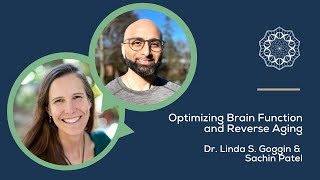
Dr. Linda Goggin, a physician who became a patient, discovered mold exposure was driving her illness after conventional medicine failed. She developed the JOY framework combining functional medicine, biohacking, and lifestyle interventions like breath work and sleep optimization, now running an online practice with masterclasses and DIY courses.
Questions this video answers
January 11, 2022
feelgoodfunctionalmed.com
Otter.ai
Logitech Brio
Urine mycotoxin test
Chapters
Hello, everyone, and welcome to Perfect Practice. Today I am excited about my conversation because we're going to explore the human potential. We're going to take a look at what the future of health looks like. We're going to take a look at what's available to us right now so that we can live not just a better life in this moment, but for all the moments that come for us in the years and decades to come. Longevity is an important topic to me, and I know it's an important topic to all of us who are questioning our mortality. And as we age, we want to live not just a longer life, but we want to live the best life that we possibly can. So today I'm speaking with somebody who's a mentee of ours, somebody who's a friend and somebody who's making an impact in the world that is positive and productive and, and increases the quality of life for those that she works with. Today I have the pleasure, I should say, to speak with Dr. Linda Goggin. And what we're going to be talking about today is her exploring her journey in medicine. She started off as a nurse, now as a medical doctor, and she has explored different facets and avenues of health care and has come up with a proprietary process that is making an impact in so many people's lives. So we're going to talk about what she's up to, and we're going to talk about how that can apply to you. And we'll also talk about the importance of community and relationships, not just in helping people live a healthier life, but also in helping practitioners grow their business. So with that being said, welcome, Linda. Thanks for joining me today.
Oh, this is such an honor. I can't tell you guys. He would be on my list of, of the few people to come to dinner and chat with. Right. If you had to pick five people. So this is such an honor for me. Thank you so much for inviting me to speak with you.
Well, thank you. I appreciate that. I love your enthusiasm, not just for this conversation, but for life in general. You've always been a very positive and uplifting person. As all entrepreneurs, we go through our ups and downs, and it's really how we handle the ups and the downs that makes all the difference in the world. So I'm glad that our paths have crossed and recrossed again having this powerful conversation. So I always like to start with why. And so let's explore. Why did you become a nurse? And then why did you become a medical doctor? And why do you do what you do right now?
Great question. Well, so I think it's just that urge to help. I've always wanted to try it. I mean, from the time I was little. In fact, I have a Christmas present was a nursing outfit, and I have a picture of it. I was about 8 years old and I really always wanted to help people and ended up going into nursing, and that is to understand more about how we work as humans. That sort of drove me to go into medicine, and I never thought I might be a physician. And so it was sort of surreal to go through medical school after being a nurse. And then, you know what, what happened with me is I got sick. I got sick as a physician and I had to become a patient. And. And then it became about like, this frantic, just like, desire to somehow figure out what the heck was going on with me. Right.
Yeah. And did you find that the system that you were in had shortcomings that made you look outside of it? Yeah.
You know, I remember just sitting in doctor's office and them coming back to me and saying, hey, you know, your labs look normal. And also not wanting to admit all of the symptoms that I was having. Because truly, I believe that if I had taken a MOCA test at that time, that someone would have told me I had early dementia. Because my memory was so bad. I was profoundly bad. I didn't want to take one of those cognitive tests. And there was, like, nothing for it. People thought, well, maybe you're anxious or maybe you're depressed. And that was when I went into functional medicine because I knew nobody else was going to tell me how to fix myself. Right. And so that led into this super deep dive into lots of things beyond functional medicine. Finding the amazing mentorship of you.
Right.
And the Living Proof Institute, which has been so helpful on my journey as a it, as a patient, as a person, as an entrepreneur. Because I never knew I was an entrepreneur before, right? Until I realized, gosh, I have something so important to share with people. And it's the hope message, right, that it might be that your doctor has never been able to help you before. But there's more. There's more. That's more natural. There's ways that we can help people now, especially with new technology. And I know when I look at you, every time I see you, you look younger. And so I know that you're some of the technology kind of things that I'm using too, because I don't know if you're feeling younger yourself, but I know I feel like 10 years younger, easily than I have before. So now I want everybody to know about this. And that's what I try to bring to the table and make it kind of fun. Right. Don't want to be boring old doctor.
Well, you know, I can say that I try to apply as much of what I teach as possible, and my age rate is about four years less. So biologically, I'm four years younger than my chronological age. I'm trying to get it down, like minus eight years. That's my goal. And I feel that's totally and entirely possible. And it's great to see that this information can be relevant at any stage in our careers, at any stage in our business, at any stage in our lives. And what I'd love to know is what was the first. You know, I understand why you needed functional medicine, but how did you first hear about functional medicine? I'm always curious about that. What. What brought you, like, what was that first interaction with that functional medicine message?
You know, it was. It was a postcard. It was a postcard. So. So snail mail actually works, right? I think IFM sent me a postcard, and it was in the time when I was in that I was in the dark times, like, after. It might have been the day that I walked out of a patient's room after an interview with them and. And couldn't remember who I saw without looking at the page. So I found this and. And went to a meeting, and I just. I actually cried in the bathroom after the first lecture because I'm like, I found my people. It was so wonderful. And when I read the textbook, too, I was like, oh, my gosh, this resonates so deeply. And there actually were tears shed over the ifm's textbook. So you never know how you're going to come across it.
Yeah. And then did you take the training right away, or.
Oh, yeah. Yeah. I immediately went through their training. So I was certified with the Institute for functional Medicine. And I started off. I think the first thing I did was actually their recode, the cognitive decline seminar that they had. One of the. I think was the first one that Dale Bredesen did and just went, you know, plowed through all of that, like, you know, drinking from a fire hose, tons of information. And, you know, functional medicine got me better. And it got me. It got me to feeling kind of normal. But, you know, I was not all the way normal because I still was not exercising. And I was. I felt a little bit like an imposter because I had done all this, and I was taking a lot of supplements, but I still was not feeling vital. And it was actually, it's been kind of biohacking that's taken me to feeling like vital and younger and self care. You know, if you don't take care of yourself, taking care of yourself is the way to really enrich your life so you can bring your gifts to other people. And I had to learn that having been a workaholic a little bit, and you just want to really help people prioritize that time in nature, that time outside. I know I'm kind of rambling on with whatever you asked me, and I'm not sure if I answered the question.
No, you did, you did. I'd be curious to know what were the elements that functional medicine did help you with. Perhaps it's a test result that you got, and what were the voids that functional medicine had that you had to kind of realize and then implement into your own protocol?
So what happened with me is I did run all the tests on myself and except for a urine mycotoxin test, which turned out actually to be my issue was a big mold exposure. And I did not even believe it when a practitioner told me that I had a mold exposure because I was like, what? Even though I'd already been to some of the things and they talked a little bit about mold, it was at that point that I actually had to go outside and get more training. So I had a couple of really amazing mentors. I studied under Dr. Shoemaker, who's the one who put two and two together with mold, and then under Neil Nathan, who I think has some expanded ideas on mold. I'm involved with International Society for Environmentally Acquired Illness. The I, the IFM didn't really well, while going to a functional medicine doctor helped me identify mold, knowing how to treat it, I had to learn a lot more. So that was one thing. And the other thing that I find now, I used to order tons of tests, tons of expensive tests for people. And now you know what? I still am going to do kind of the same thing. And so I'd rather people spend their money on therapeutics and things that will help them feel better. And so I do a lot less testing. Urine, mycotoxin testing is one of those things I'll commonly do for people. But honestly, the power of the breath, like, you know, the power of the breath and of movement and posture, I mean, those things can enliven you just right in the moment. So that's what I try and focus on. And then only we do the test when we have to. And then we follow a natural progression of treatment that makes sense for everybody because, you know, it's like. It's like Dr. Klinghardt says, if you go to one of his seminars. So how to tell if you have parasites? Well, so everyone take your right hand, right? Everybody can do this. And you just put it up to your neck, to the side. Feel if you have a pulse, right? And if you have a pulse, you have parasites. You know, he took me hook, line, and sinker through that, and I was up here. I was like, oh, gosh, he's trying to get me to take my pulse. But there are some things everybody does need treatment to balance out the system. And that's something that I've learned that I don't. I think that some of the testing is emphasized because really, a market. A market was created for that when all these doctors went and became functional medicine doctors, and somebody said, oh, hey, we could make some tests that they could use, because they're all like, you know, a bunch of MDs who want to have, like, objective data. But the truth of it is, is that you don't really have to have all that to make a huge impact in people's lives. And I think that that's. You get people better faster, too. And then you add a little bit of biohacking and, like, shoom, which kind of leads to what is progressive medicine, I think.
Hello, my friend. It's Achin here. I trust you're enjoying this content, if you haven't already. I wanted to let you know about my free book called Perfect Practice. This book is for all entrepreneurial practitioners in the functional medicine space who want to help as many people as possible. Shared some of my best tools and resources in this book, and it's absolutely free. Just click on the link below and we'll send it to you at no cost. Yeah, you know, it's really interesting. I think as my career evolved, and it sounds like as your career evolved, you realize that there were certain patterns that people showed up with in your practice, but there were also things that they weren't doing that they should be doing. And there's so many things that we can't test for. Right? We can't test for what time you go to bed. We can't test for how much sunlight you get each day and what time of day you get that sunlight. We can't test for how happy you are. Can't test for your posture. Right. By simply running labs on you. So there's so many things that play such pivotal roles and critical roles in our health that we can't even test for. And therefore, those questions never get asked. However, those are the things that influence the things that we are testing. And so it took me about 10 years to figure that out. I know it probably took you a few years to finally figure that out. And now what that's done is it's made your care more accessible. It's made it, I'm sure, more affordable, much more practical. And, you know, when you teach people skills, instead of just running labs and giving them pills, you give them really a gift that lasts a lifetime. I appreciate the trajectory that things are going in with you. You mentioned a term there that I want to highlight, which is progressive medicine. Can you tell me more about what that is?
Progressive medicine. This is my own definition. I don't even know if this is a thing with anybody else. But I've come to understand that all these healing traditions have value. Even my conventional medicine training, if I'm ever in an accident, I really want to to the emergency room. And so it is really taking the best of natural medicine, functional medicine, lifestyle medicine, and preventive medicine and what's good from conventional medicine and then adding in biohacking and this new research that's coming out, the things that really are going to move the needle in terms of how long we're going to live. Because you and I. Oh, gosh, this is so funny. When I was a child, I had a fortune teller. I was in sixth grade and I was away from my family at an Allstate Chorus convention. And at lunchtime, I went and I got my fortune read. I knew my mom would never let me have my fortune read. Right. She was very conservative. And so the lady said, you're going to live till 84. Right. She actually told me that. And I've kept that in my mind. And so I've been thinking about, you know, lately, well, how long am I going to live? Now that I understand that the technology is coming out that will allow us to easily get to 120. I mean, that's going to be like, low. And I was in the grocery store checkout two days ago, true story. When a blind man in front of me turned around and said, you will live to either 105 or 115. And so. And so I'm like, I'm really interesting because I was clearly was blind. And I was like. And then he sort of started to chat with me and he was very. But. But I'm going to take his prediction instead of the gal before because of what I understand about medicine and think that when we look ahead to where we're going, we're going to understand that right now we have to take care of ourselves. And that is the most important thing, because this technology is coming. And if you don't take care of yourself, you know, you're not going to be able to take advantage of the fact that your telomeres can be lengthened. Right. Telomeres, you guys, the little parts of your cell and the DNA that determines how many times your cells can replicate, and that in part determines how long you're going to live. And once again, I go off on a tangent so easily. Yeah. So I think that I can't remember exactly what I was responding to.
Well, I was asking you what progressive medicine is.
Oh, what progressive medicine. Okay, okay, Right. So I'm talking about the adding biohacking. So that's the last part of progressive medicine. Some of the best of all kinds of medicine. So we can take advantage of our increasing longevity and this new technology.
All right. Amazing. When people come to you, are they expecting to get tested or are they expecting the lifestyle interventions?
Well, because I'm a medical doctor, everybody expects tests, and I will tell them. And so I'm. I'm okay with doing tests. And I still check the basic things, like if somebody's tired, I want to make sure they're not anemic. Right. So I do check those things that a typical physician would check. But the expensive tests, you know, I tend to advise them against it. If I'm going to check a test, I want to know, like, what about their DNA? Right. So I use the DNA company to look at that because then we have information that they can use their whole lives. When you understand what's happening in someone's DNA, and we're still, I mean, very much in the infancy of understanding DNA, but there's. We still can glean quite a bit from it. So that's the kind of testing I tend to do. If somebody really wants the other tests, I'm happy to do them. I can interpret them. Organic acids, GI map. Organic acids is probably one I order more often. I mean, just because it has quite a bit of information on people's nutritional status, and sometimes it's helpful to motivate people. And that's. I think, the primary reason to order those kind of test is if you have somebody who needs a little fire under their butt so that they'll get going and make some good changes, that's a good reason to order a test. I Think?
Yeah, I think it's super important, right, to have access to bits of information that the client can't tell you, you know, so even if we figure out that they're doing a lifestyle part right, there could be hidden anomalies that we may not be able to pick up on. So even something like the most basic tests, looking at Ferritin, looking at people's IR levels, making sure they're not anemic, you know, we don't want to assume that just because they're tired that we jump right to the biohacking because while that could be helpful, we don't want to miss something. So I appreciate that you have a very grounded approach that, you know, isn't dismissive of one, you know, opportunity over the other. And you're really inclusive of both of those opportunities.
So I was going to say that's it. And also my little proprietary process, my acronym is joy. I'll tell you, the J is actually the jet. The JET that is progressive medicine that is trying to do root cause resolution, trying to develop routines and make it happen rapidly, fast moving people quickly to feeling better. The O is optimize the health identity. So a lot of times that's out with the old. And we really want to create that mind body approach to stepping into all the wonderfulness of life and taking back our power. Basically because self care, you take back your power, then the why is yardstick is a measurement and following what's going on with you, whether it's with an aura ring, tracking your sleep. There's other ways to measure, but I think that people need to see their improvement and so tracking is really important.
What have you identified as the biggest hidden culprit for people not feeling their best?
You know, I think that it is a challenge with mindset is very big, right? If we get into a place, especially when people. I see a lot of people who are chronically ill and we almost have to change our mind about that. That's a huge barrier when we sort of label ourselves or boxed ourselves in as I am this illness or I am fatigue. We really need to help people move past that. The other big one is sleep. People who don't understand how important the sleep is and of course nutrition. I help people change what they're eating because food is information and those are very basic things. But if you're eating the standard American diet, it's unlikely you're going to continue to feel good through your life. Helping people move out of that into healthy, yummy food and helping people sleep better but once people understand the importance of sleep and get that goal going, it can help so many other things down the road. The other really important thing that you've mentioned, and I think you're part of my process of understanding this, is the breath. That breathing through your nose is so important, and people are breathing through their mouths and are activating that sympathetic. And when you just start to breathe through the day intentionally through your nose, it can make a huge difference in people's lives. I know it's a few things, but they're simple things. Changing sleeping, eating, breathing.
Yeah, yeah. It's amazing how the simple things that may not seem so sexy are the ones that have the biggest effect. Right. Because you're going to breathe 23,000 times today, whether you like it or not. You may as well do it with some level of awareness and consciousness. You're going to be sleeping regardless. We all need to sleep and sleep deprivation leads to so many different dysfunctions in the body. And it's one of those things that it's what I would consider one of the lead dominoes. So for. For us, I think there's a lot of overlap. So the first domino is breathing, because you can change that now, right? If you want to change your sleep, I gotta wait till tomorrow morning because it really. A good night's sleep starts in the morning. And the second thing is sleep. And then the third thing is circadian rhythm. And you know how we expose ourselves, the type of lighting we expose ourselves to is so vital because it's sending information to our eyes. I always remind people that every organ eats or every sense of ours eats, rather. So our eyes are eating light, our ears are eating sound. Right. Our tongues are eating taste, our nose is eating smells and fragrances, and our skin is eating touch. So we are eating these different components, and that's sending information, interacting. Our nervous system is interacting with our environment through that process. And any one of those things can trigger a relaxation or stress response, right? So I can make you smell fire and that'll trigger stress. I can make you hear something loud or disruptive and that will trigger stress. I can show you something visually disturbing and that could trigger stress. So there's different ways that we could stimulate the senses to create stress in our bodies and shift us away from that parasympathetic state. So we feel, and I think there's a lot of alignment here, that breathing, sleeping are two huge dominoes. And then, of course, lighting, which affects our sleep. And if we can get those things dialed in, then it's so groundbreaking and life changing for people. However, sometimes people want to test. Right. Or they want a supplement and they just have to realize there are certain things that there are no tests for and there are certain things that are no supplements for, but you just have to do them. And it, you know, it takes wisdom and it takes experience as a practitioner to come to that conclusion, to come to the conclusion of simplicity. Because let's let the body handle the complexity. Let's focus on simplicity and then leverage time in our favor.
Right, right. Well, you know, the stress piece especially, it's just so important. I tell people not to watch the news, not to buy into any of that, especially my patients who don't feel well because it's upsetting. The news is upsetting. And focusing on bringing down the cortisol and helping people have effective strategies to manage stress, it's just so important. It's like stress management, I mean, is like way up there. And I think that that's why we try and get people to sleep better. But yeah, I do think we've got some overlap.
There should be. Right. The eternal, the truth is the truth. So I'm glad we're perhaps climbing the same mountain from different faces and we'll meet at the peak, right?
Definitely.
So I'd love to know how, when your clients come to you, what is that experience like? Could you walk me through that process?
Right now I'm starting to do masterclasses, which I'm pretty excited about, and I have one coming up. I'm going to be trying to do these monthly and my first one is this Saturday. So I'm going to be putting on a dog and pulley show for about four hours. So I like it when people attend a masterclass because that way they can get to know me, like kind of figure out my style a little bit and they're going to have a preview of what I'm going to say to them. Really, some people would be able to come to a masterclass and diy, which I want. I know that you say the doctor of the future is the patient. I totally agree with that. We want to put the power in people's hands. So either engaging me by watching some of my YouTube videos or coming to a masterclass is a good way for people to get to know me a little bit. And right now I'm entirely online and I have kind of a menu of different services that I offer that range from DIY courses where, you know, if you're motivated, you can watch some videos and go through these ideas on your own. And then I have some that are higher level with, with coaching, with group coaching, and then I see people individually some too, so. But it's all online. And one day I think when we get through the pandemic, I'm going to be totally having some events. I want to go, let's go somewhere sunny together and do that. But I haven't done that yet.
Okay, well, you're doing it right. And these are the steps that you take to making. Making that happen. Awesome. So when somebody does come to you and ends up in your practice, whether it's through a virtual appointment or in person, what is that experience like for them? What do they tell you in terms of how different that experience is compared to what they've had before?
Well, the big obvious difference is that I spend a lot of time, I already know them before they come because they've kind of filled out a humongous form that I've actually read and taken notes on. And as functional medicine practitioner, the idea is that you tell them a person's story back to them so that they feel validated and heard. And I think that is a really big thing I hear is that people feel heard. If somebody goes to their healthcare provider and their doc doesn't listen to them or isn't willing to look at the article you bring or read the book you suggest, those are signs that maybe a different doctor would be a good idea. So they're longer visits and there's a lot of back and forth. I try and do a lot of listening and then make sure that at the end somebody feels like they have been heard.
Yeah, that's so important. Right. For people to feel seen, for them to feel heard. What are some ways that you ensure that. I know you've mentioned repeating their story back to them. Are there any other subtle things that you do that you think would be helpful for our listeners?
Well, you know, this is kind. Maybe this sounds a little weird, but I know that when I've said, when I've said the right thing, because I feel what I call. I call this angel wings. I feel my hair stands up on when the energy is good between a person. Like I felt that within our interview, like angel wings. And that's what I use as a subtle indicator of we're on the right track here. We've got. I've got the hair standing up. And when something lands. Well, do you ever notice that? Yeah, yeah.
That's my litmus test. The goosebumps test.
Exactly. I can't wait till we figure out exactly what that is, because that connection, you and I have been in community for a while. The community part of it is so important therapeutically and just for us as people. We. That's why the pandemic's been hard. We need to be with each other, and humans need that contact. So I'm looking forward to when that's all behind us.
Yeah. Well, speaking of pandemics, how has your business pivoted with everything that's going on?
You know what's really nice is I met a guy named Sachin Patel, and he taught me about doing virtual visits long ago, before the pandemic even even came around. And so I had already been doing quite a few virtual visits at that time. And it was, you know, maybe half of my business was online. And so at that point, all we all. I did. As soon as. As soon as they first started to talk about it, I'm like, whoop, I'm not going to have this office anymore. Because it was. And then it's much more freeing. I'm home with my kids more, got three teenagers, pretty exciting times. And so if somebody needs to be picked up or shuttled around, I can do that. And now I am all from. This is my bedroom. So you guys are right in my house with me, and that's where I see my patients. So it wasn't a big. It was not hard to make that transition because of the prep that I'd had from the Living Proof Institute, which is really helpful. Thanks.
Yeah, amazing. So it's great you leaned in more than pivoted. It's just, hey, this is part of my business. It's already working. Oh, yeah, it's familiar. And now I can lean into that part of my business and drop the extra expenses and either choose to, whatever savings occur, you can repurpose into marketing, repurpose into mentorship, repurpose into, you know, investing in yourself personally, even in self care. So there's lots of things that we can do as that money frees up and our practices become more efficient. And some people can even pass those savings on to their clients because their cost of business goes down significantly. And their emotional and mental burden. Right. Of having an office to manage commutes. I mean, I can only imagine how much time you've saved commuting and gas and the carbon footprint of your practice has probably gone down significantly as well.
There are so many advantages to being virtual. And people say, are you going to go back? Because it did coincide with the pandemic. Honestly, I don't want to go back. I like this. The only thing that I'll say about working from home is that you have to be disciplined and separating your stuff. The dishes can call to me here, and if I'm in an office, not. So I would say that's the only distance disadvantage. But as a mom, the time, the flexibility is really key and has made a huge change in my life. That commute time, that's at least an hour off of my day if I have to drive in somewhere.
Oh, that's awesome. I know for me, like, speaking of the house calling. Right. There can be many distractions at home. Like, we had a major plumbing renovation that was taking place in our home, and our whole floor was dug up, and they had to jackhammer through the ground and replace all the piping from clay piping to PVC piping. And so my wife and I both work from home. I'm in the basement where all the action was. She's upstairs. And right above all the action, so we have these jackhammers going off in our home. And, you know, that was fine, and we were able to manage through that. However, what was interesting is now there was a big scar going through my entire basement floor. That. And we need a new flooring. So for. Some people may not know this, but I actually used to work in kitchen and bathroom renovations. That was like, my first. One of my first real jobs. So. So the floor has been calling me all week. And so what I do is I would, you know, go lay down some flooring and then get on a call, and then go lay down some flooring and get on a call. And I remember yesterday I was on a phone call, and I had this one, like, really intricate piece that I had to cut to really fit it into where it needed to go. And my mind was. Half my mind was calculating the angles that I was going to cut and the joy that I would get when it would perfectly fit into place. And the other half was trying to do my work. So I totally can relate to that. And it can be difficult to separate the two, especially when there's stuff going on. Right, right.
Yeah.
So I definitely appreciate that, and I know exactly what you're talking about. Any techniques or advice that you can offer to people to keep those things separate?
Well, honestly, you're seeing part of it. I've got a screen so I can create what feels like a different room for me, and then trying to have my area more clear of clutter. That's very helpful to me, too, because when I start to see things And I'll start to try and fix them. The other thing is to set a clear schedule. And for those of you who are entrepreneurs or trying to. Trying to change the world, however you're going to change the world, I think that you want to schedule blocks of time when you like 90 minutes, because 90 minutes is about a length of time that you can really focus. That is just your schedule. So you have a set schedule. At least that works best for me when I'm clearly scheduled and I'm. I write it down in my planner. And I guess the other thing is to have everything kind of ready to go so that you have a little spot where, especially if you're doing live, I mean, for all I know, I could have my jammies on. I might have just run on over here. Right. And that way when everything's. All I have to do is click on the. The computer and I'm rolling. Those are important things.
Very good. So speaking of your practice and working from home, what are some of the technologies that you're using to successfully run your practice from home?
Yeah, so right now, I mean, I have, you know, I just have a PC and a screen. I do use a big screen. I actually, for my screen, I use a. Like a huge TV screen so that I can have multiple screens open at once. And that makes it easier when I am talking to somebody. I can actually be looking outside of my eye at other resources while I'm speaking to them. Because when I have consultations with people, thank goodness I don't know it all, I look stuff up on the fly right then, right? And we share screens and. And that lets me do a tiny bit of multitasking so that I can try and give resources right away to have a big screen. Some people don't think about that. And actually I was going to give this TV to the thrift store, and I'm like, oh, that would solve this problem of me trying to see these tiny little screens. So that's one. I also. This is something I love. It's so great because this can, like, bend and sit lots of weird places. And because I do shoot a lot of video, I think that's been exceptionally helpful. Having a good camera is helpful. And, you know, right now I use Logitech Brio as my screen recorder. And then also I use my phone a lot. Guys, your phone is a great camera. So that's something. I try and shoot regular videos, and I'm trying to get better about that. The other thing that I think is absolutely essential is my coffee Warmer. I am a gal who likes to have a little cup of green tea or coffee going at all times. And that keeps it warm, so that's part of it. And then having natural light, I think is the best. I'm sitting in front of a window right now, so I think that's good for your setup if you're going to be online. The other things that I use, I use for transcription. I use OTTER AI a lot. I use OTTER to transcribe stuff and give people like summaries of their visits and things like that. I used Practice Better as my. Actually, it's funny, I used Practice Fusion before, so I still have a little bit of that that I'm kind of stuck with because I had all these patients I saw. But Practice Better is much more useful for my personal style of more coaching and taking people through courses and, you know, the. The other things. I mean, I think it's nice to have a supplement dispensary like FullScript. I use FullScript quite a bit because they send them supplements and that. That makes it easy trying to think if there's anything else that's been really important. Having a group of people that have kind of guide my daughter. Just let the dog in here. A group of people that can guide you as you're going along your entrepreneurial journey and say, okay, do this now, do this and just do that. One next thing that has been in terms of tools, one of the very biggest things, because I'm solo, I only recently hired help. And, you know, you can feel overwhelmed when you want to move into something like this and you, you need guidance. You need somebody to say, just do this and then don't worry about the other stuff. Do that.
Well, let's talk about that because you were part of our mentorship when it was called Living Proof Institute. And since then it's been renamed to Perfect Practice. And you've recently rejoined. So I'd love for you to talk about your initial experience, what it was like when you were not part of the mentorship and then what inspired you to rejoin us.
Oh, yeah. Well, so I knew that I needed to figure out how to do my business. Right. I had had left a group practice, a group family practice. Right. They one is a little funny story. One of the doctors said there will never be a meditation in the waiting room. And that day, I mean, bless him, but that day I'm like, well, guys, I can't join the practice because, you know, and it was a good decision. I'm so happy that he told me That, I mean I feel appreciative because then I went to the micro practice and I didn't know how to run it. No idea. No. There's no business training in medical school. And so, you know, searching, I came across one of your videos and looking for how the heck do I run functional medicine practice. And that was what drew me in the first time. And we, you know, if I effectively began to run programs based on your tutelage.
Right.
Once again, that step by step, step guidance, somebody telling you how to do the thing and that. And that was great. And I felt like I kind of got the good from it and I was going, I was doing fine. And then what happened is I transitioned. I started to go back to seeing people like just like pay me for this one visit, right. Pay as you go style instead of the programs. And, and I really got off track in terms and that I could see it was not duplicatable. I mean it was like one to one. And I want to be one to many. I mean I feel like I have so much that I want to give people that if I'm just talking to one person at a time, it helps them, it helps me. But what about all those other people who are hurting and need help? So I knew I needed to go one to many. And then I think I started to open some more of those emails. I'm thinking what Sachin is doing right now is really what I want to do. Moving more into how can you help lots of people at once. And it resonated with me. And of course I feel like your messages have just evolved beautifully because when I first started to come in, I spent a lot of time learning about all the tests and everything. And now what? All I want to do is become a breathwork teacher, do that amazing thing that you do. But coming back in, it has given me now the ability. I can see that my business is about to. I'm really about to explode. And honestly I've been holding back the reins because I haven't had effective assistance and I already have lots of people who are requesting appointments and I know I need sales systems in place. You guys, you have to have systems. It's so critical so that you don't run yourself ragged. And you know, all of us as caregivers will burn that candle at both ends. And so you put the self care in place first. And you, you preach that so well. I mean, and that reminder, whenever we are together, you know, starting with some breathing or meditation, I think we need to center ourselves throughout the day. And so all that rolled into, like a business model is really amazing. I mean, that you find someone who puts all that together. So that's. And so it's helped me to be able to get to this point. And I have had other mentors. I mean, I've gone to marketing training. But in terms of putting everything together, it is really. It's really been perfect practice that's let me do that. And also encouraging me, because I have a husband who doesn't get the entrepreneur thing at all. Bless his heart. Okay, so he's a. He's a conventional doctor. He's a conventional family doctor. And he. We have wonderful, interesting discussions. But, you know, he's like, let me just do a work a day. And I'm blessed that he's let me figure this out, because it's taken me a few years to figure it out. And I keep saying, honey, it's going to happen. It's going to happen soon. But I think that in the new year. I have systems in place now, and that's what your programs give me. Perfect practice really gives you systems the recipe to follow. And then you just add your secret sauce to it.
I love it. I love it. So what's next for you? What's coming up in the horizon?
Oh, gosh. Well, you know, over the past couple of years, really, physical fitness has been the new thing I've been able to. To do. And so last year, last month, I ran a half marathon. So this is personally. So I actually recently got a bug in my bonnet, a bee in my bonnet. And I am thinking that maybe I would like to try and run a marathon this year. Now, you guys, I don't suggest everybody go run marathons. I don't necessarily think it is the best thing for your health, but I think goals are. And pushing the human abilities is. Now that I'm, you know, I'm 55, I want to get stronger and I want to, like, see what my body can do now that I feel good. So that's on the personal front, but really on the professional front, I want to. I want to see my business reach the people I want to reach, which is a lot more people than, you know, I was seeing. Sometimes I'd see a couple people a week because I'm a mom, too. I take care. I do a lot of things. Sometimes I d. Four. Four or eight people a week. No more than eight people a week. And I would like to be taking care of hundreds, thousands of people a week and really making a difference in lots of people's lives.
Amazing. Well, this has been so enlightening, and I love seeing the joy on your face, hearing the passion in your voice, and the enthusiasm for what's to come. So congratulations on your continued growth and continued success. I'm looking forward to witnessing that. And it's amazing to see what you're up to. And so grateful that you're part of our community and so thrilled for what you bring to the group as well. So thank you.
Well, thank you. Because, honestly, you are the person, I think, who's primarily responsible for spurring me on. So thank you so much.
Oh, it's my pleasure. I appreciate that. And I received that, you know, with an open heart. I do want to ask Linda, where can people get a hold of you? Where can they learn more about you and if they want to come see you as a client?
Great. So feelgoodfunctionalmed.com so not medicine. Feelgoodfunctionalmed.com and then my YouTube channel is feel Good Functional Medicine. I'm trying to make some interesting videos. Yeah. So I would love to connect with you guys. And you can schedule by going to our website. And also my master classes are there, too, so you can click on events.
And you'll find it amazing. Amazing. Thank you so much. And here's to your continued success and growth and happiness and health. Lots of love, lots of gratitude. We'll chat with you soon. All right.
Sending you a hug.
Thank you. Bye for now.
Bye for now.
More from Sachin








Your Doctor Won't Prescribe This… But It's the Most Powerful Medicine on Earth

