The Marketing RAMP with Daniel Bussius and Sachin Patel
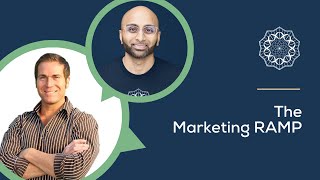
Daniel Bussius explains why most marketing fails: companies ignore the full customer journey. His seven-pillar approach starts with identifying ideal customers and mapping their journey, then builds a Responsive Automated Master Plan to guide them through each stage with delight, boosting lifetime value and referrals.
Chapters
Hello, everyone, and welcome to Perfect Practice. Today I get to speak to a marketing genius. Today we have Daniel Busius from Built by Love. And Daniel and I actually met in a very unique way. We met on Facebook. So I was scrolling Facebook, as we all probably do, and the thing that attracted me was his ad and the name of his company, Built by Love. And you know, those of us that are kind of in the conscious space, in the heart centered space, it immediately attracted me to set up a conversation with him and my wife and I jumped on a call and he took us through a proprietary process that he's going to share with us today called the marketing ramp. So I'm excited to share what he had to offer, and I know he's excited to share because marketing is an area where we spend a lot of time, energy, and effort, and we want to make sure that we get a lot of value in return for the effort that we're putting out there. And if we don't see that value sometimes immediately, because we don't understand how these things work, we might give up. And the danger in that is that our business doesn't thrive. People don't get to hear our message, and then we spend or waste money elsewhere and don't see results either. And sometimes that means people throw in the towel. So, Dan, thanks for being here today.
Absolutely, thank you. It's a pleasure to be here.
Well, it's so great to reconnect and to share what I know you love to do with great passion, which is marketing. So before we get too, too into the ramp, I'd love to have our audience learn a little bit more about you. So where did this all start for you?
Gosh, yeah. So I started my agency in 1998, so I'm about to age myself. And we first started working with Fortune 500 and Fortune 100 companies. And then in about 2009, we shift to start working with smaller businesses. And one of the things that I found when we went from, you know, large corporations that have basically unlimited budgets to smaller companies that are trying to grow and scale is that they didn't have the amount of resources and time to be able to test different variables of marketing and copy and different things to see what's going to work and what's not going to work. And so that's really where the ramp originated from, where there's a great deal of responsibility resting on our shoulders as a marketing agency that if there's a business owner that's going to invest their hard earned money with us, well, we don't have years and thousands or hundreds of thousands and in some cases millions of dollars to spend to see what works and what doesn't work. And so we had to figure out a way to succinctly and effectively get results for them in the shortest amount of time. And that's the journey that started the marketing ramp that took about 10 years to truly refine to the point that it's been in use for the last two years. And it's produced phenomenal results for clients across the world.
I love that. And I'm sure Facebook and all the other platforms don't make it easy for you because they're constantly changing. So you're probably consistently updating your process, refining a little bit more and, you know, kind of going with the flow to see what's working and, you know, what's allowed, what isn't allowed. One of the things that we find in the healthcare space is that it's very difficult to make claims. So, you know, we generally have to be very careful with the words we choose and how we put ourselves out there. Can you speak to that a little bit? Like, what are your thoughts on. On that? Because I know censorship is a big concern for people or people's ads. Getting rejected is a big concern for people. I'd love to hear your thoughts.
Yeah. So most business owners that are paying attention to what's going on in the digital world, right. Advertising, Google, Facebook, all. Is it all of. All of those different things, advertising, as well as, of course, like the newest hacks and the newest, dare I say hacks, but the newest, like, shiny objects that are coming out from the marketing world. Right. And in my personal opinion, I've actually gotten a lot of blowback from other marketers is that stay away from the shiny objects. Like, of course you're going to want to stay true to your message and of course you're going to want to do best practices, which is in any business. But at the end of the day, I feel like marketers and business owners forget that they're actually marketing to real human beings. And so, of course, you know, making sure that you're being having integrity with what you're saying and what you're doing, and you're actually delivering what you're promised your product's going to deliver. But outside of that, the real true principles of how you're going to engage with humans and how you're going to effectively market really has not changed since the dawn of time. And so that's really what the marketing ramp has been centered around. And I know we're going to get into that discussion, but it's really focused on developing a relationship with another human being and giving them the best possible experience along their journey from understanding who you are, what you do, and why they want to do business with you.
I love that. Great perspective. So why would you say that most marketing fails? Is there something that you've been able to put your finger on? I'm sure there's a multitude of reasons, but are there themes that come up for you?
Gosh, yeah, there certainly are. And so some of the things that I see that clients do and prospects as well, that we talk to on a regular basis are they haven't thought out the entire customer journey. And so for anyone who doesn't understand or has not heard of the customer journey, also sometimes known as the buyer's journey. And if you'll let me just for a moment to kind of take us off to the side, you know, a restaurant experience that is a buyer's journey or customer's journey, from the stage of you being greeted at the hostess stand, to being seated at wherever you want to sit, outdoor patio at a booth or whatever, to them greeting you, giving you a drink of water, to making the order, to getting your check, all of those different things are different stages in your customer's journey. And there's different conversations that'll happen, there's different durations of time that are ideal for you, that you'll have a great experience. And so most. And that makes sense in a restaurant because we all have arguably at some point in time, sat down and had a meal at a restaurant. But business owners don't actually think that through from a marketing perspective or a sales perspective of what is your buyer's journey, how are you going to take them through from prospect, which is stranger all the way through to them not only doing business with you, but being a raving fan and wanting to tell the world to promote about your service, your brand, and tell everybody with pride that they do business with you and that they're happy. And so we really have to think that through. And most people don't. And what they focus on is what's called the top of the funnel of like, we just got to get leads. We have to get as many leads. And they've got huge opportunity gaps in which they're losing money by not thinking through the entire customer's journey. And if I can add one more thing to that, if you have not developed your own customer's journey, one has been created for you there's no business that does not have a customer's journey. The only difference between you creating one is it's masterfully created to have the best possible experience, or one that's organically happened and is basically maybe is good but is not optimized to make sure that you're not leaving money on the table and making sure that your clients and your customers have the best possible experiences. So that argument is the first and I'd say the number one thing that most business owners don't think about. And the second is figuring out how they can infuse points of delight along the way to give the best possible experience. Because ultimately, and it's funny, there's statistics out there that say that people, and it's roughly about 68% of customers, and it's even higher on the business to business side, are willing to pay more money if they have a better experience. So a lot of times we're focusing on how to get leads and we're not focusing on how to deliver value and how deliver great experiences throughout the entire process.
Yeah, that's an excellent point. You know, it's easy to get caught up in that aspect of the funnel, like the top of the funnel, as you mentioned, where okay, we're getting more leads, we're getting more leads, we're getting more leads, but then what's happening to those leads? It's like a bunch of people coming into your restaurant, but then if there's no tables for them to sit or there's no waiter to seat them, or, you know, there's other challenges that they're facing, then. Yeah, I love how you said that whether you've created an experience or not, they're having one. And it could be a conscious experience that you've carefully curated, or it could be something that is just a result of happen chance or random, you know, randomness. And then what people do is they keep loading the top of that funnel, which then costs them more and more money. And no matter what agency they use or no matter what strategy they use, it's the other side of that, you know, opt in or whatever it is that gets those people in to say yes initially, it's that that's failing them. And you know, I learned this from one of my marketing mentors a while ago is that 90% of sales take place after 90 days. So when I'm coaching a client, you know, one of the first things I ask them is like, okay, you, you're getting these leads, but what's happening to them over the next 90 days. And they're like, what? What are you talking about? And I'm like, yeah, that's the most important part is creating that experience. You don't need a lot of people. You need the right amount of people having the right experience. We're then going to turn into hopefully raving fans or customers and clients. And if they have a good experience, then I'm sure you can attest to this, that they don't even have to become a customer to refer other people to you. You just become naturally that amazing fit that they become raving fans of.
Absolutely. And there's a really interesting statistic that I heard and we've put it into play into all the marketing that we do with our clients. And it's 60% of customers have buyer's remorse immediately after they buy a product or service. That's really interesting. And it's quite a large amount of people. So 6 out of 10 people that buy anything immediately have buyer's remorse. And they may. And that doesn't mean that they will return or ask for a refund of that product or service. But what it does mean is the likelihood of them buying again or having a great experience is a lot less. And so if we don't start thinking about again going back to the journey, a lot of people stop it. Like, we want the sale, we want that conversion. What happens after? Because 6 out of 10 people in your business that are buying have that internal talk track that starts up in their head, was this the best company? Was, did I, did I spend my money wisely? You know, should I really have done this now? And maybe I should have spent it elsewhere or waited another month or whatever. And if you don't continue to confirm, hey, Mr. Or Mrs. Customer, you did make the right choice. We are the right service for you. And what we're going to do is we're going to deliver customer delight for arguably the next 30, 60, 90 days after purchase. Well, the difference between us doing that, acknowledging that six out of 10 people are going to have buyer's remorse and ensuring that they're going to have an amazing experience is not only going to help reduce refunds, unhappy customers, but it's also going to increase the probability that they're going to have a great experience, they're going to want to buy more from us and more frequently. And of course then the most precious thing all businesses are looking for is word of mouth, referrals, raving fans. So all of those things come into play by looking again at the entire journey and then infusing strategy at every stage along the way.
Have you read Joey Coleman's book, Never Lose a Customer Again?
No, I have not, but it sounds amazing.
Yeah, so he has a framework and what you're describing reminds me of that framework. So I guess the truth is eternal. Right. And if we can create a powerful experience for people, not only do they are they less likely to refund, but they're more likely to refer and have a better experience. And I think in my opinion the worst thing that can happen is somebody buying and having buyer's remorse and never even using the product or the service in the way it was intended to and never referring anyone. I actually don't like that when that happens. Sometimes you will get people that kind of slip through the cracks and don't leverage all the tools and resources that you create for them, but it doesn't allow them to multiply their investment. So if we could do little things along the way that nudge them along, allow them to fully leverage whatever your service or offering is and make it easier for them to use that service or offering, then they're more likely to refer others, which I think is the holy grail for any business is we want our customers to do the marketing for us because they're collapsing time. Right. They're bringing us warm leads or hot leads at as opposed to us going out and getting brand new cold traffic.
Yeah. You know, going back to one of the initial questions you had asked me, you know, with, you know, mistakes that we see that most business owners are making in their marketing efforts. And unfortunately, I mean, I do own a marketing agency, so we're not immune to this. But the majority of clients that have had some level of engagement with either a marketing consultant or a marketing agency, unfortunately. But it's the reality out there. They've had a bad experience with an agency or a marketing consultant in the past. And I think it's because, and I can't speak with accuracy to this, but this is my own humble opinion, is that most agencies out there haven't really thought through an entire process. And so if a client will say, hey, I need more leads, they will focus on that. Okay, well, we're going to run ads and we're going to have a landing page and all the different, you know, shiny object syndrome out there of like, you know, even down to the button color needs to be red. I get a higher conversion. But I think what really needs to happen and the way that we've shifted and pivoted our agency is that we have to look at the entire thing. So yes, of course you want more leads. Everybody wants more leads. Everybody wants to have, you know, more, more happy, ideal customers. But we have to look at the entire customer's journey. And by doing so, in mapping that plan out, then as we then do bring in more leads, we will know as they move through all those stages, those stages are optimized. And so as they move through, whether they buy or they don't buy, we'll have a strategy in place for that. They'll have a great experience. And then like you said, if someone comes in and they don't buy after 90 days, we've got that covered. All of those different stages have been mapped out and covered.
Yeah, you know it. A lot of marketers will tell you it's a numbers game, but what I'm hearing from you is more of an experience game than anything else. And if you have all the numbers, like the numbers look good, but the experience is not that great, then it's going to show up on the back end of the process.
Yeah. And what's going to happen is once you think through the plan, once you have the foundation, build your empire, build the house as big as you want it. Right. But you have to have a rock solid foundation. And with that foundation, you can then scale. And what happens then is your ad cost, your conversion cost, your click cost, all that actually drops. And what also happens is your open rate and your click rate increases, so your engagement increases, you have a better experience. And then usually depending on the business, the customer lifetime value, which is the value of the customer over the lifetime of them staying as a customer with you, also increases. So across the board, your margins increase and your cost decline, which is exactly what every business is looking for in their sales and marketing efforts.
Yeah, and that's a timeless principle. Right. So regardless of what the newest shiny object is or the newest platform is, having this type of foundation in place is gonna. Is absolutely necessary before we start changing like, you know, jumping onto a whole new platform, because that's not gonna solve this problem. What's gonna solve this problem is, is really installing these critical pillars into people's marketing strategy. Now, you've identified seven of these pillars, so I'd love to jump into that as well. And, and that way those, those that are tuning in, this is a good time to start taking some notes. If you haven't been already. You know, Dan's going to walk us through these seven crucial pillars to, you know, building your Rockstar brand.
Yeah, absolutely. Well, thank you for asking about that, because I do think it's incredibly important for that. So the first thing is you. You have to identify who your ideal customers are. Right? Your ideal custom. If you could have an unlimited supply of these type of buyers, right, that are going to be perfect, they're going to fit perfect in your world, that would be identifying who your ideal customers are. Now, once you understand your ideal customers, then you'll be able to understand how you should communicate to them. And just as a side note, some businesses have more than one ideal customer, and that's okay. Okay, Most businesses will have one or two. But most cases, once you know who those customers are, what they look like, what their pain points and their challenges are, you can really dial down to your brand voice. How does your brand communicate? What's the kind of language? Is it formal? Is it informal? And what's the kind of tonality? Right. Okay. Once we understand how we're going to communicate with our ideal customers, then the next thing we have to do is the brand pitch. And the brand pitch is, what's the differentiating point? What makes your business better than your competition? In a world of the Internet, where we're literally competing with the entire globe, Right. Consulting, contractors, products and services, you've now got the ability to buy anywhere in the world. It's not only limited to your local geographic area. For the most cases, we have to have that brand differentiation, that brand pitch. So once we have those things, the next thing we have to do is we have to map the customer journey. And that's kind of like what I've said previously in the example of the restaurant experience. Right? So what are those different stages that are important that we know that they need to move through? And giving a restaurant example, for those who don't understand the mapping the customer journey, it would be something along the lines of if it's a restaurant greeted at the hostess stand, then seated at your table and introduced to the waiter or waitress, offered an appetizer, maybe ordering the entree, and all the way through to you leaving the restaurant. So that's mapping your customer journey. And every business will have their own journey that they need to map. So once you've understood and mapped out your customer journey, the next thing you need to do is. And this is where our proprietary process comes in, as you have to build the ramp. And the ramp is an acronym, it's short for Responsive Automated Master plan. And what you do is at every stage of the customer journey, you will build the cadence, the communication, as well as identify the assets that need to happen along the way, that becomes your blueprint for, for how you're gonna actually build your marketing. Send out your emails, depending on if you're using marketing automation systems or not, what your workflows or your campaigns may be called or what they might look like. And then the next thing we need to do is we need to set the ideal and maximum duration. And so an ideal duration is how long should they be in that stage of the customer journey before they convert, they move to the next stage. That's the ideal duration. And a maximum duration is once they've hit to that maximum duration, we know for whatever reason that stage is not working. It's not effectively getting them to do whatever we're looking for them to do. We need to stop having that conversation and change the conversation and move them to a different stage. And so just like humans would be talking with each other. Right. If I continue to ask you the same question and you're like, no, thank you, no, thank you, and I kept asking you the same question, you might think to yourself, I think something's the matter with Daniel. I'm not responding to the question yet. He keeps asking it.
Right.
And at some point in time, you would walk away and you might avoid me thinking like, either I'm agitating or irritating or maybe I'm crazy. Right? Well, that is the same that happens in our marketing campaigns at those stages. So if we hit the maximum duration, we have to change, stop that conversation and move them to a different stage and have a different conversation. Doesn't mean we're going to stop selling them on what we want to sell them. We need to change the conversation. Okay. And so then the final, the seventh one is making sure that once we've done everything that I've talked about, we've mapped the customer journey, we've set those stages, the ideal duration and the max duration. As we look back to how we can infuse points of customer delight along the way, they might be something as simple as small videos. It could be assets like PDFs. It could be any of those things along the way that are making sure that at every stage along the way, they're having the best possible experience. Because when they do that, they're going to want to buy from us, they're going to be less price sensitive and we're going to build more rapport, loyalty and trust with them.
I think a lot of times the experience can justify what they just spent. Right. So if they paid a premium based on what transpires after that they'd be like, wow, that was well worth it. I think Apple does a great job. I recently started a subscription service for organic cold pressed juices. So we have cold pressed juices delivered to our family every couple of weeks. And one of the first things that they did was they created a custom video for me thanking me, like using my first name. So it was like a legit, you know, video that they did for me and thanking me. And then over the next couple days they started peppering me with, you know, different videos and emails, like kind of pre educating me as in terms of what to expect. So when I got the products, here's what I should do. Some of the questions that I had in my mind that would have popped up, they answered them before I got the product. So one of the things was why plastic? So they use plastic bottles as opposed to glass bottles. So then they gave their whole rationale behind that. So almost answering the questions or objections that I might have, right? If I in my mind said, well, why isn't this glass? I'm not ordering this again. And they then they never sent me that message as to, hey, it's cheaper to transport, there's less breakage involved and blah blah, blah, then I would have immediately drawn my own conclusion and perhaps not reordered. So it's kind of interesting how we experience this and it creates this awesome experience for ourselves. And I continue to be a customer, so that tells me something. And if we were to do little things like that, it could be very, very powerful. So I know you gave us a few examples, some videos and things like that, but what are some of the best practices for creating customer delight? Do you have specifics that you'd like to share?
Gosh, yeah. And I'll try to be succinct about it because I could talk for days about this kind of stuff. A quick and easy win. And we do this with all of the clients because even though we work with hundreds of clients on an annual basis, the majority of the world out there, it's still a small fraction of business owners, right? So a quick and easy win to add delight is if you're a business owner and someone is filling out a form on your website, whether that's a contact form or they are opting in to get some kind of valuable resource or a lead magnet, whatever that is on the confirmation page, you should have a short 30 second video and that video should thank them, introduce who you are, and thank them for their interest in your product or service. It takes you no time it does not have to be professionally produced. In a world where Android phones and iPhones produce 4K or very high def video, you can shoot that on your own. And think about it, that's the first engagement. Other than them opting into whatever that they're looking to get from your website or your company, that's the first time they're actually going to see the founder or the owner and you personally thanking them. And then you get to open up the story arc to say, hey, over the series of days, months, whatever it might be, we're going to be sending you more information to add value, to help you on your journey to whatever their mission is, get better health, get better sales results, get fresh cold pressed juice delivered to their house, whatever that is. But that's a wow factor. And if you think about all the times that you've probably opted in for things, the chances are it's very low that you've actually seen anything like that. That is a differentiator that costs you almost no money to do and you're immediately going to stand apart from your competition and you start to do little things like that along the way, it sets you apart.
I love that. You know, we could definitely be better about that. Most of our funnels, we do have or opt in thank you pages, we do have that. And sometimes, I'll be honest, I get a little lazy and I'm like, you know what, let's just put the image of whatever they're getting. But now that you've mentioned that and reinforced it, I'm going to go ahead and do that and make sure that all of our page, all of our thank you pages have a quick little video congratulating them, thanking them and creating that arc. I love, I love that. So it's beyond just thanking them, it's, you know, creating that storyline and what they can expect over the next days or weeks or even months. That's awesome.
You know, if I can, for a moment, what I'd love to do is like I want to, I want to make sure that anyone that's listening to your, to this conversation between us, that they understand that the key of this is that we've got to get back to marketing to humans, to having a human to human relationship. And too many times people are sending emails or looking at numbers for ads or conversions and they remove the human element from that. But humans are craving more and more deeper experiences with brands than ever before. And that's because the amount of information is overloaded. Right. In a digital world where on average People are seeing over 2000 ads a day. They're getting hit from every kind of aspect of their phone, the walking out the door, radio, tv, podcasts, you name it, right? So we have to create that deeper relationship. And one of the things that I would suggest that's an easy win for anyone is typically we build this into the marketing ramp. And one of those stages is having a pain point segmentation. Now, if you and I are having a discussion and, you know, we meet for a cup of coffee and, you know, you say, you know, I'm really looking, I need for some help for this specific thing in my business. If I didn't start to try to ask, like, what's your goal? Why are you having this problem? What is your pain around this point, I would be doing an injustice to you in the discussion, and I would be kind of guessing at how we might be able to help solve your problem. But if I said to you, well, tell me why? What is the problem here? And you tell me that, and then I think about it, and then I could respond back and say, this is how we've helped people just like you to solve this problem. And here's a couple case studies or some examples of how we've actually been able to produce results so you can rest assured that we could actually solve this problem for you. You would be engaged, you would likely want to learn more, and then you might want to even learn more about my company and why I founded it and things like that, but not before that, right? And so, and from a marketing standpoint, if there's a tip I can give, we need to make sure that if people are coming in and they're opting in, and usually after they're opting in for whatever we're offering them, typically we go to the default of buy this thing now. And that's okay. There's nothing wrong with that. Some of those people will raise their hand and they'll want to buy. But if we don't know why they're opting in for whatever we're offering them, and we're making an assumption we're doing our company a disservice, and we're doing them a disservice because every communication after that, we're guessing at why we think they have this problem and we're making suggestions that could be completely wrong in a human to human engagement. If we were talking in real life like we are, you would give me dialogue and I would then change my response based off of the conversation. We need to do that in Digital marketing.
Okay, now how do we do that without making it overwhelming for the business owner? Because some of these conversations can get very complicated, especially when it's when we're working with healthcare and, you know, patients coming with specific problems. So I'd love to hear your thoughts on that.
Yeah. There's two easy ways to do it. The first is as simple as sending an email after they've opted in. And of course, after you've made whatever suggestion, please buy this. We think you're gonna like this. Statistically speaking, the majority of those people will not. It's not that they don't like your product. It's that they don't trust you. They haven't developed a relationship yet with you, but they will. And so the next thing that you can do is send an email and say, hey, in order for us to give you value, make suggestions on products or services that can help you, we need to know what your primary pain or primary challenge is. And then give them just a button to click. And then you can have, you know, if it's like you dare. Allow me to give a very basic example. I had a fitness business. Basically you would be coming into my fitness business to either lose weight or gain muscle mass. And there might be a third option where you do want to do a little bit of both. Now you might say, well, what about people that want to gain more energy? Well, arguably, then you would probably want to lose weight.
Right.
There is always like a fine line between. Let's get down to the categorical thing of what you're trying to do. If you give them the option to click a button and you can set those options and make sure that you always have a default option, okay, then they can click on the button. When they click on the button, they have self segmented. It's that simple. And once you have your database segmented, you can effectively market and then serve up the solution to them. Hey, now that you said that you want to lose weight, here's how our products and services can do that. Here are people we have helped accomplish this. Now that you've said this, we also want to give you a discount offer for you to go ahead and take advantage of this thing. Now we know if someone, and in case you're wondering, well, what if they don't click the button? What if they don't answer? That's totally okay. We can give them a little bit of time, a couple days to respond, and if they don't respond, we move them into the default. And the default kind of covers Everything. It's broad. So using my fitness example again, if I'm looking at you either want to lose weight or gain muscle mass, the default, I would talk about both. Hey, coming into my fitness program, you can get more toned, you'll be healthier, and you also will lose some unwanted or unnecessary body fat. I'm covering all the bases, and of course, there's different attributes to those things, but we've got a default thing. If you'll allow me. One other thing that we can do is especially for those that are creating content, right? Whether you're creating blog posts or just regular content, if you categorize your content based off of the pain points that your business has, and you notice a trend that someone is consuming a lot of content, whether it's opting into lead magnets or whether it's certain things that you can track based off your system and they're going down that primary pain point, well, your system can make that intelligent assumption to then start offering things based off of that thing. Does that make sense?
Yes, absolutely. Is there a particular CRM that you prefer or recommend? I know it's a loaded question, but just curious.
Yeah, it's fully a loaded question. Depending on the size of your business as an agency, if you're over a million dollars or you have funding, we would suggest HubSpot because it's designed for scale. It's incredibly powerful. We absolutely love it at scale. If you're a smaller business under a million dollars or you're a business that's a lifestyle business and you don't want to grow into a very large business, there's a lot of great options out there. Keep is one of our preferred ones for smaller businesses. But to be honest, I mean, there's so many good ones that I would be doing disservice to say, like, keep is the only one, or HubSpot's the only one. But those are our two favorites. Under a million dollars. Keep over a million dollars. HubSpot.
Okay, good to know. So how do people who are interested in this process. I love the ramp process. Like, it's. It's really simple but human humanizing, right? You humanize your customers so you. They're more than an email address, they're more than just an email open and more than a number there. It's a human being. And I don't think that anything that you said today is questionable. I mean, it's just very. It creates a very humanizing experience for the person. And interestingly enough, it can be the thing that separates you from all the other noise that's out there. So is there a reason you find people don't do this? Is it because they just don't know it or they're too focused on something else? But what have you found being the reason that people do? They find it too complicated? Like what, what's your thought on that?
Gosh, what a smart question. Thanks for asking that. I think, I think the majority of people are looking at short term results, right? If I can just get more leads, if I can just get more sales, if I, if I run this promotion with scarcity and say that this offer is going to expire in X amount of time, they're looking at short term. Rather than develop a relationship. And the relationship that you develop is going to last much longer. You're going to get way more value, way more sales out of it. It, however, that actually in the most cases will prolong your initial sale a little bit longer because you're building that relationship and that value and that trust. And if you say to a business, hey, we're going to do it right, but it's going to take a little bit longer. But what's going to happen is you're going to get more sales over time or we can get you a bunch of sales right up front and you know, maybe you burn through your list and maybe those people don't ever buy from you again. Well, most people are like, I want the sales now. Well, we'll focus on the stuff later. So they're looking for immediate gratification, immediate returns, and they're not thinking about the longevity of how their business is going to scale and grow. And so they kind of get caught into that horrible cycle of short term, short term, short term, rather than focusing on long term. And if they had just focused on long term and built that foundation in the beginning, then what will happen is that customer journey, the marketing ramp, will continue to sell and deliver value for people along the entire span. And when we build these out for clients and customers, some of them run a year and a half. So someone opts in today, they're going to get nurture and value and opportunities to buy their products and services from a year and a half from now, they will continue to get that value. Most clients don't think that way. They think about what can we do to move the needle right now in the next 30 days? And I don't care about day 31 or day 35, I'll focus on that. When that day comes and they get caught in that rut it's always like, what can we do right now, today?
Yeah, it's a very, very short sighted way of doing business. And I think that especially when businesses are just starting out, they want to put revenue in the books and they want to start seeing patients. But I think they always have to focus on the long term. It's, you know, what I refer to as a long game. And the long game strategy is what we want winning in the long run. I just had an interesting story I thought I'd share. So we had a client who signed up for care just yesterday and she had been following us for nine years. So she's been on our list for nine years and she's been through hell and back. And maybe that's on us because we didn't put the message out there enough for her to take action. But she came to an open house, the virtual open house. We did and got to learn a little bit more about why it is we do. Like everything you talked about that should have been in our ramp, you know, process. We did that in an open house. But had we been doing that all along, then maybe she wouldn't have suffered for nine years. So, you know, I love how you've articulated this and it just makes total sense. The question I have for you to.
What you just said though, I mean, and I have so much respect for you because you're looking at this as not as a sale. You're saying, hey, if we had done this differently, we would have been able to help her not suffer for so long. And I think that speaks volumes to your listeners and your followers that that's the end goal is you want to help more people. And so by you having more effective marketing and a better process is going to help more people. I mean, ultimately the end goal for you is you're helping people. Of course it's going to help you make money, but with that is going to give you the opportunity to help more people. So that speaks volumes to what you just said. So kudos to you on that one.
Oh, thank you. Thank you for acknowledging that it was unconscious. But now that you say it, yeah, I mean that is our ultimate intention is, is to reduce human suffering, especially if it's unnecessary and especially if it's because we didn't have our message dialed in, you know, like, and if it's as simple as asking that question right from the very beginning properly and appropriately segmenting them so they're getting content that's relevant to them, to their problem, and they're feeling, seen and heard Then, you know, that's simple yet profound. And it makes all the difference in the world for that person to feel like, hey, this is the. I signed up for the right list versus, you know, I sign up for things as a novice marketer myself, certainly not in your league, but as somebody who studies marketing and has been doing so for years, you know, I sign up for other people's lists and I see that I'm getting this whole bunch of emails that aren't what I signed up for. Yeah, that's totally irrelevant to me. And, and it just doesn't, like, why am I getting this? This doesn't make sense. And had they asked, like, why did you sign up? Or what is your key interest? Then they probably would have done a better job on selling me on their services.
There's a. I'm not going to mention the name, but there's a major shoe brand that I, I signed up for their list because I was looking at a new pair of hiking shoes. And so I figured because I signed up for the list that they were going to send me men's hiking shoes. And then all of a sudden I started getting emails from this company and this is a major, major brand, women's clothing, women's shoes. And I was never, I never clicked on the website for anything like that. I never indicated interest for that. And it was, it turned me off, not as just a marketer of, like, how can you be so irresponsible with your list? But just as someone who I was looking forward to, I like their products, I wanted to spend money. And if they had suggested, hey, you're looking at hiking shoes, there's some great clothing, backpacks, and other things you might, you might be interested in, I would have likely bought all kinds of things from them, but I had to unsubscribe because they were sending me things that were completely irrelevant. And so they lost not only potential sale of hiking shoes, but they lost arguably hundreds of dollars in potential sales from me because they just didn't do the simple thing to say, what are you interested in? What are you trying to achieve? And if they had said that and I said, this is my interest, they could have segmented me and then sent me only those things and helped me along the way when I wasn't doing what they were doing, doing what they were expecting, like, buy the hiking shoes, do the next thing.
So my brain is churning now, so I'm going to ask you a question. It might be technical, but I think you can help here. So if I'm let's say I'm doing, I've got a morning routine lead magnet. Now why that person joins that morning routine or wants. It could be they want to lose weight, they want more energy, they want better hormones, they want better mood. And so there's a couple of places I could ask them that question, right? I could have a dropdown menu that before they submit their email address that segments them there. I could have a button on the thank you page along with the video, as you mentioned, that potentially segments them there based on what they click and, and, or, or, and I could also have it in the email that they get that that allows them to, to, you know, say, hey, this is why I joined. Where would you, of those three spots, where would you say would be the best place to put that?
That's a really smart question. And there's no wrong answer to this. Okay. And there's no wrong place to put it. What I would suggest is, I would suggest that we put it in two places actually. I would put it in your web form and make it a non mandatory option. They can self select and if they choose to self select and tell you that right at the beginning, great. But do not date the content by them having to answer the question or you might not get a truthful response. They might just choose the first one. Okay. If they choose it there, great. Now they can go down their track. You can deliver that, you can move them right into that. When I'm talking about the pain point segmentation, you would be able to immediately move them into that selected pain point and then serve them up on how you help them and all those things. If they don't answer that, then after you've delivered the lead magnet, then I would also ask the question and say, hey, we've got a lot of information, a lot of resources, we can definitely help you. But the reason why we're asking this question, like what's in it for me Scenario is in order for us to serve up the right content, the right articles, the right, you know, advice and the right supplements and other things, whatever, you know, you're going to continue to offer them, we kind of need to know what, what you're facing. And just like if you were to go, I mean, if you were to go to a doctor and the doctor, it would be crazy. I know this is a crazy example, but imagine if you walk to the doctor like, hey, doctor, I don't, I don't feel good. The doctor's like, okay, here's your prescription, go ahead. You're like, well, hold on. You didn't even know if it was my elbow that hurts or my knee or I have a sore throat. Yeah, doesn't matter. I'm just gonna give you this prescription. Like, that would be, like, insane. No one would do that.
Right.
You probably never go to that doctor again. They're gonna ask you intelligent questions, and you're gonna know why they're gonna ask the questions because they're gonna want to pinpoint how they're gonna be able to best serve you and find the solution for you. So as long as they know that, then I would make sure that if they don't answer in the front, catch them in the back, but explain to them why you're gonna ask that question. So it's not like we're just data mining. We're just trying to get as much information from you as we can.
This has been awesome, Dan. I so appreciate your knowledge, your wisdom, your generosity, and your process. You know, the ramp process is so simple, yet profound, and I can see how it would make a huge impact for any business, especially for us in the healthcare space. Just asking the right questions and you gave a great example there at the end. And it really, like, made me think. I'm like, yeah, that's what I'm guilty of in some cases. I know other people are guilty of that. And this really enlightened us. So thank you. And before you go, I'd love to know how people can get in contact with you.
Absolutely. Thank you so much. It's been an honor to be part of your show. So if you want to learn more about our award winning agency, you can go to BuiltByLove agency. If you want to learn about the marketing ramp, you can also go to marketing ramp.
Beautiful. Thank you. We'll be sure to put that in the show notes and I look forward to having more discussions with you. So if you're up for it, I'd love to have you back on and maybe we can dive a little bit deeper into the process and, you know, highlight your brilliance even more.
Absolutely. It's been an honor. Thank you so much.
Thank you, Dan. Have a great rest of your day.
All righty. Take care.
More from Sachin








Your Doctor Won't Prescribe This… But It's the Most Powerful Medicine on Earth

