The Science of Super Patch - Hype or Hope?
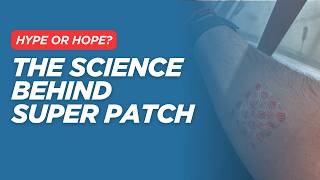
Jay Dhaliwal, co-founder of Superpatch, explains how adhesive patches with microscopic ridges stimulate skin receptors to reset the nervous system without drugs. The patches showed pain reduction over 50% in 24 hours, 80% preference over OTC painkillers, and 50% faster sleep onset in clinical testing. Dhaliwal developed the technology over 17 years partly to help his mother, who has MS.
Chapters
Jay Dhaliwal. Welcome, welcome, welcome to the Precision Wellness Podcast. It's great to have you here. I'm so grateful for this time together, and I'm so appreciative of what you've built at Superpatch. We're going to unpack all of that, and I want to introduce people to this amazing, amazing product. I've got a packet here. I've got a bunch of them here. I want to ask you a question, Jay, to. To kind of kick us off. If I found this patch on the ground and I just happen to bump into you and ask you, what does this patch do? This is the piece patch, by the way, and you had 60 seconds to explain it to me on an elevator. What would you say?
Well, first of all, Sachin, it's such a pleasure to be here with you. Thank you for inviting me to your. To your family, to your. To your listeners and your viewers and your millions of fans who absolutely adore you. And thank you for the wonderful breathwork session you did with our team in Las Vegas a couple weeks ago. It's one of the most memorable things that everybody's been talking about. So thank you for that. Pleasure to be with you, and so grateful for your support and guidance as we bring this message to the world. That's a great question. So I know I've taken up 30 seconds of my 36 seconds, but so I think an easy, really simple way to understand it is the patches of messenger, okay? And it tells our body the number one thing it can do for us. And you say, well, how does that work? Right? So everybody knows that the nervous system's in charge, right? You and I both know this. You were talking about, hey, better regulated nervous system, better regulated body, right? And that regulation happens in our central nervous system, in our mind, right? And there's these neural networks which are like programs of complex waves that are doing these really complicated processes, but they get stuck. Those processes get stuck, damaged, you know, for a lot of reasons. Injury, stress, environment, all those things that life do, right? But very few of us, unlike yourself, who through breath work, have learned to hack that nervous system. Right. Consciously. Right? And so what the patch does is it uses our skin's receptors and free nerve endings to send very discreet signals that our central nervous system understands and then nudges it back toward balance, right? So say we have. Our stress network is stuck, right? And we want to get it unstuck. So the patch you were holding up is the peace patch. So every patch has a very discreet pattern of stimulation and what do I mean by pattern stimulation? So just ridges, right? So those ridges, when they come in contact with our skin, are designed to generate a very specific nervous response from the receptors that send a very discreet signal that our mind interprets. And because we're not talking to the conscious side of it, right? So I look just like breath work. We're not talking to the conscious side of the mind. We're talking to the subconscious side of the mind that's regulating our sympathetic and our parasympathetic system that it doesn't speak English, right? It speaks. It speaks frequency, it speaks vibration, right? So that stimulation generates a very discreet signal that passes through our peripheral nervous system, upper spinal, into our mind, where it's recognized. Why is it recognized? Because we're born with that original intelligence. No one teaches us these things. No one teaches how to process pain or sleep or stress. These are natural processes in our body. And what we do is, with that signaling is gently, reliably nudge them back to homeostasis, right? So that's why the patch is like a messenger. And it just tells our body the number one thing it needs. So we're like, oh, you know what? I got some aches and pains. Well, we have this thing, it's called a freedom patch, that helps restore those pain processing mechanisms. So they're not hyperactive, that comes back down to balance. And now we're experiencing less pain or in some cases, better sleep with our sleep patch or with the peace patch, reduce that stress and anxiety. So maybe a little bit longer than you wanted, but I wanted to give a full answer on that.
No, I like that. You know, when I first got the patches, I received them from my friend Jason. And this was before I met you, maybe almost over a year ago now. And he came to my house, totally unrelated, and he didn't know I had a hip issue that I was dealing with. And, you know, he grabbed me a few baggies and I said, you know, I've been using this and they've been help helping me. I don't know if you need them, but I'm just feeling called to give them to you. And I didn't tell them anything. And I wore the freedom patch for three days. And the hip pain that I was trying to resolve seeing so many different people completely went away. And so that was my first experience. I was just like, totally blown away. And, you know, I think one of the things that you're describing here could almost be even a process of allodyn where the pain signal is just Stuck. Even though there's no real.
Exactly.
Threat. We're just stuck in that allodynia kind of pain model where something needs to be tweaked, something needs to be reset and recalibrated so the pain signal goes away. And that's exactly what happened for me. And if I hadn't experienced it for myself, I'd have a hard time believing it. Yeah. And if he had even told me that, hey, this is for your hip. Take it. I may have even, you know, just dismissed it, but something in me and people come into our lives for a particular reason. Right. You've come into my life for a reason. I feel like I've come into your life for a reason. Jason came to my house that day for what he thought was the reason. But when he left, he actually helped me in more ways than he probably even realized. And I'm like, let me just try this and see what happens. And it worked. And I've been sharing the patches recently with a few of my colleagues and friends, and one of my team members, Natalie, she just posted today that her REM sleep using the REM patch is off the charts. And she's sleeping so much better than she ever has been. And that's by using the patches just for a couple days. So she's excited to keep using it, but because she wears an aura ring, she's got the data to prove it. And I know sometimes, like, it's hard to put into words, like, what's happening in our bodies, but you did it in such a articulate way. Now, this is a very novel technology, Right? So there's no drugs, there's no supplements, there's no herbs. There's nothing in the patch. It's a hypoallergenic adhesive that you. That you just apply to a part of this anywhere on the skin where there's no hair. And, you know, you can. It's maybe hard to see here, but there's, like, these tiny little ridges, almost looks like a giant fingerprint. Like what I would imagine God's fingerprint to look like if he was pushing on my skin, you know? And so the fingerprint, I guess, is what send. It's. That's creating the wave pattern or the frequency pattern that the nervous system is then interpreting.
Well, actually, you know, to. To. And. And going to geek out just a bit on that. It's the frequency is. The frequency or the wavelength isn't inherent in the patch. Our skin and our body generates the signal. It's the indentations of the Ridges that when pushed down on the skin, it collaboratively helps the skin generate that signal. So the body is generating the reminding, the restoring signal, not the patch. Because there's no intervention in the patch is the intervention that we're applying to it. So another way to think about it is, is like playing the piano. So if our skin are the piano keys, the ridges are like our fingers touch the right keys to generate the right noise, the right signal. The fingers actually don't generate the. The note. Right. It's the piano keys hitting the wire. So the ridges are our fingers. It touches the piano keys, which are receptors. The receptors then generate that note by hitting the thing. And the thing that actually generates the electrical impulse, or ion channels, specifically piezo, two ion channels. And so there's this cascading effect of stimulation and cause. Right. So what's the stimulation? The indentations on the patch are the cause against the skin. That cause the skin to go, oh, I've been pressed. Let me generate a signal. So we figured out how to combine those receptors and those free nerve endings and ion channels to generate different signals. And if you allow me, this isn't a new concept, right, Sachin, People have, like, people with eyesight challenges, and people that are. That are blind have been reading with their fingertips for 200 years, right? So that slightest sensation at the end of the fingertips, again, there's no electricity on the paper. There's no chemicals on the paper. It's just little ridges, just like on my desk. There's little bub, little bubbles, pimples. But that is sending an electrical signal up the, you know, all the way through the efferent nerve ways into our mind. And there's. I don't think there's a typewriter in our head, Right. So, but it's generating this wave signal that. That's in the letter A. And certainly we'll agree that. That, you know, that braille is a learned thing. Correct? Like, I mean, so we learned that. They've been taught that. So that's actually working with the conscious side of the. Of our mind. Correct. But the mechanisms of stimulation are still the same, whether they're addressing, ending up being processed on the conscious side or the subconscious side. It doesn't matter that the generation of the signal is still the skin. The pathways are still the pathways. The spinal column is still the spinal column. The AP of the brainstem is still the AP of the brainstem, and it's still getting registered in our somatosensory cortex
first,
which is where all stimulation ends. Up and then it's interpreting it where it needs to go for it. So then it's going to decide where it needs to go for interpretation. Oh, this is a recognized signal in the cortex. It's going to go over to our prefrontal cortex. Oh, this is original intelligence. This is pre programmed stuff like breathing, like pain management, like things we didn't learn, right? We're all programmed with this and, and those networks are pro and recognizing this, right. Why? Because this is how we're designed, right? I mean this, this is all theoretical work in the development of this, right. We didn't know, but it just made a lot of sense to us. So when I realized and I dug into the mechanisms of braille, it was obvious that we could say that the, that the skin can read, right? If the skin can read, then the only thing that matters is what we're writing on it. So what we developed is a language instead of braille. We call it vtt. That speaks to the pre programmed systems in our sympathetic parasympathetic system, our autonomic system, which are default settings. I mean they're running anyways, so let's nudge them back toward factory settings because they do have a factory setting and, and they recognize that factory settings like oh, I was offline a little bit, let's nudge it back, right? Let's get it back. Because they do, and you're right, they do get stuck. The cause of it is came and gone. But because of how complex our neurology is, those programs do get stuck. Just like with the pain. And sometimes it's emotional, a lot of times it's emotional, it's limbic, right? So it's stuck. But most people, unless they become yogis, understand meditation can speak to that part of their nervous system. They don't know how to unstuck it, right. So we developed this little messenger that helps restore that program to factory reset.
I love that. I mean, who doesn't want or need a factory reset these days?
Who doesn't need a factory reset, right? So it's just an easy way to get it there. And what's really great is, you know, in, in dealing with health professionals like yourselves and others, regardless of whatever protocols that they're using, whether it's functional medicine, whether it's nutrition, whether it's metabolic reset, whether it's chiropractic or physio or massage or natural medicine, it doesn't interfere with. It actually is an enhancement of that benefit. Because you and I both know our nervous system at rest is going to allow everything to work better. The nutrition is going to work better, the counseling is going to work better. The exercise is going to work better. The breathing, everything's going to be better. The chiropractic adjustment is going to hold longer, they're going to respond faster to the physio treatment, the massage output is going to be better. Everything's better. Why? Because let's talk about the thing that's in charge, which is our nervous system. Let's get that regulated. And you're the master teacher. Yeah. That's what makes it better. So let's not get away from the master switch control and say, okay, let's get that in homeostasis. Because every system is fighting for homeostasis anyways. So let's just nudge it back toward factory settings and we can really start enjoying a higher quality of life without any risk. Right. Because to your point, there's no, it's not a transdermal product where there's something leaching or leaking into the skin. There's nothing being absorbed. Which I think is, is an important thing to talk about because I think people, rightfully so people are worried about, hey, what's being added to this? You know, I have my nutrition figured out. I got my exercise programs figured out. I got my, I can hold, everything's done. Is this going to interfere with what I'm doing? And, and, and I, and you know, I'm proud to say that the interference is an elevating experience. It's to make the experience better, not detrimental in any way.
Yeah. There's no contraindications. Right. So if people are medications or if they're on a supplement protocol, it doesn't necessarily throw them off or there's, there's no issues with, with interactions and things like that.
Well, as, as you know, as you helped me on my journey. Right on, on the metabolic reset and hey everybody, Satchin's amazing. His guidance and support for me now coming up two months life changing. I mean. Yeah. So Sachin, I gotta, I gotta say thank you again from the bottom of my heart for your guidance again. If you're looking to restore your metabolic system, call Sachin, get on his program. I'm not. This is not a paid advertisement. I'm telling you, if he could help me with how busy my life is and multiple businesses that we operate and so you know where I operate on 12 different time zones in 36 different countries. And if he put together a program for me that worked for my lifestyle, high stress, low sleep, convenient eating, meaning Bad, bad nutrition and get me sorted as quickly as he did it for me. You owe it to yourself, you owe it to your families. Give session a call. But anyway, sessions, just to get back to what I was saying.
Thank you, Jay.
But it's so important, right? Because I know the impact that he made in my life. And I want this for everybody. Whether you use the patches or don't use the patch, fine, Right. But let's, let's, let's, let's clean up the temple, right? Let's get this thing back on track. Because longevity is important, but vitality, longevity is the combination, right? Like living long and miserably isn't the answer. Right? We gotta live long and we gotta live healthy and happy.
Yeah, exactly. I'm curious, like, there's obviously a lot of research that's been done, a lot of technology that's been developed. I'm sure a lot of trial and error to figure out the signals and the codes. Where did this all start? Like, there must be an origin story, something that's driving this question.
There's always an origin story band. So a little bit of background about myself. So I'm a software engineer. I worked in the security space and encryption space for a long time as a code junkie and then, you know, grew into a tech bro, managing, launching, growing tech companies for better part of 25 years. But way before that, and still to this day, I'm a big mama's boy. My mom got diagnosed with Ms. In 1983. She had symptoms a couple of years before, but 83 was the diagnosis, and she went from diagnosis to wheelchair in 18 months session. So the nervous system, its dysregulation, its challenges, quality of life has been a very personal and a big part of my life for now. Coming on 45 for a long time. Right. Being in, you know, and, and, and that, and as anyone would. You take care of your family, you take care of your mom, you take care of your parents, right? I mean, you provide the best care that you could. And, and being in the technology space in the mid-90s, early-90s, right through the dot com craze and all that stuff, I was very fortunate to be at the right place at the right time and position myself in a lot of different places. So I had a lot of abundance of success to be able to provide the best care for my mom and for my family. And so we tried, if you name it, we tried it, right? And as you know, as well as I know, maybe even better than I know that when it Comes to neuro rehab. In, in mainstream medicine, there's, there's a limited number of tracks that people are guided on, right? One is a chemical track, right? Some kind of neurotropic chemical intervention track. Then there is a, an electrical interference track, whether it's implants or bombarding the nervous system with some kind of energetics, right? So this is everything from neurological implants to caps that zap your nervous system. And then there is a surgical track where somebody can try some surgical intervention, right? In, in some cases that's needed, things like tumors and other issues or lesions in the nervous system where I, I, it makes sense, but this wasn't the case. And then there is therapies, right? So therapeutic, you know, devices and things like that that you can try massage and different types of things. So we tried all of those except for the surgery, which mom was not going to do. And we didn't see. There was a lot of light at the end of a lot of tunnels over the, over the period of years, right? Most of those light turned into trains, meaning you have to run back a little bit and try something else. Meantime, I'm still in the tech space, you know, And I came to a crossroads in my career where career wise, financial check marks, family life, married, beautiful kids, everything's great. My mom's still alive, my dad's still, you know, still with us. I got great siblings, everything's great. My mom's still not feeling better. And I had just exited one company and I was like, what am I going to do? Like, this thing is like I had just that of all the things that I was grateful for, there was still this thing that the one that brought me into this world was the one that I hadn't been able to do anything for. And if there's a bunch of mama's boys listening on this podcast, I think, you know, what I speak of, right? There is a certain level of devotion a son has for his mom and a mom has for a son. Certainly that was my case. My mom lived for her children, right? And she went from Wonder Woman to somebody completely dependent on me to provide her care because dad was busy working, providing for a family. You know, there's three of us, three siblings, I'm the eldest. And so I'm at this crossroads and I'm like, okay, you know what? I'm gonna start paying attention to this nervous thing outside of what it is. So I started asking questions about what did we understand in 2008? What was all the advents and, and deeper understandings of Ms. And possible treatments for it, and. But I only know what I know, so I just started asking engineering questions, right? So with ms, as you know, as we all know, that I'm sure you will know, so I'll preface it again that, you know, all of the signals being generated in. In our central nervous system because of lesions in the central nervous system or demyelination, the peripheral nervous system, the signal isn't getting through. So my mom can't do this. She can't do this. As much as she wants to do it. It's not doing what it needs to do. So my question, like any other dem engineer, was, well, what's that signal? It's the basic question, right?
Right.
And the answer I got back was, well, it's not that simple. And I'm like, give it to me complicated. We'll. We'll figure it out, right? Like, it's okay. Like, I. I believe that we can all learn anything. It just. Some of us takes long, feel like it takes a bit longer. Super smart people like yourself, you probably get it quicker, right? So it's just, it's just time, right? And, and there's a process to learning and, and. And just immersing yourself. And I said, well, explain it to me the best way that you can. And I'm asking some of the smartest people in this field, in Toronto, in New York, in California, like people that I've, you know, developed relationships with over previous 20 years of. Who've guided to care for my mom. I said, listen. I go, let's get back to first principles. Tell me about this signal. And lo and behold, it's never actually been quantified. And why do you want to quantify it? I go, it's real simple. I go, I just want to build a bridge over the part that's damaged. That's what, that's how engineers think. Oh, there's a problem. Build a bridge over it. Right?
Right.
We just, you know, we just connect it over. We just. Fat part. We build a bridge and we'll get signal. If I know what the signal is, then I know what kind of bridge I need to build, right? So instead of an implant, which is interfering or recreating, I'm like, is there. I'm just exploring it. There's no answer. And I said, okay, so we don't know. I go, great, where does it start? Because that's usually where the answers are, right? It's at the beginning. Like, where's the genesis of this? I go, of course the signal comes from the brain. I go, great, what's the signal that controls my arm, my mom's arms and her legs? What part of the brain is sending that signal? They're like, it's not that simple. And so, you know, this was just this ongoing conversation over weeks and months, right? Because I'm just. And in the meantime, I'm reading like, I've read a lot of things on, on muscle recruitment and vestibular response. Like, I mean, if there's, if there was a paper on ms, I've read it. If there was a paper on, on nerve stimulation and nerve conduction, I've read it, right? So I'm not completely neophyte, but I'm just trying to understand what I don't know, because that's where, that's where the answers are. The answers are, if the answer is not in what we know, then the answer is on things that we don't know, or we don't even know that we don't know. So there's a, there's a black box of unknown that yet unfortunately have to stumble around in the dark and stub your toe and bang your head until you say, oh, this, what is this thing? And then you got to feel around it. You know how it is, right? If you're in the dark, you gotta feel around. Is okay, is this the thing? Is this the switch? Is this the light? This is really what innovation is all about. You're stumbling around in the dark and once in a while you get a little crack of light and you go, okay, let's try it over here. So the conclusion after many, many months was this is what the smartest people in the room agreed on as a consensus that our mind expresses neurofunction and physiological function can be expressed or is likely expressed as neural networks of brain waves here. So what does that mean in simple English? That neurons in different parts of the brain are connected with other neurons in other parts of the brain using alpha, beta, delta, theta and gamma waves. And they form little bridges, right? And millions of these little bridges form networks and they're super complicated and their interconnectivity is multi dimensional. So it's one of the most complicated things that we could get our head around. And that's what ultimately starts as measuring neurofunction. And those waves somehow generate the electrical impulses that regulate our physiological response, whether it's organ control or breathing or heart. It's all starting. I said, great. So then, then I had this radical theory that if a person was alive and awake like you and I are that everything that's running our physiology must be being expressed as those brain waves, otherwise it wouldn't be working like that. Data must be there, right? Just the, it's just algebra. It's like, okay, right. What's the total of it? It's in there. I don't know if I can see it, read and decode it, but it must be there. If this thing is in charge, then it's expressing it. We might not have the tools to see it. That's another thing that I think people have to understand that I don't think we're anywhere close to really understanding the full mechanisms of our neurofunction and our nervous system. I think there's things happening outside of our current equipment, right? I, I, because there's too much happening and we don't know, but it's happening, right? We see the output that's not visible in the data, so there's something else happening. And that's another theory we can get to in another call. And I said, okay, so what I need then is massive data. I just need a lot of data that can help me understand what normal is. What isn't normal is. So luckily there are multiple databases all over the world that have been collecting EEG data from hundreds of thousands of people for a number of years, right? So, yeah, these are licensed software databases. So I license the software. They have some rudimentary analytical software to look at the data and try to visualize the data. I wasn't very impressive because I'm like, hey, where's the network that regulates my mom's ambulatory control, right? They're like, what are you talking about? I'm like, oh, okay, what about this network? And so I'm just asking questions that pertain only to my mom's health. And they're like, that's, it's, it's again, it's not that simple. So between 2009 now and 2014, I wrote my own software to analyze EEG data, looking for common patterns of EEG networks across 90% of that database. Right? Because you gotta allow for some anomalies. And this is really based on the forefather, what we have in AI today, machine learning, pattern recognition, algorithmics too, because everything is a pattern and everything is a wave, so you can reduce those waves. It's just signal processing, right? Looking for commonalities. And, and so we've done that. So, so the software is, it's, it's, it's complex. It took me a while to write it, but I Think back in my career, if I wasn't that geek that could code, I probably would have needed other people's inputs, but I didn't. What I didn't rely on was old ways of looking at it. I, I just had my own philosophies in terms of trying to prove theories or recognize theories or, or develop theories that there must be p. There has to be because it's genetic programming, like our pain. We don't learn how to use our arms. It's not conscious experiment, right? It's, it's, it's, it's natural. It's. And I call it oi call it original intelligence. We're programmed with this. So it must exist in that. If this thing's in charge, then it has to be in that data. If it's not in charge, then it's a whole different theory. Then I got to look at other things. But. So this was all theoretical exploration. Why did I do it? I was at, I was at that point in my life. This thing was all consuming. Every day was a little bit closer to seeing what hadn't been seen before, right? So basically what, what I've done is in, in, in. And please. You know, it's, it's probably going to sound very egotistical, but it's not. But what we've really developed is like the Hubble telescope that looks inward. Look at that. It's looking inside our mind in terms of how is this thing organized and how is it flowing? Because you know, when we look at an eeg, it's like little wiggly lines on a two dimensional plane. There's no two dimensional plane in our mind, right? These things are spiraling, they're connected, they're vortexes. It's really comp. It's beautiful. It's really fascinating. It is a universe in there, right? So it's just been decoding that universe in a way that, to simplify it, to understand it, to make some sense of that chaos. And it's not chaos. It's actually very organized. But at a surface level you're like, let's just squiggly lines, they don't mean anything. So we developed this thing to help us isolate and deduce these networks that exist across 90% of that database. And if it doesn't exist, then it's not consistent enough or, nor reliable enough. So there's a very robust requirement for very powerful computing. So over the last number of years we've been able to do that. So one of the first networks I deduced was One that impacts balanced ability, muscle recruitment, and vestibulant response. Because I'm trying to help my mom. And when I would take her EEG reading and compare that network, it was performing suboptimal to that normative database. It wasn't in that bandwidth. It was subpar. When I could pinpoint those marks. I want to measure this network here. And I'm like, interesting. When I would take other EEG sets from other people with ms, they were also suboptimal people that had spastic issues or involuntary muscle spasms who couldn't control their muscles at all. They were operating also outside but above that normative bandwidth. Okay, Right. And so now I'm just looking at lines on a graph or, or just a graphical representation of what is happening inside here that I believe is representative of normative function for physiological control. And so then how do you. So now what? Right? Haven't solved the problem yet. We're seeing a problem with more variables and, and, and, and, and they're all being expressed as waves. So if I take the word brain out of the conversation, right, such. And then we're just left with waves. Because the word brain scares people. Neuro scares people. Okay, let's put that everything's a wave. Sight, sound, everything is a wave. Right? We're waves. We're just lights, condensed. It's not complicated. I mean, and I didn't say that. Einstein said that. Einstein's like equals MC squared. If you want to know what M is. Do the math. You realize, oh, we're light, right? Right. It's just, it's just light. That's the equation.
Right? So when you're, when you're like, did you. I find that when people have like an, an outside background. Right. So you're coming at this from an engineering background versus a medical background. So you're not showing up with all the dogma. You're not showing up with, okay, here's what I learned. Here's what it says in the, in the research books. Here's how it's always been, and here's what I'm essentially regurgitating back to the patient. You're coming at it from a whole new vantage point, right. Not only a son who wants to help his mom, but an engineer who, you know, everything is reduced to waves, right? At its, in its smallest form. And you're looking at it from a whole new lens. Now, I know when people have these type of revelations, there's like lightning strikes. Like, did you have a lightning strike moment that made you think that you
in so many, so many. I'll give you. And, and, and again, I don't want people to think that, you know, Jay's all woo woo and all this. I'm the last woo woo person you're ever going to meet, right? Some of the things, the, the, the deductions and, and, and, and I, I believe they're just revealed through that universal consciousness that's out there, right? Tesla writes about his autobiography. Like Tesla's a 13 year old drew the AC motor on a beach in Serbia and his friends asked him what it was. He goes, I don't know, but it's going to change the world. Thirty years before he designed it in New York and built it, right? So some sort of, but there's a lot of these, these, these little eureka moments. So I'll give you an example. So because you're starting somewhere, right? You're starting, you got to start somewhere. And I remember as I'm getting right, I haven't even started programming anything yet. I'm just reading, reading, reading and I'm trying to figure out where does, what are the, what's the source of vestibular response? Where does it, how does it do that? What, what Inside our mind, where's that? Our brain is that control mechanism. So I'm, I'm on Google. So first I'm stuck, I'm reading, but I'm not seeing any light, right? I'm not seeing any. So the first thing is it's. This is a freaky story. You're gonna love this. Among. So before I go about, you know, I just put a good session of meditation and I'm like, okay, universe, you know, where am I? Like I'm on this trap and you know, there's, there's a, there's like this big chasm canyon between my understanding and where I want to go. I need a sign, I need a bridge, I need something to connect something for me. So anyways, I put that universe and I just, you know, back to the books, back to the research. So I'm on Google and I type this query in and I'm looking at stimulate response. I'm taking a look at movement, muscle recruitment, neural networks, nuclei, all these, I'm just putting these term words into Google. This is like 2 o' clock in the morning, right? 3 o' clock in the morning because I couldn't sleep, because I'm just, I think we're all the same way. When you get into that rabbit hole, you're just, oh yeah, you're consumed, right? And I'm in bed and I'm just googling. Lights are turned off and my wife's like, she just turns over, turns over the other way, goes back to bed, right? And. And it's the fifth link down and it's a. It's a PDF. And I open it up. Here's a research paper done in 1964 in Sydney, Australia by a neuromuscular dentist. 64. And this guy has done the research to connect the brainstem nuclei and proposes these neural networks that are responsible for vestibular response, muscle recruitment, balance, stability. And all the salient points are underlined in a pencil with notes in the borders. So somebody and who has taken this out of the journal, made notes in it, uploaded it to some random server in the Internet. I download this and I'm. I read it four or five times and I spoke to my wife. I go, I got something. This is like 3:33, you know, in the morning, I'm like, sweetheart, I got the first direction of where I got to start focusing on in terms of understanding vestibular response. 1964, six years before I came on this world,
right?
I download this. So this research paper from 64, the one that I downloaded, by the way, I printed it out, it's framed on my wall in my office,
Right?
And, and so focusing on the brainstem and the pawns and the neural networks that are. Because that, that part of the brain is so on misunderstood. Anonymous. I'm like, it's unknown. Like, it's so deep, right? It's just that genesis of our neurosystem that it just isn't observed very well. So I've spent a lot of time putting pieces together, understanding how those different nuclei impact the neural networks that are. Because that's where the information goes first. It must pass through there, right? And so that was the first breakthrough and that was really instrumental in guiding my decisions in terms of what I was going to study and what I was going to focus on. And there have been four or five different things that have happened over time that have just layered and layered and layered and layered and layered that eventually led to where we are today. So that was, that helped. Was instrumental developing the software that was instrumental in getting to understanding how this thing is working through the theories that I believed in, right? So once we saw that, then the question was, how do we get these sets of waves into that normative database? How do we get them to normal? And as, as somebody that's fascinated by math and wave processing, then it's just A function of signal processing. How do I change a wave? Well, that's constructive interference. Send the right wave and you're going to transform it and you can move it, you can change its phases. There's a lot of transform math that's available. So how do I do that? How do I send a wave or sets of waves to interact with these waves that are not responding or that are responding the wrong way? Again, how do I do that? Do I zap the nervous system? Do I develop a chemical? Do I put an implant in? I'm like, yeah, Mom's not gonna go for this. She's not. You know, it's just like there's this checklist of things that we can do and things that. Because there is no super patch, right? There is no. This is just somebody that was financially independent, mindlessly and maniacally looking for a solution to say maybe this. There's a different way that hasn't been explored yet, right? But every little. Every day I knew I was getting closer. Because although there would be resistance in my understanding and beginning there, it just made sense. It made sense in a deep, deep place inside me. Call it intuitive, call it delusion, I don't know what you want to call it. You call whatever. But I knew that there was a thing at the end of this thing that would make sense, because how could this thing operate so brilliantly and so beautifully and us not be able to interact with it or even try to understand it in a way that we could interact with it? What was the language of it, right? And what became clear that the language of that system is not English, it's not Latin, it's not French, it's not German, it's not Mandarin, it's not Hindi, it's none of those things. It's waves. That's the only thing that it understands. Right? And so that was just like this is the principal belief that. Yeah, it's. It. It must, because that's how it speaks. And it speaks the same in everybody. Your neural matrix of pain is hardwired exactly the same as my neut. Matrix of pain might be working at different levels efficiency and, And. And all the different things or mind might be stuck. But guess what? The track is the same. The same regions firing the same waves, you know, and so. And that's across the board. That's. That's one of those 90% patterns that exist everywhere. Right. So how do you. I'm sorry, go ahead.
No, no, it's like. It's almost like literally like a software patch for the nervous system.
It is, right? It's just like. Yeah, let's just, let's. It's. It's like the iOS upgrade on our phone. Oh, we got to upgrade. We got to upgrade the software. Let's get everything running a little bit better, right? And so that. That discussion of or. Or that debate. How do we. How do we change these signals? Again, back to first principles. How are waves getting there now? So photons come through our eyeballs, hit our optic nerve and become waves. Sound waves come through our. Hit our auditory nerves and become waves, right? There's no projectors or speakers in our mind, right? These are just what we're. You and I are experiencing each other, right? I'm experiencing a photo reflection of you on my screen, and I know it's you. It's crazy, right? If it's in my head, it's just light that's coming through my eyeballs. That light itself isn't intelligent. It's just photons. It hits my optic nerve. So everything in this room is hitting those. And that's pretty quantum too. That all comes right through the same little hole, hits our optic nerve, and all of a sudden, in real time, it's forming a. A movie in my head and then eventually a memory and all those different things and the emotions, all those things are going to be created at the same time, right? At the same time. When you speak, the sound is coming from a speakers, right? We understand that. Transmission from your voice to the microphone across the Internet, like, we believe that's possible, which. It's kind of even more complicated, right? But think about it. And I'm over here in my office coming out of your. Out of the speakers in my phone. But we all know light is faster than sound, right? But somehow my mind is connecting the both and. And synchronizing the sound and the light. So there's no lag in our communication in our mind. But we know it's not happening at the same time, right? Physics wise, it's not happening at the same time, right? Right. It's just like things that we take for granted every day, right? So I'm like, okay, this thing cheats. It is whatever it wants, right? If we let it. And then the whole ulcer signals getting in her mind. And then the notion of skin and braille started renting space in my head, literally. I'm like, I got to figure this out. And so I believe that if we could sense complex stuff through our fingers and our skin, then all that matters, what we could write on it. So we took the next seven years to figure out how to stimulate the skin. And this was a trial and error, this was measurement, this was a lot of peripheral research being done on piezo one, piezo two, ion channels by Nobel prize winning scientists that really were a benchmark science for us to understand how our skin actually communicate with our body. And over the last few years, there's a new theory in haptic sciences. It's called the pattern theory of haptic perception. It's a mouthful, it's not my wording, but this is a generally now accepted and studied science and theory that says that, oh by the way, our skin and its inherent free nerve endings, receptors, ion channels, can actually coordinate and collaborate very complex signals that are processed and interpreted and output by our central nervous system. I'm like exactly. That's exactly so. Right. So there's this burgeoning field of studying haptic response and haptic perception. So what we've developed over the last 17 years now is, is a system of decoding and deducing those original networks and finding what that normative, what normal is for those functions across a wide, wide database. 90 plus percent of people should have that, that's what we know, it's reliable. And then figuring out how to stimulate the skin, much like braille. But our braille is called virotactile transduction. And when we put that stimulation against our skin, it uses our skin's natural built mechanisms to help restore the nervous system to it. So over the last 17 years we've deduced 15 plus neural networks. They're all, it's all theory by the way. And then we figured out 15 different ways to stimulate the skin that can help restore those networks to factory reset. And it's not 100% nothing, but it's certainly 95% like we see that in the data. So what in that development process and bringing this to the world, you know, we've spent millions and millions of dollars, not just on the development part then umpteen million dollars with the clinicals to show the efficacy of the product and the technology. So whether it's for pain, sleep, stress, mobility, balance, cognitive function, all those different things, energy levels, all of those different things. Because it's such a radical idea, although elegant and simple, because we've been trained, it's got to be a chemical intervention, it's got to be electrical interference like we can do without chemicals, we can do it without electricity. That this is physics, right? So we're relying on the physics of our mind, body connection to, as the intervention and the body's actually asking for it. It's just a gentle reminder saying, oh, by the way, Satchin's body, you got some pain stuck over here. We're supposed to be over here. We're good, right? And it gently nudges you back to where your body actually wants to be. And so we've got 16 peer reviewed and published studies, more on the way this year, more than half a dozen indexed on PubMed. And, and the body of work is growing and eminent thought leaders like yourself and other key opinion leaders see what we see, that we can really bring this incredible message to the world and have joined our advisory team. So if you go on our website, you're going to see Sachin there, you're going to see a lot of, actually some of them are Sachin's dear friends as well. So just an amazing group of, of, of healers and thought leaders and, and practice leaders and real masters in their field who see what we see in terms of, hey, this could be, this likely is the future of where health and wellness is going. That of course, you can't replace exercise, you can't place good nutrition, you got to sleep, you got to breathe right, you got to do all these things the right way. But here's another ladder, another escalator to take you to a higher quality of life and a higher living in a safe, safe, safe way.
I love that. Just to close the loop. How, how did your mom respond to the intervention?
Well, thanks. Thanks for asking. So now everyone keep in mind, she's been diagnosed since 83, had symptoms three years before that. So this is year 46. So ever since she's been wearing a version because there's been a lot of iterative processes, right? The first p. The first pattern that I deduced is today called the Liberty patch. Ever since. And now she wears three of our patches. But ever since she's been wearing an iteration of technology stuff I make for her, custom, as you can imagine, right? That's what we do, right?
This.
Ever since she's had an iteration of the tag, her Ms. Has never flared up again. She's been in complete remission.
Wow.
So mom's in bed 20 to 23 hours a day, okay? She has no pain, she has no bed sores. She has great circulation, great digestion, great eyesight, great cognition, great hearing, great diet. You, if you saw her, you wouldn't know that she's had Ms. For 46 years. I have not been able to get her to walk again. But she can move her neck, she can communicate, she can hear, she can speak. She's living a far more fulfilling life than perhaps otherwise. And I don't know, maybe I don't know what it would have been. Right. Because she's just, I just believe that she's a miracle person because her spirit is so strong and she's surrounded by that care and concern. But, you know, to say that, you know, it didn't get any worse and that she's still with us, I kiss her good morning every day, that I'm home and that for me is, is the gift. Right. That it didn't get worse, that she's not in pain, that she can communicate, that she can live, she can hear, she can laugh. Right. So now she's a great grandma. Right. So that's a whole different thing for her now. So I'm so grateful for that. Right. Thank you for asking. And, and she's happy, right? Because she's like, my God, she goes, I can live life, although I'm confined to, to not having the mobility that I want, but everything else is there, which is an amazing gift for us and we are so grateful for that.
Yeah. And it's such a, it's such a, an aggressively progressive condition. So to stabilize it in and of itself for that many years is quite a feat.
I wish I could take credit for it, Satya, and I'm grateful. And you know, we've got a lot of case studies that we're going to share over time. So we're doing a number of studies right now that speak to overall health at a genetic level. We're doing epigenetic studies, we're doing Parkinson's studies, we're doing gates, because we're seeing the evidence, we're seeing the results with people. But we can't say those things until we have the evidence and the clinical data to say, oh, by the way, this was the response in, in 100 Parkinson's patients. This was the response on our micro RNA response. This was the telomere changes that we saw. This was the anti aging biomarkers that we saw and the epigenetic changes that we saw. It's coming. I mean, the preliminary results are mind blowing, right? It's science, but, but we, it's deliberate in this design in terms of how we're addressing it. Because, you know, you're like me, like, we need to know, we get into the weed. So even if the viewers on the call isn't, if you're interested in how like how wonderfully sophisticated our body is and those signaling mechanisms inside our body. So we're using things called piezo 2 channels, ion channels, and they're the chief signaling mechanism in our body that surround the Merkel cells and every other organ and thing in our body. The amount of research being done on piezo2channels is mind blowing. And now there's evidence that not only are they sending electrical signals through our peripheral nervous system, speaking the central nervous system, but they're the key catalysts for intercellular communication and inter order communication. That it's not just a nervous system signaling mechanism, that there's intracellular communication, mitochondria to mitochondria communication. That's happening because of these piezo channels. And cells that don't have these piezos do not respond to any kind of stimulation. So that's how important these ion channels are in our physiology, in our nervous system. And we all know like intercellular communication is, is key for us, right? So the next big thing for us is focusing on the intracellular communication because we think, you know, getting that mind gut communication happening better. Speak to our liver, speak to our pancreas, speak to our kidneys, speak to our heart, right? They're all listening and the body's already doing it. So if we can understand that language and we can take the static out of the communication and we can get that language between the cells talking to each other and responding better and getting them back to normal and getting them back to homeostasis.
Wow.
So the future for us is just starting. It's just getting wider and more exciting for us. So we have a lot more work to do. But it's certainly exciting. So that's the future a little bit.
That is really exciting. You know, you mentioned that there's about half a dozen studies that have been done, indexed in PubMed. What, what, what are the studies showing or finding for?
So I'll give you an example. So we take a look at, you know, pain response. So we use brief pain inventory indexes, interference indexes, severity indexes, and we see on average over 50% reduction in perceived pain. Because pain is subjective, right. We see relief for 24 hours. We see 80% of people preferring the patch to their OTC pain relief. We see 80% of people using anti inflammatories stop using their anti inflammatories. We see a massive relief without a chemical intervention, which is mind blowing. We see improvements in lower back pain patients in their mobility, in their range of motion. We see them a positive response on their quality of life and their desire to be more active. So all of these things are making an impact. That's with our pain patch, with our sleep patch. We see. So these are people baseline having bad or very bad sleep over the previous two weeks. Right? We see a baseline of them taking 60 minutes to fall asleep after two weeks of the inter 60 minutes to fall asleep and sleeping about five hours a night. On average, 80% of the participants waking up three times in the middle of the night. So interrupted sleep at the end of two weeks, with the only intervention being the REM patch, they're falling asleep 50% faster, they're falling asleep about 30 minutes, they're sleeping 25% longer, they're sleeping six and a half hours, whereas the 85% were waking up three times a night. Now 85% are only waking up one time a night. It's a massive change in their quality of sleep. And they're waking up refreshed. You can see it on the aura rings. You can see all these different people and they're waking up. And even the ones that perhaps their sleep doesn't extend longer, the quality of their sleep is higher. So they're waking up refreshed and they don't have the side effects of the melatonin or they have a sleeping aids where it's groggy and it's taking midday for that thing to wear off, only for them to go night and do it again. Right. We see our peace patch, you know, reduce perceived stress and anxiety by 33% without a pill over two weeks. You know, all the studies have been done over two weeks. We see a 24% improvement in mental health factors. And you and I both know what that stress and anxiety is in today's modern world, Right? It's the precursor to a lot of bad things. Right? Everything from digestion issues to heart issues to diabetes, like stress is really an epidemic. And the reason we do the studies over two weeks is because people don't give things a lot of time anymore, right? People want quick results. They want to see a change over a period of time. And, and if it wasn't that, then we had to go back and design a better product that we could start. Because we know that if this thing is in charge, the better that we can help restore that, the sooner we're going to see results. So some people see results, drastic results in a couple of days, but certainly over two weeks of continuous use. We know that based on the studies that we've done, that there's going to be a clinical and a statistical significance in the quality of life that they're looking to change. And that's true for about 95% of the participants in the studies. Certainly there's 3 or 4%, 5% that don't see that, but that's also in the data. Right, so am I Saying it works 100% of the time for 100% of the people? No, but it works for 95% of the people, 95% of the time. So there's a big, big impact there. That's, that's there for people to try and use. And then we did a study performance athletic study with the University of Arizona and the D1 athletes. We see a 10% improvement, improvement in lower body power output and improvement in muscle symmetry. So the dominant side and the weak side being equally productive and powerful, which is immense for recovery and things like this. We have a paper coming from NHS in UK in conjunction with Cambridge where we looked at VO2 performance with collegiate and Olympic athletes against the placebo. We see over a 6% improvement in VO2 max. So whether somebody's already a peak, that's massive stuff, right? So whether somebody's an elite athlete who you think doesn't need anything but that know that mindset of that elite athlete, they're looking for that 1%, 2% improvement. So we can give a 5% improvement or 10 improvement. That's game changing stuff. And then there's regular mortals like the rest of us who want to help our stress, you know, make our stress levels more manageable so it's not interfering with our life, want to sleep a little bit better, want to eliminate some pain better. And then we have our liberty patch, which we know in clinical studies we see a 31% improvement in postural stability and balance. And people like, okay, what is, I'm not falling over, Jay. I'm like, I know you're not falling over. The reason that's important is that the most reliable biomarker for longevity in adults is balance and stability. There is a massive correlation. So the higher our balance and stability is, it's correlated to better longevity. The poorer bound stability as an adult, it correlates to lower longevity. So imagine putting on a, on, on a simple drug free device, this patch, this messenger, instantly improving our balance stability by 31%. The correlation is that it's going to have a significant impact on our overall longevity, our vitality and our mobility and our quality of life. Because better mobility, you know, you mean you, you, you're you're moving around easier, better, faster. With better balance stability, you can have a higher quality of life. That's why the balance is so important, right? Because we know what it means for vitalistic, healthy life with a higher chance of better longevity, better vitality, right? So I think as, as, as a group of products and a group of solutions, we can really address and help a lot of people. And so if we take a look at, you know, data from American Medical Association, 85% of the people in any family doctor's office at any point in time are there for one of three reasons or a combination of three reasons. Some kind of aches and pain, poor sleep, low energy. And what they walk away typically is a little piece of paper with something written on it's called a prescription, right? Now imagine a solution or recommendation that comes before that. The path before the pill. And certainly there's a place for pills. I mean, somebody, you know, there's some acute symptoms and acute situations where, yeah, if you need penicillin because you got to kick ass bacterial infection, you better get that thing sorted out. But people didn't, don't get poor sleep because of those types of things. These are lifestyle challenges, these are aging challenges. These are chronic challenges over time. They didn't get there overnight. They're not going to get solved overnight.
Right.
We can mask it or dope it or dose it, right? Like melatonin does, right? Melatonin just overrides it. And we're, but we're not, we don't overcome it the minute we wake up, we got to deal with the side effects of it. We know about the opioid crisis. It's not. We know what it is. We know why it started because people don't want to live in pain. And it's understandable. I don't, there's no. We said, who do you want to blame? I want to blame anybody, right? I'm saying protesting is great. What are we doing about it, right? What, like where's the solutions?
So you can, is there a limit to the number of patches you can wear or does it have to be applied to a certain part of the body?
Like, great question. So, so the pain patch, you want to put as close to the discomfort as you can, right? So if it's your upper arm, your shoulder, put it not on the joint but between the source of the pain and the brain. So I put it between the pain and the brain and you'll be good. And if you got multiple places where you're hurting, you got aches and pains, put multiple patches. The other patches you can put, I recommend, put it where it's pretty hairless because you're going to want to Change it after 24 hours. Right. Which can be no fun if you're going to be ripping hair off at the same time. The hair itself also is a super sensitive organ in a sense. Right. It also responds. You can wear it on a hairy spot. It's going to work, but it's going to come off with a little bit of discomfort because of the pulling and the tugging on it. You can wear them wherever you like. I typically wear them on my lower back. Just easier for me to apply and take off. I like to wear T shirts and things like this and polo shirts. So sometimes you don't always want to wear it, but it's up to where people want to wear it. Some people wear on the inside of the forearm or on their legs. The material of the of of the patch is made by a company called Dermamed. It's actually surgical tape that's used in surgical procedures to hold organs and arteries together. And adhesive is also surgical level adhesive. It's hypoallergenic. The tape and the film and the adhesive are FDA cleared and approved for surgery. So this is the level of the material that's being used. The patches are fabricated and FDA cleared and approved laboratories where the product's made. So we don't cut corners on that end of it. The products are made in the United States and then there's a packaging process again, all under guidelines of good manufacturing processes. The patches are registered with the FDA as a Class 1 medical device. It's in the same category as kinesiology tape, which is in every locker room and physio office in the world. Because think about it, it's almost. It's like the concept of physio, of kinesio tape, where you have general stimulation. What we've done is taken that same type of material but at a very specific stimulation to it. Right. Like. Right. It's this. It's just a different approach to sending information to our central nervous system through our peripheral nervous system. And when I talk to physios and ats like, oh, I get it, I go, cs it goes. When somebody else think of it, I go, I don't know. It's always somebody does it first. We just happen to be the first ones that did it. Right. So it's the mechanisms we use every day. Right. In terms of stimulating our nervous system.
Yeah. You know, one thing I wanted to mention is I, you know, I met 1400 people of the super patch community, which represents, I Understand a fraction of the people that are using the product and recommending it. And the stories that I was hearing were just like mind blowing.
Yeah.
You know, I had, I have my own story, right. Which is the one that we can relate to the most. But when you hear about people who are crushed in accidents or people who had multiple fractures and they're able to come off their opioids and you know there's really strong pain medications by using the patch is really heartwarming. So that's got to feel pretty good. That you've developed a product, you know, that have such a massive impact on so many people and really solves a crisis that our world is dealing with where I think people are over supplemented, over medicated, their nervous systems are dysregulated and this kind of checks off all the boxes, right. There's no drugs, no product in there. It's hypoallergenic. It's something that doesn't interfere with what they're currently doing, but more importantly resets us back to our factory settings. And I mean, who doesn't need that? I think all of us. I think so.
Right. Well this is what the breath work was about. Like let's get back to regulated nervous system. And, and this is why I think, you know, what you and I are doing together makes so much sense in, in, in, in one to one conversation, certainly with conversations with other people. You know, it's, it's beyond rewarding, Sachin, because the impact is, is the story, right? It's why we do this. Can we affect how people live in a positive way? Right? Yeah. There's a business around this thing now, but there was the genesis of this thing wasn't business. Right. And we never lose sight of that, that our measurement is impact. Our measurement is how many lives can we change. Right. And the more lives that we can change is in itself a massive reward. Because you know, I tell people, I said, listen, I go, there's one of two outputs. Either nothing's going to happen or your life's going to change. Either way, there's no risk. And we take care of the financial risk because we have a money back guarantee for our clients that purchase our product. We have a 30 day, no questions after they money back guarantee. Right. Because we're not able to sell something and say, oh, you know, what's your problem? Like this is not how, like if this doesn't work for you, no problem, we're going to talk about it and then we'll take your, you'll take the product back you can return it. They'll probably give you to, you know, a month to use it. Try it because, but the response is, we know that the response is positive. We like. And if there's a 5% or 3%, it doesn't work.
No problem.
We don't, this is not about that is like, but think about it, no risk. Well, like what's the risk? Some people do have, you know, allergies to adhesives and then there's a small, small percentage that that happens and was like, listen, I'm sorry, you know, it is what it is. So please, you know, we recommend, don't use it. You might want to try one more on a different part of the body that's less responsive. Some people put it around their thigh or on their foot, which are a little bit more resilient or the back of their hands because a little bit more resilient. I go, but if I'm sorry, like I can't. There is no 100% proof allergy free adhesive. It just doesn't exist. We're using the best thing that we have that we could find in the market. But so, so the thing is so relatively zero, no risk, zero risk. The best thing is your life's going to change in a way you never thought before. Worst case scenario, might not, you might not feel that benefit and if you don't, you can get your money back. I honestly as, as, as just another person that's interested in global health and wellness like yourself and helping people, I don't know how else to package it than that. Statements like, listen, we spent a lot of energy, a lot of heart, a lot of resources to make this thing, to make a global impact and let's, let's try it. If it doesn't work, don't worry, we're here, we're not going anywhere and then we can still be friends, right? This thing didn't work for you, but it's helped millions and millions of people. So the chances are you're going to get, your life is probably going to benefit from this are pretty high. Right? So, so let's, let's, let's do it together. Right? So this is what I say. Let's tell your body the number one thing it can do for you and you can prioritize where you need help with. You get to prioritize. We're not going to tell you we want to make space so you can find the number one thing that you need. So whether it's some aches and pains or whether it's sleep or it's stress. So we just want to be a trusted friend. Hey, we got a bunch of things. Let's talk about it, do some self assessment and say, listen, I want to try this today. And the research is there, the testimonials like yours and thousands of other people are there. And, and, and honestly, it's so rewarding that people are responding to it and they're trying it and they're sharing their stories, which makes all the hard stuff worth it because there's a lot of hard stuff. Right. The R D sometimes is tricky. The, it's, it's time consuming, it's resource expensive. But how could you stop if you knew that you could actually help people in a real meaningful way, how do you stop doing the R and D? You can't. I can't. It doesn't make sense.
You know, a lot of products that we clinicians recommend don't come with any guarantees. So, you know, if we're selling a product like a supplement or something like that and offering it to somebody and it doesn't work for them or they have a reaction to it, whatever the case may be, we're kind of left holding the bag, right? The manufacturer never takes responsibility of it because that's just not how things work. But I love the fact that as a clinician I can recommend something with the reassurance that of course I'm always trying to make the best recommendation, but just knowing that if somebody doesn't respond well to it, then there's no hard feelings, right? There's no like negative repercussions of it. Hey, like, we're doing our best. You're, we're trying to help your body do its best and we're going to find different tools that can work for you. And if this is that tool, then so be it. And if it isn't, then, you know, there's, you know, there's no cost. Right. Associated to it, except maybe the time. But, you know, we can now move on to something else that might work. But the fact that you're getting an 85 to 95% response rate is remarkable because very few things work that predictably.
It's really been wonderful. Right, Sachin, and I appreciate you saying that because we don't want to operate in a way where we're not completely collaborative with the clinicians. Right? People are in your office because they want to feel better. I don't have patients sitting in our, in our reception area, in the waiting room, right? When people want to feel better. They go to the healthcare provider. That's where they go. So for us, that partnership is very important because we want to reach people that need help. Then we want to work with the people that are helping them. That's how this works. Right. And so supporting the clinicians with the data, with the science, with the training, with the support is a big part of this. Right. Because you're in the trusted resource. They came to you, man, and they came to all your partners and all your friends that are, that are healers and health professionals. There's a reason that person's in their office. The trust is there, the safety is there, the reliability is there, the concern is there. Right. And we want to be a part of that circle of trust. We're saying, hey, here's a reliable, trustworthy product, right. That's done the hard work and the homework and the validation to bring a real solution forward, to say, hey, let's work together to help our bodies find a way forward. That's really the future of what we're trying to do. You know, we've got thousands and thousands of doctors across North America recommending the product from their offices. And it's going to be hundreds of thousands of dollars, hundreds of thousands of doctors, and it'll be millions of doctors across the world, across all, all different types of certifications and qualifications or whether they're functional medicine, chiropractic, MD specialist, you know, naturopathic. For us, we're not, oh, we only work with, no, it's whoever's interested in bringing validated benefit to their clients we want to work with. Right. And, and so far the messaging is, is, is resonating with the clinicians, with their patients and, and this is really where, you know, we want to, we want to be real partners with our clinician partners and to bring this message to the world.
I love that. Maybe you can talk a little bit about the, like the practitioner program or process that you have developed.
Sure. It's, it's really straightforward. If, you know, if you go on the website under Health Pros, you want to become a health professional with us. All the, the different protocols or use best use products are there. Lot of the marketing stuff is there, right. It's real simple. There's a simple form you fill in, the, the team evaluates it for validations, validate everything. You get an email back saying it's been approved, your account set up, you have an opportunity to buy at wholesale and you also get a link that you can send to your clients where they can go online and Buy from the shopping cart and we process it from our warehouses and send it to your clients. There obviously is an affiliate system that calculates the payout to the clinician at the wholesale thing they get at a super, super wholesale price for clinicians only that we have where they, they can really sell whatever price they want to sell. They can sample it, they can use it as a part of their treatments, or they can sell the pack right to their clients, which we find is probably the best response because they're leaving with their protocol and their treatment and they're going to go home and use it till they come back and they're going to really see that benefit. We think we see that. The most efficacious response in that. Because you know how it is. Even with me, when we were doing our protocol, you're like, Dave, did you do this? And, and because life gets in the way sometimes they don't order it or they get behind on it, which is fine. But we know that when they walk away with it out of the office is when the compliance is the highest and the uses is the highest level and you get the best results. So there's, there's that, it's really simple. There's a customer support team behind it. So if there's any questions, you call in the 1, 800 number there. Somebody answers the phone and says, how can we help you? It's really, really amazing. We're putting in the back office a link to. We built this really cool agentic AI support system that talks about the products, it talks about the benefits, talks about the studies. So a clinician, or even if they want to ask their patients, they can make it available, say, look, if a question, just type it in. So we're looking to launch that in March, which is just another level of support for those everyday questions that pop up. So I've done a brain dump into this AI agent of the science, the development, all of that. So it's like having a conversation with Jay a little bit. So it's like, here it is. It's taken us a few months to, to really dial it in, so I'm really happy about that. So just another support mechanism that's there for people to use.
I love it. This is beautiful, man. I'm really excited.
Thank you, brother. I'm so happy that you're happy that you're with me on this. And people that don't know, like Sachin's office, in my office, we're like 15 minutes apart. But you know, it was just this big Energetic gap between us, like just no times too busy, you know. And then all of a sudden, you know, we have a mutual friend now who works for the team, who connected us and we were like, where have you been? Right? So it's been really amazing. Such an. So, so, so glad to have you on the team and, and really family, brother.
It's, it's an honor, my brother. And just shout out to Jordan for connecting.
Yes. Love, Jordan.
Jordan's been in the, in the supplement space for a really long time.
Oh yeah, 15 plus years.
And, and so for him to, to kind of see the value and the benefits, like somebody who's seen it all, so to speak. Right. And to really jump in with two feet and, and he's such a huge promoter of the product because it's benefited him so much personally. And every time I talk to him, he's like, dude, the stories that I'm hearing are just insane. Right?
And it's really great.
Even more amazing than what he was hearing when he was selling supplements. And that's not the discredit stuff. We still offer supplements to people.
Listen, nutrition is so important. Supplementation is important. Right. But there's, there's a lot more education on that side than this side, rather. And then the thing is, we don't want to interfere with anybody's supplementation or nutrition. Like you need it, go do it. But here's something that supplementation is not going to do for you.
Right.
Regulating your nervous system through supplementation is next to impossible.
Yep.
You know this better than I do because you've been in this a lot. You're a healer. You know this way better than I do. Right?
Yeah.
Right. And it doesn't, it works very difficult
and really the, the limitation of somebody's performance recovery, you know, baseline function is really determined by their nervous system. So anything that absolutely gets them there. Right. That's why I, I love, like now that I have the patches and the breath work, it's, it's like, watch out world, right? Super Sachin is, is on his way 100%.
I love it and I love it.
It's just like such a. You know, it's funny because I have an alter ego character that I've created of myself and his name is Super Sachin of it. So, so how fitting that it's so important.
It's so great, Sachin. I mean, listen, we're getting. If you don't have the T shirt, I'm getting you one for sure. I'm Super J, you're Super Sachin.
There we go.
And I'm so grateful for having me on tonight and chat with you and just share what we're trying to get done here, brother. I'm grateful. Thank you so much.
Yes, it's been an honor. And here's the health, happiness and wholeness and continued success to you at Super Patch and the entire team and to the clinicians who are out there. We'll post some of the links in the chat so you can get access to, you know, try the products yourself to set yourself up as a practitioner account. And you know, from what I've experienced, the customer service has been fantastic. The whole team has been really amazing and it's just been wonderful to be part of your sphere of influence in your ecosystem. So it says a lot about the leadership when the team is happy, the team is vibing and the community is vibing as well.
So great. It's so important because that internal energy is going to be external energy. Right. And, and that, that purpose driven team here, I'm so proud of them. They, they live it, they walk it, they run it every day, they work it every day. And it's about impact. Right. And so thank you for the kind words and we still got to figure out dinner. We've been planning this thing for two months. So let me know your schedule, brother. Everyone, have a wonderful evening. Thank you for having me on again. I love it.
Thank you. Enjoy your evening.
Thank you for now, have a good evening. Bye bye.
More from Sachin








Your Doctor Won't Prescribe This… But It's the Most Powerful Medicine on Earth

