Trauma Unmasked: The Mind-Body Connection Between Unresolved Trauma and Inflammation
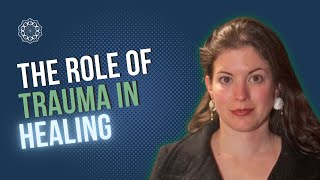
Sachin Patel and Samantha Cirillo explore how unresolved trauma triggers inflammation in the body. They discuss functional medicine approaches like herbs and mushrooms, plus grounding techniques for healing, drawing on their own experiences with trauma.
Chapters
Hello, my friends, and welcome to Perfect Practice. Today I have a guest that I think is going to blow your mind. She's already blown mine, even before we started recording. And I think that this is a topic that is very long overdue in the conversation when it comes to health, especially in functional medicine, and it's long overdue for society as a whole, and that is trauma. Trauma is unfortunately, as I'm discovering, one of the most overlooked aspects of healing. We all have dealt with it. We've all gone through our own traumatic experiences, some of them before we were born, some of them before we could even speak. And they show up in our bodies throughout our lives, but in particular can show up in our bodies in ways that we can't imagine and often don't get evaluated or investigated. So today, my guest, Samantha Cirillo, is going to be discussing how trauma plays a role in the healing process and in the disease process, of course, how we can use herbs and functional mushrooms to also help people on their healing journey. How we can help people reconnect with themselves, with nature, to go through the deepest healing that they possibly can. So, without further ado, welcome Samantha. Thanks for joining me today.
Thank you, Sachin. It's such a great honor to be here.
I'm super thrilled for our conversation. And I know that people listening are definitely going to get a lot of value out of what we're going to talk about today. Trauma can be heavy, and it's not always an easy thing to talk about, but it's also not an easy thing to go through. And perhaps it's not even an easy thing to work with with clients. And maybe that's why people tend to avoid it, because it can open up a can of worms that they may not have the tools to unpack or put back together. So tell me, what inspires you to help people in this capacity and what took you down the rabbit hole?
Well, trauma is very overlooked as a root cause of many chronic conditions. It really is the, the major barrier, I think, to, to healing a lot of most chronic health conditions. But there's two reasons why I think it is overlooked. One is cultural. In the US at least, you know, we're kind of programmed to be productive and not show emotions, to kind of tuck them away and plow forward. And I know certainly growing up in the Eastern US it was pretty much like that. People didn't go to counseling or even get massages or do any kind of mind, body work at all. And then I think the other reason is just, you know, our Bodies are programmed, hardwired. This goes back to our, to early evolution to basically protect us, to keep us alive, keep us surviving, to protect us. And so by protecting us, we're either in fight or flight, the sympathetic state of the nervous system, or we're in freeze. And basically that's conserving energy kind of shutting down. But those are protective survival mechanisms that, you know, we're so gifted as humans to have. It's just that, you know, modern day doesn't lend itself to those evolutionary adaptations. You know, we're always running from the tiger, or we do it so much that we're overwhelmed and shut down.
Yeah, I totally see that. And it's quite unfortunate because what people don't realize is that our exposure to other people's trauma is so much higher. Right. And if we think about it, like, even I can see how the world's trauma is affecting fertility rates, right? How it's affecting from a stress standpoint, but how it's also affecting the desire to have children as well, because we're so traumatized as a society and we've painted such a negative picture of what the future looks like that people don't even want to reproduce, which is one of our primary functions. So it's affecting us, I think, in so many different ways. And certainly it affects people who come into our practices from a disease or dysfunction standpoint. And unless, unless there's some something new that I'm unaware of, there really isn't like a lab test for it. So it really has to be pulled out of the patient. Maybe not pulled out, but we have to pay attention to the signs of trauma. So I'd love for you to share what that might be for practitioners. Like, what are some of the things that we're looking for that might help clue us in to say, hey, there's something here that we need to unpack. I mean, is it just asking or is it paying attention to certain cues and clues? Is it putting it on our intake form? Where does that process for practitioners start and what does that look like?
Sure. Well, there are a few tools that we have as practitioners. One is the ACES score. And that's like early childhood trauma. So scoring high, having a high ACE score, you know, increases the likelihood that you have unresolved trauma that is holding you back from your healing journey. And then with my clients, I have an assessment form that I have them fill out early on, which is asked about events that may have happened, whether they're physical traumas or social or otherwise, that, that really have Been shown to predispose people to having unresolved trauma. I think, you know, people don't know what trauma healing is, so I think that they're kind of afraid of it. And because, you know, some, you know, counseling, some forms of counseling out there, they have people go in back into the story, and they. They feel in their body like they're reliving that awful thing that happened. And. But actually, in the work that I do, somatic exercises, it's just connecting the mind and the body. We don't try to get back into the story and figure it all out. We just try to notice what. What we're feeling in the body. And it's gradual. It's very gradual. So by doing a daily exercise, like even 10 minutes over time, you get to understand the feelings that are coming up in the body. You feel like you. You can. We teach prep tracking, which is basically like you can do jumping jacks or run around a circle for a few minutes, and then you feel kind of that tension and what it feels like to be in a fight orf flight state. So you get to know how your body feels like that. And then we calm down and do a safety exercise and then notice what that feels like. And so you really get to understand and feel, okay, what nervous state system or what state of the nervous system am I in? And then we can bring in tools to help us along with that. But first, we start with safety. Feeling safe is the very first step.
You know, I'm hearing the word safety come up over and over again in so many different areas of our life. One of the things, one of the areas that it's coming up for is even in relationships, that our partners need to feel safe in our presence. And if we don't feel safe in our bodies or in our environments, then, I mean, that can really take a toll on us. In fact, I just had a conversation with a good friend of mine who was living in an environment where anytime the door would open, the hairs on the back of her neck would go up because there was so much unpredictability walking into the door that she had to go into this state of terror and, you know, obviously fear. And it's showing up for her now. I mean, something that happened to her as a child. So this person takes amazing care of themselves. Very healthy, very positive, very upbeat. Like, you would never know that this was happening for them. But when I. When she started explaining what was happening, it. It really, it all started to make sense. And, you know, I'm helping you're helping me understand what's happening for her through this conversation. So I really, I really appreciate the applicability of this for me personally. But I'm hoping as people are listening to this, they're starting to think of people that they love and care about. They may be struggling with something like this and it could be the missing link on, on their healing journey. Even if somebody doesn't have a disease, we don't have to wait for someone to have a disease to explore our unresolved traumas. I think it's something that we should all evaluate if we're listening to this and assess is this something that they themselves could be dealing with? So the question I have for you is how can someone know if trauma is part of their equation? Do we all have it? Like, I know you talked about the ACE test, but like for ourselves, if.
We'Re self evaluating, someone can go, anyone can go online, I believe, and find the ACEs test and get their score. Um, but then, you know, if you ever have felt triggered like in that the story you just mentioned, a trigger is pretty much a sign of some unresolved trauma where for whatever reason, we don't even know, we kind of overreact. But you know, we have to honor that. Our nervous system is just trying to protect us and not judge ourselves. Just be curious. Like there's something going on there that, you know, at some point in the past set me up to have this dramatic feeling in the present moment.
My wife has an irrational fear of spiders. And I would assume that trauma is tied in there somewhere or it's a learned response. Is, is that, is that accurate?
I don't think it is a. I don't think it is a learned response. And that's what makes it hard, I think, to unpack. But that's why it's a slow. Like the trauma healing journey is a lifelong journey once you head into it, but it doesn't have to take up a lot of time. It can, like I said, it could be 10 minutes a day. And a lot of times people, they hear that, you know, they should be meditating and things like that. A lot of people have trouble meditating, but meditation is kind of a more advanced level sort of thing because our bodies are, are incredibly intelligent and we need to tune into them in order to be able to heal ourselves better. And so we can do that with some basic practices. Like one I really love is grounding. So basically grounding is basically tuning your senses into your surroundings. I like to do it outdoors. Hopefully there's Some sun with some beautiful flowers or other plants around. If it's rainy or cold, I can do it in the greenhouse. Because I live on an urban farm. An important factor is that you have bare feet and that way you're actually getting electrons from the earth. We know that a lot of chronic illness involves depletion of electrons in their body. So this, this apothecary that I'm in the process of building, it's going to be straw bale and cob here on the farm. And because it's Cobb, it's clay. Being barefoot inside, the apothecary is going to be. Allow me to ground and allow my clients to ground while they're there. And so I'm excited about that. Something else I like to do when I'm grounding, I like to drink a cup of tea. Even if I can't. Even if I'm not able to be in a lush, sunny environment like that. Cup of tea is very. It's invigorating the senses. And it's also, it also you kind of develop a relationship with teas. Like you like certain ones a lot and, and they're, they're comforting. It also kind of helps you tune into your nervous system. And another tool is called the vu. And so that is basically kind of like singing in the lower end of your range along with breath work. So basically I'll just model it for a moment. Like, sure, you breathe in, take a deep breath in, out another deep breath in, and then you go. Then you do it one more time, breath in. Then you take a deep breath. And it's very subtling and actually vibrates the vocal cords, which stimulates the vagus nerve connecting the brain and the gut and which is a vital part of our parasympathetic rest and digest part of our nervous system. And it's pretty much the only place where healing happens. So it's. And it's really quick. You can get there momentarily.
So I love that. So am I. I know sometimes the microphone cuts off my sound when I do something like that. So am I trying to exhale as long as I possibly can? Is that the end and completely empty my lungs? I'm assuming.
Yes.
Okay. Awesome. I don't know if I. I don't know if I've showed you this, I certainly haven't today, but I'm wearing a breathing band at the moment and it's tracking my depth of my breath, my heart rate, my breathing rate, my hrv. And it's, it's doing that kind of in Real time. So I'll be interested to go back and see what happened during that time as I was doing that. It's always fascinating how our, our breath can instantaneously inform us about our nervous system.
Yeah, I've, I've done the vu, like salmon fishing, you know, riding in the boat and it's, I've caught salmon after I've done that, you know, it's just kind of like connecting to your, to your environment as well as yourself. And.
So like, I, I have a grounding mat on my desk and, you know, I, I like to think that it's doing something, but certainly getting your, your bare feet or even hands, it doesn't just have to be your feet. Correct. Connected to the earth in some way, shape or form. Is there, is there an ideal amount of time? I recommend grounding to all my clients, by the way, so I'm, I'm, I don't question whether this is a powerful intervention or not. I, I, My question for you is how long? Like, what's a minimum viable dose? I guess I don't, obviously it sounds like more is better, but if we could just. It's cold outside here in Toronto, so I already, I can already hear the excuses coming in. So how much time do we need? Barefoot in the grass or connected to the earth?
I don't know if there is an exact amount of time because, you know, I think minimum five minutes. But sometimes if I'm under a lot of stress, you know, I can, I can just notice that five minutes is not enough. I want to go longer, at least 10 or 15 minutes. And then I, I can just feel it, you know, this, this calm. And so when you, when you get to that point, then, you know, you're ready to move on with the day.
Okay. So it's, it's more about, you know, tapping in, listening, feeling into it and, and really getting into our bodies and, and, and, and, you know, I think that's really important. Right. It's not like I, I think the masculine energy in me wants to check it off the list to say I did it right. But, you know, really grounding is, is not all, it's not about checking it off the list. It's, it's about really sinking into it.
Right. And it's great to do before eating because we want to be in that rest and digest state when we're eating so we have better digestion. And also it helps us in our relationships. I mean, before meeting with someone, it really helps us tune into them. If we're more Connected to ourselves.
I love that. You know, my. It was really warm here, unusually warm here the other day. And so I actually had lunch outside. Bare feet in the grass. The grass is like dormant right now, but bare feet in the grass. And it was like the best lunch. It was nice and sunny. My wife and I were sitting outdoors and really feeling into that connection. I had a client of mine and I challenged. I have a group of men that I coach and I challenge them that today our challenge is to get our bare feet in the earth. And one of my clients did it, and he just had to check it off the list. So he did it, but he felt. He told me, he sent me a text saying all the stress and tension got sucked out of my body. And he could literally feel that happening for him. So what a. What a powerful free tool that we all have to. To start that healing process for ourselves.
Indeed. Going back for a minute to the, the. The stress response, like, so we've all developed some coping mechanisms around handling stress and, you know, those. Again, this is our body trying to protect us. But really the healthy stress response is like, you know, you. A stressor comes up, you know, that could be a tiger, or it could just be an email from someone that's causing trouble. And, you know, but the tiger is a real thing. You need to respond to that email is, yes, you should respond, but it's not a tiger.
So, right.
So the, the first step is to basically decide, is this a real threat? You know, do I need to flee or fight? Or am. Am I. Is this something that I just need to figure out how to respond to? So even if you don't take an action right then and there, if you just write down or come up with a plan like, this is the next step I'm going to do so that I'm not just ignoring it. When we ignore stressors, they pile up on top of each other. And over time, people get into this chronic freeze state, chronic overwhelm, and find it hard to go about daily life even at a certain point. And that can come from all kinds of different chronic illnesses or chronic, you know, environments that are. That lend themselves to that. But so it's basically like we need to respond to stress. We first need to decide whether it's something that we need to react to urgently or at least take a step in that direction of responding. And then, you know, if it is a real stressor, like it's a tiger, then almost getting hit by a bus, something like that, then we really need to like, acknowledge that, you know, we. We had adrenaline coursing through our veins, which is toxic when it gets stored. So we have to get rid of that adrenaline. And oftentimes people do that well by moving their legs. So whether that's running, walking briskly, or even just doing some leg movements, that can really help get rid of that adrenaline, which is when it gets stored. That's part of the stored trauma. And like I said earlier, like, traumas predispose us to future traumas. So really trying to minimize that getting stored in the body is going to help us in the long run.
So you said something that applies to me. I do find myself often shaking my leg, and I always thought it was like a B vitamin deficiency, because I read that somewhere. But now I'm thinking that I wonder if there's something unresolved that is that I need to explore a little bit further. So thank you for perhaps explaining something for me.
Yeah. And actually, people use, you know, if someone is stuck in an office environment, there's something called a vibration plate that they can use under their feet. And because basically, shaking or very quick, rapid muscle movement is kind of the natural way to dissipate the adrenaline. So animals do it. If you notice an animal, something happens, and then maybe like 20 minutes later, you'll see it shaking, and then it'll just go back to whatever it was doing before that event happened. Like, you know, their animals are so intelligent that way.
Interesting. So if somebody's shaking their leg, just let them keep shaking it.
Yeah. I mean, there could be other reasons for shaking. Not maybe not in all cases, but, I mean, if it's after something that really stressed them out like this, then sure, yeah, that.
That's really. I. I really like what you said there because, you know, I have. I have a bunch of dentists that I'm coaching right now, and one of the themes that we're seeing over and over for them is how high their stress levels are. And so they're making almost adrenaline because they're go, go, go throughout the day. And then having a business comes with its own stressors. So they're oftentimes turning to, you know, they're depressants like alcohol to. To kind of numb them a little bit. But going for a walk would actually be far more effective because now they're dissipating and breaking down that adrenaline and using it for what their body thought they were going to use it for, which is running away or removing yourself from the situation. I love that. I love.
I love gardening. I mean, it's kind of a form of grounding, and it involves physical work.
So there's something about gardening that I think really helps our. Our feedback, our dopamine loop. Right. Because we have this instant gratification society we live in. And. And I hope that's. I know it's a whole different topic, but gardening helps us understand seasonality. It helps us understand, you know, small, fruitful efforts each day pay off in the long run. I mean, there's so many metaphors in gardening. And then you obviously have the benefits of the soil microbiome and that interacting with your microbiome, the fractal nature of plants and being in their presence, the calming nature of that. And then also, of course, grounding. So there's, like, so many benefits to something that a lot of people don't even do anymore. Right. So.
Yeah. And then also to the immune system being in the sun and also getting some exposure to soil.
So it's like, literally the perfect activity.
Yeah. So I live on a new urban farm, so there's always a lot of gardening work to do. And I try to, you know, like, I do some computer work, and then I need to take a break, so maybe I'll go out and water some plants or do some other gardening activity. So it lends itself well to that.
I love that. That's really cool. Samantha. We didn't get into your trauma, and so we don't have to go down the trauma path. But I'm curious as to, like, how this topic has been relevant to you and. And what your kind of breakthrough was and how that's impacted you.
Sure. Well, I grew up in a. A very conventional environment, and, you know, culturally, you know, emotions were suppressed. And there was quite a bit of stress in early childhood, which I think kind of got the ball rolling. I was a biomedical research scientist for eight years and was in the PhD program and had some stressful jobs. And I became a clinical herbalist because I was just enthralled with plants and nature and forests. I was a forest activist for some time and still am, but. And I. So I became a clinical herbalist because I was having, like, a series of urinary tract infections, yeast infections, things that I didn't want to keep taking antibiotics or other drugs for. And someone said, why don't you talk to this herbalist in town? Well, she became my instructor and Mrs. Thompson's apothecary. Her name is Heather Nian Flesh Dare. And so I graduated from her academy and then celebrated my 40th birthday. And a few Days later, I was diagnosed with invasive breast cancer. So this was a shock to me and everyone close to me because I had a healthy diet and, you know, people had given me, you know, kind of picked on me for having such a healthy diet. But, you know, and at that time, I was not aware of non conventional, effective methods of dealing with cancer and resolving the cancer on my own. I just didn't know. Know about those things. And everyone was pressuring me to take action. I ended up having a double mastectomy and did four rounds of chemo. But in the meantime, I was searching for other solutions. And I started seeing a naturopath and very grateful that she was able to help me get intravenous vitamin C After the chemo, which helps get rid of cancer stem cells that tend to migrate. When someone has chemo kind of radicalizes those cells, they go somewhere else in the body, and then that's why reoccurrence can happen. So intravenous vitamin C, it's a little bit.
It.
I mean, it. Insurance doesn't cover it, so that's a drawback. But it also helps with things like fertility and just overall vitality. Unfortunately, it's not available in a lot of places in the US So I did that. And then, you know, I. My menstrual cycle had stopped. And conventional doctors were telling me that, you know, you're hopelessly postmenopausal. And it was really only my herbalism instructor and another herbalist who had gone through cancer at a young age that encouraged me to. To give it a try in restoring my cycle. So nine months later, I was able to do that, do that. And the hormone. The blood test for hormones showed that they had improved. And so I, you know, was doing all these things and also just trying to figure out why did I get cancer. And, you know, there's some definite risk factors. One was that I was on the birth control pill for 20 years. And I think I kind of at that. You know, early in my life, I thrived on stress. You know, I was kind of an adrenaline junkie.
And.
I was also depressed. And, you know, I've told people that cancer saved my life. And I, you know, I want to honor everyone who's lost their life or someone close to them because of cancer. But it really makes you. It forces you to decide whether you're living or dying. And every day is. Is just amazing afterwards. Yeah, there's still some bad days, of course, but it kind of really changed my perspective on life. And, and I really then. Then saw it as like a health adventure. And you know, I've had some other things happen since then. It's another health adventure. And by being curious about it and making it an adventure, I guess it helps my dopamine levels, but also like kind of it really motivates me to help other people unpack what's going on. The final thing that I came to, which is a, a reason for me having breast cancer at age 40, was unresolved trauma. And when I unpacked it, I, you know, did the assessments and started doing some of the somatic work with Dr. Amy Opigan. It was so obvious to me that that was kind of like the key thing that I had never really known about. And I didn't even know that it was the science. It was so solid now around it and all the tools for dealing with it.
This is so powerful. Thank you for sharing. And I know it's not always easy to talk about our own story, so I greatly appreciate you being vulnerable with us and, and you know, authentic because I think a lot of us may even in some ways be in denial or we may have pre birth traumas or even preverbal traumas that we can articulate. And, and I couldn't help have this visual when we were talking. I think it was before the recording and you were telling, you were saying that, you know, when we can't fight back, like there's something that, you know, happens to our nervous system that alters it and changes it. And, and I'm thinking of all the babies that get swaddled and wrapped really tightly in this blanket and how they instantly stop crying. And I'm wondering, are they going into a free state because they've just made so much adrenaline and now their body's, you know, frozen, or are they actually going into a calm state? I, and, and does that affect them, like when they feel trapped like that? I'm very curious of your thoughts.
Really. I don't know for sure. I'm not a parent and you know, I've gone through a trauma healing certification course, six modules with Dr. Amy Pigian. I'm not sure that swaddling is a manifestation of, you know, like when they calm down, whether that's, I don't think that would be free so much as like if you leave a baby crying in a crib, like you just ignore them and then, and then they stop crying. That's, that's a better example of them going into freeze because there's nothing they can do and they can't get out of the crib and, you know, hmm.
Okay, that was gonna be my next question, the cry it out method. And you just answered it for me, so thank you. You know, we never did that with Devin. We just couldn't, we couldn't stomach the idea of, of just having him cry it out. And I'm grateful that we didn't do that. We made a lot of other interesting decisions that we, that we look back and like, I can't believe we did that, but I think a good one that we made was co sleeping with Devin and helping, you know, really helping him feel safe and, and loved and cared for and not, not an easy thing to do, like, you know, sleeping in the same bed with a baby. But I, I think it was one of the best gifts that we were able to give him.
Sure.
So you talked about teas earlier and grounding, and I couldn't help but wonder what was, what would be in your cup of tea. And earlier we talked about herbs and how they can be powerful. And I know one of the things that you're, you're really big on is understanding what state we're in to determine what herbs can be most fruitful and beneficial for us. So tell me what's in your. What are your favorite teas? And how do you choose the tea that's appropriate for how you're feeling? And what are some herbs that can be helpful? And, and when should we apply herbs as an intervention?
Well, herbs are partners in life. They don't substitute for this mind body connection, and they can't replace dealing with lifestyle factors like diet, rest, exercise. But they are important tools and they just help us shift, have some control over our nervous system. And this can change over time. Good example. A fellow herbalist, she was using rhodiola after her workout to give her some energy, and then she experienced the trauma, and thereafter she would go into a panic attack using rhodiola. So her relationship with that plant changed as her. The state of her nervous system drastically changed. So that can happen. And that's why it's also really important for us to tune into our bodies and track. Keeping a journal is a great thing. We can rank things, things like pain, energy, GI symptoms on a scale of 1 to 10. Maybe in the morning, maybe in the evening after something that happens, an activity, and we can kind of get to see like, okay, what's helping, what's hurting. And I just, you know, in order to take control of our own health, that's one of the most important tools we have. Herbs that I really like for relaxation are lavender, lavender tea. Also just smelling the essential oil, aromatherapy, it's known as. And if we do end up using it topically, it has to be diluted in a carrier oil for safety. But it is a very safe essential oil. What most people don't know is that the species Lavandula officinalis is specifically helps relieve pain. So if we're using it topically for that, it can even help with that. And then that can be grown pretty easily. It doesn't die back in the winter, although you probably want to harvest it in the summertime. You know, when it's a nice sunny day, you get all those great smelling volatile oils going that are healing. Catnip is a great one. It's very. Because it's very safe. And even though catnip makes cats hyper, it has the opposite effect in humans most of the time. So it's considered a sedative herb. But you know, you can go about your day and your activities just fine with catnip. A lot of people like tulsi, known as holy basil for calm and also clarity. And these three can be grown, they may die back in the winter, but they can be grown in a very small space. And then for, you know, if you need, if you need energy, peppermint is a great one. Um, it's cooling and it's also stimulating. So then there's rosemary. Rosemary is a circulatory stimulant and a lot of times chronic illnesses have a lot to do with stagnation and a lack of movement at the cellular level. So using herbs that are circulatory stimulants are helpful as well as there are some lymphatic herbs, chickweed, cleavers, calendula, which is a beautiful orange flower that help us help movement between our cells and between our tissues and our body. So it's really supporting, it's really always important to support our tissues in whatever else we're trying to do with herbs and healing. And then there's rose. Either rose tea or actually I love rose water. So I've got a bottle of it right here. And if I just want to feel invigorated, you just spray some on my face. Because rose actually has like one of the highest vibrations of all plants and it's high vibration. We, we can share in just by smelling it. And it's a very easy way to feel refreshed. And of course there's mushrooms. Reishi I like best just as an all purpose because it's an adaptogen. It Helps us adapt to stress. It's blood sugar balancing. Anti inflammatory, antimicrobial. It has many other health benefits. It can be used long term. It can be used in coffee, mushroom, coffee. I love use lion's mane, which is known to help restore neural connections and rebuild nervous tissue. And then there's, there's some great research underway right now on psilocybin, psychedelic mushrooms. Um, there's, there's a lot more to be investigated with micro dosing which I've done the most of which, you know, most people, I know people who go to work microdosing on psilocybin and, and they feel more energy and they still have focus. They're not hallucinating or anything like that.
Right.
Report having this focus and a little bit extra energy that they don't. Otherwise.
Yeah, there's, there's more. I, I find the way I would describe it, there's more aperture to everything. So there's a little bit more light coming in, a little bit more sound coming in and more intuition coming in. You're able to read people better. And I also find for me, at least it, it makes me, makes me more present and grounded. So when I think of like, think about mushrooms, you think of the ground, like the next thing you think of is, is mushrooms and the mycelium. And, and so, and literally they're, they're very, they're grounding. So I love reishi. It's one of my favorite mushrooms as well. Lion's mane is another mushroom I take daily. And then. So Simon, I've, I've, you know, explored that a little bit and it's been a very powerful medicine, you know, for a variety of different reasons. And it's interesting because it's one of those things that I'm so glad that the research is now coming out and it's being decriminalized and know other parts of the world are, are allowing people to utilize these, these beautiful healing plants.
Yeah. That have been used for hundreds of years. Thousands of years. Yeah.
It kind of brings me to my next question. Maybe on topic, but off topic is, is I know that there's a lot of popularity around ayahuasca retreats. And I know people, a lot of people go through those type of interventions and experience a relief from their trauma. Have you found that to be the case or heard stories of people going through ayahuasca journeys and then kind of being shown what that trauma is and having it released that way?
I have not done an ayahuasca retreat journey and from people who have, they've mostly reported really positive transformative experiences, although those experiences can also have a really tough side sometimes with nausea, vomiting. I think it's really important to find a supportive environment, like a good recommendation, a place to go so you feel safe and have support. And I, yeah, that's something I haven't tried yet but would be interested in doing. I think, you know, there's, it's kind of glamorized a bit though sometimes. And you know, it's important to, to know that a lot of times trauma, well, what is a cause and a result of trauma is brain inflammation and oxidative stress. So you know, there's supplements that can help us out with that. Those are probably two of the greatest barriers to, to, to healing, to self healing. And you know, things like liposomal glutathione, melatonin can really calm that down, which I find really helps people make better progress in their, in the work that I'm doing with them.
And then glutath, you said liposomal glutathione and melatonin.
Melatonin, yeah.
Would you take those in the evening?
Melatonin more so in the evening. And it depends on the purpose as to like the dosage and, and such. I haven't used a lot of it that, a lot of that myself because I, you know, I try to use lifestyle first, right. Instead of adding one more supplement that I take every day or twice a day. And then I, you know, I try to coach people around sleep hygiene and how to get really good restorative sleep. Sleep is so key in this work because your brain's detoxing while you're sleeping. And fasting is another great tool addition by subtraction where you know, by it, it takes something to get into first by intermittent fasting. But I've done a four and a half day fast with just tea. And basically like your digestive system is rebuilding and repairing itself. I mean it's miraculous. People do that in the, in the cancer world, people who have cancer. There's some dramatic stories and so I guess for me it's like combining all these tools and modalities. That's exciting. And you know, I do tell people like herbs are such important tools, but combined with other modalities they're even more powerful like acupuncture, massage, yoga. There's lots of healing modalities that, that herbs are just, just help, they add one extra layer, just one extra boost to, to make progress and, and you need to experiment and play around because like what, what One herb does for. For someone won't be the same thing for the. For another person necessarily. And then diet, of course, I mean, I'm grateful. I live on a new urban farm. It's new, so there's a lot going on all the time. It can be stressful. But, you know, we're growing our own food and have excess to share. And so that's more nutrient dense with nutrients like magnesium that, you know, a lot of us are lacking. Of course, magnesium supplementation is necessary for most people, but basically then, you know, you've got herbs. And so drinking herbal teas is a great thing because we get so many more micronutrients in herbs than we do from vegetables. Just wanted to share that.
Yeah, no, that's, that's. This is really good. You know what, what's coming up for me is I can see you releasing a line of oils and I can see you releasing a line of teas, and I will be your first customer. So let me know when that happens because I love, I love the. I love everything we've talked about today. It's been really, personally, it's been really helpful for me. I can already think of a few people that I want to instantly share this interview with because I know it's going to be helpful for them. And I believe you have something that is a very powerful way of looking at people's health. And certainly I love for people who feel connected to your message to, to reach out to you, Samantha, what's the best way they can follow your work or. Or connect with you if they want to learn more?
The best way is to call or text me. And you can find my number on the. My website, Florina fountain.com. you can also find me on Facebook. My. My name Samantha Shillo for Florina's Fountain. And then the. I. I live at the Dancing Out Urban Pharmacy, which I've helped to start. And we're actually. I hope that sometime you can join us here at our. We're building a retreat center using honeybee therapy, a beekeeper for a number of years. And they do this in Europe where you can kind of lay down over a beehive. So you're getting this, like, incredibly high vibration from the bees. We have a friend who cured her breast cancer with bee stings. She. She had skins done before and after. And a lot of people use bee stings for a variety of things. And so we're going to be exploring that. And it's all very exciting.
Wow. Keep me posted. This sounds so, so it sounds so invigorating, the idea of laying in that vibration or experiencing that vibration. It sounds like a very powerful experience.
And you can find the dancing out Urban Pharmacy on Facebook.
Amazing. Now, speaking of dancing, there's. There's a study that got released, and I shared it on my Facebook page, and it showed the effectiveness of dancing as an antidepressant. And I don't know if this is true or not, but it was a meme that I saw on Facebook, so it must be true. It said that in Africa, in. In a tribal situation, the question they ask to unpack if somebody's had trauma is they say, when did you stop dancing? And. And that kind of marks, you know, you know, an event that. That turn that person's nervous system or whatever into that. Into a situation where. Or tweak that person's nervous system, if you will. And now it's. They're changing how they express themselves. So just. You mentioned dancing, so I'm like, I have to. I have to mention that and. And see if you had any thoughts on that.
Oh, sure. Dancing, singing, both of those are really important. And with the dancing, you can discharge adrenaline that way. Right. And here we would like to be doing. Getting our silent disco started to encourage dancing. And people can. That's where people can have headphones and listen to different music, but they're all kind of like dancing and sharing this awesome space together. And so that's exciting, too.
Wow. I love it. What. What an amazing, amazing vision that you have. And thank you for work that you're doing. And I'm excited to share this episode with everyone. And we'll put all the links that you shared, we'll put that in the show notes as well for all of our listeners. So thank you again, Samantha. Keep doing your amazing work. And here's to an amazing year ahead. And I'm keeping my fingers crossed and holding my breath for those teas and those oils. I'm so excited to try them. And I know I'm just dumping this idea on you, but I think you've got some there.
Thanks so much, Sachin. And I just have really appreciated being in your perfect practice mentorship program because social engagement, social support is actually a really important factor too. And so that has been great for me, as well as the functional Diagnostic nutrition certification program, all the great community that I have there as well.
So amazing. Thank you, thank you, thank you, thank you.
More from Sachin








Your Doctor Won't Prescribe This… But It's the Most Powerful Medicine on Earth

