Trusting your gut instinct when building your practice with Sharon Holand Gelfand and Sachin Patel
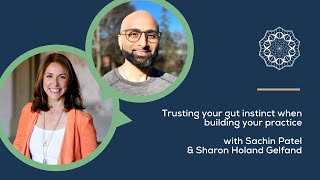
A recorded interview (YouTube) in which Sharon Holland Gelfand describes her transition from a banking career to holistic clinical nutrition after her son’s diagnosis. She explains how listening to intuition and developing the ‘GUT’ method (getting connected → understanding → taking action and staying tuned) shaped her clinical practice, programs and book; she also discusses training, media outreach, a notable client case (55 lb weight loss), and where to find her resources.
Questions this video answers
New York Chiropractic College (clinical nutrition master's).
12-week program.
About 55 pounds lost in roughly five months.
Diagnosed at age 12 (Crohn's/ulcerative colitis and ileitis).
Chapters
Hello, my friends, and welcome to Perfect Practice. Today I am really excited because we are going to have an inspirational conversation with the one and only Sharon Holland Gelfand. Sharon's going to be telling us about her journey and building her practice and sharing with us how she has been able to listen to her gut instinct throughout the process of this journey in building her business. And this is something that I think is imperatively important. We want to definitely listen to our guts. We want to pay attention to the guts of the clients that are coming in to see us. So this is going to be a very interesting conversation. Sharon's journey starts many, many years ago, actually helping her son. And, you know, that's where a lot of our story starts, by helping people that we deeply care about. And that takes us down this rabbit hole sometimes, and it allows us to be passionate about what we do. And when we see the miraculous changes and the effect that we can have on others, it really inspires us to help as many people as we can. So, Sharon, thank you for joining me today.
Thanks for having me. I'm excited to be here.
Yeah, I'm super excited to speak with you because you've got quite the repertoire in terms of your functionality. Holistic nutritionist. You're a coach, you're a speaker, you're an author, and you went from, you know, banking to nutrition. So tell. Tell me a little bit more about that journey. What. What took you from banking to helping people with their nutrition and lifestyle?
Yeah, people are always so intrigued with that transition from right brain to right brain to left brain to back and forth. I'm first generation American, and I was raised to study, get good grades and choose the profession of dia. Doctor, lawyer, banker. Seriously, like, this was what was, and you don't know any better. So I have one sister, and she became a doctor. I became a banker because I just happened to be good with numbers. I'd gotten an internship in high school, which led to a banking career. And I'm telling you, if we had a third sister, she would have been a lawyer. We would have covered all three areas. And so it's what I did. But I was just never happy. It was. There was something missing. And I just went about life and, you know, got married, had kids. And it wasn't until one of my kids was diagnosed at the age of 12 with Crohn's ulcerative colitis and ileitis that I started to question things. And the reason that I started to question things was the doctor. And doctors are awesome. They save lives. We need them.
However, we always need a disclaimer, right, that they save lives. They're good people. And then now comes the but or the however, right? Tell us about that.
The but. I just remember my gut saying, there's got to be something more. Because she said, just take the medicine and don't worry about anything else. And I said, well, what about food? Because I didn't know anything about what this was. This was, you know, back in 2007, knew nothing about health and nutrition. I thought a cup of coffee and a Bram muffin from Dunkin Donuts was healthy. You know, bran, right? It's got to be healthy for you. So I didn't know. You don't know what you don't know. And I just remember thinking something. It just nagged at me. And I spent some time googling, right, Dr. Google everything and going down that rabbit hole, trying to figure things out. And about a week later, as I was trying to figure this all out, my son came to me completely complaining and crying that he was getting worse and that it was the medicine. And at first I was like, yeah, let's just call the doctor and let's see. And the doctor insisted that it was the disease and not the medicine. And then after a few days, I caught myself, you know, just like asking myself, wait, why aren't you listening to your son? He's crying, he's telling you how he's feeling, and you're trying to intellectualize it. And that became the turning point because it made me realize that there's so much I didn't know. And I made this declaration that I'm going to grad school to get a master's in nutrition just to help my son, because nobody was giving me the answers that I was looking for. And it made me realize I'd been compartmentalizing my own health issues. And from IBS to eczema to sty to migraines, I can't even tell you how many doctors I was going to thinking, oh, this is normal. I'm just getting older. And so I like to say that my son's diagnosis was a blessing in disguise and that nutrition found me. And it's just, that was it. And there was no turning back, and I was on my path to healing.
You know, I want to highlight something there which is, you know, really listening to our children and their bodies, just like our bodies are so miraculous. However, we do tend to over intellectualize things. Children are born with this intuition and this ability to express themselves because their prefrontal cortex isn't fully developed, which is a blessing. It can seem like a curse at certain times. Right. But it's certainly a blessing because their body is trying to tell us something. And there's so many different ways that the body will communicate. It could be through behavior. It could be through the frequency and the vibration. And because as a mom, you're quantumly entangled with your child. I'm so grateful that, you know, you. You kind of tuned into that. And, you know, once, once, once you kind of witness that it's. It's hard to unsee. And that's a skill, right? That intuition is definitely a skill that we need to develop, you know, as business owners as well. So I'd love to know how, you know, it served you in developing that skill set in your business as well.
Such a great question. Because it, honestly, it took years. It didn't happen overnight. Nothing ever really happens overnight until all of a sudden, you become what people think of success. You're like, yeah, you know how many years it took me? And it's really fascinating because I grew up with a set belief system, you know, like that. And we all do, right, with how we're raised by our parents, our caregivers, society, the teachers, and we tend to squash those dreams. And so this shift, this, like, as you say, you can't unsee now, what you've seen made me just become so, like, curious or, like, always be curious, right? The ABCs of, like, wanting to know more, asking questions, asking questions, and not stopping until I got those answers. And that's the same with my business of I wanted the answers for health, but then how can I? And I actually had no intention of starting a business. The business found me because people started to ask me, I looked different, I was losing weight, I was happier. What I was doing in terms of health and understanding what food does to our bodies changed my whole being. And as you said, like, the energy that we emit from that. So people started asking me what I was doing because they wanted a little bit of it. And so at first, it was like these lunch and learns of having friends get friends together, literally around a kitchen table and just doing it for free, just sharing information. They were so intrigued. And, well, what else do you have? And I didn't have anything, but I made something. I'm like, well, what do you want? You know? Right? You start with those little baby steps. And it just kind of naturally morphed into gaining confidence as I did this, because I felt like an imposter at the beginning, like, who Am I? You know, I'm just a mom who became a nutritionist. Yes, I had the degree and all of that, but I didn't have the years of experience that so many other people had. I was just going, listening to my gut and following it and asking questions.
Well, what more can we ask for? Right, so tell us about your formal training and then how that led into you actually creating a business itself.
So I went and got a master's in clinical nutrition and it was the New York Chiropractic College at the time. And now it's like Northeast Medical science or something. And again, this was really just for my own edification because I wanted to go deeper into what physiologically goes on in our bodies. And then I became certified as a functional nutrition practitioner because even after getting the master's, I wanted to understand even deeper with testing that went deeper than what the doctors did because the test results always came back normal. Everything looks normal, you're normal, but it didn't feel normal. So getting certified to do these at home, testing these, you know, the stool kits, the gut, the hormones, minerals, micronutrients, all of that really helped me then to be able to offer to people opportunities, healing opportunities. Right. To go deeper when they become frustrated, not getting the answers. And it's just putting one foot in front of the other with. Well, it's not always one foot in front of the other. Right. It's you. You do a forward step, you do a side step, you do a back step, it's a dance.
Sometimes you're doing somersaults, right?
Oh my God.
Gotta do whatever it takes sometimes.
Yeah, right, exactly. You climb the mountain, you finally get there and you're like, wait, that's not the top of the mountain. There's more to go. Exactly, yeah. And so with that, it just, it became clearer and clearer because I was getting a lot of interest in, especially for women, for the women whom I work with, of really wanting to become their own health advocates and trying to help them bridge that gap between health care and their own self care so they stop googling everything or they stop popping pills. To think that it's a panacea for whatever's going on when it's not. And to really listen to your gut, figuratively, emotionally, physically, mentally, everything. Right.
So let's talk about. You know, we've mentioned listening to our gut several times. How do you actually develop that skill? Is it meditation? Is it heart math? Is it all the bumps and bruises along the way? Is it breath work? Like, what, what is the if you have to give people some advice on that, when we say listen to our gut, how do we sharpen that sword? So to speak.
Another excellent question. Sachin, you're so good at these questions. Well, it's most of the above that you just mentioned. For me, I love being outdoors. Even if it's 10 degrees out, I need to move, I need for my energy to flow because otherwise I feel stagnant and heavy. It was taking walks early in the morning and just breathing and listening to nature. And you know what's interesting about that? It wasn't an intentional meditation. I just knew what I loved and what made me happy. And what made me happy was being outdoors, whether it's a park or a hike or anywhere that I could just not have to get into a car and just be outdoors. And by doing that, I always, you know, I need to actually back up a little bit because when I was younger, I think I always had that sixth sense, but couldn't really share it with anybody because I was that weird girl of, you know, who are you? And like, what are you talking about? Kind of person. So I kept to myself and I would doodle, I would journal, and I would just spend time alone, focusing on my body and sitting with things. And nobody taught me that. So fast forward, right? You grow up, you forget about all of that. You live life until something or a health crisis brings you back to your center. So for me, it was just breathing. All different types of breaths that we've learned that you've shared with us. Being in nature, allowing for peace and quiet, and realizing that the downtime was equally as important as the uptime. Because I was a type A personality. Do, do, do, do, do, run myself into the ground, exhaustion, and then not be able to do anything and allowing myself to say, it's okay, I need this. And when I, as I start to do that, I just would say it and literally close my eyes and just breathe and just ask, what do I need to know? What do I need to know? And then feel if it felt good or if I felt resistance in my gut. And that feeling of resistance is the nerves. The feeling nauseous, feeling shaky, feeling irritable. When you fight that, it gets worse. When you release that, you feel more aligned. And so I made that my practice and that quiet, really. And to this day, that's what keeps me connected and allowing me to listen to what I need to do next.
I love that. And so what I'm hearing is that we have to find what works for us, right? So for you, it's nature. For somebody else, it might be cold baths. For somebody else, it could be breath work, it could be plant medicine. But we have this voice inside of us, and we've got to kind of shut off the noise that's going on around us. Slow down a little bit so we can hear it and find whatever activity or, you know, that. That it takes in order for us to find that quietness. And, you know, many people who are listening to this might be type A's and. Or recovering. Type recovering, yeah. Where we're just, you know, go, go, go. And as you said, do, do, do, no pun intended there with the gut stuff, right? And we're just constantly moving. And when we study entrepreneurs that we probably admire, like, you know, one of my entrepreneurial mentor, somebody who I study is Steve Jobs. And one of the things that he learned on one of his early trips to India is that people in India who are extremely poor, you know, very low level of education, don't have intellect, may not have the intellectual capacity of people in the west, but they have something that he found and felt was far more important, which was intuition and their ability to, you know, just really go inwards and kind of ignore this material world of illusion that we live in and really go inwards to that most quiet part of us where we really find and see ourselves and our inner compass, if you will. He really admired that skill. And one of the things that he took from that was that every few days he'd look in the mirror, and if he didn't like what he was doing or didn't like the direction that his company or his life was going in, he would start to reevaluate. But many of us don't do that, right? We just feel like, I've got a certain title, I have a certain job, you know, and we kind of get married to this ego, this outward Persona that we have, and we feel like that's it, this is how our life is going to be. And I love what you did is you found, you know, that quietness which helped you find what you really want to do. And now you're taking that and you're out there helping as many people as you can. So, you know, lots of lessons to unpack there and, you know, for. For everyone who's listening, you know, find that, you know, find that thing that allows you to get, you know, still and find that stillness, whatever it is. It might be getting in a sauna, it might be an ice bath, it might be a cold plunge, it might Be a cold shower. It. It could be anything, but something that allows you to really hear the whispers that are coming from the inside. And if you're a practitioner, that's going to be important to you. And if you're a patient listening to this, that's going to be really important to you. And, you know, I had a call earlier today with a friend of mine, and she was just go, go, go, and just telling me that she, you know, her way of not dealing with our health issues was to just keep going and doing stuff. And, you know, eventually that catches up to you. So. And that's when I get the phone call, which I never like getting those phone calls because, you know, it means people weren't listening to that voice and that voice was whispering to them and eventually had to start yelling at them for them to start paying attention and do something about it. So thank you for sharing that. So your journey has led you to develop the GUT method, and I'd love for you to break that down for us, if you would, so that our listeners get a better understanding of what that entails.
Yeah. So the GUT method came intuitively, and no pun intended, but pun intended, because as I start to work with people, and even to your point of what you were saying, you know, like, we're running around and our ego, like, there's so many nuggets of how we have this checklist of what we think we should be doing, and then if we're not doing it, the guilt and the self sabotage that goes with it. And then we become more disconnected from ourselves because we're looking externally for the band aids to fix everything. So part of what I was discovering for myself, for my son, for my clients, the frequently asked questions and the common denominators was this disconnection and then understanding the why behind it, understanding where it came from and what to do about it, so that the G is getting connected to your symptoms physically, mentally, emotionally, spiritually, energetically, and really going deep into looking at what those are. Right. Because we're also different. You know, we're. It's like a car. You get a manual for a car, but nobody gives you a manual for your body. So I created this as a manual so that once you do get connected and you pay attention to that, then it's the you of understanding. All right, so if this is how I'm feeling, what does this mean? And it could be for those who are even more spiritual, because there's certain levels of this, of the meaning of it behind everything. Right. So the Gut has to do with the self love or lack of. Right. And where's that coming from? And so looking at what those symptoms are and then t taking action. But it's not just taking action. Staying tuned in and taking action so that you can transform your life. And it's picking one thing we always talk about to start with one thing. And as you do that, as you become aware of the patterns, then you can create and change the habits one at a time. Because you can't build a house without the foundation, without the walls, then with the roof. And then you put the windows and decorate. We try to decorate first, but there's nothing to put it that decoration in. You buy a couch, where are you going to put it? And that's how the gut method was created. And from that, my program and my book.
All right, so tell us, tell us about the book.
I always wanted to write a book. So. So when my. I have three kids. Well, they're not kids anymore. My oldest is 31. My twins are 20. Oh my God. They're going to be 27. And when they were babies, nobody taught me how to be. How to take care of twins. So I just thought I was going to write a book. And it almost came to fruition. It didn't. For whatever reasons, but in my head I always. I don't know why, I just wanted to write a book. Okay, that was years ago. Fast forward. This is. I hear the voices in my head. My, my Talk to my. Whoever you want to, you know, my angels or the people that I connect with. And I kept hearing, start writing. Just start writing. Just put this all down. Don't worry about organization. You'll find the person to help you. And talking about before finding that inner peace, however that is for each of us, I listened to that. I allowed it to happen. The right people came into my world and helped me to put all my thoughts together with the outline. And during COVID it was the best time to do it because business was not great because nobody wanted to pay for anything. For me, it was a lull and a big shift in how I wanted to do business. But which was then how I found you after all of that because I was waiting for you, Sachin, and you showed up at the right time. And same thing with my book. And it just. I wanted it to be an easy manual for anybody who's just getting started and to be able to take that even to their doctors and practitioners so that they had something so that they can have conversations with it. And yeah, it's exciting. It's weird, but exciting and surreal.
I love that. It's amazing how we come into each other's lives. So appreciate that our paths have crossed and now we're getting to share your story with people far and wide. Many practitioners have that on their wish list, or even maybe somebody who's listening, who may be a prospective client, have writing a book on their wish list. And it's one of those things that started off as a small little whisper for you, and then it turned into you actually taking action and writing it. I'd love for you to unpack, if you would be so kind to the process. What was that like to actually write that book? Or what kind of frameworks did you use? Did you write every day? Did you voice dictate it and then turn it into text? Did you have an editor? Maybe you can unpack that for somebody who's listening, who may be interested in writing a book.
All of the above. And I started working with someone who helped me to just organize it into. What are the main thoughts of. What do I want people to get from this? Like, what's the big picture? Why. Why am I writing this? Right. It's like Simon Sinek says, like, what is your why? Because that drives everything. And from that, she had said to me, you should. You have to write every single day. And I didn't like that. I'm like, I'm a Sagittarius. I'm fiery. I just kind of go with the flow sometimes. Don't tell me to do that.
Whatever you do, don't tell me what to do.
Exactly. However, I did have this format and I allowed myself to give myself a timeframe every day where I did block out time. And if I felt it, I wrote. But if I. And if I didn't, I would do something else because I. I, like, I just can't be forced. It needs to come to me. And sometimes. I hate to say this, but sometimes it came to me in the middle of the night and I would literally like, wake up at three in the morning and I'd write for two hours because it just came to me and I didn't push it aside. Sometimes I would take out my phone because I couldn't open my eyes. And I'd just start with my eyes closed, speaking into my phone. And then, you know, I love that. Yeah. Just whatever method it was, sometimes it was just when I was out in the park and it would come to me, but I had in my head that I knew that I had a time frame to get this done. And that I trusted that I would get. I wouldn't beat myself up if I couldn't think of anything that day. And then if there were days where I kept going, I made sure that I gave myself a little bit of that buffer time and scheduled clients at different times so that I had hours sometimes to be able to write. And then there would be times where I literally had nothing to write or say for a week. So the process was all of the above. But then I did have my editor and, you know, the person who helped me to just stay on track, but. But have that flexibility to do it when it just felt right. And it really. It was a lot of persistence and consistency, but flexibility within that. Does that make sense?
Yeah, it does. What was the hardest part of the whole process? Was it. Sometimes it's the title, sometimes it's the content, sometimes it's, you know, like, getting the case studies and the stories. What was. What did you think was the hardest part for you?
Two things, actually. It was organizing it so that it really flows. Flowed, because I had the gut method. But I, you know, it was like, you're saying, adding the stories and the case studies and my story and science behind all of it, so that it was built on a foundation and in a structure that people could follow simply. So that was the hardest part. And there my editor was like, just right. Don't think about that. Because we overthink just right. And we'll organize it after, and you'll see that it will come together. So that took a while, but that was the hardest part to get started. Then once it was done, the next. Actually, so it was three things. The next hardest part was I kept wanting to add more. Once it was edited, I kept thinking of more things, and she's like, that's going to be for another book. You have to stop, right? You reach a point where it's like, enough is enough. That'll be the new and improved version, or it'll be a different book. And then the next hardest part was the COVID and the title, because I work mostly with women, but I wanted it to be universal, and I wanted it to appeal to people. So I wanted the colors to be a little bit neutral. So that was a challenge. But then I found the right person to work with who helped me with the design.
It's quite the process, right, to get it all together.
It is, let me tell you. But I think once you get that first book done, because I have an idea for another one already. Gets easier. I think I'll let you know.
Yeah, we'll do another interview and you can fill us in.
Yes.
So you've actually had quite a few media appearances as well. And that's, you know, I would definitely say that's an important part of building our business, getting our message out there, having a bigger impact. Can you tell us a little bit more about that, how you landed those opportunities and what those meant for you and your business?
I always knew that I wanted to give and create something that was going to be bigger than myself. And I tend to be an introvert, so I'm great at selling everybody else. And I had to find a way for me to be able to show up. So I started, you know, just to hear about different types of PR groups and joining different masterminds. So I kind of found my way through certain groups where I found a couple who just were wonderful in being able to help me to how to position myself as an expert, how to pitch, and then how to realize that they're just people, too. Right. We put people on pedestals. We think, oh, my God, you know, being interviewed, they're people too, and they want to help us. And if you show up and you're authentic and you just want to help people, it comes across, and then people want to help you. So I just kept, again, it was consistency of sending out pitches, looking for editors, looking for opportunities, and putting that on my calendar. Everything is also about time management and blocking out the time consistently. And it wasn't every day. It was a few days a week so that I could allow myself to have that grace of not being so hard on myself. And it took a while, but eventually I got one, then I got another, then I got a third, and things started to flow because one leads to another. And I think what's important about that, that credibility, it just shows our clients, it shows other people how serious we are more than anything about what we do and how we want to help others. And to me, that was what was important, that credibility of I want to help everybody. I want to, whatever I can do. What is the best platform to help me get there?
Beautiful. Congratulations, by the way. That's awesome. Thank you.
Thank you.
I'd love for you to share before we wrap things up, I'd love for you to share your favorite case study. Is there a case study? Maybe you can even share your son's story if you want, but is there a case study that jumps out at you that really highlights the work that you do?
Absolutely. Because, Sachin, and I'm saying this, yes, because you're the one who helped me with this. But finding your mentorship in your group and working with you and your systems helped me to put everything that I had been doing in order. So I had this client that I had been working with for quite a while, needed to lose a lot of weight and we'd done the testing, you know, she had a bunch of things going on which we were able to improve. But she also type a personality, a lawyer, likes to be told what to do, but was disconnected. Something wasn't clicking. And as much as I was coaching and trying to like put it back into her space and have her be the one to feel like she's come up right, because that's our goal to have you realize that it wasn't clicking until this gut method reset program, until this 12 week program where she finally, finally got it. Through repetition, through listening to the modules, they're realizing that with the way of eating, getting rid of all the inflammatory foods, really looking at eating just whole foods, understanding what it meant to eat because she wasn't eating properly. I started with. So in about five months she's lost £55. It's the most weight that she has ever lost. She is so giddy. And she's done the reset now twice. And she didn't necessarily reset the second time in a way that I had encouraged her to. Had a big setback and was getting very discouraged. And I kept reminding her of what the work that she was doing and I knew she was going to be okay. I knew it, but she had to feel it. And I kept saying, sometimes you have to have a huge setback to set you up for a huge comeback. And somehow those words resonated with her. So when she had that comeback, she's a completely different person and hasn't seen this weight in 10 years.
Wow, what a great story.
It's just, it's so exciting because you know, that's all you want. You want for your clients to really just feel their best. And now she's become my biggest ambassador. Sharing this with like everybody, well, it's.
Hard to hide, right? When you have all this energy and you're losing the weight and you have these amazing breakthroughs. That is awesome, Sharon. Where, you know, I had goosebumps. I still do. As you're, as you're sharing this, so it really resonates with me. Where can people learn more about you? Where can they find more of your amazing work? Where can they grab your book from? Where can they follow you? I'd love for you to share that.
Best thing is to go to my website, Sharon Holland with1l.com Everything's there. My social media, my links to my book, links to my program, a free guide that they can opt in for. So that's the best place for everyone to reach me or find me.
Amazing. Well, thank you. This was awesome. I really enjoyed our conversation. Keep doing the amazing work that you're doing. Keep making that impact. And here's to your business growing. Here's to more people that you will touch with your amazing story and your amazing gifts. And here's to all the practitioners who are listening that you've inspired, who can listen to their gut tune in and take their business to the next level. Thank you so much for our conversation today.
Thanks Sachin. It's been wonderful. I so appreciate being here. Had a great time.
Thank you. Well practitioners, there you have it. Sharon Holland, thank you so much and I so appreciate you for being here and really enjoyed this conversation. Check out our website, sharonholland. Com and you'll get to learn more about her, her book, her program, her process and you'll be able to connect with her there as well. Thank you Sharon.
Thank you.
Awesome rest of your day.
You too. Take care.
By.
More from Sachin








Your Doctor Won't Prescribe This… But It's the Most Powerful Medicine on Earth

