Weekly Living Light Metabolic Program Q & A July 28, 2023
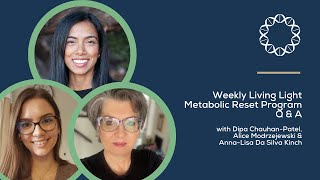
A group Q&A where participants share wins like weight loss and reduced inflammation, then ask about magnesium, loading-day calories, fasting timing, and when to start another round of the program.
Questions this video answers
Q&A dated July 28, 2023 (video titled with that date); uploaded August 1, 2023.
Approximately 5,000 calories for loading days (guidance also notes ~4,500 kcal as a lower target for some individuals and that 4,000-range may be acceptable).
Wait at least four weeks of maintenance (fat integration) before a second round; if progressing from a second into a third round, wait five weeks of maintenance.
After completing day 72, you may begin loading again on day 73 (i.e., finish 10-week protocol, then resume).
Release phase: wait at least 5 hours between meals. Maintenance: aim for a 12–14 hour daily fast (16 hours optional); many keep 16 Mon–Fri and relax on weekends; maintain 3–4 hours between meals during eating window.
Chapters
Hello. Hello everyone. Happy Friday. Good morning, Annalisa. Hi, Jan. Nice to see you. Thank you for joining today. Hi, Mary. Lovely to see your face as well. Hi, Nita. Hi, Beverly. Hi, Denise. Welcome, welcome, welcome everyone. And as we are waiting for everybody to slowly trickle in to our Q A today, as always, I love to start the calls with some gratitude. Maybe a win that you were able to experience maybe sometime this week, maybe it was sometime, you know, last week that you were really proud of. Maybe you hit a weight release goal, maybe you hit a consistency goal in terms of just hunkering down on a habit and getting really, really tuned in and making sure that you're not missing this habit each day. I know I wrote in the Facebook support group yesterday, what's one habit that really has kind of shifted the needle for you, has moved you in the direction and made that big impact on your day and in the way that you feel. A lot of you said fasting, which is really awesome. So being able to keep up with fasting, it's, you know, initially a little bit more mentally taxing, but once you get into it, it becomes so easily second nature and there's so many amazing benefits to it as I'm sure you've all have experienced to some degree. So as everybody is coming in, please either share something using your V as a win from today or win from this week or feel free to type it into the comments below. And you know me, I always love hearing voices, like seeing faces, social person. Would love to see anybody that would like to share out loud. So Annalisa here is saying heading out to a cottage for the weekend. Congrats. That's going to be so nice. I hope the weather is in your favor. I hope the bugs take a vacation as well. Where are you heading? Heading out to my sister in law. Okay, nice. And whereabouts is she? North of Kingston.
Okay, well, it's gonna be a lot of fun.
We haven't seen them in four years. Oh, amazing. Amazing. Enjoy it. That's so awesome. And Mary is saying she's drinking more water. Yes. It's always nice to make sure to stay hydrated, especially in the hot heat and into the summer months as well. We lose a lot of minerals. We lose, of course a lot of hydration through sweat. While it's good, we want to make sure we're remineralizing, rehydrating back and sometimes we get a little sweatier than what we even know it just sitting and working or maybe dealing with something stressful. So yes, awesome. Grateful that you're keeping up with that. And if you wanted to supercharge your water, I always say it's a great time in the summer to infuse it. Maybe you have something in the garden that you're growing. I know many people like to grow a lot of herbs and usually accumulate a mass amount of them as well. So water is really great with some basil. I love putting in just some raw cucumbers. You can even do something like strawberries to make it look a little bit more fun and colorful. I know that many of us are. Yeah, we. We tend to eat with our eyes, and that extends to drinks as well. So the more colorful, the more fun you can make them look sometimes the better. I'm just drinking plain old water here today, but I usually have something like mint or strawberries or some sort of lemon inside just to give it that n refreshing flavor. Beverly is saying, went to the fair. Amazing. What fair was it? What fair did you have a chance to visit? I know it's summer. There's lots of different festivals going on here in Mississauga. Just a couple weeks ago, there was a festival as well, in kind of a smaller part of Mississauga, which was really fun to just kind of blend in with community. See so many people out and about in big group settings. It still makes me so happy. So I hope you have an amazing time at the fair. Beverly, Denise is saying, heading to the lake, lots of nature time this weekend. Amazing, amazing. Enjoy the beautiful lake, and hopefully it's just smooth sailing, nice weather the whole way through. And ate salad. Beverly is saying, way to go. I know it's hard to stay on top of, especially with so many food stands, so many people that you're usually going with. The York State Fair. Exactly. So I'm sure it's a massive fair, being a state fair as well. So way to tackle that kind of setting and situation and know that you have the tools that you need in order to navigate it fully. Annalise that, yeah, it is like having a mocktail. It's nice because, you know, you have the visual interest and, you know, do do with this information what you will. But there was a time where I also took some sparkling water and I put in some apple cider vinegar. And it just kind of. Because I don't mind the taste. And it looked like I had a fancy cocktail and I fooled at the barbecue that I was at, but I was just drinking my prebiotics, my probiotics, before I was sitting down to a meal. So it was a win, win. Nobody needs to know these little secrets. As long as you look like you're, you're settling in, you're fitting in. That's all that matters sometimes. Awesome. I am actually spending some time in nature this weekend as well, so I'm very much looking forward to that. Have been very consistent with getting outdoors, getting a good sizable walk in each day. I've been really loving walking in this weather. It's so refreshing and so nice in the morning for a little bit and then in the evening to kind of round off, watch the sunset. So grateful a lot of us have some nature time in store for this coming weekend. Super helpful. And for those of you who do have an aura ring, I recommend putting it into your tag section that you're spending some time outdoors. Maybe it's an anomaly situation, maybe it's something you do every weekend, who knows? But I think it's knowledgeable and important information to kind of piece together the different things that could improving your hrv. So it doesn't just extend to going out in nature. It could be a lot of different things. It could be, you know, let's say one day you spend significantly less time online on a computer. So make note of that if you've been able to have a really nice conversation with somebody. Make note of that if you've went to a comedy show, anything uplifting, anything different. So then we know to include those habits more frequently. Welcome, Ed. I know you came in here as we were kind of chatting away. Welcome, Gail. Welcome, Anna Maria. Nice to have you all here today. So we are just rolling in with any sort of wins, any insights that we were able to experience before we dive into kind of the question and answer period. And then additionally, I have some kind of just small information I wanted to get through today just to really optimize not only our health, but also the health of our home. So it's very important to have the space be conducive to the life it is that we are creating. So I wanted to touch on that a little bit at some point in this portion. But if there's any questions, I first and foremost want to start with that. And before we get into the question period, there was a fun exercise I found that I kind of wanted to try with everybody today. If you all are open to it. And this exercise is really amazing at just being more present and grounded in the moment that you're in. It really helps if you are somebody that deals with maybe a little bit more anxiety, somebody that deals with high stress situations or has to Speak on stage and is not used to it or whatever. Have you something that evokes maybe a little bit of that anxiousness, maybe excitement that you want to kind of blow through, maybe with a little bit more ease, a little bit more grace? So there's this exercise, and I want everybody to kind of just sit comfortably with your back straight in your chair. We're just going to go through this simple, quick exercise. So I want you to focus in on your breathing. You can have your eyes open, you can have them closed. You want to really focus on having a nice, slow inhale through the nose. And then when you've reached the top, you want to have a nice, slow, deep release all through the nose. I'm going to go ahead and inhale again, and you can do this counting. You can count to four, you can count to five, whatever number is comfortable for you. And now exhale deeply and slowly through the nose for a count of five.
Love them.
Let's take one more deep breath here. And release. Beautiful. Now I want you all to notice five things that you see around you right now. Just go ahead and notice them. Can move your head, you can move your eyes. Go ahead and just examine your space. Once you have your five things, I want you to go ahead and notice four things that you can touch right now from where you're sitting, that any movement, I would love for you all to touch a couple of things. Four things that you see around you right now. Noticing all the different textures, all the different bumps or smooth parts, curves, whatever have you. And when you're finished with that, I want you to notice three things that you hear. Of course, this call is largely going to be on it, but anything else? Maybe it's a subtle lawnmower that your neighbors are using to cut their grass right now. Maybe you're hearing some sounds of your house and there's a little bit of a buzzing coming from, you know, maybe a boiler or maybe something else. Tune into three things that you can hear. And now when you're done with that, I want you to notice two different things that you can smell. This might be a tough one, especially if you're away from a kitchen or maybe you're in a room that doesn't have any essential oils. I see Annalisa pulling out some essential oils. They're amazing. But notice two different things that you can smell. I see somebody has a coffee. I see Gail. That's a coffee or a tea up there, too. Beautiful. And feel free to bring it up to your face and give it a Sniff. When was the last time we smell things, you know, and when, when, when do you stop and smell the roses? I know that's a big saying, but it's important to stop and smell maybe some other things too. And the final thing, I want everybody to focus in on one thing that you can taste right now. What's the last taste that's kind of lingering in your mouth? Maybe it's two different tastes. Maybe it's something that we need to brush our teeth with afterwards or brush our teeth for afterwards. I see Annalisa is enjoying a beautiful plum. Awesome. So this exercise is really about stimulating all of our senses. When we're able to identify with the senses and the setting around us in our environment, it tends to ground us. We can't be anywhere other than that present moment to tune in and stimulate, engage all of those senses. When was the last time you've taken some time to just sit and notice the different smells else that are around your place? When was the last time you've had a chance to close your eyes and. And notice all the different sounds that maybe are tuned out throughout the day or maybe listening to some smaller sounds that nature is producing in the background that have always been there? I. I actually saw my sister doing this exercise many years ago. It was more so catered just to sound, but I thought it was really interesting. If anybody wants to play around with this, especially those that are going up north or going some nature this weekend she was taking a psychology class and so the psychology professor told her to sit in a place, you know, backyard, wherever it is, a comfortable setting, and close your eyes and you want to notice all the different sounds that filter through or that boil up around you. You're going to mark those sounds down on a notepad in a journal. And then from account from 1 to 10, you can write down how pleasurable that sound is for to hear. It's kind of a fun little way of getting to know yourself, of maybe tuning into different senses, different activities that you weren't paying attention to before and notice if you're happy in the place that you're surrounded in, if the things that you're hearing are in alignment with where it is that you want to go in life, where it is that you want to go in health, what it is that you want to work towards. And while it's, you know, very simple, very easy exercise, I find it to be very powerful at the same time. So just a fun little thing for anybody that is curious, for anybody that wants to do these little Self exploration exercises. It really does provide a lot of insight, sometimes some insight that you weren't even expecting to receive. So just wanted to do that quick exercise with all of you today and then of course, any sort of questions coming through. So I see Denise here quickly saying, loved hearing owls hoot last night. Yes. I've been waiting to hear an owl for so many years now. I've dodged it and I don't know how, but that is so high up on the bucket list and so beautiful what you can hear when you're tuning in, when you're creating that intentional time. So thank you for sharing that. I see, Gail, you have your hand up here. I would love to hear your question.
Yeah, I was just wondering about the magnesium oil that people were talking about the last time that they put on the soles of their feet. Do I have to wait till I'm out of the release phase to use that because it is an oil or.
No. So you don't have to wait until the end of the release phase. You can definitely go ahead and start using it now.
Okay. Because I was just. I had, I ordered it and I've had it for a few days, but I remember saying don't use any body lotions or anything with oils or whatever. So I thought I. I'll wait and find out first. So.
Okay. Yeah, you can go ahead and start using that.
I also got tablets for myself and my husband. He can use them too. He needs them too. But so I can. I'll. It's okay if I do both?
Both, yes. Yeah, it's okay to do both. I would say to ease into it only because sometimes, like an overdosage of magnesium all at once can create a little bit of a loose bowel movement. But if you eat like kind of titrate into it slowly dose yourself, it should be fine.
Okay, perfect. All right, thank you. And I want to just say I. That my favorite sound right now is the sound of my puppies, my dogs playing and driving me crazy with the barking. And we. One thing that you see, I was cleaning my house. That's why I was. I was like, oh, I just finished dusting. Oh my God, my. So I got on and I see all their. Their Australian shepherds. So they have long hair and of course they're shedding and there's like tumbleweeds of. Of hair all over. I haven't. Yeah, I have to vacuum twice a.
Day, so I can imagine.
Yeah. So I have three dogs, so. And a cat. So I haven't had a chance to do it today. And I'm just sitting here thinking with the things that you see, and I'm like, oh, there's one. There's another one. Anyway, it was just funny. And my. That I absolutely love that I heard and I hear it every night and I'm grateful for is I love the sound of crickets. I love the crickets. I don't want them in my house, but I love the sound of them. So thank you.
They sound great from outdoors while we are indoors, but vice versa, not so much. Thank you. Yeah, thank you for sharing that. And it's amazing how much we can tune in, how much life is buzzing around us, that we sometimes just tune out because we've been hear it for such a long time. So to be able to thoroughly enjoy your puppies, to enjoy nature and all of its diversity. Awesome. Keep up the great work and maybe see what else you notice this weekend. You know, having that additional intention set out there. Maybe there's something else that's been kind of around that maybe you haven't noticed before. Awesome. Welcome, Susan. Welcome, Michael. And I see, Anna Maria, you have a question here. Go ahead and ask away.
Hi.
Nice to see you again.
It's been a long time.
So last year I did this. This program and I lost 20 pounds, which was amazing. And I more or less kept it off the whole year. And then I started again in June, and I did about five weeks and I lost about eight pounds. But the whole month of July I was traveling, and so that was really, really hard. But I maintained my weight, more or less, you know. But, yeah, thank you. I'm very proud of that. But it was, it was. It was, you know, just not following the rules exactly. Just being really mindful of what, picking the best options but not staying on the program. So my question is, now I'm back and I'm wondering whether I should start from the beginning with the loading phase phase or whether I should just resume the release phase. You know, I. I feel apprehensive about doing the loading phase because, you know, 5,000 calories a day is really terrifying, you know, so, like, my natural inclination is just to start right back where I left off. But I wanted to hear what you have to say.
Yeah, thank you. And so how much weight are you looking to release at this point? Point.
Sorry, wait. You know, I think that for me, it was more the way. So the weight is a metric.
Right.
But like, for me, the biggest. The biggest improvement is just the quality of my life. And, you know, I clearly had a Lot of inflammation and that was clearly producing depression and anxiety. So for me the weight is, I mean, you know, sure, like I feel better losing weight, but it's just a metric that we're all kind of familiar with. It's much harder for me to tell you how much happier I am. And so that's really my goal isn't so much to, you know, I think that if, let's say I would. I'm about 15 pounds away from what I was in my, my 20s and 30s and I'm in my 50s, so I'm about 15 pounds over that. But you know, I'm also 50 something year old person so I'm not terribly worried about the weight but I'm most worried about just, you know, I have a very, very, very high stress job and I think that so I'm a professor at a university, so, so the, so the, the semesters are really, really high intensity and the summers are less intensity. So I want to take advantage of the summers to kind of reset myself emotionally, mentally. And then I'm pretty good like as you can see, even on the road I'm pretty good about eating healthy and keeping my weight. So that's more my. So I'm less interested in losing weight as I am in reducing inflammation which I really think think has been a huge factor in my mental health.
Yes, definitely, for sure. And I'm grateful. The most important thing is that you're able to stay on top of majority of kind of the foundational habits that we've incorporated throughout the reset. So there are two options. What I would say would be more catered towards your specific goals right now is to get back on track with the program, but not necessarily do the program. So in terms of doing another loading day, you know, doing another spray, another round of release, if your goals are not mainly weight release centered, I don't necessarily think that would be the best choice for you at this moment in time right now. If you find that by instilling more of those habits in terms of the fasting, in terms of sticking to the approved food list, in terms of of course getting gentle movement, focusing on stress reduction, focusing on optimizing sleep, your body is going to naturally be healthy because of those daily habits that you're practicing. So if at that point you find that you're still not making weight in terms of beating through some of that inflammation, that's when I would say doing another round on the program would be the best next step. So really it's all about those small lifestyle factors each Day and oftentimes when we create a healthy environment, we create a healthy body, it naturally releases is weight and inflammation that's no longer serving it. So that would be my personal recommendation. The only way I would see doing another round right now to be even more beneficial is in terms of if you find that that accountability component is essential for your your success. So if you really enjoyed filling out the journal entries, if you like coming in on the Friday Q and A's, if you wanted maybe one on one consults, that's when I would say that would be a great next step too. But if you wanted to try it on its own and to kind of the release phase protocol as it is, I would say try that before doing another round.
So meaning just stay with the maintenance phase and not to release?
Yes, exactly. For this period of time. And then if you find that you're still not getting the results that you're looking for, then we can talk about different options.
Okay, thank you.
Yeah, my pleasure. Mary is saying there is a bird app you can put on your phone and it hears the sound and lets you know what the bird is. No way. Yeah, my friend had it at my cottage last week and she just put it and then she put her phone up to hear the bird and then it comes out with the picture of what the bird is. Oh my gosh.
It was really cool.
Yeah, so cool. I love that. I'm definitely downloading that app right now for this weekend. Thank you for sharing. That's so awesome. I'm not an avid bird watcher by any sense, but I love bird songs so it'll be fun to see what is making that sound. Denise is saying how many hours should we wait between meals? Attempting to add breakfast? Maintenance phase phase. So ideally you want to wait at least. So during the release phase, we're waiting at least five hours in between meals. So your stomach is completely finished with digestion. It's going to help just with ketosis. It's going to help with fat burning. When you're going into the maintenance phase, you want to still keep up. Anywhere between a 12 to 14 hour fast. You can still continue with 16 if that's what's comfortable for you. What a lot of people tend to do is Monday to Friday continue with the 16 hour fast because it works well with their schedule. They've really gotten used to having that routine. And then on the weekends, if you wanted to include a third meal, you can go ahead and do so in that 12 to 14 hour fast, meaning 12 to 14 hours of eating or 12 to 8 hours of eating or 12 to 10. 12 to 10 hours of eating, yeah. So when it comes to hours in between, I would say is so long as you're able to keep three, four hours in that 12 to 14 or 12 to 10, 10 to 12. I'm just going to stick with that 10 to 12 hour eating window. Keeping at least three to four hours in between. Lots of numbers. Clearly math was in my strong suit or it hasn't been for the last little bit. Mary is saying very good question. I do have a lot more weight to lose, have stayed with fasting, however, not 100% of the time, not 100% of the eating. To get back on track, do I need to do the loading again? So it depends on again how much weight you have to release and it depends on those top goals. If it is weight release centered, I would say that doing another round would be your best next step. The amount that you need to load can differ. So what we typically recommend is anybody that has 20 plus pounds to release, that's a better time to do more of that 5,000 calorie load. It also though depends on the weight that you're starting from. So if you're underneath the 200 pound mark, say sitting at 180 somewhere around there and you have 20 pounds to release, 4,500 calories would be the kind of goal. I mean it's still an ungodly amount of calories but it makes it a little bit easier. So if you were to aim for somewhere in the 4 range, that should be fine as well. Thank you. You're welcome. Jan is saying I'll be entering the last week of maintenance. I have not added the third meal as of yet. So thank you for my answer here. If I start again, which I plan, how many weeks do I wait until before I start again? So before another round you want to. The, the main thing to take into account is waiting at least four weeks in that maintenance phase period. So waiting four weeks, having consistent fat integration for those four week period of time and then you can go ahead and move into a second round. For anybody that is doing beyond a second round, let's say you're doing, you're going into a third round each time you do it. And this rarely ever comes up. In all honesty, I don't, I don't believe it's actually come up for me in the past. But let's say you're transitioning from round two going into round three. You want to then give your body five Weeks, weeks of the maintenance phase. So the first time is going to be four weeks of consistent fat integration maintenance going into a second round, the second round completion, moving into the third, you want to do five weeks of maintenance. So five weeks of consistent fat integration, then you can go into your third round. So for anybody that is in that, in that spot, that's the way that I recommend to go about it. That's only if you're consistent or consecutively doing rounds. That's not. If there's chunks of time in between. Between. Great question, Jan. And yeah, there's no need to add the third meal if, if that's not what your body needs and if that's not what you're feeling. Always checking in, giving yourself a pause, asking, is this more out of habit? Am I eating out of autopilot, or is this a true hunger my body is craving for? So oftentimes it's, it's, you know, that lunchtime period or that breakfast time period, maybe people around you are eating. So it prompts you to create a meal and to eat with them as well. But always tune in with yourself. Make sure you're staying on top of your hydration. Many times, I would say 8 out of 10 times, when, when we are receiving a hunger response from our body, it's actually a dehydration response. So making sure you're getting lots and lots of hydration in especially first thing in the morning, that's kind of the best time to hydrate, especially because you've been fast all night. So your body has been without fresh water, without fresh hydration. Super important to hit yourself with at least 2 cups or around 16 ounces of water. I like to do a liter just because that's what makes me feel my best. But two glasses minimum, I would say to aim for first thing in the morning, and then your hunger will regulate itself. Once you're staying hydrated, once you're getting the proper minerals, and then having the two meals a day. It also depends on how much activity you're incorporating each day to. So really assessing the amount of food that you're putting on your plate, the amount of fats by the activity, and the kind of errands or maybe other responsibilities you have going on that day. So Jan is saying, can I begin right away after I finish the fourth week of maintenance? Yes. So as soon as you've completed day 72. So it's 10 weeks and two days, because the two loading days basically count for the two days. So once you're done day 72, day 73, you can go back on the loading. One thing I will say that might be a little bit harder, of course, is the loading days the second time around. So what I recommend, especially because your stomach is shrank a lot, going on the release phase and then going into that maintenance phase, maintaining more or less two meals each day, is for a couple of days, three to four days, eating larger quantities for those meals and then trying to include a third meal as well as comfortably as you can, ramping up to the loading days. So that's just to kind of allow you to get more calories in. In that loading day period and to stretch your stomach slowly over a short period of time in preparation. And then whatever additional weight you receive or you, you know, kind of just stays on in that kind of elongated loading day period comes off really quickly as soon as you enter the second round of release. Hi, Gail. Would love to hear your question.
Yeah, I don't have a question, actually. I just. First, I want to say the first time I tried the coffee, your coffee, the. The Rishi coffee, I'll be honest, I hated it. The very first sip, it was like, oh, my God. And my friend Sarah, I believe someone on this call, knows her very well. She said, oh, it's delicious. And I was like, really? How did she get that? But abs, I absolutely love it now. And I just realized. I ordered more, and I just finished my last one before, so I'm gonna have to go probably a couple days without it. But I absolutely. I love it now. And I. I never thought. I never liked stevia before. I bought a small one of it, and now I bought the big bag of powdered. So I replaced my sugar bowl with it. But I just want to say, I don't know if. If it. I mean, I wasn't a big bread eater anyway, but I mean, without the white, anything like the sugar, the flour, the pasta, the bread, I feel so. I know my infl. I don't have celiac or anything like that. I'm not gluten intolerant. Anything. But I don't know if I'm assuming it's from all that stuff that's been completely taken out, but my inflammation, because I have osteoarthritis pretty much everywhere in my body. My spine, all my joints. And I will say that before I started this program, like, my elbows just removing my arms, my elbow would just swell up like crazy. And I have these bands, these brace things that I wear. I look ridiculous when I'm all braced up. But I Haven't worn them once. And my elbows don't hurt, my wrists don't hurt. Like, my back still kills me. I mean, it is what it is. But I feel so much better. Like, my joints, everything, like, I just feel meal, I sleep better. I never. Yeah, When I was told this by my friend, I thought, that's not possible. Like, it doesn't sound, it sounds too good to be true. And you know what they say about that. But I sleep pretty much all night. At one point, they were saying that my doctor had said I might need a cpap. And now my husband's like, you sleep peacefully all night long. I wake up to go to the washroom maybe once. That's it. So I probably won't need that because I, Yeah, everything is so much better anyway. My sleep, my joints, I feel it 100%. And I am so grateful. I just, I mean, like I said, every day I write in my journal, I feel great. But I do. I'm not just putting the word in. It's. It's incredible. And I will never go back to sugar or any of. I just won't because I know how I feel without it. And I did buy a loaf of the, for the loading the gluten free bread. I couldn't get brown. I don't eat white bread. When I did eat white bread, I like a whole grain bread. But. But, yeah. So, I mean, I will probably just stick to gluten free and be just forever. I'll just. Yeah. I mean, I just feel amazing and I have more weight to lose. Obviously I want to lose quite a bit more. But. Yeah. I just wanted to say that this has just been like a godsend for, for me. I, I, Yeah. I still can't believe it, the way I feel. My husband is thrilled. He's like, I can't remember when you've looked so happy and you've looked like you feel well. And he's been living, We've been together for a long time. And he said, it's so nice to see you not be miserable because you're in pain all the time. I mean, I was on antidepressants because the pain was horrific for me pretty much every day. And I would. And I mean, I used to sleep in this chair because laying down was too painful for me. So, so, yeah, I'm just, it's, it's incredible. So I just want to say thank you.
Oh, my gosh, Gail, congratulations. I don't even know what to say. I'm just so blown away by all of Your shares. Congratulations hugely on, on just all of that. I don't even know where to begin and where to touch on, but it changes your quality of life, you know, so drastically. And sometimes you don't realize how good it can be because there's certain things that know. So I don't even want to use the word attached to, but so used to. It's just what we've been doing. It's what we've been taught to do. You don't question it, and so you don't really sometimes even think there's an alternative, but then you do the alternative and then you're. At this point, you release the weight. Your osteoarthritis is, you know, so much better than it used to be. And your sleep, everything improves. And it just goes to show how beautifully sophisticated our bodies are. And when you work, work with them, how many things across the board just kind of magically resolve and, and, and we can continue that. It's in completely our control. It's in our. It's in our hands to do and practice every day.
So, like, I have control, to be honest, because I, I got to the point where you feel very helpless and hopeless and you have no control, no nothing. And it's, it, it's like, that's really sickening. Vicious circle of pain, depression, anxiety, and it's just anxiety because of the pain. So I'm hoping. I can't wait to go back to my doctor. She's going to be shocked when she sees, you know, and I actually, I was. I'm involved with the pain clinic here. Well, in another city. And I actually, the dietitian they set me up with, I actually emailed her last week and I told her about how much weight I've lost and how I'm feeling, feeling, and she was just like, oh, my God, what are you doing? So I told her about the program. And I mean, she, she just said, oh, that's fabulous. That's. Yeah, so I've just been telling everybody, but. Yeah, I just want to thank you again.
Yeah, thank you. And, and thank you for spreading the word. And I'm grateful that this program has been such a success for you because everybody, you know, is different. Everybody needs different things. But the fact that it was that that one component, the protocol that took you where you are today is huge. And so, and we really want. The whole emphasis of this program is to make sure that you're empowered in your health. We don't want you to rely on us while we're here as the rail guards. And we love to support, we love to, you know, be connect and communicate and teach and learn and all of that. It's ultimately in your hands and we don't want you to be reliant on anybody other than your yourself. That's our motto. We want you to be living proof. And now you have the tools that you get to consistently sharpen and, and, you know, grow on and, and continue to just explore in all the beautiful ways. So this is very much just the beginning, Gail. There's so much more fun in store. Thank you so much for your share, Ross. I see you have your hand up here. Would love your question or comment or whatever, whatever, whatever is coming up.
I actually have loads of questions if you will indulge me. And sorry for coming in halfway through, but I've been working.
You're in the right place.
I'm now on the beyond maintenance part.
Okay.
Starting to plan what I'm eating and it feels harder than what it was with the, with the fasting. Now, forgive me if you've already covered this earlier on the session. If you have, I'll, I'll listen back to the recording. But yeah, just bunch of questions like starting with breakfast, if I have breakfast, can I only have greens at breakfast? Can you give me some examples of what people have for breakfast? And if you have breakfast, should you change the quantities for lunch and dinner? So that's a place to start. And I've got some other questions as well, but yeah, questions about breakfast. If I introduce that.
Yeah, that's a great question. So if you wanted to introduce it, you don't have to, I would say to experiment, play around with it as you're in the maintenance phase. So something that works really well is doing something like gluten free oats. So that's a grain. You want to focus on having some sort of protein as a part of that breakfast as well. So for instance, with granola you can have something like chia seeds, can have something like hemp hearts. I really enjoy pumpkin seeds as well. So getting your nuts involved in that granola or in the gluten free free oats and then having some sort of fat. So the nuts are going to kind of COVID the, the protein and the fat. But if you wanted to put in, you know, just a different diversity, maybe adding in some fruit in there as well, that's a great option. For breakfast you can do something like a tofu scramble. So for those that are vegetarian, tofu scramble. For those that aren't, you can of course do eggs if you tolerate them well. So that's another breakfast I idea. Having some non dairy yogurt, if that's something that you enjoy or having some Greek yogurt, of course the highest quality you can get your hands on, focusing on that protein content, focusing on adding in some low sugar fruit, you can do something. I know sometimes I just like to have some hummus and some free vegetables. So some good quality protein, some fat in the hummus with the tahini and then the free vegetable with the carbs and the fiber.
That's really, really helpful. Okay, so do I then need to adjust my quantities for lunch and dinner? So I'm going with the maintenance guidelines here. So if I do have breakfast, should I have pure vegetables or less protein or anything like that or. Not necessarily, no.
So I would say not necessarily. I would keep the other meals as they are. So focusing on a minimum still of 4 hours ounces protein, non free veg fruit. So having that consistent. The free vegetables you can omit if you need to. But the other components I would keep in. And really when it comes to adding in breakfast, it's analyzing how much activity you have going on that day. So it doesn't have to be a daily occurrence in terms of breakfast and how to include that. So let's say one day you're spending more time moving or you have a workout planned or you're doing a hike that's going to take half the day. So that's the day I would definitely include the breakfast and then leave the two other meals as is.
That's great. So then the next question, I think you've answered it, but do you double count nut butter and seeds so that you know, butter is all. Both, both a fat and a protein or do you separate those out? Because I'm also aware that they're different quantities as well.
So.
So you've got like a tea, a teaspoon of nut butter or half ounce of nuts would be, you know, fat in one place and protein in another. So yeah. Do you double count or not?
Yeah, so I would count the protein and use that amount. So I believe it's about 2 ounces of nuts. That's considered the protein. And then you can on top of that overlay the fat.
So 2 ounces of nuts. So yes. So count the protein rather than the fats.
That's right.
Okay. All right, that's great. Now the next thing as you say about vegetables in this as well, but you don't state whether the you say in dinner six ounces of vegetables, one salad. I presume by salad you mean the free veggies. Veggies. By vegetables you mean non free veggies or can vegetables be free veggies and non free veggies?
So I would say to focus on the free veggies, of course, get in the non free first. But the free vegetables, as many you can include on top of that, the better overall your metabolism and weight management will be. So those foods are very nutrient dense. They're going to be very hydrating since they're water water dense as well, and they're going to provide a lot of fiber and bulk to your stool. So I would say as best as possible, focusing on the free vegetables, but then also having that 4 ounce of non free as a part of your meal.
Okay, so when it says 6 ounces of vegetables in one salad, what do you mean by salad?
So that would just be your leafy greens. So that's more of an emphasis to include more leafy greens, more of those phytonutrients nutrients.
Got you. And then can pears and nectarines be eaten as fruit in summer now that I'm on maintenance, or should I still avoid eating fruit, pears and nectarines?
No, you can go ahead and have them. That's mainly just for the release phase because we want to make sure that you're getting a certain amount of sugar in. So those just tend to be a little bit higher so that you maintain and keep ptosis. So out of the maintenance phase or in the maintenance and out of the maintenance, definitely go ahead and enjoy.
And a large fruit would be something like an apple, an orange or a pear.
Yeah, exactly.
Okay, okay. And then last question. Sorry, lots of questions, but you're doing really well with this.
Go for it.
Is it just me or is there two separate lots of instructions that are slightly contradictory? So you've got this set of guidelines, the two page PDF and then somewhere else I read or saw that basically, if you've got something like what? Quarter. Quarter of your plate is protein, quarter of your plate is carbs or grains, and the rest is veg, which. Which is more correct.
Great question. So the two things that you're likely referring to. So one of them is the maintenance phase protocol, one of them is beyond maintenance protocol. So there is that slight difference of as you're going through maintenance, this is kind of what we recommend to do. The way to introduce foods, how to base your meals, how to transition into beyond maintenance. So beyond maintenance is once you've completed the program. So when it comes to the maintenance phase. We want to kind of take the training wheels off and have people sit, stop weighing all of their food. So we want you to start using methods such as the plate formula, which anytime you create a meal, it's going to focus on or it's going to look like half of your plate with free vegetables. One fourth, like you've mentioned, one fourth is going to be a quality protein. One fourth of the plate is going to be a starchy veg slash complex carb. You could do a mix of both if you need to, and then one to two servings of fat.
All right, so I'm still confused because you're now saying, so the. The half a veg of plate, plate of veg, the quarter protein and the quarter starchy veg and complex carbs. Is that beyond maintenance or maintenance?
That's going to be kind of both. In all honesty. That's going to be, you know, what you're practicing in terms of taking the scale away and not weighing each of those portions. But then that's also largely how you want to create your meals, even after completing the program.
Okay, so it's not that they're contradictory. It's just that one is weigh everything. And you've stated four ounces of this and two eggs of that and one ounce of oatmeal or whatever. And the other one is the way to do it. Taking a scale away.
That's right. Exactly.
Got it. Thank you. You've answered all my questions. Questions beautifully.
Awesome.
Awesome. My pleasure, Ross.
Thank you.
Great questions. And yeah, I know sometimes that information can be a little bit tricky, and there's no shortage of contradictory information on the Internet as well. You can find whatever it is that you're looking for. So it's nice to be able to have clarity. And the maintenance phase is really a brief about finding what that ideal meal plan is for you. That's the part where it really carries you into that long transition outside of the program so that you have the tools, you know how to get back to health, you know, uniquely for you, what your body runs the best off of. So I say if there's any time, of course, the release phase is beautiful. There's so much, you know, so many insights that are coming through, so many things that are getting cleared up. But the maintenance phase is really where I say put all of your eggs and your efforts in. In this basket because that's what's going to carry you through outside of this program as well. And while, you know, there's a slew of healthy whole foods. It doesn't necessarily mean that those are the best foods for you or the foods that your body runs the best off of. So making sure you're really taking the time to to slowly integrate foods back in. So one new food each day is going to be the most important. Starting with one portion at each meal and then then creating also this is an extra step for anybody that likes this kind of stuff. Also having a journal off to the side, so writing in which foods you've added in on what day and then you can write in any sort of reactions you notice immediately after consuming that food, two hours after and 24 hours after. I typically find if somebody's going to react to a food, it's going to happen in that 24 hour period. Unless you're experiencing maybe more sensitivity, maybe you're having an underlying autoimmune issue, then I would say waiting up to three days is kind of the best way to approach that maintenance phase to make sure that that food has run its course through your system. So when it comes to the types of reactions you can kind of notice when you're introducing foods back in is of course physically so noticing if you have any dry skin, noticing if you have a rash, noticing if you have have any sort of discoloration, any sort of discomfort when it comes to digestion. So if you're noticing bloating or maybe some extra gas, or maybe you know, your bowel movements are irregular for whatever means those are reactions. If you're noticing brain fog, if your energy is dipping down, if your sleep wasn't as optimized as it usually is, that's also going to be a huge indicator for those of you again that have an oura ring checking in with your HRV and your rest your of in heart rate, those are going to be subtle signs that your body is fighting some sort of stressor off as well. So if you notice a decrease in terms of your hrv, that can denote something that your body is not responding, it's best to of course, you know, taking into consideration no other variables have changed because there's so much that we interact with. But if that's the only thing, that's what I would say could be contributing to it or an increase in your resting heart rate, that can also signify that your body is going through maybe a little bit more stress. I see headache. Yep, from Jan here too. So headaches are also huge. I know that and I've seen a lot of people when they introduce eggs, they have either really intense nausea or they experience some really intense headaches. So those are also really big signs that your body is not reacting to that food. And when it comes to introducing eggs, make sure you introduce the egg white and the egg yolk separately. So both respond a little bit differently to the body. The egg yolk tends to be not as trouble or not as problematic because it's mostly fat. But the egg whites are protein based. So that's where the proteins differ quite heavily from human protein, of course. So that's where I find that that kind of inflammation can be spiked. So lots of different ways. Oh, yes, sorry.
Denise has got something in the chat here about seeking more energy. I don't know if you've seen that question as well.
Yep, yep, I'm going to get into that question really briefly here. Just kind of finishing off with the maintenance phase and any sort of anomalies. So last thing I wanted to to say in terms of reactions is, oh, the scale. So noticing any sort of difference, kind of large swings on the scale. So let's say you step on the scale one day and you know, you had some popcorn that day or maybe you had some ghee that day, whatever it is, the next day you stepped on the scale and you're two pounds heavier. It's not that you've gained two pounds by eating that popcorn or ate two pounds of popcorn or ghee, it's the fact that that food stimulated that inflammation in your body as well. So those are all signs of reactions that can be coming up as, as you're introducing foods in and let your body kind of let you know, you know, tune in with it, make sure that you have good communication channels because that's really what, where you're going to be able to, to cultivate that healthy meal plan for you.
Thank you.
You're welcome. So yeah, Denise's question here, seeking more energy, taking mito energy. How long should I try it for before something else? Would you recommend rhodiola or glutathione? So I've personally not taken rhodiola before, but glutathione, yes, that's really going to help your detox pathways and many of us do not produce enough of it nor receive enough of it through nutrition. So yes to the glutathione, I can't fully confirm for rhodiola because I have again, not taken it before. When it comes to the energy component and mito energy, I would say for at least two months, consistent, consistently taking the mito energy protocol. So I believe it's two capsules in the morning, two capsules in the afternoon, if I'm not mistaken. So continuing with that for about two months. And if at that point you don't notice a difference, of course, assessing lifestyle factors, that's going to be really important. So making sure that your sleep and wake cycle is as consistent as it possibly can, can be, that's going to be a huge influence on your energy. Making sure that you're avoiding blue light at night, that's going to be the biggest culprit when it comes to taking away from REM sleep. And when we don't get enough REM sleep, it messes with our memory, it also messes with our emotional regulation. So super important to get that REM sleep at least 90 minutes. At the very least, 90 minutes. For anybody that has those wearables, 120 is what I like to recommend. Recommend the most, as best as possible to get every night of that REM sleep. Making sure that the conditions, of course, in the bedroom are conducive to a stress less sleep, restorative sleep, making sure it's calm, it's neutral, making sure that it's cool, that there's no light coming through, you're sticking to warm hues of lighting, and then additionally realigning or resetting your circadian rhythm by getting more morning sunshine. So while blue light in the evening is not super beneficial, it can be extremely beneficial in the mornings. In fact, highly, highly, highly encouraged. Recommended. It makes the biggest difference in terms of energy just getting two minutes of morning sunshine. If you can elongate that and get more time, I will not stand in your way. But at least two minutes in the morning is going to be huge for optimizing energy because, because in the early hours of the day, the sun is actually emitting blue light. And that's for a reason. Because blue light suppresses melatonin production, increases serotonin production, which in turn then in the evening that additional serotonin breaks down into more melatonin. So it's actually helping work on your restfulness and your energy throughout the day by just getting two minutes of morning sunshine. If you really wanted to get to that next high level, even getting two minutes in that noon period is super, super important because again, the sun is highest in the sky, it's going to be emitting a certain wave of light and it's also going to be reflecting from up above our heads. So the direction light is hitting the back of our eyes is also sending a lot of important information to our brains. Letting Us know what time of day it is. So getting out first thing in the morning, ideally half an hour after waking, is the best time. So I always say whatever it is that you're doing in the morning, already, take it outside. If you're drinking your water, take it outside. If you're making your coffee, take it outside. If you are doing a meditation, a prayer, you know, whatever it is that you're doing for yourself in the morning, take it outside. You're not creating any additional time, you're just maximizing, benefiting the time that you're already doing to take to do that habit it. So morning sunshine, noon sunshine, going to be huge for energy. Yep. So that's the kind of issue that a lot of people that do shift work get into is that misalignment with the circadian rhythm, which can mess with energy levels quite a bit. So focusing on stress reducing techniques, whatever that is for you, whether that is, you know, getting outside, whether that's connecting with a loved one, whether it's, you know, enjoying some, some time with a hobby that you really like, having some stress reducing time, self reflection time is going to be really important for your nervous system which then of course course will turn into a more restful sleep and sticking to a schedule as best as you can that's consistent for the days that you have control for the things that you have control around you. So I always say to anybody that is a shift worker, whatever days you do have those shifts, try to keep your meals at the exact same time, try to keep your bedtime and your wait time at the exact same time for that specific shift. And then on the days where you have another flow to your day, try to your best to keep that flow as consistent as possible. Bye, Anna. Maria. Wow, it's 1:00pm already or nearly that or 1:00pm it's, you know, almost at the top of the hour, whatever time it is for everybody. It's kind of crazy how fast I feel like it went by today, maybe because I've just been blabbing, but I hope that some of the information, information was relevant or helpful and it was so great to hear from, you know, so many of you on your plans and Gail, how just amazing your journey has been and how many wins you've been able to receive. So I, I ask one last time before we kind of end off today for my final spiel, if anybody has any final questions before we take off for this beautiful weekend. Weekend. Ross, do you have a question? You still have your hand raised or are you good? Good she's good. Okay, awesome. If everybody is good for today, we are finished up with our Q and A. Thank you so much for joining. Thank you for bringing your positivity, for your light, for your comments, for your questions. And I hope everybody has a beautiful rest of their Friday and weekend ahead. We will see you all next week. Great job, Alice. Thank you so much. Take care, everyone. Nice to see your faces. Bye.
More from Sachin








Your Doctor Won't Prescribe This… But It's the Most Powerful Medicine on Earth

