What I wish I knew about sales 5 years ago
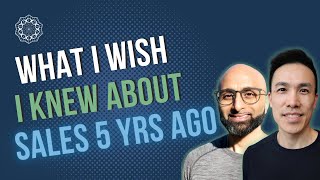
Sachin Patel talks sales for healthcare practitioners. Reframe rejection as information, not failure. Match your communication style to the client's personality type, listen deeply, and treat sales as service, not persuasion.
Chapters
Awesome.
Aaron, it looks like we're live. How are you today?
I'm doing excellent. How about yourself?
I'm doing awesome. You know, I just celebrated Devin's 12th birthday and so celebrating my 12th birthday as a father and some great time to reflect on what is important in life and, you know, what's valuable to me and my family. So yeah, it's been a time of reflection and gratitude and really paying attention to, you know, what's important. So yeah, lots of celebration taking place over the last few days and I feel like it's still continuing because my son's birthday party with his other group of friends, we did family this time and then in a couple weeks we're gonna do friends. So it's kind of going to be like a three week ongoing birthday party for him which, which is, that's what life is all about. It's about celebrating. So we've been to a lot of celebrating.
How about you? That's, that's a blessing. Well, I am celebrating my two months as a cat father, so. First time ever adopting a cat and I woke up to my cat at 5am licking my head. I think it's a, it's a show of affection for cats to groom, groom their parents. I don't know how I feel about that but you know, it's, it's cute but a little bit annoying in the, in the moment. But I'll live with it. I'll live with it.
So if you could go back words in time, what would you tell your current self?
I would tell myself this is what you be prepared for, what you're signing up for. It's not just the adoption's the easy part, I'm sure just like having a child, right. In some ways, you know, not the easy part. But there's, there's a more commitment to it than people realize at the adoption. At the shelter they have this statement on the agreement that if you can't handle it, you know re you, you can return the pet to the shelter. So I know there's a lot of people who jump in and aren't ready for the commitment. So I, you know, I was ready for the commitment. It's just you wake up at 5am with a, someone with a cat licking your face. It's a little disturbing.
I guess kids don't do that, right? So it's a little bit different than having a kid. But that's very cute image I'm getting of a cat licking your face at 5 o' clock in the morning. I wonder what it's, it's probably just trying to get your attention, right. In a way that it knows that's going to work.
Well, I, I learned a lot about cats and they do a lot of grooming and then it was really like a self care type of activity. So if you're. Usually cats groom each other when they, they love each other. At least that's what I'm telling myself. Unless my cat really hates me and is trying to torture me.
I love that. It kind of brings us to our topic, right. As you, as you're talking about it is sales, right. Sometimes it's the easiest part for our clients is saying yes. At least in our heads, right? That should be the easiest part because they're like, oh my God, I've got this amazing program. It's going to change your life. Like just say yes so I can help you. And, and then we have. For some people it's the hardest part, right. And I think, I think that's, you know, know a kind of a relevant conversation for this day and age because it's important as practitioners that we find this balance between sales and being of service. And for many practitioners, sales is like the S word in running our business. And we need to get them feeling good about that because nothing happens until a sales, a sale takes place, right. We can't help people fully and completely until we identify what is going to get them to say yes to a better future for themselves. And, and so let's dive right in. I'd love for you to share, Aaron. What does sales mean to you?
It brings me back to the moment where I realized the importance of sales and I, my, my mentor at the time was trying to bring me on as a new practitioner in the practice. And there was a prospective patient on the phone that called him. He's like, here Aaron, you take this call. And I remember getting on the call not knowing what to do at all. I didn't have any sales training. I kind of knew what it was. But once that prospective patient had asked, do you accept insurance? And we were a fee for service, cash based practice. And all I could bumble was like, no, I didn't know how to handle it. And basically that was the end of the conversation. I knew that person was dealing with digestive issues and I knew I could help but I wasn't able to because I wasn't able to make the sale or show and demonstrate. So now I think of sales as a service, as something important, as an advisor that I can guide someone through and get that Commitment on both sides to work together. So that was when I realized how important sales was, especially in the healthcare space. So I'd love to hear your perspective.
Yeah, absolutely. Thank you for asking. Thanks for sharing. I think, you know, we all may have that story of when a sale went right and when a sale went wrong. And, you know, it's. It's so interesting how this whole topic can be so taboo for practitioners, right, because we're not really, we're not, we're not really positioned to, you know, to think of our clients that way. We're trained on how to help them, but we have to realize that nothing happens until they say yes. So, you know, for me, sales is helping people make a decision that creates a better future for them and a better future for me as a practitioner, because I want to feel fulfilled knowing that this person is going to get a result and also serves your business. Because we have to obviously make sure that every time a sales takes place that we have profit left over to reinvest into ourselves, into our skills, into equipment, into our team, into whatever we need to do to continue to grow our mission. So there really has to be three, you know, entities, separate entities that are benefiting from that process. And until that happens or until that's happening, no one's going to feel good about it, right? So if the, if the balance of that benefit is overly favored to the patient or overly favored to the practitioner or overly favored to the practice, you know, eventually that doesn't work out too well in the long run. So I wish I had known that five years ago that it's, it's more than just, you know, revenue, you know, that person is far more than what they pay you. And it's important for us to understand that your joy as a practitioner doesn't actually come from them paying you. It actually comes from them producing a result. And because that's ultimately what we want, right? The money doesn't hug you at night, the money doesn't send you testimonials, the money doesn't send you thank you letters, and the money doesn't refer people to you. And ultimately, that's what we want. We want people making a educated decision, an informed decision that everyone feels good about and everyone benefits from. That's my definition of sales.
Love it. Perfect. So, I mean, what was maybe one thing now that you wish you knew five years ago?
Yeah, you know, I. I wish I didn't take it so seriously.
Right.
Because sometimes what happens is when a sale doesn't take place, there's A lot of judgment. And we either judge ourselves and we are our worst critics, or we judge the person. And our mind can run wild as to why somebody says no. Right? We know when they say yes, it's very clear to us why they're saying yes. But when they say no, there can be a lot of confusion and, and we can start overthinking it, right? We can start second guessing ourselves, we can start guessing our program, second guessing our program, our process, our pricing, you know, every like our existence comes into question if we become overly judgmental and our creativity and imagination runs wild, usually towards a direction of negativity. So what I realized is let me make it fun, let me make it, let me make it so there's, it's a judgment free zone on both sides of that phone call that I don't judge myself and my self worth and all the knowledge that I have based on that person's decision. However, it is my obligation to be able to help that person. So I do need to become a more effective communicator and communicate in a style that is appropriate for that person. And that's maybe something we can talk about is different communication styles that can help us in getting us to better understand what that person needs to hear and in order to make a decision, what parts of our program or process we need to emphasize to again create that better future for them for you and your practice as well. So I wish, you know, in short, five years ago I wasn't so hard on myself and so hard on other people for not seeing the vision that I could see for them into the future. How about you? What do you wish you knew five years ago?
I wish I knew that rejection was not as scary as it is. And that word rejection and getting a no, it really isn't about me because looking back any no I, I took as a failure like, like as you were saying, it's a judgment about my own performance, my own, my own. About me, the person. Not no to the offer, not no to the service. And you know, it would carry, you know, I would carry that for a while and it would take a while to get over it. But then having done kind of in being in sales now for three or four years a little bit more seriously, the no is really just part of the process. No. 1, I had the expectation that if I didn't close a high percentage, it was meant I was a bad salesperson. But then you realize there's so much more going into it now than you, the salesperson. Like is it the Right. Time for this person. Are they able, the bent, you know, do they have the budget, the authority, the needs? The timing is actually really important. What are they deciding? Are there other options between their other options? Maybe they found something that was better for them and it's actually better that they don't sign up and work with you because I don't know about you. I've signed on patients and clients who ended up being kind of a nightmare situation. I won't say they were a nightmare, but the situation was a nightmare and it ended up in a refund or a partial credit. And that never felt good. I wanted to avoid that. I thought, why don't I try to preempt that in the beginning? So it's okay if they say no? Because I only want someone to be a hell yes, not, not like a maybe. Let me just do it. So that's one thing I, I wish I knew that the no is not a bad thing.
Yeah, sometimes a no is the best thing, maybe for you, your practice, or even for them. And that's the thing, right. The, you know, part of what we talked about a few weeks ago was what profit is. Profit is impact minus efficiency. And if you get the wrong person saying yes, then it's hard for you to make a profit because your impact is going to be very small and the efficiency is going to be very low. So it's kind of a lose lose situation. And you never, you never know what that person's saying behind your back. Right. Because even though you give them a refund, if it wasn't the right fit, they may not even tell others who it might be a right fit for. So it's always better to preempt that. If you have any self doubt that this person isn't a good fit, give them a safe exit. You don't want someone saying yes when they really mean no because of their own guilt or their own shame or maybe because they're not able to fully express themselves. So we want to create a container during that call where they feel fully listened to and they feel safe to fully express how they feel. And if that's a no, there's no harm, no foul, and you're preempting and avoiding something that could be catastrophic emotionally to you, you know, emotionally to them. And the money comes and goes. Right. You're better off finding somebody who is a hell yes so that there's more impact that you're creating for that person. More, you know, more of a feed positive feedback loop for you as well. So your Self worth is improving, your confidence improves and then of course greater efficiency. So your business also benefits from that as well. So it's like there's so much to be said about a win, win, win. And I never want somebody paying me if they don't see the value or if they are not fully sold on myself, but also more importantly, fully sold on themselves. So sometimes handling objections, for example, is a common thing that comes up. How do we handle objections? First we have to define what an objection is. An objection is a doubt. So somewhere along the way we've convinced ourselves that an objection is a personal attack. And it's really not, right? It's. And we don't want to assume that it is either. I mean sometimes it might be if you're, if you're just not an all around nice person or you created a horrible experience for that individual, then yeah, it could be you, right? I'm not saying that it's always not you. It could be you and we have to own that. But let's assume you're a nice person. You created a safe container, you answered all their questions and now they're still saying no. Where's the self doubt coming from? Where is the doubt in your process coming from? We need to identify that they are not doubting that they can be helped, but they may just be doubting themselves. Like am I capable of this? Right? Is this something I can do? This sounds really hard. So maybe we need to really get to their level of what question they're asking in their head, what self doubt that they're having and smoke that out, so to speak, right? Really give them the opportunity to share that in know is, you know, what about this program creates doubt for you, right? And the next question that I would, I would have for myself is where can I improve my process or where in my process are they having or experiencing doubt? Maybe there's an amazing thing that I do, but they're not, you know, they don't feel comfortable being able to do it, right? Or maybe they don't think that they can. You know, I'll give a crude example, which is a cold shower, right? So if a cold shower is part of your process, for example, which it might be for some of you, and that wouldn't be on a sales call necessarily, but let's just say there's a component of your process that they don't think that they could do or they don't understand. Maybe we need to get down to that. And so I always look at it as doubt in themselves. Or doubt in your process, not necessarily doubt in you. And there will be that time where they may doubt you or they may not feel that you're totally authentic and transparent. And we've got to own that as well. But I find the majority of the time it's, it's self doubt or you didn't explain your process enough to demonstrate how it's going to help them or support them. You know, another thing that we found that can be very helpful for people and practitioners who are tuned into this. I learned this from Howard Partridge when I took my Zig Ziglar small business training with him. And he introduced me to the disc communication and behavior style. And that information changed my life. So there's actually four. And of course, there's all kinds of different methods out there. Like this. I like, I like the disc because it's really easy to understand. So there's four different communication personality styles. There's the D, which is the dominant. There's the I which is the influencer. The C, which is the conscientious, and the S, which is the steady or stable. And, you know, and the needs of these individuals and the words they need to hear can be radically different. So somebody who's a D needs to hear a different set of words than somebody who's an S. And we, we dive deep into training this in, in our mentorship program because this understanding allows you to know what part of your service or your program to emphasize for the individual. So, so really quick example is when you tell a D to do something, they don't like, that they like to be challenged. So instead of telling them to quit gluten, what you would tell them is, I challenge you to try giving up gluten or give up gluten for seven days. And let's see how that goes. So just simply changing the communication can be very powerful. A D likes to feel like they're in control, right? That they are always able to make decisions for themselves. So maybe we talk about that, we emphasize that this program is going to put you back in control of your health. Somebody who's an S, it's going to be a little bit different. Same program. So, but we're going to emphasize different aspects of it. So the S, we're going to emphasize support and stability, and we're not going to say, hey, I'm going to challenge you to do this, this, and this. They don't like to be challenged, they like to be supported. So instead of telling them, hey, I challenge you to go gluten Free, you might say, I've created a gluten free menu for you that's gluten free with a shopping list that's super easy for you to follow. And we're going to replace certain things that you're already eating, some of your favorite foods and we're going to make them gluten free. Right? So now that person is, wow, I feel supported. I feel like there is some loyalty here. I feel like this is going to be easy for me to do. The last thing that person wants to hear is we're going to completely overhaul your lifestyle. Right. They don't want to hear that. That actually drives them nuts. And that can cost you the sale, Right. It can cost you them saying yes to a better future for themselves, better future for you, and a better future for your practice. So what we found is communicating to our clients more impactfully, emphasizing the right parts of the program to them. That has been transformational in the process because now they feel seen, they feel heard, they feel acknowledged so much more. And it's not just about listening, Right. I'd love for you to talk about listening in a second here, but it's also about what are we saying back to them, you know, so we can be amazing listeners. But if we, every time we open our mouth, we're putting our foot into it because we're not saying the right things or emphasizing the right things, then that could be a problem. So what we did is added this questionnaire to our intake form. A simple paragraph, four paragraphs, and we asked them which one describes you best. So they self identify if they're a D and I, an S or a C. So that when we get on that call with them, we know, okay, I need to emphasize xyz, here's the words that they need to hear to make a decision. Now, I'm never going to tell you to lie, right? So if you don't provide those things, don't tell them what they need to hear. We don't want to use communication to manipulate people. We want to use communication to make our message more effective and land for them. And if we can help them, we have an obligation to do that. So the skill set of, of, of understanding people's communication styles and applying it to all of your conversations in your personal life, with your children, with your co workers and teammates, but also particularly with your clients, we found that made a huge difference in our process. I know you, you know.
Yeah.
Yeah. Thank you. So at Perfect Practice Live, you know, you gave a really great talk about listening and you actually shared the symbol for listening, and that was really profound because there's. Listening is more than just hearing what people have to say. So I love. I'd love for you to share that and. And walk us through that, if you would.
Yeah, absolutely. So the. The character is a Chinese character, ting or Tang, you know, Mandarin or Cantonese. But when you draw it out, each part of the symbol represents a different aspect of listening. That's the amazing thing about some of these older languages. The written language, like, the symbols are so much more representative than just letters, like the. The. The Roman letters. And so when it comes to listening, there's different aspects. Yes, we listen with our ears, but we're also listening with our eyes. We're listening with our heart. We are listening just by being in someone's presence. And I. I think I learned the importance of this being a manual therapist for a very long time. When you approach someone in an office, you can make them feel safe or you can make them feel defensive just based on how you show up. And I think that can be projected through a call, but you're also receiving information by watching someone on zoom on video. The body language communicates so much more. And so I use listening just to pick up on clues where maybe there's a little bit of dissonance in what they're saying and what they're projecting through body language. And like, like you said, listening is an important skill. I had to learn how to reflected more accurately. Like, that's my challenge as maybe someone who's more like, growing up, more introverted, a little bit more shy, is I listen, but I don't necessarily have the best ability to reflect back. So that's the thing that I was. I'm always working on in sales. How do I accurately articulate what I'm listening and hearing so that the other person feels heard? I think that's important. Does the other person feel heard in the sales process? Because I. I don't know if you've ever been on a sales call where, you know, they're following a script and it's like, you did not hear anything that I just said. And that's. That's like the most annoying thing for me. That's like the biggest insult. Like, are you even listening? Or are you just. Just going through the motions? And that's the way you kill the sale and you don't. And then you get off the call, and if you were following a script, you're like, what happened? The script works all the time. But no, you probably weren't listening to the person, you probably miss the actual question behind the question.
Right.
So when you hear an objection, there's usually something else underlying that. And if you just answer the question, you, you might shoot yourself in the foot. Like an example is, oh, how, you know, how many weeks is it? How much time do I need to, to participate in this course? And if you just say like six hours a week, you're not maybe understanding why they're asking it. So you, you might have just lost the sale or you might have, it might, they might still buy, but you didn't understand why. And so that's where listening comes in. The disc is so important because I'm, you know, you want to reflect back the right tone, the right benefit that they're looking for. Because if you tell someone who's results oriented, high D, you know, we're going to give you support, you're going to be able to connect with everyone that might be important to them, that might be the result they want, but maybe they just want to make more money. Right. So you have to be, be conscientious of the other person's type, their archetype, their, their personality type.
Right. You know? Yeah, I love that. You know, one of the things that we don't recognize is that, you know, in this process is how important authenticity is. I know you obviously do, and that's something we talk about all the time. And it's crazy that you have to tell people this day and age to be authentic. You just assume that everyone is. But I remember this one time, I'll share this quick story that I had. I was on a podcast, I was invited to speak on a radio station type of deal, and it was an online radio station. A friend referred me. So I kind of got set up for this. And in hindsight, I should have probably asked more questions, but they invited me on, they did, quick 15 minute spot. Later on that afternoon, I get a call from the station and like, oh, man, your presentation was a huge hit and we really loved it. We'd love for you to sponsor our show. We'll get it in front of more people. Here's what it includes. And I was like, I was not expecting that. I wasn't expecting this interview to then turn into this sales call, if you will. And so I caught onto it pretty quickly and I asked the guy, well, tell me, what did you love most about my presentation? What did you love most about what I said? And then you could tell he never even listened to my presentation. So he starts stammering and you could tell that, okay, he was busted, right. And of course, there was no sale that took place because it was a very inauthentic process. So it's also important, I think, for us to a prepare. But if we're not prepared to acknowledge that. Right. And maybe not pretend like we are, if we aren't, and show up authentically ourselves, because when we are not telling the truth or not speaking our truth, then guess what? It can become pretty obvious to other people. The energy in the room, even in a zoom room, changes when we lose authenticity. The vibration of the space changes. And so, yeah, being authentic, I think is super important. And I'd love for you to maybe talk about in relationship to this, how do you prepare for a meeting? So if you've got a call with somebody coming up, let's say today, what's your preparation process look like? Maybe it's the same day, maybe it's days leading up to the conversation, but I'd love to hear that too.
Two words. Facebook stalking. No, but doing my homework is really what it's like preparing to see a patient in a lot of ways. I think there's a lot of what I learned now realizing is as you know, someone who has a medical degree, the part. The process of being with the patient, understanding their case, and then making recommendations is how I've realized. It clicked only recently that, oh, as a salesperson, you are like the doctor, the trusted advisor. So how would you prepare? So with our appointments, we have an application they fill out. So there's important questions we're asking ahead of time so I can get an idea of what they're looking for. So that helps me frame the questions that I want to. The most important questions I want to ask, I also want to understand. How did they enter our world? Was it referral? Was it through social media? Was it a cold? You know, they see an ad and they just booked an appointment because that gives me an idea of how. Where they are. Maybe you can talk about the safer process where they are in their journey and readiness. And then that helps me know how much time I should invest at this point in their journey, because maybe they just need to learn a lot more about the. The business, the offer, the company, and then, you know, before the call. I work as hard as possible to be present, to show up on time, be professional, don't be. Don't be irresponsible. So a lot of those basic things that I try to show up 100% for the person because they might really, really be Needing something to listen and. And they might be feeling really desperate for. For help. So that. That's a little bit. I don't have a specific recipe, but that's my mindset going into it.
Yeah, it'd be great if we even thought about it to create a checklist of what people can do leading up to that call. Some of it's going to be research, Some of it's going to be even creating space in between their previous call and the call that they're going to have. Could even be something like creating the right state. And I think that could be really important for ourselves. So we show up fully energized. Could be the difference between sitting and standing for the appointment and where they're going to take the appointment. I also think the other thing for us to take into consideration is how we prepare that client to show up. Right. So do they have the link? Are they clear on where they need to go? And even reminder text messages or emails can be very beneficial for people as well as a clear set of instructions in terms of what they can expect on the meeting. And if they need a notepad, if they need their pen handy, if they. If they need anything with your A client, if they need their lab work with them, let them know that in advance so they can be best prepared. If there's a form they need to fill out, make sure that that form is completed 24 hours before the appointment so that you can review it and then there's time for them to submit it in case they forget. So create the best odds for them to be successful through your process and not, you know, show up and embarrass themselves by not having certain things done because then it's hard for them to save face. And, you know, it allows you to get the most out of that time together. And I always look at that time of that person and my time equally valuable. Right. So nobody's half hour is more important than my half hour. And my half hour isn't more important than anyone else's half hour. We're all blessed with 24 hours each day and how we use that time. I want it to be sure it's leveraged in my presence. And I know you want the same for your clients. And all of us should want that. They should walk away from that meeting feeling hopeful, feeling inspired. Even if they say, not now, there should be hope and inspiration that, hey, something can actually be done to help me. And, you know, for some people, including people that join our programs, that might mean they need to save up for, you know, a few months or a few years, or maybe they need to get the timing just right, as we talked about. But, you know, how we show up, how they show up, how we prepare, how we prepare them, that's going to allow us to get the most out of our time together. So I wish I had known that too. Right. It's not just about me. It's about them. And one thing to also keep in mind is that when people show up to our. Our. To our calls and even in our offices, the. The tone in their nervous system, especially if it's their first time, like the first time you go anywhere, it's a totally different experience than the second, third, or even tenth time that you go to that place. Right. It's. Sometimes you feel lost. You're not sure, is this the right place? Am I doing this right? And so what we want to do is we want to calm their nervous system down as soon as we can. So for us, it might mean starting off with some gratitude. It might mean creating a meaningful yet casual conversation. If you're following them on Facebook or research them on Facebook, you might even bring up something recent that happened in their life. Hey, congratulations on such and such. You know, tell me a little bit more about this. So we can build rapport with people by having that information, and that familiarity calms the nervous system down. And we want people to feel calm in our presence, so why not use tools that we know work during these conversations? Right? So maybe you have your clients take a few deep breaths. Maybe you ask them what are they most grateful for. Maybe you celebrate something that they've recently accomplished. So now they feel like they're talking to a friend. They're letting their guard down, and we want to be sensitive to that. We don't want to manipulate them. We want to serve them. But sometimes, if people have a wall around their heart, it's hard to communicate effectively to them. So let's remove those stones or those bricks, you know, piece by piece, by creating meaningful conversation and rapport with that person. And then, you know, once they feel calm in our presence, which is rare in healthcare. Right. Usually when we're seeing the doctor, we have a term called white coat hypertension. And if we're going to do the opposite of everything that they've been doing, we have to make them feel the opposite of how they've been feeling leading up to this process. So I think there's something to unpack there a little bit as well. You can use certain colors in your office. You can Use certain essential oils in your office that help relax and calm the nervous system down. I remember when we had a physical office. Every person that came into the office and said, wow, it smells great in here, signed up for care. Every single one of them. Because instantly, instantly it resonated with them. There was a resonance in their nervous system. If something smells good and we feel so good that we feel like expressing it, we know that person feels better in our presence because of it. And they don't know why, but they just feel calm and relaxed. And of course, you can use certain colors on your wall that are calming and relaxing. Artwork can be calming and relaxing. Your presence can be calming and relaxing. Even the microphone that you use to have your conversation can be calming and relaxing. Right. So there's ways that we can set ourselves up for success. No matter how we're communicating or what medium we're communicating with that person with. To tone their nervous system and move it in the right direction. So, so powerful, yet so overlooked in the process.
It goes so much deeper than the script or the words or even the. The mechanical. The questions you ask. That's what I'm realizing as you say this. There's a lot that leads up to a sale. Some of it is visible and apparent and tangible, and sometimes it isn't. And I don't like the discomfort. It's uncomfortable knowing you can't control everything, but it's a state of being. It's an odd way to describe sales. It's like how you are. I guess that's how it's our existence. It's how you are, it's how you be. And it's always a practice. And you know that things aren't going quite right. If you hit a streak where a lot of people are saying no, when you feel like they should say yes, you can start to evaluate the other aspects of your life. Like what. What else is going on? Is there conflict somewhere else? Is there something? Is your mind somewhere else? So at least that's what I try to evaluate. If things aren't feeling right, then I try to say, how can I get feeling right again and showing up? So I'm glad you mentioned a lot of those types of things.
Yeah. You know, our feelings are basically, most of how we feel is driven by the unconscious. And so we as practitioners know that what tools can help people get into that calm, relaxed state. And. And here's the other thing about getting your clients into a calm, relaxed state is that they are. They're going to be more receptive to Learning new things. Right. When we're in a stressed out, sympathetic state, our mind is in a reactive state. It goes to the familiar as opposed to when we're in a parasympathetic state. In the right type of parasympathetic. Right. Then our mind goes more into an expansive state, a state of possibilities. And that's what we want people in, right? We want them to be open to new possibilities as we're communicating to them, not to be contracted and be in a reactive state where they're just going to stick with what's comfortable and familiar. So again, how we make them feel has such a profound effect on what direction they're going to, what type of internal dialogue is taking place with them. And the likelihood of them making better decisions for themselves comes from being in a parasympathetic state instead of being in a fight or flight state. Lots to unpack there, right?
I'm digesting it. There's so much more I know we could talk about. That's a challenge with anything. But I love the opportunity to expand on this stuff.
What I'd love to also mention maybe we do a part two of this. I think that would be kind of cool. But one thing that I want to talk about is how to create a magnetic personality. And when you're a magnet, you're never afraid of attracting. That's all you do. Magnets attract. Let's call them the opposites for now. And so magnetic messaging and marketing is what gets people to want to work with you. So I had a call with a lady, she was referred to me and struggling with some digestive issues. And then within minutes we identified part of what was contributing to her challenges. And she was just stuck in fight or flight all the time, doing on paper all the right things. Eating healthy, exercising, but doing all of it in fight or flight. Right. So you can only imagine that that eventually leads to something like gastropares, right? Where the bile bowel starts shutting down, the detoxification systems aren't working as. As well as they should. When we're in constant fight or flight, our organs go into a suspended state of animation. And I know that practitioners listening to this probably know that. But what I want them to know is I explained it to her in a very, very simple way. Even though she was an ER nurse or is an ER nurse, she knows the anatomy and physiology, explained it into her in a very, very simple way. And she started, she was like, oh my God, how do I keep talking to you? I was doing a friend, a Favor having this conversation with her. Didn't try to sell her anything, didn't send her through even my sales process. I was just trying to be of service to her and wanted to deliver as much value as I could. And I said, hey, try these things out and keep me posted. Let me know how things go. And then I get a message from her two days later. She's like, I'm doing the things you recommended. Super appreciate this. Like, how do I keep, you know, talking to you? How do I keep. How do I work with you? Was. Was her exact email. So. So now that's leading to a magnetic process where I don't have to sell anything. Right? All I did was create an opportunity for her to experience her body's magic and healing. And then what I did from there was I gave her something to work on, Gave her a sample of, hey, try this. Let's see if this works. And that leads to, hey, I want more. So, not that my intention was for that, but, you know, it's cool how that happens when we add value into people's lives. People want value, and they're willing to pay for things that are valuable to them. So don't be afraid for your call to be multiple sessions. Right? Don't be afraid to get on a call with somebody and say, hey, you're not doing these things. How about you start there and let's see what happens, right? Then it makes more sense to work with me. Right? So for her, I can't help her if she's stuck in fight or flight. There's nothing I can do that is going to help her get healthy and move towards her objectives unless she moves into and is willing to move into a state of being more parasympathetic. And she did. Right? So now it's okay, here's the next thing. Here's when working with me makes the most amount of sense. So even when we're talking to practitioners, hey, I don't even have any training. Okay, well, yes, our program can benefit you. However, is it a win, win, win, Right. So I might win way down the road, when this person kind of gets things together, the practice will win because the person's obviously paying us. But are they going to win? Right? And under what timeline are they going to win? So it doesn't make sense if we do things that way. So the ultimate goal is for us to be of value at the right time for the right person, for the right paradigm that they're wanting to shift into as well. And if we can create the Right. State and make them feel good. They're going to want to work with you, they're not going to want to work with anyone else. What all of us have to keep in mind is that by the time patients get to us, they've probably been to five or six terrible experiences that they've had and they're still unwell, they're still looking for answers, but they're not just looking for an answer on a piece of paper. They're looking for someone who makes them feel good, not just six months from now, but makes them feel good right away. That's where the buy in takes place is when we can make people feel seen, heard and make them feel like we're invested in them. They're much more willing to invest in themselves, but then of course in our business as well.
So glad you mentioned investment because the conventional sales kind of mentality that I've encountered is like, get the sale now at all costs. So it's like it's all about conversion rate, close rate, which are important, it's not unimportant. But you, I've learned from you really embracing the longer term view. When you invest, you don't invest to make that return on investment like now or tomorrow, but how many years, like down the line. And in terms of like karmic currency, you've talked a lot about karmic currency. One of those things beyond money that you get by investing, the, the intention, the serving someone, helping them out of just the kindness of your heart and it becomes more magnetic. I think that the karmic currency makes you more magnetic in that way. Is that accurate?
Yeah, absolutely. Here's another thing that I'll say, Aaron, that could be helpful is that when somebody says no, it doesn't mean they're saying yes to somebody else. Right? So if somebody says, hey, I don't, I don't want this coaching right now, or I don't, I don't, I'm not going to do this program right now. It's not like they found a solution. In many cases, I shouldn't say everyone, but a lot of times we're the only person that they know that does this type of work. So if this is what they're looking for and we have an actual solution, an answer for them, what do we need? What is the circumstance that needs to be created for them, for them to remove all doubt in our process and all doubt in themselves, that's the question we should be asking, how do I remove doubt? And when you have no doubts and you have no doubt that this process can help you. That's when you're actually a better client. Now here's the other thing I tell people, listen, I know that this can help you. I know that this is going to move your practice in the right direction whether you sign up now or whether you sign up into the future. There's nothing else out there that's quite like this. And you know, it's okay if this isn't the right timing for you. We're always going to be here. We're not going anywhere, right? That's the thing is like, it's important to make the sale if you're not going to be in business in six months, right. And you need to make the money now and obviously deliver the service, let's say. But if you're going to be in business six months from now, right. Let's keep nurturing these people. Let's keep moving them in the right direction. Let's remove doubt, fear, uncertainty and doubt fud as they call it in the crypto world. And let's get them to say, I have no doubt, satchin that you can help me. I have no doubt, Aaron, that this program is going to be beneficial for me. And you have way more buy in at that point as well. So just keep that in mind as well. Is that when they say no to you and it's okay if they say yes to somebody else, that means they found a solution. The tragedy is when they say no to you, you give up on them and they never find a solution.
Right.
That's the worst thing that can happen for that person because then they go down the hole of being hopeless. And that can be very tragic, as we know. Cool. So I know we're coming up on our time here and I've actually got another podcast right after this. So I would love to invite you. If you haven't subscribed, subscribe to our channel. I'll share a link where you can get a copy of my book Perfect Practice for absolutely free. We'll ship it out to you and just cover the shipping. And what I want to do is I want to remind everyone that we also have an opportunity for those of you interested, to set up a time to speak with someone like Aaron, who's part of our practice advisory team. If you're looking for a turnkey solution for your functional medicine business, we're always honored and so grateful for the many, many hundreds of practitioners we've coached. But we know it's going to take many thousands more to really make the impact that we want. And we've created what we refer to as a turnkey business model for functional medicine practitioners where we share all of our systems and tools so that within 12 weeks instead of 12 years like it took us, you can have the tools that are necessary for you to deliver transformational care for people. And of course, we provide training on how to offer that care to people and get them to say yes. And some of that comes from what we talked about today. But there's so many other tools that we offer you so that more people say yes to their best future. Your best future, where you're being appreciated and also the best future for your practice. So check out the links. We'll post them below. And Aaron, any. Any words you want to say before we sign off here?
I'd love to maybe just summarize really quickly, is that you know, when you show up and you have a product and service that you trust and your clients can trust, you can sell without selling, and you can show up authentically. So that I think that encapsulates a lot of what we discuss here today. And looking forward to going deeper on this topic. Again, the future.
Yeah, let's definitely do a part two. Thanks, Ajit. All right, thanks, Aaron. Bye, everyone. Have an amazing, amazing rest of your day. And here's to your wholeness, happiness and health. We'll talk to you all soon. Bye for now.
More from Sachin








Your Doctor Won't Prescribe This… But It's the Most Powerful Medicine on Earth

