Why Now with Sachin Patel and Marci Catallo Madruga
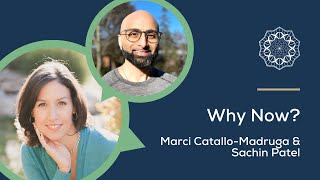
Marci Catallo-Madruga went from chronic back pain to founding 5280 Restorative Medicine, a functional medicine practice that uses genetic testing and manual therapy. She caught a patient's implant-related liver failure that traditional medicine missed, then shifted her business from insurance-based physical therapy to cash-pay functional medicine and group coaching.
Questions this video answers
Alex and Austin.
Agility Physical Therapy.
5280restorativemed.com.
Dr. Marcy's Marvelous Meals — available on Amazon and Kindle.
dōTERRA On Guard.
Chapters
Hello, and welcome to Perfect Practice. I am super thrilled today because I'm having a conversation with somebody who's been inspirational to me in so many ways. Somebody who has what I might define as an insatiable appetite and hunger for knowledge and serving and helping people, and somebody who, you know, I've grown to admire by following her on Facebook and just watching her journey and transformation, and, of course, watching her live a fulfilling life and sharing that with people. So welcome. Marcy. Thank you for being here today. I'm so grateful that we have this chance to have a meaningful conversation to learn more about you and to share with the world your passion about helping and serving people and telling us where that comes from. Welcome. Thank you.
Thank you for having me. I really appreciate the opportunity and everything that you've done for me so far since meeting you back in. I think it was in March, actually. So I appreciate the opportunity to be a part of your group and learn more from a lot of different people as well. So I appreciate that.
Thank you. Thank you. So I understand you have twin boys. Tell us what their names are and tell us which one's older, too.
Alex and Austin. And because my husband's an engineer, Alex is. Is the oldest one, and Austin is the younger one.
What is. What does that mean? What's the reference there with the engineer?
He has to have everything orderly. And so my thought was to name Austin as the first child, and he's like, that's not alphabetical. That doesn't work.
I love it. So it must be. As a functional medicine practitioner. It must be awesome being married to an engineer, because it probably. He probably looks at what the work that you do through that engineering lens is. Am I correct in assuming that?
Yes, most of the time. But there's also moments where he just totally doesn't. He's like, I don't even know where that came from or why you even thought to think that way. I never would have guessed that that was what was going on. So it's. It's interesting having his very kind of black and white view versus the more artistic view, I guess, that we take as functional medicine providers. So it balances me.
Okay, awesome. So I'd like to start with learning a little bit more about you. Tell us where your health journey start.
So for me, the biggest part of it actually started back when I was pregnant with the twins. I thought everything was going along fine, and then at 10 weeks along, I started hemorrhaging and ended up on bed rest, and nobody could figure out why. They just Thought, like, you're healthy. There's nothing wrong with you. We don't know why this is happening. And then around week 19, we figured out that there was something wrong with one of the babies. And then 30, 25 weeks, and I went into preterm labor. And at 30 weeks, we decided that we were doing a scheduled C section. And there were all these things that just kind of kept popping up that seemed like, why is this happening if I'm supposedly healthy? And after the boys were born, I started looking at some things. I had had one miscarriage prior to that at around 17 weeks. And so I started looking into what are some other things. I did some genetic testing and started asking questions, and nobody had the answers for that. And so I started looking on my own, and I actually found. I think this is in 2014. Dr. I. I don't know if he's Dr. James Maskell. And I watched a few of the episodes that you guys did live, and you were on there. And that's actually when I first started following you. Was back in 2014. And I started asking my providers, well, what about this? And what about this? And their response was just like, you just need to take this medication and get over that. That's not real. And in my head, I thought, it is real because it makes more sense. So I started looking for different answers other than medication and really found kind of my truth in helping other people that were going through, not necessarily the same thing that I went through, but health experiences where they really were being put a label on that did not fit what was happening. And then trying to do enough research to discover what was going on, I ended up stumbling across a gentleman by the name of Garrick Vosloo and going through his functional medicine certification for physiotherapists and really started doing more health coaching from that perspective in 2017.
Awesome. So you said something that I want to come back to. You said that your practitioners at the time regarded you as healthy, and then you went through the functional medicine training. So looking back at yourself, this is just out of my curiosity, because I used to think the same way. And then when I went through the functional medicine training, I'm like, maybe I wasn't as healthy as I thought it was. Did you find that that was the case for you?
Yeah, there were definitely some big things that popped up. Some of them had to do with some food sensitivities or allergies that I had had where, you know, you're eating something that you. The world is telling you this is Healthy for you, you should eat this. But your body reacts to it in a way that creates a negative response. And so some of it was changing my nutrition plan completely because the nutrition that I was eating was actually causing me harm. And some of it was looking at where my genetics say my body needs a little bit of support and supporting that through, like, higher quality supplements. And also trying to make sure that I was honoring what my body needed in that day or at that time.
Okay, now, what was the big shift that you noticed then after you started incorporating your functional medicine training?
The biggest thing for me, I've had back pain since I was 7, and I don't have back pain anymore. And that it. It's when you've had pain for two or three decades and then all of a sudden you wake up and it's not there. You're like, oh, wow, that was weird. I don't feel like I need to get up a certain way or I'm going to be in trouble today, or I feel like I can do more and have less restriction, or I'm not afraid to do that activity anymore because this isn't a problem. Um, and things like that were nice but strange because it had been that way forever.
Hmm. Is the back pain what inspired you to become a physiotherapist?
Several things, but the back pain was probably one of the biggest ones. The second one was I had as good slaughters when I was 12, and I went from being one of our, like, star cross country runners to barely being able to walk without pain. And I saw a physical therapist then, and I thought to myself, if I could do for one person what he did for me, that would be it. That would be all I needed to fulfill my life. Turns out that's not true, but it was a good thought at age 12.
That's awesome. I always like to know the origin story as to why people do what they do. So then you're a physiotherapist, you go through the training, become certified in functional medicine. I also notice as I was preparing for this conversation, that you have many other designation. So tell us about some of the other trainings that you've taken.
So I'm a certified vestibular rehab specialist through the American Institute of Balance. And that training was partly because there was a need in my area that wasn't being met and also a desire for me to understand more what was happening with my own vestibular dysfunction. And if I'm going to take a class and there's a certification offered for that class, I figure I might as well go all the way through the certification. I'm double certified in vestibular rehab and concussion rehab. I am certified in trigger point drain needling, Functional trigger point joint needling. That was something that I did because of an injury that I had. Where I went from, I hadn't been able to walk more than a mile or run at all in about six months. Two treatments of trigger point joint needling, and I could run seven miles without pain. I am a certified manual therapist. And that was again, right after graduating PT school. I was like, okay, there's a lot of stuff to this manipulating joints. And it's not just the spine. It's all the joints in the body can use. Better alignment. How do I bring that into my knowledge base and use it better? And did the certification for that. I'm a certified health and wellness coach, and I am a. What's called a certified turbulence trainer. So creating programs that create enough disruption that the body has to constantly adapt, because when it's adapting is when it is burning the most fuel.
Wow. I love that. I know you're also big into essential oils as well, which is something I enjoy. So I'd love to know what is your favorite essential oil?
Oh, my favorite. That's hard.
I know. That's why I'm asking the tough questions today.
So my favorite overall is probably the doterra on guard because it's so versatile. My favorite thing, I gave up putting any sweeteners in my coffee about a year and a half ago when I started putting the on guard in my coffee. So I'm. I'm. I gave up sweetener in my coffee, which I was using honey, and started putting that in. And now my coffee every morning tastes like chai tea with coffee, and it's delicious. So that's probably my favorite. But in terms of, like, what I diffuse every day, probably my favorite one is. One of the citrus ones. And mostly because it makes my kids happy.
Okay. Happy kids, happy life. Right? Awesome. So tell us more about your practice. If I were to come into you as a patient or somebody listening to this were to come in as a patient, what can they expect working with you that would be different than working with somebody else.
Coming in on the functional medicine side or on the PT side? Because I still have both.
Yeah, I would imagine there's a lot of overlap though, right? Like, you probably can't see a PT client without thinking about the functional elements of it. Do you ever combine the two or are they separate? Totally. No.
I combine the two a lot because I feel like I have this almost like a gift to retain information where I have trouble actually letting things go out of my brain. Um, and a lot of times when you're seeing a physical therapy patient, the reason they're there is because there is some sort of dis. Ease in their body. Right? It could be a traumatic injury, but it could also be something that's emotional, or it could be something that's nutrition related, or it's something that there's just something going on in the body that they aren't aware of and they're not healing for some reason. And sometimes what that looks like in my clinic, I mean, best example I can give is probably a gal named Lauren that came in a few years ago, and this was actually while I was going through the process of certification with the functional medicine certification. She came in to me after a knee surgery. And the knee surgery that they did was they had moved where her patella attached on the tibia because it attached too far laterally. And she was a chronic patellar dislocator, which only bothered her if she tried to run or walk up and down stairs, which in Colorado is a big deal. So she came in six weeks after surgery, and her leg was like. Still had blood flow because she had good pulses everywhere, but the leg was blue and it was ice cold. And between that six weeks of end of surgery and seeing me, she had been to the ER five times for debilitating pain in her head between 2am and 3am and it was kind of interesting. And so I started doing some research on it. And then about her third appointment, which was the next week, she came in and down the entire other side of her body, she had bruises. And I went, oh, no, we're having liver issues. And she's like, what do you mean we're having liver issues? And I was like, your liver isn't detoxifying either from the anesthesia or for something they did during the surgery. Like your. Your body is like rejecting something, and we need to make that stop. So went into a little bit of her history, and it turns out she has an autoimmune condition. She's allergic to her own sweat, and then she was also allergic to nickel. The ER had labeled her as drug seeking. I called her surgeon that day and said, I think we have a major problem. I think she's rejecting the hardware, and I think she's in liver failure. He said, why do you think that? I texted him the pictures of her leg on the non Surgery leg and texted him the picture. I have those, um, you know, those thermometers, probably from when you were also a kid, that went on the forehead and they changed colors like a mood ring.
Okay.
So I have those so that I can check joints for infection. Like, if somebody comes in and they're just like. It just feels swollen and hot. I can check the temperature. I used it to check the temperature of her cold leg, and the temperature didn't even register. Like, there was no color change on the thermometer.
Wow.
And so the surgeon decided to meet her in the ER and they did a bunch of testing, and sure enough, she was allergic to the implant. She was allergic to the cement that they had used. She was allergic to the stitches. She was allergic to the anesthesia. She was allergic. I mean, it was just like, this long list. She was in liver failure. And she had another issue that popped up, GI issue that popped up because of all of this stuff where she developed eosinophilic esophageal. And that her story is probably the biggest one, where it comes out where this other training came into place. But there's little things that happen every day with clients where you see somebody and you just look at them and you go, what does your nutrition look like? Because you. This. This surgery should have healed or this injury should have healed. What are you not. What's not happening in your body? What process is missing so that we can correct it? And then you talk them through that. And sometimes I just give advice and I tell them, you know, I have this other side of my business where we can talk about that if you would like. And you just need to set up that appointment. And I do preface it by telling them, you know, it's not very likely your insurance will cover this. I can give you a super bill to submit that on your own, and you can see what they're willing to do. But I'm happy to provide you with research as well if that will help you get that claim paid. And about 50, 50 they get reimbursed their insurance. But most of the time, the insurance says that it's experimental.
Yeah. I mean, to me, this sounds like a perfect combination of being able to look at somebody through multiple lenses that you have with the different trainings and certifications you have taken. So the value that you offer is, in my opinion, so immense. And your community is definitely lucky to have you and have someone like you who can look at them through multiple different perspectives to find an answer. Right. Because I can't even imagine what would have happened to that young lady had she not met you? It's. It's hard to imagine.
Surgeon said she would have been dead within 48 hours.
Wow.
I mean, that's like, like somebody, you know, somebody said once, well, it's not like you're saving lives. And I went, actually, I am. Like once. But once is enough, right? It's. It's enough to know that you've made that change for someone once.
So, yeah, I mean, it doesn't get much more fulfilling than that. Right?
Yeah.
Hello, my friend. It's Sachin here. I trust you're enjoying this content if you haven't already. I wanted to let you know about my free book called Perfect Practice. This book is for entrepreneurial practitioners in the functional medicine space who want to help as many people as possible. Shared some of my best tools and resources in this book and it's absolutely free. Just click on the link below and we'll send it to you at no cost. So what. What's the certification that you have your eyes on right now? Is there anything else that you've got on your mind?
I've thought about doing the Functional Diagnostic Nutrition certification, partly. I have a. My bachelor's degree is major in kinesiology with a minor in nutrition. And I just think the Functional Diagnostic Nutrition certification would go well with that. But the one that I've been really. I keep coming back to is the neuro Linguistics Programming certification. And it has a couple of different components. It has one for health coaches, it has one for hypnotherapy. And it has. And there's a third part to it, and I'm going to space on it. But I keep pulling up that website, so that'll probably be the next direction I go instead of the Diagnostic nutrition one. But that's kind of there in the back of my mind. And then I've also been looking at. But it. When I pull up that website, it doesn't speak to me as much, but I have pulled it up a few times. The Proprioceptive Deep Tendon Reflexes certification.
All right. Amazing. Now I know. I follow you on Facebook. I see that you love to exercise. It's a big part of your, you know, what makes you who you are. I see that you love being in the pool and love being in the gym. Which one do you like more?
The pool.
The pool. Did you swim competitively growing up?
Yeah, I started at age 5 and swam through my freshman year of college and then switched over entirely to water polo for a few years. Took A couple years off and then got back in the pool just before graduate school. The water, to me, is a place that has always felt very comforting and very safe. And it's where I go when I'm really stressed, because otherwise I would probably just bake, and that's not as good for you.
What's the favorite test that you run on your clients? Do you have one?
Honestly, I think the test that I get the most information out of and can really talk to patients about why they should make the changes they should make is running the DNA analysis health and DNA analysis diet test. And really what that speaks to is it gives them like, this is really where your genetics are and where you could be supporting yourself better, at a minimum, at a base level. And this is what would look like the best nutrition plan for you, plus the amount of activity you should be doing to maintain a healthy life. And it really puts it there in black and white, according to their genetics. And I can show them, look, this is my test results from this test, and they don't match yours. And so I'm not just telling you this based on what I think you should do. This is what your genetics think you should do.
Yeah. Whether you like it or not, right?
Yeah.
And how do people respond to that?
The ones that have done the test have done really well within taking in information to help them move forward. People who are resistant to do the tests are obviously the ones who are also resistant to do any of the programs. I think partly because they know they need to change, but they're not ready to change, either emotionally or mentally. They're just not ready to have that conversation with their friends about why they want to change. And that's a big step, I think, for a lot of people is overcoming that question of, well, why do you think you need to lose weight? Or why do you think you need to eat healthier, or why do you think you need supplements? I think for all of us, it's a very tough thing to justify why we feel like we need to do something for ourselves and be a little bit selfish. And having that conversation with family especially, I mean, biggest example, right. Adele, everyone criticized her when she was overweight, and now they're criticizing her because she's not body positive, because she lost all the weight. And it, you know, that happens in our own families, too. It's very hard to want to do something and be a little bit selfish, even though your health is not something that you should not be selfish about.
Yeah. And it's almost impossible, as Adele demonstrates To please everyone.
Yes.
Yeah, it is sad. I didn't even know that I knew she lost the weight, and I was super excited because that obviously means her health has shifted in a certain direction and doesn't mean she's happier necessarily, but we can say physically she's in a better place, but sounds like she's happy about it, but other people are not so happy about it. And sometimes other people changing and improving and aspiring to be better versions of themselves triggers something deep inside others, and there's obviously something there for them to explore.
Right.
So the NLP is. That's interesting because I know a lot of very influential people like Tony Robbins are big on language and really understanding how to more effectively communicate with somebody else so that you can move them and inspire them to action. What would you say is something that inspires your clients into action? Is there something that you've identified that triggers them to take action, jump in, and become the best version of themselves?
I think one of the biggest things is that I do tend to give away a lot of information for free. Um, I mean, the conversation I was having just with a physical therapy patient this morning, she said, you know, sometimes I feel like I'm taking advantage of you because you give me all this information, and all of it has been helpful. And I feel like I'm not paying for that service because I only have Medicare and I'm only seeing you for back pain. And she said, it's been eight years and I'm going to book a health coaching appointment with you. I think that understanding that, yes, I could be charging you for this, and I don't have to charge your insurance for that information. And I could tell you that I don't want to talk about that except outside that appointment, that. That fact that I'm willing to give that information and help them, even if they're saying, well, I can't do anything outside of insurance, you know, I'm not sitting down and writing a program for them, but I'm giving them the information. And what they choose to do with that information is up to.
Yeah. You know, as you're saying that, what's coming up for me is you have to talk about something while they're there. Like, you could talk about nonsense, or you could talk about something that's relevant. Right. Because your time is already invested in that individual, and it's an opportunity to educate them and nurture them. And, you know, this reminds me also of something we call karmic currency, which is where you do things with such a pure Intention that the universe has a way of repaying you in ways that can't always be measured. So I love that you serve people with an open heart and, you know, not necessarily being so attached to the fruit, but being more attached to. Being more attached to the fact that you're being of service and value to them.
I think that's a lot of healthcare practitioners get into healthcare with the goal of helping people. Right. It's not like, yes, you can make a good income being a health care practitioner, but if I had wanted to just make a good income, I would have become a neurosurgeon, not a physical therapist. So I think sometimes we have to remember why. Why did I start this career? Why did I choose to go into health care? And what am I doing with that? Am I still honoring that, or am I burnt out and do I need to move on to something else, or do I need to readjust my thinking, or do I need to stop working for the person I work for because that they don't align with that? All of those things are what you have to consider. And I mean, those were all questions that I asked myself when I decided to open my own practice. Was, you know, am I. Is it normal to have an upset GI system every day when you go into work? Because it doesn't align with what you want to do with your career and what you want to do with the knowledge that you have. And what it came down to ultimately was it didn't align, and it also was not in alignment with my family values. And so it was time for me to move on.
Okay, now you mentioned your own business, so I'd love. I'd love to dive into that a little bit more. Tell us. Tell us a little bit more about your business.
So I opened Agility Physical therapy back in 2009 while I was still working for someone else. And I was just using it to see clients kind of on the side out of my home, because I only worked 30 hours a week for the person I worked for. And then in 2011, I opened a brick and mortar PT practice. We grew pretty quickly. By 2014, we had doubled our space and then started kind of actually shifting away from physical therapy and doing more of the health coaching. So I was still seeing PT patients, but when I lost a pt, I didn't replace them because that wasn't where I wanted to spend my focus and my energy and kind of slowly downsized and stopped taking 90% of the insurance back in 2019 and started 5280 restorative. Medicine 5280. Restorative medicine 5280 is a nod to the Denver mile high city. And things that are related to 5280 are kind of popular here. And the idea of restoring your health so instead of just restoring your body, really restoring anything that looked medical because in the long run if you're not evaluating emotional, physical, mental side of everything, it's not. You can't fully restore the health and you have to bring all pieces. And so that was kind of the journey to that. And I, I am still, I do take Medicare and Tricare and that only because those are populations that are very underserved and also our military serving us in ways that we don't even know or want to know. I feel like giving back to that community is a huge plus. And the nice thing about Tricare is that they do actually approve some of the functional medicine stuff and pay for it, which is great for that community because I am able to build their insurance for services even on the functional medicine side.
Nice.
So my business right now is about 50, 50. I see 50% of my business is health coaching, 50% of it is physical therapy. I'm hoping to shift that to where it's more of the health coaching functional medicine side at 70% and only PT at 10% and really move towards helping more people more in a group setting as opposed to individual settings. Because I think that in the group coaching people gain an understanding that they're not alone on this journey and that when they need someone to support them besides me, they have other people to reach out to that are going through those same or similar situations.
Yeah, groups are so powerful because you get to learn from one another. You feel like you're not alone. And as you and I, and I'm sure many of the listeners know, community and having a sense of purpose are very powerful predictors in health span. So we're doing the client a huge service. And some practitioners eyes they might feel like the one on one is far more impactful and powerful and not to, not to take anything away from one on one. But I do feel that groups are very underrated until practitioners start actually doing them and they start realizing, wow, like this is awesome. I remember when I was doing mentoring it used to be all one on one. And then when we moved to, when we moved more to a group environment, at first I was a little reluctant. What are people going to say? What are people going to think? They want the one on one. And then you start realizing no, that they actually benefit more from being in the group. And once both the caregiver or the provider and the student or the mentee kind of let their guard down and just embrace the situation, they start realizing that it is so much more powerful in a group. So speaking of groups, like, who is the ideal client for you in that group setting?
My ideal client is probably a female between the age of 35 and 55. She is a mom and has been in a long term relationship and really kind of let herself go a little bit and tried not to be selfish regarding her own needs. Because I think a lot of times as moms we put ourselves on the back burner and is really looking for a way to find herself again. And part of that is through rediscovering how healthy her body wants to be and how she can move towards the best health that she can.
Yeah, I think that is a very underserviced, unfortunately a very underserviced group of people. And you know, a lot of times their challenges are being dismissed and they're not feeling seen, not feeling heard. What would you say makes your experience different if a client comes to work with you?
So before they even come in, I have them fill out a really long questionnaire and I review that before their first appointment. So when they come in, I've reviewed any information that they've chosen to upload. I've reviewed that questionnaire and I already have an idea of where we need to go. But then the first 30 minutes of our appointment is them telling their story. So they actually get to tell their story and have somebody hear what they think is their biggest problem and they get to have that acknowledged. And I think that's a place that's really lacking right now in today's medical society is the patients. Even sometimes when you come in with a list of questions, the doctor never actually looks at you. They are looking at the screen and there's a block between you and them and they're just typing. And I think we've had this conversation in the mentorship a few times. The act of physically writing with a pen to paper, you take in that information like 80% more than typing. So when you can let the person tell their story and you can look at them and you can see what part of them really triggers when they're telling their story, you can find where things went wrong. And that's the point you need to go back to to fix what's happening now.
Yeah, I bet so many people have never had a chance to fully share their story to Tell their story to feel heard, to feel seen. And you said a word there that triggered for me, which is screen. Right. There's literally a screen between you and you and the. Or not you, but the practitioner and the patient. And they literally are not feeling seen because there's something that's screening that view. And just simply going around the desk can make such a huge difference in that engagement and interaction with the client, looking them in the eyes, which probably doesn't happen as much as you would think these days. And sometimes it almost feels like the doctor or the practitioner may have one foot in the door, one foot out the door, and you're trying to blur it out and squeeze out as much information and time with the practitioner as you can, but it just doesn't really happen. What's the number one piece of feedback that you get from your clients, your happy clients? What do they have to say?
The most common thing that I hear is that I'm the kindest, mean person that they know.
Tell me more.
So they all think that I am very giving and, like, very loving in my interaction, but also very firm about this is the direction, and if you don't want to go here, I can't help you. So I think that they. When they finally realize that my goal really is to see them succeed, they understand the firmness. And they say a lot of times it's like having the conversation with their mother that they never want to have, but that I do it still with kindness.
All right. Call it a slap on the heart. Does that. Do you think that some of that comes from just your competitive athletics growing up and knowing what it takes to win?
Possibly. I think more of it comes from, I don't want to have somebody kind of, well, I think we should do this. But what do you think? You know, I want to have that person. If I'm going to someone and you say you're the expert at this, I want you to be able to tell me, nope. I understand that that's how you feel and that's what you think, but unless we do this first, it doesn't matter what we do there. And if you don't want to do it this way, it's not going to work. Yes, you'll see some results, but you will never get fully healed.
I love that. Do you know Tim Grover? Does that name ring a bell for you?
The name rings a bell, but I haven't listened to any of his stuff recently.
Okay. I think you'd really resonate with it. So it reminds me of a Story of when Tim Grover met Michael Jordan. So he was actually Michael Jordan's physical coach, if you will. And Michael Jordan, when he hired him, Tim goes over to his house and he says, okay, you got half an hour. And he starts explaining the plan to Michael. And it's like basically the exact opposite of what everyone else in the NBA was doing. Like, he would have him work out on his game days, which nobody else in the league was doing, for example, and he said, give me 30 days and trust the process. And he was firm. You know, you think you're dealing with the world's number one athlete, possibly of all time, certainly in their sport, and he's telling him what to do. So. But it was that confidence that made Michael listen, right. And he, you know, he's, he held his ground and you know, coached him for another 15 years after that. So, you know, people who want to win want that. And, you know, it's great to see that you're implementing it into your practice because that type of winner's mindset and attitude is really going to help people get amazing results if they can follow the plan that you lay out for them without asking, you know, asking the right questions, but without questioning the plan. Right. So they can question the process or maybe question, have questions that come up. But you're, you're the one that's holding the map and directing them on exactly what they need to do. Yeah, I love that. So you mentioned that the first time you heard of the work that we're up to was when you heard James, when you were following James Maskell and it must have been the Evolution of Medicine series is what you're referring to. Yeah. So what, what was it that triggered you or inspired you to, to look at functional medicine a little bit more closely? Was there something that was said or a moment that you said, I need to do this?
So the, the first indication was I went to an appointment because I had had increasing back pain with my provider. And I said, you know, here's my history with. I know that insurance is going to tell you to give me a muscle relaxer, a pain pill and an anti inflammatory. My history with muscle relaxers is they make me hallucinate. I can't take pain pills without vomiting. It happens within 20 minutes. I'm not so keen on taking high doses of anti inflammatories because that can cause all kinds of different issues. They have a lot of side effects. My question is, is there anything else we can do? She prescribed me a pain pill, a muscle relaxer, and an anti inflammatory. And I went, okay, that doesn't work. So I started doing research on natural treatments for. At the time, I was concerned that I had an autoimmune disorder. I was concerned that I had ankylosing spondylitis because my mom has lupus, my grandma has ankylosing spondylitis, my sister has psoriatic arthritis. So at the time I was concerned I had an autoimmune disorder. And so I started looking up diets for autoimmune disorder. And the first thing that came up was an article by Dr. Mark Hyman. And I read that article and I ordered his book. I think it was the Daniel Plan was the book. And I followed that for 30 days. And I was like, okay, well, that seemed to help a little bit. And then I started looking more at the functional medicine stuff, and I think it was an ad on Facebook that brought up the evolution of medicine stuff. And I clicked on the ad, and at the time, they were doing certifications for pretty much everyone except physical therapists. And so I was like, well, I'm just going to follow this group on Facebook to start and see, you know, see if things change down the road. And I started watching the episodes and was like, this is. This is it. This is what I need. This is what has to happen. And if I'm really going to change my health, I can't do it in traditional Western medicine because that's just going to give me pill after pill after pill with side effect after side effect after side effect. And my body's already shown me that it doesn't like that. So this is what I need. This is where I'm supposed to be. And that was really the beginning. And I bought James's book, and I think I wrote a blog about the book in 2015 and then started just kind of consuming as much information I could that I could get my hands on as a physical therapist that was related to functional medicine. And that was when I really was like, this is more of my patients need this. They don't need another pill. They don't need a surgery. They need to heal.
I love that. And, you know, pretty recently you joined our mentorship. I'd love to hear a little bit more about what inspired you to join.
I had done a mentorship on business a couple of years ago, and I have always, throughout my. Since age 5, I've had a coach, right? So the thing that I look at, even in business is that even the best business people need a coach. All the best athletes in the world have a coach. All the best business people in the world have a coach or someone that they look up to or, you know, constant material that they're reading to better themselves as a leader. And so I had been looking at other mentorships, again, related to business, but not feeling like it was what I needed. And so I had gone, I think 18 months without a coach. And when I saw the ad for your event in March, I thought, I need to attend that because I've been following Sachin forever. So I need to just do this. Even though, like, I had a kid's lacrosse game and a kid's sweet. And so I was kind of in and out that weekend. But at the end when it was like, you can set up a call to talk to one of my people, I set up that call because I knew that it was more in like, yes, it's the business stuff, but it's also all of the other things. So it's the coaching on that Jared does every Tuesday with, you know, how to interpret these complex lab reports or multiple lab reports. It was the group that was there speaking and honestly, Miranda, her story and listening to her just ooze what it is that I'm trying to get across to my patients. And then when Natalie did her talk, I was like, those that, those are my numbers. Those are exactly the numbers I need. This is where I'm supposed to be. This is the group that I'm supposed to be with. And this is where I am meant to do this coaching from here.
Amazing. Thank you for sharing. So tell us what you've enjoyed the most about being part of the group.
I feel like I am more connected to people even though I have not met any of these people in person than I have been in probably the last five years. And that to me is huge. I think in 2019, I had a very bad experience when my last PT left my clinic. And I was, I will say I was depressed for probably six to eight months. And when I came out of that, I wasn't depressed anymore. But I also wasn't willing to let anyone in. And so my group of people had become my in laws and my husband and two other people and that was it. And I wasn't willing to let anyone in and so I wasn't connected to anyone. And somebody brought it up the other day that since I've joined the mentorship and he didn't know that this was when, but he said, I finally started remembering your full name about six months ago, which is when I joined the mentorship. So I finally started opening myself up to let people see me again about the time that I joined the mentorship.
Wow, that's amazing. So with the mentorship, you've obviously connected with some like minded people. You've been able to open up yourself a little bit more, let people in. Right. You've beautifully expressed your gifts with the world. I see your posts every day or whenever you post them as often as you do. The, you know, inspiration and the energy and the vitality is something that really comes through. So I appreciate you doing that and sharing your gift with the world. What would you say to somebody who's perhaps in business or trying to get into business, doesn't have a coach, doesn't have a mentor, doesn't have a community. What would you say to that person?
I think the biggest thing is being a business owner can feel like you're on an island and like you have absolutely no support, even when you have a supportive spouse, which I have an amazing support system at home. And you really have to find a group of people, even if it's just a Facebook group of other business owners that do something similar to what you're doing, you have to find that community and then you have to find a coach that you resonate with. So my previous coach for the business side because I was trying to take my, excuse me, my PT business cash pay was Aaron Labour. And I chose him because again, it was one of those things where I had been seeing his stuff off and on and, and his philosophy and his character and the way he presents himself and his family and it's a family oriented business just resonated with what I needed at the time for that, for my business to be more successful. And so when you're choosing a coach, most of them have a book, buy their book and read it and see if it's something that makes you feel happy or if it's something that makes you feel conflicted. If it's something that makes you feel conflicted, find a different coach, find a different group of people and do that in a timeframe that makes sense for you so that you're not on an island for longer than six months. You need a support system within that first year.
Such sage advice. Get their book, it's usually free. Right. For most people and read it and you'll probably know pretty quickly if it resonates with you or not. Right within the first few pages. I'm sure you can pick up on if this is the right person for me. And those words are powerful. So if you haven't written a book, it's a good impetus to write one.
I wrote a cookbook.
Oh, you've written a book, right?
One. Just a cookbook.
Yeah. Tell us about that.
It's. My kids named it. It's called Dr. Marcy's Marvelous Meals. And it is the. Because one of the common things, and I'm sure you hear this all the time, too, or Deepa probably hears it from her clients, is I don't have time to make real food. So I wrote a cookbook. I cook a full meal every night at our house, and we have kids in different sports and I have two kids. And we also have family obligations that we have throughout the week. And I work full time and I run a business and my husband works more than full time. So I wrote a cookbook of the. It's like the 22 most common meals that we eat in our house that have a protein, a vegetable and a fruit at every meal. And they are cooked fresh pretty much every night, except for the three casserole dishes that are in there that I do prep on the weekend. But I'm also doing that in conjunction with prepping the meals for those nights. And we don't eat out when we do. It's a big treat. So everything in our home that is consumed is something that I have made, and I feel very comfortable giving it to my children. And they literally named the book Dr. Marcy's Marvelous Meals because they haven't found anything that I've made that they don't like. And These are the 22 simplest recipes that you can make.
I love that. I love that. Can people get that on your website?
It's not on my website, but it is on Amazon and it's on Kindle and I think it's like a buck on kindle. So a $22 recipes.
All right, that's a good deal. We'll make sure we share a link to it so people can get access to that. Marcy, where can people learn more about you if they're interested in connecting with you? Where can they bill?
So 5280restorativemed.com is my website for the health coaching. If you want to know more about what I do. On the physical therapy side, it's agility physio.com I'm on Instagram at Agility Physical Therapy on Facebook at Agility Physio. If you want to follow my personal page, it's Marci Katalo Hyphen Madruga on Facebook. So that one's a little complicated, but you can find me. And then I also have a TikTok account which is 5280 Restorative Med and that one is mostly some inspirational quotes. There is some workouts on there and some health tips for you.
All right, well, thank you, Marcy. This has been very enlightening. I learned so much about you and your business and your vision and your mission. I'm super thrilled to see what the coming year brings in terms of your own personal and professional success and want to take the time to thank you for being such a valuable member of our community and for always sharing and always having some great guidance and input to give and for inspiring your followers as well. Thank you.
Thank you for having me.
All right, well, have an awesome rest of your day and to all the listeners out there, check out Marci, follow her on her social accounts and connect with her. She's a fantastic human being and if you know someone in the Denver area who needs some help, she's your gal. So thank you again and thanks for tuning in.
More from Sachin








Your Doctor Won't Prescribe This… But It's the Most Powerful Medicine on Earth

