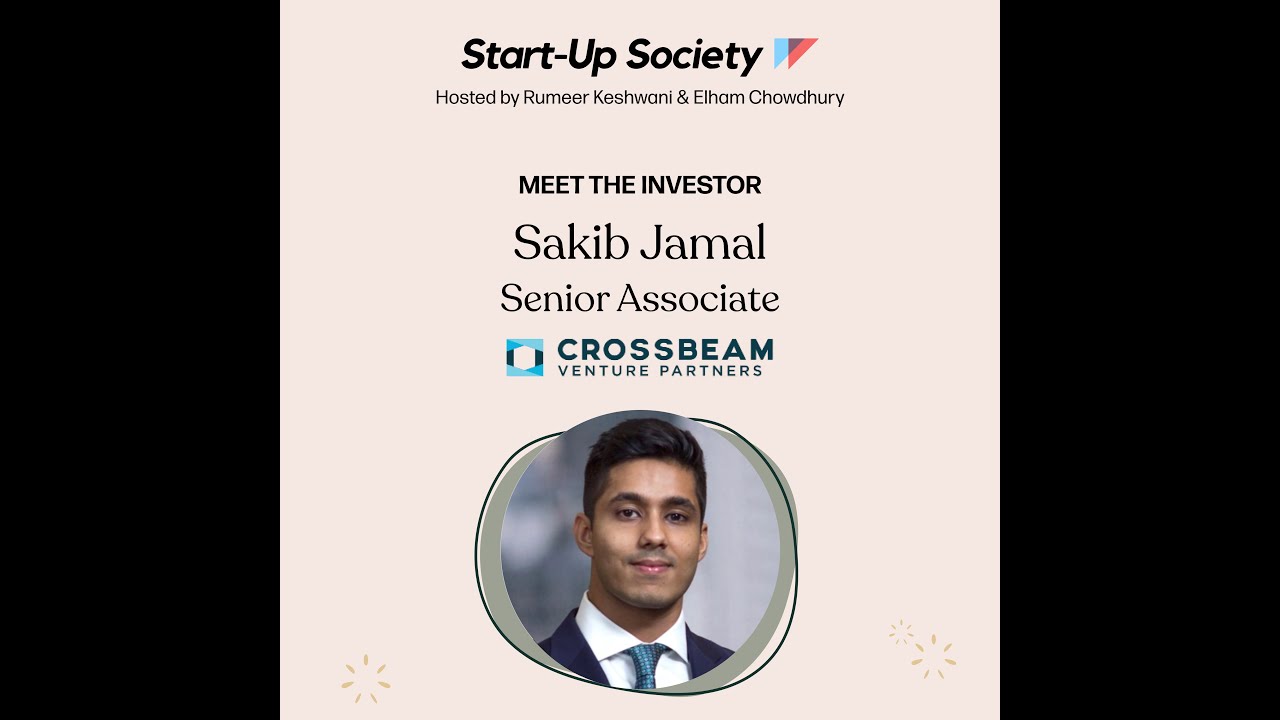
Crossbeam VP Sakib Jamal: From Creator Economy to Enterprise Tech

In this live interview, Grace talks with Sakib Jamal, Vice President at Crossbeam, about his unconventional path from investment banking to venture capital, the creation of a crowdsourced VC handbook, and practical aspects of the VC trade. Sakib explains how early networking with the firm’s founder, Ali, led to his role at Crossbeam, and how he turned his personal notes on navigating venture into a 10‑week, 50‑chapter book that serves both as a learning resource for new investors and a networking catalyst. He details the book’s structure, contributor selection, and the philosophy of using it to build deeper relationships. The conversation then moves to day‑to‑day VC work: sourcing deals through a tight circle of trusted partners, prioritizing information flow in due diligence, and maintaining a disciplined hiring process for associates, including the use of LLMs for filtering. Sakib shares his approach to personal CRM, handling bad deals, and preserving reputation. He contrasts East‑Coast (methodical, valuation‑focused) and West‑Coast (what‑if, product‑centric) investing cultures, and outlines Crossbeam’s generalist strategy versus sector specialization. He offers bold predictions for 2025, emphasizing AI‑driven voice interfaces and new markets unlocked by cheap AI labor. Finally, he discusses his philanthropic content funnel for South Asia, personal influences, favorite books, and habits, providing a holistic view of his expertise, mindset, and operational tactics in venture capital.
Chapters
Hi, Sakib. Welcome to Venture with Grace. We're live.
Awesome. Excited to be here.
Awesome. So to start the show, I want to get like— I want the audience to get to know you a little bit more. So you started your career, um, in investment banking, and then you slept on the co-founder of your firm's couch, and then one year later, you guys are working together. Maybe why don't we start with like your journey on, you know, self- Like discovery journey into venture?
Yeah, yeah. Um, it's funny because I, you know, a lot of people ask me like, oh, well, it's like, how do— how was the interview process, etc.? And, and I like to joke that I never had a formal interview process. I think I was— I've been interviewing for years. It was like 4 or 5 years. So I actually met, um, the founder of the firm, Ali, my freshman year in college. Um, he came back, he came back as a guest speaker, and, you know, he was He was, you know, in his 20s and he already had a firm then. He was very, very charismatic, very impressive. And so I basically went up to him and was like, hey, like, you know, he was— I just went up to him with random ideas. And, you know, looking back, most of those ideas were pretty bad, if not all. But I think it was just the initiative of me sort of like taking that initiative and going up to him that left a lasting impression on him. And so every year he would come back to campus to like, you know, just do, you know, take a guest as a guest speaker or do classes and whatnot. And, you know, we just, you know, I just made sure that I stayed in touch with them. I, you know, I kind of figured out what was important to him, like whether it's deal flow, whether it's meeting others, and I tried to like sort of add value, right? Mm-hmm. And so when he was starting the firm, he was like, hey, I need someone young and hungry to like come help me build this firm. You know, do you want to come work here? And I was like, yeah, as long as you sponsor my visa, I'm good to go. And so that's sort of how it ended up. happening and how I ended up joining Crossbeam.
For sure. I feel like, and then you started at the beginning, you started writing about enterprise SaaS and then quickly from the comments of Ali and other people. So basically you pivot onto writing about your journey as a young doctor in the industry. How did that transition into the book? Yeah, obviously you're like, you seem like the most connected young VC in New York. So let's talk about like the personal, I guess, networking journey as well.
Yeah, I think there's actually a lesson there and I'll try and sort of articulate it over, but I'll give the high-level lesson first and then sort of go into detail. But I think the quote unquote lesson or takeaway for me is like, Are you able to zig when others are zagging or zag when others are zigging? And so I think I just saw, I think the comment that Ali was making at that time was like, hey, everyone would try and join this industry and would try to have an opinion. They would try and go on Twitter and write about enterprise SaaS, but it's like, are you the best person to write about enterprise SaaS? And I think the advice he gave me at that time was like, do what's genuine to you and do what you know best. And I was like, okay, well, what I feel like I know best is like how to navigate, you know, this job. It's pretty opaque, right? There's like, you know, there's Venture Deals and a couple of other books, but there's really no guide or resource. And so I started blogging about what it's like to be a young or newcomer to the industry. And so I would like share about like what it felt like after you had to pass on a deal after doing a lot of work, or like how do you gracefully do that? How do you keep adding value? How do you build a reputation, et cetera? And then over time, when we were hiring another associate after me, I was like, oh my God, I wish I could like take all of this, all these lessons that I've learned over time and turn it into a guide for this, like a new employee handbook. Mm-hmm. And I started writing a Notion doc And yeah, and over time I was like, oh my God, why am I like keeping this just for us? What if I could turn this into a book? What if I could ask the smartest people I know in venture to then go and give me all their secrets, right? And I could like, and I knew who was good at what, right? For example, like the market sizing chapters written by my friend Chelsea. And she used to be a consultant. So I know that she's trained on how to think about market sizes and business analysis. So I asked her to sort of do that chapter. And so that's really how that transformed into the book. And the reason that helped a lot is because I had something unique to talk about and give to new people I was meeting. So, you know, in VC, there's a lot of like networking going on. And the reality is like, you say, oh, you're not transactional, blah, blah, blah, blah. But the reality is like, you ultimately want to like source deal flow from each other or, you know, share info on portfolio companies with each other, et cetera, et cetera. And so I was like, well, you know, everyone was kind of doing it one way. What if I could like build a deeper relationship through like, you know, working on this project together where we were having this crowdsourced book, it was for a good cause, all the proceeds were— are going to a nonprofit back home in Bangladesh. And so it was just this unique way that I, it was It was almost a unique hack that I was using to like, you know, go meet people. And it was genuine. It was very genuine in the sense that it's a project I care about. There were lessons that I cared about. And they were— it was very, very personal to me. And it was something that I myself kind of knew the problem about. Mm-hmm. And yeah, that's sort of how it ended up being. And like, you know, like you said, it allowed me to meet people that I otherwise, you know, I could have met but otherwise would not have as deep a relationship with, or perhaps sometimes, you know, not even be able to meet. But now I had this excuse or reason to meet them and actually build a deeper relationship with.
For sure. I want to quickly say hi to the audience. Hi, Aditya. So I wonder, so like when it comes to like actually organizing the book, like, I mean, as someone who have like wrote books as well as like be a part of like other people's books. Um, I wonder like, how do you think about like, um, organizing like who does what? And like, do you create the, the official structure first, like memo writing, follow-ons, um, all these like different chapters, and then you find the best in the, um, in your network? Or do you go about it as, um, you know, okay, here's like 5 people I know, they're good with blah blah blah, and— Yeah. of like branch out beyond that though?
Yeah, I think, I think it was a bit of both. I wanted the book to have a very clear structure. So even if you open it today, you'll see there's like 10 weeks, which are basically 10 chapters, and each week had 5 subchapters and 5, and they're all posed in question as questions. How do you, how do you, you know, do market sizing? How do you, what does the diligence process look like? All the way. And it's a, it's almost like a progressive thing. And the last chapter in the book is like, if you find out VC is not for you, how do you look Where I'm at now. New roles, right? And what does that process look like? And so it was about someone who worked at Bessemer, who's like, you know, a very sought-after, you know, tier 1, so to speak, firm, and then went to— went the operating route. So I asked, you know, that person to share his experience. And so a lot of it was starting off with, okay, here are the core things that I want the book to have and who are the right people that I know. But over time, I realized if I really wanted to maintain quality, I can't just rely on my— then I would have, like, gaps. I would almost always have gaps from within my network. But I was like, can I ask other folks to also refer me to people they think are good for this? So that's how I tried to, like, ensure that I could get to the best people. And again, remember going back to the previous lesson is like, you know, this person, if this person was, you know, senior or good at this thing or hard to reach or whatever, I now had this excuse or this referral from someone else to go meet that person and build a deeper relationship with, right? So that's how I kind of did it. Yeah, it definitely had an initial sort of constraint of my personal network, but I tried to like branch out and make sure that, you know, order to maintain quality that we were finding like the best people for that particular chapter.
For sure. I feel like that's— I love that. I love what you said about like, you know, you can technically having an excuse to like branch out to the expert in XYZ category. I wonder, so let's say if someone like, what would be your suggestion on like how to use a book if like a person that's like just graduated? Would you say like they should go for like a 10-week process to self-advocate before they go after something? Or how do you think about the positioning of like leveraging your book to having a success in venture?
Yeah, I think, I think different people get, uh, I, I think almost everything in life is you get what you put into it, right? And I think different people utilize it differently. Some people have utilized it in a more tactical way, i.e., they would find the people, they'd find them and see what they talked about and use that to like, you know, as an excuse to reach out to people and say, hey, you talked about this, can we like expand more? And they use that as a networking strategy. Some people used it more as like, hey, I'm gonna learn the basics from here, etc. But the way it was originally intended to be used is that, hey, you already have a job, you're starting a new job or you're through the interview process, once you join or once you're in the job, you read a chapter a night. And the idea is that you have 50 chapters, you get to learn from 50 of the smartest people in venture capital who's been in your shoes. And after 50 days, you know, you now have, you now have at least part of the collective wisdom of 50 very, very accomplished people. And so, you know, that's sort of the suggested way or what it was intended to do. But, you know, one of the cool parts have been like, I've gotten feedback or people have mentioned how they've found different ways to use it, right? Part of it was like I said, that networking thing. Some people were like, I was using for interview prep because I wanted to come across as someone who was knowledgeable. Some people were like, oh, like I was recruiting at a particular firm and so I read that chapter from that person and like, you know, was able to sort of understand that person's thinking better or discover certain firms, et cetera. And so It's, it's really been, it's really been a, um, a wide variety of, of, um, I would say strategies that people, people have used it for.
For sure. Um, quickly saying hi to the audience. Hi, Baharkov. We're gonna go through your question at like in the middle or at the end of the interview. So I wanna like learn more about like, so, um, what's your, like, let's say like there's 2 scenarios, right? Like, so some of the listeners are like maybe building their own firm. Let's say they're like emerging managers and then they're like hiring their first like internal intern or like associate or something, how do they pull from the best talent in the industry? And since like, I feel like a lot of people are saying, oh, you need to get like a warm referral, or like you need to post like tons of content on like Meetup or something. But what would you say is like the best practices on like, from like a finding talent perspective, on hunting down like what type of talent?
Yeah, yeah, that's a really good question. I think I would say 2 things. Number one, I think the market is very much in favor. It's a buyer's market per se on when it comes to hiring. I think people can get, you know, the cream of the crop and because there's just not enough roles for the number of people who are actually interested in the industry. I would say a couple of things. Number one is, you know, I think it's more of a filtering problem. I think you'll get a lot of volume of applicants. Like I know, for example, like my friend Yoni at Flow Ventures, he posted like, you know, an associate role and I heard like, got like 1,000 apps within like a couple of hours or whatever, right? So I think people are going to apply, and I think the question then becomes, how do you filter? And I think, look, at the end of the day, our job as venture capitalists is to find outliers. And, you know, yes, you can use certain sort of signals like which school they went to, previous job experience, etc. But I think if your job is to find outliers, you often have to find outlier people or people who have done outlier-ish things. You know, it can be, it can be anything. It's— some people do it by content, uh, and media followings. Uh, let's take you as an example. I don't think you would need that because you already have like the following, etc. So perhaps you are looking for someone who's, who's really good at diligence, or someone who's like, so, you know, maybe someone who's really good at, uh, business analysis. So maybe you try and find someone with like equity research background, or or you find someone who's won, I don't know, a CFA challenge competition or whatever, which shows that this person knows how to model, this person knows how to read businesses, this person knows how to invest really. And so, you know, I would look for sort of some of those tips. And in the past, you know, you would have to manually go through the LinkedIns or whatever, but now you have LLMs. Like, you know, if you can, you can probably like, you know, put them on Claude or ChatGPT, et cetera, and then try and, filter through some of those things and go from there. And then, you know, that's like the initial filter. And then at the end of it is also like once you talk to people, you know, it's the small things, right? Like how quickly are they replying? How much intensity are they displaying? Or how— what is— do they have a sense of urgency, etc.? Because at the end of the day, this person is going to represent your brand as a firm. And it's like, okay, how You know, what are the— I think it's very— you by now kind of should know what you— what brand— your brand represents, and then seeing if this person can like represent that brand and some more, or even include more dimensions to that brand. So those are like some of the things that I would say from a high-level or strategic perspective. In terms of technical stuff, you know, the the easy, the sort of easy ways to go through like venture capital clubs at school or even ask founders, right? Like, who are the, who are some of the best like young VCs that you've met? And like sort of reach out and like have, do proactive recruiting that way. I think that it's, this is a job that a lot of people wanna do and it's a job that, you know, a lot of people can do 'cause, you know, it's not hard and from a daily perspective, but it's really hard to be great at. And so you probably wanna like find people who are showing early signs of greatness, and whether it's referrals, whether it's reputation, etc., and you want to like borrow that reputation over time as a signal.
For sure. I wonder, so like in terms of the shocking things that you found about like chatting with the people from the book, since I feel like the people from your book are like very relevant since they're like either like they're like they have some experience in their career, but they're still fairly young.
Yeah.
And I wonder, like, what do you think it's like shocking for you that to compare? Like, let's say, I don't know if you have studied other like past— like, I'm sure you have studied other like, you know, the Medalisters or like the, um, uh, Fred Wilson of the worlds. Like, so like compared to the last generation of venture, like, what do you feel like are the Gen Z, uh, VC ecosystem, especially in the East Coast that kind of like represent versus like the old—
Yeah, the OGs. Yeah, I think, yeah, look, I think venture as an industry has changed quite a bit. I think the founder makeup has changed more and more. You know, younger people are doing, are invested, are sort of starting new companies, and younger people are also investing. And so there are certain areas that I think younger people are have an advantage in. So like, you know, for consumer, like, you know, I don't consider myself old by any means, but I graduated in 2019, which is 6 years ago, almost 6 and a half, 5 and a half years ago.
Wow.
And like, you know, I probably don't know a lot about like the latest consumer social hypes, right? Like, and I try and notice small things and small behaviors. Like, for example, like if you're an avid Instagram user, You know, a couple years ago everyone would post posts. And then if you look at the younger Gen Z people, no one posts anymore. The grid is empty, but then they only post stories, for example. Mm-hmm. And so there's like certain shifts that happening. It's like, okay, does that tell you something about, you know, user behavior? Does that tell you something about, you know, new apps people are using, et cetera? And so I think for that, it's all, in that sense, it's almost gonna be a young person's game at all times. I think in terms of like the biggest difference is like, I think just the wisdom, right? Like you just see a lot, you just see a lot more. And, you know, although pattern matching can be dangerous and everyone talks about like, oh, if you pattern match too much, you miss the outlier. I think it's useful in most cases, right? Like it's very, very useful to see a certain situation, see a board dynamic, for example, and be able to say, oh, I've seen that movie before. Or I've seen, I kind of know how this plays out, or I kind of understand, you know, you know, or you make a mistake in the past, that, that was the cause of the mistake, and you can sort of bring that up and have a conversation about, about that to avoid that mistake or avoid that blind spot, right? And I think that's like the big thing that I see. I think the younger people are obviously more wide-eyed and more aggressive, and, and as you get older, you, you become a bit more conservative in many cases. But I think the best The, the best people are able to— are very self-aware, and they understand what their, what their sort of patterns are and try and like correct, but at the same time leaning— lean into their strengths as well.
I wonder, so maybe we could use like your firm and then like your personal experience, uh, as an investor as example. Obviously, like, you can pick whichever company. Maybe we could talk about like From sourcing, diligencing to winning and exiting, how do you think about it? Since like, yeah, the author of your book, you already learned from the best of the best. Like, what's your like, um, application in like on the day-to-day life kind of for the 15 companies that you have invested in?
Yeah, I would, I would say the big thing, the overarching theme is you just have to do the basics well. And I think if, as you stay in this industry longer and longer, you have more portfolio companies to manage, you have more founders you're talking to, your inbox starts to get overwhelming, et cetera. And it gets harder and harder to just do the basics, right? You start taking shortcuts, et cetera. And I think the big part of this job then, you know, you're initially, you're like wide-eyed, you wanna like talk to everyone. Over time you start like, having to manage your time, right? And you have to prioritize really well. And so the big theme I would say is like really doing the basics right, like basics of prioritization, basics of getting back to people quickly, basics of like, you know, having good taste or creating some sort of, I would say, intuition as to what's a venture-scale business, what's not, et cetera. And so I would say in terms of, you know, having said the basic stuff, first, in terms of sourcing, it's, you know, everyone has their own different ways, right? And I think that's like the hardest. I personally think that's probably the most important thing ever, right? In the sense for a venture capitalist, because if you don't see the business to begin with, Hari, almost everything else, like the due diligence and the winning doesn't matter. And so people have different ways of doing it. I think some people the reality is like, again, you prioritize, you know, everyone talks a lot about prioritizing found— you know, how do you find the best founders, et cetera? But I think what a lot of people don't talk a lot about, and which is something I tried to articulate in the book, or like have people who have worked on those chapters articulate, is like, there's diff— people don't talk enough about prioritizing different channels. Mm-hmm. It turns out that you end up choosing 3 or 4 other investors that you sort of latch onto, and, you know, they see most of your deals, you get to see some of, you know, their best stuff and you like, you know, collaborate that way. There are certain channels that work really well. What I mean, some people do like LinkedIn outreach really, really well. And, you know, they find that to be like their source of alpha or et cetera. They find, they know what they like really well and they filter for it and they reach out. But I think the way I personally do my sort of quote unquote sourcing is really like I choose, you know, in my head, 5 to 8 people that I really think extremely highly of because either I trust their intuition or our styles go really well. And I, you know, build a very, you know, closer than usual relationship with them. And I try to like add as much value as I can. It's just like any other friendship, right? Like what are the characteristics of a a good friendship and you bring that over to a professional relationship. And that's how I personally do my sourcing. But, you know, there are people who, I know VCs who are like very anti-networking. They're like, I don't wanna talk to a single one. And all I'll do is go through databases, go, you know, I'll build my own like proprietary data scraping. Mm-hmm. Or I'll do like, you know, I'll get notifications from different people's websites. I'll go through PitchBook, I'll sit on PitchBook and I will only do cold outreach or find a warm intro from someone else or someone from my firm, I'll just be the person who flags stuff and they take a very data-centric approach. But the OG way is obviously the networking way and that's why you'll see content, et cetera. A lot of time content is just to be top of mind, right? A lot of people are like, it's very hard in my view to come up with original, unique, high-quality things to say every week after week. And even if you get some of the best content creators, Thomas Dangous or Fred Wilson, et cetera, of the world, they vary, right? There's one post that absolutely crushes it because it's so interesting. But yeah, I think sourcing is, in my view, A, just to reiterate, the most important thing because I think that drives— if you're sourcing really good things, even if you throw darts, you end up outperforming. Yeah, you know, people have very different, different strategies, and that's why you have different firms that exist, because if everyone was, you know, playing the same game, it would have been, um, it would be very hard. So that's on the sourcing part. Um, yeah, and then on the D— on the DD stuff, I actually, I actually wrote one of the chapters on, on the book about, um, you know, due diligence, and the way I like to think about Didi is like, you know, just, it's not very, I would say, proprietary or personal to me. It's like, you know, I would credit Ali and like other investors. It's very much like, you know, what are the things you have to believe? And I think one of the things I learned from Michael Ovitz, who's one of the partners here at the firm, is like, you know, information is power, right? Like, if you just have to find better information, and often, You know, if again, going back to those people that you're close with, like what are information flows that you can find? A great example would be, let's say some other, someone else is a pre-seed investor and you're a seed investor. Can they flag companies early to you? Can they, will they give you information when you're do— do— diligencing a company that other investors diligencing that company will not get access to, right? Or often they tell you, even if it's the same info that you get to hear about it first, there's a speed advantage, right? So that's how I like to think about my DD, which is like, what are the things you have to believe? And then once you've figured that out, what are the information? Because how are you gonna find that information? And then after that, I think the, what makes, quote unquote, what makes a good business is pretty commoditized over time, right? If you keep looking at enough businesses, One thing that, you know, I'm not the smartest person on the planet, but one thing I try to do is, you know, outwork people when it comes to that kind of stuff. So for example, I, on the weekends, I read something called MBI Deep Dives. If you just Google that, MBI Deep Dives, he posts like one deep dive a month on various different companies. And he's like a great business analyst or like Scuttlebutt. These are all people who are analyzing public stocks and they teach you how they're looking at these companies at a very, very deep level. And like, for example, that I think gives me intuition as to like what makes a good business, how people other— how, you know, it's almost like learning by, by like just watching. And like, I try and do that. And I think that gives me a very good foundation as to understanding what, what makes a good business, what doesn't. And once you understand that, it's just a matter of reverse engineering to see if that company sort of fits some of those bills or If they don't, or they don't today, but they can at scale. And, you know, that's the sort of, you know, what you want is what are the things that you have to believe? And then you have to say, okay, this can hopefully happen to, oh wow, this will probably happen because of the information that I've sort of been able to gather along the way.
I want to double-click on like, there's 2 things I use that— oh, before that, hi Michael. Hi Tamim. Obviously everyone thinks you're awesome. So I want to learn more about like, so I think one thing you mentioned about like finding, let's say, 5 to 8 people and then kind of like leaning towards them, like in terms of sourcing. How do you make sure that people share the best deal with you? Just because I feel like the challenge of that, it's like, okay, you know, obviously you would have your own like unique advantages and like strengths. Yeah. But on the other hand, it's like, It's kind of like whenever there's like a depending on something else is hard.
Yeah, no, Grace, that keeps me up and that keeps me up at night all the time. And I think there's obviously you can't control others, but there's certain things you can do to increase the probability of them quote unquote sending their best thing to you. Number one is you send your best things to them and you make sure that they know and you make sure that you're adding value. And it's not just VCs, right? These could be angels. It could, you know, Michael just joined the live, you know, he's a co-founder of an accounting startup, right? And so like, you know, sending him clients or whatever it is, right? Like figuring out what they really care about and making sure you do that really well. And so eventually, you know, human beings are like reciprocal creatures. And so they end up sending you something as well. So that's That's number one. Number 2 is you could just build a track record and a reputation. Like, if founders keep saying like, hey, this person is, you know, will, you know, pick up the call at 2 AM or give me or have given me XYZ number of customer referrals or have helped me hire talent or whatever it is, you know, those, that compounds over time. That take— that's the longer route, but that's also the stronger route if you get like a ton of strong references. Yeah, I mean, look, I think that's why it's so important to talk more about and be thoughtful about what your channels are, whether it's people, data, et cetera, because you want to make sure— and that's the pros and cons, right? The pro of the data channel is you're not reliant on other people. Right. But the con is not everything is showing up in the data. especially if you're trying to be a very, very early-stage investor, right? Mm-hmm. And so, you know, at the end of the day, it's just like, you know, you have to be a good person. And the reality is that your brand really matters. And, you know, everyone has the firm's brand and the personal brands, et cetera. And, you know, once you— the reality is that the best founders go after tier 1 firms because they, you know, they give them, something very valuable, which is signal. So it's signal for future capital markets or future rounds, new hires, customer validation, et cetera. So it's like, how do you create that brand, you know, for yourself? And some of it could be, oh, you know, some of it is like really impressing growth investors. So I try and I work really hard to ensure that I'm useful to growth investors, or I'm sending some of my analysis or work I do unsolicited to some of those people. So they're like, okay, this person's smart, this person picks well. Every time they send me a company, that's high signal. So I try not to, like, I personally, for example, don't ever send lists out to people of lists of like companies. I'll send them, I tell them, hey, I'll send you one deal every quarter or one deal every 6 months, but I bet you that one deal that I send you is curated for like the sectors you focus on or what you like. It's high signal and it's something that you'll actually spend time on because the worst thing you can do in this industry is remain busy, but like, and like burn yourself out and not actually look at high stuff that's high quality enough. So yeah, you asked a really, really good question and I think about it all the time. It's just like, and by the way, some of that is also like it rotates over time. Like your 6 to 8 people are not the same people at all times, right? But ideally they're They're the same people for a long time because you build deeper and deeper relationships and more confidence in each other to do that over time. And that's why this whole co-invest, who do you co-invest with, matters a lot over time.
I love that. And I feel like it definitely will rotate since I feel like different sectors are being on the roadmap every year. So I wonder, so you built a strong content funnel. in India, so through your own like media properties. Um, why don't we talk about like what's your overall like outlook on like investing globally and what's your kind of like—
Yeah, I, I, so, so I, I would say most of it is, is in Bangladesh where I'm from, uh, and some of it also goes to India and Pakistan, like that South Asian belt. But what I would say is You know, that was more of a pandemic side project. I, you know, I'm very passionate about, you know, giving back to that part of the world because, you know, I grew— I was, you know, born and raised there. I grew up there. So it's a very important part of the mission for me, you know, of my personal mission. But, you know, if you think about it, like, it all comes back to that ultimate goal of, like, you know, seeing the best deals, winning them and, you know, doing that consistently over and over again. So I'm often like switching the way I do things. So for example, the book, you know, I generated $15,000 or more, I haven't checked, for, you know, the school that all the proceeds are going to. Like that's not insignificant money if I just did it as a for-profit project.
Mm-hmm.
But then if I did it as a for-profit project, it probably would've been harder to get the buy-in that I got from so many collaborators, whether it's to write the book, the front the front page foreword, the back cover quotes, etc., right? Mm-hmm. And so that was like a very deliberate, thoughtful part, which is like, okay, you know, for me, I know that if I had made the money, I will end up, you know, donating to this cause. Can I just like cut myself out as the middleman in that whole process? But then I ended up indirectly building, you know, some of these relationships, etc. So I think in terms of content, again, I try to focus on quality over quantity. I blog when I really want to or when I really feel like I have something insightful to say, or I will write down if I have a lesson and I would often aggregate them. I think the last blog I wrote was how to prove your business is valuable before you generate revenue. And so it was like a consortium of lessons from the past few years in terms of what actually drives value, or what are leading indicators of value, especially when you don't have like an easy-to-read metric like revenue to jump off of, right? So that I felt like I had a unique— I had something unique to say there. I had something original to say there. I had something personal— something, insights that I was pulling from personal experiences to say. And that's when I like decided to write that blog and publish it, etc., right? And so yeah, that's just my personal style. And then some people are very, very good at like being very prolific and they consistently write on Twitter, etc. But I think for me, I have struggled with dealing with the noise. And so I was like, I'm really bad at— I feel like I'm like, I get very bad at filtering when there's too much noise. And so I'm like, okay, I will cut the sources of the noise, which is gaining a massive following, et cetera. And then try and really focus on the whole 1,000 true fans strategy, which is sometimes I'll write this blog and I'll send the draft to 5 different people. And that's my way of deepening my relationship with them. It's like, oh, okay, you get to see it first. Here's, what do you think? Are there things you can add? Are there things you disagree with, et cetera? And again, it's deeper than just hopping on a Zoom call like, what are the deals you saw last month? Oh, okay. Oh, what are the— here are my deals. They're all BS. It's just not genuine and it's not useful. It's not additive in any way. And so I think Finding ways to be genuine and adding, sort of pursuing your curiosity will often lead to that ultimate end goal, right? Keeping that in mind.
Do you have, like, I'm pretty sure you caught, like, someone from the book covered in the book, but like, how do you think about your personal CRM? And how do you think about, like, let's say if a deal, it's like, bad, like assuming you just don't send it to anyone, but like, um, what if people ask you, hey, like I saw you invest in blah blah blah, but technically blah blah blah is doing terribly? I mean, like obviously like everybody have a deal that's amazing and then that's like going,
yeah,
not so amazing. But how do you deal with the fact that like people ask you about something that's like not necessarily like something that you want to talk
Yeah. You asked a bunch of stuff, so I'll make sure I start with the CRM stuff. I'm not the best person to talk about that, so I probably wouldn't want too much. In fact, the best person I know who deals with CRMs is Jesse Bloom, and he's actually the one who wrote the chapter on CRMs in the book. And so I think I will refer you at some point, and you should definitely interview him once. I try and I, you know, for me, I've tried a bunch of different things. I've tried like, you know, just Excel sheets the very basic way. I've tried Airtable. I didn't like it. I thought it was just way too much frills. I've used software like dex.com, but at the end of the day, I just rely on lists and my personal memory, which is probably not the best way to do it because you end up— there's certain fallacies, right? You end up sending your deals to the last person you spoke to, which is not the most systematic or best way to do it. But I think A lot of it comes down to just being organized. And so I now have like my own stack per se that I use, but it's definitely a work in progress. So that's all the CRM stuff. On the deal stuff, especially when you have a bad deal, I think it's very, very important to remember that a deal can be bad today, but it can be good tomorrow. Because founders, especially You know, good founders find ways to pivot, they find ways to constantly upgrade, etc. And that's on the selfish side. On the more like sort of, you know, building a reputation, building, being known as someone who is in it for the right reasons or doing it, you know, in a genuine manner, you always have to remember that bad deals are also like run by founders and founders in my view deserve the utmost amount of respect for being risk-takers in our society. They, you know, they probably could have gotten a job with— for $500K somewhere, but they left that and downsized to a small Brooklyn apartment to then go hack away at something that they have dreams of changing the world for. And in venture capital, we are not like small business investors. We are looking for outliers or people who will change the world, right? And so any venture-scale founder has my respect for taking that. So even, even if the deal is bad in the sense that, okay, crowded market, or, you know, the tech doesn't work super well, or, you know, or they are sort of being delusional about certain things about, about the market, you still have to have the humility that, hey, maybe I don't understand it, or maybe I, you know, I think it's bad for the wrong reasons. Right? And so even if it's a, even if it's a quote unquote bad deal, it— when I see a bad deal, I think it's a bad deal for, for that other person that I'm sending it to, or for me. It could be a bad deal for me, but it could be great for someone else. Um, or it could be great for, for stage-specific reasons, right? It could be like not actionable because it's not, you know, for if a Series A— if I'm like sending a seed or pre-seed company to someone who does primarily Series A, it's like— Mm-hmm. Yeah, maybe that's a bad example because they still wanna see track, but it's the other way around, right? Like if the Series A person is sending a seed person like something at like, I don't know, 70, 80 posts, then it's like, okay, yeah, maybe. But most of the times I'm just gonna, it's just not a qualified deal. It's not thoughtful. It's not done well. So that's what I have to say about bad deals, which is just like, remember the human aspect of it and remember that the way you treat those bad deals often end up like driving some of your reputation elsewhere. But having said that, the one sort of thing that I've learned last year, I would say, is I've always been an idealist. So I always wanna say, oh, like, you know, you wanna pass really well and the bad deals, you know, you still wanna like maintain your reputation, et cetera. But the reality is I worked You know, I'm representing my LP's capital. I'm representing some, you know, large endowments, people's retirement projects, teachers' pensions, etc., etc., right? And if that's the case, they're relying on me to ensure, at least in a very small manner, to ensure that they have a safe and sound retirement. They have enough cash to fund their retirement. I cannot be wasting time on something that is for my quote-unquote personal brand But will not, you know, at the expense of chasing another deal that will drive outsized returns. And so it's a very tricky balance. I think a lot of junior people make this mistake because they read all these like blog posts and like all these Twitter bros are out there like, yeah, founders first. And like, you know, you gotta pass really well. You gotta like mean to— yeah, yeah. All of that is very true. You should. I'm not saying be an asshole, but I think you have to be a bit of a ruthless— You have to be disciplined in terms of not spending too much time on that. If you've passed some, you know, you can't get emotionally attached because at the end of the day, your job is to return 5 to 10x of your LP's capital for that fund, right? And you need to make sure that almost everything you're doing gets to that. And like, you know, it has to be, and you have to be very honest and truthful to yourself about the priority of of your time. And like, you know, even doing this interview, right? Does it help me? Does it help with distribution? Does it help with branding? Does it help, you know, build our— yours and my relationship stronger, right? And will that ultimately get to help me, you know, get to that 5 to 10x from my LPs? Like, that's very much in the back of my mind. And I think sometimes— All the, like, being, being, like, doing the right, you know, what is conventional wisdom does not often go back to that goal. And it's very easy to forget that goal on a day-to-day basis. So I try to be disciplined and remind myself of that at all times.
I, like, I love that. And then, okay, so I want to be mindful of the time. Maybe we'll keep it—
Yeah, I can go for, like, another 10 minutes or so.
Okay, perfect. So one question is, like, okay, in terms of, like, Reaching out to people, um, who is like influential in India. So like, I, um, worked in venture in China, so I feel like the climate's like very different. It's like, um, people don't transparently put stuff on their LinkedIn equivalent. Um, everything is through like WeChat as a funnel, no matter if it's like a work person or everything else. Um, so it's like really hard to like even reach out to someone publicly. like a public figure just because like you don't even know like where to find them or like even you can't really sit through the noise of like billions of people. Um, how do you kind of like start the media channel in India to like reach out to these like influential people?
Yeah, um, you know, I, I think, I think it's, it's like just like anything. It's a very good question because I think it goes back to broader sales, which is like You kind of have to match a product to a problem. And so what I mean by that is like, let's say if I'm a podcast host, my product is my audience and like, you know, distribution, etc. And so if I have a big large following, um, you know, that the larger the following I have or larger the following within a particular community I have, the more interesting my product is. And so what I tried to do was basically, I just tried to qualify people. I tried to look for people who I knew cared about that distribution. Or like, for example, my audience was mostly young students in South Asia. So India, Pakistan, Bangladesh, right? And mostly actually Bangladeshi because that's where I'm from and that's how the snowball started and my initial audience is from. So I tried to figure out, okay, who are the people who would care about talking to this audience? Either because they want to, you know, give back or either because they have commercial interests, etc. So I'd reach out to these people and say, hey, here's who we are, here's what I want to do, you know, I, you know, I like having— and here's examples of past interviews, etc. Would you be interested? And I always tailored to what they cared about. So for example, I reached out to, you know, an influencer and I knew, I knew that they didn't have, you know, maybe they were big in Pakistan, but they didn't have a big following in India, for example. So it's like, okay, you now get access to a new audience. I reached out to the founder of Zerodha, which is like the youngest billionaire of India. I knew that there was not much I could offer him, but I was like, hey, like, you know, a lot of people will really learn from you. And here's like the number of entrepreneurs I have here. And like, you know, by the way, I noticed that you angel invest sometimes and, you know, you A lot of my audience are founders and one day you could, blah, blah, blah, blah, blah. And so it's really just a matching game in my view. And if you can be very thoughtful about matching what they need or what their intent, what their goals are to your product or your set of products, set of tools, then you can be very, very successful in my view. And you'd be surprised how successful you can be.
I think that's really interesting to like kind of like value match, to match like someone's go with like whatever you can offer. And I wonder like what's the differences in your opinion? Obviously like we met in SF, but like, you know, you're an East Coast person. I feel like I identify you as an East Coast person. Yeah. How do you think about The culture, investing culture differentiated from East Coast to West Coast?
Yeah, it's, uh, yeah, I, I think about that quite a bit, and I'm trying to spend more and more time in West Coast, um, because I think it's very different, and I think it'll make me a better, you know, um, it will increase the dimensions that I, that I can like sort of think about my investing in. But I'm really glad I started my investing career in on the East Coast because I think the way I think about it is the East Coast guys are like the Excel guys, right? Or guys and gals.
Excel
guys? They're the ones, right? What, you know, what do you have to believe for something to get there, right? And they are very, you know, very linear, you know, they probably have lower loss rates, etc. I think the West Coast, they're like, okay, what if, right? They ask the what-if questions a lot more and they really take the optimistic route. And often that's reflected in valuations because like they'll like pay up often, right? On the West Coast, in my view at least. But I think there's a right and wrong— there's no right and wrong way of doing it in my view, because if your goal is to find outliers, it doesn't really matter if you end up doing a seed deal at $25 versus $22 or $18 versus $22, if it's like, if that means that you end up winning that deal. And that's probably some of the reasons why you ended up, you end up like seeing people paying absurd prices, but then, you know, it, it still ends up being, again, going— I, what I said earlier, your job is to return 5 to 10x of your, uh, of your LP's capital. Okay, can, if you pay up that much, does this have a high prob or a higher than average property probability of you, uh, returning that capital, right? So That's true. At the same time, fundamental physics, lower valuation, higher returns, right? So that's also very true. And so how do you balance those 2 things? But I would say those are the 2 big, the main differences I see, whereas like the East Coast guys are like very methodical, very like, hey, how does this work, et cetera. Whereas on the West Coast, they'll do some of that, but I think a lot more like product-focused, a lot more technology-based, a lot more like IP-focused, etc., which is awesome. And I think that's, you know, one of the things that I want to— I want to— that's a muscle I want to flex over time. And that's why I'm spending more and more time in SF. Like, I'm probably going to be in SF again in February. I, you know, spend a month here and a month here, a month there, kind of like that. I'm pretty bicoastal right now.
Love that. Um, so I wonder, okay, so What's your, since one of the audience asked, the bold predictions on the state of venture in 2025?
I think, oh man, there's so many. I'm thinking a lot about how obviously everyone else, how AI changes the game, etc.
Oh, I'm so glad you mentioned AI. I was like—
No, I think I'm not one of those people who are like, This is my hot take. I think anyone who says AI is overhyped is trying to be contrarian for the sake of being contrarian. I think they don't actually believe that. I think it's pretty abundantly clear to me that AI is— this is a supercycle and that we are going to see new platforms, new ways, a ton of value being created for sure. That's almost like I'm— that's a hill I'm willing to die on. But I think a lot about what are the second-order effects? So are there certain verticals where a software company didn't make a lot of sense, but now it does? Maybe because it's very labor-intensive and software didn't really help with much. Well, if AI can replace or enhance labor, is there a market that you can crack open? I think a lot about, okay, what used to be too small or economically unfeasible, like small debt collection, right? Mm-hmm. If you can't pay someone $15 an hour to collect a $100 loan because we know that 1 out of 500 people will actually pay back that loan, right? But if you are now using voice AI and paying 20 cents, does that really change something. So in 2025, I think we'll see a lot of AI apps that are focusing on new markets being cracked open because of this collapsing cost structure on certain labor functions. And I think a lot about interfaces as well. I think 2020, my bold prediction of 2025 is I think we're going to see a lot of voice inputs. I think people are going to type less and less. I think a lot of people are just going to talk to your Apple Watch, to your computer. I just downloaded this thing called Aqua, I think it's called. Let me see. Yeah, I think it's called Aqua. But, you know, it's like a voice interface thing where you can type your emails, etc., as you like read them out loud. Because I notice I often like will like read it out loud, be like, hi Grace, what time, blah, blah, blah, as I'm typing it. And I'm like, oh, if I'm saying it, I should I don't need to type it. So I think that's going to be a big change in 2025. That's my bold prediction. I think AI is going to be cheap enough and good enough to understand voice transcription in a really good real-time manner that's going to allow you to have a whole new interface in general.
I wonder, so for Crossbeam, I feel like you guys invest in some really interesting industry From you know the YouTuber world to like you know Amazon shopping really things. Look, I feel like you guys invest in like a broad category of things that's like leaning towards like the Gen Z economy. What are something that you feel like are interesting that for example people from the West Coast slash Silicon Valley probably would have like missed?
Mm-hmm. I think we take a lot of pride in being generalists because I think it's, A, it's very hard to do, but not just because it's hard, but I think if you do being, if you're a generalist in a good, and you do that the right way, you can actually outperform. And so, you know, we think about that quite a bit at the firm. The one other thing that I was gonna say is like, I think VC is an opportunistic business in itself. And so if you're not generalist, if you're like completely focused on one aspect, if you kind of miss the wrong sector, if that sector's out of vogue, you like kind of sit there and you're in like in a tough position. I think there's obviously exceptions to the rule. I can think of Ribbit who just did fintech and QED who just did fintech, But I would also argue like fintech is so broad and they can, they often squint their eyes on fintech and like they also do general stuff as well. But I think most, most, you know, top talent ends up, you know, leaning towards and wanting to work for or work in a way that allows them to be generalists and allows them to like follow their curiosity. And it gets very hard if you like pigeonhole yourself in into sectors. At the same time, I think sector expertise is hugely valuable. Founders value that often, but it's hard. I think, for example, you just said, oh, we spend a lot of time on platform economies and Gen Z is like, yeah, we did that a lot in 2019, 2020 when platform economies were being a thing and Amazon rollups came up and et cetera, et cetera. Different companies were being built on top of YouTube. Shopify apps were getting venture-scale multiples, right? And so we made some right calls there and then some calls we didn't, that wasn't super right. But then what I'll say, like we've made a few calls that have really, I would say it has outperformed. And so again, it's just sort of the 80/20 You know, the power law thing in action, which is you, you just have to, like, I think you need to have more, you need to have a thesis that's directionally correct and you need to make sure you end up finding the, finding the right outliers within, within those theses. And I feel like I'm giving a lot of caveats, but the other caveat is you can also end up investing in, you know, good thesis, bad companies. And so you have to, you have to be very, very careful as to not getting married to your thesis too, too closely, because then your thesis ends up acting against you. All of it comes back again, repeating for the umpteenth time, which is your job, which is, hey, you have to return 5 to 10x for your LPs. So if, if the thesis is helpful, if it's no longer helpful, you gotta ditch it. You just got— you can't be emotionally attached to it.
Totally. Okay, so I wanna end with a Wemef Farhan. What's your favorite book? Besides your book, of course. Like, everyone should definitely—
It's nowhere near my favorite. I love Amp It Up by Frank Slootman from a work perspective. From a personal reads perspective, I love One Breath Becomes Air by Paul Kalanithi. Those are my favorite books.
Who would you invite to your dinner party?
Oh, so hard. So hard. There's just too many people, but probably Josh Kushner.
Who made the biggest impact in your career?
I have to say Ali. Ali, my founding GP.
What's one piece of advice for your younger self?
Every action you take ends up becoming your reputation. Ends up contributing towards your reputation.
Wow, that's stressful. Uh, where can we— that's true, technically. Um, where can we find you outside work?
Um, playing cricket or at the gym.
Amazing. Well, I feel like they're the same thing. It's kind of like workout in general.
Yeah, yeah, trying to be active. Yeah.
Amazing. Thank you so much, um, Sakib, for coming on the show, and thank you so much to the audience for joining. They asked great question. Thank you. Yeah, let me quickly end the stream.
More from Sakib

How to become a 99th percentile VC | Crossbeam Venture Partners VP, Sakib Jamal