Meet the Investor #4 - Sakib Jamal, Crossbeam Venture Partners
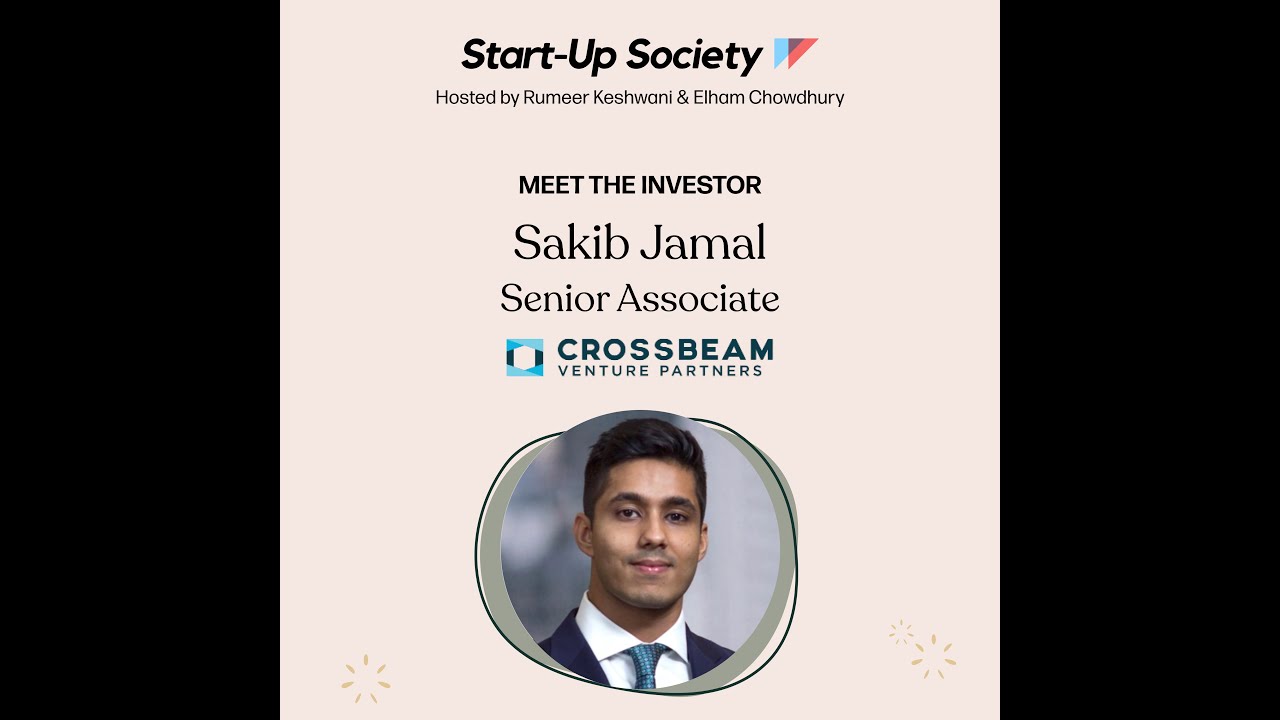
In this episode of the Meet the Investor podcast, senior associate Sakib Jamal (employee #1) walks co‑hosts Elham Chowdhury and Ramir Kash through his unconventional path into venture capital and his role shaping Crossbeam Venture Partners. He explains how Crossbeam, a general‑purpose fund with a credit‑focused affiliate (CoVenture), invests in early‑stage internet‑economy businesses, structured‑credit deals, roll‑ups, B2B SaaS, and contrarian narrative‑violation themes. Sakib details the fund’s unique deal structures—asset‑backed lending, high‑LTV roll‑ups, and software‑like credit businesses—and how they differentiate themselves by treating founders as customers, offering 24/7 operational support, PR, daycare, therapy, and other founder services. He shares the firm’s thematic scouting process, citing examples such as DTC brand revival, alternative‑income platforms, and legacy businesses unlocked by remote work. The conversation also covers Sakib’s side projects: The Capsule, a South‑Asian‑focused newsletter curating news, culture, and learning resources, and a collaborative book for junior investors. Finally, Sakib reflects on Bangladesh’s massive, resilient consumer market, the challenges of liquidity and exit pathways in South Asia, and his personal connection to the country, while noting no immediate plans to relocate.
Chapters
Hello and welcome to the fourth episode of the Meet the Investor podcast. This is Elham Chowdhury, and I am the co-host of this feature along with Ramir Kash. Today we are speaking with Sakib Jamal, a senior associate and employee number 1 at Crossbeam Venture Partners. Crossbeam Venture Partners invests in early-stage startups that operate in new internet economies, financial services, and novel asset classes, and they are currently on their second fund.
If you wanted to start off by, you know, walking us through your career and how you ended up in your current role.
Yeah, so I mean, it's not the longest career on the planet. It's a relatively short one, but I've been, you know, very lucky to have been able to like sort of punch above my weight in my role because of the trust that my GPs had early on. So I was the first employee here at Crossbeam. When I had joined, we were just about to raise our first fund, and now, you know, we are, you know, we have a bunch of We are, we are at our fund 2 on our core fund, and then we have a bunch of other vehicles. We have a separate fund just to invest in Amazon aggregators, for example, and, and a bunch of other SCVs where, where we do a couple of other opportunistic investments as well. So it's, it's been great, you know, it's, it's almost like being, being at, being at a startup itself, right? You know, you kind of get that operating experience even at a VC fund. You, you start thinking about, you know, what is the product that we want to sell, right, to founders? And how do you think, how do you position, how do you position the fund? What should the branding be? How do you think about reporting? Like, what makes for good LP reporting? What doesn't, right? And, you know, how do we, what do we want to be known for over time? You know, one of the core values we have at Crossbeam is that we really view every founder as our customer. And so how do we delight our customers at every turn, right? So, Those are things that I got to, like, not only think about, but also shape in a way. And, you know, now the team is much, much larger, and we've had other viewpoints, and, you know, it's become a lot more institutional. But I think when we were first starting, you know, being able to have that, being sort of take that creative lens to venture capital was pretty exciting. And, you know, I got to learn a lot. Sort of, there's things that you read on books and theories, but there's also things that where, you know, you kind of do, and you're like, maybe I wanna do that differently, and here's why, right? And having the liberty to do so at an early stage is pretty special.
Yeah, that's super cool. I think like one of the things that always rung out in my head, like in VC, is that like the— you're kind of like selling money to founders. Right. Exactly. And like, and like to your point, like it's like that is the product, right? So you think about like all these ways that like you can make that more valuable, right? With like other offerings or just like with the experience that you guys bring. So I always thought that that was like a fun analogy for it.
Yeah, no, 100%. And it's especially challenging if you're young, right? Because once you're a little older, you know, you have a lot of experience, you see a lot, and sometimes what you're selling is not just money but also your experience and, you know, pattern recognition over time. But when you're young, you don't have a lot of that. that, right? Like, you know, as I think about my career right now, like a lot of what I'm trying to do is earn the right to sort of get there. And like, you'll see some— sometimes you'll see 23, 24-year-old, you know, partners at different firms, right? And it's great and all. Yeah. And sometimes, you know, even at 23 or 24, it turns out that they've been investing since a very early age and they have that experience. But sometimes when they don't, it's actually, it's actually not the most— the credibility is often questioned, right? And so I, I spend a lot of time sort of, you know, earn what we call sort of internally like earning the right to sort of be in our dream jobs. Like these are— if you meet everyone at Crossbeam, every— you'll see everyone really, really loves, loves what they do. And we really think about, okay, Like, what are we doing every day that really allows us to earn the right to be here? And that a lot of that just entails like, you know, helping our portfolio companies, being, you know, having, treating them as customers and having that service mindset at all times. And, you know, that can entail hopping on a call at 2 AM to figure out, you know, your cap table strategy and how, you know, running through dilution math and helping, helping a founder decide whether they should take the money on a SAFE or a price round, especially in this market where, you know, there's so much flight risk and so many deals that, you know, can often get sometimes term sheets gets pulled, et cetera. And, you know, just thinking through those things, right? At the end of the day, there are things that you as an investor will have seen more than the founder, right? So like what happens in this situation, et cetera, et cetera. And, You know, sometimes, sometimes it's, a lot of times you'll see people say, you know, have like war stories really. And sometimes it's not really just war stories. Sometimes it's just plain old boring Excel dilution math, right? And sort of being able to communicate that quickly and being able to show the founder that and sort of walk through logic is important. And especially when sometimes your incentives are misaligned with the founder, right? And sort of doing right by the founder You know, and, and, you know, having that respect for them, having them, building that trust with them is, is incredibly important. And that's, you know, as, as you kind of alluded to, Ramir, you know, VC can be a commoditized industry where you're just selling money. I think the, when it, it becomes less commoditized, when you start building that trust, when you start having that, when you start having that track record, that's, that's when you see the, the real difference. That's That's how you choose certain VCs over others, basically.
Absolutely. And focusing on Crossbeam specifically, what do you guys focus your investing on and how do you typically structure your deals?
Yeah, we are a general fund. So what we like to say is we're a general fund with certain specializations. So we have an affiliate called CoVenture. They do all sorts of asset-backed lending. So think about from lending against YouTube back catalogs and YouTube royalties to like doing acquisition facilities to go roll up mom-and-pop stores on Amazon, like all sorts of like interesting financing deals they'll do. And so we, we think that we have a unique view on, you know, highly, highly structured credit-enabled businesses, stuff like roll-ups, stuff like, you know, cash advances and things like that. So, so that's, that's definitely been a core theme of, of what we invested in. And a lot of, as we think about, you know, our deal flow, a lot of it is, you know, in the sort of structured credit space or, you know, esoteric structures, highly novel forms of insurance, for example, new types of roll-ups, et cetera. But otherwise, we'll also do like standard B2B SaaS. You know, we don't, we, We haven't historically done a lot of consumer, but, you know, we have a few team members right now, like, starting to think through consumer and, like, you know, starting to think through, like, for example, a research project I'm doing internally right now is, like, you know, is DTC really dead? Everyone talks about, hey, DTC is dead. Like, you know, no one wants to do consumer, you know, brand investing anymore. But is there, you know, is there a narrative violation that you can, within that narrative violation, can you find, diamonds in the rough, right? Yeah. What would take, what would take for to find diamonds in the rough? What can we learn from successful brands in the past like Lululemon? How, how have they been sustainable, right? Do the market conditions exist today than what it, what it was before that enabled that sort of sustained growth and brand loyalty, right? So those are all questions like, you know, we, we ask ourselves and think through. But yeah, I think the way it works is, you know, we have these core sort of understandings of things and core advantages like the credit, you know, with the credit fund and an understanding of credit. But every year I think every— the team sort of finds 2 to 3 new themes to like really focus in on, right? Yeah. So it can be, you know, one of the themes we had is like, okay, what are platforms that can enable people to earn, earn alternative income or find novel types of jobs, right? So that's one theme we had. One theme we had was like finding legacy businesses, but because if you go remote, does that sort of enable some level of like unlock for like, you know, VC-level margins or VC-level growth that you could think of, right? So you'll see a lot of businesses that were like in the past thought of as not really venture-backable or not, doesn't really have that hypergrowth characteristics. But post-remote, there, you know, things have changed where the cost structures have changed, where you don't really spend a lot on like, it's been digitized. You don't spend a lot on like office space and real estate and, you know, your G&A all of a sudden looks a lot leaner than before. So those are the type of things that we sort of think about, like, weird esoteric ways of not just financing deals, but also even some of the non-credit, non-financing deals we do. We look for like, you know, sort of narrative violations. What is, you know, what is commonly believed and what can be different? Contrarian is like the clichéd word for it, but I think it's even It's even simpler than that. It's even just like, what is something that just makes logical sense?
Yeah, I love that, contrarian. And speaking of like diamonds in the rough, any portfolio companies that you want to give a shout out to that you're extremely keen on?
Yeah. So I can't really cherry-pick any company. Yeah. You know, we like all our— we all like all our companies equally, but I can talk to like some of the themes that I've been involved in and some of the themes I've sort of worked on. So I've spent a lot of time on like rollups, right? As you know, rollups historically, we think at Crossbeam, it's a very attractive Venture play, but historically it's always been like, you know, VCs never really loved roll-ups per se. They were like, you know, it doesn't really make sense. It doesn't get you the growth. It's, you know, it's not efficient. It's not capital efficient. What we think at Crossbeam is, yes, you're right, it is a capital-intensive model. When you go buy other businesses to build your business, it is expensive and you will get diluted over time. However, the view that we take is the— what we think people are missing is that it's often equity capital efficient, especially if it's a roll-up, if it's a digital roll-up on the internet, right? Where if you can go buy something using 80% debt, right? 80% LTV versus traditional PE where it's like 60%, 60/40. But if you can go do 80 to 90% LTV, all of a sudden you're using a lot less equity. And if you have the right risk structures and if you have proper structures that sort of not completely protect you from the downside, but like have some level of downside protection, all of a sudden you are using much less equity to go sort of acquire those companies or grow your revenue that way, right? So that's been a very interesting play for us. We have done, you know, we've done a couple of roll-ups in e-com, we've done roll-ups in the gaming space, we have done roll-ups in, you know, YouTube back catalog is like a, it's an interesting example. And then, yeah, and then, you know, we also spend a lot of time in credit as a team, right? So we have internal frameworks as to how we, you know, how we like to think about these businesses, right? So you know, credit is another sort of, I would say, historical narrative violation where a lot of people are like, you know, credit is difficult, right? It's really low margin, it's legacy, etc. But then, you know, we look for the— what we say internally, and, you know, credit goes to my partner Ali, he coined the term like, you know, we look for credit businesses that look like software businesses. What does that mean? It's like, Credit businesses where, you know, you have very high stickiness, right? Software businesses have, you know, very good retention. Yeah. It means, you know, you have, you often have like some level of, how do I say, some level of like advantage on your underwriting, right? So you have some level of sort of product market fit there, right? And, and then there's, there's like various different sort of frameworks that we, that we use for, for like, you know, different businesses. But at the end of the day, every credit business, you know, we look for, we, we look for a handful of things like, you know, unique and proprietary origination, you know, an underwriting advantage, a good, good, you know, maybe an advantage on the, on the type of capital you're sourcing. And so maybe you can, you can lend people, people cheaper than anyone else. And yeah, and like a way for you to like actually be extremely sticky, right? So you, your retention is higher than other folks. So those are some of the, those are some of the like themes that we think about and like, you know, utilize to when we look for investing. But obviously every investment we do, we try and like Ripped them apart to like simple truths and and very fundamental analysis. Go from there.
Yeah, it sounds a lot like you know like taking things like first principle. Like I love doing that. Like I think it's like so helpful. Like especially when like when you get into like really complicated topics like insurance and things that have a lot of levers. Like taking a step back and viewing it from outside in is like really helpful.
Exactly.
It it's pretty cool that you talked about like innovations in credit. We didn't we did um a podcast previously with a company called Segal Seguros that was. innovating in like auto insurance specifically for Spanish-speaking communities. And he basically was like, found like these statistics that said a majority, like almost 80% of like, of like Spanish-speaking communities get their auto insurance like in person and like on paper. And like they, like the credit doesn't transfer over, doesn't make sense. And like he was basically saying that like this is a huge problem because these people should not have to be going in like to deal with communication issues, stuff like this, like in person for no reason. They should just use a product that is more naturally like a fit for their community. And it was just like such an awesome idea. So I really like to hear that you guys are kind of playing in that space.
Yeah. And also like whenever we hear things like that, it's like, you know, you wanna find markets that are large but no one knows about it, right? Yeah. So like sneakily large markets.
Sneaky large markets. I like that.
And so, and so you know, finding niches like that are interesting, or you want to find markets that are not— that everyone thinks is small, but there is— but you, you know, accurately predict some sort of tailwind that'll make it huge, right? Because if it's a large market, everyone knows about it, it's arbitrage, the arbitrage is gone, right? It's priced in. Yeah. One of the things that we think about is like, hey, everyone talks about like, you know, where asset prices should be et cetera. But sometimes what we, in our ideal world, we would look for an asset that is unpriced. And in the sense that, you know, no one really knew how to value YouTube back catalogs, right? No one really knew how to value like Amazon brands, for example. And so the whole idea is that, you know, you see these things early enough, you help these founders, you help them structure it, you know, you over time, over time as, you know, as these companies mature, other people will realize that there's, there is tremendous value in some of these assets, right? And so if you're, you know, if you're early enough and if you are, if you're right about your, your thematic predictions, you will be, you will be rewarded for it. So, so it's not really about like over or underpriced, but the beauty is, you know, when it's unpriced and you can really think about You know, you can really think about the narrative over time that you can get it to the price that you think it's actually worth.
Yeah, that makes a lot of sense because when you mentioned like the fact that you guys are like that, that you guys have like your own kind of credit facility attached to the fund, like I really noticed like a trend with like VCs, that in order to basically like add value other than capital. Like they'll usually add on like a service. Like it doesn't matter what it is. Like I worked at a fund that had an accounting service and like it basically like spun out to do—
Was that FFCT?
Yeah, exactly.
Yeah.
Yeah. So like, you know, and like, you know, like you said, if you guys have a credit facility, that's huge because also just as like a, as like a company that's playing with financial instruments, like you guys now have access to a wide, a much wider breadth of like deal structures that you could kind of go under. And like you've mentioned a couple of themes that are like a little bit more like PE-ish, right? Like when you talked about rolling up businesses and injecting software, it makes me think of like the classic like dentistry or like doctor play where they like to acquire these practices and then make them more efficient. And it's like such a sound investment, right? It's like, why can't like there be more creative forms of capital that kind of support these types of investments? Yeah, really interesting actually.
Yeah, I think you hit the nail on its head. It is really like just creative forms of capital. It's, you know, sometimes equity shouldn't be, you know, you know, equity shouldn't be used for everything. It's, you know, it's funny that, you know, one of the things that my partner and I are talking about is, you know, everyone calls everything venture debt, but not everything is venture debt. Yeah. There's venture debt, there's asset-backed lending, there's general corporate credit, right? And so each one is different and each one should be used and utilized at different times. So, yeah, I mean, Totally agree. And just on your— very quickly on your point about, very quickly on your point about like, you know, VCs adding services, it really is at the end of the day a way for them to differentiate themselves. Like, you know, for us, you're absolutely right. Our affiliation with CoVenture helps us like take not only, not only like provides the credit, but also the relationships in the credit world, right? Mm-hmm. Like we not only know like other credit funds, but we also know like the rating agencies, for example, right? Or people who have founded credit firms and like who've, who have like scaled and founders who have scaled their credit businesses, right? So all of that is incredible. It's the ecosystem of the knowledge other than just, just the product itself that's, that's useful. Yeah. And like, you know, we, we constantly think about that, right? Like we, we constantly think about what should our founder package look like? Like for example, we have a, we have a PR team in-house. We have like different, you know, we, we, we think about like, okay, what would founders need? Could, would it be like daycare? Would it be, You know, it can be anything like a therapist, right? Like what are services that founders, you know, what are challenges they face and what are the, you know, what are some of the common themes that you see in them and like how can you make their lives easier, right? Again, just goes back to the core ethos of, you know, treating them as customers and really bringing that service mindset.
Yeah, I think it's like, just to continue riffing on this, like you mentioned like therapy, like I recently met a founder who's like Trying to basically like inject software into like therapy and like bring that, bring like the gig economy concept to like these like therapists who, because like there's a mismatch, right? Like, yeah, like they're like—
It's a very hot space, man.
Yeah, it's a hot space, right? And people are like, oh, there's, I think like the issue is that everybody goes straight to consumer, right? They're always trying to capture like the end user. Like in this case, it's people who want like mental health, like support or help or something, therapy. But they don't have access to it. But then you also, on the other hand, you have like therapists that don't have enough clients and it's like because insurance is gumming up the works, is my opinion. I'm inserting that there. But, you know, it's like interesting how these inefficiencies form and, you know, at the end of the day, it's like, it's like an entrepreneur's job to like see these and solve them. And it's also like a, you know, a venture fund's job to like recognize when these things make a lot of sense and they, and, you know, this needs to be solved as well.
Totally. Yeah.
Awesome. So that was really cool. Like, I loved kind of talking a lot about this, like, Crossbeam and stuff. We noticed that you also had, like, your own, like, brand that you were kind of building called The Capsule. Like, yeah, just talk a little bit about that. Like, how, like, why you started it, like, where it is today and all that good stuff.
100%. 100%. So, you know, it was in the pandemic, you know, everyone had, like, a pandemic project.
Yeah.
And dude, like looking back, it was like a pretty crazy idea that it was pretty crazy that I actually did it because at that time I was like, you know, I was doing, I was working full-time investment banking. I was trying, I was doing a master's on the side and I was also trying to do this. And like there was like a period in my life where I just like slept for 3 hours a night, which is not recommended. But I started this because I realized that people back home, don't really like the youth, or even college students don't really need to read the news like that. You know, they, they, they, they scroll Facebook and they call that reading the news. And so as a result, youth were just generally less informed. One of the things that was like really eye-opening for me in the US is like college students, like really everyone read the news, everyone like scrolled BBC, CNN.com, everyone had these like newsletters like Morning Brew. where they would like just get all their info and everyone was just so well informed all the time. And, and I, when I started to think about, okay, who are the smartest kids I know? They're just like these kids who are just curious, right? And, and they're just knowledge just compounded over time. This, the smartest kid was smart freshman year. He was even smarter sophomore year, and she was even smarter junior year, right? And so that was like an insight I had. I was like, oh my God, like you know, people, people back home should be, should have access to this, right? Education is completely democratized. You can learn anything and everything you want, but people just don't know where to look, right? And so, you know, started this newsletter. It had the news, it had stuff like, you know, it had like a, like YouTube, like course of the day. It had like quote and, you know, if here, here's, here's a, here's an interesting blog post that you should be reading. Here's like, you know, Here's, here's the list of like, uh, MIT MOOCs or like MIT like courses recommended by, you know, if you want to start thinking about coding, um, or, you know, if you're a designer, here, here are some things. Here's a, here's an artist that you should know about, right? Like, you know, just, just to be more— people think about like being, being smart is about like, you know, just being smart,
right? To the culture.
Yeah, right, exactly. Being cultured, having— being well-rounded, like knowing Uh, knowing who the famous art and knowing who the famous local artists are, right? Like knowing the, the pro— the, the, the, you know, platform was really focused at South Asians. But if you, if you go to India, Pakistan, or Bangladesh today, um, a lot of, a lot of like middle class, upper middle class folks would start listening to like, you know, like US music or Bollywood, et cetera. But man, Pakistan has a really, really, uh, good rock scene. Uh, Bangladesh has like a, like a pretty nascent but up and coming hip hop scene. Like Sri Lanka has has a really interesting hip-hop scene, right? And so like people just don't know about them. People don't hear about them. It's really good music, right? And so there were just stuff like that. Like, you know, there's so many Instagram artists, man. There's so many pages that you could be following. And so we were just curating a lot of that and it just gave me a lot of satisfaction. It was my way to like connect with home. And man, it was probably one of the most fulfilling things I've done. Like, you know, people would Send us emails going like, hey, you know, I, I started, you know, I got— I started doing these online coding courses 3 months ago, and now I enrolled in a boot camp. You know, I really, you know, I'm gonna do like a career shift, right? And then there was someone who emailed in broken English going like, you know, I read this to like learn English, and, you know, you know, I read this and I like show it to my dad, and like, you know, we go back and forth reading it. And I was like, those are like small things you're like, you don't even think about like the quote-unquote use cases. Yeah. And it was super meaningful. But, you know, right now it's on pause. I think, you know, all my time and energy is focused on Crossbeam. There's a lot of like, you know, exciting and meaningful things we're doing here. But yeah, well, and I'm also working on another side project, right? I'm curating a book for younger investors. And so, you know, the core premise there is like, there's a lot of resources for people in consulting and banking when they start, they get training programs, but in VC, you don't really get that. You're kind of like, you're supposed to figure it out by reading 1 or 2 books. But the job for a junior investor is often very different from, you know, what they say in venture deals or—
Yeah, from like being a partner, basically.
Exactly. And so, you know, the book project is basically getting a lot of the junior investors I know, some of my friends who like write different chapters and curating that. So been working on that. And obviously Crossbeam's been super busy. The market's been a little shaky. So a lot of time with the portfolio supporting founders in however we can. So that's also been fun.
Absolutely. And, you know, considering we met at the Bangladeshi Startups event, I thought it was only fitting to kind of like wrap up this podcast with this question. So, you know, as a Bangladeshi native yourself,
yeah,
do you have any plans to bring that investing knowledge and experience with you? Um, and, you know, any future plans to go back to Bangladesh?
Um, so no plans to go back to Bangladesh as of now, but man, um, you know, I can, I can talk, I can talk for another 30 30 hours, not 30 minutes about Bangladesh, right? Like, it's, it's— I was born and raised there, uh, you know, come from a pretty patriotic family. Um, you know, it's, it's very close to my heart. So Bangladesh is super, super interesting, right? Like, it has— if you think about it, it has more than half the US population into a country the size of the state of Iowa. So it is— if you, if you ignore all the island countries, it is the most densely populated country in the world. Crazy. Like, Dhaka City is a megacity like so many people. And so if you think about a consumer market, an up-and-coming consumer market, like that's it, right? And, you know, the country is relatively poor. We don't really have like, you know, that many mineral resources, etc. It's very flood-prone because of like, you know, it's on a delta, but it is such a resilient country. Like we'll have floods every year, but people will come, you know, will stand right back up. Yeah. We are very famous for our garments, you know, 80-something odd percent of our exports are just clothing. But if you go to, time you go to, you know, Gap or H&M or Zara, you see made in Bangladesh.
You were wearing that shirt made in Bangladesh. I loved it, by the way.
Yeah, yeah, yeah, yeah, yeah. It's a, it's, it's actually, yeah, I actually got it off of Instagram. Um, it was like I saw, I saw like an ad. I was like, oh, I need that sweatshirt. I got that. Um, but yeah, no, I think, I think Bangladesh is, is, is super interesting from an investment perspective. Well, obviously you have to take a very, very like multi, I think, a a decade-long horizon. And, you know, there is some question marks around liquidity. I mean, not just Bangladesh, but like South Asia, like emerging markets in general. Like there are interesting businesses, but what happens at the Series B, C, D, like the growth equity round markets? Yeah. And what is ultimately the exit strategy that, you know, there hasn't been as many success stories yet. But even then, I just think just from a Just from the public markets perspective and from a lot of the mature businesses that are there, it's super exciting. The tailwinds are really there. There's a lot of potential, very young population. People are hungry to learn, people are hungry, you know, and people are like, they just make do, man. It's a crazy place, it's a crazy city if you've been, but, you know, they just They just find genius ways to not just get by but thrive, right?
Yep, that's Bangladeshis for you.
Yeah, exactly.
Thanks for tuning in to Meet the Investor. Be sure to follow Startup Society to stay on top of the most exciting startups in the country striving to keep the American dream alive. Until next time, take care.
More from Sakib


How to become a 99th percentile VC | Crossbeam Venture Partners VP, Sakib Jamal