Do Your Customers Make More Money? ft. Keith Pigues
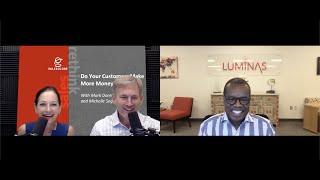
Keith Pigues, CEO of Luminous Strategy, explains how to build a value proposition around a simple question: do your customers make more money working with you? He walks through identifying which capabilities deliver measurable ROI, validating value with the right people inside the customer's business, and using feedback to fix or create offerings.
Chapters
Hey, Michelle.
Hi, Mark. Hey, Keith. How are you?
I'm fantastic. How are you guys doing?
Doing great. Doing great.
Doing well. It's another Friday, Mark. I know another round.
There's a song like that. Friday, Friday. And then they came out with this song, Saturday, Saturday. Remember that?
I thought it was Monday. Monday.
No, that was. That was seven. Seven generations back.
Like your era. I don't know.
Got something fired.
Oh, yeah. Well, you listen. You haven't heard the worst of it. We were at a conference, a really big conference, Keith. And I don't remember what I said to Mark, but everybody said, ooh, it was something about. Oh, yeah, I remember what it was I was talking about. Mark was talking about how he was listening to me, and we were talking about my prep for this conference, and I said, oh, you mean when you fell asleep and your mouth was open? You know, you were really listening to me. And you know what he said?
Oh, on the plane.
On the plane. Because he falls asleep on planes, and it's kind of like, it's not that pretty. But anyway, you know what he said to me? Oh, Michelle, I didn't think you could see that far into first class.
Always truthful. I'm just a truthful person.
Anyway. So, Keith, how are things going with you?
Things are going well. It's a great day in the neighborhood.
Oh, that's good. That's good. So, Mark, why don't you tell me what's going on with Dottie these days?
Oh, Dottie, the dog from. From the kennel. Yeah. So my daughter's a vet tech at a vet. That's where vet techs are. And there's. There's this dog that's been there for years, Dottie. And we figured out once we got rid of my grandmother's cats, it'd be a great thing for us to give Dottie to my grandmother. Right. Because they're both kind of on. And to my mom, her. Her grandmother, they're both on in years and really get along well, and it's been a great relationship. But my mom went in the hospital recently. She's back out now, and I got to spend more time with Dottie. And I realized as I was calling her to take her outside that she never reacted. And then I. And I stomped on the floor, and then she reacted, and I realized Dottie can't really hear. And so. And then I. Then I realized that despite what I was told, because Dottie had been kept in kennels for years, she didn't have any teeth because, you know, they Were rounded out from years of chewing on the bars of the kennel until I went to take the tag off her doggie bed and she bit me with these little nubbin teeth.
Right.
Which work? Yeah, the teeth work. So I've been having dog days, but. But Dottie and Mom are back together now, so that's good.
Something about these rescue dogs. So I rescued a dog, you know, who knew, right? One Jack Russell terrier. Just wasn't enough for me. Right. I had two. Two females at that. But anyway, this girl, little girl, just this morning, Mark, I got up at 5:30. I'm working on, you know, just stuff. I'm working on my book, actually. And I. My other dog has like something on her ear and she's at the vet right now, but she had the cone of shame that she's wearing. I stopped to take her outside when I came back to my desk and you know, my office, I love. I absolutely love my office. And everything is just exactly what I want in there. And my favorite chair, it's this leather chair. It's distressed. It's a little older. And that's where I sit every single day. It's like this old distressed leather. And I looked at it, I'm like, what happened to my armchair? It was totally torn apart and all this stuffing is on the floor. I'm like, what the heck? The new puppy, the new rescue had gone over there and totally shredded the arm. Oh, yeah, the armchair. And you know what people told me, they said, actually here, they said, well, what do you expect when Mark gives her carpets watches in the office to chew for toys?
We developed a taste for furniture.
Yeah, that's not good. So anyway, yeah, so much for the rescue dogs. The free rescue dog. The free rescue dog.
Yeah, they're cheap, but they're not right. There's no free dog.
Oh, my gosh, I don't know. So what do you say, Mark? Should we. Should we get started?
I think we should.
All right.
Well, welcome everybody to this week's Sales Globe Rethink Sales Roundtable. We're excited to be here. Excited to be talking to you again. We got some really cool stuff to talk about this week.
Yeah, we do.
And Michelle, what are we going to talk about?
We're going to talk about creating a differentiated value proposition. And basically we're going to answer this big question, which is this. Do your customers make more money by doing business with you? That's like really a really compelling thing to ask. And when you think about value proposition, it's not the first thing that comes to my mind. Mark, what about you?
No, when I think of value proposition, I usually think of this ethereal thing that people talk about in marketing departments and, and nobody really knows what to do with it. But we're going to be talking with our guest this week, Keith Peguise, and we're going to put some reality to it, which I'm really excited about.
Very exciting. Welcome, Keith.
Hey. Good to be here. Good to be here.
Oh, we're really, really excited to have you here. So Mark will give you a nice introduction everyone to who Keith Pigues is. He's got a great, great background and I've really been looking forward to this particular roundtable and I'm just going to talk to you all a little bit about us. So, Sales Globe, what are we? We are what we call a problem solving firm for sales. And that just means that we solve for the biggest challenges that companies have within their sales organizations. We are what we call a creative data driven firm. And what does that mean? That means that we use a combination of analytics and data as proof sources along with creative problem solving methods to solve those problems. You will see that we have written a few books, what your CEO needs to know about sales comp account planning, quotas and of course innovative sale where we get into in the quotas book as well that that whole sales design thinking or how you can solve problems for sales.
And I've been told these are all, all books that once you put them down, you just can't pick them back up.
I know, it happened to me four times now. So. So now let's get on to our guest, Mark.
Okay, awesome. So we are delving yet again into the roving whiteboards around the Sales Globe studio. And we're mapping out the future of sales. And not that we know, but we know what the questions are, we know what the considerations are. So we're talking to all sorts of smart people and Keith is one of them about what's going to happen in this post Covid world in terms of strategy, customer needs, how we structure the sales team, what incentives look like. So there's a whole bunch of areas that we've been covering in the round tables here. And we are really excited to talk to Keith Beguise today. Keith is CEO of Luminous Strategy and he also wrote a book called Winning with Customers. And what I love about Keith is that we're actually classmates back at UNC Chapel Hill. Kenan Flagler Business school way back in the 90s.
Talk about UNC. You always talk about uncu people.
You know what? I remember Keith. I remember Keith was one of those guys, he really knew his stuff. And I was totally lost. So I was always kind of like, maybe it's Keith's level of confidence and competence to go together. But I always thought Keith knew his stuff, so he's got some great background. So, Keith, glad to have you on and real interested in hearing what you have to say today about value proposition and differential value proposition.
Great. Good to be here. Yeah, it was a lot more confidence than competence, Mark. But I think next to each other in a lot of classes and helped each other out, so it was good. Right, Right.
Well, okay. Well, thank you for being here. Now, as we get kicked off, I just think we should take a step back and let's talk about just what does this mean in this idea about questioning and asking if your customers are making more money because they're doing business with you? When I think about, you know, I walk into. I'll just think about me as a consumer. I walk into Apple and I'm dropping several thousand, right. On a new laptop that then I dropped on our concrete floors here in the office, which wasn't a good value. But anyway, so you think about. You're spending money. Right. So what exactly does it mean, Keith, when you ask that question, are your customers making money by doing business with you?
Yeah. Well, when you think about it, right, business between two companies is really about a relationship. I know we don't like to walk around thinking about it like that every day, and we probably don't. Right. But it's about a relationship. Right. And in every relationship, both parties are asking, okay, why am I in this relationship? What value am I getting from this relationship? Should I continue in this relationship? Do they really understand what I need to make this relationship work better for me? Well, when you think about the relationship between two companies, that question really kind of sums it up. You know, the customer's thinking, am I making more money doing business with your organization versus the next best alternative because I have choices. So it gets to the heart of the matter of the currency, if you will, in the relationship. Right.
Well, that's a really interesting way of thinking about it.
Yeah, yeah. So. So if you take that idea and we're talking about value proposition before and we think, what does that mean in terms of value proposition? So customers, yeah, naturally they want to know, are they, are they making more money working with you? But what does that mean in terms of value proposition? What does that mean in kind of a day to day form to people that use that. Because again, it's kind of this high level marketing jargon we hear. But what's value proposition to somebody in a sales organization or somebody that can use that in their work to actually sell more, provide more value to their customer?
Yeah, that's a good question.
It is a good question.
Mark, I just came up with that one.
Mark's been asking good questions for a long time. No, asking good questions. So, you know, we like to say, you know, let's put wheels on this. Right. So we bring it down to earth. You think about what a salesperson might be doing representing their organization. They're going out and they're saying, okay, I've got some products, I've got some services. Right. We've got some capabilities in our organization which might be like our supply chain capabilities and that kind of thing. Which of these things that we provide, that we do every day, that's in my package of things, if you will, that I have to sell. Which of those are helping my customers more than others? Which of these actually are going to help the customer make more profit, grow their sales or decrease their costs, if you will? What's going to hit their key performance indicators? Because that's where customers live. It might be, well, you know what, we got a broader product line, broader product breadth that actually provides more value than a competitor who has a more narrow product breadth or. Right. You know, we actually have incredible supply chain operations that get you your products faster, shorter lead times. Right. Which have financial value to my customer. Right. So those are the kinds of things. Very practical. Right. And but we don't always think about those in terms of them being part of the value proposition because sometimes marketing hijacks the value proposition and they get really nice flowery words about the value proposition. But at the end of the day, that has to result in something that you do for that customer that has value in their business that they can measure.
So if I'm a salesperson or I'm a sales leader and I'm thinking about, okay, the things I can do that are going to improve value proposition, what do I do with what marketing is saying? Because there's value proposition for marketing that's on collateral or however else we hear about it, am I supposed to hook onto that? Am I supposed to try to personalize or yeah, yeah, translate that into. Into sales terms, what do I do with that? Or do I just figure out what it should be kind of within a broader framework for us?
Well, I think the first thing, and I was in sales For a long time, right? And I was a global account manager for a couple tech firms. When I believe that we have a value proposition, you know, the stuff that I can actually go out and sell that's different from everybody else, that has a positive impact on my customers business that others don't. I then go and grab marketing by the collar and say, stop it, stop writing that stuff until you come and hang out with me and you learn what really delivers differential value. Sometimes organizations have it, have it outside in, right? They have it backwards. You know, they have aspirational messages, but they may not truly be things that you can execute on that are really differential. And we find that a lot with our clients. Sometimes they're talking a good game, but it's not what they can execute on. We also find instances where they're doing some really, really, really good things that the salespeople are executing on delivering differential value every day, but it's not captured in the marketing material and it needs to be there.
So how does the company go about, you know, quantifying and pulling together what that ROI really is? And then how do you end up, you know, how do you end up bringing together, if you will, sales and marketing. Boy, sales and marketing. That's. It's tough, right? It's almost like sales and finance either get along or they just flat out don't because one doesn't believe it enables or supports the other. I even get that here sometimes. No, I really don't. But anyway, we love our marketing team, but the. I know, right? But anyway, how do you do that though, Keith, in all reality, I mean, how do you bring that together?
This is going to sound a little bit like, little bit like motherhood and apple pie. Value proposition should really be the centerpiece in all organizations. Marketing, sales, service, general management, product development, whatever. They all ought to come together around the value proposition.
Yep.
Value proposition, at the end of the day is what the organization is trying to improve upon so that they can drive sales growth and differentiate themselves from competitors. So I try to stay out of that fight of sales versus marketing, sales versus finance. And I say, can everybody just get together around your value prop and figure out what's working and what's not and let the customer help you understand what you need to improve, then you figure out what your roles are. If the customer says, we want more service, then who in the organization is responsible for improving the service? If the customer says we want you to communicate more effectively to us what you do, so we really understand it. Okay, that's marketing's job. Right. But the value proposition should be the glue that pulls all those functions together.
So tell us if you have maybe an example you could share with us about a value proposition that you saw in a company where they were saying something and then it actually turned out that they needed to say something else, something different. And just, I'm just kind of curious, maybe the contrast between they said this, it was high level, it really didn't mean a lot to customers. But then once they did the work, then they figured out they needed to say that and it was actually a lot more effective.
Right, we'll share one. And unfortunately we have a whole list of those that's. It's not good, but, but we could share one. So we were working with a client that really believed that its products, that its products were really driving value. And in fact, the way we start this whole thing is we get the organization internally cross functionally, marketing, sales, finance, operations, general management, to come together and develop what they think is delivering value right to the customer. In this instance, they thought that about 60% of the value was coming from their products because their products were better, higher quality, blah, blah, blah, blah, blah. Well, we went out and had this kind of validation discussion, right, with the customer. Turns out that their supply chain was driving the majority of the value. And so what that meant was your products are not as differentiated as you thought. The competition has caught up over time and you've been pushing product, pushing product, but there's really not a lot of value that the customer is getting from your product they couldn't get elsewhere. However, your ability to get those products to them when they need it, right. On a delivery schedule that you can commit to and that you can deliver on. Right. With a customer service organization that helps with logistics and inventory planning that ensured that the customer got the products they wanted where they needed them on time so they could meet their commitments to their customers. And that's worth real money.
It's a very different conversation, isn't it?
So, yeah. And if you take that and you split those two parts together, products, and then the supply chain, couldn't competitors then ultimately replicate that supply chain unless this company had something unique they were doing?
Absolutely. And so what they're always trying to do, which is why we have our clients do this every 12 to 18 months. Right. Because things change. Right. There are some things that you were doing a year ago or two years ago that were really differential. Right. And then customers needs change, the marketplace changes, the competitive set changes, and your capability changes. So a year Forward. You need to say, okay, now, where do things stand? Yeah. So it's an ongoing process. Your value proposition is not stagnant. It's dynamic. Right. You got to keep assessing it, and you have to keep investing in it, but make the investments in the places that matter to the customer.
Yep. So, Michelle, one thing that caught my eye about what Keith does and what he was talking about was this idea of differential value proposition. And first thing, I thought Keith was, okay, what's that? Because it sounded like it was a little more tangible than just value proposition. So that you could tell there is a difference in your value proposition in terms of what it's doing for the customer, what it's doing for you. But can you talk about what that means? Differential value proposition?
Yeah. So it's interesting. So when we start with our clients, we have them come up with a list of things that they think are valuable that they're providing to the customer. And I have a long laundry list. Right. And then we start to pro. As we say, with very technical term, this process we call wringing the water out. Right. And we press. Okay. You say, right. You saying that your products are better help me understand exactly what's better about your products that matters to the customer that will help either increase their sales or decrease their costs because they're using your product versus the next product, the next available option. Sometimes that degree of confidence that our clients had at the beginning of that conversation wanes, and they say, okay, maybe our product was differential. It delivered more value, it was better off. It had more capabilities a year ago or two years ago or five years ago, but everybody else is caught up. On the other hand, you might say, hey, you know what? Our supply chain, if we continue with the earlier example, we know that we have capabilities because of where our plants are located, right? Because of the systems that we use, because the analytics that we use, we're able to get product placement placed in the supply chain and get it to our customers in ways that our competitors could never do. Right. And so that's truly differential. And so you take the items that are differential, and then you calculate how much is that worth. So you might say, if we can get products to you faster, right? If we can make sure that we get every product on that in that order to you, and you're able then to serve your customer, how does it prevent you from having missed sales with your customer? What's the value of that?
Aha.
That's our measurable differential value. The incremental sales you can get because of what our supply chain provides that you can't get from the next best competitor.
And I imagine that's something you share with the customer, then you're sharing the actual dollars with them.
Okay, yeah. That's what's really neat about this approach. You get to go in and have a conversation with the customer, not about what our features are, what our benefits are, how much we love you, how long we've been around. But here specifically is how we think we've delivered value to you, this differential in the last 12 months, in the last fiscal year for your business. And we think we can quantify that financial impact to your business. What do you think? That's a different discussion, as Michelle said earlier, that's a different discussion and one that our clients. Customers love because it's about their business, not about buying something, not about our products and services. Right. But it's about how you really impacted my business in dollars and cents. Now, we might not have it. Right. You know, but that's a good place to have the discussion, to start the discussion.
So can you do that with prospective customers? So you're talking about the value that you provide to current customers. What about prospective customers where maybe you don't have as much information?
Absolutely. And one of the benefits of understanding this about your current customers, and then you look for analogous, Right. Similar prospective customers, and you can go out and start to have that conversation. And we've seen that really shorten the sales cycle. Right. Because you quickly get to what they care about. Because if they're going to have to make a decision to leave who they're doing business with now to do business with you, you're essentially saying, here's what's possible that we can provide that you might not be getting elsewhere. And you can do that with confidence because you've quantified it elsewhere in a similar situation.
All right, let's. I want to talk about something that's related, and let's shift over for a second to customer loyalty. I just read a blog this morning, and it was the VP of Gosh, Customer Service and Support at Gartner. And what the article was saying is they did some research and they said basically that you lose 40% of your customers because of customer experience. Experience. Right. But not having the right customer experience. And they talked a little bit about what that was, and they said that you need to, as in customer success and other roles, be able to quantify, be able to explain the value proposition, the value that your product and services offer that maybe someone else doesn't as one differentiator. And I wanted to take that idea a little bit further, Keith, because I'm thinking about, as we quantify value proposition or differentiated value, how does that translate into what the front line, the managers inside sales, customer success, how everyone can make that really part of their DNA, right, so that they understand what it is. That'd be the first part of my question. And then I guess the second part would be, how does that translate into internally? I may have customers. So if I'm sales operations, I may be serving the sales team or marketing. You know, we're really, really lucky that we're very aligned with our marketing team here, and they serve us very well. So internally as well as externally, meaning, you know, the differentiated value that we provide to our customers.
Okay, so let me break that apart. Okay.
Okay.
So three things. First, I first of all, think Gartner's. The quote from Gartner is insightful, and it's consistent with what we see with our clients. Right? So when you think about the customer experience or the customer experience journey, and you think about your value proposition, the customer journey is really an overlay. It's just talking about all of the steps along the journey, right. Where there is an opportunity, right. To provide some value to our customers and in their experience with us from initial contact to post sale, right. What do we do? But within each of those elements or of the customer experience, the journey, we think there is a value proposition assessment, opportunity. So, for example, if one of the things that you do in bringing customers on board, right. Is to make that work really well. So maybe you need to train them on your products, you need to ensure they know all the services, customer services, and other implementation services, depending on your business, that are available to them. Well, that only delivers value if they take advantage of it. Right? So you may have that as a key part of your journey, but if you don't have the services embedded in there to make sure they can get value from it, and if it's not better than the competition, so what? You have it. But so what? Everybody has it. So there's a companion piece of research that we use that comes from the Gallup Business Journal, and they took a look at B2B companies and their relationship with their customers, and they suggested that two years ago, 60% of those B2B customers were indifferent. Indifferent in the relationship. What that suggests is that they found no differential value in that relationship and they were subject to walk at any time. Right. And so I think you put those two things together. Yes, Customer journey is Important. Customer experience is important, but you still need a differential value proposition every place along that customer journey so that you can deliver value that your competitors can't and prove it, which is why the metrics are so important. So when you talk about the front line, which I think was the second part of that, hey, if we know that our differentiator is customer service, and we know that we have the ability to outshine our competition in a way that helps our customers succeed because we get the product where they need it, when they need it, right in the way that they need it, and we can do that faster and less costly than they can get it elsewhere. Our people in customer service ought to be reinforcing that every day. First, it helps our people in customer service to know you're not just an ancillary service. You are core to our differential value proposition. Right. Which drives the growth and profitability for our company. First, and we actually had a client where, for the first time, their people on the front line were involved in a consulting engagement. We involved them and their leader, who'd been around 30 years, stood up and made a proclamation. For the first time, we actually feel like we're part of the game. And in reality, they were delivering more value than product development and innovation and all those other groups in the organization, which is a little bit telling, right?
Yeah.
I mean, front line has to be armed.
Customer service is one of the first touch points that you have or one of the consistent touch points you have as a customer. So, yeah, we can't overlook that. We always talk about the customer experience and the fact that who answers the phone, all those things create the Persona of the business.
Right. And today, I mean, let's be real, there are very few truly unique products and services, and especially amongst competitors, I mean, they're all basically the same. So you got to find something else. Now you're making me think of another point, which is voice of customer. How do you. How do you. Like, first of all, what does that mean to you? Right. What is voice? Let just define it in your own term, what it means, and then how you go about ensuring that you're getting the right voice of customer so that you understand what's truly valued and how that translated again into the ROI that is important to that business.
Yeah, because I always think about voice of the customer. It's like those calls you get at night that they want to do surveys, and I'm like, well, that's not really the voice of the cut I do. Especially when they, you know, they're Asking me about how my Windows operating system is working and I use a Mac.
Oh, and then they ask for your credit card and you give me your credit card.
Oh, boy.
This one.
So good. Great question. Where do you, where do you get that voice of the customer? What does that mean in practical terms?
Yeah, I'm gonna try to do this very quickly, right, because that's a little bit of a. That one puts a little bit of a burn to my saddle. Right? Taking this term voice of customer, and people use it for all sorts of things and sometimes out of context, but, you know, there are a whole lot of voices. The question we ask is what voices should you be listening to? And not only that, what kind of conversation should you be having with people who have those voices? Right. So we think it's about asking the right questions of the right people at the right time in the right way. What does that mean? What I really want to understand clearly, I want voice of the customer. We might call that a category of information. But what I really want to know is who are what we call the beneficiaries of value for the value proposition, products and services that we sell. So who in the organization, highest ranking person who at the end of the day wins or loses because of that part of our value proposition? So, for example, when I talk about that supply chain example, getting the product, filling the orders, getting the product there on time so that our customers can meet their sales with their customer, who do I talk to? Some people might say, well, you probably ought to talk to procurement. No, some people might say, well, maybe you talk to, I don't know, receiving. No, you talk to the head of sales. If the head of sales is responsible for ensuring that the company can meet its sales targets and your supply chain is helping them to have the product they need to meet their sales target projections or the needs of their customers, that person is what we would call the beneficiary of value. So that's the voice I want to hear, because I want that person to help me understand. Are we delivering these products to you in a way that we think we are? That's helping you meet your sales commitment, drive additional sales, prevent lost sales. As we look at the last year, we think we've done it on these occasions and it's impacted your business in this way. And here's our estimate of the additional sales that you were able to achieve because you were doing business with us. How do you think about that? That's the voice I want to hear.
That's really interesting, Keith, because that May be a different person than the buyer. Right. Because when we think about voice of the customer, you go, okay, let's go talk to the buyer and see what they think about us. And it may be that there are other parties in the organization that are the beneficiaries of value beyond the buyer.
And.
And if you understand their voice and can provide that differentiated value to them, you can make that case to the buyer.
Right? Absolutely right. And in fact, Mark, what we suggest is bringing that whole group together because sometimes it's difficult to just meet with one of those people. And sometimes you have the people who are the guards at the gate, right? And they won't, you gotta meet with me. You can't go meet with that person, bring them all together and have a discussion about their business. And sometimes it's educating the buyer in that process. Because when you have the head of sales stand up and say, you know, when she stands up and says, look, this helped us last year, we would not have met our sales numbers. No one here would have gotten their bonus. Right. If it were not for this supplier who helped us achieve 20% more on the top line because they got us the product we need when we needed it, where we needed it. Absolutely. That was differential. That's a different discussion. The other thing I would say is figuring out who that beneficiary value is sometimes a little difficult. So we have another client, and they sell chemicals, and they sell chemicals to companies and amongst other things, companies who make tissue. Right. And their chemistry that they sell actually creates the softest tissue in the marketplace. Without their chemicals, this softness profile would not be possible. By the way, softness is the number one driver to consumers of why they buy this tissue while their market share grows every year and they're able to increase price. So you say, okay, well, who's the beneficiary of value in the tissue company where we sell our chemicals and we had a conversation with their teams. It's like manufacturing the people who buy our products and use it in their plants, right? Nope, it's the brand manager. It's a chief marketing officer. It's the person who wins or loses with that market share increase or not. That person who wins or loses with their ability to increase the pricing of that tissue or not. And so in some cases, sales organizations don't get to those people. They don't have those conversations. And we think that's the place where magic happens. Those beneficiaries of value.
Wow. Yeah. So we got to be really insightful about understanding that before we make Assumptions, because I think that assumption is you just go for the buyer. So everybody's thinking about the current environment, Keith, and what's going on. Obviously, Covid and post Covid. What do you see changing about what customers are looking for? And I don't even know if we can generalize this question because it may be different by industry, but what kind of changes do you see in terms of what customers are looking for now versus maybe pre Covid? And what does that say to you in terms of what companies should be thinking about with their value propositions?
Yeah, that's an important question. And yes, it does vary by industry because there are some industries right now that are going gangbusters that are doing really well, and some industries that are really just trying to figure out how to get through tomorrow. Right. But if I hearken back, I'm gonna. If we go back to the Great Recession, Right. We actually did work with some clients there that I think is very relevant to what's happening now. And I'll talk about a current example, but in our book Winning with Customers, a playbook for B2B, we use a case of Owens Corning, right? And Owens Corning's business and the roofing shingles business, right? And so they were providing these roofing shingle products, and the big box retailers were all trying to figure out how they continue to hold on to share and sell during that time. And when Orange Corning did this work, what they really understood was that most of the sales were driven by the people's ability on the floor in Lowe's, right to keep selling and to be about those products when a contractor came in, because a lot of those sales are made through contractors. And so because they understood that the value proposition for Lowe's was about customer service, they were able to double down and provide more support for the salespeople on the floor in Lowe's, educate them so that when contractors came in, they could tell them why the Lowe's, why the Owens Corning roofing shingle products performed better. And so they were able to steal share during the recession because they understood that the service component, educational service component to people on the floor in Lowe's or Home Depot or whatever was now the differential part of their value proposition during the recession. So we have a client where there was a similar situation, and they actually are in the material space where they provide materials to garment manufacturers, to clothing companies, Right? And as you think about what's happening with COVID people aren't going to, you know, brick and mortar stores, you know, and they had been very, very good at helping their customers sale online, but now they need to be able to help their customers sell online like nobody's business. So it's taking those things that they were doing before in person to help the retailers sell, sell people real time. Now, how do I do that online? So it's a tweak, it's a pivot, Right? So those are a couple of examples.
All right, so let's think about adjusting our value proposition. Just as a result of the new environment. We can, you know, like, where would you suggest, Keith, that companies, like, where do they start?
They start by figuring out what they think they're delivering, right? What is it that we really believe we do that delivers differential value? And that's where we have our clients start, because there's a lot of knowledge internally. What do we think? Right. So is it our products? Is it our supply chain? Is it our customer service? Whatever. What is it? Right. And then you go out and you have a conversation with the customer. I know that sometimes that is, you know, we don't just go to customers to sell them things. We also go to customers to figure out how well we're delivering value from the stuff we're already selling. So you go out and you validate. And it's amazing that when you do that, sometimes you find that there are things that we're delivering value on today, and they will also be valuable tomorrow or post Covid. And there are some things that we may need to deliver which we hadn't thought about. Some new things that the customer wants because of the changes in the environment. We need to figure out if we can do those things and if we can do them well. So it starts by figuring out what you think you're doing well today, and then secondly, getting the customer's perspective. I can't say that enough because, you know, sometimes we have. We're pretty confident and we know it all. It's sometimes really good to go and get a perspective from the people who you're trying to serve and see if they think it's the same. Sometimes it is, sometime it isn't.
So let's talk about. When you talk about this value proposition. If you find out that it's not your value prop isn't giving you the differentiated value right to your customers, what do you really do? So you said you got to, like, step back, but what is it that you do?
You fix it.
You fix it well. Okay, tell us how you fix it.
So actually, we have discussed four things you can do depending on what you find, right?
Okay.
If you find out that you thought you were delivering value and you're not, and the customer says, sorry, I know you love your products, but we don't love them as much as you love them as compared to the other things that are out there. So, okay, we spread the love. But you're not all by yourself here. You fix it. If there is something that you're doing that's delivering value and the customer says, yeah, but not quite as much value as you think compared to our next best alternative. Folks have been catching up in that area, then you enhance it, right? You make it better. And the insight that you get in that discussion helps you to figure out what you need to enhance. Why is it not delivering the amount of differential value that the customer wants? They'll tell you if you ask the right question of the right person in the right way. Right? The third thing we find is that in this discussion, the customer says, I've been thinking about, right? And that thing they've been thinking about sometimes, you know, you're kind of like Arnold Horseshack for people who might be in that generational cohort. And you go, ooh, ooh, ooh, ooh. We can do that.
I remember him.
Guys will probably get that.
That was a long time ago.
I was like, I think.
But I do remember it.
All right? So sometimes there are those things, it's things you have on the shelf, if you will, that you haven't delivered to that customer, but you're delivering to other people. And so in those discussions, they come up, right? And we call that expedite, let's get that to them as quickly as possible. And then the last thing you do in that discussion is say, hey, we call this a checkbook question. So we say to our clients, customers, if our client gave you their checkbook and you had an opportunity to write checks today, to invest in the supplier's business on your behalf, what would you write checks for? In other words, if you could take over and become the management for the day of the company serving you, where would, how would you serve yourself differently? And so they'll come up with these ideas and they may come up with five or 10 things. We understand why they're important, how they will help our customers, our clients, customer drive their business forward. That becomes customer driven, input to innovation. What are those things that are going to drive our customers business forward? And sometimes we think we know the answer. And so we also have our clients bring along what we call seeded opportunities, the things that they're working on the things they're thinking about. And we asked their customer, would you like to include these in the mix as you've just. You're deciding what you're going to write checks for. Sometimes they get a little embarrassed. Their customer will say, no, thanks. Now there might be somebody in R D or product development or new service development spending hours and spending lots of money on this stuff that we thought was good. And the customer says, miss me with that. Sorry, have no need for it. But on the other hand, what we find is that their customers will say, here are the top four things we have them. Prioritize and weight them and say, if you're gonna go invest, here's your investment profile and here's the amount of money you ought to put in each one of those. If we spread 100 points or we spread $100 million across it or whatever, right. And they leave with insight like, that's probably not the way we were thinking about how we were going to. We call that create. So fix, enhance, expedite and create.
Fix, enhance, expedite and create. Sounds to me like you. You feek it.
Feek it. That's right.
And you feek it till you make it.
Oh, gosh, All right. You know, we only. We don't have that much time left, so I think it would be kind of interesting. What do you want to talk about, Mark?
Yeah, you know, I want to talk about this idea of values and beliefs of the company, Keith. And so when you find out versus price or other concessions that you make. So when you find out that your value proposition isn't there, and perhaps you're in an environment where it's price competitive, where's the point where you say, yeah, we're going to do something on price to be more competitive versus no, we're actually a premium price provider. And this is what we believe in in terms of the quality of our products, quality of our services. And you don't make those concessions. You don't play that game. But maybe you don't keep some of the customers that you have because you're kind of standing by those values. Where do you make that differentiation point?
That's a good question. And as you know, that's a tough. That's a tough question. I think what that really calls for is the organization, its leaders thinking about what are their values, what's their mission, if you will, where do they want to play, and are they really able to execute and sustain that position? They may decide based on what we've learned, we can Continue down that street, or based on what we've learned and the way that things have changed, we may have to go down a different street. We may have to change our positioning, we may have to change our strategy, right? Those are not easy decisions, what we help organizations do, because it does vary, right? We help them to make those key growth decisions more confidently. And that's what the value proposition work does. It helps you to understand where you're winning or not, To what degree you are winning versus your competition. Right. And if you can build a strategy around that, because what you might find is that you are headed down the high value track and the markets caught up with you, right? You either need to be able to innovate and stay on that track, those new future opportunities, those things you're creating, and you might be able to do that, or you might say, you know what? We can't do that, we can't do that, or we can't make money doing that, or we don't have the capabilities to do that. And you may have to pivot and say, okay, now we're going to go to a different segment, a value segment of the market where what we need to do, our capability is going to be very different. And we have clients with that all the time. Because sometimes you have to make those tough. The worst thing to do is to be so tied to what you were before that you're unwilling to listen to the reality of today. And you do that thing that they call insanity, right?
It plays on your point though, of having to take reads on voice of the customer and where your value proposition is on a periodic basis. And then you have to believe that information. You have to have confidence that you can make decisions with it and be doing the right thing versus getting a false reading or saying, well, we don't think our data is quite right.
Right? And we've had some clients that made some pretty tough decisions in that regard. And we believe that what we do really helps them to make those key strategic growth decisions more confidently. That's the key, right? Because you're going to be making these decisions. How confident are you in those decisions when you make them? Whether it's a decision about how to structure your sales organization, how to compensate your sales organization, right? How to price right, how to price right, what new products and services to develop or not, right? All those decisions that they make every day, these are decisions they're making every day. How can we help them make those decisions more confident? And that's what we do.
I want to ask you A question before.
Right. So we know what that's like. So.
Let me ask you a follow up question. I keep thinking about when we talk to, when we discuss customer experience. Right. We always say that there are three things that we ask companies to ask themselves and that is, you know, kind of who they are as a company, who they are as a business, what their purpose is, and then finally why customers want to do business with them. And this all goes back to like the vision statement or the mission of the company, like what their purpose is. And what I'm wondering is how can you take. To me, it seems that at the core of it, a lot of this differentiated value proposition and the ROI becomes part of who you are and your mission and value. And how do you translate that over and have you seen companies do that success successfully?
Yeah, they certainly need to connect. I mean, and what we ask our clients to think about is think about your mission, who you are, why you exist, and separate that from what you provide. Because you can continue to be who you are and provide something different five years from now than you provide today. The way that you live out that purpose, if you will, will maybe with a different set of products and services or markets that you serve or technologies that you, that you bring to the marketplace. Right. So you don't have to change who you are at your essence, but you may have to change the value proposition to execute on it. Because the world changes, markets change, customers change, competitive set changes, technology changes. Right.
That is so true. Look at how the market has changed just this year alone. It's been dramatic. I want to ask another question which would be around getting back to people. And we discussed it a little bit earlier. But if I want to demonstrate or understand what my differentiated value proposition is as a person, and it could be me serving my customers, like how do I actually measure that and how do I understand what my differentiated value proposition is?
Yeah. So I'm going to go back all the way to where we started. Right. It's about relationships, right. So if you think about, you know, your value proposition and say you are a salesperson and you're trying to figure out what your value proposition is in your company. Right. And you might think that, you know, I bring some things like real keen insight to understand customers. Right. Or I understand how to. Really effective training. Right. For salespeople in the organization, that might not be my job. Right. But they always call on me because I really know how to do that really, really well. Right. So the question is, what is it that you think you Bring that's a value to your organization or whoever that other person is in their relationship. Right. Becoming clear about that for yourself and then going to that person and validating. So here's what I think, right? Here's what I think my differential value proposition is. Here's where I think I add value. Here's how I think it benefits you. What do you think? Right. And in fact, we've taken that approach which is less quantitative. Right. Than the work that we do traditionally. We've taken that approach and we've developed a new set of product offerings. Right. That we call scans. Right. There are light version. And so it's for organizations that may not want to get a deep quantitative assessment. They may just want to get a heat map. Right. Where do we think we're providing value just to get a read on the situation without. Now, they can't make these really tough, you know, more confident strategic decisions, but they can get a glimpse, if you will, under the COVID of how things are working or not. And so I think that applies to individual and it applies to not for profit organizations, which we've begun to serve recently. And it also works for our traditional large B2B companies who just want to get a peek under the COVID as opposed to getting all the data on analytics.
I think that's really a good point. So don't take a myopic view. It is qualitative. And you need to, though, ask people, just ask them. I'm going to ask you later what my differentiated value is. So anyway, that's.
I got to start thinking about that.
I know it might take a long time to figure that one out.
Oh, well, you don't need at least two days to have that discussion with Mark.
You could be right. You could be right. Well, we are very excited to have you here. Thank you so much again, Keith. It's been so such a pleasure having you. It's been very insightful and given us all something to think about. So please everyone that's listening, connect with Keith Pegues on LinkedIn. He's out there and he wrote an excellent book. And don't forget to our next session will be August 28th. And don't forget to link with us or connect with us on LinkedIn. Subscribe to our YouTube channel and don't forget always to talk to us about your tough challenge at Sales Globe. So thank you so much for being with us, everyone. Have a wonderful weekend. And again, Keith, thank you for sharing some of your time and your insights and knowledge with us all today.
My pleasure. Thank you all for having me.
Keith. Thanks, everybody.
More from SalesGlobe







Sales Compensation for Results - Course 1: A Strategic View on Sales Compensation - Trailer


Freative Friday - Episode 98 - Insight in Your Hunt for The Revenue Roadmap Pt 4


Freative Friday - Episode 97 - Insight in Your Hunt for The Revenue Roadmap Pt 3