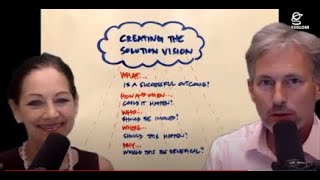
SalesGlobe Sage (Mark Danolo) and Michelle Seeger discuss how COVID-19 has changed the way companies should manage their most important customers. They argue strategic accounts require deeper, account-by-account insight (breaking penetration into product/division/buyer levels), a market-informed radar screen, and a shift from short-term selling to aspirational, long-range account visions (3–5 years). Practical recommendations include clarifying value propositions and brand story, understanding the customer’s narrative through W/H questions, and building account plans on three legs: sell-to, buy-from, and partner-with.
Chapters
So today, strategic accounts, Michelle. Yeah, that's big stuff. A lot of what we're dealing with is for our biggest accounts are most strategic and how we can get closest to them. So it'll be a fun conversation to have today.
Yeah. Because what we're going to do is actually think about them differently. You know, it's. You and I were discussing this earlier, Mark. I was listening to Mel Robbins. I like listening to her podcast. She was talking about how COVID 19 and she was quoting someone else. But it's called the Big Pause, which is really, you know, an interesting way of thinking about it. And you know, I know that we have paused in our own business, you know, to reflect and think about what does our go to market look like and as we think about our clients, what does their go to market look like? How has that changed? And that's really some of our thinking today, isn't it?
Yeah, yeah. I mean, it's about how you think. And I think the Big Pause is a good way to describe it. I think for us, especially during March, it was a great time. I don't want to use the word great, but it was a, an opportune time to stop and think about what we're doing. And you know, in the regular world, you're so busy and just jamming so hard, you don't do that. So valuable, valuable time.
Okay, so what do you think, Mar?
I'm ready to get started. So welcome Everybody to the SalesGlobe Rethink Sales Roundtable. Glad to have you. On every Friday at 1pm Eastern time. And that would be what, 6pm G for the people having cocktails over there?
Yes, and I wish I had one in my hand right now. I say it, I think almost every week, but I mean it more with each week that goes by.
I'm Mark Danolo with Sales Globe and with me is Michelle Seeger.
Hi. Welcome.
So what are we going to talk about today, Michelle?
We are going to talk about getting strategic with strategic accounts. And a little bit about us, though, Mark.
Yeah, yeah, let's talk about this a.
Little bit about us. So we are Sales Globe. Thank you so much for joining us today. And really we are just problem solvers for sales. Our consulting advisory. We solve the biggest sales challenges that companies face. You'll see that we wrote a few books down there. And actually we are going to be talking about this one today. Essential Account Planning. We're pulling out some of the concepts there and we have reframed some of the thinking just like you all are. And we are looking at how COVID 19 has changed and reframed the view that we have on strategic accounts. So we're going to be having a great discussion with you today. Thank you for joining us. And as we look at our topics, getting strategic on strategic accounts. Right.
So we're going to the big, big rolling whiteboards this week, Michelle. So as we've talked to people about before, a lot of what we have around the studio here at Sales Globe is stuff to write on, right? So we get out the markers, we're writing on walls, writing on whiteboards, but it really frees up thinking. And so we try to get off the PowerPoint, try to get off the Microsoft Word and kind of open up the ideas. So this week we're thinking about strategic accounts because it's so important and they represent such a large portion of our business. So we're going to talk about a few different areas. But I think, Michelle, what we want to do this week is give everybody some ideas, some things to think about, some concepts you can take with you for how you think about strategic accounts. So this is not going to be about, well, here's what an account plan looks like, and you've got these lines and fill in the blanks and, you know, grade your relationship strength with the buyer. None of that. We're going to talk about how we think about these accounts and how we can help them. So I just want you to pick up a few ideas along the way as we're going through this week.
That's right. So we're going to start with wise strategic accounts. And as we said, what's different with COVID So we spent a lot of time talking to our customers. We have done some market research. We have, you know, everything that's been going on in our business and spent a lot of time really, really going through this, haven't we, Mark? Just in what that needs to or what that can look like and things for you to consider. So how should we think about our street strategic accounts and then finally how we can make a plan. Right. And take action? And we're going to give you ideas and things that you can do to plan and take real good action today.
Good. All right, so let's jump right into it here. Why strategic accounts? Well, you know, the answer may sound obviously, but these are our best customers in most cases, and they're the ones that we have the most insight on. And if you think about the Pareto example that you see up there, if you look at the percentage of accounts and the percentage of revenue or the percentage of potential or opportunity, These are the ones that make up the most. So, right, 20% of the accounts, 15% of the accounts make up, you know, 80% of the revenue, 80% of the potential. So the idea is, if we're focusing on them, that's going to have a big influence on their business and a big influence on our business. Michelle, we've been talking about this idea since March about stop selling and start helping. And you can't really help as effectively en masse as you can account by account and understanding the situations in each of your clients, each of your customers. So if we're focusing in, going to get a lot more effective.
And so, Mark, I think what's really interesting here, if we look at this, we talk about, when we look at accounts, we look at retention and penetration typically. But you've got, I asked you this, I'm like, Mark, I notice you put penetration 1, 2 and 3.
Right.
And we had a great conversation around that. And really what we discussed was mostly we look at our strategic accounts in aggregate. But what the idea here is breaking it down.
Right, right. So where you might look at in this idea of how your accounts grow and how we grow those accounts, where you would typically look at retention and penetration and new customer selling or acquisition, break apart those components of growth. With strategic accounts, we actually want to break them into several P's, several penetrations. So we've got product penetration, we've got buyer penetration, but we've got penetration by different buying points, different divisions within the account. And Michelle, we were talking about an example earlier.
Yeah, I got a great example from a client of ours. So a beauty products company, and they manufacture containers, right? So think about lipstick containers and mascara containers. And so what happens in that business is there's a lot of fads, right. And there's a lot of new technology that comes out there. And by the way, what they sell is branded as well. So I'm going to bring up, you know, the Kylie Jenner line, because this was a great example. And so when they were looking at how their accounts were growing, they saw significant growth in a couple of their big accounts. But when we broke it down and we looked at where they were penetrating, what we found out is that as the Kylie Jenner brand had been exploding on Instagram and people, there was a high demand for that manufacturing and for that product, it happened to be lipstick. They basically took their eye off of these mascara, the things to put mascara tools and putting that on the products.
For that, you know, what these things are called.
I know, right? A mascara brush. I don't know what's wrong with me. I do use it every day, and I found out all about mascara brushes. Anybody want to know anything about that? I was on that project. Just ask me. I'll let you know. But the point being that they lost the mascara business, which was one of their core, and it got taken out from right underneath them. Truly. And so until we broke it down and looked at it that way, they had no idea. And so these trend products were coming in, but then they were losing their core. Hence why you want to look at all your products and services.
Right? Yeah. So, you know, the thing that we hear too much is, okay, we've got, you know, 100% retention in that account, and we've got this much penetration, but they're not breaking it out into the. The child accounts. So think about parent or grandparent account, parent account, child account. Break it down into those child accounts and look at all your sources of revenue. So you got to break that out. And these are the accounts that have the most untapped potential. So situation after situation. Michelle, what we see in project work is those strategic accounts are not highly penetrated. And so, you know, all the glory is about going out and winning new accounts. Well, there's a ton of opportunity there, and we understand their needs. These are the ones. Yeah. The concept of helping not selling. Well, you have to understand their needs in order to be able to do that.
Right. Okay, so key points. When you look at your strategic accounts, you want to look at by product, by segment. Right. By buyer within your company and understand what's really happening there. And why do we want to focus on key accounts? Again, Mark, strategics. Because they're easiest. Right. Especially in an environment like this. We know them, right? Right. And so we know their needs. We traditionally will know the buyer. And one of the things, though, is that you can't look at them the same way. And that's what we'll be talking about.
Now think about this Covid period, too. This has been what companies have done that have been successful is they focused in on the customers that they're closest to. So it's really made a difference in being able to make those connections and show the empathy and understand what they need.
So when we talk about looking at them differently, Mark, talk to us a little bit about that.
Yeah. So what's different with COVID So this is a different environment. There's a lot of uncertainty. We're going to talk about the idea of the Salesperson of the future, the problem solver in a little bit, Michelle. But these accounts, they need insight. You are positioned to provide that to them because you know them the best. You need to know what's changing in the market and what's changed around segments. And they require a long term view. So again, we were talking about this months ago. We're not trying to accomplish, you know, big wins, necessarily close in. What we're trying to do is we're trying to build relationship. We're trying to be aspirational. So that's one of the areas we're going to talk about later is being aspirational. So this great NCAA basketball coach won't name him, but he did say it's great. It's great saying he said play the game, not the score. Right. So don't think about where you are. Yeah, it's important. But think about how to play the game correctly and how to help correctly and how to work correctly with these accounts.
Okay, so that reminds me too, just another hint for you guys in case you, we happen to like Simon Sinek. I do. Also this reminds me of the infinite game, right? So the finite game says I'm going for this one play. But the infinite game says, okay, how are we helping and what does the long term relationship look like? So this is really all about playing to win at what's an infinite game?
All right, so let's take a look at the market. So first step is, well, you know who your accounts are, but let's understand what's happening in the market to them. And we took a look at this a few weeks ago. I just want to flash this back up on the screen. And what this is, is this is change in overall spend. And this is indexed back to June of 2019. So we took this back about a year. This is from our partners Corterra. We'll show a few of their examples here. And what it's showing is we had a whole bunch of industries. We picked just a few. We have all industries. You can see there in the red, which is right there. Then we've got manufacturing people making stuff. We've got the wholesalers at the top, the people that are distributing things. And then you've got the retailers, the people that are selling it to consumers. If we're talking about a retail channel, of course, you know, wholesale can be selling to direct to business as well. So we tracked what's going on here. And you can see March 20, which was around the time of the lockdown. You can see how things were down there. And then where you can see right here and I'm just going to swing over to the side a little bit. You can see July of 2020. And what this is showing you is that wholesale and retail, where they were up a couple weeks ago, they're coming down a little bit. And our big concern was manufacturing may not be keeping up with them because you could see manufacturing was heading down right here. But we're seeing most recently manufacturing picking up and perhaps starting to converge a little bit with wholesale and retail. So it was looking like perhaps inventory levels are going to be going down and manufacturing wasn't going to be fulfilling on those inventory levels. And then separately what you would see if you look at transportation is challenges with supply chain. Right. How do we get things out to customers? So why are we looking at this macro view? Because it's important to have a big view to know what, what's happening with your customers in their industries and in their supply chain. So if you can have some of this information, some of this view, then you can start to be a little, you know, forward looking about what you want to do and understanding what they're going through.
Right. So this all comes down to looking at your accounts differently. Right, so this is the highest level. What else we got there, Mark?
Right, so we're going to show you a few cuts here and what I do want to say to everybody is if you would like cuts of information like this, just let us know. Again we work with our partner Corterra and we can give you some complimentary initial cuts of this just to look at for your business. So if you say, well I'm really interested in transportation or I'm interested in food retailers, whatever it might be, just tell us, we can get that to you and you can just email us@infoalesglobe.com and get that. So let's take a drill down. So we took manufacturing, we took wholesale and we took a little bit deeper. Look at this. And this is looking at what we're calling the bounce stages. So on the horizontal axis what you see here is the June, year over year spending change, so spending change by industry, year over year for an entire year ending with June. And on that vertical axis there they taught us in business school, we call that the Y axis.
That's right.
What you'll see is the month over month bounce. So that's the May to June bounce. So right in the middle is zero. And if they're above that zero, they've gone up from May to June and in the center here, as we showed you before, to the right of that is the positive spending change year over year. So within manufacturing, what are we seeing? Well, computer and electronics, you can see off to the right now, you can't read these. These words right now. I know they're a little bit small here, but we can get this to you. Food manufacturing is up. Beverage manufacturing is up. Some of this we know about. And then also general miscellaneous manufacturing is up. So depending on what your customers are involved in, you can literally go through and pick the segments and go, okay, I know who's getting a bounce now and who's got some positive outlook. And I'll mention, this is spend information. So this is not just what they're selling, this is what they're buying. So it's indicating that they're buying for a reason. So they're things are picking up or things are not picking up. And the spend information is broken down by product categories as well. So we can see. Wow, their spend is increasing on transportation, like we saw a couple weeks ago. And so we know what kind of transportation. Truckload less than truckload, et cetera. Some of the ones that are down a little bit lower. Petroleum traveling less.
Surprise. Right. Yeah.
And also printing. They're printing. Yeah. So we're not printing stuff as much.
Printing is down.
That's right. That's quite interesting.
Yep.
And I want to drill down in one other here, which is wholesale. Okay. So you'll see same, same axis, same layout. What's up in wholesale? Machinery. Wholesale machinery. And also hardware and computers are up. And also beverage and grocery is up. See, those are up. And then interestingly, Michelle, way on the bottom, apparel. So we're not. We're not buying as much clothing.
We're not. People are home. Right, right. So it's, you know, it's a little bit. They're not buying work clothes, I don't think the way that they were. It's summer, just kind of hanging out. Yep.
So what's, what's real powerful about this is again, like I said, get the radar screen, get the view of what's going on in the market, and you can get some very specific information. These are just little dots, but behind every one of these dots are many companies and many line items behind these companies. So you can see exactly what's happening by purchase category. So you can say, well, are they buying our stuff? How's it looking for us?
And we're picking some broad categories or some categories here that we know you can relate to. So apparel and petroleum and why? And then because we can create that parallel. We know that a lot of technology is up because again, people are at home, right. Working from home. So more personal computers being purchased and things like that.
So that's a little bit about the who, Michelle.
Yes.
Right. But let's go a little deeper on here. And I want to show you an example. I'm going to borrow this from, uh, let's see, here we go. I want to borrow this example from Jeffrey Moore, Crossing the Chasm. And we'll get into that in just a second here. But how we should think about our strategic accounts and who they are. Yeah, right. So knowing what segments to target, we talked a little bit about that and then clarifying, clarifying our brand, so who we are to them.
Right.
And next week we're going to get deeper into this, on being able to tell your brand story and understand your personal brand, understand the brand of your organization. So our guest next week will bring us in deeper on that. So we'll go, go into that. But I want to focus for just a second on this. Who values what we offer. See just at the bottom of the screen right here. And this example here from Jeffrey Moore, Crossing the Chasm was a book he wrote years ago. Simon Sinek mentioned this recently in his book. His book Start with why, who Values what We Offer? Okay, so if we have a good, sharp, unique value proposition, we want to think about not just selling everything to everybody, we want to think about who's going to value what we do. And Geoffrey Moore brings this idea up here in the law of dispersion. And you guys are probably pretty familiar with this. You've got your early adopters, you've got your early majority, you've got your late majority, you've got your laggards. And everybody tries to sell to the mass market. What we want to do is we understand what is it we're providing that's unique to the market and special to the market, and who's going to care about that, who's going to value that? And those are the ones that you would say they get us, they get our value proposition, and they're the ones that'll pay a premium. They're the ones that you'll get more deals, a higher win rate on deals. They're the ones that will become raving fans, they're the ones that will become recommenders of what you do. That's where you want to focus. The late majority, everybody wants to go for the mass market. Those are the price buyers. That's where we're making concessions. Right. And the who here is not just the companies or the industries like we saw in that prior example. It's people, it's those buyers that understand what you do. So in the major accounts, the strategic accounts, you want to be looking at those individual people that get what we do.
So let's just spend a minute exploring that a little bit and take it down to reality. Right. So you've got companies like I did a lot of consulting in the paper industry, you know that. And so I thought about that and I thought about, you know, this pulp and this bleach board and this craft paper and the things that are raw materials used to make other things. They look at it as highly commoditized. Everything is on price. And you know, they've got this big late majority buyer, if you will. Right. And what I, as I really thought through this, I thought, well, wait a minute, they don't really have to compete on price if they really thought about something else, which is this, who they are and their why and the value proposition. So I know there are very specific manufacturing companies out there that go through a lot of effort, Mark, to replant and that they don't, they won't harvest certain hardwoods and mature trees and, and they're very focused in the environment because they're not looking at it as a short term view, but a long term view. They're also the same ones that are looking at how we can recycle these materials and they take them back and they're using their own product as a recycled product. So I think if we want to look at this, these early majority, we need to be able to articulate why. Right. So like why we are doing what we're doing and who we are as a company and, and that's how you can get into this early majority group. What do you think about that?
Yeah, I think it's hard to say who you are and hard mentally to say we're not going to try to be for everybody.
That's right.
And so that's a clarifying position. And I think like you said before, this whole period gives us time to think about that, but I think it's very powerful. It also settles you down. So if you're running a marketing organization or you're running a sales team or you are a seller, just being able to say, hey, I know where I'm going to focus my time and my efforts settles the mind down a little bit. So you really know you got to make that statement. Here's who we are, here's who I am. And I'm not going to be trying to do it all. So for me, that's been very clarifying as we've been working through that.
So when we think about this whole why, we want you guys. And again, Mark said we're going to talk about this a little more next week, but thinking about why you're doing what you're doing and your company's why. So leaders, and all of you on this call today, we encourage you to talk to your clients about their why. We encourage you to talk to your leaders about the why of the company if you don't understand it and really push for that. And that can help you really redefine who you are.
Yep. All right. So planning for strategic accounts. Michelle, before we get into this, I want to just take a pause and, you know, if people have questions, feel free to raise your hand like we said, and we will stop and we'll let you ask those questions so we can have some interactive discussion. But we'd love to hear your thoughts on what we're talking about here and if you're doing any of these kind of things right now and what that's done for you.
And as we move ahead into this now, we're going to hit on or we're going to discuss four key areas right now. The first is when we talk about planning for the strategics, we're going to talk about getting aspirational. And I'm very excited about this one, Mark, because we talk about the concept of abundance. I can't wait.
The.
I know, I love it. The clarifying your value proposition and how you can do that and then how we're going to actually plan for these, how we're doing the story so understanding their story. And I'm going to have. You're going to talk a little bit about that. And then finally, how we build on three legs. And I'm not going to say anything about that. We're going to have it be a good review.
Right? Right.
Okay.
Yeah. And guys, this is. These are. These are ideas that you can leverage about how you think, which is really important. Again, it's not about filling out forms, doing strategic account plans. Let's take this first idea.
Yes.
How you think. Getting aspirational.
Yeah.
Okay. So we did some interviews for the book Essential Account Planning when we wrote that, and there was one that was particularly notable, and it was a fellow named Glenn who runs sales. He's actually the president now a particular company, and they were working with some Big tech accounts, accounts like Alphabet and Microsoft and others. And what they were doing was they were getting beyond the incremental account planning. So they weren't just thinking about what can we sell next year, what can we sell in the next couple years? What they were thinking about was, what can we do in three years, what can we do in five years? And what this fellow Glenn said to me, he said, mark, he said a couple of things. He said, if you plan to early out and if you're looking at the quota here, right, that becomes kind of the wall, that becomes the goal. And that's short term thinking, that becomes an end game. But if you're thinking further out, if you think three years out, you think five years out, what you're doing is you're unhinging everybody from the current reality. So what they're not doing is they're not thinking, what's that going to do to my goal? Right, right. So. And he also said another important thing. He said, if you think tactically, you will make tactical decisions, but if you think strategically, you will make strategic decisions. And what that means is as things go up and down in the economy, as things go up and down with the account or in the business, the tendency, if you think tactically is to say, okay, well, let's hold off on doing this or let's change what we're going to do because we didn't win that deal or whatever, things are down, you'll make short term decisions. If you have a bigger strategy, a longer term plan, a longer term vision, you're going to be looking further out and you're going to make a different decision. You're going to say, no, that's fine because we've got a bigger path here that we're going to follow. So you will inherently make bigger decisions. So what we came out with here is this idea of thinking aspirationally. And it takes two things. It takes possibility. So the first question you ask is, what could we ultimately do with this account? What would be the audacious thing we could do with this account that would kind of shake us loose and scare us a little bit. And what would be a timeframe for that? We put down three years, could be three years, five years, something like that. And what you want to do is you want to get something that's going to kind of rattle your team a little bit and rattle yourself a little bit where you go, yeah, I don't know if we could really do that. And then once you get that down, you want to go to the customer, and you want to talk to them. And he used a great example of this telecom company. They were working with one of the big telecoms, and the telecom wasn't taking them seriously because they were only selling, I think about $100 million into that company at that time. And they weren't on the radar screen. He went and he sat down with the buyers and he said, we want to grow this to be a $500 million account in the next three years. And he said that the buyer just looked at him and he paused and then he started talking about, okay, well, tell me what you mean and. And let's talk about why that's even. If that's even possible. And he said, every conversation after that, the buyer looked at him differently. The buyer talked to him and his team differently because he had a different perception of where they wanted to go. And it actually was meaningful to the buyer. It wasn't just another supplier, but it was somebody that was going to have to do something to partner with them. Right. So we'll talk about some of that later. So I can't emphasize this enough. Thinking aspirationally, and then you can see the bullets here. The value proposition. We'll get into a second offers the resources you're going to need, the talent you're going to need, and the partners you're going to need. So this is point number one. If you're not thinking aspirationally with your accounts, then you're going too short term. So you should be scaring yourself a little bit. You should be scaring your team a little bit on this.
And Mark, when you're getting aspirational, it's not just aspirationally. Here's what we can sell you. But aspirationally about your customer's business. Right.
We can do for the customer. Yes. Great point. Yeah. Not just about what we can sell to them. No. It's about how can we help them, how can we be a meaningful part of their success?
And especially now, guys. I mean, this concept really resonates well. And what we're hearing is that buyers are open to. Are spending more time with the sellers. And this is a great way to have a really meaningful conversation.
Yep. So this actually is a chapter in the book. Not that we're trying to sell books here, but it's called Think Thinking Big. Right. That. You know, when I was doing this book on account planning, that was one conversation that kind of changed everything. I'm like, wow. And it was powerful. And we did a lot of count planning work with them as well, and we're putting that into action. Okay. So how you think is everything.
How you think is everything. And then this whole value proposition. So we discussed already, what are your company's beliefs? So the why of your company. This isn't about what are we selling, but what's your brand story as well. So you, your company, and then you as an individual, we. What's the story behind you? Why are you doing what it is that you want to do, that you are doing, and then what's changed with your customers? So that whole. We can't emphasize how empathy is a really important thing right now. And empathy just means understanding where people are coming from. We can't sell the same way that we did before, can we, Mark? It's requiring a completely different mindset.
That's what I love about this, is that we're actually having to or forced to connect and understand better than we've understood before.
Right, Right.
So things are booming. You're just kind of cranking it out. Things happen like this, and you start getting introspective.
Right, Right.
Yep.
And so each of these strategic accounts, you want to be thinking about what it is that you can provide that meets their needs. This could be in terms of information. It could be in terms of helping them build their own strategy for the next three to five years. Because things have changed. It's a whole new normal. It's not just your product anymore. And then how is it valuable in the new economy? Right. So reframing and rethinking what it is that you're offering, and then how are you differentiated from your competitors? We always ask that. Right. But I think it's even a little bit more meaningful now as you think about your brand story and the why behind your business. And then finally, how can you communicate and fulfill your value proposition? So it's not just empty words, not just selling, but creating that real connection that resonates.
Yeah. So if we actually start here, Michelle, and we define who we are, and again next week, we're going to talk about creating brand stories, so please come in for that one, because that'll be really good. But if you can define your brand and your value proposition and who you are and your position and stake your claim on that hill, then you can go back to that prior point about thinking big and talk about who you are and how you can help the customer much more effectively versus, you know, just what do you need and what can we do for you? Right?
That's correct.
How can we make a big difference in your business? You know, go back and say, Mr. Customer, here's what we're really focused on doing. It's game changer. It can change your paradigm in terms of how you think.
Yes, it can. Now, this next piece that we're going to move into this next is understanding the story. And Mark, this is really all around our premise at Sales Globe and our approach to even consulting. So I really want you to walk people through this.
Yeah. You know, another, I think, really important moment as we, you know, do this kind of research, this kind of work over the past several years is just the idea of the story. And that sounds, you know, kind of, kind of common to a lot of people. But if you think about this in the context of strategic account planning, too often what we don't really know is we don't know what's going on with that account. And in the book quotas, we go into the story of Jimmy the mechanic and fixing my daughter's car and the engine and that whole deal. And the big difference it made with Jimmy the mechanic was. And you have to read it to know the whole story, but is he was asking the right questions and he figured out and he unraveled a whole mystery that changed everything that everybody else we talked to didn't figure out. So I want to give an example of this sporting goods company, that great, great client of ours, great partner of ours, we have been working with them on strategic account planning over the past year or so. And they go in and they work with major buyers, and they kind of. A lot of their salespeople will go in and they'll kind of go through the motions. They know what the buyers are looking for. They've got their purchasing patterns. They'll follow those. And we did the strategic planning. One thing we said to the guys, because they're like, oh, strategic help plan. I'm gonna do this stuff again. There was, like this. Everybody stiffened up and there was this resistance, right? You could feel their backs stiffen up and they're looking at their watches. And we said, no, no, you know, forget all the math. Forget all the gross margins. Forget all the stuff upfront. We want to understand two things. Okay? The two things we want to understand are the story of your customer and then what you can do about it. Okay? So the story of your customer is what are their pain points? And we just use the W's and the H's. What are their pain points? What they've been going through. How and when did those things happen? Who was involved in terms of buyers, maybe their Customers, their users. Where did it happen? Did it happen globally, nationally, regionally, in certain cities, in certain departments? And why was it done this way? And you go, well, this is pretty simple. Try it. Because if you ask these questions and you understand the story, you are going to start redefining what it is that you're trying to solve for that customer. So we went through with these salespeople and sales organization, we said, okay, let's take this particular buyer, and one of them was a school as an example. And they said, well, the buyer is the principal. Okay, let's talk about the principal. And we went in and we understood what was going on. Oh, well, he actually has career aspirations to. To become superintendent of the school system. Oh, that's interesting. Yeah. And you know, his coaches, actually the football coach, kind of dominates all the other coaches. Oh, that's interesting. What happens? You know, what's happened there? Well, you know, baseball's not getting its fair share, and all of a sudden we have an entire story, and then we say, okay, well, what would you envision or a solution to that? So if we take the what's and the hows and the whens and who should be involved and where it should happen and why, it'd be beneficial, and you flip it around, you say, well, if we got out at six months or a year, what would it look like? Oh, well, we would be able to do these things for them. Right. So this simple exercise, the guys and the ladies in the sessions walked out and they were all like, never would even thought about this kind of stuff unless we had these conversations. It wasn't about filling out the blanks.
Yep. It was really exciting and powerful. So, you know, you're talking to your customer and you're asking your customer, your buyer, what their pain point is. Not just the pain point within the organization, what they're trying to achieve, but what is it that their pain is? And it completely did change the conversation. And something that they did not think that they could accomplish, they were actually able to achieve. So if you remember, in that case, Mark, that particular seller didn't really even know what to go back to that person with. And now they had a complete offering plan. You know, was very, very excited about that. So it's real and it really works.
Yeah. Okay, so as we're going along here, so understanding what's going on in the account, thinking big, changing the way you think, clarifying your value proposition, and then starting to understand the story and create the solution vision and whenever. And I'll just give you Guys, a kind of a glimpse into the inner sanctum here. When we work with clients and they come to us and they say, hey, Mark. Hey, Michelle. What's going on in terms of what companies are doing about quotas and COVID 19? Because we're thinking we need to lower our quotas, or maybe we don't need to lower our quotas. What should we do? Right. And the temptation is we're going to give them an answer. Right. Just like you might give your customer an answer. But if we go back and we do these two steps of, okay, well, tell me what's going on? What's important to you? How did this happen? We know what happened in COVID 19, obviously, but tell me about the people. Okay, let's roll it ahead six months or a year. What would a good solution look like? Well, we'd want to build goodwill with our salespeople, and we want to build high retention when this is all over. Okay. So that changes the way they think about the answer. So just doing these two simple steps just changes the way you think.
It changes your starting point, changes the complete conversation. Now we have a new idea. We were going to have people that were thinking about Mark, and this is building the account on three legs. And this first came up, this idea on one of our very early roundtables. We had a roundtable right after the shutdown, and it was really. It was. Quite a lot of CEOs were invited to this roundtable, and we talked about the concept of, okay, we're selling to our customers, but they really weren't buying at that time. Right. So we started to discuss and explore what ended up this building the account on three legs. So not just what can you sell to your customers, but is there something. This is radical thinking that you can buy from your customers. And then thirdly, even better than that, other opportunities for you to partner and sell together with your customers. And I remember the CEO of a cybersecurity company who was extremely excited about that partnering and selling idea and was immediately going back to his team with that because he was able to understand how their particular product and service could fit with some of their customers to create a whole new offering into the market. So this is just a whole new way of thinking. When we talk about getting into a partnership, what is it that you not only can sell, but what can you buy? And what can you partner and sell your customer together? Going to market with something.
And so that first one tends to be what everybody's doing. Sell to that third one tends to be the most radical. And there are a couple flavors you can partner with the customer. You can also partner with partners to help that customer. But in some of the great examples we've seen, some of the great examples we've worked on, it's been just again, that paradigm change of, okay, who is their customer and what can we do to help them sell more or is there a competitor or a pseudo competitor that we can go to? And I've seen you do this a few times, Michelle, and we're like, well, that's a competitor.
We can't go there.
Why not? Right. So we go to the competitor, we talk to them, and we say, can we put these couple of pieces together for the customer? And something happens there because it's radical because nobody thinks of doing it. Because everybody's got their lines of defense and their lines of thinking set up. Right? Yeah. So big variable that you can change here, who you're working with and how you're working with that customer from a partnering standpoint. So, yeah, I just want to.
I have to comment that I actually, I love this illustration. It resonated with me a lot simply because when it's a camera or a tripod, you think about these three things. But I said, wow, it gives me a whole new focus. Right. So I'm looking through that camera and I'm kind of adjusting my focus there and provide provides a little clarity and a whole new picture on what you can do with the account. So anyway, thank you for doing that, Mark.
You're welcome. All right, so what actions we can take, Michelle?
Yeah. So what actions can we take? 1 becoming at the heart of it, becoming better creative problem solvers. And what we attempted to do today for you is show you some real, tangible, practical ideas for how you can do that. The one is by looking at different types of market data and like we said, no skin off our teeth. I don't have any skin on my teeth, though. I don't really know what that means, Mark. But anyway, it is no problem for us at all. We are so happy to provide you information on market data. If you like, any of the corterra information that you saw today, we're happy to provide it. But looking at your customer differently, Mark spent time talking about how you build a more aspirational plan that's filled with abundance for you and your customers just different ways and then the three legs of the stool. So we're just trying to help you think about that. And then of course, at the heart of it all, understanding the story and building what we call this solution vision.
Right, right, right.
Yeah.
And you mentioned a key point there, Michelle, about in a mind frame of abundance.
Yes.
Right. You ever notice when, if you're in sales, things are going well, you've got a lot of new customers, you got new projects going, and in the next phone call is another new opportunity.
Yeah.
And the next email or the next, you know, the fifth email is another new opportunity. And things keep coming. Right. And you're in a mind frame of abundance. And. And that translates. Right. That I believe that that attracts opportunity. Right. So if you take it in this environment, in this Covid environment, and if you're thinking about, oh, man, things are tough, unemployment's high, things are. I don't know what's going to happen, Michelle. Things. Things are looking really bad, you know, and if you're thinking that way, things tend to not come to you in terms of opportunity, but they don't also come to you in terms of ideas. If I'm thinking in terms of abundance and I'm thinking, look, we got a lot of ways we can help this client, a lot of ways we can help this customer. And we're doing brain trust meetings, we're putting our heads together, that positive energy brings in. And this sounds, you know, a little squishy, but it brings in opportunity. So if I'm doing my account planning, my conversations with customers, and I'm thinking in abundance in terms of. Yeah, there are a lot of ways we can actually help them. Stuff happens, guys. It's absolutely true. So we've seen this firsthand.
Yep.
So creative problem solver.
Yes, I know. This is the future of sales. So becoming the salesperson of the future. We do believe that that person is the creative problem. Sol. So what do you do? Changing how you think. And we already discussed this Aspirational and abundance.
Yeah. I'm going to stop here. This is the most important one. We could erase all the rest of these. It's how you think is everything. If you do the other four and you don't do the first one, it doesn't matter.
Doesn't matter, does it?
It's extremely powerful.
Yeah. I have to agree with you for once. I think this is the first time I'm agreeing with you. I'm not sure. Yes. This hour, clarifying the value proposition. I think we spent a little bit of time on that and we're going to show you some tools, tricks, ways to do that. Join us next week. Understanding the story, creating that solution, vision, and building the account on three legs. So this is Just a little bit of the how. And it's not a complete answer for you, but some key considerations. As Mark, as we discussed when we opened this up, key things that you can take, practical takeaways. And we hope that this has been super helpful.
Yeah. So. So if you took these. And so probably some people that were getting on this in the beginning thought, okay, they're going to show us some account planning templates and I'm going to catch a nap. And, you know, there's all sorts of stuff that I already know didn't happen. There were no templates. Right, no templates. But if you do these five things, or you do even the majority of these five things, try them out for the next 30 days and tell us what's happening. Right. Because I guarantee you're going to see a difference in how you're thinking about things and how our customers are responding and how you're going to be successful with those customers.
Yes, that's right. So next week we talked about Pete Canalicchio. We did not bring up his name. He wrote a book, Expand, Growth, Thrive. He is going to talk to you specifically about building your own personal brand and how you tie that into your company. So please be sure to register at the roundtable.
Yeah. And I'm excited about this one. I've known Pete for a number of years. He's a Naval Academy grad, been in business for many years, worked for a number of really big brand companies, including Coke and others. And when I first heard Pete talk a couple of years ago, Michelle, you know this. We went to his book presentation and he was talking about building your brand story. And the first thing I did after that presentation is I went back to the office and I started writing it out because I'm like, it's all here, but we're not getting it out. And I'm just being totally transparent here. We're not getting it out. So what Pete taught us changed the way we were thinking about how we get our message out and our clarity. So go back to some of those earlier points that we talked about, defining who you are, not just trying to be like everybody else or get into the pack. Right. So brand story critical. So he's going to talk about at the individual level, he's going to talk about the company level, and he's going to talk about what it means during COVID 19 and the importance of being able to understand customer needs and clarify your story during this period as well.
Yes, it's going to be great. And guys, we all, we invite you to please connect with us on LinkedIn if you have not. And you know what? We are showing these videos. They're on a YouTube channel. So please join us, subscribe to our YouTube channel. We would love to have you there. Don't forget, you can always ask about your tough sales challenge. Send us an email@infoalesglobe.com and we said, of course we'll provide market data to you, whatever it is that you need. We want to be your place. So we want to help you out. Yeah. So thanks so much for joining us today. And everyone, have an unbelievably wonderful weekend, wherever you may be.
Thanks, guys.
Thank you. Bye Bye.
More from SalesGlobe







Sales Compensation for Results - Course 1: A Strategic View on Sales Compensation - Trailer


Freative Friday - Episode 98 - Insight in Your Hunt for The Revenue Roadmap Pt 4


Freative Friday - Episode 97 - Insight in Your Hunt for The Revenue Roadmap Pt 3