How Can You Use Design Thinking to Become a Sales Problem-Solver? ft. R Brian Stone
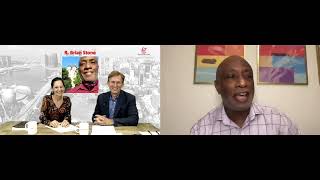
R. Brian Stone explains how design thinking applies to sales. Interview customers about their goals, not just tasks. Use asynchronous communication and short meetings to collaborate effectively in remote teams.
Chapters
Well, welcome everybody to this week's Sales Globe Rethink Sales Roundtable. And we're happy to have you on. I'm Mark Danolo here with Michelle Seeger.
Hello everyone.
And we every week explore new areas in how to rethink sales. And we're looking a lot at the future of sales right now. Post Covid future sales, what's going to be happening? And we have a great guest on this week. Let's tell you a little bit about salesglobe as we get started here.
Yep. So salesglobe, we are a problem solving firm for sales and that means that we solve the biggest challenges that companies have across the globe regarding their sales organizations. We do consulting around strategy and coverage and we look at things like, oh, segmentation and total addressable market selling roles, the processes that people follow, rules of engagement all the way down to enablement. Right. So things like account planning and your approach to incentive compensation and quota setting and training and development of your team. And of course we'd be remiss to not mention the tools that are used to enable sales organizations. So today we're actually digging down into one of the big problems, which is how do I coordinate and how do I sell in this new environment? How do I coordinate great interactions and the selling process in a new way of selling, which means I'm remote right where I used to be face to face. And we believe that the future is around this creative problem solving. Right, Mark?
Right. Because we don't know what's going to be happening. So the better we are at solving problems, the better equipped we're going to be to deal with whatever's on the horizon. And in the past couple of sessions we've talked about some, some predictions for 2021 and you can go back and check those out. But you know, here are some of the big highlights and we're going to get into some of these today. But you know, fear and financials driving behaviors.
Yeah, we know that that'll continue. So as companies are looking at budgeting for 2021, we're finding that those two things are driving those decisions. So fear of what, Mark?
Fear of what's going to happen. Fear of is it going to stay around? Is it going to come back? Do I still have to work remotely? And so. Right. So that's going to drive a lot financials around. Well, we don't need all this commercial real estate. We're going to lower our profile or lower our cost. We don't have to travel anymore. And so that's driving short term decisions. But we see some things that are going to happen, like short term we're getting higher efficiency because we can call anybody anywhere in the world, but we're getting less collaboration. So the number of puts and takes that are going to happen here and, and as we get into 2021, like we've talked about in some prior sessions, there's more goal risk. So we don't know how to set goals and what's ahead. So how do we deal with that? Probably a little less distinction around what business is good business and everything will be good. Maybe some higher turnover because as we have more of this continued bunny slipper fatigue, people are going to start to become disconnected with the value proposition for their jobs. And communication challenges are going to continue with how do we build relationships, how do we communicate with people? So that's going to be a set of challenges here as we're moving ahead. So we're going to talk with our guest today about some of those and how we apply design thinking. We're going to be asking some questions, but you can also post your questions in the Q and A section and we'll be picking those up as well. So just enter those in and, and we'll pick those up. So, Michelle, let's talk about our guest.
All right, Brian Stone, actually. So Brian Stone, red part, which we won't. It's our Brian Stone. I did learn that. So we'll be talking to him and he is coming to us live from Singapore. Brian, thank you. Because we know it's after 1am and we talked to him before when we were getting ready for this session and he looks great, everybody. He's like wide awake on a Friday. Friday more really Saturday morning, his time. But we are really happy to have him here. Brian has been a professor at Ohio state for over 20 years and he'll tell his story there. But you know, thought that's probably where he would stay. He had a great position there and made a life change decision to go to State. And he is at the National University of Singapore now and we're going to delve into his experiences there. He brings a wealth of knowledge and information around creative problem solving. And you know, it's all of this work that you and Brian have done in the past around design and design thinking and bringing design to the public or to people for businesses. It really is all about problem solving.
Mark? Yep, yep. We're going to apply problem solving to, you know, from design to sales. And you know, speaking of design as well, Brian also wrote a book called The Theory and Practice of Motion Design.
This book I started reading and I learned some stuff. I was. I was kind of excited about it. So motion design is what it's about. Even the COVID of the book is really creative. But motion design, I mean, it's everything that we are in contact with and that we interface with everything every single day in our life. And, you know, everything from logos. So there was a couple things that resonated with me around the Southwest logo and the emphasis of that logo around the people and it being the heart of the company. And even when the employees step up to that logo, how you're focused on the employee, not the logo. I mean, it's amazing motion design and how it impacts everything that we do each day. So that's what he solves for. And it's a really interesting book. So, Brian, welcome. Today.
I'm accustomed to saying good morning, it is morning here in Singapore, but I'm very happy to be here. And Michelle, want to say something about a comment that you made at the outset, which is that we're going to have a little bit of fun today. And I am pretty sure I'm going to come back to this book that I like. It's 100 things every designer Needs to Know about People. But I would say it's relevant to anyone involved in sales or sales strategy because ultimately this is about a human experience. And one of the things that they say in this book is that humor is one of the biggest things that bond us as people. And so if you keep things light hearted, it makes people approachable and willing to make decisions a lot easier. So I'm not going to tell a, you know, a priest and a rabbi and a hooker walk into a bar kind of thing. It's not humor like that. All right. But it's just to keep things, you know, light and upbeat. And this hour will go just like that.
That's great. So we're going to have a great conversation with Brian. And you know, Brian, what I would love to start talking about is how you got to Singapore and just that journey that you took in the decision making process you went through. And then as we were talking with you earlier this week, we were discussing just kind of what it's like being there. And you know, we talked about this multicultural, creative, innovative island of 5 million people, of which 1.6, 1.7 million are expats, which is crazy. And when you think about that, it's like almost 30% of the population. So we would love to just, you know, delve into that and just talk to everybody about that, if you would.
Well, again, I actually started teaching design at the University of the Arts in Philadelphia. My former professors saw something there and said, hey, maybe we should bring him in part time. And I started. That's basically how I started my career there. And then I decided that I wanted to pursue my advanced degree. Ended up going to Ohio State and ended up staying there for more than 20 years. As you said, it is a terrific university. And what I learned about that experience was my previous orientation to design was actually very design centric, meaning that I read a lot of books on design, I talked to a lot of designers, and I looked at a lot of design history and design artifacts. But when I got to Ohio State, being a large research university, I started to see more of how design intersected with cognitive and systems engineering, and how it intersected with business, and how it had relevance to the medical school and some of the things that they were trying to solve. So it actually really opened up my thinking in terms of design being a catalyst for collaboration. So then with that, after 20 years and, oh, gosh, I could just go down the list of wonderful interactions that I've had with students and colleagues, I found that I was starting to stagnate a little bit. I started to get bored. And I knew what the routine was. And the part that sort of worried me a little bit was I knew every day what I could and could not do. So when you know what you can and cannot do, it doesn't push you forward to get into more challenging things, Right? You just start going through the routine. So I thought, okay, well, maybe I should kind of make a shift here. I am getting a little tired of these Ohio winters. So I started looking around and I had actually visited Singapore in 2009 and 2010, so I was a little familiar with the things that were happening here. And I saw this position at the university and then went through a whole course interview process and took a deep breath, said, okay, let's give this a go. So here I am, National University of Singapore, which is I believe now the 11th ranked university in the world in terms of its quality and its research output. So it's quite the prestigious university here in all of Asia, even though we reside in Southeast Asia.
You know, Brian, we heard the idea before that when you get into a dense environment like a city, especially a diverse environment, multicultural environment, you get more innovation, more ideas per capita than say, you know, a smaller place, suburbs, et cetera. But, you know, you've gone from Ohio to A place like Singapore, where you've got so much diversity, so much concentration, what do you sense there just in terms of ways of thinking that may be different?
Okay, well, to step back, it's not a coincidence that we have a lot of things happening in New York and San Francisco in the United States, and then emerging places like Atlanta and Austin, Texas, and Seattle, Washington, because these are densely populated, diverse cities with a lot of activity and a lot of energy. Now jump across the world and come to a place like Singapore, the influences are actually even more intense, which is, as you said, Michelle, there's about a million and a half expats here. So we're getting values and ideas from people in Western Europe, people in South America, people from Japan and China and Oceania, Australia and New Zealand. So. So it's even more influences that come into a city like this as compared to, let's say, in New York or San Francisco, Atlanta or Austin. And so it's actually very exciting. And I am challenged every single day here with the people that I meet and trying to understand cultural nuances and how that might kind of fit into what I'm doing here. So it's. It's very exciting. That coupled with the government identifying Singapore as a global design center. So the government of Singapore wants to put design up on a pedestal because they look at what are the strategies that Singapore can use to really emerge as a global leader. So one is banking, another is logistics and shipping, and another is design.
So if you can take this design idea. We talk about this a lot, Michelle, in terms of design thinking, sales design thinking, creative principles. And we talk about, okay, the principles that apply to design or visual problem solving or a lot of other kinds of problem solving, they actually apply to business, and they actually apply to. To sales as well. And I'm always showing people how that works. But I really love to hear you talk about the parallels that you see. Cause you've worked on both sides. You've worked on creativity in design and then creativity in business, and of course, creativity in sales or problem solving in sales. What kind of parallels do you see? How does that cross over for somebody?
Yeah. So everybody out there, Mark and I have been talking about this for years, I mean, literally years, thinking about what's the sort of common ground between what's happening in sales and maybe marketing and then what's happening in the space of design. And I sort of simplify it to deconstruct the definitions of design and thinking. So design, although people think, oh, you're the creative person, you come up with this cool product or whatever it is. Design is really about planning and how to solve a problem creatively. And creativity is about perspective shifting. It's also about taking influences from different areas and seeing how those things can be applied. So in other words, how do you best connect the dots from different experiences or different domains? And then you sort of couple that with, with thinking, right? And what thinking is about is formulating ideas that solve a problem that ultimately should be transformative. So whether that gets applied to developing a mobile app or building a new consumer product, or maybe it's developing a service, or maybe it's developing a sales strategy or communication plan to an audience, the process is absolutely the same. It's just that it's applied in different ways. And if you think about like then the application of it, I believe that given the right tools that anybody can go through a process of design or design thinking to solve problems. And it's really simply about a re examination of, of where you are and what the problem might be.
Okay, that's very cool. I had not heard it expressed that way. So here's what I heard you say design. So creative design thinking, right? Design, it's about planning and solving for a problem. You can break that down to business or art. Creativity is about that perspective shift and then connecting the dots and then in a new way and then thinking, formulating what you expect and would love to be transformative ideas. That's really practical, right? Those three things that you just said. And you know, when we talk about salespeople, what we're saying is that the future, the salesperson of the future, we believe that they've got to be these, these data driven creative problem solvers. And what that really means to us is basically that what we're saying is they need to step back and have a different type of plan for their clients. It's not just going out to dinner anymore, but being really not that all salespeople are doing that, but that's part of the relationship building process. We're really understanding deeply the problems that they're solving for. Right? And then creatively looking at how they can connect the dots in a new way, having a perspective shift in this new normal and the way that they're having to work remotely and then formulating transformative ideas. Now how would I. So now I know, okay, that's what I'm supposed to do. Talk to us a little bit about an approach. So here I am, you know, I'm a sales gal and I'm used to going on site and let's say I'm really a top performer, too. Couple challenges. When I step back and look at them, it could be that I'm going to make up my challenges because we hear about these every day. I'm remote and I used to be on site. And there's a no travel policy, at least through Q2 for my company. So I know that even if my clients open up, I'm not going on site. And secondly, my clients, they don't have quite the budget that they had before, but I don't want to lose them and I certainly want to continue to grow the relationship. Like, how do I start to think creatively about my own, my own business using these types of principles? I'm putting both of you on the spot.
Yeah. So a good, good problem solving approach. You know, where does somebody start? So, you know, regardless of the problem, how do you start thinking about solving the problem? You know, you're not just trying to be creative. What you're trying to do is figure out, where do I begin and do I have like a consistent process that I, that I follow each time so that I'm just not trying to wing it.
Right.
This might take this, this might take a little time question that you pose. I think there is a little anxiety around time, you know, which is how do we make these shifts very, very quickly. And the reality is that some things are going to change very quickly. Some things are going to change actually very slowly. So they have to exhibit some degree of patience in all of this. Maybe it's not the best metaphor, but think about how do I hit a lot of singles in baseball rather than trying to swing for the fences every time and hit a home run? That home runs probably not likely to happen because it takes a little while for people to adopt new processes, break out of the sort of mental models that they've had around business and sales for a couple of generations now. So I think if you sort of document like these are the little wins that we're getting that accumulate to big wins, you can sort of visualize that you indeed are making progress rather than looking for these kind of wholesale changes and shifts. Now, to answer the strategy question, one of my colleagues, I remember her telling me, did I ever interview my boss? And I was like, what do you mean? And she says, yeah, I mean, do you know what makes your boss tick? Like, how do you manage upward? And I thought, oh, that's a quite interesting proposition because I always thought the direction was the other way, that the boss is always talking to the subordinates if you will. So I think a way to approach the problem, first of all is to talk to your customers and interview your customers, but interview them from the perspective of understanding what their goals are, not their immediate tasks. And this is a big difference. Tasks are these kind of day to day things that people need to accomplish versus understanding their goals. Their goals are much longer range kinds of things. And the goals are about the ultimate things that they want to achieve. And then what that will do is that it unleashes this shackle of how we're doing it now. Because if we interview about the day to day, you'll get stuck in the present. And what we have to do is extract ideas that help us envision what the future is. And I like to use this. If any of you have used Mint, this application, Mint, it's a sort of financial aggregate system. Like on the surface, if you said we're going to take all your credit card information, mortgage information, your savings, we're going to put it all in one place. That goes against the mental model that we've all had for decades, which is, my credit card is over here, my mortgage is here, my car payment is over here. But if you really talk to people about their financial goals, they want a holistic picture. They don't want a compartmentalized picture. And thus you come up with an application such as Mint. So that would be one place that I would start.
Yeah. So when you talk to the customer, and I agree with what you're saying because we talk a lot about this with customer problem solving, strategic account planning, that you've got to get out of the day to day and you've got to get aspirational. That's what we talk about, Brian, is we say look ahead two, three years with your customer and where do they want to be and what do you want to be able to do for them? And, and that kind of frees you up from the current day constraints. Right. And so then you start to see the problem a little differently. You have a different view on the problem, a holistic view on the problem. And then from that point, what are you doing as a creator, as a problem solver? Once you have a better definition of that problem, how do you approach that differently than maybe somebody that just starts to try to solve it?
Yeah, I think you have to look at different scenarios. There's sometimes people, they follow a very sort of linear or serial path to solving the problem rather than, I think you have to build in a lot of kind of what if statements, like if we do this, or if we propose this, what happens? And if that's the case, what if something else comes in and all of a sudden changes the dynamic? Am I prepared to respond to that? If all of a sudden some technology out there changes, am I prepared to do that? So I think about the sort of problem solving aspect as several branches, sort of what if scenarios. And then you become better prepared, you become more proactive in this sort of creative problem solving process than reactive. And that's one of the things that confounds people, which is they lay out a plan and then something changes, like, for instance, Covid, and then they panic because they're reactionary now and they don't have the tools to really respond to it very quickly, rather than being sort of predictive on a lot of things. And that'll keep you sort of energized and expect change, because that's where we are now in 2020. We should be change. I was just always reminded, to oversimplify it, Mike Tyson's rather famous quote, which is, everybody has a plan until they get punched in the face.
Yes, that's right.
Very true, very true.
Who would have ever thought we'd be quoting Mike Tyson in 2020? But here we are.
Mike Tyson probably thought that.
You know, funny little story. He owns this mechanic shop down the street from where my dad lives, my family home. He's around a lot. Upstate Albany. Anyway, that's just, you know, upstate New York, Albany area. Now let's talk about online collaboration. I want to shift over to that. So here's the big challenge, right? We're on this zoom platform. We're learning how to make it work. We're creating big backgrounds and just trying to get more creative here with how we interact with our clients and how we provide value back to our clients and help people as they're navigating and preparing for 2021. You've got. We hear every day from sales leaders, sales managers, and the frontline, different stories, right? So leadership is. I don't have a big handle on what's really going on with my team now. They can focus on analytics and getting better reporting, but that's not exactly what they mean. They're really referring to the things like what you've talked about, Mark, like bunny slipper fatigue, keeping the team motivated and how, you know, so how they stay in contact with them in a remote environment, all the way down to the front line. Who's saying, you know, yes, my customers, my clients, they might be more available because they're not in an office, and neither am I, but the Zoom platform is still kind of new for me or whatever platform they're using. And particularly we hear the struggle with prospects, not existing clients. Right. And then even existing clients, it's kind of easy to push off the client. It's easy to push you off a little bit because they just might not be interested in a particular product and service at this time. So, you know, just practical tips and ways that we can think about how we can connect using creative problem solving with customers virtually in a better way.
And, you know, Michelle, I heard somebody say a couple months ago now, and it was actually a training company, and this may be kind of a little framing point here. They said, well, you know, now when you're talking to your customers, your PowerPoint is more important than ever, right? Because you're just reduced to a little talking head up in the corner. So how can you make an effective PowerPoint? And we thought, that's not the problem we're trying to solve for. And yet that's the box that we've been put in in a lot of situations. Here's your PowerPoint. Here's where your little head talks, and that's it. And that's not connecting. So how do you change the paradigm there?
Yeah, changing the paradigm. You know, I'll give you an example. We have. We're creating two forums, Brian, and they're forums where we bring together clients, actually, and thought leadership around future of sales, compensation and future of sales. And, you know, it's a small subset of clients, and we're looking at thought leaders in the space to actually, not only to get clients, you know, collaborating, but to have people, people talking to each other about what they believe is ahead as they're solving for their problems. It doesn't all necessarily come from us. So, you know, we're just trying to think of creative ways for connecting and how if I'm a salesperson, again, like, how I can be thinking about that.
Okay, a lot to unpack here.
I know I do that. I always on the spot.
The first. I would argue that we really haven't been that good at collaborating in the first place. It's probably not our fault. We go back to our formal training. So you have the business school, and then you've got journalism and marketing over here, you've got engineering over here. You know, you got. You got the medical school over here. So all of our disciplines have been compartmentalized for more than 100 years. And then we graduate, and the first question they say is, what's your major? What did you study? And then you kind of put yourself in this box, and then you go into professional practice and they tell you, now you have to collaborate. And the tough part is, but I've spent all this time only talking to people in my own bubble. So we have to get over that hurdle first, which is, I think what you're doing here with having me from a different discipline, coming here and talking to sales managers, people working in compensation plans. That's a great start. Because we have to, in a sense, like, set the table, if you will. Like, this is all the expertise that's required for us to have success, this project experience. Let's understand what everybody brings to the table in terms of application, like what they do. But everyone shares in the responsibility of ideating what it should be. So I want to hear the voice of the engineer. I want to hear the voice of the person from marketing. I want to hear the voice from the person from sociology. So we have to do that and then come to 2020. I think the thing around collaboration is we have to establish some rules of engagement of what collaboration means. I've been in the room where the idea of collaboration is, I'm the boss, I have a great idea, this is what I want to do. And everybody shakes their head and goes, yeah, it's a terrific idea, boss. And they leave the room and go, gosh, how to put this person in charge? So you really have to, you know, empower people to contribute without any.
With.
Without any prejudice or repercussion, to give people the confidence that you can say something in a collaborative session that might feel silly, and it might seems silly, but it contributes to the dialogue nonetheless. Because even the most kind of radical, crazy ideas, a good collaborator will understand how to flip that idea into a positive, like how to take something that sounds really half baked. Because in collaboration, you should be trying to understand the intent behind what people are trying to impart. Not how they say it, but what they mean, you know, what's kind of in their head. So I think we have to do a little better job of leading that charge. Now, maybe the second part of your question. When Covid hit here in Singapore, probably pretty significantly in around March, the university said, we have to shut down and classes are going to go remote. And you had a large group of faculty members here that went, omg, what am I going to do? Then you had another group of faculty members that said, okay, this is yet another problem that we're faced with. How do we solve this problem? Let's look at what electronic media actually enables, like what is it better at versus face to face things. So I would suggest one to your audience is you can think about collaboration and communication asynchronously. So we always say, okay, we're gonna, you know, I need to have a meeting with this client, etc, etc. It's like, well, maybe I propose something and I give the client, you know, four hours to think on it and then reply maybe with a recorded session. Or maybe you introduce the problem one day and then you circle back and you have a follow up meeting sort of the second day. That gives people time to sort of process. I also believe in some of the things that you're doing at Sales Globe is that you communicate with people through multiple channels. So you have your, you have podcasts. Podcasts are great by the way, because I can listen to a podcast while I'm walking my dog or riding my bike or out jogging or I can of course do it in my office. And then all of a sudden, you know, things that are happening in social media, we're finding that like Instagram is a good channel to give people kind of bite sized information to entice them to understand and look and learn more things about what our offerings are and what our services are. Yes, we have zoom fatigue, all of us. And we talked about this before, which is maybe the meeting is 20 minutes and not your typical one hour meeting. Alright? So in 20 minutes you kind of rapid fire through these things. And there's a television show that I, that I like, a sports show. And they have a timer on the agenda for the sports show, like on the right hand side of the screen. Mark, you probably know what show I'm talking about. And so you can see holistically they're going to talk about these eight things and we're going to spend two, two and a half minutes on each things. So it's sort of, it's predictive, right? What it does is it hooks me in because I see like number seven, I'm very interested in that topic. So they kind of get me to kind of hang in on the program. So I say look at things like that for some of your online communication because I found that it has some degree of effectiveness, especially for our introverts, which we sometimes forget about. Like our introverted people, colleagues, they seem to be thriving in this environment because they're more, they're more comfortable because they're not overwhelmed with a big, with a big audience or the intimidation of the person walking in the boardroom. And they can they can contribute. One last thing. I've also held collaborative sessions through Zoom, and I use breakout rooms quite often. Right. Which is, here's the activity. I'm going to randomize and put you all in these breakout rooms. We're going to come back in 15 minutes or 20 minutes. And so what that's doing is one, it makes people accountable. Right. So when we come back, I'm going to ask for a report from each of the groups in the breakout sessions. Right? So nobody kind of gets to sit on the bench, not do anything, which is sometimes very easy to do in online conversation. And then you get people together in these clusters, and then you get different thinking. That's why I said I randomize the groups, right. So we have people that work together a lot, and then we have another session where people have never worked together before, and it gets them sort of figure it out. Figure out this whole collaboration thing in a. In a very, I would say, less intimidating environment. So give that a go.
Cool. So that's a great transition to the idea of problem solving principles. And we want to talk about things that everybody can apply. Brian. And the way I think about principles, it's how you think. So regardless of your problem solving process, there are certain things that you do, certain principles. You talked about one of them already, which is engaging the outsider. So you talked about different people and different functions, and we're siloed, so we're bringing the outsider. We don't like the outsider. Right. Because they disrupt our thinking as they take us off our path. Right. So you can be very uncomfortable with the outsider, but it's very healthy for you. But I wanted to go through maybe a few different principles around creative problem solving that might be useful. You talked about another one just a minute ago, which we call what is. Right. So when you talk about the asynchronous and we need to have a meeting, well, we go, what is a meeting? Well, a meeting happens in time. Well, what is time? Well, time can be asynchronous. What is a team? What is interaction? What is content? What is length? Right. So you. By changing those variables around. Let's talk about parallels, Brian. So when you start to look at parallels in other situations and how others do it, how can you use that as a creative principle, a problem solving principle?
I think it's absolutely critical that you get outside your sort of proverbial box and look at parallels. Charles and Ray Eames. I know everybody there is familiar with their work. You might not know them by my name. This prolific design Team. I like one of their quotes, which is, eventually everything connects, but it's the quality of connections that makes the difference. So that people really sort of get tuned into seeing where there are affinities or parallels or relationships. And so I encourage. I encourage my students, go to concerts, go to theater, read books, talk to other people, walk around, shift your perspective and that will help you. Don't reside only in your domain. So if you're selling widgets, don't only look at things that are relevant to widget selling. You know, look at things that are relevant to selling services, or look at things that are relevant to selling ideas or other products. Because there's some strategy out there that when you really examine it, probably has some applicability to it in your domain. And again, it's challenging to do, but once you do it, you'll think, why have I not been doing this my entire career? It is about perspective shifting. I tell a brief story about this. I'll try to keep it under 60 seconds. So this. So this little boy sticks his head through a wrought iron fence and he gets his head stuck. And they're trying to remove the kid's head. And so the one person comes along, the big brute guy, and says, no problem, I can bend the bars and get the kid out. Doesn't have enough strength to do it. Then the carpenter comes along and goes, oh, no problem, I got some hand tools in here, and I'll just hammer him out. And it's like, no, you're going to hurt the child. Don't do that. Then the other person comes around and says, well, I'll grab his legs and let's pull as hard as we can. The child's head's going to pop off and then comes along. The person who was disconnected from the problem immediately looks at it and says, hey, if you turn your shoulders to the side like this, you can just walk through going the other way. So everybody is thinking about how to get him out the way he came. And the reality is, no, just have him move forward and then he's all set. I have to simulate a video maybe of me doing that, but it really is true. You can get out of. You can get out of that situation by just turning your shoulders and coming on through. And Mark, I actually had a couple of other principles that I wanted to share. I think maybe one of the biggest ones is empathy and putting yourself in the position of others. Like, why are people struggling with a particular situation or scenario? And then how can your services or products aid in again, being Transformative, and I like using that word because transformative is, this is your current state. And by engaging us, this is going to be your future state. And your future state is going to be, you know, it's going to be better or it's going to be more efficient or it's going to be cost effective or whatever those things are, whatever those sort of attributes are that sort of make people tick. Back to our interviewing your boss concept. So being more of an empath, I think is a really important skill for people to have moving forward. I think another thing that would help people is to think more about how you tell stories. Alright, so how do you tell stories to make things relevant to people, you know, rather than just the idea of, you know, it's cost effective or this is the price point, but this is really what it kind of enables again for a human experience. Another thing is, and this is really difficult, but we have to move beyond being risk adverse. It takes a little risk if you're going to be creative or innovative, that comes with risk. And it's hard to manage, it's hard to manage risk, it's hard to manage failure. But I believe you have to have some discussions around how we deal with that, what's acceptable risk and then how we recover. Just like I said, we need to be more proactive in thinking about it could be this or it could be that. If it's this, what do we do? If it's that, what do we do?
How do you deal with along the way when you're talking about the risk, the idea of criticism? Because I've run into that a lot myself personally. When you're trying something new, you get, oh, why are you doing that? That's a waste of time, not a good use of resources, whatever. And you get criticism and then in the end it comes out and it works out really well. But you've got to get through all that. I mean, that's part of risk, right? Yeah.
And that's actually, Mark, why a lot of places are not moving forward, right? Which is the moment they get criticism, they turn back to their comfort zone, what they've always been doing, and then they don't go anywhere. You kind of end up stagnating. So you really need, you really need buy in across the board that says if we are going to make wholesale changes or paradigm shifts, we have to be able to accept some risks. And then the second part to that, Mark, is people have to get better at their criticisms in the space that they are constructive. So what you said I've heard, I've been in many meetings like this, which is, that won't work. That's not very helpful. That's a creative killer. When somebody says that won't work, rather than, well, what's the intent behind your idea? And let's think about how that may work. Because there's probably somebody in that room that's thinking, yeah, I can see how that works. And then the really vocal person says, that would never work. You've kind of lost that opportunity. I think that critique and criticism has to be a point of empowerment. Like that's why we're having these discussions, that's why we're having these reviews. Right. Which is to move our ideas forward and not come up with reasons why it can't happen.
Yeah. And so that takes confidence too. And I think if you're in your typical corporate environment, it's hard to break out and it's hard to have that confidence to take the damage right along the way.
Yeah. So what I, what I heard, I think we're gonna write some of this up into a blog and send people out. So I've heard about creative problem solving principles, engaging the outsider we talked about and what the importance of that, being an empath. So having empathy, storytelling, being able to take risks and manage criticism, embracing that and then finding these patterns, parallels. And also I love what you said about these open ended questions. So you know, as a salesperson, instead of, you know, your client, if they say something like, we just can't do that right now, asking an open ended question, well, what if we could, you know, or something that opens it up, I think that is really some good practical advice. So I know that we're starting to reach the end of our time, but I do want to ask another question here because I think this is important. One of the things we wanted to, you know, a lot of this creative problem solving causes you and that you need some time to think. And one of the things that we hear is that as people are working at home. Right. I just read something from one of our partners, Robert Hap. They had something on LinkedIn and, and they have these beautiful stories, these really cool stories of people that are talking about the challenges of working at home and how they're making it work. And what they're talking about are things like kids are in our home being home from school and you're having to home school, but yet you're still managing your career. There's a lot more noise and distraction in the home and you're, you're interfacing differently than you were before. You're having to leverage things like Zoom and then how that goes down. And there's just a lot happening in our environment right now. And then of course, just the distraction of COVID itself. So how do you make time right and give yourself permission, if you will, to think? And what are some principles that people could put in place to give themselves that time to really think? And how do you create the right environment for that?
You should go to a dog shelter and adopt a dog. Now, I know it sounds and sounds silly, but I'm actually being serious because that dog has to go out two or three times a day, maybe four times a day. And there's your quiet time, right? So I have a dog, he's under my feet now. He's trying to figure out my problem. Brian, why are you still awake and talking at this hour? It's usually quiet, but when I walk my dog, that's my kind of time to, as I said before, connect the dots. Because I'm not grinding at a particular task or problem that I was working on at that moment. If you can't adopt a dog, then you adopt some other strategy in which you release yourself from your, your actual work tasks. I think that's very important, like distance, and whether that distance is 15 minutes or 30 minutes or an hour, that you have some routine in which you disconnect from it every day. I have personally also changed my work schedule, as in I work from 8 to 8, but I take a break in the middle of the day. I'm not working eight consecutive hours. What I'm doing is I'm doing two hours heads down, then maybe a 30 minute break, then I do another three hours of heads down, where then I take a two hour break and then I come back like after dinner and kind of clean up some things. So I think when people are trying to sort of retrofit Your quote unquote, 9 to 5 in that window, and you've got kids in school that are on Zoom, you've got the distractions of the refrigerator over there and all these other things, it's just really hard to manage all of that. So maybe if you compartmentalize your day and then as I said before, that you're doing more things asynchronously rather than synchronously, it's actually, it can be very helpful.
So you're changing place and you're changing time. And I wanted to ask one other point out here, which is how do you give yourself the permission to do some of those things. Right? Because we're all used to, at least in the US we're all used to working and grinding really hard. And one thing I hear is with people now because they're distracted, they're losing time, but they're also not traveling. Right. They're not doing all the things that ate up tons of time before. But how do you give yourself permission to have some of that creative messing around time that you really need to connect the dots when you feel like you just need to keep going? Right. And it doesn't feel like you're working, but it's really allowing things to gel, allow, you know, it's that whole walking away from the problem idea.
Yeah, I don't know if I have a good answer to how you give yourself permission to do that. I just, you know, you just kind of do it. I think a lot of us, quite frankly, don't really ever turn it off. Like, even though you might have the nine to five, you're still thinking about what you're doing, you're still planning for the next meeting, you're still checking email. You just have to, I think, establish some boundaries for yourself. Now I've done it, we talked about it before. I've established some communication boundaries, which is I take, I use one form of communication, discord for all of my classes, all of my consulting work, and then I close the browser at a certain hour and I don't get any pings, I don't get any messages. I'm able to do some other things and then I come back at a designated time and then look at it again. The worry that I have is with all the forms of communication that we have now, it's like somebody constantly poking at your side. Like all day long they're poking at you. Like, look at me, look at me, pay attention to me, pay attention to me. And then I find that I'm not very productive because I'm turning my attention in too many directions. So you have to kind of constrain it, then you get something done and then you move on to the next thing. Believe me, people, they can wait. They can wait. If they send you an email at 9 o' clock and you don't reply until 10:30, it's okay.
That's true, that's true, that's true.
You know, so the big thing here is get a dog. I think that's what actually I did get a dog.
We got a few of them.
Yeah, we got a few. Through this pandemic that was actually all really great advice and one thing I wanted to that you reminded me of. For those of you that haven't watched it, I did see on Netflix they've got the social dilemma. And Brian, it's a lot about social, but also about mail and the constant pinging and always being on and you know, and how you can manage that. And these are from people that created this stuff. So I recommend everyone to watch it. It's really a good thing to see. Yeah, I think it's been good. This has been a great session. Brian. We're going to start to wrap this session up. I think it was really a wonderful conversation. We've got great information from you. Thank you so much for sharing your time with us, particularly at 1:00am it's.
Now 2:00am it's now 02:00am that's right.
I know. I don't know. I hope he gives us a warm welcome when we decide to go visit him in Singapore. We'll see. But anyway, thank you everyone for sharing your time with us. It's a privilege for us. As always, feel free to reach out to us if you have any questions. Always forward on the roundtable to others and call us with your toughest challenges, sales challenges. We are here to serve you. So thank you and everyone. Have a great weekend.
Thanks everybody.
Bye. Bye.
More from SalesGlobe







Sales Compensation for Results - Course 1: A Strategic View on Sales Compensation - Trailer


Freative Friday - Episode 98 - Insight in Your Hunt for The Revenue Roadmap Pt 4


Freative Friday - Episode 97 - Insight in Your Hunt for The Revenue Roadmap Pt 3