SalesGlobe Sage walks through a design thinking framework for creative problem solving. Learn three techniques: understanding the story behind a problem, finding parallels by asking "what is", and using storytelling to sell solutions. A mechanic diagnosed a frozen engine by investigating root causes; a sales team redesigned compensation during COVID by reframing the constraint.
Chapters
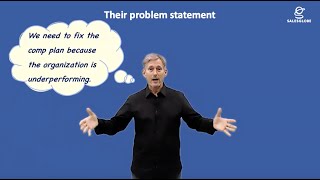
Well, hey, everybody, thanks for having me here. Real excited to be talking to you at GTA Rewards. And I'm talking about one of my favorite subjects, which is creative problem solving and how to use it to future proof your career. And this is really exciting because I'm going to help you to think a little bit differently today. And one of the things I want you to do is be able to take away some different techniques and some different principles with how you solve problems. We're going to take the mystery of creativity and we're going to put it into some ideas that you can use practically a little bit about us at Sales Globe. We're a creative problem solving firm for sales and for organizations that want to grow. So what we do is we solve some of the toughest sales problems. So we love problems that haven't been figured out. We love problems that have been around for years that companies are struggling with. And what we help them do is we help them get beyond the benchmark. We help them get beyond what everybody else is doing. We love to write books, so we've written a few books. The innovative sale essential account planning what your CEO needs to know about sales compensation, which I think is an entertaining read and quotas design thinking to solve your biggest sales challenge. In terms of my personal background, I might what you might call a closet art school mba. And before you get the wrong idea, what that means is I went to art school undergrad in Philadelphia years ago, and then I became a designer in New York and I did that for a few years. And I realized that I really loved business. I was rooming with some stockbrokers. They were all going off to business school. So I went off and I got an mba. And as I got through it, I realized a couple things. One was I wasn't a master in business administration. I was kind of a shoveler. The other thing, what I realized was nobody wanted to hire the art guy in any real serious company. They couldn't quite figure out what I was going to do in their organization. They wanted to hire people that look like themselves. And so what happened years later is I put the whole design thing, the whole creative thing in the closet and realized that I was using creative problem solving. And our teams are using creative problem solving in working through some of these business challenges. So put it all together to left brain and right brain thinking for sales organizations and for business. And all of a sudden we have a way to think through some of our toughest sales challenges. So I'm going to share some of those ideas. With you today. So around the studio here at salesglobe, we've got rolling whiteboards everywhere. In fact, I look around here, I can see them all around me right now. This is one on the future of sales and the future of business. Post Covid. And we ask a lot of questions on these whiteboards. We don't necessarily have answers to everything, but we have considerations like how's our environment going to change? Fear and cost reduction driving a lot of change. What kind of new challenges are we going to face? What's the organization going to look like? So they spur creative thinking. We like to go non linear in terms of how we think as an organization. And I want to take a second and I want to bring that down to the next level and talk about getting personal. Okay. And so this is really about how do you think about creative problem solving for yourself, for your job, for your career, for your life. And I want to get into some techniques here that we use in business and we also apply to our lives now. We had enough challenges around careers. The uncertainty back in pre2020, which sounds like ages ago, Markets were moving. We had products and services and lifestyles that are changing. It's impossible to keep up with the technology skills. If you think about all the new technology coming up, one of the toughest things you can do is be in a technology job because you're always becoming obsolete. You're always having to to retrain yourself. Careers are changing. In fact, depending on where you are in your career, your future career may not even exist yet. So that may be something totally new. Jobs are getting downsides and commoditized and jobs are getting offshored and AI. So commoditization, offshoring, artificial intelligence, big threat to what we're doing in terms of our careers. Then along came this thing called Covid. Right? So with COVID and Post Covid, fear and opportunity are going to drive a lot of business decisions. So what I mean by that, well, you look at things like the finance, the lower cost of working remote that companies are seeing by putting people off at home, working at home, not having the cost of travel, commercial, real estate, we don't need all that real estate anymore. It's going to be tempting for now, but I predict what's going to happen is we're going to see that remote workers are going to lose collaboration, they're gonna lose connection with their teams. Productivity is gonna start to dip at a certain point. And I'll give you one example. If you think about call centers, we go, well, everybody can Work at home. Cause they just need a phone setup, right? And it's even easier now than it ever has been with technology. So we can have all of our call center people working at home. Well, what happens is a call center is actually a center of excellence. We have people working together, we have people learning and collaborating. And you can't do that when you're sitting in your home or in your living room somewhere when you're. We also have the issue of people working with kids at home now. So we've got virtual education, virtual learning. So while you've got your highly productive people sitting at home, they're getting pulled aside by the kids, they're having to help with homeschooling. And all of a sudden we're dipping productivity there. So we're going to have some challenges there. And we're going to have the employee value proposition, I think is going to become a big change as well. Because what's going to be happening is, is people who love to connect, people who depend on connecting with customers, connecting with other people, people who collaborate the job, the value proposition of their job is going to change as well. So they may be looking at other opportunities. So all of a sudden the foundations of our careers, the foundations of how we work and the foundations of our jobs are starting to crumble. And the problem is we don't know what the answer is. But what we need to do is we need to know how to solve for that problem. So the last frontier, at least that we know of so far there's been many last frontiers and we keep finding more in work and in life and in your career, is the ability to creatively solve problems. And I'll add to that in a data driven way. So we're not talking about just being wildly creative. What we're talking about is what I call functional creativity. And functional creativity is marked by two things. It's marked by an objective. I want to accomplish something or I have a problem that I need to solve. And it also has constraints, it has things that are holding you back from solving that. So we want to use data to help solve that and we want it to get impact for your life and for your organization. So there are a lot of reasons why you can leverage these creative problem solving techniques. So I want to get into this a little bit with you today. But first I want to ask you question, and here's the question. Where were you when you thought of your last great idea? There are two assumptions in here. One is that you actually had a great idea. The other Is that you were somewhere. So you're thinking through right now and I hear you saying, well, I was in the garden or I was out biking or I was working on my car. I didn't hear anybody say that they were sitting in their office. I didn't hear them say that they were sitting in their conference room. I heard somebody say that you were in the shower. Good answer. Well, what happened is you were in the shower and you're doing your thing, and all of a sudden you had this problem that you were trying to solve for. Could have been in your life, could have been in work, and bam. That answer came to you instantly and you're like, that's what I got to do. Well, what happened there? Was that a eureka moment? No, it wasn't. It was part of the creative process. Your mind was going through design thinking, your mind was going through creative problem solving. And so what was happening is you were working on this problem you were trying to solve for. Maybe it was the day before, maybe it was that day. And then you go and you do something else, whether it was riding your bike or being in the shower. And your mind starts to go into a look, seek, function. It starts to create random combinations. Now, I'm no neurologist or anything like that, but. But the idea is all this random, nonsensical stuff goes together and then combinations hit. And that's when you have these eureka moments. This is one of our principles that we talk about in creative problem solving, which is walking away from the problem. So rather than grinding away and staying all night trying to figure out the answer to this thing, you work on it, then you step away. And as you're doing something else, the answers start to come to you. So there are not enough showers in the office, probably not enough showers in your house to. To be sitting in them all the time when you're doing your creative thinking. So we need some better methods to use. So I want to start with the challenge. The challenge is that this creativity, this creative thinking is really important. But our system is lacking, Our education system is lacking. A recent survey that was done, 75% of educators said that students need to learn creative problem solving. They also said that these kind of skills are going to be in high demand for senior level careers. But they said that education is limited by budgets, it's limited by a lack of resources. And over half of them said they don't have the training or they don't have the knowledge to be able to teach creative problem solving. So how can you teach people to do this when you don't even know how to do it yourself. The good news for you though is Canada is near the top in creative problem solving. You're about 93% of the best level in terms of creative problem solving in schools across 44 countries. Singapore was the top. So you're right up there with Singapore. But what about all of us in our careers, in our jobs? We don't have the benefit of even if we had an education system of learning it. We need to find some way to be able to learn techniques beyond just formal methods that you might pick up in school here or there. So that's what I want to get into today. So a few different areas, future proofing your career. I want to talk about how to become a creative problem solver. We talked about the challenge. I want to start next by talking about what our goal is here in terms of what we're trying to accomplish. And then a couple of very important points. Right. So I want to talk about methods that we create with. These are techniques that you can use. I'm going to share three of them with you today. And there are a whole bunch of these things, right? So I'm just going to give you three. And these are techniques for problem solving. And then I want to talk about principles that you create by. It's basically how you think. So you think of a. The methods are the way that we're solving the problem and the principles are kind of the underlying ways that you think while you're solving the problem. And you'll be going along, working on something and all of a sudden it'll be like, oh, that's a creative problem solving principle. That's something that I need to think about, like walking away from the problem. The shower, right? So I want to walk away from the problem and that will help me to solve the problem and I want to talk about putting it into action. So today what you're going to do is you're going to come away with a few techniques and a few principles that you can start to test on your own. And these will be really cool. And I'm going to teach you a little bit about creative muscle memory as we finish up. So let's talk about our goal. My goal for you is to make you a better data driven creative problem solver. I'm going to put you in the top quartile creative problem solver. So I can't make you like Da Vinci, I can't make you like Steve Jobs, I can't make you like Elon Musk. Or anybody else that you might think of as a creative genius. What I'm going to do is I'm going to give you the ability to solve problems, so you're going to be among the best at practical problem solving. It's up to you if you want to become a massive creative genius. You probably already know if you have that capability. But what I'm going to do is, especially if you're a left brainer, give you some techniques to use to start to think more creatively and you can apply for life and you can apply that in your career. First thing you have to do is you have to understand where you want to go, what your aspirations are. Now I'm big into goal setting and I was always a big fan of all those cassette tapes. My parents gave them to me when I was a kid. All about how to set your goals, the long term goals and short term goals. And if you think about goal setting and you look at the elements of time that you see here on the chart and also possibility there you sit right on the left hand side there. So you're looking at your goal and that goal becomes kind of the end game. That becomes a thing that you're trying to solve for, you're trying to focus on. And sometimes that can become a barrier because we're trying to solve for something that maybe is a little too small versus thinking about the aspiration. What's the big thing that I really, really want to do? What really excites me? What's three years out, five years out, 10 years out? That really excites me, that I want to go after. And if you put together the elements of time and aspiration or possibility, you can create what's called a trajectory. So you'll start to see what your path is to get there. So a few questions for you to think about as you're getting started. What are you tolerating in your career? What are you tolerating in your life? What are you tolerating that you're just not changing because you can't get outside of yourself to fix that? What excites you? What do you really get jazzed about that you want to do? Maybe in the future? Where do you want to be? What do you envision? So we talk about this technique of walking out into the meadow and where you ultimately want to be. And then you look there and you say, what does it look like? And you look back and you say, how did I get here? So where do you want to be? When we talked about the idea of trajectory, and then this idea of healthy frustration. So how do you know when you have a good aspiration? I think it is when you have a goal that is so big that it creates tension, it creates excitement at the same time, and it creates a little bit of frustration. And I've had this for years. In fact, people that know me complain about this, about me. They're like, you're never satisfied with what you're doing. You're always looking at the next thing, or you're always doing two things at once. But for years, I've had a healthy frustration about, why am I not doing X? How long is it going to take me to get to Y? And that healthy frustration will drive you. It'll propel you forward. So we have to start with a problem, and I got a particular problem I want to talk about. It's my daughter, Isabelle. She's not really the problem, but it's something that happened to her. And she goes to University of North Carolina at Chapel Hill. She now goes to University of North Carolina at Zoom. But back when she was going to University of North Carolina at Chapel Hill, she called me one day, and she was visibly stressed, and I could hear a lot of traffic in the background. And I'm like, what's going on? She said, I was driving down I40 outside of Chapel Hill, and my car just broke down. I'm like, oh, man. So what's going on? She said, well, it just broke down. It just died in the middle of the highway. And I had to pull it off. So I'm on the side of the road right now. And I said, well, you okay? She goes, yeah, I'm fine. She said, my boyfriend's with me. You know, Alex? And I'm like, that guy? And she said, no, but it's okay. You know, he's with me, but, you know, he's real sensitive, dad. He's starting to cry a little bit right now. And I'm like, oh, man. Okay. So I said, okay, listen, I'm going to call aaa. So I called aaa. They came out with the. With the tow truck. They took the car away. They brought it back to the shop. A couple hours later, I get a phone call, and they say, okay, well, here's what's going on, sir. Your daughter forgot to put oil in the engine. And what happened is the engine froze up, and so now it doesn't work. And I'm like, okay, well, that's kind of odd. I remember putting oil in the engine back in Atlanta. Hmm. I said, so how do we fix it. And they said, well, you can't, because it's frozen up. It's like a geological form right now, and nothing's going to happen to it. You're going to have to get a new engine. And I'm like, oh, get a new engine. Come on. And they said, well, yeah. And I said, what's the new engine cost? He said, about $5,000, maybe more or less, depending on you get a new one or you get a used one. And so immediately, like any good dad, I went into the Boy Scout mode, and I started to try to figure out what to do. And as I started having calls, making calls with other garages in the area, I started to go into freak mode because everybody's saying 4,000, 5,000, $6,000. In fact, this one place that we can order an engine on the Internet and you can have that shipped to any shop you want, and then they'll fix it for you there. I'm like, oh, that's fraught with problems kind of falling between the cracks there. And so I just about gave up. And I found this one other listing, and there were a bunch of reviews. So I called the place and I told the guy with the problem. Problem was. And on the other end of the phone, Raleigh, North Carolina, I hear this voice, this kind of New York accent. He goes, mark, Mark, tell me the problem. Tell me the story of the car. And I'm like, the story of the car? What are you talking about? Yeah, tell me the story of the car. When did you buy it? Do you like it? Has it performed to your satisfaction? And I'm like, this guy's a little nutty. And I'm like, well, yeah, I mean, it's an okay car. Where did you buy it? Well, I got it at the Chrysler dealer. And he told me his name was Jimmy. And so I'm telling Jimmy, what's going on? And I said, well, yeah, my daughter and my wife were at the Chrysler deal, and they called me, they wanted me to come see this car, this Jeep. And I went over there, and it was a decent enough car, but the salesman wanted too much for it. So, Jimmy, I did this thing where you walk away and to get a better price. And then my daughter started crying, and he goes, oh, daughters, daughters. They'll do it to you every time. And I'm like. And I said, but it's not been a bad car. And he said, any accidents? Any incidents? And I said, well, she did have a rear end collision, actually, at this intersection. And. And it wasn't made a lot of damage, but any bloody work? I said, yeah, yeah, she had to have it fixed. Any engine work? Well, yeah, she did have the engine working. Ah, interesting, interesting. So I finished telling him a little bit more about it. He goes, I'll tell you what I'm going to do. You bring the car in, I'll take a look at it. At this point, I'm half sold. So I have the car brought over and the next day I'm in the office, I get a phone call and I say, hello, it's Mark. Mark, you sitting down? Oh, hey, Jimmy. Yeah, yeah. You sitting down, Mark? Yeah, Jimmy, I'm sitting down. What's going on? You're never going to believe what we found. We opened up the engine, we found a rag in the oil pan. The rag in the oil pan? What are you talking about? He goes, yeah, the boys, they're laughing so hard, they're rolling over the floor, they can't even get off the floor. He said, I'll tell you what I'm going to do. I'm going to take the car, I'm going to move it off to the side of the shop and I'm going to put a shroud on it to the investig is over what investigation? Some kind of scam. And he said, well, he thought that perhaps the rag was put in the oil pan by the prior shop. Like, oh, boy. So he had the investigator come over and of course, Jimmy knew the investigator and they traced it all the way back to a shop in Atlanta that had done the engine work on my daughter's car. And there indeed was a rag that was left in the oil pan. So what did we get in the end? Well, we got a free engine in the end. And Jimmy got another great review written by my daughter. So what did Jimmy do? Jimmy understood the story. So Jimmy got into the what and the how and the when and who was involved and where was it happening and why was it happening? And you can see all these points. He came out with the frozen engine, the lack of oil, how the car just stopped. He didn't just ask what the other companies asked, which was, what do you need? He asked me all these questions to understand the story. So we're going to take something that Jimmy did a little bit later here and want to talk about some design thinking principles that Jimmy used. And I talked to Jimmy about this a while later and I told him what happened and how we were really pleased with it. And he goes, look, he said, I could have sold you an engine for $5,000. You would have paid me the money. You would have gone away. You wouldn't have been very happy. I would have made good money. It would have been pretty quick, he said, but it wouldn't have been solving the real problem. So Jimmy, this mechanic, was doing design thinking. So we're going to come back to him in just a second here. So I want to get into some methods that we can use to create by. So these are methods we can apply in terms of how we create. So let's go to the first one. You got to start with a foundation. You got to start with how you creatively solve problems. So we don't want just a bunch of random methods. What we want is a framework to think about. So this is future proof design thinking. We also call it sales design thinking in our sales books. And. And the whole idea. I mean, if you look up creative thinking processes on the Internet, and you may have done that already, you're going to find all sorts of diagrams. It's really confusing. Everybody's got a different point of view. It doesn't matter. You just need a process that's logical. Here's a logical process. You understand the problem statement. Everybody's got a problem statement, right? The problem statement is not enough. You need to then redefine what the challenge question is, what's coming off that problem statement. And a challenge question, by its nature, is more provocative than a problem statement because a question provokes ideas, it provokes answers. We think horizontally or think divergently, come up with a range of ideas, we develop those ideas vertically, and then we start to manage the change with what we have. So I want to pull out three techniques here and talk to you about them. Understanding the story. We already started with Jimmy and redefining the challenge. Then I want to talk about how you find parallels asking what is? And then I want to talk about how you tell the story. So let's go back to the story. The story comes into redefining your challenge question. This is what Jimmy was actually doing, was redefining the challenge question. I want to give a quick business example of this. This is a company in the automotive electronics industry. They make components like GPS components and antennas and things like that. And they had been in business for a while. They had grown through acquisition, and they started to see that they had some performance issues, and they ran some analytics. And you probably are familiar with these kind of analytics here. If you've done any work around compensation, which is they looked at quota attainment percent for their sales organization and they looked at the number of reps. It's a histogram of quota attainment performance. And what they saw was only about 20% of the organization was hitting quota. In fact, you see a big spike here. 97 of the reps were actually just below quota. So there's something going on there, some reason they're not getting to quota. So it could be something to do with maybe how the quotas are set historically and they get a bigger quota when they go over quota. So we'll get into that. We can get into that another time. But this is what the view is that most companies take on quota setting is just a view like this, right? So then they went one step further and they said, well, let's look at the trend. Let's look at year over year quota performance in terms of quota attainment. Percent. Right. And what we saw is year one versus year two quota attainment percent. Each one of these dots represents a person. You can see that if somebody did well in year one, they didn't do so well in year two. Vice versa, not so well in year one and did very well in year two. So what's happening here is what we call porpoising performance. So they're going up and down. So they took this and they said, well, we have a problem statement. We need to fix the comp plan because the organization is underperforming. And the problem with a problem statement, it's like this inanimate object. It's. You put it on the table and we try to solve for this thing. Right. Versus developing a provocative challenge question that's going to evoke ideas. So what's the real challenge? We're going to use some of Jimmy's questions here. Okay, so I want to go into what they learned when they asked the questions. So let's take a look at what they learned about the organization when they asked the questions. What happened? Well, too many reps were below quota. Only 20% of them were attaining quota, as you saw there. How and when did it happen? Well, the company started with core electronics and they grew through acquisition. So antennas and gps. They acquired a lot of organizations, but they had varied levels of integration. So they didn't put all the organizations together the same way. So they had all sorts of different types of sales roles, different types of organizations. And that was fine when the market was good, but as competition increased and as the market became tougher, we had higher sales expectations. The organization didn't perform as well. Who was involved? Well, senior leadership. They did opportunistic M and A, that was fine when things were good and finance became the pit bull as the organization, as the organization started to not perform as well. So you start to had an have an adversarial relationship. And where was it happening? Well, you were having sporadic performance in the global accounts, their biggest accounts and their turnover they were getting was the highest in their 75th percentile performers. And the new reps, the people with less than two years experience. So they had no new talent flow. Well, why did it happen? Well, it was aggressive Ma, so there was a need to grow and they were doing it through acquisition rather than organic growth. So we've got a great story there. All that's the pain and suffering that happened. So what I want to do is I want to take that story and that pain and suffering, I want to flip it around the other way and I want to say what does a good solution look like? A solution vision ask the same questions, what would it be? Successful outcome, how and when would it happen, et cetera. So let's take a look at the solution vision for the organization. So what would happen? Well, we'd raid sales, raise sales organization performance, quota performance, 50 to 70% of the reps at or above quota, which is a great benchmark. We'd get our hit, our revenue goals. We'd have market opportunity based goals. Well, how would it happen? Probably have a staged introduction globally, who would it happen with? Well, we'd want lower performer, lower turnover for the top performers and the new hires. We'd like to have a consistent organization design so we have all these sporadic sales roles all over the place. We'd love to have a more consistent sales organization design. We'd really like to engage the theater leaders around the world because they're critical to make sure they're aligned with us and they can implement this. And of course we need to engage finance and sales as a unified team, especially around the quota setting because finance is critical on that. We've got to educate them. Where would it happen? Well, across all markets, but especially global accounts. And why? This is probably your most important question. Why? Because you're going to use this later when you tell your story. It would be a benefit to shareholders, It'd be increased, predictable growth. It'd be better for sales as well. Right. So there's a great solution ahead. Now what I want to do to create my challenge question, I want to take each of those components in the solution vision and pick them out and say let's develop a question that's going to tell us what we're really, really solving for. So how can we develop a solution that that uses market opportunity based quotas? It drives company revenue goal attainment, it raises sales organization quota performance across all markets, especially in global accounts. It engages theater leaders and we have year to year consistency and it also contributes to lower turnover for those top performers and new hires. And we have an improved sales organization design while we align finance and sales as a unified team. So if you take this challenge question and you compare it to the problem statement that we had earlier, which was more around we need to fix the comp plan, you're going to come up with two completely different answers. So you start solving for even some of the components of this, you're going to have a much more well rounded solution. In fact, with an effective challenge question, you're going to start from a different place and you'll inherently come up with a different answer. And if you apply this to a competitive environment with customers, if I start from a different place than my competitors, I'm going to come up with something they probably haven't thought of. Okay, so here's your expanded challenge question. It's kind of a run on question, but very effective. So you start solving for each component of those. So that's piece number one. Now I don't expect that you're going to get all this right the first time, but start working on little pieces of how do I understand the story? Just by understanding the story and saying, okay, well what would great look like? You'll start to see new ideas come out of that. Now I want to take that a step further. I want to talk about finding parallels or asking what is. So I want to apply this to what we just did. And I use this technique all the time. Even if I don't have a challenge question defined, I'll ask what is around different areas. So let's take a look at this. I have our challenge question. We just went through the redefined challenge question. How can we develop a solution that does all of these things? And I picked just one component out of it about engaging the theater leaders, because that's a really important thing to do. And so what I can do is I can take one piece of my challenge question or I can take all pieces or some pieces and I can start to look at what that means. So I take engaging theater leaders and I ask what is engaging? And what I'm looking for is I'm looking for expanding my thinking around the idea of engaging. So engaging is connecting, it's involving, it's aligning people. It's bringing people together. It's getting people to commit. Maybe it's getting people to sacrifice. We don't think about that. Probably wouldn't have thought about that around our theater leaders asking for a sacrifice. We could do it in certain ways, in person, probably virtually nowadays, in their work. Engaging could be benefiting. Engaging could be creating a dependency among a team so they have to work together to get something done. Accountability. So if you're giving accountability that can engage people, you might be asking them for leadership, you might be asking them to share a risk. You might be asking them to do it as a team, you might be asking them to do it individually. This could go on and on. We create flip charts line by line or lined up, and we just go through and we look at meanings of words. And what this does is it expands thinking. So if you think of a recent project you worked on or even how you thought about your career, because I use this all the time for personal stuff. How you thought about your career and you came up with a couple of ideas or three ideas. If you start to take each of those components and expand it out, I guarantee you you're going to come up with an abundance of ideas. So this technique alone can help you become a more abundant creator, an abundant thinker, and then finally telling your story. So I want to go to the other side of the equation and talk about storytelling and the importance of storytelling. Stories are important, and we can apply them to our problem solving for our lives, for our careers, for business, for personal situations. Because we're a story culture, we gravitate towards stories. You think about the Jimmy story before, right? If you were paying attention, you're probably getting into that a little bit and you're wondering what was going to happen there. We learn through stories, so we learn through stories as kids, we learn through stories as adults. That's the way we pass down information and knowledge. Probably some of the things that you learned or know in your job today, you learned through stories or tales, through your company or at work. And we engage with stories, right? So when we tell stories, people hook in. They immediately engage. If you ever think of a good comedian, they start telling a story. All of a sudden you start listening, right? And so these stories are very, very powerful. We. We don't use them often enough. When we come up with ideas or answers to problems, very often we just tell people what the idea is or tell people what the answer is versus taking them through the story and then hooking them into that. So I was working On a survey with world at work at the end of 2019. And I flew out to Phoenix with my partner Michelle, and it was on a survey on sales compensation practices and what's happening in sales compensation. And we met with Chris and lindsey, two of the researchers at world at work, and had a great meeting with them to talk about what was going to be in the survey, the different topics we wanted to cover, etc. And one of my favorite parts of the trip was we went out to the sushi restaurant. It was one of those revolving sushi bars where you sit down and the food just comes by you, and you just pick it up and you eat as much as you want. The problem was I had about 17 plates, and they count the plates to determine how much to charge you. I started sneaking them behind Chris, and that sort of worked for a while, but it was a fantastic place. And then we came back and we had to figure out the problem. And all of a sudden Covid came along and it threw a wrench into everything, and we didn't know what to do. The survey was irrelevant at that point. It really didn't mean anything because nobody cared. And so we had 48 hours to figure it out because we had some deadlines we had to hit. What does it mean, Covid, to organizations? What does it mean to compensation? And we came out in the end with a really big story. COVID 19 has put sales organizations in fast response mode, and they're looking for compensation beyond just answers. They're looking for total solutions beyond just compensation itself. Over half of the organizations they've defined to the sales team how to engage with customers. This is back in march. And in terms of other customer findings, Organizations have shifted from selling to helping. So they're asking how they can help customers. Most expect performance is going to be lower this year. About half of them plan to minimize compensation impact. So they want to do something with the organization on compensation, on communication. Only 15% have communicated some sales compensation action. This is again back in March. A lot more are doing that now. Almost half have assured the sales team of some action and compensation. And they're trading on trust. In fact, they're using this trust to say, look, it's going to be okay. We're going to take care of you. The trust tends to be higher in organizations, though, with fewer than 1,000 employees, because they tend to be a little closer, a little bit more connected. On the compensation front, only 36% of the organizations have a plan to address sales compensation. And the top considerations are quotas and performance measures and thresholds. And the most implemented ones, at least early on, were performance measures and quota adjustments. So what just happened there? I told a story, right? I took a lot of information that came out of this survey and we created a story out of it and it made it really engaging. And people started to listen to that story and it became usable and it became meaningful to them. And they were able to take that and they were able to use that and deep dive down where they wanted to learn more. We followed kind of a traditional storyline there with Chris and Lindsey. And a storyline starts with a setting and character. So think about what we call C level goals. We have those in the book. What your CEO needs to know about sales, compensation. C level goals. Get into what's important from a product standpoint, customer standpoint, financial standpoint, organization standpoint, talent standpoint. And so it creates the setting and the situation. We dive into the problem or the challenge question. Well, we already learned a little bit of how to do that. And so what happened is that we then with that problem, we start to investigate, we start to find out what else is going on. So we use some analytics, we have this rising action in the storyline and it goes to a climax and we find the solution and then it brings us out to the solution, vision or the resolution. So it's not a novel, it's a short story. It's memorable, it's something people can remember. It's tied to the core purpose of what you're trying to do in solving your problem. It builds a need for action and it may provide a resolution. So story is a very, very powerful tool. And I would recommend that you take a look at storytelling as you're getting to your creative solutions to get commitment to your ideas. So why? Well, they simplify the complex and in compensation, as an example, there's a lot of complexity. So we can simplify a lot of complex stuff. They engage the audience, they create memorability. So people remember stories more than they remember a bunch of information. And they build commitment so you can get action off of those stories. So those are a few techniques, a few methods, and we've got tons more we can share with you at a later time. But I wanted to take another minute or two and just talk about some principles you can create by so how you think when you're creating. And I want to talk about some of my favorite principles here. Number one, take time or protect time to think. What I didn't say is, I didn't say make time to think. I didn't say, make time to create. I said, protect your time to think. You have to put it into your schedule so that you actually have time, and you protect that time so you can do your thinking and your problem solving. If you don't do that, it's going to be very, very, very hard to be a good problem solver. So you got to block that out. Look at barriers as creative enablers. So one good example. COVID 19. COVID 19 is a big barrier, but it's created a lot of opportunities for people, for companies, for a lot of different organizations, because it's this idea of functional creativity. There's an objective and there are constraints, and create constraints create creative outcomes. So look to those barriers as good creative enablers. We talk about walking away from the problem. So step away when you're deep in the problem solving mode. This one I love came from an old art school professor of mine, Ken Hebert, back in Philadelphia. He told me one day, he said, mark, you need to get comfortable being lost. And we were at an art exhibit. I thought, he doesn't think I understand anything about this exhibit or anything about what we're looking at. He wasn't talking about that. He was talking about the creative process. He said, necessarily. Because he went on, he said, necessarily, as you're going into a true creative endeavor, you have to hit an area where you're actually lost and you're not quite sure what's going on. And then you'll come out and you'll find the creative outcome. And so what people do is they stop short. They tend to stop short because they're uncomfortable with where they're going. They feel like they're wasting time. Or other people tell them that they're wasting time. And then finally engaging the outsider. And who is the outsider? Well, the outsider is that person that could be your boss or somebody else that knows maybe something about the area that you're working on. You've been working on this project for. For weeks, and you're finally just about done. You're sitting in the conference room with your team ready to wind it up, and he walks by and he goes, hey, Larry, how's that project going? You're like, oh, no, here he comes. We got to get done. I got to get home for dinner. We've been going at this too hard. And you show it to him, and he starts saying, well, why did you do this? Why didn't you try that? And all of a sudden you realize that he's creating different thoughts, right? He's gotten you away from getting so deep into the problem that you actually come up with a better answer. So we don't like the outsider, but we need to like the outsider because the outsider is going to help us come up with better answers in the end. And then putting into action. So it's a lot like a golf swing. You can't master a golf swing right away. In fact, it's taken me 40 years and I still haven't mastered a golf swing. My daughter who plays golf will tell me that, but you can't master it right away. What you have to do is you have to try a step at a time and incorporate it into your work. So take any of these techniques and just try little bits. Put them into your work. See how it goes. Introduce them. Introduce those ideas. Make it natural, not mechanical. So when I get up and I get ready to tee off and I'm only thinking about a couple of things. Number one, there's people watching me, so don't screw up. Number two, I want to make sure I keep my head down. Number three, I want to make sure that I follow through. Right. I can't think about all this stuff up on the chart here. I have to think about just a couple of things. So as you're doing creative problem solving, you have to start to make it natural. You have to put it in your creative muscle memory in terms of how you think. So I want to thank you for joining us today. I want to give you a couple other resources that you can use. You can register for our Friday Rethink Sales Roundtable. Those happen every Friday at 1pm Eastern time. We have lots of guests. We're talking about the future of sales. We're talking about the future of growth and what that means. And again, we don't have all the answers, but we're trying to do is create good thinking environments. Talk with us about your toughest challenge. You can send us an email. And if you'd like, in our book, Quotas Design Thinking to Solve youe Biggest Sales Challenge, we've got a chapter on sales, design thinking and problem solving that you might like. So go ahead and send us a note. Be happy to send you that chapter. And so thank you very much for joining us. And we will take a few minutes for any questions that you might have.
More from SalesGlobe







Sales Compensation for Results - Course 1: A Strategic View on Sales Compensation - Trailer


Freative Friday - Episode 98 - Insight in Your Hunt for The Revenue Roadmap Pt 4


Freative Friday - Episode 97 - Insight in Your Hunt for The Revenue Roadmap Pt 3