Making Virtual Connections Work for Sales ft. Todd Abbott
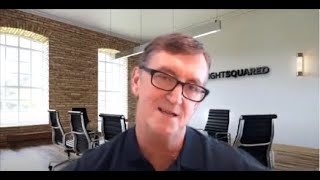
Todd Abbott, COO of InsightSquared, argues that remote sales reps can match or beat in-person productivity if companies shorten meetings to 25 or 50 minutes, add one-on-one check-ins, and use data-driven activity metrics. Face-to-face selling for new business will decline, but inside teams that digitize their processes can forecast and scale.
Questions this video answers
Todd Abbott — COO of InsightSquared; experienced sales leader and former CRO-level executive.
July 17, 2020
Chapters
People joining. We'll pause for a couple minutes here just to let everybody join.
Yeah, I guess while we're doing that, we can talk a little bit about our roundtable because this is now the Rethink Sales Roundtable. We shifted from, you know, COVID 19 roundtable to the Rethink Sales Roundtable. And we are going to be focusing on the future of sales, something that we work on every day here at Sales Globe. But it's become more of a focus. So we're really, really excited with the shift that we're taking on this. And thank you so much to everyone, all these listeners that are continuing to join because this is really for you and it excites us when we can bring you new ideas and thinking, which is what this is all about.
That's right.
So every week, new ideas, new insights. Right. And we're going to be bringing on guests. So what do you say, Mark? Want to. Should we kick it off?
Let's jump into it.
Yeah.
All right, that's good. So new ideas and insights every week as we look at building the future of sales. And today. What is it we're going to be doing today, Mark?
We're going to be talking about the buyer and seller relationship and how to build that virtually. And Michelle, you know, we've been looking at this map here. Working on the map as we've been going. This is our virtual kind of mind map of what things might look like. And right now it's all considerations. And we're working through the different nodes. We're in front of it, so you can't take a screenshot, but you know, we'll just kind of let you get.
A peek of it. It's all proprietary, but one of the.
One of the areas that we're talking about here is what's going to happen with differences in contact that are driven by maybe continued fear. And does that mean that we're going to have fewer face to face meetings? What does it mean if we have virtual meetings and how do we build relationship virtually? So we're going to be talking about some of those areas today. So I'm excited about that. And as we're doing this series, we're going to be diving into different areas like this on the map. We're going to continue to expand the map out. So. So that's what we're going to be chatting about today.
Yeah. So let's talk about who we have with us today.
Yeah. So I got to tell you, I'm pumped. This is a guy that I've looked up to for years. His name is Todd Abbott. He's COO of Insight Squared. And Todd, I think we've known each other for decades.
Maybe.
Todd was a sales leader back at Cisco Symbol Technologies. Avaya Mitel I look at Todd as an enlightened sales leader but a person who knows how to get things done. So we're going to talk about building relationship with Todd and also what he's seeing around the sales process. So Todd, great to have you. Thanks for joining us today.
Good to be here. Thanks for giving me the opportunity to join the team.
Yeah, we're pretty excited about it. So to get started. So Todd, we know that you're an authority in technology to enable sales organizations. That's, that's pretty clear. But what I wanted to do was give everyone listening here a little bit of an insight into you. Just kind of who you are and your philosophy and mission. I think that's really important.
Yeah. So listen, I'm a sales guy. True. And through it I've led sales and sales marketing teams for better part of my career. And so my passion is really about people and helping people grow and develop. I mean I've had the opportunity to work for some really fast growing companies. It's the relationships that you develop with people and helping them grow. And yeah, it's fun when you're in situations where you can create some equity for them. But the relationships you build and helping people grow and develop I think is what is what's really root core to me. I think the other thing is that I've learned is that I've never lose sight of the fact of the rep. The rep is your face to the customer. And so it's all about giving them the confidence, the tools, the insights, the ability to represent your company. And if you stay true to that, everything else just kind of takes care of itself. I've seen too many times where you lose sight of that and that's when you start having difficulty keeping your best people.
Right.
It's all about people at the end of the day.
So when you think about that, Todd, one of the things that a lot of sales leaders were talking about at the beginning of this crisis is connecting with the rep and kind of assuaging their concerns and making sure that they were connected with the organization. What kind of things did you do to make that happen?
You know, so it's what's happened now in this work from home is it's a lot more one on one videos where I would have had an opportunity with my inside Team to have a lot of impromptu. Those are gone. And so what I have found the hardest thing that you got, I have to continue to reinforce to my leaders is be careful. You don't get into this grind where you're just doing, whether it's one on one or planning meetings or work meetings or customer meetings and you're not getting the one on one time and just literally taking a step back and hey, how you doing? What's going on in your situation? Because everybody's situation is different and there's stress levels that are different today. And I find that if my team was not as in tuned with figuring out those pressure valves and being empathetic to each of everybody's situation. So I kind of realized about six, seven weeks in that I kind of lost touch with that and have now started to really make that a matter of practice, even to the point where if there's several people, hey, why don't you stay on? And hey, how's everything going in your situation? What's going on? And so that to me has been a key thing that I've picked up. Just staying connected emotionally and mentally. And it's the emotional piece that you got to make sure you don't lose sight of. And it's harder to do here than just kind of seeing people's body language. And you know, whether it's in the cafeteria, around the coffee, coffee, coffee station is just kind of staying in touch. And that's something that I've kind of picked up. So it's, it's, it's. You got to spend the one on one time on video to see how people are doing.
Yep, yep. And you know, we talked earlier about the idea of humanity and how this is kind of driven a little bit of that. Some of the things that you see now on video would have appalled us, you know, a few months ago. And it seems like people are getting a little more connected, a little more human, even though we're virtual, which is kind of ironic.
Yeah, yeah. And it's so true. And I've seen people, you know, get on internal sessions where a baby's crying or somebody comes in and it's. And I've just kind of got in my way to just say it's all good. Hey, who is that? And you just gotta de stress Everybody or literally 60 days ago, if that happened, oh my gosh, you know, people would be in panic mode. I hope we're able to keep that humanity aspect of it because at the end of the day we all have our family situations. And the garbage man is going to come by and the dog's going to bark and the kids going to come in and it's all good. It's all good. So I've seen that. I mean, my biggest concern is for those people at home with little kids and working spouses. I see the pressure level there. Really, really tough. You know, no daycare, you're trying to coordinate two different meetings, who's got the kid? And I see a level of stress there that's, that's palpable.
And how do you guide your team through that, you know, because you know what, that's the reality. And we hear that a lot.
I think it's just being honest and practical and being empathetic that, listen, I don't expect you to be, to do the same level of productivity that you did. I don't expect that we're going to have to be flexible, that you may not be able to make that meeting. And we're playing team ball now. So just being aware and sympathetic and empathetic and accommodating I think is becoming so much more element of how we need to run the business going forward. And I don't think that should change going forward. I think. I hope it sticks. I really do.
Yeah, so do we. So now let's talk about running the business a little bit. One of the big questions that keeps coming up and we had several people send us this question actually it's how do I develop and how do I build relationships with prospects in particular and even my clients ongoing when everything is virtual. So how do I do that in a virtual world?
Yeah, so it's interesting. I have most recently kind of figured out that it's actually, I'm actually more effective in this environment than before. I always found it hard sometimes to get customers on video. And so when you're out traveling to try to get to customers. Anytime I was out, it was never a one on one. It was always some of their team and some of my team. And if you could get them out to a social setting, then you could have some one on one engagement. And so the technique that I've picked up is really reaching out to those executives and saying, hey listen, let's just hop on a quick call, one on one. And I literally put the one on one in it. And when I get one on one on a video call, we're all dealing with the same thing. It's easy to. Everybody has an opportunity to relate right now. Like, how's your business, how's mine? What's going on in your family. Where are you right now? I'm on my lake house or I'm in my apartment. And so the ability to just have some bantering discussion right up front is so much easier. And I think people are getting used to video where I couldn't get some of these guys on video before. And so I now make a practice of reaching out to the executive and saying, hey, can we pop on a quick call? I promise I'm not going to be in sales mode. Let's just kind of catch up. If it's an existing customer or if it's a prospect, then it's about, hey, as an ex CRO, let's love to connect, share perspective. Let's just get on the phone one on one. I have found that starting to become very effective for me and you can have some good engaging discussions in this environment. I think that aspect is going to stick as we come out the back end of this. I think everybody's now going to be much more comfortable. I can't tell you how many times I would get on a call. I've been a video guy for a long time and I couldn't get customers to come on video. Now it's a non issue.
Isn't that crazy?
It's really crazy, right?
Yeah. That literally did change overnight, didn't it? We've been using this for years ourselves at sales globe and now it's it for me. It's a joy, right? All of our clients are there right on video and they just do it naturally. So I expect that will stick as well.
The biggest excuse you get is, hey, you know, I I'm in a T shirt or you know, my place is a little. Not now. It's like, okay, well, everybody's isn't right. So I've been on calls with a baseball cap. Like that never would have happened two months ago, right? Oh, no.
I saw you once berating a consultant who had a baseball cap on call once.
Yeah.
I mean, this is kind of deep. This has humanized everybody and gosh, I just hope we keep that. I think this is gonna last long enough, unfortunately, that I think it will be much. It'll stick. Even some of the oldest school sales executives, I find, are now getting on video where I never would have been able to get them on video before.
So we've broken the barrier of video. Looks like we've broken maybe a little bit the barrier of humanizing which I'm with you, Todd. It's like, I really hope that sticks as well, you know, unfortunately, we've had some other major crises in our country over the past couple of decades and that humanity hasn't stuck. So maybe the elongated period of this and because it affected everybody equally, will help if people aren't on planes and trains as much anymore. It sounds like you're saying maybe access would increase as well. Access and efficiency.
I think so. I mean, depending upon your business. I've been part of some big companies where when I fly into a city, there's more than enough customers and opportunities that I'm busy dawn to dusk and I missed some of the car ride times with my team to just kind of understand what's really going on. But I'm doing way more customer calls. So from a productivity standpoint, I'm way more productive in this environment than I would have been previously.
Right, right, yeah. And on all that time where, you know, I'm sorry, I'm traveling, I'll be on a plane or, you know, I've got all that, that drive time where I don't know what I'm going to be doing and you can't get time with people. A lot of that's just been a lim. If you look at the contamination of people's time around travel and all the associated activities, that's gone to zero.
That's right. I think now those of us that have been road warriors, we missed some of the reading time and some of the catch up time on planes. So you got to make up for that. But the other tip I'll give your listeners or your audience here is that what we started to do here is we went to 25 minute and 50 minute meetings because one of the downsides of video is you just go back to back to back. Right, right. And in fact I just said so I started instituting this and sharing this with my customers saying, okay, yeah, great, I'll schedule a meeting. I'm gonna do it for 50 minutes. Because we and I share. We find that when you, when you do 50 minutes and you've got 10 minutes in between meetings to go get a drink or just get out of your seat or check up on email, just get off the screen that it's, I find myself much, it's much more effective. And I have been surprised at how again, it's an icebreaker for customers and we literally, I'm spending the first two minutes, you know, explaining what we do and God, it's a great idea and.
I haven't done that.
And so. And then what are you doing? Right. So we're all kind of learning this mode of operation. So the ice breaking opportunity in these discussions is right there in front of us. Right.
You know, in the idea that you actually could have a few minutes to think about the next call coming up versus just launching into it and thinking while it's starting. You know, this idea, we talked about this on a prior session of attention slicing. So you're not really doing multitasking. What you're doing is you're slicing so thin that you don't have time to think anymore. So that just shorten those calls up and actually increase the quality of the calls because you're ready for the next one.
That's right, exactly.
Right now, as we start getting used to this mode of communicating, I would love to ask you and have you talk to everyone about how you believe that sellers can best maintain relevancy with customers and clients. And that's not in this environment necessarily. Right. So now we've all kind of bonded through this, but what's the best way to maintain relevancy and build those relationships?
Yeah, so what we're teaching our team is it's a contextual question. And by contextual I mean it really depends upon who you're talking to. And so our team has to spend more time doing research whether it's a prospect or an existing customer and understanding how is that customer affected by this environment. We categorized our customers into three categories, 1, 2 and 3. One is those we primarily sell to technology companies. And so those technology companies that we're selling in the industry that have been greatly affected, retail, services, industries, hospitality. If you're calling into them as a prospect, I tell my team like, stop, don't waste your time. If it's an existing customer, we have to be much more flexible, especially on renewals because I've got some customers that have lost 90% of their business. So asking them to renew right now is. It's a waste of time. And it's much more about how do I help you use my tools to be able to for free if need be while you're going through this. And so you got to get. And so category two are those that are affected, but you know, by 10, 15% on the upside or downside. And then category three is their business is going gangbusters. I've got some customers who's already made the full year plan in the first half and I tell my team, don't let them try to negotiate with you. They have money and so you got to go do the research to understand if you're selling into Startups, how well funded are they? Did they get around in the last six months or didn't they? And what's the state of their business? And am I approaching this of I'm not really trying to sell, Take the hard sell off and let's use this time to educate versus in some cases it's go for the hard sell. Because they're growing so fast, they need the tools. It's very situational, what the relevance is and how you approach them. And so we're really coaching up the team, brought on some additional tools to give them the ability to do some of that research. That needs to be much more an ongoing, almost required element before you pick up the phone or send an email.
Yeah, some more data driven selling, better preparation. You know, our hypothesis, Todd, is that with relationship time not there like it traditionally is, we've got to come to the table. A seller has to come to the table with more value, but that value really probably has to be around solving problems better. And how can you solve a problem better? Well, you can know what's going on with that company, their industry, their situation, so you can ask better questions versus just, you know, having your time at dinner, having your time at the golf course, whatever that might be.
Right. And there's no excuse now for a rep not being prepared. It's so easy to do to figure out what the funding round has been, to assess what their business is. In the context of this environment, there really is no excuse. And even with some of the things that LinkedIn's doing, and I picked up this tool, Crystal, it's an attachment to LinkedIn that helps you understand the profile of the individual you're talking to and how to communicate. There's just no excuse anymore for a rep not being able to engage more effectively.
So what about the reps where that's not their strong suit? Maybe a little more old school. It's just not what I'm good at. How do you deal with that?
So we spent a lot of time as a management team coaching them up.
Right.
And there's now much greater technology to really understand, you know, what reps are doing and what's working and what's not. Right. So, I mean, we're moving into a world where I believe one of the fundamental things coming out of this state we're in is the need to be able to have much better data to understand what's going on in the sales process. You know, the digitization of the sales process, if you will, has been very slow. It's probably one of the least data oriented process functions in most companies. And I believe coming out of this that that will fundamentally change because you can't not have that as a foundation with a remote workforce. And it's going to be the difference between those companies that may survive or certainly those companies that are going to be successful coming out the back end.
Let me ask you something. Do you believe that face to face interactions between buyers and sellers, those days are done? What's your point of view?
You know, I believe from a new customer standpoint, I think it's going to be a lot less. I mean, I was seeing this when I was at Mindset. We were doing enterprise deals that were one and $2 million multi year contracts and had never had a face to face. I think this is just going to accelerate that enterprise sales. I mean we've all seen this. If you've got a transactional business where most stuff is being done on inside sales, the inside sales, the level of business that's being done on inside has continued to creep up. Size and complexity and there's a lot more enterprise business being done now that doesn't need a face to face. I think the face to face is going to still be an element for existing customer nurturing, cross selling and such, the relationship building. But for new business I think it's going to be a lot less. I don't think we go back to the big TV budgets and lots of travel. I think it's going to be fundamentally different. Don't see us going back.
One of the things that came up on one of our prior sessions, Todd, was the question about, well, if I'm moving people to more inside roles, how do I deal with those job structures? The pay levels for people on the inside are different. And I feel like some people are still thinking in the current framework, oh, that's an inside sales job. When in fact you may have an enterprise seller that just happens to do more of their work through video or remote.
Right? Yeah. I don't think it's so you're right. I've heard this. I don't think ultimately that the compensation level is going to change because I think you can make that enterprise rep that much more productive. Just like I am more productive. That enterprise rep will be able to do much more remotely than what they were able to do before when the customer expected a face to face. So I don't see compensation coming down. I see productivity going up for those B2B enterprise reps.
Yes. I mean that's a whole new sales model to think about in a whole new sales capacity model to think about to say, well, productivity has to change in a certain way and then we can actually afford to keep those pay levels or maybe increase those pay levels. But it kind of throws everything out the window in terms of our current structures, in terms of what an inside salesperson would produce and how much they would be paid and when an enterprise person would produce, how much they'd be paid. And you know, do we get more efficiency if we don't have the constraints geographically to, you know, geographic territories? Does that, you know, increase efficiency and productivity as well?
Yeah, so I think I agree with you. I would, this is the way I would put it, is that, you know, I used to in the traditional B2B world, and I was as guilty of this as anybody, it was all about hiring the best rep, the superstar rep, the rep who came with a Rolodex and a wealth of experience. Give him or her a territory and let them at it, whether it's a six month or nine month sales cycle. And if they didn't execute, then you kind of got rid of them and you turned out you brought another one. I mean, I'm exaggerating a bit, but in essence that's the way the enterprise system kind of ran. And you're always striving to get the next set of superstars. If you're in a growth business, I think tomorrow as we digitize this process, you can out execute a company with a few superstars. And if you look at the bell curve, everybody's got a bell curve. Your superstars are over here. You're trying to get these guys to become superstars and you get rid of these guys and try to hire superstars. In reality, when you move to a process, a real data centric sales process, it's more inside, it's much more about the process. It's not about how what great EQ this person has and their ability to relate. It's now about get that, get that the process in place and provide the tools to help a B player execute in this environment in a process. Give me a good process and a set of all B players and I think you'll out execute somebody with a traditional bell curve with a few superstars. That may change some of your compensation for what you're paying your superstars. I still think you're gonna still pay enterprise guys more because you can make them more productive. But I think we're gonna become so much more data centric process driven in the sales process coming out of this than ever before. I really believe that.
So it kind of goes back a decade or two to Billy Beane and Moneyball and the Oakland A's and how it wasn't about, you know, the glamour and glitz and the power. It was about finding the characteristics and the process and the data.
That's right. It's like I use the term sales math. You have to know what your sales math is. There's math associated with getting an MQL to an SQL, there's math associated with getting an SQL to a booking, and there's math associated with getting a customer renewed or a customer upsell. That math is the digits in the math are activities and there's a set, there's a profile of activities that are associated with high conversion rates in each one of these. And if you know what your math is and where your friction points are, then your ability to take that B team and give them the playbook with machine assistance, go run this play. It doesn't mean you get a set of robots. You still need people that can relate and can listen to, can modify their messaging. But give them the playbook and the system and the tools and enable them to know when they're falling off track, real time and let a manager know when you're falling off track on a deal. Enabling that coaching, engagement, real time is what I mean by knowing your sales math and having the systems to be able to direct you both either as a rep or as a manager, to really know what's in your funnel and how to move things through the process. So there's no doubt in my mind that if a company coming out of this doesn't know what their sales math is and isn't driving a cross functional process improvement on the execution of that process, you will, there's no way you'll be a strong contender in your industry. No way.
Let's talk about sales leaders and managers. One of the things that I do know is your passion around the success of the CRO. You've been one, you know, you been there, done that many times. Talk to me, talk to everyone here about what some of the challenges are that that CRO has and what you believe sets them up for success.
Yeah. So you know, the life of a CRO is 18 months on average. Why is that? I believe it's because, listen, most CROs and certainly the vast majority, I'm sorry, most CEOs and the vast majority of CFOs don't understand the sales process and don't understand sales. Some of them are irritated that we have to spend as much as we do and they don't understand it. And they fall into this trap of the big boy of the superstar culture. At the CRO level, if things aren't executing, if they're not able to meet expectations, it must be the sales guy, let me shoot the CRO and it buys the CEO another two to three quarters. I've seen that play out so many times, and I think the only way to get out of that trap is to, is to make the sales process bring digitization so everybody understands when we're not executing. Why are we not executing? Is it product, is it marketing? Is it quality of leads? Is it the market's fundamentally changed. We have, we're fundamentally relying up to this point on being able to identify changes, whether it be competitive or market, and how it's impacted by the conversion rates and the closure rates and the win rates fundamentally based upon what the rep tells us. And it's the inspection process that we're always trying to figure out what's real and what's not in this so that I can forecast. Because if you can't forecast your business as a CRO, your life is short. Miss a quarter as a surprise, you get 1/4 maybe depending upon your environment, but in most cases it's a short trigger, especially this day and age. And so you have to know enough about what's going on in your sales math to be able to forecast. But I think it's more importantly about helping the whole company understand what is that process. And the dependencies that sales has to execute are more significant than any other function. The quality of leads, the quality of marketing support, the quality of the product doing what it says it's going to do, the quality of support. I mean, there are so many dependencies. And if your math can help everybody understand if the outcomes aren't being translated because of what's being mixed executed in the process, then you make it a lack of executing on a core, a company problem versus a sales functional problem. Too many times it's just translated to must be sales. Sales isn't executed. My product is great. My marketing is awesome. My support is really good. The business plan we signed up for the board is really good. Well, okay, yeah, sounds good. But let's look at what's working and what's not. Take the, take the, the black magic out of it so everybody understands the dependencies. And when things aren't working, why aren't they working? I think that's, that's where we're going. And I Think that fundamentally changes the game for CROs.
I want to pause for a moment. I was not going to ask people for any questions right now, but you said an awful lot and I've got a lot of questions around it. But I'd like to open it up to any of the guests listening. Does anyone have a question for Todd at this point? You want to ask him?
It's a quiet group.
It's a quiet group this afternoon, so I'll ask.
I have a question.
Yes, go ahead.
Rick and Todd. I activated my video after you said baseball cap, a T shirt got on, man, you said a lot. Fascinating.
But one point that I like you.
To elaborate on and that's kind of communicating within the organization, the activities of the sales group because we see that a lot when we evaluate our clients. Clients that a lot of what they do does not get transmitted through the organization. You're now talking in the rearview mirror about, you know, the seller. I'd love to hear more comments on that because that really gets into documenting what you do and as a selling organization.
Yeah. So I mean I think what I see with the, the leading companies that are kind of stepping up to this, this recognition and challenge is, you know, the ability to see the data has been encumbered by this siloed approach to creating our tech stacks between marketing has its tech stack, sales has its tech stack, customer success has its tech stack. And you've got lots of islands of information and there's no end to end view of what is actually going on in that math from end to end. And that's a huge inhibitor. And so what you see is the leading companies are moving to this concept of revenue operations where you've got either a virtual or a hard organization where you bring the tech organizations together under one leader or a virtual leader. This tends to be a really political issue in a lot of companies because marketing doesn't want to give it up and sales doesn't want to give it up. And where do you report it up to? So it becomes a hugely political issue. If you have a coo, it makes it really easy. But if you have a good GM that can kind of be a virtual leader, you've got to get to the point where you start making trade offs of a functional point product. Right. Market. The average product, average market tech stack products in an enterprise company is 54. It's crazy. And so you've got to start breaking down these data sets so that you can actually see what's really going on end to end. And a revops platform will give you all of that consolidation to really understand what are the activities in the sales process. Now the other thing I would tell you is if activity captures a new term for you, it was for me until I got exposed to some technology. You got to get the rep out of the business of being of depending on the rep and what he puts in the CRM. I believe now that that's a total waste of time. I've tried stick, I've tried carrot reps are only going to give you just as much as what they need to keep you and I off their back because there's nothing in it for the rep to update. CRM0, right. It never achieved the promise of being a territory management tool. And there's now technology that can literally take the REPF out of having to update tasks in Salesforce. And you can increase your data set by a factor of 10 with technology to now really understand how many emails, how many meetings, how many proposals, how many activities does it take at each one of your steps. And if you understand the activity profile of your business, then you can very quickly put a filter of that best case against every deal and be able to know what's real and what's not and not have to rely on an interrogation of a rep to understand really where is this deal. So I'll give you a quick example. In my business I've got a commercial segment. We identified that it's 100 activities and five meetings on that 47 day sales cycle. If a deal hits that level, the win rate goes up exponentially. And if you then take that and go back to the inflection points of every deal and every deal has several inflection points, whether it's a renewal, whether it's a cross sell, whether it's net new and that inflection point typically is the value prop resonating and when it stops resonating then the email responsiveness slows down, the meetings get pushed, the time in between engagement, if it's relevant, the customer's coming back and you got a lot of back and forth activity, you have engagement. It's the number one indicator of the health of the deal. And so if you can put a system in place that says coming out of discovery, the activity profile looks like this. And if reps are moving deals and it's so far off that paradigm or that benchmark, you want to be able to flag it and say whoa, whoa, you've lost that customer and you don't even know it. And so that's what you really want to do is to know if a deal is dying or going dead. You need to run another play, you need to get another value prop or you need to recognize it's dead. Stop wasting your time. Put that valuable rep resource on a new lead that's got much greater promise. And so if you think that's what I mean by sales math is know what the activity profile is, the only way you can get to that is by using technology and get the rep out of it. It's a waste of time. Reps reps are happy to get out of it and they actually like the prompts to know when their deals are going a little bit off track, whether it's a MQL to SQL deal, a new booking, a renewal. Right, so that's what I mean. And so you've got to make sure your tech stacks don't create these little islands that don't give you the ability to know what's your activity profile on a winning deal. And that's what a great RevOps platform will do for you.
Any other questions for Todd? We probably have time for just one more. I have a question. So Todd, where does somebody start? You know you're great, great idea and great thought, right? I gotta tell you that I'm a fan of your comments around CRM and it ends up being an administrative tool and I've had sales leaders say we know it's an administrative tool to make, you know, the C level feel comfortable. So where does somebody start the journey to change?
I think the start is, is recognizing where you are on this functional tech stack and what is the environment in your company. From a senior leadership culture and alignment, can you get to a common view of how to look at these components of your tech stacks to be able to start to develop an architecture to get to a common end to end view that's kind of step one. And if you don't have that environment then I would suggest then just start with the sales process. Don't worry about the marketing and customer success and you can show them how the digitization of your sales math can change the game and be a change agent in your organization. It starts with activity capture. You got to get the reps out of the business. Like I can't tell you how many CROs will debate with me. No, I make it mandatory. I get all the data I need and I've been there. I'm telling you, if you believe that, I'm telling you I can prove you wrong. You're not getting the data you need and you're not getting the data from your best reps because we give them the most amount of latitude, because they execute. And in actuality, that's the data you need the most to replicate. Because your best reps, you put too much administrative burden on them. You're costing them money. They're out of here. And so take that requirement off the table and start to give them value by giving them benchmarks of their deal. And they'll love it. They will absolutely love it. So the starting points for me is think about your RevOps strategy. And it doesn't need to be an organizational change, but it should be a recognition and a virtual teaming at a minimum. For me, I made it one organization. I took it all out of the functions reported to one guy. That's the extreme. That doesn't work for a lot of companies. But you don't need to do that to start thinking about understanding what your sales math is. Because knowing your sales math, you can drive a lot of alignment cross functionally on the dependencies. You need to be able to deliver the number.
Well, that's really good fresh thinking. Thank you so much, Todd, for joining us today. For all of you listening, you feel free to reach out to us here at Sales Globe. Mark and I, Todd Abbott on LinkedIn. We'll be posting things up on our website about this session as well. So a recording will be available as well as some collateral and information. But please reach out to us and thank you so much for being with us here today.
Thanks for joining us, Todd. Thanks everybody for being here today.
Yeah, guys, enjoy your weekend.
Have a good weekend.
Bye. Bye.
More from SalesGlobe







Sales Compensation for Results - Course 1: A Strategic View on Sales Compensation - Trailer


Freative Friday - Episode 98 - Insight in Your Hunt for The Revenue Roadmap Pt 4


Freative Friday - Episode 97 - Insight in Your Hunt for The Revenue Roadmap Pt 3