Part 1: What You Need to Know About Quotas in COVID-19 [Webinar]
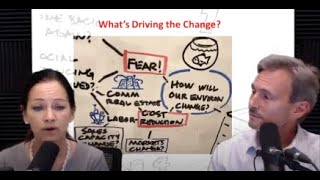
Mark and Michelle from SalesGlobe break down how COVID-19 is reshaping sales quotas for 2020 and beyond. They map four phases of quota response from acclimation through recovery, outline a model based on market opportunity and sales capacity, and show three approaches companies are taking: sharing the burden, letting sales absorb it with different incentives, or shielding the organization entirely.
Questions this video answers
June 29, 2020
A little over 25% of the U.S. economy
38%
52%
About 5% had adjusted quotas and about 15% had adjusted compensation (early phase)
Chapters
So we'll be talking about some cool things today.
Yep.
We're going to talk about quotas during 2020 and then quotas during 2021. We'll be talking about next week. So we're going to set the stage for that and start out with the big picture here. So I think it'll be very cool.
It's going to be fun. Again, I'm going to keep reminding people as we're going along that this is a little bit different. For those of you that have been with us each week, we typically, you know, you're zooming on. Right. We can see you and you have interactive conversation with us. You're going to have to use the chat feature with us today because we have exceeded over 100 on our roundtables. And that's kind of what happens as you go into the next phase. Very exciting for us and you. But remember, we are only an email or a phone call away to have to have a video conference with us. And don't forget to submit the questions. And then we have a couple fun things we'll be doing with them to engage the people that are on today, too.
Activities.
Yeah, going to have a couple of activities. I like activities.
So why don't we get started? Looks like we've got a great group on and we are going to kick off here. So. All right, welcome to our session. We're going to be talking about what you need to know about quotas during the. During COVID 19 and we talk about 2020 and we're talking about 2021. So 2020, what's happening now, what you should be thinking about for this year, rest of this year and then 2021, planning for next year. So kind of two big pieces. 2021, we're going to talk about next week, next Wednesday. So you can join us for that one as well.
Yeah. So today we're really going to be focused on things we're seeing in the market, kind of understanding the story behind quotas. And then we're going to take you through and help you understand what companies are doing. I just want to make one more comment, Mark, which is there's a Q and A feature. Questions and Answers, it's called for those of you that are live with us today. So please submit questions. We're going to try to answer questions live today. For those that we don't, we will be sure to get back to you. So here's a little bit about who we are. Sales Globe, what do we do? We do problem solving for sales. Any type of sales problem that you have. We are here for you. You'll see that we have written four books here and a fifth is on the way. And quotas, that's the one we're going to be talking about today. So I actually have an in with the author on this book, Marc.
I've heard once you put it down, you can't pick it up.
Well, I don't know about that. I actually did like that book. So, guys, we're talking about quotas today. Book is available on Amazon, of course, and, you know, we hope that you enjoy what we have ahead.
So we're going to talk about quotas. We also do work in the areas of sales strategy, go to market, sales organization, design, talent, sales process. So you'll see a lot of those things come into play here as we're talking about quotas. So let's jump right into it. And I want to make a big statement. The future of sales is uncertain and it demands creative problem solving. So this is probably the biggest headline for the day here, which is as we're looking ahead, we don't know what's going to happen. So everybody's saying, well, what are other companies doing? You know, what are the benchmarks? And everybody's kind of looking for safety and numbers. But as we get further out, things are going to be changing in terms of how the market evolves. So the best thing we can do is not tell you what to do. The best thing we can do is teach you how to think and how to solve the problem. And here today, we're going to talk about the problem problem around quota settings. So, Michelle, we're going to talk about what's happening in the market. Talk big picture as we get started here.
Big picture across different industries. And I think we would be remiss to mention that we know that the cases of COVID 19 have been increasing and we've heard recently that a couple of states are actually shutting back down. So that again, drives a bit more uncertainty, doesn't it, Mark?
Yeah, big drivers of change. We're going to look at the big whiteboard again, the evolving whiteboard, and then want to get into a model for solving the quota challenge. And it's your quota challenge. We're going to talk about a few company examples. We're going to talk about what we see going on in the market overall, and we'll give you some recommendations. But keep in mind, again, we're giving you tools that you can work with so things that you can apply. And again, we're A phone call away. If you have questions or need help with this, just let us know.
That's right.
So let's go to the big picture.
Yeah. What are we seeing out there, Mark?
Yeah, so what you see here is a few sectors and there are a lot of industries obviously, but we picked three big ones because they're relevant in terms of what's going on. So you've got manufacturing, how things are made. You've got wholesale, how things are distributed either to businesses or to retail. And then you've got retail, which is how things are getting out. So what we did, we got a ton of great data. And this is from our partner, Corterra and Michelle. This covers what portion of the U.S. economy?
A little over 25%.
Right. So this is looking at spend information, this is what companies are spending, which is telling you what they are actually buying. And it breaks out by all sorts of different product categories. So great information to use for quota setting and for predictive modeling as well. But let's take a look at.
Yeah, we just wanted to pick a few of the big ones. Right. Like you said, Mark, around wholesale retail manufacturing. And so let's look a little bit about what the data is telling us. So no surprise that manufacturing had started strong. And then of course it goes, it goes down at the end of the year. And that's simply because as retailers are lowering their inventory, that's natural that manufacturing goes down and then it automatically goes up in Q1 as people are or as companies are beginning to buy. Right. For the retail sector and wholesale. So that's pretty normal. Yeah, but what we did see is that manufacturing has basically plummeted. And that is simply because as we know, supply chain globally has been impacted. And we know that supply chain in China and Mexico, we've gotten some very recent data on that. They're completely closed. So that's a real challenge for retailers and wholesalers. Interesting information around wholesale. Wholesale is actually up and we really know why that's happening, don't we?
Why?
Yeah. Okay, so wholesale is up because as we think about that, and by the way, a little fun fact, I was a wholesaler and a retailer in this industry. So in the wholesale side it's up simply because demand has been up in certain sectors. And when you look at retail, it's really was an interesting fact for us that retail was up around the holidays and then it went down as we got into Q1. Very natural and normal that that happens after the holidays. Like everything is a little sustainable into January. People have gift Cards that they're redeeming and they, they tend to buy a little bit more. Then with COVID 19 we saw that it went down, but then it's starting to rise back up again. So we want to tell you a little bit what's happening in retail and that will inform the wholesale discussion we started to have. So retail is up, particularly in online buying. We saw that and that is skewing the overall numbers. And then it's called non retail purchases. And then retail got a little creative. So think about Dick's Sporting Goods, Mark, you made a purchase. Talk about what that experience was like with Dick's Sporting Goods.
Yeah, well, it's all the no contact purchasing. So you buy it online, you swing by the store, they drop it in the back of the car. You know, now in Atlanta you can actually go in the store. But so much has shifted online. So you've got, you've got your online retailers that have been doing extremely well. Your Amazons, et cetera, Shopify companies that power, power that online retail. You got your traditional brick and mortar retailers that have gone to online, which is making a, making a big difference for them.
Yeah. And if we think about the online, the retail sectors that are up, everybody, I think not a lot of new news there. Health care, like vitamin stores, things like that. Sporting goods has been up. Any home recreation type of things and hobbies, the whole hobby business has been up. So why wholesale? Because what's happening is the demand is surging so much and in so many different areas. The things that we just mentioned, that all the wholesalers are really selling all the product and services. The big problem though is that manufacturing isn't keeping up. So the big unknown and the big question is what is going to happen as we get into the third quarter of this year and a lot of companies are asking themselves this. So I'm going to bring it to Main street but a second mark and then I think you've got an example of a global company just really quickly on Main Street. So I happen to have a friend who owns a recreational product. It happens to be a holder and they manufacture in China. And so basically the demand has been so high they sell into Costco, rei, Dick's Sporting Goods. Companies like that demand has been so high they've sold everything and, and completely cleaned out their distribution facility as well. So now the big question is how are we going to get the supply? Because it is coming out of China. And we heard a very similar story about Mexico, did we not?
Right, right. Well, packaging is interesting. 1. So we're working with one packaging company. Business is booming because they're selling packaging to food manufacturers. Another packaging company we just talked to, business is fluctuating because they sell packaging, corrugated packaging for computers. And so what's happened is there's so much in inventory that the packaging hasn't been in demand. Right. And so their packaging has shifted over to other segments like toilet paper.
Toilet paper, that's right. They happen to make that.
So the big question here is going to be what's going to happen in manufacturing? Are we going to see supply chain issues and are we going to see a pickup in manufacturing to fill those inventory needs? If you're a manufacturer, that's something that you need to be aware of. And I would say take a look at this kind of information. Really, really useful as you're thinking ahead. So may not be quite as good for the rest of 2020, although it can help you for the second half, but really good as we get into 2021.
And if anyone is asking this question, which is why are we talking about this? I thought we were talking about, quote, because this is all part of the story. So it ends with the quotas. Right. But we really need to understand what the market dynamics are. So we just thought it would be interesting to give you some fresh information that is just coming out now.
So let's take a look at what's been happening with companies and quotas. And we've been talking about this idea of the four phases of COVID 19 for quotas. And gosh, we've been talking about this since March.
March, yeah.
And trying to be predictive about what's going to be happening. So the four phases, acclimation, so getting used to what's happen then planful action, building and adjusting and planning for recovery. So I want to talk for a second just about what we've been seeing. In the first phase. Everybody was trying to figure out what's going on. So messaging from companies to their employees to their customers about what's going to happen, what their plans are. And companies were trading on trust, especially with their sales organizations and especially related to quotas and compensation. You can see the stat there. 38% of large companies, meaning companies above 1000 employees, and 52% of small companies below 1000 employees had high trust from their employees. So that was really important to get through that first phase just to make sure people were staying on and they were not adjusting quotas. Only about 15% or actually about 5% of companies were taking any kind of action. On adjusting quotas, 15% on adjusting compensation. So early on, not a lot of activity.
Right. And then we moved into planful action as companies were beginning to figure out what was going on. Big question. Cost and risk mitigation. You know, what are we going to do? We saw that about 27% of companies reported. This is a survey we did with World at work in Q1 at the end of Q1 and they were adjusting their performance measures. And what does that mean? It means that maybe revenue and maybe bookings wasn't happening right. As much. So they started to look at other things that they could continue to pay the team for. Right. Activities that were driving to the right direction and paying beyond the curve is what we started to see. And why? Because companies were still doing that. What Mark was talking about, building trust within the organization and nobody was really still quite certain as to what was ahead. We do know though that we started to see of a lot, a lot of layoffs, furloughs. And an interesting fact around that is that it did start with like the bottom percentile of performers within your organization.
Right. Performance based. Yeah.
And now we are basically seeing phase three and four. So some of our clients we're dealing with, we're helping them as they're building and adjusting to what's ahead and others are actually starting to plan for the recovery.
Yep, yep. So you see about a quarter companies making quota adjustments. This doesn't mean necessarily for the whole year, just some sort of adjustment. And on compactions, considering about two to three actions on the comp plan. So it could be changing performance measures, it could be lowering a threshold, it could be adjusting something else in the plan itself. So we wanted to take a second here to ask you a question. We're going to launch a poll here.
Oh yeah.
And here's the question, really simple one. As your organization adjusted full year quotas for 2020, we just want to get a sense from you on what's happened within your organizations. And this is have you adjusted? Not thinking about it, but have you actually adjusted quotas full year for 2020? And what we're seeing is as is coming in, it's firing up the survey, just kind of getting some smoke on it here. But a large majority and we'll see see the number here in a second. Large majority saying, no, we haven't adjusted quotas for full year. We're about half halfway through the year. So we're still kind of early.
Yep. And that really does go along with Mark, what we're still seeing. Right. So People are not jumping off that quota cliff yet. What they are still continuing to do is cost and risk mitigation in other areas. So as the numbers are coming in, you're still. You're still looking in at this. You guys are still voting as the numbers are coming in. We did discuss cost risk mitigation, which was around the furloughs. They're looking at variable expenses. They're looking at things like, well, we do know that T and E has gone down, right, as one other example. So what does our number look like, Mark?
Looks like about 73% said, no, you have not adjusted Cora's full year. And about 27% said, yes, you have adjusted quotas for full year. Really interesting results over the 27% that have made that quota adjustment. That'll be something in terms of their ability to forecast and actually know how to do that for the rest of the year. All right, so I want to get big picture here for a second. Michelle, can we go big picture? Let's go creative here. All right, so we have these whiteboards, rolling whiteboards all over the sales Globe studio here. And they're meant for the purpose of thinking, right? So we're always doing mind maps and thinking about stuff. And we have one which is just for thinking about the future of sales. And we're always updating it. People are coming by, redrawing things. And we zoomed in on one part here about how's our environment going to change related to quotas? And you can see the little fish in the fishbowl there, very dependent on his environment. So a couple things that are coming out of this that are related to quotas. One is fear. That's a big driver of change in the environment. So everybody's afraid. We do social distancing. We stay away from each other. We're going to work remotely.
Travel is basically less travel.
And some of the questions are coming out, you know, is it going to come back again? We wrote that, in fact, weeks ago, and now it's starting to come back again a little bit. So the fear part. The other is cost reduction. A lot of people haven't thought about this, but there are two big, big areas around cost reduction. One is around, and this will sound a little odd, related to quotas, but commercial real estate.
Right.
Okay, Commercial real estate, meaning companies have gotten a taste and are tempted by all the cost savings they're seeing by not having all this commercial real estate. So we don't have to have all these people sitting in offices. Hey, they can work remotely People in our call centers, well, you know, they're on the phone anyway. Why can't they work remotely? And I think what's going to happen is there's going to be a shift in dynamic in terms of the ability to, for people to collaborate together as sales teams or as organizations overall, the ability to collaborate and think and create and also the ability to learn. So you know, I use the call center example, Michelle. If you think about call centers, these are groups of people that physically sit together and they have a center of excellence. So they're working together and they're learning from each other. So we remove that and all of a sudden we remove the ability to learn. So what I'm predicting is that we're going to see a shift in commercial real estate usage back up at some point where companies realizing they're not getting the productivity they're looking for.
The other thing that I just wanted to bring up was around when we talk about the people working remotely and connecting remotely is salespeople are struggling a little bit. This, and this does, I will argue that it does directly relate to quotas, which is that you still can't quite do get the connection that you can get with the in person, the face to face interaction in building rapport and engagement. And we are working with our clients on that as well. Now we're going to say one of the things you can do is help your salesperson become more of a problem solver. Right. You'll hear us say that a lot when he or she is connecting with their customers. But it is a true situation that we're seeing arise that salespeople are now who are used to being on the road. They like it, they enjoy the travel aspect, they enjoy the complexity of it. They enjoy the face to face and the meetings and having those conversations. It's changed and it's going on. Right. It's not, you know, companies are questioning whether it's short lived. So we do believe that that will shift back a little bit, don't we Mark?
Yep. So the other area, cost reduction, labor.
Yes.
So we have clients that are in their second round of layoffs, some of them. So a lot of layoffs. So people are asking to, are being asked to do more with less. Right. So that's changing the demands and also that's going to affect our T and E. So our T and E is going down because we're not traveling. But to your point, Michelle, and we're just saying the other day, gosh, it'd be great if we can get on a plane to Philadelphia and go see that client. Because we could work through this thing that we can't work through as easily on the phone, but we can't do that. And everybody's going to be running into those situations. Can't do it all remotely. So two big temptations. Keep the cost of labor down, keep the cost of T and E down, and our service levels go down.
Right, right, right.
And so what does this mean in terms of quotas? Where you see the two boxes at the bottom there, Sales capacity and market opportunity change. So our market opportunity is going to change because buying patterns are changing and our sales capacity is going to change because of how our sales organization is operating now. And when we get into 2021, we're going to structurally start to see changes in organizations to maybe more hybrid models. We'll talk about that next week in terms of what sales might look like in the future. But that means the whole expectation for quota changes when you change those two areas around market opportunity and sales performance.
Let's go to the model. Let's talk to everyone and show them the model mark that kind of puts this, pulls it all together.
Right. So this is in the book quotas. And you know, coincidentally or not coincidentally, these are two areas that happen to pop up. Market opportunity and sales capacity. The third area, the anchor point around the quota success model is people. So how people work in terms of quota setting in the organization and how the process works. But I want to take a look at market opportunity and sales capacity. Those are going to be the two tools that you want to look at primarily as you get started on solving the problem for 20, 20 and 21. How has the market changed and how has the capacity changed? And the book gets in all sorts of calculations. We'll do some of that next week as well in terms of how to balance these factors out.
Yeah. And just one quick caution on sales capacity. We are hearing a lot of sales leaders and at the C level saying without this travel. Agreed. A lot of time spent on the platform, planes, trains, automobiles, for anybody who remembers that movie. And the bottom line there is that it's not going to be a one for one. So if I'm not traveling 30% of the time, you cannot expect. We don't believe you will see an increase in capacity of 30% and that translating over dollar for dollar in revenue opportunity for the company. Because there is. It is a little bit different being face to face than being remote. And it's just one of the considerations.
Right. So let's chat for a second about those considerations. So on the sales capacity side, the total headcount that we have, that's changed. And we talked about that. The amount of time people spend on selling, well, you know what, that actually can go up because people aren't spending time on the planes and trains and automobiles. Right. So there's a higher degree of efficiency workload for the sale. We don't know how that's going to work because we have to look at new sales processes. Right, right. So if you think about just something as simple as, wow, geographic boundaries that constrained our sales organization before, in terms of territories and quotas, those no longer exist. Getting access to buyers is actually easier in a lot of cases because you just, you know, you're one video call away versus having to travel, you know, all the way to a distant location to do that. So factors there and then market opportunity. The opportunity is going to be there. The question is, where is it and how much of it is there. So getting visibility on how your markets are shifting, and we gave you a glimpse of some of that data before, but that's going to be a key thing, is to have some foresight in terms of where things are heading. And that may mean that you're having to do some reshifting of segmentation, reshifting of territories, and reshifting of how you're doing the quotas.
All right, so how do we think about solving this problem?
Problem solving.
Right, so we gave you backing up a little bit. Right. It's not just about the quotas.
Yeah, yeah. So this is, this is a method that you can apply to quota setting or to really any kind of. Any problem, sales problem or not. So we call sales design thinking. We just picked a few pieces out of that. And this again is in the book as well. So think of the first model we showed you as a model for quota success. Right. So there are a lot of components behind that. And then think of the second model as how do I approach the problem? And I'll just kind of start out, so articulating the problem statement. Everybody starts with a problem statement. Everybody's got a problem. So you can see one here. We need to fix our quotas for 2020 and 2021. Let's have a brainstorming session, do a bunch of notes on the wall, the virtual wall now. And then let's start thinking about ideas on how to fix it. Well, that's the wrong thing to do. What you want to do is you want to discover the story. So what's going behind it that's not the story that you see on the screen. What the story is is what's happening in your organization that's unique. We'll talk about that in a second. You want to redefine your challenge question and then you want to create your solution vision and do some divergent or horizontal thinking about different types of options. So we want to just hop through a few examples here of what this looks like within companies and how you might approach it. So, Michelle, what's been happening across companies? Right, so not company specific. This is across organizations.
Yep. And so at the beginning, we all know market opportunity has been shifted. So the first thing is we do know that salespeople at the beginning, and this will continue on, they shifted from selling to helping. And that's still going on. And then that went on. So it's like, what can we do to help? And we do know something else that's been an interesting fact out of all this is that you mentioned it, Mark, that your clients are more available. Your customers are more available. Sellers can connect a little bit easier, but what they need to say and how they need to connect, we're finding is different. So people are valuing information more. So even market information. And what you can tell them, just bring them some information if you can't sell them a particular product and service. Selling beyond the curve is one of the solutions that companies have been doing very with much success. And that just means that they're not looking at how do we close Q2 now. Right. And they're looking at what's going to happen into next year.
Right.
And we're looking at things like, are there even opportunities for contract extensions and putting people into selling other things that normally they wouldn't be selling. Right. Yeah. So, you know, as you're thinking about selling beyond the curve, it's not all about just Q1, Q2 anymore. But companies are beginning to look at how can we reward our salespeople now for looking at the opportunities that might be available in Q3, 4 and beyond.
And then redeployment.
Yeah, we already discussed about redeployment to other segments. And that just means that, as Mark said, territories don't matter anymore. I was on the phone with one of our global clients and they have found that they went through their second round of furloughs and they have found that obviously the geographic boundaries really don't matter as much anymore. Now they've got a team of really great sellers and they are finding because of the product and service that they're Selling that in certain segments where COVID 19 may not be having as much impact. They are doing a lot more business. And I can't really mention their product and service because they are one of the top global companies in that area. However, what we do know is that because the geographic boundary is not mattering anymore, they could take their salespeople and their best people and put them into the segments where demand may be higher than the sellers that are actually in that area.
And we talked about a few of these other areas about uncertainty, the model changing. So we see are a lot of factors that. That are happening. So the key here, Michelle, is understanding your own story. Right? And what I usually see in companies is if you think you know the whole story, you probably don't because there are a lot of different perspectives on what's going on, even in something as short as a period as we're dealing with this year with COVID 19. So understand that story.
And you know, there's this whole thing about being creative, about what the solution is. And I'm just going to bring up one thing that we're doing. So we talked a little bit about sales globe on demand, and that's not to create a selling point, but to create a true story to you, which is that there's a lot of uncertainty through the rest of this year and all of next year. And we looked at our own model and said, gosh, instead of these discrete projects that we're doing with clients, how can we offer them something affordable that goes year round and allows us to be available to you when you need us, when you want us, how you need us to be there?
Right. So customer needs change. I mean, and that's. We'll talk about intent here in a second. But backing up from. We were just talking about this the other day with a client. They were looking at what they're going to be doing in terms of their products. And we said, well, it's not about rationalizing your products. It's really working back from the customer experience and from the value proposition. Again, that's going to change our market opportunity. It's going to change our ability to sell.
Yes, that's right.
So story, let's get into taking a look at the challenge question. So, you know, the story challenge question is the next iteration of the problem statement. Right? So problem statement is kind of this thing. Here's a problem statement. We got to fix this thing. And everybody tries to solve for maybe the wrong thing. The challenge question is more provocative because it's asking more. Has More branches to it. It's asking more in depth questions to try to provoke thinking. Right. We have two challenge questions here. One we're going to look at today in 2020, how should we address quotas too? And with a little exploration, you expand it out, motivate performance, align with the market and the market opportunity, build goodwill with the team at a reasonable investment. Okay. So that's beyond just fixing quotas. So there's some intent behind that that allows us to hang some more possible solutions on that. And then we'll be talking in the next session about in 2021, how should we address quotas in. In an uncertain future with a new coverage model. Okay. So I want to start to expand this out a little bit so you can see some of the thinking. So motivating performance, aligning with the market, building goodwill with the team at a reasonable investment. So, Michelle, we got three phone calls from three different clients that we helped out.
Well, okay, let's be clear here. We got a lot more than three phone calls, but we pulled three different examples because as we look at, as we look at what the challenges are, we chose three examples because there's three ways that companies are looking at their philosophy or comp and quotas. Right.
Yeah. So let's kind of lay the setting here. So what we talked with them about was understanding their desired outcome. It wasn't about how to fix the quota problem for 2020, but what's the outcome you're looking for. And then considering their options there, the horizontal thinking, and then understanding their investment for 2020, what are they willing to invest and then what do they project ahead for 2021? One point I want to make here is that where they started was number three. What are we going to do in terms of what we're going to invest? What's this going to cost us? But that's not the driver. The finances aren't the driver. What the driver here is, your desired outcome could be that that's the desired outcome is your finances. But in these three cases, actually, that's right.
And what we asked them to do was back up. Right. And think about how they want to come out of this. And there's basically three ways that you can come out of this. And the one is companies that say, you know what, we want to be in it with our team, so we'll share the burden of what's happening to our business. And we should mention, by the way, three things are happening with, with companies and their business. It's either a gone in the tank Right. They're losing business. Two, they've had what we call neutral impact up or down 5 to 7% or it's actually surging. So we're really addressing what the majority of our clients are dealing with, which is the first one, business is tanked, or they know that it's not even close to where it should be, even if it's not tanked, but they're not sure how they're going to get out of it. So three ways that they can deal with that. One is sharing the burden with their team. Think about, you know, how you want to come out of this thing. The second one is. And this is. Is what one of our clients said, well, we're going to have the team take the burden and we'll discuss that scenario. And then third, which is, you know what? We have gone through furlough. Number two, we want to keep our people. We've got the best in the market. It's competitive. We believe in our future, we're going to take the full burden. So let's talk about each one of those. Mark.
Yep. So here's what we laid out for them. So before we worked on these solutions, here's the question we asked Michelle. What outcome do you want for the organization after this year and what are you willing to invest financially? Very simple question. And what this did is it fundamentally changed the way they thought about this because they said, wow, to your point, this is something we have to consider. So company, a global media organization.
Yeah. The company said, you know what, we are going to share the burden with them. So basically they said, this is a competitive labor market for us. When this is all over, we're going to build goodwill. We are prepared to invest in this. But it was a shared burden. And what does that mean? That means that they weren't looking at 100% of the burden taken internally because they're being hit super hard right now. So they're looking at how can we share the burden, mitigating the impact on our sales. Organization still come out of this looking strong.
Right? Right. And since you had both finance and HR in on this question here, it was really meaningful because they said, what we do now is going to affect how things are going to be happening after this whole thing starts to subside and we want to be able to hold on to people. So they came out with a different answer, and then they came out with a number about what they were willing to invest.
Right. So I want to just back up for a second here, Mark, because we have a question that Came in from an attendee and we're answering this question right now and it said let's say the company didn't lay anyone off. Right. And so now if they adjust their quotas, Right. Let's say they reduce them, which is what some companies are doing. Where are companies going to find the money to pay? The sellers say paying the same amount for less revenue generated and that again, it goes into the whole cost and risk mitigation piece. We are finding that companies are looking at things like T and E expenses in other areas. But also.
Yeah, And I think it depends. Okay. So first thing, as you can see, most companies are not reducing quotas, at least not right now.
Right.
If they are reducing quotas, there are a couple things I think that are going to happen. One is you're going to make a conscious investment in that and they are going to attempt to pay somewhat near the same levels for less productivity or they're going to expect people to do something else.
Right.
And that's something else might be. Well, if we're going to be lowering quotas, either A, you're not going to be earning as much money or B, we're going to want you to do things like work on getting some leading indicators accomplished. So it might be proposal volume, it might be key meetings, it might be relationship development, it might be things that our customer recognized that are getting us closer to the ultimate sale. It's not that we think that the sales aren't going to happen. We think the timing of this is changing. So what can lead us along in that process? Right. So either invest or we're going to expect something different. I don't think it's just a free ride. I don't think that's what's happening.
No. And I was just reminded of a couple of other things. So we've even got where some salespeople are being asked to go out and look at collections, which is something they normally would not be doing. Also contract extension. So when you talk about how are you going to pay for those things, it's working out terms with customers in a way that helps you get paid something but still still maintains a level of goodwill so that they remain your customers after.
So we'll get into a couple of these here. Company B, major tech storage company. So you kind of mentioned this and let me describe this one. We asked them that question. They said we have a lot of opportunity to grow by shifting the markets we focus on. Reps can make up their quota by year end. We do need them to focus on AR issues during this period. And it was to the tune of something like $100 million of AR that they had sitting out there. And also contracts that were just running late, late on payment or predicted to run late on payment. So how do we keep that down? So what they did is they said, we're gonna let sales take the burden. They did no quota adjustment, but they added incentives for dealing with some of these payment issues. So one was for securing AR, so collecting some of that 100 million. The other was for keeping AR under 60 days. So in a lot of situations, what we found here, in this situation, which was similar, was the AR was not due to companies or customers not wanting to pay. It had things to do like with missed expectations, operational situations, customer service, or maybe they just weren't able to pay right now, so they had to restructure the terms. So by not ignoring it, by dealing with it, it actually helped company revenue.
And the other thing with the, in the SaaS model, SaaS industry, we found that particularly in retail services just aren't being used. So where you're being paid based on usage and usage isn't happening. Right. They're looking at other creative ways to stay engaged with their customers.
Yep, that's right. That's right. And so, yeah, going back to that question again, Michelle, don't assume that when you're changing quotas that you're necessarily holding on to the same measures. That's the other. If we look at the two big things that are changing in quotas and compensation to this point, it's changing the way we're looking at quotas and the other is changing the way we're looking at performance measures. So we may be measuring something different. We'll talk about that in a moment. So don't say, well, it's a one dimensional thing. We're just going to lower quotas. We're going to have to pay more for less productivity. We want something out of the deal and so does sales. Right. Sales wants to perform as well.
All right, what's our third scenario, Mark?
All right. Major communications organization. This one's kind of interesting. So big telecom company, they said, well, we pulled our door knockers out of the field. Those are the people that go house and business to business. Tons of them. Yeah. So they can at the same level. We need to keep them focused on helping customers and supporting in some operations roles. So they're keeping people busy, but they're doing different things.
Gosh, I remember. And they even instituted some training and development for them. So that when they are outdoor knocking, again, they're doing it in a little bit different way.
So what they went for is an approach involving shielding the sales organization. And this was an expensive approach. Paying at the average earning level for Q2 and Q3 or during Q2 and Q3 and making a major investment. So they're performing above goal in some segments like the work from home segment. So again, telecom, and that's helping to subsidize it. But they clearly had people that couldn't do what they were able to do before and they made a major investment. So those are a few different examples kind of on the spectrum of how companies are looking at this.
Right. So let's sum it up, Mark.
All right. Awesome. Top desired outcomes for quota changes. And then we're going to get into some horizontal thinking here. So when we asked that question here are the top things companies said to answer that question, number one, we want to keep the sales team engaged. So don't write off the year, keep selling, keep moving ahead. Number two, building goodwill and trust with the sales team during COVID So future being future market competitive. So making sure that we're holding onto our top performers and we're able to get new people when we want to get new people. So that goodwill thing is a really important thing for companies.
Yeah, we're reminding companies to remember and think about when we get through this, how do they want to be remembered? Because that's what the word will be out in the market.
Yep, yep. So you think if you're a large company, over a thousand employees, back to those trust numbers. How do you build those trust numbers? This is a good time to do that. This is a good time to think about how do we, how do we build goodwill with the organization, other intentions, continuing to drive performance of some types. And Michelle, you talked about, you know, not just revenue, but could be bookings, could be contract terms, could be accounts receivable, could be leading indicators. So there are other types of measures where companies are getting creative about what they're tracking and using to measure performance. And then number four, keeping cost down net of the layoffs. And that has not been the big driver here. And what I've been talking with a lot of companies about, Michelle, is the idea that you've got air cover now. So you think about what's going on. You've got the PPP program for people in the U.S. in fact, going back to our projections of what's happening, that's going to start to taper out. So that's going to have to be considered in the forecasting, but you've got air cover to be able to make these investments. So it's okay to do that if you can handle doing that financially. It's not necessarily, you know, a black mark on your record if you have to do these kind of things. So do the right thing in these situations.
That's right. So let's look at the spectrum mark of what people are doing with their quotas now. So one is do nothing, what they plan on doing through the rest of this year. That's the conservative approach to discrete quota periods.
Okay, so what does that mean? So that means instead of in this complaint to 2021 as well, that means instead of saying, well, we're going to look at the rest of the year, what we're going to do is we're going to break that into some components. So it might be quarters, it might be months. So the idea is by going with shorter periods where we have better visibility, we can do a better job of making those adjustments to quotas or setting quotas. Now we made a note here. Watch the accelerators, because what happens if you go to discrete periods like quarters and you keep the same payout curves in your comp plans? You have the risk of overpaying in those situations because you can hit spikes much more easily during quarters. And then the next quarter you might be lower down. So if you have, for example, an accelerator in your plan for the whole year and you keep that same accelerator in the quarter, you could have spiky accelerator sitting quarter by quarter, which could cost you a lot more in the end. So about a quarter of company of companies are looking at this type of approach.
And then there's the shifting seasonality.
Right? Seasonality. That's like kicking the can down the road. Right? That's like saying, okay, what we're going to do is we're going to kind of push that lump of what we expect for quota attainment further out into the year. We're going to make it easier to attain now, but that's going to increase near term cost.
And then the difficult one, which is just in the annual quota, I mean, the big caution around that is it does set a precedent into the future too, does it not?
Right. Yeah. So look at your quota policies. And again, we've got air cover because it's a unique environment and we can do some, some different things. But before you commit to adjusting the quota, especially at the half year point, think about the precedent you're setting.
So we have just a moment left. We have like two minutes left. So why don't we just launch a quick poll right now? Last one, we'll ask you, and then we'll. We'll wrap up. And we are asking you what do you anticipate your company will do regarding quotas through this year?
So this is what you anticipate your company, not what you've done, but what you think is going to happen, Right?
Yep. The numbers are coming in, Mark, and.
Whatever answers come back, everybody don't just go, okay, this is what everybody said. So we're going to do it.
No, give us a call. This is just context because remember, you got to think about and do that which is right for your company. And that's all based on the story, Right?
All right.
It's still coming in there, Mark. Still coming in.
I'm not going to give any hints here. Going to give any hints here yet.
Oh, no, I think they can see it.
Not quite yet. I think we're keeping it away from everybody till they.
Oh, I get them all in.
I think we've topped off here. Okay, so let's take a look here at what everybody said and we're going to share the results with you.
Okay, there we go.
What you anticipate your company is going to do. 46% of companies or participants said do nothing.
Have do nothing in terms of the.
Quota, discrete quota periods. About 11% of participants said you expect your company's probably going to have discrete quota periods. Shifting seasonality. About 21% of people said they think their company is going to shift seasonality. And about 21% said they think their company is going to adjust the annual quota. So again, in terms of what's been done and what's actually happening, it is that adjusting the annual quota is not necessarily the big thing to do here, which I agree with. I think that makes a lot of sense.
Yeah, I think that's right. So as we wrap up, we just want to remind you guys that on Wednesday we are going to be talking about quotas in 2021. We sincerely hope and that this was really helpful to you today. Just understanding a little bit about what's going on in the market and some things for you to consider. Please feel free to call us. Absolutely. If you've got any questions about what your own challenges are. Everybody's calling us every day. We don't have any issues with that. We'd love to help you out. Just, you know, give us a call. We've always got, of course, sales club on demand for you, but talk to Mark and I, we're there for you.
Right.
And you know, just a few points to be thinking about understanding what market opportunity looks like, the impact of any new coverage model that you hope to put in place. And then don't forget understanding what the true sales capacity really does look like.
So we'll get a little deeper in next, next Wednesday at noon Eastern time and talk about these pieces and I'll give you some tools to look at in terms of how to calculate some of these answers. And again, Michelle, we'll give them some ideas in terms of how to think through solving the problem.
That's right. So thanks so much for being with us today. We look forward to seeing you next week.
All right, thanks everybody for joining.
Have a great weekend.
Thank you. And we'll stay on for a couple minutes here just to answer some questions. Oh, you see that here? And this will be, this will be published as a recording and a podcast as well. So you can go back and, and check it out again. Alright, so we got another question here, Michelle, if not setting a precedent, do you recommend not adjusting the quote quotas? No, we don't recommend not adjusting the quotas. I think this is unprecedented time. Right. So if we have, if we're doing things that we need to do, it's not like we're going to be committed to having to do it again unless perhaps we have another pandemic, God forbid. So I think to the point we're making, I think you got to do the right thing for the organization. But adjusting the annual quota is going to be a big expense. Now if you can keep the organization engaged through the year, what we would recommend is holding onto your annual quota adjustment option until as long as you can in the year. And what we mean by that is the closer you get to the end of the year, the more visibility you're going to have in terms of where you end up and the better you're going to be able to calculate what the investment is. Right. So if you adjust your annual quota right now, then things really come back during second half, you go, man, okay. We just kind of did ourselves over there in terms of expense versus leveraging the trust and giving yourself the option to do it later on.
That's right. And you know, bottom line, what we're finding out is that the companies that are continuing to communicate to their sales teams what's going on and what they're seeing has been extremely helpful. So it's not that everyone is expecting you keep them 100% whole either. We are finding that in is resounding out there that the sellers, your sales team just wants to know what's going on. Be transparent and just share all that you can. This is a great time to build collaboration with your team and even around quotas which we find many, many times it's like a big black box. Right. From the seller perspective.
Right? Yeah. To that point Michelle, I think it's good to be, to be transparent about how you're doing these things. Not giving everybody necessarily all the details at the rep level but understanding that there is a process and how that, how that process works.
Right. Well thank you all. We are out of time. There's a couple more questions that we can answer offline. Thank you so much and we look forward to seeing you all next week and if you like this please pass this on to your friends and colleagues.
Yep. Great seeing you guys.
Thank you.
Thanks a lot. Take care.
More from SalesGlobe







Sales Compensation for Results - Course 1: A Strategic View on Sales Compensation - Trailer


Freative Friday - Episode 98 - Insight in Your Hunt for The Revenue Roadmap Pt 4


Freative Friday - Episode 97 - Insight in Your Hunt for The Revenue Roadmap Pt 3