Part 3: What You Need to Know About Quotas in COVID-19 [Webinar]
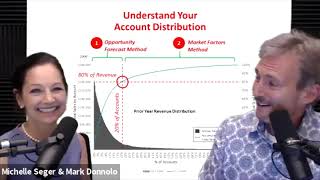
Mark Danolo and Michelle Seeger explain two methods for setting sales quotas in 2021 when historical data doesn't work: opportunity-forecast for top accounts and market-factors scoring for smaller ones. They recommend segmenting accounts 80/20, combining market opportunity with sales capacity, and getting managers involved early to build buy-in.
Chapters
Okay, well, why don't we get started, Michelle, what do you think?
Yeah, that sounds good. I think that we can get started. It's just after the hour.
It is, yes. And it's cocktail time in London so I think we have some people on from London as well. We persuaded them.
They're the ones that drink those gin and tonics that I wish I had one right now, especially with this puppy. But anyway, so I'm excited about today, Mark, you worked really hard on some of this content and we're going to see interesting stuff today we haven't seen before. Because you're bringing in real work that our consultants have done as well, aren't you?
That's right, yeah. So we'd like to welcome everybody to our session. This is our third session on quota setting and what you need to know about quotas in COVID 19. And I am Mark Danolo with Sales Globe. This is my partner Michelle Seeger. Say hi, Michelle.
Hello everyone. So exciting today and Sales Globe. Just a little bit about us. We are a problem solving sales advisory. So what does that mean? That means that we solve your greatest sales challenges. So anything that you have sales related, we advise on sales strategy, coverage, model, structure your roles. Today we're going to be talking about quotas. So we do territories, quotas, segmentation and incentive compensation. So big sales problem, give us a call, we're there for you. We published a few books as you can see, one being quotas. And we're going to be actually talking about the quotas book today. And quotas you'll see has an exclamation point, Mark. Why is that?
I've never heard anybody just say quotas. They always yell it, they always scream it. So we thought that was appropriate.
They scream quotas.
That's right, that's right.
I know. So you aptly named your book Quotas with an X.
So all the things we're going to talk about today, you'll be able to go in the book and go get those in more detail. We're going to show you some real examples as well and we are going to drill down into some of the specifics today.
Yeah, two important things we're going to look at market opportunity and sales capacity. We spent a lot of time on sales capacity last week on our roundtable. We're really going to be drilling down into market opportunity and we're going to look at two things, right? The macro market as well as down at the account level, how you can look at those in a different way and then some practical Methods for setting your 2021 quotas. We'll be discussing both of those today. Because what's the one thing we know is certain? We know that the future of sales is uncertain and we do believe it demands creative problem solving. And that is what we are bringing to you today.
Yeah, And I think that's probably the biggest point here is creative problem solving. We can give you tools, we can tell you how to do things, we can tell you what other companies are doing. But in the end, you've got to solve your specific problem. We can of course, help you with that. But every problem, every challenge that companies are dealing with have their own story behind them. So in our first session, we talked about understanding the story behind the problem. We go into that in the book as well. But I can't emphasize enough, Michelle, how important it is to really step back before you try to come to an answer. Because we get these calls every day. What are the companies doing? What should I do? Before you're tempted to come out with an answer, to go back and talk about what you're trying to solve for and how you got to where you are and then your solution vision. So really important points, whether you're solving a problem around quotas or something else to do with sales effectiveness.
Right. And so really the intent of today is we're going to bring that live to you. So we're going to show you how creative problem solving can be utilized in your own organization through some creativity that we have used with our clients.
Yep. So rolling whiteboards, Michelle.
Yes, I know. So this is the. For those of you that have joined us before, you'll know that we have rolling whiteboards all over sales globe. And this is one small piece from the future of sales. And what we do know, what do we know that the market opportunity, it's changed. Right. And we're trying to understand how customers needs are changing and how you respond. So where will demand shift? So we're going to talk about that today and we can show you examples of how demand shift has shifted. And then you know how we're structuring our sales capacity. We spent more on that last week, but we'll touch upon that as well. And then, you know, how are we going to set quotas so that that carrot, we're going to be dealing with that one as well today.
Yep. All right, so let's dive in. So market opportunity, sales capacity. There is this model we call the quota success model, Michelle. And this is looking at the big factors that really make make it possible to Do a great job of setting quotas. And too many companies, you rely on history. They look back at history and they use that to set quotas. And so we can't really do that anymore. Even in a normal world, history is just not a great way to predict the future. So if you look at the three big anchor points, starting at the top with people and understanding how the process works and how the organization works to set quotas, we want to focus on these next two, which are the market opportunity. And if you're a company that's looking at market opportunity to set your goals, you're already a few steps ahead because that's a big step just to get visibility on what's out there and what the possibilities are and then balancing that with sales capacity, as we said last week. So understand what's out there and understand the, the sales capacity of what your organization can do. And the components that go into sales capacity are your head count, how much time people are spending on selling. We talked about last week that sales organizations on average spend about half their time selling, which means you've got a lot of opportunity there to increase capacity. And it also has to do with the design of the roles. And we know that the roles are probably going to be changing as we go into 2021, as we go into different types of hybrid roles and new types of sales models. So your capacity is going to. And also, Michelle, because people are working virtually, so there's a higher degree of or higher frequency of access and conversations. So that could change your capacity to have all those important meetings and conversations with customers.
Right. And how we manage that time is going to be really important. So, Mark, I want everyone to know that we go into a really low level of detail on the quota success model, the sales capacity levers that you mentioned, as well as market opportunity. And in chapter five in the quotas book.
Right.
You can also, of course, go to salesglobe.com but this is where this is, is coming from.
Yeah. It takes you through each of the, each of the steps here.
Yep.
So what do we know? What's going to help in 2021?
Yeah. That history is history. Right. Because what do we know that we all discussed is that the future is uncertain. Heck, next week is uncertain. So we're going to, you know, you call it, Mark looking ahead at history or history looking forward. And that's what we're going do and show you how to do that today. And then understanding the composition of your accounts and what revenue potential really is, we're going to Take a look at that today. This is going to help with your quotas in 2021. So you're going to give them a practical approach as well as building market opportunity estimates. That's going to be really important. Over looking at history and then of course, balancing with your new sales capacity. What the heck does that mean? We said that you've got more. You've got different time. Right. So it could be more time, but it's probably different time. Your buyers are more available. Right. Times of meetings are a little bit different. And so how you manage that time and how they fill their time is going to be a little bit different. And then how you can balance that with the quotas will be a critical thing for 2021.
Absolutely. So we're going to show you some details. We are then going to wind up with some principles and ideas that you can take forward with you as you do your thinking about 2021. Now, there's a lot of ways to do it, Michelle.
Right, so these are some examples. Chapter seven of that book, you can tell I read that bookmark, but chapter seven of the book, quotas, we go through the different methods of quota setting. I'm just going to move back for a second. So you'll see that as we go up the continuum, that's where we get more of the account orientation. And you see history is down there at the bottom. The only thing below it is flat quotas, which. That just assumes all opportunities are equal. Right. History is looking backward. We're going to look forward. And today specifically, we're going to focus on market factors and we're going to focus on opportunity forecasts. So 77% of companies utilize market factors and we're going to look at some market factors you can consider and then opportunity forecast, which actually gets down to the account level.
Yeah. In a normal world, you know, you could select from a lot of these opportunities depending on the kind of territories, kind of jobs, type of segmentation that you have. We talked about historical before. You can see historical right here. That is a method that about 65% of companies use some form of historical. Now, it doesn't mean that they're using straight historical numbers. I think it's about probably 40% of companies that, that do that and as a primary method, but history does play into this, but we're going to start moving away from that. And the reason we're picking these couple of methods is one is really good for getting into the details of accounts, like major accounts, strategic accounts. The other one is really good at looking at the market more broadly and what you might estimate is going to happen in the smaller accounts that are just too small to go account by account. And those are the parts of the market that we're often tempted to just kind of take a big historical swath at and try to try to solve it that way.
Right. And we just know that that's just not working right now in this current environment.
Yep. All right, So I want to dig down here and look at, look at a couple of these methods. So opportunity forecast and market factor. So opportunity forecast, what that does is it looks at the larger accounts, the ones that we're tracking the details on. It may be the accounts that you would get into for doing strategic account planning. It may be accounts that are smaller than that, of course, but the ones where you actually have knowledge of those accounts. So we're looking at a combination of a couple things. We're looking at build of the pipeline, what we know about those accounts. But we know that if we only look at pipeline, we get sandbagging. Right?
Yeah.
So if you say to people, well, we're going to look at your pipeline and we're going to use that for quota setting, what are you going to see in the pipeline? Whole lot of nothing.
Well, we've seen it time and time again, haven't we?
Right, right. So pipeline, and then you're combining it with opportunities for retention, penetration and acquisition. So retention, penetration, acquisition, what we're retaining in our current customers, how we're penetrating or growing those current customers, and then how we're acquiring new customers. So it's, it's that, that build up. So it's a buildup of components. And this takes a little time to do this, but it'll give you much more accurate results. About 56% of companies, you said, Michelle, use this type of method. You have to have known information on those accounts. So you have to be accounts that you know. So that's, that's area number one. We're going to go into. Area number two is market factors. And market factors, as I said, is for that larger group of many, many accounts where we look at them as a broader market and it looks at factors that are going to affect where that goal would go. Okay. And then it's about 3/4 of companies use this type of method. This one, for me, this is kind of like a market opportunity method on training wheels, Michelle, because it's easy to do. You don't have to have a lot of information to do this. Basically you're asking about what's different about one market versus the other. I don't know if you. Did you ever watch Sesame street when you were young?
Of course.
One of these things is not like the other. That's what you're doing with the market. So you're saying one of these markets is not like the other and which one doesn't belong. Right. And then so we can come out with a good, you know, baseline for setting our quotas. Okay. So I know everybody's really excited based on.
Yeah, but big point on this one. Right. This is the best way. So for. For those of you that use history as your base, this is a great way. We consult with a lot of companies on this.
Right.
When they want to move just from history into getting into market factor considerations, this is the first step.
That's right, Mark. Yeah. Yeah. It's kind of like you go from Neanderthal to CRO Magnon quota center, and you're kind of slightly getting up and then you're in the market factors method. So it's your first step. Yes. All right, so we're excited. All right, so let's take a look. Bigger picture, number one, understand what you're dealing with with your market. So your account distribution, your segmentation. We're showing an example here. This is a Pareto rule. Again, this is in the book. But what you're doing is you're looking for the 80 20, or maybe you've got, you know, a 90 10, or you may have a situation like that. But in most organizations, most companies, there are a smaller group of accounts that represent a large amount of potential or a large amount of revenue. So we want to start to isolate our attention in on those ones that have a lot of influence, right?
Yep. Yep.
Okay.
You know what I find really interesting with when we're doing our consulting, this whole 8020 rule, it really does seem to hold. It's somewhere between 80 and 85% of the revenue is just in this small 15 to 20% of accounts.
Okay, so let's check out some math here. Okay, so you see this chart, this very cool chart in front of here? So what it's looking at on the horizontal axis is it's looking at the percent of accounts. So we're looking at cumulative percent of accounts. So we start with 0 on the left hand side, and it goes all the way up to 100% on the right hand side. You can see, see, if I go.
Back here, you can see that percent of accounts.
So they said X axis in business school, not horizontal. It's The X and the Y. It's not the horizontal in the vertical. You're exactly right.
I went to B school.
I guess I got reprimanded for that. And not labeling my axes either. We label these. Okay, so you got percent of accounts, cumulative percent of accounts as you go along. And then on the Y axis you have the total sales by account. Or it could be the total potential if you had market potential information at the account level. And what you're, what you see in the gray is you see the actual accounts. So you'll see some really big accounts down at the zero or really the 1% area. And then they start to get smaller as you go along because they're sorted in ascending order. Not random, it's ascending order. Okay, so really big accounts and they go to really small. And then that aqua covered line or colored line or that teal colored line up there, that curve that's showing you the Pareto curve. And what it's showing you is that when you look at the intersection of those two red dotted lines that when you get up to about 20% of the accounts, that's representing about 80% of the revenue, which is kind of amazing. And so you don't have to look at a lot of accounts to really have a lot of impact. And if you could even go up to 90% of revenue if you wanted to. So what we're doing is we're taking that chunk of 80% of revenue and we are looking at that opportunity forecast method so that those are accounts that are big enough that we have information on them and they're worth spending time on in terms of examination. And then number two method, number two, the market factors method we're looking at for those smaller accounts. Okay. Now really for the smaller accounts you could just do a, as they call it, a peanut butter spread as well. But there are some methods you can use. Like we're going to show you that can, you can do a more accurate job of those as well. Okay, so segmentation first thing and looking at the composition of those accounts. Now let's go into number one here and I want to show you some examples here. Two of our consulting team members at Sales Globe, Michael Bullock and Charles Smith, did a great job on several projects here. And we're just pulling some examples to show you from some actual situations which I think will. And they're all cleansed. So it's not real numbers, but it'll show you the approach on this method. So opportunity forecast method, what we want to do is we want to Start to understand how we grew, how we got to the place that we are right now. And the big mystery, Michelle, maybe it's not a mystery, is that accounts or customers don't grow from year one to year two in a straight line. Right? What we're doing with some customers and also overall, if we look at our account base overall, is we retain some of our account base. So most companies on average retain about 80 to 85% of their revenue. So you can see that first bar there, revenue retention. And they churn out about 18 to 20% of their revenue. So what that means is that we can do a better job of growing if we can retain more. They also penetrate or they grow their current customers a certain amount. We have an example number in here of 22%. And then they grow, in addition to that, their new customer revenue. So they're adding new customers. So by retaining and by penetrating and by acquiring new logos or new customers, you're able to grow. Okay, so what we want to do in this method is we want to start to tear apart those pieces and we want to examine what's happening with those pieces. So keep this big picture in mind here.
So mark just one point on the revenue retention piece. You said first area of opportunity. Look at that revenue term for this example. It was 18%. So a lot of times, right. We're so focused on penetration going out and getting new. We're kind of forgetting or not really focused on the retention. We just assume it's going to be there. And we do believe that, particularly in the current environment, that we really need new ways of focusing on retention, don't we?
Well, yeah, I mean, the retention is not a glamorous thing. Right. Everybody talks about the thing that's in blue, which is new customer revenue or maybe a new, you know, big deal. We got within it, within a current customer. In fact, some sales organizations don't tell anybody. This was some sales organizations. Sales is not actually responsible for retention. What?
Who's responsible?
Operations or maybe customer service, which. So, and you're talking about the most important piece of your growth, which is holding onto what you have. Yet you have sales going after just the new growth. And then guess what your competitors are doing. Their sales organizations are going after your retention and they're facing off with your operations and customer service people because they're.
Looking at new customer revenue because that's new customer to them right off that.
So, yeah, so think about, think about the whole strategy here. So anyway, we're getting a little bit into sales strategy, but I get kind of excited about the stuff, Michelle.
Yes, you do.
Kind of geeked out anyway. All right, so what we're going to do is we're going to focus in on one area of this right now. Just as an example, you can see that little chart up top there with the P, that's the penetration piece. So this is looking account by account. So this is one account, Allied Industries, that we're using. The name was changed to protect the innocent here, but Allied Industries, so what you're doing is you're going account by account and you're looking at a couple things. So right behind you, Michelle, you can see we're starting with our prior year penetration revenue and our penetration rate so that we had 10 million in revenue from that account and we had a penetration rate of 10%. So we grew that account 10% over the prior year. And so what we're asking in this blue bar is what's different or what's changing? Okay. So if we take our prior year penetration and we apply that to our current revenue, we're going to have a baseline penetration for 2021. And then we want to ask some questions about what's happening in the account. Well, this account's in a strong recovery mode. So we're, we know that their industry is coming back. We also want to know were there any significant one time wins that we made last year that maybe are not going to happen again. So we, you know, that we don't want to include in there. So we don't want to take a one time win and say, well, you know, if we sold, you know, a $2 million deal and it was a one time project, that it's going to happen again because it's probably not right. So we're taking apart these things and understanding what's changing. Okay, so we're getting a build here. So we're going from the 10 million that we had initially and I will back off here. And you can see we are bringing that down, adjusting that down a million because we had a significant one time win there. So we're doing some puts and takes there. We're carrying that forward. And then we're also looking at a couple of other important things. So what are the growth expectations for that segment? So this is a transportation company and we'll show you their details in a second. And they're selling into a number of different segments. But for this particular segment, they know it's growing at a compound annual growth rate of three and a half percent. So they're adding some Segment growth to that. And then we also want to understand our current wallet share in that account. So what do we have with that account right now and is there opportunity to grow? So we have about 50% of their business which is actually pretty substantial of that, of that slice that we were selling to them. In this case what we're selling is we're selling truckload and LTL less than truckload shipping services to these companies. So we have about 50% of their business. But there's a little bit of room for growth there. So we're doing some addition there. And then we're also looking at internal customer factors. So this also gets kind of down to mini account plan. So we're not doing the deep account plan here, but we're saying what's happening? Well, we've got a new VP of Transportation there. That adds some risk into the situation. So we make an adjustment for some of that risk and then we also look at any expected new wins. So are there things in the pipeline that we can anticipate are going to be coming in? And we want to detail those out as well separately. So we have pipeline. Now what you'll see is at the bottom here we come out with a penetration forecast which is 11.95 million. So you can put in your factors as you go along here. You can do that for your particular business, the factors that make a difference. So again here it was, what's happening in the market with the overall growth rate? Did we have significant one time wins? Do we have deals that we know about that may come in? Are there things that are happening in the account that we should be aware of? What does our wallet share look like in the account? Right, so those are the kind of factors and I want to reflect back to last week for just a second and show you. So when you go into this area here which is on your wallet share and understanding what your growth opportunities are, you need to get a hold of market information that can tell you that. So you can see the market data here. And we use this example last week of two of their food company clients, Schreiber Foods and Link Snacks. And this again was from our partner Corterra. And this is all purchase data. So this is purchase information on what these companies are actually buying. And so we know what they're spending on transportation services. So you can see as an example that Shriver foods over here, $312 million in transportation spend and on other reports we know how that breaks out by truckload and LTL etc. And we also know that they are growing right where we're looking at linked snacks, and they're not growing. So this gives us a lot of information up to the most recent month or reporting period about what's happening in these companies, which is really valuable and way more valuable than just looking at some broad number of employees per account kind of information and trying to interpret something from that.
So, Mark, if I'm listening, I'm in the audience listening, I might be thinking, how can I get this type of information to my salespeople? Like, how can you help a sales organization look at the market opportunity? Who should be responsible for helping them?
Well, I think you've got a few sources. You've got. The sales organization itself can give you a lot of information. And we're not saying that you can just know, buy things off the shelf, buy information off the shelf. But you should look at building this kind of information as a competency for your sales team. So sales should be able to provide you with information about what's going on in those accounts. Although I think we have to remember there, you know, there's a little bit of a bias view, like we've got everything in the account that we can ever get. Right.
It's a good starting point, though.
Yeah.
And then to get them included in the process.
And then if you put sales operations together, maybe with a little bit of help from marketing, you can start to start to blend all this information together. But I think the point is you should, you should look at this as a really important competency that you're building for your organization. Not that we just bought some market data and it's, you know, it's garbage. Right. And so we don't use it. But okay, we bought some market data and it's not perfect. Now how do we put our spin on it to try to build into something that's going to be really useful for us? And that's where a lot of companies don't push far enough to do that.
Right. Okay. Thank you for that, Mark.
Okay, so what you're doing here is, as I said before, you look at that diagram on top, that's the penetration piece you're doing for each of your accounts, a look at the retention piece and the penetration piece that would be for your current customers. And then for the new accounts that are strategic or important that you think are worthy of pursuit plans or worthy of putting into the goal, you would be doing a new customer acquisition or new customer growth forecast as well. So you're doing three different types of Forecasts potentially, but you're only doing those for that 20% account. So it's not a lot.
And your big area of focus, your big focus accounts.
So when you're moving into 2021 and we have like pretty much no visibility, this is going to give you a lot more rationale for how your, how you're going to be setting the goal versus a complete blank like, oh, crickets.
Yeah, crickets.
So you need information, not crickets. That's exactly what happens. So everybody's standing there, crickets, and they don't know what to do. All right, so this will give you a start. Now let's talk about Michelle, that, that second piece here, which is the thing for the 80% of accounts that make up only 20% of the revenue or 20% of the potential, this is our Sesame street approach. Which one of these things is not like the other one that belong. Okay. All right, so an overall picture of it. So what we're doing is we have an overall business goal, right? So you probably have a goal for the business and you're, and you're probably doing a bottom up build. And if your bottom up build is incorporating information from those top accounts, those large accounts that's going to make 80, make up 80%, you probably have a pretty good idea of what's going to happen for the rest of the market, for the rest of those counts. So if we take the rest of that and historically, what a lot of companies will do from the historical method is they'll just take that number and they'll spread it across all those other accounts. So what we want to do is we want to start with historical, start with the spread. And again, this is kind of our training wheels approach. And then you want to look at some of what we call market factors. And so you can see some examples here. Wallet share. So if I look market by market and you could even look account by account when I show you this method, you'll see that you can do that. But say market by market, meaning territory by territory, how is that territory doing on wallet share, meaning this market share it has in its accounts relative to the other territories, average or could be midpoint territories, Is it higher or lower? Well, if the mark, if the wallet share or the market share in that territory is higher, you might get a downtick on the goal for that territory because there's less growth possibility. Market growth rate. If it's a faster market growth rate, you might get an uptick in what you're getting for the goal versus historical competitor intensity. So there's a lot of competition in that market. You might get a downtick on the goal because it's very competitive. And so hitting the goal there is going to be harder than it would be in other territories. Propensity to spend. So some territories may be in a place where there's higher spending. Again, uptick or downtick. Resource experience. Well, we have a younger rookie rep in these territories, so we may. And that's kind of, you know, looking a little bit at sales, sales capacity. We may tick down a little bit on that goal. So what you're doing is you're getting these puts and takes on the goal based on what's going on in those particular territories and you come out with a working quota. Okay, so step one is allocating and then step two, and I'll just lean back here, is reconciling that with the overall goal for the business and with sales capacity. So you're coming up with your final quotas there. Okay. So you could put any kind of market factors in that you wanted. You could just put three in if you wanted, but they'd have to be meaningful to your business.
Mark, about how long does a process like this take? Typical Fortune 500 company?
Well, I mean, this should, this kind of process should take a period of a few weeks really, just at this level. But because, you know, Michelle, when we were saying before, you don't really need to have specific data on the accounts to do this. What you're using is you're using intelligence from the leaders, the sales leaders, and you're using information they have about what's going on in those markets. These are things that they know. It's also very helpful if you can kind of prove that out empirically that, you know, market growth rate is faster than one than the other. But this is information people, the manager should pretty much have at their fingertips and be able to make those kind of judgments or decisions on. Okay. What we want to do is we want to get away from, on both of these methods, the idea of gaming and the idea of trying to get concessions or adjustments because too many goal setting processes, we see they set the goals and then they go through the exception process. And the exception process is like, you know, painful. So if you have step by step and you can start to justify each of those steps and have rationale for each one, then it makes it a lot, a lot harder to game it.
So sharing this with the sales organization, it sounds like is really key, Mark. And getting them engaged in the process, the leaders as well as down to the front line, right?
Yeah. If you, if you think about knowing how your goal is set, if you know how your goal is set, you're more likely to be accepting of your goal versus you know, here's, here's the goal and sorry, we all got a heavy goal this year and they, I do the pronoun test, the goal they gave us versus the goal we developed. So are they referring to, they, are they referring to us? Right. So you want them to be referring to us because they had input to setting the goal.
Well and again, ever more important now in this environment because it's so uncertain.
Right.
To get that communication and get the buy in and inclusion down to the front line.
So let's take a quick look at what this looks like here. And you can see on the left hand side here, this would be your historical baseline. And you can see a number of territories here. 16 million, 18 million, et cetera. What these territories are showing you is they're saying historically if we took their performance over the past year or could be the combination of the past three years through your traditional historical method. And then we said, okay, the goal for the company is going up 5%, therefore everybody's going to get 5%. Or you know what, you're going to get the same portion of the goal that you got last year based on the size of your territory. So some historical allocation methods. So you start with, with that method. And then what we're doing is we have our market factors here. So you can see these five factors going across and there's your wallet share and market growth rate, et cetera. And then it's got key. So what you're doing is you're rating them from 1 to 5 according to what's going on in that particular market. And so for current wallet share you can see a one would indicate that that's very low current wallet share. And so that would probably give them that territory and increase in goal and market growth rate. They've got a number of four in there, four out of five. So that's high growth. They're getting another increase in goal. So that's a pretty hot market. You can see across the very top there are weightings on these factors as well. So you can weight them out of a percentage of 100. And you could say this factor like wallet share is going to be 50%. So this is a predominant factor. This one's really, really important in how we're calculating this. And so you can weight them according to that importance. You could also change the sensitivity of the 1 through 5. So you know, is it. Is it a plus or minus 10% swing from a 1 to 5 or is a plus or minus 5%? So there are various adjustments. But again, the concept is what's really important here, that you've got a logic behind this. And so you can see that $16 million goal that we started with right there, historical, when you run it through all these factors here, comes out to about $17.2 million over on the right hand side through these factors. And then that's. And so you can know that you're shaping the goal to more accurately reflect what's happening in those territories.
So again, Mark, it looks like a very objective setting process.
Right.
And again, you want your sales leaders to be involved all the way down to the individual rep. Yep. The communication help them understand where this is coming from and get their validation and buy in.
Right. I'd say either down to the rep level or down to the sales manager level, depending on your company, depending on your culture. So some companies do involve rep, some companies just get it down to the sales manager level. But you have to get it to the level where there's an understanding and where you're going to get the buy in. So, you know, you're always talking about change management. So you know, you got to get buy in from people on a change like this. So you have to get down to a level where it's really going to be specific for the group that's going to be accepting that change.
Great.
All right, so those are the two big methods. Let's talk about some principles as we move ahead.
Okay. Shifting from history.
Yeah, history is history.
Yeah, history is history. I think that's the one big point that we want to make. Well, we got six big points to make, but one is shifting away from history. So again, history looking forward. Think about that, how you incorporate market opportunity. Because it's not going to be just what worked before.
Yep. Engaging the team. So we talked about the idea of you got to get this method or these methods down to the manager level. You know, Michelle, when we build these kind of tools, these kind of methods for clients, one thing we do is we don't build them in isolation. We don't build them just with the project team. What we do is we talk to the project team about what's going on. We get the analytics and then we come back with a proposal to them on a first starting point of what this might look like. And then we get them to co develop it with us. And so when somebody co develops a method with you, they have ownership.
That's right, yeah.
There's a lot of passing passion, there's a lot of gnashing of teeth, but in the end they own it because they were involved in it and they're proud of it.
That's right. And then using market methods, we gave you a couple of ideas here, but think about the market method, method that makes sense for your business, right?
Yeah. So 8020 rule, there may be other ways to look at it. You may have a different method by different industry, but don't look at the. At your goal, your markets as one whole thing. Break them down and understand what method is going to be right for each particular market.
That's right. And getting detailed on your major accounts first, understanding who the major accounts are. And I love that Pareto that was run. I love that 8020 rule that we showed earlier.
Right.
But helping, you know, understand who they are, where they are and then getting a detail. I actually like that you use the word account planning too. It's really not account planning, it's modified. But you really are developing a plan for that account, right?
Many account plans. Yeah. What you're doing is you're forcing people to think through those accounts. Now we do talk about the account planning method, you'll remember in that quota methods continuum. So you can use account planning to help with quota setting as well. So that's getting, you know, a lot more detailed. So that would probably be just your very, very biggest ones. But check that out in the book. You can see some of the pros and cons of doing that.
This is your starting point. And then using this logical approach for broader accounts.
Right? Yeah. So something that's going to take away the peanut butter spread, something that's going to take away the gaming, something that's going to help. Think of it as shaping, helping to shape that goal according to those territories. Not just, you know, based on what you did last year.
And Mark, talk a little bit more about the consider this full year versus this half year goal.
Right. So full year versus half year. So look out into 2021. So one thing companies are talking about or a question they have is should we be setting a full 2021 goal or should we be doing it for half the year or by quarter? Right. And so there's some reasons you may or may not want to do that. But if you set a full 2021 goal at the beginning of 2021 or the end of 2020, you're committing for a very long period. Of time for something that you may not know is going to happen. Right. So there are a couple options there. One is you set the goal for the full year 2021, and you have a review point at half year to see if we need to make any adjustments based on certain factors. Right. It can't be like, well, at six months we're going to take a look at the goal and everybody goes, oh, we know what's going to happen.
That's right.
Yeah, the goal is going to go up.
We're doing. The goal is going to go up.
Right. So you have to, you have to say, you know, here are the reasons we would make an adjustment if these particular, you know, economic indicators change, whatever it might be. So there has to be a logical reason behind that.
Governance behind it. Right. Governance around it that's communicated.
So there's logic in that. There is trust in that. We talked way back, Michelle, when companies are making changes on comp plans or they weren't in the beginning and they were trading on trust and they were saying, just trust us, you're trading on trust a little bit in doing the mid year adjustment because the organization needs to trust that you're going to do it fairly and not just knock them down. Okay? So that's if you do full year 2021, if you do half year 2021, then you're going to do if your calendar year, fiscal January through June 30, and then you're going to set a new goal for the second half of the year. The complexities in that are kind of like the complexities in making the mid year adjustment that you know you're going to be setting a new goal. So if the organization is doing really well and things are really hot, things are much better with the economy, you're going to be setting a bigger goal for the second half of 2021, which you may not have if you set a full 2021 goal. So again, a little bit of trust there. It's almost like breaking it into two, two years. It's two half years. The other thing is, and we've talked about this before watching your accelerators. So if you have accelerators in your plan for upside, if you do two half year quotas, people can hit those accelerators twice. So that can blow your compensation, cost of sales out of the water if you don't watch that. So you can't just make one change to how you're doing quotas without going back and looking at how it's going to affect the plans. You Can. But you're going to be unpleasantly surprised.
That's right, yeah. Unpleasantly surprised. Okay.
Okay. So it was a lot in point number six there. And this is, you know, these kind of methods, these kind of questions are fraught with all sorts of twists and turns here. So as we're showing you, these things are not, you know, obviously as simple as we're showing you. So these are the kind of things that you learn through experience. If you have questions as you're looking at these things, just give us a call or drop us an email because, I mean, you have to know some of these pitfalls here.
Right. I think it was worthwhile for you to spend a little time talking about quotas and the full year, half year conundrum that companies are facing. So let's talk about Mark wrapping it up.
Yep.
Right. So next Friday, I'm actually really excited we're going to have a guest, Anita. Well, I'm always excited about these roundtables, but Anita Nielsen, she wrote, I consider her a friend and a colleague. She wrote a book, Beat the Bots. And we're going to have a discussion, we're going to have a discussion around humanity in the sales process and how you connect in a virtual world. Please make sure you register for next week's roundtable and please feel free to call us about your tough challenge, your toughest sales challenge. It can be quotas, it can be comp, it can be anything in between about your coverage model, infoalesglobe.com, you can connect with us. And then we've got SalesGlobe on demand. So, you know, we talk about you listening to your clients all the time and we're listening to ours. Sales Globe on Demand is just a great solution to have Sales Globe available at your fingertips if you will, expertise year round for your needs. And that's, that's what I got for everybody today. Mark, anything to add here?
I don't think so. So those are the three parts, the prior two weeks and this week, if you want to look back on our website, salesglobe.com you can see the prior two sessions and you can see where we started with understanding the problem and looking at the very big picture to getting into balancing out market opportunity and sales capacity and then down to the specifics today. So check out those three and because they all connect together. So thanks everybody for joining us.
Yes, I do. Sorry. Please follow LinkedIn us on LinkedIn Sales Globe. And if you like what you're seeing, please subscribe on our YouTube channel. So, Mark we're going YouTube, you and I. Yeah, we got. This whole thing is going on YouTube. I know we might have had a couple things out there before, but this is going. Yeah, it's going for them a lot. We got. Our production manager has brought alive our YouTube channel. And then of course, course, if you find these useful, please pass the invite. You get along to anyone who you believe would find this beneficial. So thank you so much for spending time with us today. We consider it a privilege and honor to see you each and every week. So thank you.
Have a great weekend, everybody.
Yes, wonderful weekend.
More from SalesGlobe







Sales Compensation for Results - Course 1: A Strategic View on Sales Compensation - Trailer


Freative Friday - Episode 98 - Insight in Your Hunt for The Revenue Roadmap Pt 4


Freative Friday - Episode 97 - Insight in Your Hunt for The Revenue Roadmap Pt 3