Part I: 5 Sales Effectiveness Moves You Should Consider for 2021
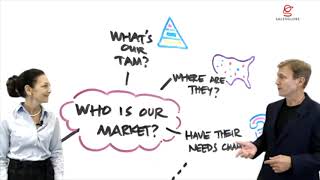
SalesGlobe Sage and Michelle discuss two sales moves for 2021: rethink partnerships by re-evaluating TAM and partner needs, and create a hybrid sales playbook with new roles, compensation tied to value, and tools like AI for lead generation and machine learning for deal signals.
Chapters
Hey, Michelle, how's it going today?
I'm doing okay. How about you, Marv?
Fantastic. It's a chilly Friday here in Atlanta.
I know. I woke up, I was so cold. It's like 50 degrees. Although people in some areas of the country won't feel very sorry for us, will they?
Yeah, it's kind of like put a damper on my yoga practice this morning. My downward dog was a little down, a little chilly.
I don't even want to know what that's all about. And I don't know if anybody else does either. But anyway, well, welcome, welcome to the Roundtable. Today we're pretty excited. We're going to share some considerations for some moves that people should be considering as they look at 2021 for their sales organization. Aren't we?
That's right. Five, five big moves. And we're going to take a look at a couple of them today and we're going to get into how you should think about these. Not just the answers, because it's going to be an evolving situation.
Yep, that's exactly right. So just a little bit about us. We are a problem solving firm for sales and that just means that we focus every day on solving your biggest sales challenges. You see, we've written a few books, they're available on Amazon, but we consult in all types of areas of sales effectiveness and we're going to be hitting on just a few of those today.
Right. Some of our favorites in fact.
Yeah. So let's look at, just take a step back and think about some of the macro factors and that are accelerating change for sales. So it already had started years ago. Right. Think about back in the Internet, how that just changed how sellers were having to go to the market already many years ago. That was because the buyer continued to become more and more informed. And then as companies developed their websites, it just even continued. And as sellers were getting more competitive and with globalization, they're on the road more. There was this whole pressure for efficiency because the T and E expenses were continuing to go up. The expenses and cost of sales. And then we started to see the evolution of new selling models. A couple of the really popular ones was the evolution of inside sales. We talked a little bit about that last week and we're starting to see things like teaming models as we came into 2020, where field sales is actually working with the inside sales sales rep, some overlay roles and the sales engineers. And then technology advancements. Right, Mark. So in the technology advancements were driving change as well. So not only technology that was in the hands of your buyers, but also the ability to have information for sellers. So that could be things like competitive intelligence, the ability for us to send mass emails to that could be sent in a matter of an hour of what a rep could spend a whole day doing manually. And then what happened? Covid.
Covid happened. Right, right. So we've talked about the four phases of COVID but what's happened is everything's become accelerated. So early on in the year, around March or so, we were in this period of acclimation figuring out what's going on and then moved into planful action. So we started to take some action, building and adjusting and then now planning for recovery. So one of the things that's happened is everything has accelerated. So all these different areas, especially technology selling models. You know, Michelle, you think about just how we work on video now, that's accelerated exponentially from what the trend line it was on.
I wish I bought stock in that. But you're right, Mark. And we talked about last week. There was a recent study done by 4 Fortune magazine, it came out in September. And 75% of the Fortune 500 CEOs, over 90% were part of the study had said that they were advancing their technology transformation. And that included putting technology in the hands of their organization, their sellers, so they could sell more intelligently.
Right, right. So you take technology, you take AI on top of that. We'll talk about that today as well. So everything's accelerating incredibly. So what does this have to do with what we're talking about? Well, the changes are happening very, very quickly. So what we have to do is we have to be equipped to deal with those changes and to problem solve through those changes. So what we want to do is talk to you about some of the big areas that we see are going to be potential changes, but not just give you answers, but help you do your own data driven creative problem solving. So how do you approach this? So we're going to open up the whiteboard and the mind map today and show you inside some of the nodes and some of the areas that we're thinking about and what we're hearing about so that as you look at each of these areas, you can start to think about how it's going to affect your organization. And so the first area we're going to talk about is partnering to approve your offers and reach. And we want to give you the ways or the different indicators that you should be thinking about that are going to show what you might do in the area of partnering yeah.
And so there's three things that as we, as we get into this, three things you want to think about. And the first one is who instead of what, like who is our market? We know that markets are changing and we know that history is history. We've had this conversation before. So as you understand what your true market is, do that first. That's one of the considerations that you should make before you partner. Because why that helps you also understand as you understand where your market is and how it's changed, what do you need as an organization? And we're going to talk about four, I think four or five considerations of what you may need. And we want you to understand what it is you need that will help you then inform what kind of partners that you actually need to help you move forward and what partners may be looking for that can get benefit by working with you.
Alright, so who's our market? Well, we're going to get more into depth next week on total addressable market. What's out there, but we know is it's changing. So as you mentioned before Michelle, history is history. Right? So we can't just look at the past and try to predict the Future like about 40% of companies do. First thing we want to do is understand what's our TAM or our total addressable market. So what we know is that if you take now versus same time last year, things have changed. Yes, things have changed in total, but things have also shifted. So where you may find that the volume overall has changed, it's moved in terms of sectors and perhaps where it's being bought. If you take office products or office supplies, which everybody can identify with as one of those, as an example, if you look at the purchase of office supplies now versus last year, there's going to be a difference in trend, but also it's going to be a shift in terms of where those purchases are being made. So so traditionally a B2B sale for companies, but a lot of that has shifted to B2C. So we're having to look at where that volume's going and it's also shifting by industry. So we know that different industries are doing better than other industries. So that purchase will shift as well. So that TAM is going to be moving. So we have to know where that's moving in terms of the segments B2B, B2C and sectors. And then geographically. Right. So geographically we know, and we took the US as an example over the know past few sessions that things are shifting in different parts of the country at different rates. So understanding that bottom up is really important. So you put those first two pieces together, and knowing how your total addressable market is shifting is really critical, because when it comes to deployment of your sales organization, that's going to be a little bit different. We'll talk about that later. And when it comes to your offers and also to your overall forecasting and targeting, that's gonna change as well. So we have to have a current view. We can't just take the historical view.
And just understanding how the opening of the economy globally, how openings, reopenings, closing again, is impacting your business and how you can pivot and shift, that's gonna be really important. As we look at 2021, we don't see that going away. We did see another study that said that only 5% of company CEOs, again, this was the Fortune 500, said that their decision was going to be impacted by a vaccine as to whether they were going to be opening their business or how they were going to continue operations. So these are really important things to be thinking about. And the assumption that your total addressable market is going to be similar to what it was in 2019, not the same.
Right. And then the needs are changing as well, Michelle. So what people, what companies need is actually evolving. You know, we've talked in past sessions about compassion, understanding the customer, turning from selling to helping. But getting better insight on how those needs are changing is going to be critical because it's going to affect what, the size of your market, and it's going to affect your offers as well. So when you take an area like this, this question of who is our market? What you need to do is you need to take these big nodes, these big questionnaires. You need to apply these to your organization. What's our tam and how's it shifted? Where is it moving to? How have our needs changed? And that'll start to set the platform for partnering and also the rest of the sales model.
Exactly. Yep.
Now, what do we need in terms of partners? So we're talking about what do we need? And then we're going to talk about types of partners. So visibility is one major area you may have a need for. So what you want to do is you perhaps want to improve your positioning. So if your positioning is changing during this time, you. You might want to do something in terms of how that positioning is changing. Might use visibility partners for that, and you could do that for your direct sales organization. So you have visibility partners. Improving visibility for direct sales. You could also do that for your Partner sales organization. So visibility partners improving visibility for partner sales organizations. We'll talk about some methods about that in a minute. But visibility could be the kind of conferences that we're participating in, it could be the types of events, it could be the types of companies that we're working with. So you've got to work back from your customer, understand how to increase visibility. So we'll get into some of the specifics on that in a few minutes.
Another thing you want to look at or think about is do you need access? So has your buyer changed? And maybe there's a C level buyer that you believe would want your new product and service, but you don't have access to that particular buyer any longer or you need more access. So you might need to expand your geographic reach from where it was because the demand that you have in your particular market, it just isn't there anymore. And then finally just target segments. So as you look at the product and services that you have, you talked about, mark the B2B to the B2C, maybe you don't reach that B2C market. So do you have partners that do and can you provide something through them or with them to reach that market?
So you take a manufacturing company we're working with right now, their offers are moving to, they've got products that are industrial products, but they're moving to additional services and additional software around those products. Those decisions are being changed now from the manager who used to buy those products to more of the C level as a good example here. So now they have to find partners to get them to the C level to of these major companies to consider those bigger types of decisions. They also may want to look at how their target segments are changing as well. So for them in the manufacturing business, their target segments, because their TAM is shifting, their target segments are shifting as well. So they're looking at partners on how to get them access to the C level in different target segments.
Just a different way of looking at partnerships, isn't it?
Right, right.
And then offers, you may have an offer change, right. So you might be looking at something that will fit a customer need that you cannot. You may also be wanting to leverage a brand that a partner has that can help you reach an audience that maybe you have not reached before. Right. Buyers that you haven't reached before. And then finally you might be piggybacking off of the investment that you're part of partner has made. So what's in it for them?
Right. So let's look at an example of this Fitting a customer need that you can. So you are a software company and you have a product that helps companies perhaps deploy their sales organizations or perhaps work on their sales process. But one thing you're missing is information, and everybody wants information now. So you might look at how do you partner with information providers to. To be able to create a combined offer that meets a total customer need that you can't address just with your software product. Right. You may be working with a data company in this situation that has a bigger brand than you. Right. And you're leveraging their investment in that brand, and you're leveraging their investment in presence in their market. Right. So you're coming out with a new offer because your total addressable market has changed and their needs are changing, and then you're combining that with somebody else to create that offer.
And I know that some of these things might seem like impossible, but, you know, everybody is looking to scale. So if one of your needs is looking to scale, maybe you need a bigger sales team. You might need better production capabilities. But know that you're not alone, that your partners or people that you or companies that you never thought to partner with before, they may be having the same challenges that you are. Right.
So a company working within security services. So as Covid has happened, the demand for technology security has increased. Their sales team for that product that was not as hot as it is now is not a huge organization. So they can leverage the organizations of their partner firms to be able to get out to a broader customer set. Okay. So you and I see this all the time where companies just can't add salespeople fast enough. So the rate of hiring is too slow and the rate of training and development is too slow. But if you can move into a salesforce that has kind of related knowledge and access to customers, that's very powerful and much, much faster. Yep.
And then finally, efficiency.
Right.
So if you may need to lower your cost.
Yeah. And this one I've seen as being kind of a driver of partnering a lot with companies in the past.
And.
And they'll lay out and they'll say, okay, here's our cost of acquisition for our partner channel. And we pay them x percent. You know, is that good? And they're all excited about it. We find out, oh, my God, this is more expensive than actually the direct sales organization. So what you get is you get a layering of costs with partners. You have to be careful about that, because if you have your direct sales organization or partner management organization working with partners, you're going to get additional costs. Also, your cost of marketing may be different because you may not have to invest in the same type of marketing if you're using partners because you're leveraging them. So you really have to look at, as you look at visibility, access, offers, and scale, what is your cost and what kind of efficiency are you getting around that? So again, looking at these nodes, thinking about what you need, do we need visibility, access, offers, scale, and what does that do to our efficiency? And for everybody that's looking at this, you're going to have different answers depending on your organization. And that's going to start to create some ideas as this situation evolves.
That's right. And inform what type of partner you need and how you might partner moving ahead.
Yeah, so let's get into that. What type of partner?
Yes. So you've got your awareness partners. And Mark, you touched on that a little bit.
Yeah. And these, these overlap or mirror a little bit some of the other areas that we talked about, sometimes one to one. So you have awareness partners that create awareness. But we'll see some combinations here as well. So awareness partners can get you to a bigger audience. So think about, you know, speaking opportunities, associations, conferences, those types of things. You know, they're happening in virtual formats now, but they can also credentialize. And what we mean by credentializing is they can get you better awareness in an unbiased way. So I'm thinking about a test and measurement equipment company that we work with that. And this is not a new method, but something that's, you know, very reliable. They went to major research universities and they give their equipment to those research university scientists that then credentialize because they're using that equipment. So defacto. That's good equipment. Right. So what kind of sources can give you visibility through the usage of your products, whether those are current products or new offers?
You know, and Mark, to me, that's something that a sales organization can control. So it's not like you've got to go through, oh yeah, several channels to make that happen. But it's something. It's just a new way to go to market and providing those products and services out there. Yep.
All right. Referral partners. These are organizations or people that are trusted parties that are referring or, you know, bringing you to somebody else. Those may be paid or unpaid. I think it's kind of a, you know, a misconception that all referral relationships need to be paid relationships, because if we have a reciprocal relationship with a partner and, and we're providing them with opportunities and they're providing us with opportunities. As long as we're keeping that relationship going, that can be very powerful. Sometimes they have a vested interest, so they want us to be there for business reasons, for themselves. Sometimes these partners like to be totally unbiased, which means that you're going to be competing with other providers, with these partners. But the unbiased point of view actually creates more credibility. Okay, so think about referral partners, paid and non paid, and we'll start to see how these combine together.
And remember this, if you are willing to pay someone as a referral partner, just make sure that you've got this thing about trusted parties that we were discussing, Mark. And I think that's really important because your partners may be short term, they may be long term, we just don't know yet. But what you do want to make sure is that they value and treat your customers the way that you want them to be treated. So keep that in mind as well.
All right, and then resell. There are some classics here, Michelle. So resell is kind of a broad ring in the cash register kind of classification here. But you've got partners that can certainly take title to what you sell. If you have a product, they can take title and resell that with markup. You can have what we call a VAR or a value added reseller, which has been around for years in technology and software, obviously. So a great example of that is a software company that has financial software and they use a VAR to create an application for the legal market. Right. Or for the manufacturing market. So they're adding some value on top of what you do. And then you've got agents, of course, that can represent your product. So you pay them essentially a commission. We like the VARs because as you can see, when we start to talk about co development as well, they're starting to augment your offer. So they're creating a better offer. Right? So think about with the offers that you have and again, your total addressable market and who you're trying to reach, are there companies or are there people that can do something to enhance or modify that offer to get you out to a new audience and then the joint offer. Michelle. So this is kind of, you know, sort of related to the var. I think in this period. One of these is a real big one, which is co development. So co development is we find a need in a customer segment and we say, hey, somebody else can match up with us and we can put this together and create a common offer. So Again back to that idea of software company and they need some data element to provide intelligence for their customers. You can co develop that and put it together as a packaged offering. And one thing we're seeing right now in the market, Michelle, is more of a need for packaged or finite or well understood offerings. Maybe lower threshold, lower cost. So it's not like the big enterprise system but it's hey, something I can bite off that's a little easier to manage and a little easier to budget for in uncertain times. So as you're co developing we know some companies are thinking about how do we create something lower profile. And then you've got your classic oem. So your OEM think about your computer and all the stuff that goes in your computer that's white labeled, you don't even know about. So you know who maybe who manufactures your semiconductor. Now you might, we used to know because that was heavily branded but a lot of stuff might be white labeled and put in there that you have that may be part of somebody else's product and then an attach or a bolt on which I think is probably the weakest form of joint offer because that can be easily unbolted or detached. Right. So then we can kind of lose our position. So right now the strongest one we're seeing being played right now is co development and companies coming together that maybe are not likely partners that are figuring out ways to combine offers.
So you can have you talked about unlikely partners and one would be customers. And sometimes you haven't thought about that before. And for anyone who watched your. You did a segment on account planning and strategic accounts.
Getting strategic about strategic accounts. Right, right, right.
And so part of that was partnering with your customers. And it is we have these roundtables that we had started gosh back in May and and we had one that was just geared towards CEOs and I remember we had a really interesting conversation about that early on, Mark. And there were some of the CEOs that contacted us after and said wow, I never really thought about that before. So think about what it is that your customers are bringing to the market and how you may want to partner with them.
So let me give you a quick example there. So on the strategic accounts you've got your sell to that everybody thinks about. Right. So I want to sell more to my strategic accounts. You've got your buy from. We don't think about that as much. If we're a sizable company, we might actually buy something significant from our strategic customers. But then you've got this partner with which is that third leg of the tripod there. So we don't think about this one a lot but how can I partner with my strategic customer? So example software manufacturer, they want to get out into the distribution industry, right. So distribution, transportation industry, they have a customer in that industry and they co develop a product for the distribution industry and then with that customer because they gave them a great opportunity to co develop with that customer. That customer then becomes a referral source to them into the industry in non competitive segments of the distribution industry. So you can see a few of these pieces coming together here. So if you work from the customer back sometimes you can find real cool opportunities you may not have considered before.
Yeah.
And then competitors.
Competitors. Financial services has been doing this for decades and really what can happen there is you may have a joint offer. So think about, gosh, some of the large financial institutions. Let's just talk about banks. And banks have very different products and services. If you're a particular industry, you want to grow your reach and you have some attributes that maybe somebody else doesn't have. It might be a special feature within your online banking that's only available to small business and somebody else may have a loyalty program that's good to go for that small business, you may choose to partner on that and even under a totally different brand so that it doesn't cannibalize and it's not out in the marketplace that you're actually working with your competitor. So competitors and customers, they can even be one in the same because we also know that, oh gosh, big financial institutions, thinking of an example, there are only a few out there that own payment processing companies. But yet, and they're usually owned by one of the big banks, but yet all of the banks offer those services out to their, out to their B2B out to their customers that have businesses. So it's, you know, they're doing business with their competitors with who have become their customers.
So with the partnering here, what we've given you is a bunch of nodes to think about. So as you're thinking about moving ahead into 2021 on the partner dimension, which is one of the big moves you can make, think through those areas of the total addressable market, what your needs are for partners and the kind of partners and ask these as questions, starting with the total addressable market and their needs. And, and I guarantee you'll start to come out with some things you haven't thought about. So that's big area number one. So let's go to big area Number two, Michelle, which is creating a new sales playbook for your team to sell in a hybrid model. And again, giving you the whiteboard mind map ideas here that we started with. So we want to share some of these with you as well.
This one I'm pretty excited about. So three things, and you've heard us talking about these a lot on our roundtable. One, what are the new roles going to look like? So you heard us say, and it's becoming more clear. And as we have been talking to our customers and we've been talking to the C level and chief sales officers, we're hearing that the field sales role will be more of a hybrid model. And that means, you know, we're not talking about they become inside sales. So again, you know, we all talked about just because I'm selling remote doesn't mean I'm inside sales. That is a rules and responsibilities and rule of engagement question, whether I'm inside or field. And we can maybe we'll be seeing a whole lot of new titles coming out there, but we want to look at what our roles are going to look like to serve our customers. And then sales tool impact, how does that go into your playbook? I had a chief sales officer say to me just last week, michelle, what goes in my playbook? I don't want to spend the whole thing just talking to my salespeople about how they leverage Zoom, because Zoom is a tool, but it doesn't exactly advance the conversation. It just replaces face to face. So thinking about the right tools for your business, and boy, there are a lot of them out there. But make sure that you do some considerations and take a pivot. And what else have we seen out there? Well, what your optimal sales process is going to look like in this new environment. When we talk about something like if you're a B2B seller, and we're hearing that by the end of Q2, 2021, that about 60% of businesses are expected to be open. Another 26% of big companies, Fortune 500 haven't even said they said they just don't even have a timeline to reopen. So you've got about maybe half of your B2B of your customers that are in an office environment, the rest or home. So how does that impact my sales process as well? And so the new roles, you've got three big considerations here. And I come over by you, Mark, and the first one is, you know, what are they going to do? Go back to the pre Covid roles. And that just means it's Business as usual when this is all over? We don't think so, but it's certainly an option out there. The second one is what are the learnings that we've had from COVID to date and then how do we apply that to the traditional roles?
So we're going to see people getting back on planes and trains to some degree. I think the travel is going to be more selective. I think that the learnings are going to stay with us. So I think more targeted travel, I think probably more leveraging the virtual capabilities, video capabilities, but it's probably going to be a little bit different, at least for the foreseeable future. So even, you know, your road warriors, your major account people are still going to be coming back to some degree early on. And then we're going to start to see some hybrid field roles, as you mentioned, Michelle. So some permanent change, right? My grandfather used to say, there's nothing permanent but change. And he was the guy who hated change the most. But permanent change. So hybrid field roles. So what that means is that we're going to continue on in some similar mode to what we're doing now. Again, selective travel. One of the challenges is going to be eliminating that bunny slipper fatigue. So how long can you work in your living room? Right. So people will be coming back to the office. We're seeing a lot of our clients outfitting their offices so that they're doing the social distancing, they're doing all the precautions and they're preparing for people to come back. The density in real estate is going to be a little bit different to start. So bunny slipper fatigue. Get getting people back, employee value proposition. We're gonna have to watch out for that. Because what that means is if you're in a sales career, a lot of times people are in sales careers because they love to work with people, they love to be in sales, they love to be out and about. Right. And so if they're not getting back re engaged, you may have a retention risk in terms of, you know, people wanting to stay with your business and looking elsewhere. And they go, you know, this is not really what I had in mind. It's not really what I really wanted to do. Then you've got a productivity node here, which is what's going to happen as the roles change. So you've got your traditional roles that are at the top that may be staying somewhat similar, you've got your hybrid roles and then you've got a productivity change. So what's going to happen here is we have A decrease in productivity and you have an increase in productivity. So you got a decrease in productivity because we've got distraction. So people are homeschooling kids. They're trying to deal with multiple things at once. We've got less collaboration, so they're not working together on teams in person anymore. And then the increased productivity because they've got efficiency of contact, so they're not on planes and trains as much so they can get more appointments faster. We may not have the same boundaries that we had before. So when you look at it in your sales capacity model, you're going to have to then start to revise that. So when you think about differences in roles and, and differences in how these roles work, our sales capacity is going to change. So territories probably less geographic in some places because if people are accepting contact without being in person, so we're doing virtual meetings and things, you may not have the same geographic boundaries and your goals are going to have to be aligned to the company and to your new sales capacity model. So there's some thinking here that has to happen about how the roles are going to work. And there's some thinking that has to happen about the math and the sales capacity. And somebody the other day asked, well, you know, is sales compensation going to change? Are we going to pay more for less productivity? And our answer was, it's going to be related to value. Right. So if the sales organization and the sales team is providing equivalent value, then compensation is probably going to be somewhat similar in terms of total compensation. If it's less value because our capacity is going down, that's going to change as well. And we talked about other things like pay mix and stuff we'll get into in another session. But you got to look at that capacity model.
That's right, yep. Now let's think about the sales tools. So we talked about the role and I just brought up the example about the CSO talking about am all I going to do is teach people how to use Zoom. So how do we get people beyond the PowerPoint and the talking head? Let's discuss a few things that are out there. Now we know that we've got all these AI tools that are out there. I mean, there are a bunch of them out there right now and what do they do? You've got extended reach for lead gen and there are things out there like, I think I touched on this one already, but you can reach targeted leads and send tailored emails. It's really crazy. Oh, gosh. Literally hundreds in an hour, which would take a rep More than a day to complete. And then I love this next one, automation of tasks. So you discussed, Mark, that people are going to be home. And we discussed that there's going to be a need for more information. Well, one of the things that salespeople are worried about and one of the things we're hearing about is all I'm going to be asked to do is administration now, you know, I mean, this is the time for us to clean up our CRM. This automation of tasks and the ability for this to be automated is pretty crazy. So there are tools out there that'll pull emails and appointments set into your CRM automatically. And there's really cool things out there like geo fencing. So when I'm back on site, this is kind of cool. But there are tools out there that might even that will tell you when you're driving on site at a particular client, it does the map of them. And so, boom, your appointment was already logged for you and you don't have to log it any longer.
I don't know if I like that one.
Yeah, I know you didn't like that.
So AI can be a little scary, but it can be, you know, it's kind of like fire, right? So it can be good as well. So these first couple are about really increasing sales organization efficiency or, you know, as we talk about Michelle, decontaminating the sales role. So, you know, that lead generation, If I'm using LinkedIn to contact people, that can be rapidly, as you're saying, rapidly rolled out with customized messaging. And you can eliminate all the work and all that contamination in your job, you can get rid of as well. So I like that part of AI.
Well, the key thing here that we're hearing is AI isn't replacing people, and that's becoming more clear. What it's doing is helping you to work smarter and more efficiently. Machine learning. I actually like this one a lot as I've gotten to know more about it. And really all that means is that it ties into your predictive sales process. But based on activities and things that you've done in the past, it's recorded and memorized and things that are working, it'll actually prompt you to do something that worked before. Or it'll say, don't go there, don't go there because it didn't work for you the last time. There's even some machine learning out there, Mark, that's pretty crazy. Through one of our partners that will actually even tell you when do you walk away from a deal? Because sometimes you just need to walk away.
Yeah. So they can look at CRM and I like this one, Michelle. They can look at CRM and they know how many appointments you typically should have before you get to proposal. They can look at massive amounts of data and they can flag situations where they'd have to be examined. So instead of doing the Monday morning pipeline calls and going through every deal, it can flag stuff and you can say, okay, there are aberrations here we need to address. What do we need to do in terms of the approach, the solution development, whatever. So that machine learning empowers that.
That's right. And a lot of the things that are out there and studies that are out there. HubSpot said something recently about this, about how buyers are now expecting sellers to anticipate their needs. I'm going to tell you, be careful what you ask for. A lot of us are already familiar with this. We're starting to get tailored emails, some of which we like, some which we may not like. But it means that companies as well as individuals are being followed on social and that that information, you see all this stuff about cookies and it's all growing insecurity. Well, the. That's what anticipating needs is all about. And then finally these mobile sales apps that are available for salespeople, there are a lot of them out there. You introduced me to one that helped me, which is called Quick voice. So there's QuickVoice is an easy thing. Right. So I just went on side with a client and I walked out and I can very quickly talk into a recorder and you know, the keynotes, things that I need to do, it's like right there on my phone. There are also apps out there available to salespeople that will tie into collateral interactive presentations that they may need. And there's really great dictation devices out there. So when we think about mobile sales apps, think about anything that you believe your salespeople could use when they're back on the road. Right. That would help them with their sales process. And finally CRM, good old CRM still around.
It's becoming more important though.
CRM is becoming more important. And why do we think that that is?
Well, I think it's connection. Right. So we've got everybody out there spread around working virtually. What we're seeing is with CRM, spm sales performance management software, that's becoming a big mode of communications for people and it's also becoming a method to understand what everybody's doing. So I've seen some leaders get really antsy, like I don't know what's happening with my people. I don't know what they're doing. Again, on these calls. I'm okay with the dogs walking around in the background, but I know they're homeschooling their kids. So. So we're seeing more rigor, more detail in CRM and using it more for communications tools. I think we're just going to see that increasing. We did a study with World at Work and one of the things that we called out in that study was that SPM not being used. This is sales performance management for compensation not being used by a lot of companies, maybe 30% of companies using it. But the ones that do use it see it as a critical communication device with their sales team about quota attainment, et cetera. So if we can't be in person to be connecting with people as much, these tools are going to become much more important. On the CRM front.
Right. And on the CRM front, just validating that. There was a study that just came out. It was another HubSpot study and it was over 6,000 frontline salespeople and managers from across the globe. 68% of them reported that their company is going to be enforcing the use of CRM. And another it was over 60% said that the usage of CRM. So the portions of CRM they were using were expanding. So we see that that's going to be really important. And so the also hand in hand with that, the automation of tasks is going to be important as well. Not just for the efficiency of the sales rep, but for the accuracy. Because also remember, every time you touch it, there's also an opportunity for error. So those are some things you want to keep in mind.
All right. And then sales process. Okay, so the other big area, optimal sales process. This is a question we get a lot from companies, Michelle, is how should my people be selling now? What should they be doing differently? And everybody's just kind of trying to figure it out. Right? So some big questions or big considerations in a virtual sales process or a virtual sales role or hybrid sales role, how do we create value? Right. We don't have the ability to build the same kind of relationship. So we're going to have to do more data driven problem solving and probably have, I'm predicting, some support resources to do that. So when you go back up in the other area we just talked about in terms of roles, I think, and we'll check me in at six months and see if we're right here, I think that we're going to see More support resources in companies that are providing support data and information to salespeople before calls so they can have smarter sales calls and be more informed during those sales calls. So I think we're going to see a change there. And then, you know, we mentioned relationship building connection. Wow. So that's, you know, that's tougher to do. You know, actually frequency of contact has been up, as we said. For the people that you know, that's good, but for the people that you don't know, it's harder to build those relationships. So how do you build connection and how do you solve problems with that data that you have? The pad and the pen? Okay, I've talked about this before. One of the most effective methods that we use with companies is we say, okay, when you're going to sit down for a sales call and you're going to be talking with your customer virtually or in person, get rid of the PowerPoints, get rid of all the brochures and everything. You want a pad and you want a pen. And the reason is you will listen, listen to what they're saying. And as you're listening, you know everything that's in your PowerPoint, you know everything that's in your pitch and you're going to be able to reflect back to them what you're hearing. You're going to use that data that we're talking about to say, okay, so what I'm hearing is I'm, I'm hearing three different things here. And what we're seeing in your industry is X. And it kind of looks like this, does this kind of represent we're talking about. Right. So it's a totally different conversation changer. So we don't have to be fancier, we don't have to have better power points. I remember this one training company a couple months ago, they said, well, you know, with virtual selling, you're going to. PowerPoints are going to have to be better than ever because you're just reduced to a little box on the screen.
Don't fall for it.
We're not a little box on the screen. You got to change the paradigm. So you got to have good problem solving conversations and then to the point of conversations. Conversations create opportunity. So as part of your new sales process, it's got to be conversation focused without all the collateral and all the junk. All right? And then developing the new method. So this is something. And we'll share some of this as we go into other roundtables about what do some of the new sales processes look like? Because I Think you can get a lot from that. So the new face to face model. Right, so what's that going to look like? Well, face to face is that we actually want to see faces, want to be connecting. But how does that model work and what does our new world sales process look like? It's going to have a lot more of, I think, institutionalized creative problem solving that is data driven. That is going to be the differentiator. And one of the reasons is, number one, it builds better connection. Number two is the stuff your customers are going through. They don't know what's ahead and you don't know what's ahead. So you're going to have to be dynamic in terms of fitting to what that changing situation is. So the ability to use the data to solve problems creatively, not just offer your product, is going to be critical. So the future will go to the creative sales problem solvers.
So that wraps up this session. Mark, I do believe that we had a few questions that came in for us. Oh, gosh, we got a bunch of questions. Okay, are we ready for them? You want to go get those marks?
Oh, let's see here.
What do we got?
Okay, can you tell me a few of the tools that companies are looking at to give more intelligence to the sales rep? So by intelligence I think they mean like information.
Yeah. So let me just think about some of the. Okay, so one of the things that they're looking at, I'll start really simple. LinkedIn. Right. Just think about that and LinkedIn sales navigator. So have you ever, when you're going on site, let's think about prospects, let's think about customers. But you can use tools like that to learn more about your customers than you ever thought that you could learn before. And it's pretty simple also. Intelligence.
Yeah, I mean, what I like for intelligence, as I said, is getting help or getting support to be able to understand what the trends are and what's going on in that industry. So LinkedIn obviously really good, but becoming a student of that industry, of your customers industry is really important and being able to draw parallels with what you're seeing in their industry, their situation with what's happening in other industries. So I'm a big fan of having systemic news feeds on select companies. Sometimes people do that ad hoc with some of these search engines. But I think if you have a standard set of news feeds and in fact, if you have, if you're thinking about building your data or intelligence function in your company, if you have somebody who's in charge of Scanning your markets daily in the morning and having categories that they're populating about. Here are the key things that are happening in terms of the category of the thing that's happening, the company where it's happening and what the implication might do to us. So what you're doing is you're institutionalizing that learning so everybody has access to it. It's so much better than everybody having one hook in the water trying to learn something about the market. You say, okay, we're going to have a driftnet out there. We're going to have a function that actually collects this information and provides it to the sales organization. Sounds really simple. It doesn't happen the majority of the time.
Yeah, it really doesn't. Another one.
Do you have any quick hits you.
Can recommend sales reps can use today to help them build better relationship with prospects and understand their customer needs? Well, I think I just came LinkedIn. That would be a quick hit. I think that it is. The other thing is Google Alerts. So if you want to know what's going on with your customers, you could set up Google Alerts. I think that companies are being more open to having their salespeople get information that they didn't have before. Because what I'm thinking about in that question is like, what could you do today without making a big purchase decision? Sales Navigator is a great tool and oh gosh, there is a tool that we leverage. I'm going to plug one of our partners, one of a service that we use called Scalex. That's a great tool, guys. And so it works with Sales Navigator, but basically you can enter in different attributes or company names and it pulls those profiles together for you and you can send very tailored email messages and it has some other things that it can do too. But anyway, those are some quick hit ideas.
I got a couple thoughts on that one, which is sovs something of value or they call them give to gets.
Right, right.
That, that always plays well. And what that means is you're not trying to sell. What you're trying to do is provide something useful to your customer, to your client based on who they are, what they need. Okay, so that falls in a couple areas. Things to help them do their job better and things to help them personally. So if you want to build better relationships, know your customer personally and, and provide them with information that's going to assist them. So it could be, depending on the industry, it could be information about the business that they're in. Go back to your data intelligence function. I'm providing Content to them. What they say about SOVs is that you don't have to create it yourself. So if you find something in the Wall Street Journal as an example and you forward it to a client by the fact that you actually forwarded it, you get credit for that.
Right.
You didn't write the article, you didn't do the research, but you get credit for that.
I just thought about that. You know, your partners may be out there writing really good stuff that you could forward on and you know, kind of get a double benefit there.
Yep. And then the other thing is not a quick hit, but become known as an advisor to your companies. And obviously there have been books written about that. But if you're an advisor, then you start to develop the ability to have better conversations with them. You start to develop the ability to schedule regular calls with them, to give them information that they know you're not just trying to sell, but you want to provide them with information obviously you ultimately want to sell. But if you want to help more, that's going to make a big difference.
Okay, this next one. I run sales ops for my company. It's interesting what you say about the total addressable market. We're struggling to understand what it looks like for us. We sell snack vending machines to large companies now. I'm hungry. Do you have any ideas for how we can look at this?
Yes, sell snack vending machines to homes because they're not in large companies right now, but when it comes back.
Well, okay, when we look at this, if they're looking at their total addressable market. So we talked about getting information from different sources. Sources. Right. And so understanding what your total addressable market may look like and getting the information maybe that that's not relying on history. Again, I'll talk about one of our partners that we use, which is Corterra. And you know, you could use anything out there, but Corterra, we like that data. They've got spend information of B2B company, actual spend.
Right.
And what does that do? That simply informs. It informs opening. It informs how many people may be at that place of employment, but it informs the health of that business and what's going on. But you know what we would recommend is that you understand what data might be available out there for you to help you understand what your market might be looking at.
Yeah. And even in a data source like that, you still have to find what the relationship is of their information to what your product is. So while a source like that might have information on total purchases, office products, packaging, Et cetera, et cetera. It may not be a direct match to what you have. So you're always going to have to find those correlates for potential. So I always go back to that office products example. White collar workers for this one office products company we worked for was the predictor was $1,000 per white collar per year in office products purchases broken out by, you know, business machines and furniture and consumables. So you're always going to have to find that relationship. My best advice on that is that you're going to have to develop your own competitive intelligence because it's not always purchasable in the market. And when you do that, it's going to be an advantage to your business. So it's worth making that investment.
Okay. People can be cynical.
No.
Have you heard from clients who tried to stop selling and start helping, but whose customers didn't believe them and thought they were just hearing a sales pitch? How can we show our customers that we really want to help right now? That's a good one.
It's about authenticity, isn't it?
That's what I was going to say. Took the words right out of my mouth. But basically, if you believe what you're saying and if you're coming across as credible, it is, it's about authenticity. So it's approach, you know.
Yeah. And you really have to look at. And I'll go back to personality assessments, Right. You have to look at who your salespeople are as people. You have to look at yourself and who you are. And if your motivation is really to sell, they know that. Right. If your motivation really is to help. And by the way, you know, of course you sell because we all need to make a living, then that's different. So that comes across. So you really have to think about what your. What your real intent is there. Are you doing that just to be able to make some advances or are you doing that because you really care? Okay. Sounds a little squishy, but it's true. We know that. We know that. Awesome. I think that's all we have time for right now.
Yes. Thank you so much for joining us. Please register for next week's roundtable. We're going to talk about three more moves that you can use. Let us know about your toughest sales challenge. And then again, our whole thing is that we want to be where you need us, when you need us. And so please talk to us about sales. Globe on Demand. That's actually a new offering that we have. Bark as we've been listening to the market, providing expertise and resource assistance to you when and where you need it.
Kind of like being virtual staff, just being there when you.
Yes, it's like a virtual staff model. So thank you for joining us. We'll see you on October 9th. And everyone stay healthy, stay safe, and we'll see you next week.
Thanks, everybody. Have a good weekend.
Bye. Bye.
More from SalesGlobe







Sales Compensation for Results - Course 1: A Strategic View on Sales Compensation - Trailer


Freative Friday - Episode 98 - Insight in Your Hunt for The Revenue Roadmap Pt 4


Freative Friday - Episode 97 - Insight in Your Hunt for The Revenue Roadmap Pt 3