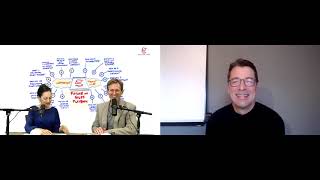
A SalesGlobe Sage roundtable (hosts Mark Danolo and Michelle Seeger) with guest David Horsewood on selling in a virtual world. The discussion emphasizes that on-camera communication is an essential sales skill, covering how to build rapport remotely (sincerity, transparency, helpfulness, confidence + humility), use short true/relevant stories, manage emotions (forgiveness, live conversations), and practical webcam/logistics tips (lighting, camera position, simple background). The session includes audience Q&A and actionable coaching recommendations (practice, consider a coach, keep stories <2 minutes).
Chapters
So welcome everybody to this week's Sales Rethink Sales Roundtable. I'm Mark Danolo, Managing partner, Sales Globe, here with Michelle Seeger.
Hello, everyone. Today we're kind of excited. We're going to talk about selling in a virtual world.
I know. And that's like we're all virtual now. So it's becoming more and more important. And I'm excited, Michelle, because we're going to learn some cool stuff today. And as you were saying before, I've got a lot to learn. So I'm very excited about improving during this session and learning about virtual communication.
Well, what we all know is that it's not going away anytime soon. And what we know also is that it continues to be a challenge as people want to build relationships, particularly new relationships.
Right, right.
So you know, how, how can you build new relationships and then grow existing ones? That, that'll be some of the things that we'll be talking about today. And a little bit about us at Sales Globe. We are a problem solving firm for sales and that means that we consult with companies, Fortune 1000 companies across the globe solving their biggest sales challenges. And that would be the reason for the roundtable.
Today.
We're solving the challenge around virtual communications, but we do consult in areas like insights, market insights, competitive intelligence, pay benchmarking. We look at sales strategy and changing strategy in a changing market. Segmentation, targeting, sales process, sales structure, go to market and of course, incentive compensation and the tools to enable your team.
Like you said, Michelle, it's all about solving problems. And the things that we're seeing now are dramatically different, which is an obvious statement than what we saw, say this time last year. And what we know for sure is we don't know what's ahead. We don't know what's ahead in 2021. But we do see indicators, we see things coming along and we work a lot with our clients and work in sessions with companies to get a sense of those indicators. So we see the indicators, but we know that we are going to have to solve problems as those indicators evolve. Right. So the most important thing to us is helping everybody become a better problem. Sol driven, creative problem solver. So that as these things come up, it's not about, you know, what's everybody else doing in the market, eg, what should I do? But it's really more, okay, I see these things coming. I know how to define the problem, redefine my challenge and how to think divergently.
Yep, that's right. And that would be why we are talking about virtual communications today. So it's a big problem to solve for and we are really, really excited about our guests today. And Mark, let's put this in context first before we introduce David to what we're talking about here and why, how we at sales Globe are looking at solving the problem around virtual communications and really just the whole changing world ahead of us.
Right. So you've seen a lot of our mind maps. In fact, we look around the studio here, we've got mind maps all over the rolling whiteboards here. And we're sketching out what we see ahead, what the big indicators are and what the big challenges are. One of the areas that's coming up a lot, Michelle, is this idea of future of sales playbook. So what's the playbook as we're moving ahead and what does our sales organization need to know and what should they be doing? And you could look at that in a couple of ways. What does the front line need to know and what they should they be doing and what do sales leaders and sales managers need to know? So it could include areas like, you know, how do I coach my team more effectively? What should my sales process look like to number three up here on Front Line? How do I professionalize virtually, how do I communicate? Right. So as we're having these sessions, we're going to be talking through different areas of what can be in your future of sales playbook. And we actually do training and development in this area as well. But today with our guests, we're going to be talking about virtual communication, which it's right in. Right in the middle of this whole question.
Yeah, so let's get right to that. Mark, I want to introduce David Horsewood. And David is the founder of Fire by Light. It's a virtual and in person communication and training and coaching company. He is based out of Knoxville, Tennessee. David's been doing this a long time, over 20 years. And he's going to talk about some of the challenges and opportunities that we have in this new virtual world. He also wrote a book, Fire by Light. Real and Relevant Applications. So today we're going to talk about some things like how you can build meaningful relationships virtually. We're going to discuss the value of storytelling, which I know that's something, Mark, that's near and dear to your heart. Storytelling is important.
I'm always telling stories, Michelle. It's really important.
Oh boy. Okay. And then finally we're also going to discuss, of course the new focus, how we can communicate and connect virtually with the webcam. Right. With the laptop. So, David, welcome and welcome to our roundtable today.
Thank you, Michelle. Thank you, Mark. I'm glad to be here.
Yeah, we're thrilled to have you. So to get started, everybody already. Well, I've told everyone you're an expert in this space, and we don't need to talk a lot about that. I don't think you're extremely credible. What I would like to talk about is what can you share with people so they can get to know you a little bit as we get started on our conversation? So let us get to know a little bit about you and maybe something that you would like everyone to know that would be of interest to them today.
Yeah. I think the main thing I would share that's relevant to our conversation today is just a few months ago, which kind of feels like 20 years ago. It was February, and in February, just about everything I did was face to face. I did public seminars, I did one on one coaching, I did on site training, but it was always with me being in the same room as the other person or people. And then March hits and all that goes away. Everything that I had planned, poof, you know, it's just all gone. I took about a month to be depressed. And during that depression month, between March and April, I found myself online a lot, like a lot of people did. And I just started noticing that there's a new essential skill, and that is being able to engage through a webcam and a laptop screen. And even though I've done this for 20 years, because in the training world, we've had distance learning and asynchronous training and synchronous training and all this kind of stuff, I had only done it on occasion through those years because most people rightly believed that face to face was the best way to go. But just because it's the best way to go doesn't matter when it's not an option. And right now we're in a world where face to face just isn't an option for the vast majority of people. And what we're also finding during this time is that virtual has some advantages that face to face doesn't. So anyway, while I was in that month between March and April, I just started realizing, you know what? Even for people who do what I do for a living, if they're not used to being on camera, they're not coming across well on camera. And it isn't because they're unprofessional. It's because as recently as February, it seemed like an irrelevant skill to most People, and I know a lot of people watching right now are in sales or marketing, whether it's in a mid sized organization or a large size organization, or maybe you're a sole proprietor, but a lot of what you used to do was face to face, like me, and now you're on camera. And being able to engage and inspire and persuade and sell on camera, being able to cultivate relationships and demonstrate you're trustworthy on camera has become the new essential skill. Just knowing how zoom works isn't quite enough. It's important to be able to have people not experience zoom fatigue. Because the truth is we're used to looking at screens. There's not really anything tiring about looking at a screen. It's looking at something that's boring on screen that causes zoom fatigue. But you know, people watch videos on YouTube and they watch television and they play video games for hours at a time. It's not the screen causing zoom fatigue, it's what's on the screen. And we just have to, particularly in sales and marketing and client facing jobs leaders, if we're going to be on screen, we have to be engaging.
Wow, you said a couple things there. I want to make a couple points. The one we had more than one CEO and CSO say to us, we want to know future sales playbook. What do we teach them? What am I supposed to do? Teach them to be zoom experts. We know that's not the full answer and you just validated that and we would agree with you on that one. And very interesting too, because we talk a lot about zoom fatigue and what you just said, boy, that resonates. I think about how much screen time my kids spend now. I know kids, but other people too, and even myself. And you're right, it's got to be engaging. If it's boring, you're gone. Right?
And if you think about the cadence of the whole thing too. So David, as you're mentioning, you know, we used to have meetings. So we would go to a place and we would take a plane, we drive there, go up the elevator. Then we would have the moment, we would have the meeting, right? And then we would leave the meeting and then we would go to the airport or, you know, go to dinner or whatever. But now what we do is at 7 in the morning or 9 in the morning, whenever you get started, depending on what your time zone is, all the way to five or seven at night, we're on these continuous calls, right? So it's one zoom call after another. So the cadence is a little Bit different in that I'm wondering if some of the fatigue comes from, you know, continuously doing this versus having those mental breaks in between. You know, the efficiency goes up. We're doing a lot more meetings, but I mean, it's just the number of reps is so much higher. I think that that could be fatiguing as well.
Yeah. What do you think about that, David?
Well, one of the things we'll address during this hour or so is rapport. And Mark, what you basically just addressed is something that I address in the sessions I do specifically on rapport. You talked about a pre meeting time where you would engage in banter and things like that, and then a post meeting time where you would engage in banter and things like that. A lot of times the zoom call that doesn't exist. And it is important to have off camera conversations, even if they're on camera. And we can get to where we're being so efficient that we lose the relationship part of getting results. I learned a long time ago that there's two Rs in business and the one that's getting lost right now in this Covid time is the relationship part. The glue that holds us together is starting to chip away. And we're just now into this results thing. But it gets harder and harder and harder to get results with eroded relationships. So we do have to have an ability to still connect even though we're not in the same room with each other.
All right, so that is a great segue into our first question, which is on everybody's mind, you know, how we can actually build those relationships. And you and I had a discussion about this that really resonated. And you talked about just, you know, key things that customers are looking for that anyone's looking for when you're connecting like this. And I would. I think that's a great place for us to start. And I expect we're gonna have a lot of conversation around this one.
Yeah, I remember that conversation. And it's a funny thing. I don't think everybody comes up with certain things they're looking for that they consciously think about. It's just we notice when certain things are missing. So I've been at this, as you said, for over 20 years now. And I've just noticed over time because I've met a lot of people for the first time just doing what I do for a living, I now look for, and I notice when it's missing sincerity, transparency, helpfulness, confidence and humility. And to a lot of people, those will just sound like buzzwords. But as soon as one of those is missing, you realize how important it is. So, for example, we've been engaging now for roughly 15 minutes. If during this initial 15 minutes, I'm not coming across as sincere, that means I'm coming across as something other than that. And the two most obvious options are insincere or sarcastic. And that's not going to help me. That's really shooting myself in the foot. If I'm not coming across as transparent, then it seems like I have an agenda, that I'm really in it for me. If I'm not coming across as helpful, well, that means I'm irrelevant. Why are we even talking to each other if I'm not even being helpful or relevant to you and your goals and your ambitions. The last two seem almost impossible to pull off simultaneously. But if I'm coming across as confident without humility, then it means I'm probably more likely seen as arrogant or cocky. And I heard a long time ago I can't claim ownership for this, that cockiness is a disease that makes everyone in the room sick except the person who has it. And obviously that's not useful. If I come across as humble without having confidence, then I seem incompetent and why would you want to do business with me? So just in a nutshell, those are the things that even if people aren't consciously thinking about it, they will notice if those things are missing and trust will just never develop, particularly if it's a first time meeting or a first time engagement. But even if it's later in the relationship, it will seem as if I have a priority other than you. And my priority when face to face needs to be the person or people I'm talking with. My priority when on camera needs to be the person or people on the other side of the camera. And seeming distracted, seeming disinterested, seeming to have a selfish mindset doesn't work face to face or on camera.
So other focused. Right, so, so we're focused on who's on the other side, not focused on us, which I think could be hard to do because, you know, you mentioned before, David, being on camera is not natural to us. And so you're thinking about, okay, how do I come across, etc. And so, and there's also a difference between I'm on a conference call with a team versus I'm presenting and I'm presenting. I'm more self conscious about how I'm doing this. So you mentioned these five areas and to me I'm thinking Okay, this is kind of like a golf swing, right? So I've got to keep my head down. I've got to, you know, do the grip correctly. I've got to swing back, follow through. And how do I remember five things like that while I'm trying to communicate with people without becoming kind of stilted and mechanical? How do you make that natural? Because all those things make sense. But what do you do to actually accomplish that naturally?
Well, it's an interesting question you ask, because I get asked that question a lot. And the only way to do those things without thinking about doing those things is to be those things. Just kind of let that settle in for a minute. You've got to be those things to do those things without thinking about it. So that's just gut check time. Nobody should leave right now, but after this show is over, you should go look in the mirror.
My mind has been expanded right now.
And simply ask that person, are you sincere? Are you transparent? Are you helpful? Are you confident and humble? Because if you're not those things, what it means is you're trying to manipulate. You're trying to portray yourself as someone that you aren't actually. You're trying to trick people. And that's tough to do. That's tough to do face to face or on camera. Dan Rather, I don't know, 20, 30 years ago, maybe longer ago, he wrote a book that was titled the Camera Never Blinks. And that's true. The camera never blinks. So if you look that way on the video, you did that, you know, if you look disinterested, it doesn't matter if you really were disinterested. If you look disinterested, then you were. But I will share a quick tip here before we move on to something else, and that is there's a natural tendency when on zoom, like we are right now, to look at the image of the person or people you're talking with. So right now, Michelle, Mark, we're talking with each other. I haven't looked at you since the show began because I'm looking through the camera because your eyes are on the other side of the camera, not in the image in my zoom screen. One thing that will help, because it's just a tendency, we all tend to gravitate towards looking at the image. If you will shrink your zoom screen to almost as small as it'll go and still see the images and center them under your webcam, then even when you make the mistake of looking at the person, it will look like you're looking through the webcam. So that's just a quick tip that will help you, because eye contact, it really is a lot. It's hard to overstate how important eye contact is.
And that's an important logistical point as well that you just bring up. And everybody gets. Is really into this thing. Like you mentioned before, Michelle, how do I do the sound? How do I do the lighting? How do I do the cameras? But one thing that. And we'll talk about things that can kind of get us along the way. But one thing I know that gets me a lot is when somebody's camera is in a different position than the monitor that they're looking at. And this sounds really small, but it can. These things, I think, because we're human. Right. These things can be disconcerting. So somebody is looking at the monitor, but the camera's over here. And I feel like they're not listening and they're not paying attention because they're not looking at me. In fact, they are looking at me. They're not looking at the camera. Right. So just that camera position can change the dynamic. And sometimes when we're getting on calls fast, we don't think about that. We throw the camera up, and all of a sudden we're on the call, and we realize we're looking in two different places.
Yeah.
Well, think about it this way. If you were meeting face to face in a local coffee shop, the person you're talking with never looked you in the eye. It looks like they're looking out the window instead of into your eye. How quickly would that bother you? Why are you not looking me in the eye? How quickly would that bother you? And that's what a lot of people are doing. Not intentionally, because they're just looking at the image on screen. But you have to remember the person's eyes are on the other side of the camera, right?
Yes. So I want to ask a question around that. Let's say really good sales. If I'm really good at my craft, chances are I am sincere. Chances are I have built that rapport. I'm transparent. Chances are I really enjoy my job and what I do. Chances are I'm confident, I've got humility, and I'm helpful because we always say that you've got to be helpful to your clients. But. Okay, so I'll tell you how our camera is positioned. We've got a full screen, and it's centered just above a monitor. So I can. I'm actually looking at you, but. And then I go back and forth between the Camera and you, because we've got it very, very close to your point. They're very close to each other. But how do I. Because I struggle with this, right? I have a podcast as well. And sometimes they're not, you know, I don't have the video going and I'm looking at a webcam because maybe I'm on it. How do I act sincere and confident all those other things if I think I'm talking to a webcam? How do you help people with that? Because that's where I think a lot of people get stuck. That's what we're hearing. And I can say that it's one of my challenges. Because you feel like you're talking to a piece of technology, not necessarily connecting with a person. What kind of, what can you share around that? David?
Well, there's two things I would share. One is there are some basic things you can do. If it helps, you can put a picture of your spouse or your kid or a close friend near your webcam. So at least there's a face there looking back at you. But in all seriousness, the most important thing, and this goes to, in a small way, something I was talking about as our interview kicked off, and that is you have to get comfortable with the new environment. Okay? So as I was saying, even people who do what I do and have done it for a long time, sometimes they're uncomfortable on camera because as you just said, we're not used to looking at a camera. We're used to looking at faces. One of the things I do is one on one coaching with people who just want to get comfortable looking into a camera. And in all seriousness, at the end of a 60 or 90 minute session, you won't have any trouble after some coaching being comfortable with the new environment, you'll still rather that you are looking at a face instead of a camera, but it won't throw you anymore. So short term fix, just put a picture of someone so you have a face to look at. Or if you have a favorite stuffed animal like I do, it's Henry. He's a little stuffed monkey I gave my son when he was born. But he spends more time with me now than he does with Max. Bottom line, just put some kind of face up there and that'll give you something to look at that's right by the webcam. But longer term, don't settle for a shortcut. You know, when I first got started as a trainer, I was told by the trainer who was training me and other people in the room, if being in front of an audience makes you nervous. Just imagine they're all naked. And I just remember thinking as I looked around the room, I don't want to imagine most of these people naked. I certainly don't want them imagining me naked. But more to the point, more to the point, you don't want to develop a crutch that you'll have to walk with for the rest of your life instead of coming up with some way of demeaning or belittling the people you're talking to so that you feel confident enough to talk to them. Why not just grow your own courage? Why not grow your own confidence so you can talk to fully clothed people? Why not grow your own courage and your own confidence so that you can look into a webcam just like you were looking into a face? That's the better way to go. And you don't have to walk with a limp for the rest of your life.
That's really good advice. I'm going to shift the topic and let's talk about. We had discussed something else. A lot of people, when we talk about having these attributes and we talk about selling and being excited about what you do, and I happen to be in a position that I really love what I do, we had this conversation. I don't feel like I have a job. This is what I do for a living. Right. It's not like a job. And although sometimes you're a job to work with. But that's aside. That's aside. But anyway, how do I reconcile that? Like, if I'm trying to come across as all these things and sell my product and service now, I'm not even face to face, but I don't necessarily really like the product. You know, I mean, some people, young people, might take a job out of college, but it was a good opportunity to get into sales. Or someone might be in transition. How can people come across as sincere and have that humility and that credibility and confidence? If maybe they're in a position that they're selling a product or service, that might not be something they really love themselves.
Yeah. My son last week came home and shared a conversation he'd had with his friends, which isn't a new conversation, but I think every generation has to have this conversation again. And that is, should you follow your heart, should you do what you're passionate about? And it's always an interesting conversation. I have maybe a little different take than some or maybe people agree with me, so I'll just share my take. I have three beliefs that I try to wrap everything I train and everything I do around. And I'm not perfect at it like anybody. But I do strive for these three beliefs. The first of the three is believe what you're saying is true. Believe what you're saying is true. The second is believe the person or people you're talking with are better off believing the same thing. And the third is to believe it's your job to make sure they believe it. So we just relate that to sales. Believe what you're selling is good. It doesn't have to be something you would actually use yourself. For example, my favorite car is not a Ford Taurus. Doesn't mean it's a bad car. Lots of people love the Ford Taurus. For years it was the best selling car in America. I happen to drive a Subaru Legacy, so it's not really an exciting car either. That's just the car I like. So bottom line, could I sell a Ford Taurus? Sure. It's a good car, it's a reliable car, gets decent gas mileage, it'll seat five or six people, it'll get you where you want to go. One of my favorite catchphrases that I live my life by is different people like different stuff. So could I be a Ford salesperson? Sure. Wouldn't bother me at all. Just because I like the Subaru better doesn't mean I can only sell Subarus as long as I'm not lying as I'm selling. Now here's the key about those three beliefs most people have. The first two, even if they're in a job they hate, they understand that their product or service, it's good for whomever it's good for. They know that the person they're talking to or they're trying to determine if the person they're talking to would be able to benefit by using that product or service. But having the first two, that's just called being opinionated. That's not really going to get you very far, face to face or on camera. The third one is essential and the third one just to review is to believe. It's your job to make sure they believe it. And even in the world of sales, there's a lot of salespeople who kind of hesitate to consider it their job to sell. They consider it more their job to inform. I actually, for someone with integrity, consider selling to be a higher form of informing. As long as you have these three beliefs. Because if you fail to sell what actually is in the person's best interests, you're actually leaving them worse off. So it's that third belief that will show your heart, it'll show you care. It'll make you persistent and tenacious. It'll have you make the second call and the fifth call and the tenth call. Because, you know, if the person or the organization you're talking with doesn't buy what you're selling, they're actually worse off. So that's true, whether you love your product or just selling it because it's your first job out of college, or you're selling it because it's a down economy and it's the job you could find. As long as you have a good product or a good service that can help a target audience and you're trying to sell to that target audience, you don't have to love it. And you can totally be a person of integrity and totally live your life by those three beliefs.
That's a great point, David. I learned that many, many years ago. And I think it falls under this idea of sales. And sales is trying to persuade people to do something that they don't want to do or they shouldn't do. And the person I was working with, they said, no, no, you got it all wrong. And it basically said what you said, that, you know, that if you don't help this person to do or to buy what you're selling or to do this particular project, you're actually doing them a disservice. And if that's not true, you shouldn't be talking to them about it. Right. So you've got to get past that point where you know, you've got to believe and you've got to know in your heart that what you're offering them is actually going to help them and is going to be better. And that really kind of cuts away the idea then, that I'm representing something that I don't like or I don't believe in. Because you have to. You have to meet that test. Right. So I think that that's a great point that you're making.
Yeah, it's a really great takeaway, I think.
Yep.
The reality is there's just so many things to sell. And again, you don't have to like yourself, what you're selling. I mean, for example, most men don't wear makeup, but there are lots of male makeup sellers. So you don't have to use the product to be able to sell the product. You just have to believe your product is good for someone else. That's what you have to believe. So it's not about loving the product or the service yourself, you might never use it, but you do have to believe that the people you're talking with would benefit by using it.
Right. Well, I want to jump over to another point if I can, which is you talked before about one of our prior conversations about stories and storytelling. And there are a couple of levels I wanted to explore on this one is your personal story or your personal brand and how you get that across. Because in building the relationship virtually, you know, when you get on, and I see people do this all the time, you get on a call, get on a presentation, they kind of talk mechanically about who they are or what they do or their function or their experience. But everybody really has a story. And we're storied cultures and stories engage us. And I'm interested in hearing your view on just how do you get your story across to the people that you're talking to and how do you make that engaging and how does a person find their story?
Yeah. Well, the good news is, and this really is good news, you have more than one story. Now. You could consider your life one story with multiple chapters, but just for the case of this discussion, just realize your life is filled with a bunch of stories and there's a bunch of stories you can tell. I do recommend everybody watching right now start recording things you're living through right now that would be useful stories moving forward. As long as they're true and as long as they're relevant, you can tell the story. But those are two things that I do require for storytellers that want to tell stories with integrity. Make sure they're true and make sure they're relevant to your purpose. And if you don't have those two things, find another story. Because it's not that hard to find stories. The two stories that I recommend everybody be able to tell, and particularly those in sales or those in startup organizations, entrepreneurs, things like that. Be able to tell the story of how you came to do what you do now. Be prepared to tell the story of how you came to do what you do now. Whatever you're doing now, you used to do something else, so you got from there to here. And that's always an interesting story. You either got fired or you got recruited or you saw an ad on indeed or something, something happened, you got inspired and you started making that transition and here's where you are now. It's always an interesting story. And if it's a well told story, chances are it's going to reveal the five qualities that we talked about earlier. Sincerity, transparency, Helpfulness, confidence, and humility. Because transition, always, if you tell the full story, is going to reveal those five things. So that's one of them. The second story that I recommend anybody be able to tell at the drop of a hat is, who is a person you recently helped? Who is a person you recently helped? And the more recent, the better. Too many people in sales tell stories that happened five years ago, and invariably what the hearer is thinking is, haven't you helped anybody recently? And the other thing they're thinking is, am I getting a canned presentation? Because nobody likes to hear a canned presentation. And if I start hearing you tell stories of when you helped someone from five years ago, I'm thinking you've been telling that story for five years and it's your favorite story and just really like telling it. I'd like to hear of someone you helped this morning, if you have it. Certainly this week, certainly this month. The more recent, the better. And those two stories, I think, best convey who you are, your brand, to use a current term. And they do so in a way that's accurate, relevant, truthful. So those two, I think, are the best place to start.
So what about somebody that says, well, David, my story's kind of boring. There's not much to it. How do they find something that's interesting? And I'm reflecting on that one word you talked about before, which is humility, that, you know, I have a story and, you know, it's about being in art school and then figuring out the combination of creative thinking and business, et cetera. But it involved humility because I had to admit that it was a tough time and I had to go through some failure to get to where I am. But it seems like humility would play a big part in that. If people can find, unless they have a perfect story, if they can find what in their story, what in their past was maybe a challenge, right? Because we all identify with challenges. But what are you trying to find in telling your story that actually makes it engaging for somebody rather than, boy, this is a bloody boring person that I'm talking to.
Well, I have very good news for anyone who thinks their story is boring, you're wrong. There is no such thing as a boring story. If you tell the true story of how you got from where you were to where you are, even if where you are is not a place you enjoy being, it's still a good story. One of the neatest things, if you just slow down and think about it, is as much diversity as there is in the world we're not all that different. We're just truly not all that different. And I've trained on a variety of subjects over the two plus decades I've been doing this. Leadership, communication, conflict resolution, strategic thinking, etc. One of the main things I noticed is the main thing most people needed. Yes, they needed the knowledge of whatever topic we were discussing, but the main thing they needed was the courage or the confidence to apply what they learned after the training session was over. Fear is a universal quality. It's a universal quality. You know, just as a silly example, it wasn't that long ago when I decided, because of what I'm now talking with you about, that I wanted to do public seminars on impactful storytelling at an affordable price in my hometown. It's just a very specific goal that I had. That's really what I wanted to do. But that required me to do something I hadn't done in a very long time. Cold call, people I hadn't talked to before. As long as I've been at this, for most of my career, I've been traveling outside of my hometown. I wanted to do this in my hometown. So even though I've lived here essentially forever, I didn't really know anybody. So I had to call people cold. I had to walk in cold. I had to face rejection. And I remember one particular day I told my son I was going to make a cold call, and he said, all right, tell me how it goes when you get back. I pulled into the parking lot and I sat there. Ten minutes later, I was still sitting there. Ten minutes later, I realized I should probably move my car because somebody inside is probably wondering who this guy is who's just sitting outside the front door. So I moved my car to another parking spot a little further away from the front door, and I sat there some more, and I wound up driving away without ever going in. So I'm not immune from fear. It's a word none of us like to associate with ourselves. But I was nervous, anxious, stressed, whatever word you want to use. It's fear. So I go home, my son says, so how to go? Said, man, I never went in. And he shamed me. He just rolled his eyes and walked away. He just totally shamed me. And I'm very glad he did that because I went back, I went in, and we had a great conversation. Now, I didn't wind up selling to that person, but that got me over the hump. And after that, I just started doing what needed to be done. I just had to face my fear. I didn't originate this quote. I think it's from Emerson, but it's a true statement. The vast majority of the time, do the thing you fear, and the death of fear is certain. Avoid the thing you fear. And I think this is an extension of the quote. I don't think it was part of the original quote. Avoid the thing you fear. And the fear just gets bigger. It just gets bigger. So that little shame nudge from my son got me to go back, face my fear, and I haven't looked back since. It's kind of like going off the high dive. For the vast majority of people, unless they really hurt themselves when they go off the high dive, after they go off at once, they never fear it again. They might not do it again because they don't care, but they don't fear it again because they realize it wasn't that hard.
So somebody that's listening to what you're saying, one of those people is saying, you know, David, I'm not a good storyteller, and that's a bit like a high dive for me, because when I tell a story, I'm taking a risk. Right. I have to start and I'm then committed to telling that story. And, you know, I'm just not interesting and. And storytelling is a skill. What would you have for a couple of tips for how to tell a better story? You know, when you get into it and you want to make sure that people are actually interested in listening to you and you don't want to go too long where they go, okay, that's the guy that does the 25 minute introduction every time, you know, he starts off in a meeting.
Yep. Well, I'll share two things real fast and then give a more protracted answer. The most important thing, seriously, in addition to being true and relevant, is your story has to be short. Particularly in the business world, if you take more than two minutes to tell your story, people have stopped listening. There's just no point in telling that story. And every good story can be told in less than two minutes. And that doesn't mean there aren't better, longer stories. You just can't do it in a business presentation. You can't do it during a zoom call. You've got to keep your stories to less than two minutes. So our stories are going to be true, they're going to be relevant, they're going to be short. Now to the skill part. And everybody knows this, but a lot of us don't want to admit this skill is a lot more difficult to acquire. Than knowledge. You can get any knowledge you want, anytime you want for free off the Internet. It's everywhere. And you can watch a lot of YouTube videos on how to be a better storyteller, but none of that is making you more skilled. The single best way to get more skilled at storytelling and this will sound totally self serving, but it's working with a coach. That's what I do. That's one of the main things I do right now during this Covid time is help people develop this new essential skill. We set up a time, it's just me and the other person, nobody else is watching, no need to be embarrassed, and we just get to work. Unless you have an actual presentation that you know you want to get great at. We'll start by working on the two stories I already recommended. How did you get from where you were to where you are and who is a recent person you've helped? And we'll just nail those two stories. And in the process of nailing those two stories, making sure that they're true and relevant and less than two minutes and told in an engaging way, in addition to that, you're going to know not only how to tell those two stories, but you'll be able to apply it to any story you want to tell from that point forward. So skill is best improved with a coach and everybody in every field knows that. But way too many people say, I just want to do it on my own. And instead of getting great in a single afternoon, it takes them six months or a year. And what's the cost of that to a salesperson? What's the cost of not being skilled, engaging with people through a webcam and a laptop screen for six months? And in a very real sense, I don't say this to be harsh. Many of us are finding that out right now because we're six, seven months into Covid where we've only been able to engage with others through a webcam and a laptop screen. How are the sales going? How are the sales going? How are the new relationships going? How is that pipeline? Do we have a lot of stuff coming in through the pipeline? And we may actually right now be experiencing a cost of not having that skill of engaging through a webcam and laptop screen?
Yeah, it's true. I want to talk about emotions for a minute. We switch over and talk about emotions.
This is hard for me to talk about emotions. Michelle.
I know Mark struggles with eq, but we'll discuss that at another time. David, maybe he needs some coaching, but let's talk about Emotions. It's a very emotional time. In all seriousness, across the world right now, you know, we got pandemic, we got shutdowns, we got people working remotely, some of which like it, some of which don't, and just all kinds of turmoil across the world. And you know, we've had, let's be transparent, there's been protesting, there's anger, there's all this stuff. And you know, I actually had not intended on talking to you about this, but I saw a LinkedIn post that you had, David, that it resonated with me. And you were talking about anger management and you were have, you were discussing again a conversation you had with your son. You and your son have a good relationship. I'd like to know the age of your son, because me and my 18 year old daughter, it's shaky. I'm kidding, kind of. But anyway, I thought it would be great. You know, you talked about this logical control of your emotions and, and how you can choose how you want to deal with anger in particular. And I have my own method for doing that as well. But I'd love for you to share with everyone what your thinking is around that.
Yeah, if it's the video I'm thinking of, I was referencing a time probably a decade ago when my son was maybe 7 years old. He's 17 now. You asked that question earlier. He was probably roughly 7 years old. We, we were sitting at the kitchen table having breakfast or lunch, I really don't remember which. And I looked him in the eye and I said, max, if I ever did something that you just considered so awful that you couldn't forgive me, what would happen to our relationship? And he just put down his fork or his spoon and he looked me back in the eye and he said it would be over. And I looked him in the eye and said, you know what, you're right. So now, leaving that conversation, that's just a fact. It's a painful fact, but it's a fact. Would I have kicked him out of the house? No, we would still have the physical relationship. Father to son, son to father, but all the enjoyment would be gone. And my guess is everybody watching us right now can think of someone with whom they have a relationship. The physical relationship is there. It might be a parent, it might be a sibling, it might be a neighbor, could be somebody at your church or whatever, but you know that it's icky. You just really don't enjoy each other anymore, even though the physical relationship is there and forgiveness is step one if you want to have A good relationship and you are angry with someone, there isn't a solution. Absent forgiveness, it just doesn't exist. Anger and forgiveness are flip sides of the same coin. So what you really have to ask yourself is, do I want this relationship to be good? Now, if you don't care, well, then you don't have to forgive. I'm not here to say you should forgive. I think you'll be happier if you do. That's not my point today, though. If you don't care about the relationship, fine, hold on to your anger. It's not going to be a good life, though. You're going to wind up very bitter and frustrated and irritated a lot because people have a tendency to irritate us. I have a tendency to irritate other people sometimes, and I'm very grateful when they forgive me when I irritate them. But you can't just stop there. Real world, you've got to move beyond just forgiving people, because in the real business world, you have to get results, whatever those results might happen to be. So after forgiveness, what do you do then? And the two most common responses are either to withdraw or to attack. So in today's world, withdraw might be shifting from live conversations to emails. It might be delaying responding to emails. It might be the silent treatment. You know, that that would be withdrawal. But it usually just makes the situation worse. We can also vent. So we can, you know, call someone and vent. We can go to their house, knock on the door, stand six feet apart and vent. You know, we can vent. But again, that usually makes the relationship worse. So it really doesn't serve any useful purpose to withdraw or vent with people that you'd like to have a good relationship. Chances are the other person isn't going to engage with you if there's ickiness. So you're going to have to be the one to engage with the other person. So just to kind of wrap all this up, my best advice when angry is to forgive whomever you need to forgive before engaging. Then go engage in a live conversation. I wouldn't try to do this by writing. Almost always if you write email text to try to resolve a conflict, that makes things worse because the reader interprets negatively whatever your good intentions might have been. Go have a live conversation face to face if possible, zoom or phone if not, and just try to address the issue. But forgive before going. Forgive before going, because that'll put you in a better frame of mind. And if you never do business together again, hey, sometimes that happens. But you'd be Shocked how much power you have to improve just about any relationship you want. If you'll just forgive and then go engage and just have the conversation. Be ready to hear, be ready to respond. And that's my best advice. Because this is a stressful time. We just kind of wake up on edge a little bit because life isn't quite what we want it to be. In reality, most of the people we're talking with didn't cause most of our wake up in the morning irritation and frustration. They just happened to be in the line of fire.
Yeah, that's exactly right. I think that's really good advice and thank you for sharing that. I know that we've got some questions in the chat if we'd like to look at a couple of those questions and why that's being pulled. I know we would be remiss if we didn't talk about logistics. Yeah, so we did talk about logistics, which would be, you know, the webcam. Now you already gave some advice around that earlier around how to send your webcam, where to place it so that you're looking into the camera. I want to tell you about. We shared a funny story, David. I had someone who runs the North American business for business development for a global consulting firm talked to me and, and said that when she was talking to her team, she said, guys, just remember something. You are now inviting your clients into your home, and you have to assume that they don't necessarily like the same things you do. And then as a follow up to that, you know, we laughed about that. I had a chief sales officer say that he was on a call with a client, and right on the wall in back of him where the guy was sitting, he had a big deer head on the wall with a rifle under it, which, you know, some people don't like the hunting. Right. And then the gun thing too.
Right.
And he just said he was on the call going, oh, my God the whole time. So, you know, it's. It's a little bit about that, how you set up your environment. You want to give us just a quick skinny on your advice there. That would be great.
Yeah.
Let me just share that. I kind of learned some of what I'm sharing since February because like the rest of you, this is kind of a new thing for me. And even though I've been on camera literally for thousands of hours, it was always in someone else's studio. Someone else took care of the lighting and the sound and the background and all of that. So in February, I participated in a friend of Mine's Facebook Live show. He just asked if I would come on and be interviewed and I said yes. I just set up in my living room and thought it went great. And then I watched the video and I realized my broadband was insufficient, my lighting was horrible and my webcam sucked. And actually it was a good thing to learn in February because I bought a webcam that day. I went online and realized I need a webcam. Almost no one, even in February had webcams in stock, at least at an affordable price. I wanted the Logitech. I think it's a 920s. I only found one in the entire city of Knoxville. It was in far west Knoxville in a Target. So I just drove out there and bought it. I still think it's out of stock everywhere. I don't think you can get the camera I bought. And here we are in November and that was in February. It's crazy. So anyway, those three things are essential. You want to have good lighting, you want to have sufficient broadband, and you want to have a webcam, an HD webcam. So beyond that, everybody understands you don't have an in house studio. So we're really putting all this in the category of do the best you can. You'll notice my background is kind of simple and that's advisable. I think the most common mistake people make is they sit in front of a bookshelf. And the truth is I've got a bookshelf right over here that used to be right here. When I realized bookshelf wasn't a good thing to have, I put it over there. Took a while to move it because it's a big bookshelf. But even if people like what's on your bookshelf, and many times there's nothing wrong with whatever's on your bookshelf, they'll still get distracted by it. You know, if you have a picture of your trip to Disney World, they'll start thinking about their own trip to Disney World instead of thinking about what you're saying. So you don't want a distracting background. Now I do have a whiteboard right here. It's not really serving any purpose other than it's a contrast. When I didn't have the whiteboard here, it seemed too boring, a little bit too plain. So I just kind of swung this in here to have a little bit of a contrast. And white is a color that kind of goes with every other color. So I can wear whatever shirt I want and still look good on camera. So you want to have a simple Background, you want to have good lighting and you don't have to spend a lot on lighting. I have right in front of me, to my right at a high level, one of those long arm desk lamps just for the high intensity beam. And I've just got pointing at my face. That's all it takes. It really doesn't take a lot. You can invest 50 bucks at most if you don't have a way to have a simple background. You can invest in room dividers. You can get them for 100 bucks or less. And they have all kinds of styles, might even mix and match them if you want to look like you're sitting in different rooms from time to time. But that's really the gist of it. It's not overly complicated to have a studio look that is sufficient for what most of us are doing, which is zoom calls.
Yeah, you make a good point about the bookshelf as well, because we always assume that's a good thing to have. But what do you do? No matter what kind of interview you're looking at or meeting you're looking at, if somebody has a bookshelf there, you're trying to read the titles of the books, you just naturally do that. You're like, you know, I do that. Oh, yeah. All the time. All the time.
Because I want to know.
So another thing that gets me, David, is, and I guess this is just my bit of advice is this idea of parallax. And parallax for people that don't know what that means. I'm an old art major and, you know, photography student. Parallax is when you have something that combines together with the other image. Like if I'm standing here and somebody takes my picture and I've got like a palm tree behind me, directly behind me, it looks like the palm trees coming out of my head. You know, those things you don't notice right away, but people on camera see those. And I see a lot of that in when people are doing presentations, doing meetings. And it can. One of them that gets me that a lot of people run into is the ceiling fan.
Right.
So people have these ceiling fans. Looks like they've got a propeller on their head. And if it's spinning. And so check your parallax before you get on camera and see what's lining up with your. With your image.
Yep. Well, to specifically address that, if someone can see your ceiling fan, then you haven't followed one of the rules we've already addressed in this hour, and that is your webcam should be at face Level, I shouldn't be able to see your ceiling at all, let alone your ceiling fan. You'll notice you can't see my ceiling, and we can't see your ceiling. If either one of us has a ceiling fan, no one would know because webcam, or camera, as the case may be, is at face level. So if you will have your webcam at face level, you will eliminate the problem with the ceiling fan. But to take it just a step further, you'll notice my whiteboard, which is over here to the side. I could have centered right behind my head, but if I did, that would bother people. Why is that? Well, I recently did a coaching session with a guy interviewing for a job, and he had a square picture framed right behind his head, but it looked like his head was in it. Okay. So every time he came over here or over here, it looked like he was out of his own frame, so to speak. And it would have been better if he had his picture over here so it wouldn't look like he was constantly out of center. So I don't have my whiteboard centered behind me because that same problem would occur. I have white. I have me, and then I have this whatever grayish greenish color over here.
Right, right, right.
Yeah. That's really super good advice. Don't travel with Mark, because he does the Parallax thing all the time. Like, mocking me, though. I mean, it's just kind of a pain.
I try to make sure as many of my photos as I can actually have Parallax just because it's funny.
That's what he does. Yeah. Anyway, hopefully, I mean, at least they don't get post on LinkedIn. So, production manager, would you like to give us some of the questions we've got? Let me see. Okay. The first one, if I get on a zoom call with a client and there are tech glitches on my end and my kids walk through the room causing a disruption, or a neighbor's dog is yapping. Is it as mortifying for my client as it is for me? Is there a way to start over and do a redo if I make a bad first impression? Ooh, that's a good one. We talked about first impressions. We didn't today. Yeah. Let's talk about recovering from the first impression.
Yeah, I've heard my entire life that you never get a second chance to make a first impression. That isn't true. Although it is true. Obviously, you can't redo your first impression. People can't unsee what they've seen. But, you know what's part of your first impression? Recovering from a glitch. Recovering from a glitch. So when the glitch occurs at first, are they mortified? Oh, yes. I don't want to kid anybody who's watching right now. Are the people watching you as mortified as you? They're more mortified than you particularly. Pretend like it's not happening. If you try to pretend like it's not happening, they get more and more and more mortified. They're like, why am I on the call with this incompetent person? But the good news is, since everybody knows we're all working from home, nobody's under any expectation that it's something else. We all know people have dogs. We all know people have spouses. We all know people have kids. The thing to do if you think it's possible that there'll be some kind of glitch is pre call it. Now, if for some reason a glitch occurs that it didn't occur to you to pre call, then just acknowledge it. When it happens, address it. Even if you have to leave the room for 30 seconds, just say, I'll be right back. I need to address this. I don't want it to be an ongoing issue. And then you go address it and you come back and you say, I think things are settled. We're not going to have any ongoing problems. But the key is to either pre call it or when it happens, acknowledge it, address it, and then move on. Specific to tech glitches. Let's just say for whatever reason you have a PowerPoint presentation and you can't get the share screen to work. Make a quick decision to not use your PowerPoint. Part of being an excellent presenter is mastering the material. You shouldn't need your PowerPoint. It's fine to use one. I use PowerPoint very, very often. It is not fine to need it. And if you don't need it, you can make a rapid decision within 15 seconds. You know what? Forget the PowerPoint, I don't need it. And then proceed to wow them without the PowerPoint. And that will be part of your first impression. What you planned on doing, you weren't able to do and you still impressed.
That's funny. I think one of the presentations that I did that you may have attended, that happened to me like my PowerPoint was gone. I mean, and it was fine. I just. I did exactly what you said. I just moved on. I had like, really cool stuff I wanted to show people, but, you know, they got to hear me talk about.
It, I think the reality, the PowerPoint is you're more interested in it than the people are because you put up the PowerPoint and then you become kind of comes a crutch.
Well, on that subject, just so you know, one of the main mistakes people make, particularly if it's a longer presentation, is once the PowerPoint goes up, they either are off screen altogether or just in a little tiny box in the upper right hand corner of the screen. And what that means is if you've got a 20, 30, 40 minute PowerPoint or a one hour webinar, all they're seeing are static images. And even if they're really attractive static images, nobody likes looking at static images for an hour. They just don't. We have not universal attention deficit disorder, but we do like to see a moving target much more than a static image.
Right, right.
So go full screen is my point. Like if you're, if you're really talking at length about a PowerPoint slide, go full screen and then go back to share screen, but come full screen fairly often.
Yeah, I think that makes sense. So I think we can take one more question. Let's see. I guess this one. I'm sorry, there are more questions, questions than we have time, I believe. If I'm nervous on camera, does that make me look insincere if I can't picture the audience naked? And I worked hard to make that, I don't want to picture anybody naked myself, you know, how do I make a good impression on camera when I. It gives me the jitters. Yeah, I think that's one of the challenges that we're hearing from salespeople. They feel insincere even if they don't get the jitters, you know, and so you talked about the skill of building the skill through repetition. But what could people do? That would be a practical tip.
Well, let me answer it first as I've done earlier with a piece of good news. Truth is, novice presenters often come across as more sincere and transparent than experienced presenters. It's also true that if there's something we admire more than confidence, it might very well be bravery. So if we can tell someone is good at what they do, maybe they're just a little nervous on camera and they're putting the best effort out there. We see them as sincere, we see them as transparent and we see them as brave. Now here's the thing and I just, I don't want to let go of this because it's so important. Don't settle for being nervous. There is a way to get over being nervous earlier, I used the analogy of going off the high dive. Nobody wants to see me go off a high dive. I can jump off the high dive. I can dive off the high dive and I can do a backflip off the high dive. I can't do a forward flip off the high dive. That just never goes well. But I, for whatever the reason, I can do a backflip. I just can't do a forward flip. Nobody wants to watch me. They're going to get bored pretty quick. Everyone, the world watched Greg Louganis go off the high dive and every other dive because he decided to master that skill. And I'm just here to say that if you're in sales, if you're in charge of salespeople, if you're a leader, if you're a fundraiser, if you're a minister, if you're a teacher and your job is essentially on camera now, it is your job to get great at engaging people through a webcam and a laptop screen. We're now seven, eight months into this and it's now time, if you haven't already gotten there, to get great at this. And there isn't a shortcut to getting great at a new skill. You got to put in the time. Sometimes you need a coach. Do not settle for getting through it. And the main reason for that, aside from it's in the best interests of the people watching you, the main reason for that is you're going to hate your life. If your life is basically on camera and you know you're not good on camera, every day is just going to be another day you've got to muscle through instead of a day you enjoy. As soon as you get not just competent at talking into this camera, but as soon as you know you are actually coming across as you are, sincere, transparent, helpful, confident, humble. As soon as you know you're conveying who you really are, you're going to love doing this. You're going to love doing this because you're selling a product you believe in and you're talking to people that you think would benefit and you believe it's your job to benefit them. And you know, you don't have to lie, you don't have to cheat, you don't have to manipulate. You can just be yourself and tell the truth and be relevant and show people what's in it for them to do what you're suggesting. Once your life is that it doesn't matter if you are on camera or off, other than you got to develop the skill and skill is different from knowledge. So don't settle for being nervous. Do not settle for being nervous and somehow muddling through. Get great at this. Be someone who can be yourself on camera.
That is such great advice and thank you so much for that. I think we're leaving this one on a great note.
Mark, I'll tell you, I'm ready to charge ahead. I think that was great stuff.
It was really wonderful. David, thank you so much for being with us today and for for all of you here. We hope you enjoyed this roundtable. Please forward the link on to others. We'll be on our YouTube channel. Check in on Sales Globe's YouTube channel to access this and other videos. And next week, guys, we've got a special guest coming back. Jim Swift. We are giving the state of the economy in the United States and this is going to be late breaking new news through the economic recovery and where we are data through the end of October. So this is really late breaking information. Make sure you see this one. You're not going to want to miss it.
Yeah. So Jim is CEO of Corterra and he has got great information on customer or company purchasing patterns. So we can and we've shared some highlights of this before but it's basically how companies are buying what they're buying and by industry, by geography. So if you're concerned about where should we be focusing in our market and what are the trends and how fast are certain industries bouncing back, this is really going to be informative information.
You're going to love it. And it'll be the first of our quarterly readouts. So he's agreed to come back and talk to us quarterly about this and if you all enjoyed what you heard and you do need some help, we can consult with you. Future of sales plan playbook contact info salesglobe.com we are here to help. David is here to help. We really enjoy that and thank you for spending your time with us here today. It was enjoyable for me.
I know, I know.
So everyone have a wonderful weekend. Thank you for being with us today.
Thanks everybody. Take care. Have a great weekend.
Thank you.
More from SalesGlobe







Sales Compensation for Results - Course 1: A Strategic View on Sales Compensation - Trailer


Freative Friday - Episode 98 - Insight in Your Hunt for The Revenue Roadmap Pt 4


Freative Friday - Episode 97 - Insight in Your Hunt for The Revenue Roadmap Pt 3