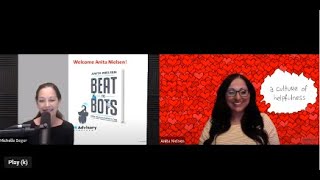
This content was created by SalesGlobe Sage. This content was uploaded by SalesGlobe Sage. This is a YouTube video titled "Selling in the New Economy ft. Anita Nielsen" created on July 20, 2020. It features a conversation between Michelle and Anita Nielsen discussing sales strategies in a virtual world, focusing on building relationships, creating value, and the importance of authenticity and emotional intelligence in sales. The discussion also touches on the challenges of selling during the pandemic and the shift from selling to helping.
Chapters
Hey Anita, how are you doing today? Hello.
Doing good. Happy Friday.
I know. Happy Friday. I can't believe it. I love your background.
Thank you.
That is so cool.
Thank you. Yeah, I figured it was so fitting for today, so I had to do it.
Yeah, it's absolutely perfect. I am so excited what we're talking about today.
I know, me too. Me too.
Conversation.
So.
So I'm. People are joining on and I just have like a couple of logistics that I'll be talking to them about because our roundtable was back and I think Anita, you might have come to a couple of these. But I was on them. Yeah, Everybody's, you know, put their zoom on their audio and their video. They could come on.
That's right.
Now what they need to do is submit questions to us through Q and A as our preference. You can use chat feature if you want to just tell us. Hey, we're doing well, right? Yeah, that's right. Questions in Q and A. And we won't really be putting people on the air because guess what, Anita, you and I are going on Sales Globe's YouTube channel.
Woo hoo.
I know, right?
I'm so excited that you guys are going to be doing a YouTube channel. That's fantastic.
I know.
I love it.
Channel a podcast that we're not yet announcing for another week, but the podcast will be announced soon. Yeah. Nobody knows about the podcast.
So many exciting things at once. I love it. I love it.
I know. Yeah, it's been exciting stuff that, you know, we've really been working on for a while and finally have got the focus to get it, make it happen. So that's kind of exciting for us.
I know. And you've been working hard. I remember when we were in Miami, you taught. You were talking about the podcast at that time.
I know.
I love that. It's like, you know, you've been able to take the time to make it awesome.
Yeah, we're pretty excited. Writing I won't tell anybody the name yet. I almost said the name in my production.
Me neither. Oh, did you look at you? Did you get a look?
I got kind of. I heard a comment. I didn't. I'm getting kind of a sideways glance.
That's it.
Anyway. I know. So any good plans for the weekend?
No, actually, not really. Well, I guess we're going to be seeing my parents. We haven't been doing a lot of. Yeah, we haven't been doing a lot of know. Going anywhere still.
Right.
But we'll be actually, we'll be seeing them. We Started. I think Father's Day is when we started to say, okay, we can now actually spend some time with you guys with our masks and everything. So we're gonna spend some time with them. And my brother has twins that are 18 months old. They're my favorite.
Oh, my gosh.
I love it. They're my favorite because when they're bad, I can just be like, hey, go to Mommy. Go to daddy.
Oh, isn't that the best?
I know. So it's a whole new dimension. Yeah. So we'll hang out with them. Nothing too exciting, but it'll just be fun. Quality time.
That's great. Very nice.
I'm excited.
Yeah. I think that's chill. I know. Yeah. I almost feel like every weekend is almost like Groundhog Day. Except you're right, we're doing a little bit more, but we're not really doing much either. I think I mentioned before that we have a big movie screen that we bought for the backyard, but it actually fits on our screen in porch, which is even nice. It takes up a whole wall.
Even better.
I know, right? Because you're out of the bugs, but you're outside.
But you're still outside.
I love it. But you're still outside. It's interesting how just one little shift in a venue. Right? So being inside versus outside makes all the difference.
It changes the whole tone. Right. Of what you're trying to do. I love it.
Yeah, I know. I'm pretty excited.
So.
All right, well, we are at the house. What we will do is start. So welcome everyone, to our roundtable where we're going to be talking about selling in the new economy. And what we're going to discuss is tapping into your humanity and creating value. I'm so excited today that I've got Anita Nielsen here with us. Anita, I'm really thrilled to have you here. She is author of a book that we'll be looking at called Eat the Bots. That'll be some of our discussion today. But, Anita, thanks for. For coming.
I'm thrilled to be here.
So all of you joining us, Sales Globe. We are a problem solving firm for sales, and we're rethinking sales. And that's what. What this roundtable is about today. We are a sales innovation firm. We use data driven creative problem solving for our clients. We've written a few books there. And again, here with us today is Anita Nielsen. Anita is author of the Bots. Thank you. And yeah, Anita, thank you. It was a great book and I so appreciate you being here with us.
Here Today I'm super excited. I've been excited since I met you in Miami. So just great to be able to sit and have a chat.
Yeah, it's really wonderful. And thank you everyone for joining us today. We are just, we're going to have a nice conversation and what we know. You know, as we at Sales Globe, as we entered the pandemic, there are really three things that our clients are asking us consistently, Anita. The one is how do I pay my team? So it's all about incentive compensation for sales because a lot of them just are not selling. How do I manage the cost of sales? We're getting into the target setting, right? So how do I deal with my quotas and target setting?
What do I.
And thirdly, and in no real order, they're asking about how they're building relationships, meaningful relationships in a virtual world and creating value to differentiate themselves. So that is what we're going to do today. We spent a lot of time at Sales Globe talking about incentive comp and quotas. And I could think of no better person to invite to come along with me and talk to people about building meaningful relationships in a virtual world.
I can't. I'm so excited. This is going to be fun. I don't know how we're going to keep up with all the topics that we have. We'll have to try to keep me focused. You have to try to keep me focused. Focused.
I know. All right, so what I'm showing here, everyone is. Yeah, so we build this mind map, right? We've got in our design studio, we've got all kinds of whiteboards and rolling boards and we've been talking about the future of sales and what that's going to look like. And it looked a lot different coming into 2020 than it does entering into, you know, this, this new quarter of 2020. We've still got some fear going on because of the pandemic. Social distancing, it's continuing and it's just not really going away. And it's all this thing around how do I create value? And that's what we're going to talk about today. How do I make connections in this virtual world? And you know, coming into the pandemic, I think that we all believed it would be fairly short lived. But with openings and now closings again, and I don't know about you, Anita, but they just made some announcements in Georgia about school closing through the rest of 2020 anyway. And looking at it in 2021, we know that things aren't going to change anytime fast. So we need to be prepared.
That's right. We're getting our announcement today, I think. So we'll see how that goes.
Yeah, I know. It's just a whole new world and a challenge for us working parents, too.
Yes, exactly.
So let's shift to building relationships that stick. And there's three big points that you and I discussed we want to share with everyone today. And the first one is this shift from selling to helping. As we started to look at this whole thing. Right. I think you and I are of a similar mind that it's not about just selling products, but it's about helping your customers where they are. So talk to us a little bit about what that means to you and things that you've been consulting your customers on your clients in sales.
Yeah, for sure. So I think one of the things from. And I love this, we've always kind of agreed on this, but the selling, it should always have been helping, but sometimes it hasn't been. Right. So now we're in a time where it's not an option anymore. You have to be helping, otherwise you just won't be taken seriously. I mean, with this pandemic and all the chaos that we have going on right now, customers are holding on to their money. They actually don't want to have many sales conversations. So if you're the person that's in there, you know, basically helping them, giving them some hope, showing them what the future could look like and how you can create value when it's time. When the times get a little better and they start to loosen those purse strings, they will call you. Who they won't call is the person that's been nagging and annoying and pressuring. So I think that's super important. Yeah, yeah, it's super important.
So help them. And when we're talking about this whole helping. So there's been some stuff that we've been able to find out there. So let's say, I don't know, I am in travel and entertainment and we're selling into that industry. Right. So just do a little research on what's going on in that industry. And chances are you've got other. You've got several clients that are in that same. That same vertical, call it that same industry. So what we're finding is, you know, we have been talking to customers, our customers in different industries, and doing some cross sharing. People really seem to want information, don't they? Yeah. And you as a salesperson, I think, have a lot of access to that. So Shifting from selling to helping. It just means that if they're not buying your products and services today, it really does mean trying to understand where your customer is today and what can you bring to him or her, particularly as they're probably working remotely just like you are. And everyone's feeling a bit more isolated, aren't they?
Right, yeah, that's exactly it. And kind of going into our next topic, I mean, right now we're in a time where people are starved for connection. We can be on Zoom all day, but sometimes you still feel hollow, right? If that Zoom interaction wasn't something that you were able to really get engaged in. And now more than ever, I think the humanity is so much more important. I was talking to someone the other day and I said, I feel like I've been talking about humanity and using your humanity to help you differentiate for so long, but in the past, probably three or four months, I feel like it's an idea whose time has come. And I'm just amazed at how many people are finally catching on and saying, hey, you know what? We're all human. That's the one thing we all have in common right now. And all this stuff that's happening in our world, it's impacting everybody. So best to stick together and keep in mind that the person that you're speaking with, if you're a salesperson, the person you're speaking with, they're going through something right now. It could be big, it could be small. You don't know what it is. So I think approaching people with compassion is so important. And compassion, of course, is a key part of humanity. Empathy has always been important, but I think people need it more. People are starved for it.
I think you're right. And, you know, I believe that the push on the virtual communications and what we're doing today and people being at home because of the pandemic and, you know, before it was phone calls that we would make. Right now, it's almost like everybody expects that you're going to connect on Zoom, or you're going to connect on whatever the platform happens to be that you're using. And so when I think about tapping into humanity, it used to be, think about six months ago, even if you were ever on a phone call with a VP or a C level or even a customer and a dog barked in the background, or a kid walked by, right? It was like, oh, my God. Nobody was accepting of that. So I believe that if we can pull a few good things out of. There's nothing good about the pandemic. And I will never say that there is, but if we can look at some spots where we can find some things. Tapping into humanity is one thing that I think it's forcing us to do. Because now people are more vulnerable. They're at home. They're not necessarily putting their makeup on every day. Right. Or they don't need to be perfect, but they can be more human. So let's talk about how that humanity can help a frontline salesperson.
Yeah, I love this question. So exactly what you said about in the pandemic, you never know when there's gonna be a kid running around or the doorbell's gonna ring. Cause you got a delivery. So there's something. And historically, people, you kind of just clam up and you're. Oh, I'm so sorry. I'm. Well, now I think we all have permission to say, oh, my God, I forgot that was coming today. It just has made you more real. And I think you find when you are that real, it gives everyone else permission to be the same. So when you're vulnerable and you're displaying that humanity, others are no longer looking at you as somebody who's a business contact. Now they're looking at you as a person. And you can't differentiate unless you are a human and a person. Because a business contact, you know, it's all the same. All the salespeople are trying to do the same thing. They're all trying to sell. But it's who you are and what you stand for that makes you different. So I think it's. It's really important. Zoom has been tough for people. Sales professionals have struggled a little bit with it, but I think they're coming along now and they're seeing that it actually does work. It works really well, you know, as long as you're doing it correctly.
Right. So when we think about that and then, like, creating relationships, I'd like to spend some time on this, because what we're hearing is that salespeople are really struggling with creating relationships, not only with customers, but with prospects. So I'm going to give you an example of something that I did here at Sales Globe. Typically, when we go on site with our. When we meet our clients the first time, we'll have discovery session on site. So even though a lot of our consulting advisory can be done remotely, because we service global customers. And so even though a lot of it can be done remotely, we like to have these key meetings on site, and that's really not happening right now. So just on the Spur of the moment, I'm introducing my team to another team. And this happened to be for a global company that sells equipment and tools into the construction industry. And, you know, I happen to be. Fun fact, I was a general contractor, believe it or not. Right. I was a general contractor. And so I brought that up. I said, you know, I gave my whole spiel on here's who I am. And I said in fun fact, I was a general contractor, so I understand. And I actually use some of your tools because they were made for contractors. And, you know, everyone started to share then at that level, and we were laughing. And what it did was it helped us open up a lot faster than if we just had, you know, kept to our protected party line, if you will, and we were able to start to get into discovery. So what are some things that. That we believe salespeople can do if they're making that phone call or getting ready to make that connection that they could. Some tools and things that they could use?
Yeah, I mean, I think it is just. It's being real, Right? So instead of being a Persona, which is what your role indicates, that you should be. Be a person and be someone that, you know, you can be trusted. I think that people that are vulnerable and authentic and are willing to just go out on a limb and kind of expose where they're at and what they're thinking, I think they have much better chance of creating a stronger relationship with someone else. Because now if I'm being real, for example, if I get on a call and, you know, I say something like, okay, well, I'm going to pick the Brady Bunch square of whoever is going to speak first. I'm doing a workshop. These are all clients, but yet everyone laughs, everyone chuckles, and everyone just sets the tone. And so now we don't have 10 stiff people that are there guarding their every word. I've given them permission in that one simple thing. I've given them permission now to feel like they can be who they are. I can't differentiate unless I know who my customer is. Not just that Persona, but that person. Ultimately, it's the human being that's making that buying decision. It's not the role. So you have to kind of think of it a little bit differently. And I think that's the most important thing. And for salespeople, just know this, and I have an example in the book, and I like to go back to it. But when you are late, for example, God forbid you're late to a meeting and you get on, you could either Be like, I'm so sorry. I apologize. I did not mean for that to happen. Da, da, da. Like the whole line, right? There's nothing wrong with that. I mean, it's okay. It's nice of you to apologize. And they'll say, okay, no problem, let's continue. Or you come in and you say something very honestly like, I'm so sorry I was late. I put the address into the maps. And for some reason, the maps did not want to cooperate today. Just that one sentence. Now, the person who I guarantee has experienced that same type of thing is saying, I know it happens sometime. Come on in, have a seat. Right? It sets a different tone. And you have to be. You can't look at that statement as something that's making you less powerful. It's actually making you more powerful, because what have you just done? You've taken complete control of the tone of that meeting by doing that. Vulnerability is something that gives you power. It's not the other way around, which.
People assume vulnerability gives you power. I think that's a great statement. Now you brought up. I'm glad you said the A word, as in authenticity, because, you know, I was listening to a podcast that I listened to, and the speaker, they were talking to Hank Green, and Hank Green said, you know, authenticity, I don't even really know what that means. And everybody says it's like we throw that word around, right? And everybody says, you must be authentic. But, you know, and I don't know that everybody really understands what it does mean. What does it mean to you, Anita?
Yeah, this is. And I love this word is. I have a love, hate relationship with the word.
Yeah, me too.
I hate that it's used all the time. But I also know that it's the exact right word to advocate what I like to tell people. So authenticity is basically I was saying before who you are, right? It's who you are without all of the added defenses or added just images that you've had put on you by your role, or not even necessarily a work role, by a role within a family or somewhere else in society. So authenticity is when you're being true to who you are in all of your interactions. And I joke about it, but it's pretty true. When I do roundtables or webinars and everything, I often get emails that say, thank you for being so authentic and so real. And it makes me happy, but it makes me sad in some ways. Like, what are people out there doing that they're out there. Are they just reading slides or what? But People really value that, especially, I think, for me, salespeople, because sales professionals don't have time for bs, right? They are ready to get stuff done. They want to learn, they want to move forward. If I'm real and I show them that I'm somebody who cares about them and I've been in their shoes, I have a much better chance of getting them to change their behavior, even influencing them in any way.
You know, I read something recently, and it was Harvard Business School, and they were talking about products, and they basically said that features drive interest and it's benefits that drive sales. And I, you know, I started thinking about it and I immediately made the connection of, well, gosh, my salesperson is really a benefit, and how do I become a benefit to my customer? I'm certainly not a feature and I'm certainly not an extra. Right? And everyone talks about building trusted advisor status, you know, which means so many different things across companies now, and really building meaningful relationships. So let's spend a minute talking about how. I think it would be fun to talk about how a sales rep can become that benefit to a customer.
Yeah, I love this question because it's something I'm so passionate about. So what I tell sales professionals is that who they are, what they stand for, and how they make that matter for their customer is the single point of differentiation we have left, period. Companies can copy products. Companies can copy company things like, oh, we're the customer support that has raving fans. Or five minutes later someone's going to say, we're the customer support that has relentless customer service. That's always going to happen, right? So products commoditize. It happens all the time. But the one thing no one can copy, who you are, you're human. There's only one. And so I think people don't appreciate the value of that as much. And it really is, I mean, who I am, what I stand for, how much I care, and how I show that I care, that is what will differentiate me. And ultimately, if I'm doing it right and being genuine about it, I've got a customer for life at that point, Right. It's not someone who's just going to. It's going to be beyond the deal because we've connected on a different level aside from that benefit. And just on that question about the future and benefit, if I look at it that way, if I wanted to think about how that article was written, benefit to me is translating those features and the benefits and making them in the context of where that customer is at so not what's on the brochure, not what is on your website, but very real. What. How is this going to impact that customer? And not just the customer in their role or the company, but that human being. Now, you have to get to the point where you know those things, but that's. That's where salespeople make the difference. All the difference in the world, you.
Know, and it's the one thing that can't be, as we like to say here at sales, go AI'd or offshore.
Exactly, right.
The ability to be able to create that level of differentiation. So when we get back to the concept of bots, right. Which is really the same, you know, I thought it was such an interesting parallel that we're talking about how we connect in a virtual world and create differentiating differentiation and value. And it's really the same as, you know, how do I differentiate myself from a bot? Right. It's the parallels I find really something else. So let's move on to a little bit of how. So we talked a little bit about how you can build relationships that stick. And to really summarize that, we're saying just be human, have conversations that are meaningful, right? Like, just don't be yourself and don't be as guarded. And go beyond the playbook. Right. I mean, it's really about, I believe, going beyond the playbook. So now. Right, right. We want to just like, make it matter. The other thing is when we talk about people becoming a benefit and this part of the how I think it could be understanding and how we can solve the challenge for that buyer. Right. So that really, I think, is a good segue to our next piece. Building value creation. Right. In a virtual and digital world. And I broke this down. I wanted to talk about. You and I discussed four areas, right. We wanted to talk to everybody about. And one comes through. Two of these are directly from your book. And this concept of personalized values. So let's have a conversation about what that is. Anita.
Yeah, so personalized value, I was starting to allude to it a little bit before, but if I. The example I like to give for personalized value is a toothbrush, for example, right. So if you have a toothbrush, let's say Oral B comes out with their electronic toothbrush. And it's huge. I mean, it's a huge innovation. People want it. It's wonderful. Everyone wants this new thing, so they buy it. Great. Three weeks later, Philips or somebody else creates the same thing. Maybe a little bit different, but the same thing. And so now You've got two things. They both achieve the same purpose. Right. So the benefit of them is the same. They're going to brush teeth. Well, if you look at it, then take it to, you know, brushing the teeth is the general value of it. That's what it's going to do. The company value is whatever the company layers onto it. So perhaps that is that Phillips has an app that they connect to their toothbrush. So it'll show you how long you're spending in each quadrant of the mouth. Right. And give you a summary report. So that is something that's differentiating. I mean, that's something that most things don't have. Most toothbrushes don't have. Well, until five weeks from now when they do. Right. So that companies are going to copy that as well. So that's kind of the company value. It differentiates, but only for a minute. Personalized value is what I was saying before. The value that exists between that human to human interaction within the context of a sale. People talk about B2B and I understand what B2B business to business means, but in my head I'm kind of like, you know, AlphaCorp isn't selling to Beta Corp. Right. It's the Director XYZ at AlphaCorp selling to the salesperson, selling to the director at the company. It's two human beings. It's not even the role, it's two people that are having a conversation. And how that sales professional guides that customer is where personalized value lives. You can't duplicate who that salesperson is. They are the single point of differentiation. Now the trick for the salesperson is they have to do a really good job at it. Right. Otherwise it's not value at all.
Yes. Now I'm thinking about, when we talk about personalizing, the value is understanding. Right. One way that they can do that or one of the avenues is by understanding the buyer. And, and not just by understanding the buyer. Oh, it's, you know, we've segmented it and we know that all, you know, directors of it are like this. But you and I have a very similar belief on this that it goes a lot deeper than that, doesn't it?
Yeah, it sure does. I mean, there's so much behind that individual, their context, like where they come from. What are they doing? Are they trying to get a promotion? Are they looking for another job? Are they, you know, working on a degree? Do they have to leave early because they've got kids to pick up? There's a, like you said, story. There's a story There.
And it's very. I find it kind of easy to find that information today. So when I'm. When I'm getting ready to get on an interview or talk to someone, I go, you know, and it's. This is being authentic, guys. This isn't being fake, and this isn't in any playbook. I actually go out to LinkedIn. I want to know, have people change jobs? Like, what are they doing? Have they post any articles? What are they interested in? Right. So what is it that matters to them? And that may be, oh, gosh, it could be an environmental cause. It doesn't have to be directly related to the product or service you're selling. But understanding where that person is coming from right before you talk to them helps you understand the personalized value. And if you create that initial connection, you can start to understand what challenges they have in their business. So you're not selling them a product. You end up selling them a solution that will ultimately help them be successful in their role.
Yeah, right. And what they care about is the outcome. Right. Or the result of whatever that product is going to do. And it's so important. I just, I feel like people lose sight of that. Right. When you're in a deal and you've got your sales process and you've got your sales methodology and you've got your buyer Persona and all these things. There's so much script there. And I think a lot of leaders encourage people to use a script. The challenge is the script is just that it's a script. It didn't come from a place of good intent or a place of wanting to serve that customer. And that script isn't going to convey that. So it's really important that we kind of. We do. We have conversations that are meaningful to that customer because we learn their story. We're not talking about random things that don't matter to that customer. Because nothing will kill your credibility faster than that. Right. Than if you're just off on some other tangent that means nothing to them.
We got this process that we use, and we use it internally when we're solving for challenges, big challenges in sales for our clients. And we also coach sales leaders on this, which is around understanding the story and, you know, getting to that. And you and I have discussed that. We also, you know, you and I have a lot of parallel thinking, but understanding the story is really getting beyond just my product and service and the features of that product. But why is it that someone wants the product? And one of the things that you talk about and that we believe is you ask these open ended questions, right? And explain and talk a little bit about what an open ended question can do for you contrasted with just a statement.
Yeah, this is a good question. So I look at. So when we're in sales, right. We're taught in our. Any salesperson worth their salt has been an onboarding plan that said don't ask close ended questions. You don't want just a yes or no. You want to ask an open ended question so that they give you a better answer. And that's great. I totally buy that. I think it's important. But what I advocate is something I like to call a high impact question. And these high impact questions are very powerful because the way that you ask them, they enable the emotion to seep into the conversation as opposed to just the facts and the logical information that they need. I'll give you an example because I know that's kind of nebulous the way I said it, but if I'm a sales professional and I go in to speak with a customer and it's one of the early meetings and I say, okay, well who reports to you? It's a good question. I mean I want to know who reports to them, right? So they might tell me, these are the people. This is a role. I'll write it all down. Great, good job. The information, you check the box next. However, if you're the salesperson and you go in and you talk to that customer and you say, help me understand your org structure now you've opened it up way bigger than what it would have been with the other way. So it's like a open ended question on steroids almost, right? Here's what happens. I found and time and again. So that person will tell you, maybe they'll tell you about the reports, but what they might tell you is, oh, well, I reported to the CIO and the CIO is new to the company and he brought some people, my peers are XYZ and the Z. He brought her over from his other company. So they already have a good relationship. And I'm over here and this is one of my peers that we work together. I mean they're giving you all that emotional gold or that insight into them. Now I know that there's a little bit of a chip on the shoulder of this person that I'm talking to, right? They're a little bit concerned that somebody that came in from the outside is outshining them. Good. Why does that matter to me? Because now when I go present something to them, Before I even come up with what I'm gonna propose to them, I have that in mind, right? I know what they're trying to do, and then when I go to present it, I position it in that way. This is gonna help you show your value back to your company. And, you know, your new cio. They need to understand what you're made of. And this is how that's gonna do that. There's nobody that can resist that. It's human nature. It's human psychology. So I think it's really, really important to. To ask the questions that are high impact. And these are things like, help me understand is probably one of my favorite ones, but tell me about. Or how does that impact you? So the kinds of things that will allow the emotions to seep in. And I only half joke about this, but I like to say that these are questions that a shrink would be jealous of psychologists, because that's what people. That's what therapists and psychologists do. They are. Emotions is their currency. So they're trying to pull those emotions out of their clients or their patients so that they can then figure out what the. What their diagnosis is and how they need to address it. Similarly, as sales professionals, we have to understand where that person is, you know, emotionally, logically, in that role and then be able to prescribe what we think is the best thing for them.
That makes so much sense. And, you know, one of the other things that I like to go along that line of questioning as well, when I'm working with our clients, and then I always like to ask at that discovery meeting is what does great look like or success look like? So if we go a year from now from our engagement that we're on, like, what do you want the outcome to be? So even asking them about that, that kind of helps you understand. It helps us understand, really, what are some of the key challenges they're having and what they're after that they might not have told you just by saying what are your biggest challenges? Right. So I love the idea of the discovery, and that helps us move on to. I loved this particular part of your. And we talk about. You talk about the rider, the elephant, and path. And so why don't you explain to everyone what that means, and then we'll have a good conversation about that for sure.
This is a hard one to explain, but I'm going to do my best. So there is a social psychologist named Jonathan Haidt. He came up with this metaphor, a rider, elephant, and path for change, for getting a human to make a Change. Well, I looked at this metaphor, I said, hey, this really applies to sales. So what's the metaphor? Imagine a 6 ton elephant standing out there on a road, on a path, looking forward, trying to go on a journey. Imagine a human rider on top of that elephant and the path. So you've got a rider, an elephant and the path. Now you have that in your head. Now let me take it to where it jives with the psychology. The human mind has two systems, a rational system and a logical system. This metaphor is because it shows you that the elephant represents the emotional aspect of the human mind and the rider represents the logical aspect of the mind. The path is where you need to go or where they need to get. And so for in sales, that's our buyer's journey, that path. So what the value is to salespeople of this is okay, when I'm thinking about this rider and elephant emotion, elephant rider logic. If there's a disagreement between the elephant and the rider, right, in terms of do we go this direction, this direction, how long, et cetera, who's going to win the 6 ton Elephant or the little dude sitting on top of it? Right. It's easy, you know, it's going to be that elephant. And that's, that's what shows to salespeople that it's the emotional aspect of that sale and that conversation that's much heavier, it's got a greater weight than the logical. It's in no way, shape or form to say that you don't have to have that information. Like we talked about earlier, that open ended question, who reports to you, what are the, what's your current environment, all those things, you have to have that logical information. It's like table stakes, right? But if you want to make them change and sales is driving a change, you have to appeal to that emotional side of the house and that side of the brain. And it's just, it's been so powerful. I mean, I taught psychology and sales for a long time and I talked about lizard brain and neocortex and new brain and all these different things. And salespeople, you know, when they're in class, they loved it, but it didn't stick as much as I would have liked it to. So when I saw this analogy, I was like, oh, game on. This is what we're going to do. Because everyone can understand this. Now I have a slick little video and some stories that I tell that help them, but I get emails all the time from people that are just like, hey, I did a great job with the elephant this time. And you know that type of thing because it's easy to understand, it's simple, it's straightforward and it reminds them what.
Matters most, you know, and it's interesting that when I read through it I thought, oh my gosh, emotions, they're the elephant in the room, right. It's the first thing I thought about. And when we're at work, right. The one, what's one thing when you're in a corporate environment that you have been told from the earliest days, it's keep your emotions at home, don't cry, for example. Right. Don't show your emotion, be strong. But yet in a human to human interaction, you have to consider the emotion. Right? I mean what we're saying is you have to have permission to do that.
Yeah. And here's the thing, if you don't address that emotion, who does that help? If the emotion is truly the thing that's going to drive the buying decision in your favor, who does it help to be ignorant to it? I mean it doesn't help anybody. And so your discovery questions are aimed, that's why their higher tech questions are aimed at getting the emotion out, because you're selling to the emotion. And people have said this for a long time, it's not a novel concept of people buy based on emotion and then they justify it or they rationalize it and it's true, but it's that emotion. And that's why I say right now in the pandemic especially people are scared. We're living in a high anxiety, uncertainty, fear filled world. And so these individuals, their emotions are so it's a big fat elephant that's afraid. And so how are you going to get that elephant to move if they're that afraid? Well, you just got to know that you're not going to be able to do that right this minute. But start talking to it, start understanding it better. Start figuring out that once this gets better, this is how I'm going to approach that conversation. And the emotion is emotion. The elephant always, always wins is what I say.
And the elephant, the elephant always wins.
Yeah. I love that you thought of that. The elephant in the room, if it's the big fat emotion or that big hot topic or that button, if you're ignoring it, you're going to leave that meeting or that conversation having done nothing better than you did when you came in there. You have to hit it head on. Now there's an art to it and you know, making sure you're respectful and those types of things. But do yourself a favor. Don't act like that emotion doesn't exist, because that is what will end up determining whether you win or lose.
So, Anita, I am a, let's say a hard line. You know, I've been selling for 20 years. I am at the top of my game. I am a top seller now. I am on the road all the time. Right now. All of a sudden, I'm home like everybody else. I'm getting a bit of zoom fatigue. You know that. You know, this. You and I have discussed this. We're starting to get a lot of calls from sales management and leaders like, gosh, how do I keep my team motivated? Because they're getting a little burned out, right? So I'm used to being face to face. That's what excites me. It's what I live for every day. You know, getting that sale, getting out there, making those connections. Where and how does that person start on this journey?
It's a great question. And it's tough, right, because it's going to be a little bit different based on where that customer is at. But in general, I mean, it's zoom. It's a camera, but so you can still be yourself, right? One of the things that I found that I was watching a video of a recorded sales call. The sales rep was sitting there just like this the whole entire time. And it's one of the best sales reps we have. But he's sitting there like that because he feels like this is what he has to do in order to get through on this video. Absolutely not. And you can see me. My hands are all over the place. So you still have to be that human being that you are out on the road. No, you're not playing golf right now, or you're not having a steak dinner, but you can still have that conversation. And it's amazing because your personality still can come through within. And it's your words that you use. It's the facial expressions. It's all of those things. And you have to. I mean, you don't have a choice right now. You have to try. And so try to be who you are. Try to ask the same types of questions, engage them. One of my favorite things to do is if I've got a group of customers that I'm meeting with and it's a workshop. For example, everyone's in their home, and before all these fancy backgrounds happen, well, you know, you can see the background of their office. And so I always say. I always say, okay, grab something in your office. We're doing show and tell. So that's our introduction to the show.
Oh, I love that.
Yeah. So everyone has to go around and say, okay, I'm so and so. This is my role. And this is the baseball that was signed by so and so and so and so. And that is just so powerful because now everyone has had to look at everyone else in a different light as a human being who has a life and is, you know, not just this role completely sets the stage for different real conversation and a conversation that can differentiate. I mean, there's not a lot of people that are doing that. Most people don't get on calls and ask for a show and tell session, but wow.
I think that's super cool. Yeah. So if you were in my office, I would show you this marble elephant that I got in India.
I saw that the other day.
I was like, yeah, I know, right? It's so funny. So we have one question that came across which actually does dovetail nicely into this driving performance and getting results and giving some people some ideas on tools and tricks. It says, I would love any tips that you have for selling and prospecting virtually. So we talked about specifically creating those connections and talking to people in a way that's authentic, understanding their story, doing really clear research before you even get on the phone. Right. But you and I did talk about when you're prospecting, how you can tailor messaging and what is it that can differentiate you as you're in the prospecting world and get you that call back. So let's discuss a little bit of that.
Yeah. Yeah. I think for prospecting, I mean, it's not that much different than it was before. But like you said, you do your research, you understand, and you don't just go to LinkedIn and look at three different things and think that you've done your research. It's not how it works. You have to look at that customer. You have to look at LinkedIn, you look at their entire social footprint. Go look at Glassdoor to see what that company is about. Do thorough research. Yeah. And I mean, that's one of my favorite things to do because it gives me some insight into what context they're sitting in. I mean, of course there's a lot of disgruntled people on there, but it's good intel to have. So when you go to talk to that customer, instead of calling and saying, I'm so and so, prospect, rather I'm so and so and I want to talk to you about da da, that does nothing for that person. That you're talking to. But what you can do is you can say, my name is Anita and I'm calling because I recently worked with a CIO and I helped him address the challenge of capital expenditure to operational expenditure. I've got a techie client base. That's why I talk about these things. But yeah, now I've got. Now they're at a minimum, they're not hanging up right that moment. Right. And so that's. And then you go from there. And then as soon as you've gotten that out and they've said, oh, now you say, my company is this. And this is what we did. It's a total upside down of what people typically think about when they're prospecting. But that's how it has to be. I mean, when I call my friends, when I call people that I am talking to, I don't say, hi, this is so and so. It's not. It's just unnatural in some ways. Right. That immediately sets you up as the person who's cold calling. You know, I'm here to talk about, I wanted to talk to you about. Da, da, da. So make it genuine, make it real. Don't make it a script. The minute it sounds like a script, you're done.
You're a cold caller, you're done. The other thing I like to think about is it's like a bank account, right? So you've heard about the bank account analogy. So now I'm a prospect. It's like a brand new bank. I'm going to. Well, I can't take anything out if I don't put anything in.
That's right.
So if you do that research and you understand, you just mentioned a beautiful example around, around the industry. So if your company happens to have a white paper on that, I mean, gosh, you can certainly pull them from other resources and you just send them something. Hey, I know that you have been involved in this, oh, call it a merger and acquisition.
Right.
Here's a paper that I have on that. Here's some information. You're not selling them anything at all, are you?
No. And you can say it, you know, I. And say the white paper. And I would even add on to that and I would say something like, you know, this is a white paper that a lot of my customers have been using and they are all facing this. And so then that way now they're like, huh, this person might know something about me. So exactly what you're saying, make it, make a deposit. Make a deposit.
You got to make those Deposits. So the best advice that we could give you for prospecting isn't just to sell, but to send something of value. And something of value could be a piece of a blog or something that you've seen out there. It doesn't have to be something you've created. Chances are your company has a wealth of information, but it can be something you get from somewhere else. But include that. And, you know, there was something else that we did that worked beautifully with one of our clients, Anita. We were trying to figure out, and this particular client is in sports apparel and equipment. And their sellers, a lot of them came from. They had athletic backgrounds. And I'm looking at the background of these sellers. I'm like, oh, my gosh, you played pro, you were in the NFL, you were a pro baseball player, you were in the Olympics, whatever that that case was, or all this different stuff. So we did these tailored. We just tried it, right? These tailored emails that had picture of the person, and they just gave a brief bio and then said why they wanted to help and what it was they wanted to set out and achieve. It wasn't about, I sell this product or service, but I may have something of value for you. And the response on that was immense. It was pretty big. So telling people a little bit about offering them something, not just asking for something.
That's right. People just don't. You won't respond to that. I mean, if you come to me and to get my attention now, anyway, I mean, there's so many things I'm reading and doing to get my attention. What you're saying to me needs to be different. It needs to be something that gets past all the rest of the noise. So how are you, the person who's prospecting and calling me, going to be different than all the, you know, 20 others that I've heard this month? And that's how you do it. You make it all about them. Back to personalized value. The more you make it about them, the more chance you have of them wanting to talk to you. Because people love to talk about themselves. What people love more than that, I believe, is love to be heard, right? So they love it when someone's actually listening to them. And so if you can show them that you've worked with your customers and you've heard your customers and you're willing to share that insight with them now, you've got the makings of a really good conversation.
I really love that we're ending on that note, Anita, because it's. The whole thing is you don't need to be talking, you need to be listening. That's the objective.
Right.
People want to be heard. So asking these open ended questions, making a deposit in the bank account. Right. Of everyone you want to serve, understanding where your customers are today in their own journey, in their business. So in that particular industry, up, down, what's going on? Is that particular person new in their role? Are they in the midst of a job change? Someone that may have been a longtime customer but understanding the context of the story will help you develop and build a relationship that matters and we believe will end up driving long term value and ultimately sales and benefit to both you and your customer. Yeah.
The high impact questions is how you do it. Right?
That's right.
You ask the questions and that's how you get the information. Yep.
Yep. So I want to thank everyone here for joining me and Anita today. Right. So I want to remind you to register for for our roundtable on Friday. Every Friday they're 1pm Eastern. And you know, you can talk to Sales Globe about your toughest sales challenge. We hope that Anita and I have provided value to you and some tips that you can take back to your organization. Please feel free to reach out to Anita and I and connect with us on LinkedIn. We're happy to have a conversation with you and offer you some tips and tricks. Anita has a great book, Be the Bots. You can order it on Amazon, of course. And please subscribe to our YouTube channel. This is going to be available to you on YouTube. I'm so excited.
Me too.
This was a value. Please send it on to others and everyone have a fantastic weekend.
Thank you. Have a great weekend. Thanks for having me, Michelle. Thank you.
Thank you.
More from SalesGlobe







Sales Compensation for Results - Course 1: A Strategic View on Sales Compensation - Trailer


Freative Friday - Episode 98 - Insight in Your Hunt for The Revenue Roadmap Pt 4


Freative Friday - Episode 97 - Insight in Your Hunt for The Revenue Roadmap Pt 3