What You Need to Know about Sales Compensation in COVID
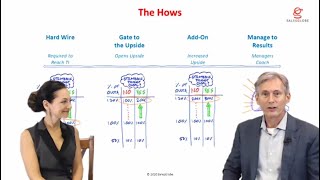
Roundtable by SalesGlobe (hosts Michelle and SalesGlobe Sage) explaining how sales compensation measures should adapt during COVID-19. Covers industry purchasing recovery data, the Sales Comp Diamond framework, and practical guidance on performance measures (bookings vs billings, TCV vs ACV), use of milestones, and product-mix/strategic-offer incentives — with pros/cons and design considerations for 2020–2021 uncertainty.
Chapters
Okay. So, Mark, let's talk about today. Yeah.
So this is our SalesGlobe Rethink Sales Roundtable, and we're gonna be talking about sales compensation over the next several weeks. We started last week with some findings from the World of Work survey.
Yes.
And this week we're gonna dig into performance measures. So we're gonna talk about some things that are changing during COVID what we're seeing in companies. And I think you'll find it quite interesting. So.
Yep. And for any of you that are new to us, Sales Globe. We are a problem solving firm, so a consulting advisory. But we solve the biggest sales challenges that companies have, which is why you'll. You'll hear us, we're out there a lot, and we'll be posing questions that we'll be answering questions that you have had. So please send things into us because we're all about problem solving. And you'll see that we've written a few books here. We're going to actually be talking about what your CEO needs to know. I believe we have a copy of that book, and I believe the author might be sitting right next to me, too. Of that book. Yeah. Anyway, it's a good read.
Some of the ideas you'll see here are actually in that book. So we're not going to go super deep on every idea, but you can check them out there. And also we'll be talking about quotas in future sessions, and we've done that in some prior sessions. We've got a book on that as well that you can get more information on. All right, so at the Sales Globe studio where sitting today, we have these whiteboards everywhere. We've got writing on the walls.
Right.
And one of the things we're talking about a lot, Michelle, is the future of sales post Covid what that's going to look like. And these are all considerations. So every time we have new considerations, new ideas, we're putting them up on the board. And a lot of the big drivers we talked about last time were around fear and financials and what's to be changing our environment, the new challenges that we're going to face, what sales organizations are going to look like. And today, as I mentioned, we're going to get a little bit deeper into performance measures.
Right. Because the one thing that we know before you talk about the performance measures is that we do believe we're going to be facing a lot of uncertainty as we. As we go into 2021. So there's that whole fear, but then there's the whole Uncertainty. So Mark, what are we talking about today?
Well, we're going to talk about a few big areas. So bookings and billings, what's happening there? And as related to that, TCV and acv. So total contract value, annual contract value. So these are kind of like cousins to each other.
Yeah, that's right.
Talk about what we're seeing companies doing there and some ideas that you can consider. We'll get into product mix and looking at strategic products because some of the priorities are changing for companies now as we're in the COVID period. Some products are becoming more important and more strategic and our strategies are changing. So it's important to consider that in the sales comp program and, and then milestones, something we're seeing a lot of early on in those initial phases of COVID So how do you use milestones and do the things you need to do to move customers along, help customers move deals along? This sketch actually was something we did while we were eating a grouper sandwich.
Yes, we were. You're telling everybody what we're doing for lunch. Milestones is going to be really interesting for us to talk about because it's not something that, that we typically say, hey, let's pay your seller on that. Right. We usually especially. But when we talk about finance milestones, are you kidding me? It needs to be like revenue. But we're going to talk about why that makes sense and why it can make sense in Covid.
Yep, yep. So let's take a look at the bigger picture first as we get going here.
Oh yeah, this is really exciting.
So this is some data from our partners at Corterra and they do really great information on purchasing in company. So this is not sales information, but it's what companies are purchasing. And we've been tracking this right by industry. So you can see all companies over here, all industries in red. And then you can see retail, wholesale and manufacturing. So it's telling us what they're buying and that's highly correlated to how they're doing.
Yes, that's correct.
And so you know, when you take all the headlines and the news that you're hearing, it's helpful to see some clean data on this. And what you see, the left side is starting back In June of 2019, we indexed everybody, at least in these groups, back to 100. And we asked the question, well, how are they doing relative to where they were mid year last year? And you can see some ups and downs here. The yellow line represents that 100 line. And you can see January of 2020. That's when things started to, to turn down a bit largely I think, Michelle, due to the seasonality.
Right, right. So see how manufacturing is down after the holidays. So you know, I talk about my retail background. That would be down because what's happening is businesses, retailers are getting rid of inventory. You'll see that retail is really up in that December, November, December timeframe, but down in January. Even the redemption of gift cards doesn't really count as the sale because the sale actually happened the year before. So that revenue is kind of counted. So that looks fairly normal. Right. Because it's cyclical and you can see.
The lockdown during March. What's interesting to note here is that things are coming back. You can see retail and the green line was down, but come back considerably. And this is through August. This is through August. Right. So this is August that you'll see right here.
Okay, got it.
So you can see retail is up wholesale following as well as retail is pulling along there and all industries kind of stabilizing a bit. Manufacturing about where it was middle of last year. So we're seeing this coming back fairly consistently. And I think the point here is as you're looking at your sales comp programs, understand where you are, what markets you're in, what markets you're selling to, because that's going to help you to be able to develop plans correctly with the right measures and of course with the right goal setting based on those opportunities in the market.
Yep. Let's go a little bit deeper in an area here, Mark.
Yeah. So this is looking, this, this just looks back to February of 20 and this is looking at the year over year change. So you can see the green is retail sales and you can see that the pit was in April. So retail sales really down significantly year over year.
Yeah.
The blue is business to business spending, which is lagging retail sales. So that bottom point was in May and then both coming back pretty strongly as we saw with retail on that previous view. You'll also see the unemployment rate. That's the absolute unemployment rate in the gold line there. And you can see that that took a dip down to about 14.7% up to about 8.4% unemployment rate starting back in February, 3.5%, which is actually better than full employment economically speaking. So unemployment rate is following suit, but lagging with what these other indicators are.
Yeah. So a couple of observations. We see that there's a greater spread between retail and the unemployment rate, but we do believe that part of that could be because of that additional Financial assistance that was given to people that were unemployed, so they still had money to spend. And in a lot of cases, people were whole or close to it.
So.
But we do see that B2B spending year over year retail spending is coming up, and that's good news. It means that we are starting to see some level of recovery.
So a couple thoughts here related to sales compensation is as you're seeing these kind of trends, be aware of them, as we said, as you're designing your comp plans. But also be careful how far ahead you're projecting because things are changing, Things are evolving very rapidly. Where we're going to be in 2021 is going to be probably different than where we are right now. So if you're designing for the current state, just keep a tab on these indicators. And I'll say, Michelle, if anybody listening would like to get some information on your industry, just let us know. We'd be happy to provide that to you.
Yeah, absolutely.
Give you some good visibility. So let's get into sales compensation a little bit more specifically. And here's our old friend, the sales comp diamond.
That's right.
It's what we use, what your CEO needs to know, Michelle. This is one of what we call our laminators because we have these little cards. There's a little sales comp diamond card, little teeny one. Carry this around with me. Whenever I have sales comp questions, I.
Carry them around too. I do. I do that in the revenue roadmap.
Revenue roadmap, right. So we've got some laminators. These are really good just for reference. This looks at, you know, all inclusively, how you evaluate how you design an incentive compensation program or sales compensation program all the way from the C level goals in the middle and the roles to how that you frame the plan. You link pay and performance, you align the team and financials and how you operate for results. So one of those little nodes there is performance measures and priorities.
Right.
Which is going to line up with your strategy. And we're going to look at a few areas today. We're going to look at bookings and billings, and then we're going to look at TCV and acv, both closely related. We'll look at milestones. Those are things that have been used quite frequently during this whole period. And then we're going to look at product mix and strategic offers. And we want to take each one of these and talk about what it is, where it's being used and what we're seeing happening during COVID and the considerations, pros and cons considerations, as you're thinking about these measures. And again, these are kind of like tools that you're going to, you're going to pull out. But be careful to design with the future in mind. Just not where we are right now as you're looking at these, because we got to probably a long 20, 21 ahead of us that we're gonna have to plan for.
Right. And now, Mark, talk a little bit about just the measures because it's really a multi dimensional thing. It's not just the measure itself.
So we're, you know, real methodology based here at Sales Globe. So we're not looking just at performance measures and what measures should we use. We're looking at how do we consider the different dimensions of performance measures. And you'll see the red is showing the measures themselves. And we'll get into those in detail in a second. But there are a few different layers of types of measures. So you've got financial measures which are typically the things that show up on the financial statements. So your revenue volume could be bookings, you've got customer or strategic measures which are kind of like the steering wheel. It's saying, well, we want revenue, but we want it with certain types of products, certain types of customers. You've got forecast measures which are looking ahead at leading indicators. And then you've got qualitative measures or we kind of think of as your, your swamp of performance measure. Your key sales objectives. We don't like those too much.
Not, not to pay.
So you want to, you want to, you want to push toward the top as much as you can on these measures. But the other dimensions you want to consider, we'll talk about these as well. Is the frequency, how often you're measuring and paying on those.
Yes.
So you could be paying monthly, quarterly, annually, you could be paying discrete periods, so every quarter is its own standalone. Or you could be paying cumulative year to date. So a lot of considerations there's. And then level. So you could be paying and measuring at the company level. So how does the company do in terms of revenue or profit? Or you could be paying at the team or the individual level. So the general rule of thumb is you want to start to look at measures as close to that leading edge or that front of the cube as you can. So as financially oriented, as close to the individual and as frequent as possible, as long as it aligns with your sales cycle. So just the general point to remember, so keep those couple of structures in mind as we're as we're taking a look at these, these big areas that we just talked about, these four big performance measure areas.
All right, so now we're going to get into bookings and billings. And so where they're used. This is results from. For those of you that were on last week, World at Work, we did a survey with them. There were over 400 companies that participated. And what we know is out of this, we ask them what measures you use. We know that billing leads as a measure with 60 to 79% of organizations using some type of a revenue measure in the incentive plan. And bookings, what we know is they're used less frequently with about 37 to 50% of organizations using bookings as a measure for the field sales roles for their roles. So you can see down below how that plays out for field sales across all the different roles. And what we mean by all roles is I may be a new account seller, I may be an account manager type role penetrating existing business, and I've got a name book of accounts, or I may do both. And that average is about 72%. Where we see it the highest is in that new seller role. And then channel sales, 79% for billings. And you'll see it's significantly lower as a bookings measure. Which again, I think that that kind of makes sense just on what the behavior is that you want out of the role. And then on the inside sales roles, we see that billing leads again across all roles, about 70%. So the same pretty much as the field sales roles to about 40% for inside sales roles. So I guess a couple points here, not a whole lot of difference between whether I'm inside or outside, whether I'm using billings or bookings, but I am tending to use as a company billings Greater times like 72% of companies, 60 to 79% of companies are definitely using billings as a lead measure. And then bookings a little bit less than that. Companies are using it and companies could be using both. Right. So what we don't know is how many companies might be using both in this number. But.
Right. And so this is current data too.
Current data. Brand new.
This is brand new. So this is during COVID Yes.
Q2 release. Yep. So why in Covid bookings and billings? Well, this is, you know, we want to kind of bring this back. So what we know. When you look at your billings measure, why is this like an important thing to be thinking about? And why are we saying let's talk about bookings and billings for Covid? So billings, when we Think about that. It closely aligns with revenue results. Right. And finance tends to love that measure. However, we know that sales cycles, we know for a fact that selling cycles have been elongated because companies just don't have the budget that they've had. The budgets are changing or they're just not as certain as it was before. So it might not be that that sale is going away, but we're seeing a lot of delays.
Right.
And so the big question becomes, if I just have bookings as my measure in 2021, do I want to think about shifting some of that to bookings so that we still keep the sales rep motivated and he and she is making something for the sale. So that's kind of why we think you want to look at that. So even though we love billings as a measure. Absolutely. It aligns closely with the revenue results. Those can be delayed. Bookings also will address delays in the actual usage or the billings due to Covid. So what does that mean? There are a lot of our SaaS companies, they might pay for usage of a product and service. And right now we know that everyone is at home and some of those products and services that they were paying for, it could be security or your building, it's not being used as much. And I just made up the security of the building as one example. But anything based on usage may not be that you might be paying for, might not have the same level of usage when people are not in their building. And you know, we know that work behavior have changed and that can change the usage of your products and services that you have sold. And I'm sure some of you listening right now to us can relate to that. Bookings also can help promote the selling beyond the curve for future billings. And that means that I'm not so frantic as a sales rep, right. Worried about how I'm going to make that month or that quarter, how am I going to make that incentive? Because I'll get paid a portion of it now. And you as a company, it benefits you because you're, you're really concerned about the long term health of your business. So that's why we think you need to be thinking about this in Covid. Think about how your, your, the companies you do business with may be impacted with their budgets and the selling cycle and the decisions that they're making which may impact their purchase decisions with you.
Yeah. So the bookings is creating more action. We're seeing more of that with companies right now where they're making some shifts over to bookings to try to bridge that gap for people. So where we may see those delays, like you said, Michelle, it helps us to still connect the sales organization to the result, you know, getting that deal.
That's right. So when we think about how they're used and we'll talk about also we'll get into some of the pros, cons, too. But how you can use these effectively, the bookings would be like for long sales cycles. Right. And then what we're saying is, again, because that's a benefit in Covid especially, and then use it as a percentage of your ti. So Mark made a point. You just made a great point. He makes a lot of good points. But you just made a good point. You said they're paying a portion or we might be seeing them paying more on bookings. So a lot of the companies that we consult with, they may be 100% billings and. Or a very high percentage. And the reason that you want to think about a percentage of ti is because, again, it helps you mitigate your risk in case that booking doesn't fully convert over.
Yeah. And I've heard recent stories about, well, you know, we have all these bookings that we're making now, but then this is like a president of a company talking. We're not seeing the revenue, and so we're celebrating these major deals yet we're a couple months down the road and we're seeing nothing. So. Right. Having a portion of that and balancing it out with revenue makes a lot of sense that you're not putting a ton at risk.
Yep. And the next point around this pay mix, you might say, well, what the heck does pay mix have to do with bookings and billings? Well, if you think about pay mix, it's the percentage and the difference of my base pay to my incentive. So companies that are paying their salespeople a much higher percentage of base pay. Right. So I might have like an 8020 plan. Right. 80% might be on base pay and then 20% on incentive. I may tend to really want to put his or her incentive on billings. Why? Because I'm paying them already so much to book business. Right. So on the booking side, if I've got a really highly leveraged plan, let's say a 50, 50 or a 40%. 40, 60. We've even seen those where your rep might really need that help. As we go into 2021, you might want to say, well, instead of changing their pay mix, because we've actually had companies say, should I change my pay mix? Say, no, don't change your Payments because you still want to drive the selling behavior. But one way you could help mitigate that is putting a little bit of TI on bookings that maybe you haven't. Right. So the other thing is on bookings for any that non recurring portion of a sale. So that would be things that aren't part of your long term contract. It might be training, it could be implementation any one time. Fees that you might have, onboarding fees, those are all good things that you can look at for your bookings. And the behavior that you're rewarding or that you're driving with bookings is move on to the next deal. Not important to me. So when you have 100% on bookings, we covered kind of some of the points over here. It may be where you have some high conversion volatility from your bookings to billings. But the whole point here is at the end of the day, the more you pay on billings, you are driving a behavior of project management. Right. And watching the sale progress all the way through as opposed to, and I.
Hear that a lot. I mean the big complaints I hear about billings are we're not getting the urgency, especially at ends of periods.
Right.
And we are not getting people focusing on the next sale. Like I said, they're babysitting the revenue. They're kind of watching and ushering that revenue through.
Particularly when we have very low leverage in plans and you've got highly competitive base pay. So think about that as you're thinking about your organization, think about your payments. Right. But when you're not very highly leveraged, you know that that can be a benefit. So now let's just talk about the pros and cons of bookings versus billing. So I'm like the pro and he can be the con. So you're sitting over there. That's why I'm laughing. You're on the con side. So bookings. That's right, bookings. What does it do? It motivates your team, places focus on the next deal. So they're not just, you know, worried about the project management piece of it. They're actually keeping their eye on the ball of sales. And you can also mitigate your risk by limiting the portion of ti. Right. Cons could be if you have too much on bookings, the risk of an overpayment if there's no callback provision, which is really not well received by sales. We don't really like fallbacks. And if you've got a multi year contract and you're paying something on bookings, you just Might, you might realize your overpayment two, three years into the point that you made that payment to the sales rep. So finance is usually not on board. You got to work this out with finance as well. And your bookings quota could be a little bit difficult to forecast.
Yeah. And you know, from finance, you hear about risk, right. So we're paying out, aligning cost to revenue. And so that's the big, the big hitch there. Some methods we've seen that have been successful recently and also in the past are understanding what portion of your bookings historically tend to come through. And they may be different during this time period. But if we can forecast that, then what we can do is we can say, well, there's a certain portion that we're willing to pay up front on bookings that we feel statistically we're going to be safe on. So there's some ways to get around that for the people concerned about it in finance.
You know, and Mark, on that point, what we've been working with our clients on, we are saying one thing, which is history is history. But what we are when we are actually talking to people right now about how they're forecasting their bookings and billings and what that's going to look like. And so we're not, you know, throwing all the history out the window on that bookings piece, but what we are is we're just taking up a piece of it. Right. So we're adding a factor to it. So depending on the impact to your business, that factor may be a little bit less or more. And then on the billings, what do we know? Well, there's really no risk to the company because there's no fallback. It's based on revenue. You've got finance supporting you all the way. And then of course, your billings does align with revenue recognition. What could be some of the consultants? Well, as we talked about, sales may be thinking about that whole revenue collection piece instead of going out there and selling the next deal. And so, you know, you just want to, again, have that little bit of balance. It also may not drive action toward, you know, as you get to the end of your quarter. They're not going to be focused on selling a new, new piece of business for you. They're going to be focused on closing and making sure that the revenue is recognized on the business that they have already closed.
Right, right. And you know, there's a big point here too, about the champagne moment, which you don't get.
That moment especially I just hiccuped.
I don't know why a period like we're in right now, so you close a deal, you want to have celebrations. Sometimes it's hard to celebrate when nothing's actually coming in. So you know, having bookings as a piece of that can be really important.
Now let's talk about TCB and acv. So this is the total contract value and annual contract value. When we looked at this and again you mentioned that these are like cousins to bookings, right? Because these are bookings measures. And what we saw is that the total contract value and annual contract value. The big news here is that there's more of a, there is more companies that are actually using bookings. So total bookings, 78% of companies use that over contract value. Whether It's TCB or ACV, that's like 39%. So basically twice as many companies are relying on bookings measure over the total contract and annual contract value.
Especially with the new account sellers.
Correct, especially with new account sellers. So as we look at TCV and acv, again less than and there's not a whole lot of difference the roles. So you'll see behind me the field sales roles and inside sales roles at about 25 to inside 22%, not that much different. And then channel sales 31. And another interesting point is that whether your total contract value or annual contract value, there's not a whole lot of difference. Mark, when you go from tcb, ACB across the different roles either.
Right.
Pretty consistent. They're fairly consistent. Now why in Covid? I actually like this illustration that's behind me right here.
Huh.
Why in Covid? Because it does promote selling beyond the curve by rewarding longer contract terms. And that means that when you're looking at the total contract value that may be I've got a five year contract and I am rewarding that. Right? So you're, you're promoting selling beyond the curve. It's not like I'm just looking at my first year of revenue. The other point there is that it does allow flexibility for sellers. They can offer these contract terms right. Now again, think about in Covid that works for your customers budget and needs. Now this is a point that it's pretty important to make and not something that would have been so big outside of COVID But we just talked about budgets are changing, right? Your budget as a company may have changed and so you need to be in tune with and we talked about how sellers need to become really good at problem solving and understanding what it is that customers customers need. So part of this creative Problem solving can be by allowing your sellers to have some flexibility by offering contract terms that are going to work with customers. And that may mean that in the uncertainty of 2021, I can either do one or two things. I can create a contract that ramps, or maybe I've got a contract that will allow me to take some of that first year revenue that's associated with that contract and push it into subsequent years of the contract. So it's just a way to be, you know, allow some flexibility, but the seller is not penalized for the decisions that are made based on the contract terms. ACB that can also help you understand the health of your business, the quality of your bookings over time. Now this is important whether we're in Covid or not. But bottom line, annual contract value just takes the entire lifetime of your, of your, the value of your contract. So let's say it's a five year contract, that's year one, 5,000 and year two, three, four, five it's 10,000 because I can do that quick. That's $45,000 over the lifetime of the contract. You would divide that by five and that tells your annual contract value. Now that's an important measure for you to have even if you don't pay on that measure, simply because it will help you understand if you're elongating your contracts, are you actually getting better quality bookings over time? Are your contract values actually going up? Are you simply just elongating revenue that you would have had if all the contracts were just two or three years? So it's a good way to understand the health of your business, especially, especially in this time of uncertainty and will even help you again do additional planning as you look beyond the curve. So let's talk about tcv. What it does. It rewards major deals. So hardware, training, implementation, usually in contract, well, always in total contract value. It includes your fixed costs, one time costs as well as any contract over time cost. So it could be a recurring revenue or not. It could just be an annual pay, right, an annual contract amount. It does reward long term deals closer to the time of the sale because total contract value is what you're counting. And then binding contracts with assured revenue. It's a great way to use tcv. When we think about how ACV is used, we want to think about it's best for contracts that really are not binding because again there's uncertainty. With that five year contract you may only really be good for one or two years. So focusing on annual without committing to long term is how they're also used. So that could be, let's say me as a company, I'm out there to drive as much near term revenue as possible. Oh gosh, I might be getting a company ready to, to sell, let's say. Right, so you're using HCV as a measure. It drives a behavior of focusing on near term annual results and not so much where the behavior in TCB is, which is high value one time products and services as well as long term contracts with recurring revenue. So you can see that you can drive certain behaviors depending on which one we're using. And then just a note again, even if you do not pay an acv, it's a great measure for you to just look at to understand the health of your business. And finally we're going to talk about the pros, me and the cons, Mark. TCV vs ACV we already talked about. So total contract value, it promotes contract length and it does align with the total sale and timing and the timing with the selling effort. Because total contract value is typically paid when the deal is closed. And then it's easy to calculate, right, it's all in. And then the cons would be overpayment if the contract happens to be canceled and it may be difficult to claw it back, especially if you realize that the contract is canceled in year four or five. That could be very difficult.
Yeah, there is risk with this. Simplicity is great, but you can get, you can get way out beyond and you're having to discount back the value of the contract as well.
So you are.
It's not as simple as just taking the total contract value and paying on that. You might discount out your future years, you know, the net present value of your future years. So you're not overpaying for those. But you have to be pretty clear on how the financials are working for that.
That's exactly right, Mark. And that's a really good point because we have actually worked with, with companies in making, in doing that. And the other thing is you as a business, gosh, I remember a client, a SaaS Global SaaS company a couple years ago, they said I don't want to pay for anything over three years. Absolutely not. Because the price breaks are so great. So TCB doesn't really work for me. You know, I want, however, I don't want one year. Well, I don't want one year contracts, I want three year contracts. So now ACV minimizes some of the future risk associated with the tcv. And the pro would be the short term focus if that's what your strategy is. And then of course it does align with the timing of the sale. But however the con could be, it could require additional incentives for multi year deals. And if you are not counting your part hardware and your any one time sales as part of the acv, just want to make sure you're at least measuring it because it is, it truly is revenue.
Right, right, right. And so, and that's one of the big differences here on the ACV is that as you mentioned, Michelle, not accounting for the multi year deals and perhaps a shorter term focus. So if you're going to be using ACV and multi year deals matter to you, then you're probably going to have another incentive or some other multiple or a kicker on top of that. So you're getting into two measures at that point. Short term view, I mean you're thinking about that single year. There are a number of ways to calculate acv. So as you mentioned, Michelle, you could take the total contract value and divide it by the term or you could be looking just at what's the annual contract value that you're getting right now. And you may be paying on that this year and that may be the only year that you pay on it or you may be paying on that annual contract value next year for that same customer. So there are different flavors of this. It's not. That's right, a single flavor type of approach on acv.
Yep.
So a lot of big considerations there. I think with the bookings, billings, tcv, acv, we are seeing more leaning toward how do we have those upfront rewards, especially during COVID to make sure that we're driving behavior because you know, because of these lags and in deals following through on the revenue. So that, that is kind of a general trend when you take these two kind of cousins measures together.
That's right. That's the big I think message there, Mark. Now let's move on to milestones.
Right. So one of the big ones we're seeing with milestones is milestones. This started happening early on in the initial phases of COVID We talked about the four phases of COVID and we talked about that in our last session. But milestones are basically getting us toward indicators that we're moving along in the right direction. And that was happening during periods when, or started during periods when we weren't seeing the results and we needed to do the right things. So 50 to 68% of organizations using milestones as a measure, that's a pretty high percentage.
It is.
You can see that Those tend to be more for channel sales, which is more kind of relationship deal oriented inside sales as well. Field sales for all roles, about 53%. So pretty, pretty high level of usage. But let's talk about why you might use milestones in Covid. So Michelle, a while back, like way, way back in March, we were talking about this concept of helping rather than selling.
Yes.
And so it was like, we can't sell anything to our customers, so we might as well figure out what we can do for them, how we can help them out. And we started looking at milestones or companies started looking at milestones as ways of defining what helping was. So helping might have been providing support to customers. It might have been doing operational things, it might have been doing things that were going to lead toward getting a deal, but that the helping versus selling was a driver of milestones and then also measures of progress. So if we weren't going to see deals closing soon, how do we make sure we're moving along in a customer recognized way so that we're making progress toward that goal? A couple of other types of measures that we were seeing in milestones as well. Contract renewals.
That's right, yeah.
One thing companies are telling us is, well, if they can't sell anything to the customer now, they can renew contracts or they can extend contracts.
It's absolutely contrary to what we actually have salespeople doing today. Right. We're like, we don't want them to do renewals, but we actually have them focusing on renewals proactively.
And then during customer hardship, particularly with, if you think about recurring services where a lot of customers were saying, we know we can't pay the bill for this this month. You know, we're looking back, you know, a couple phases ago now. One of the tactics we saw with the milestones that was, I think, pretty effective was saying, well, that's okay. What we want to do then is we want to extend your contract out if you can't, you know, pay us this month.
Right.
So, you know, it's kind of like the old, old landlord thing, which is if you can't pay rent this month, we're just going to extend, keep extending your lease out and then we'll let you catch up on that. So there were ways that we were doing that, but we had to convert that into measures on the plan as well. So the milestones in this period were actually very good for that. And you know, Michelle, they're being applied in a couple of different ways. One was replacement of current measures of milestones saying we're not going to, you know, we're going to carve into some of the revenue measure and we're going to use milestones there. And then very commonly we're seeing additional incentive for hitting those milestones on top of the revenue. So not, not the takeaway. So a couple of basic approaches there on the pros and cons on milestones, focus on tactical approaches because those tactics are changing during this period. You can get a longer term perspective on developing the account beyond the year. So kind of like when you were talking about bookings, Michelle, on those long contracts, if we can identify measures that are going to indicate that we're getting there, those are things that are going to be deals that go beyond the year. The milestones can be effective as well. And then I think one of the reasons that companies are using them during this period as well is to soften the economic impact on people from their compensation program. So the lower earnings, the cons. Now again, we don't necessarily like the non financial measures because they can be too soft. They have to be objective. We like customer recognized and customer recognized would be. We got to a certain proposal stage, we got, we did some prototypes, whatever it might be, but it wasn't just manufactured by the rep. Right. So it was something the customer actually recognized. If we don't connect it together for people, you know, with their finance hats on here, it can increase your cost of sales if it's not leading through to bookings or to revenue. So we have to.
Yeah, you got to think about what it is. That's right. Really think clearly about what that milestone.
Is and then dependency, of course. So if we use these things too long, we can, we can create a dependency on milestones rather than.
That's the one problem. Right. Because it's very hard to take something away once you give it. And so you want to make sure that you communicate to your team why you're paying them on milestones now that it's actually a give me. Right. You're giving to them and that once business is back to usual, it needs to go away.
Yeah. And our tactics are going to change as we, as we move along here as well.
So now product mix and strategic offers.
Right. So this one is becoming more important as we're looking out into 2021, I believe because the strategies of companies are changing in terms of what they're selling, what their offers are to the market. And I'm thinking of one company in particular where they've got a security offering. It's a Technology company, they've got a security offering and that's all of a sudden become really, really important, Very important. So they want to emphasize that to their salespeople and other companies. People are selling very tactical. This is a manufacturing company. People are selling tactical short term products. They're saying, no, we want to sell more software and systems and solutions. Right. And when people are trying to get quick results, especially during a period like this, they're not thinking as strategically. So we want to do something in terms of product mix to do that. So it creates direction. And we talked about those different types of measures. Remember the financial measures at the top and then the customer or the strategic measures that can indicate or tell you where we want people to go. So about 40 to 60% of organizations are using some type of product specific measure in their plans and you can see that they're hovering around 50%, plus or minus for field, channel and inside sales. And these are usually not the primary measure in the plan, but they're a secondary measure about how we're going to get the bookings or how we're going to get the revenue. Tricky thing.
Just make sure you can measure it though, right. Because a lot of companies have a hard time bifurcating it and pulling out some particular products.
And it becomes a pay delivery mechanism. If we can't measure, we just end up giving it to people. So why in Covid? Well, priorities have shifted like we mentioned, so different opportunities are coming up. We need to translate that strategy to the organization. Some companies are looking at the longer term strategic offers rather than the short term. So if you think about in an environment like this, if a salesperson has opportunities to make shorter term sales, they're going to do that. But that may not be strategically where we're going with the company. We may want to be throwing the long ball here. And so we have to motivate people to do that. So I want to take a minute here just to show a couple of examples of what this might look like. And if you think about the hows around the product measures or the strategic offer measures, you can do it a few different ways. There's kind of a continuum that runs from hardwiring, which is you have to do it as a rep to get your target incentive to a gate to the upside, which is you don't have to do it, but you can get your upside. If you do it to an add on, you get more upside to managing the results. Which means that we're not going to do anything with the reps. The Strategic products. But we're going to have the managers take care of that. So Michelle, right behind you on the hardwiring, you're going to lean a little bit. So if you look very simply at the percentage of quota that somebody would attain and if they don't hit on the hardwiring, if they don't hit their strategic goals, they are not going to be able to get to their target incentive. But if they hit their strategic goals, they'll get their target incentive. In above, in that green column there, that's kind of the real hard line to say you have to do it. It's critical, critically important to the company to do that. And we don't see that used in a majority of situations just because the strategic products are not always available for everybody to sell. So we see a little variation there. So we don't want to be so tough about it. We tend to see more of the middle to the gate to the upside which says, you know, you can get to your target incentive if you don't sell the strategic offers. But if you do, that's going to open up the incentive. It's going to open up the upside.
Yeah, that's a win. Win.
Yeah. Right, right. So, so we're not gonna, you know, we're not gonna make it impossible for you to pay your mortgage, but we're gonna do is we're gonna say, you know, if you want upside, you're gonna have to sell these, these, these incent, these strategic offers. And then probably the one that's more common is the increased upside. So you can get some upside if you don't hit your strategic product goals. But the upside really opens up if you hit those strategic product goals. And you have to obviously, but you can see if you get certain types of returns in terms of the strategic product sales and if that's really, really important to your company, it can be worth that extra upside. So it's a really nice way to be able to put some additional accelerators in for something that's going to be benefiting the company long term.
And they do work.
Yeah, it does just, you know, you don't want to be punitive. That's the point. You want to make sure here. So we'll talk about this here right now, which is pros and cons. It's giving people direction on where to sell. If it's not clear to them, it can move them off of a short term crisis view to a longer term focus and it can create additional incentive above target. So it can be a really Positive message if you structure it the right way. It can be a very negative message if you don't. Right. So if we look at the cons, opportunities have to be available for all reps or at least some level of opportunity. So the thing you don't want to hear is, you don't want to hear, well, I just can't get to that because I don't have those opportunities in my market. I can't sell those strategic products like other people can. Or if the offers don't match their customer needs, you don't want to oversteer and enforce. Fit a situation and then setting the product goals. It's tough enough to set a goal or a quota anyway, Michelle. But when you look at strategic products and saying, okay, we've got a new product, a new offer, setting a goal for that can be really tough. And so then you're tracking attainment of two different goals and scaling of two different goals around the incentive compensation plan. Sometimes a simpler thing to do is set a simple threshold and say, you know, we want you to get to X dollars of performance in your strategic products, and if you cross that line, then it opens up the upside. Or we want it to be a certain percentage of your, of your sales. Now, the percentage of sales, you have to be careful because you don't want to create a sliding scale. Because if you say, you know, strategic products have to be 20% of your sales and somebody's just sitting on 20% and they're in the, in the money on the incentive and the next big deal doesn't include strategic products, it's gonna knock them down to 19%. Yeah, sliding scale will get you in trouble, but that can, yeah, threshold is really the way to go here. So those are a few big ideas on the incentives you might consider as you're looking into Covid. And again, these are just some ones that are, are being commonly used right now and that we're looking at with companies. There are others. And as we say, Michelle, the answer is always based on what the specific challenges you're dealing with. So it's not a situation where just because other companies are doing this. It's the right answer for you. So you really have to, you have to come up with your own challenge question, your own solution vision as we talk about in our problem solving and solve the right problem.
That's right. Yep. So thank you all for joining us today. Next session, on September 18, we are actually going to go into incentive Compensation Insights Part 3. So please be sure to register for our roundtable and then you guys saw, you all saw the sales compensation diamond. We actually have a nine point sales comp inspection that we can do for you to help you all get through sales comp season. We're right in the heat of it now, so please reach out to us if you want to know more about the nine point sales comp inspection. And then of course, sales club on demand. We're always here for you program to get expertise and resources as you need them from us. So thank you so much for sharing your time with us. I know it was a privilege and a pleasure for us and have a wonderful weekend.
Thank you everybody. Thanks for.
Thank you everyone.
See you soon.
Bye. Bye.
More from SalesGlobe







Sales Compensation for Results - Course 1: A Strategic View on Sales Compensation - Trailer


Freative Friday - Episode 98 - Insight in Your Hunt for The Revenue Roadmap Pt 4


Freative Friday - Episode 97 - Insight in Your Hunt for The Revenue Roadmap Pt 3