101 - IDEAS FOR LINKEDIN - CONTENT MADE EASY #podcast #marketingagency #contentcreation
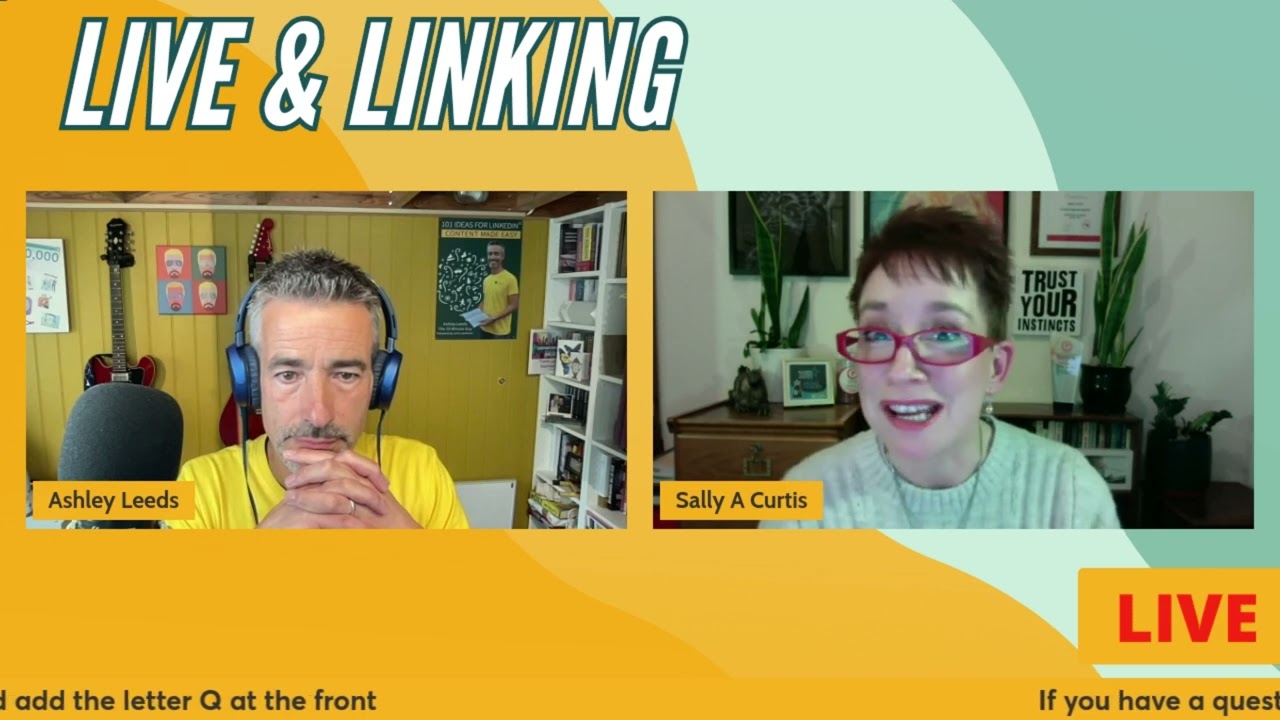
Sally A. Curtis, founder of Monetize Your Content, shows how to turn books, videos, and podcasts into hundreds of social media posts. She extracted 300 content assets from one client's three-hour video and book. Her client Peter Nichols saw a 400% increase in episode views using repurposed clips.
Chapters
Whoa, here we are. We're talking to Australia today. Sally, how are you?
I'm very, very well, thank you. I'm bright-eyed and bushy-tailed very late in the evening.
Oh yeah, how late in the evening are you?
About 9 o'clock PM.
Oh my goodness, well, that's very good. So let's, let's, let's, let's let a little story out. Um, you and I did a recording for your podcast, um, this morning at 6 AM, but didn't you do another recording for somebody else in America or something First thing
I did. So we've done 6 a.m., just after lunch, and now we're doing evening. Just all in one day, just because we can.
Wow! Wow! Isn't that amazing? Sally, for those people that don't know who you are, let us know who you are, what you do, please.
Yes, certainly. So Sally A Curtis. I have a content marketing agency called Monetize Your Content, and we're best known for turning your existing content into bite-size content pieces and building you a library of reusable assets to make consistent. Consistency and posting on social media a breeze.
I think you've said that before, haven't you?
Yeah.
And so if we look at you on LinkedIn, you are the feisty bite-sized content crusader.
I am.
I love it. Thank you.
And I think that was a suggestion of yours too, wasn't it?
Might have been. It might have been. Um, I mean, this is the thing, is it's, it's How are we going to remember you? So yeah, where did the feisty come from, Sally?
Um, way back when I sold my racehorses and show horses and started racing ferrets, and ferrets are in fact feisty, and I would very, very much say my spirit animal.
That's so— hang on. Yeah, I know we're here to talk about content. We're here to talk about content, and here we are now talking about ferrets and racing horses. I'll tell you what, racing horses, absolutely amazing sport, um, but oh my goodness, huge, expensive. Ferrets, that's dead easy. I can see why you transitioned. Was there any other reason?
Yeah, and I'll also say I actually made more money racing ferrets than I did horses.
Oh, that is brilliant. Oh, you're gonna have to come back and just tell us this ferret story. That is, that is crackers. Um, So, content. How did you get into content?
Long story short, been in the professional development and personal development arena for a very, very long time. Was a seminar junkie, and then found myself at the front of the room as a speaker, and then kept getting asked, how are you putting bums on seats to all your events? Because that was something I used to do for other people, and that was how I discovered LinkedIn, which we'll get onto later. But when I was doing that side of things so effortlessly and didn't really know what I was doing, I was utilizing LinkedIn and creating content and posting it in groups and just building conversations and relationships. I thought everybody did that. That was common sense. I started to see with my speaker buddies that were struggling and they were getting really fatigued and frustrated. I said, oh, you've written a book. How many books have you written? They'd go, oh, we've got all of this. Just did my, oh my God, ferret style. Oh, for God's sakes, give me your book. Um, and I actually started turning books into little bite-sized pieces of content. And then I kept getting asked, Sally, I've got somebody that, you know, could you help them do that? Um, and that was how it became a thing. Um, and when one of the, my referral clients, um, had come to me and he had a book and 3 hours worth of video content, He had a marketing team, so we didn't need to do the graphics, but I extracted all of the gold, the extraction process as we call it, and turned it all into the suggested pieces that they could use on social media and e-newsletters and lead magnets and other video opportunities. We turned that into 300 asset opportunities for him, about 32 e-newsletters, and we also turned the 3 hours' worth of video content into 32 videos. It was at that point that the client said to me, Woohoo! We've just created 2 years' worth of content, which is where my tagline came from and why we are now best known for turning books into 2 years' worth of content. There's always a story.
And what a brilliant story. And the thing is, right,
yeah,
I don't know about you, but, but I'll just say hello to Sam. Um, hi Sam, thanks for coming along. If you've got any—
Hello, beautiful lady.
You know, you know Sam, do you? She's staying up late as well, is she? Sam, if you've got any
questions— She's in the UK.
All right, okay, so having her lunch as well. So if you've got any questions, please pop them in the box and we'll have a good old chat with Sally and ask those questions for you. So, um, I teach people how to do LinkedIn, but they always, always, always, always, always say to me, I don't know what to write about. What's your answer to those people, Sally?
Well, twofold. I think what you do really well is, you know, telling that personal story and, you know, the examples of what, uh, what they've done with clients is a great way to create the written type of post. And then where we come in from a different angle is utilizing those stories or those articles or books or the long-form content or even a video that you've created, working with the transcription version of the video, going through and actually highlighting the little one-liners or the little teachable element or the In my case, the Sally Nags or the rants and all those sorts of things. I've always got a pencil and a highlighter, and I work with written sheets of paper because it's easier to see because it jumps off the page at you. If you just go through an article and highlight some of those one-liners, you can turn them very, very easily into a graphic social media post that you can then store for those times that you're in a hurry and you want to race out the door. when you relook at them, there's a level of being in that inspired state. So you can quickly write a social media post, the written bit that goes with it, but you've got a beautiful graphic asset that helps stop the scroll, that sort of attracts people and is highlighted in your beautiful brand colors like your yellow, etc., and things as well. Helps you be recognizable and stand out.
Yeah, absolutely. So I've written a book. All right. And it's, I don't know, I'm not talking about my book. I'm just being hypothetical. I've written a book and it's taken me a year and it's like 60, 70, 80,000 words. Yep. No one's going to want to read that again in a post, are they?
Absolutely not. And you know what I find is the author, because they've spent so much time birthing it and then they've spent so much time marketing, they almost don't want to look at it. When you say, oh, you could repurpose your book, they get this cringe. They go, no, don't make me look at that again because they've grown and evolved. from the process of writing that book, which is probably why people come to us. But my trick for those that don't want to utilize our services and want to do it themselves is you don't actually reread the book. And you wouldn't expect your audience to read the whole book in a social media post. My suggestion would be look for things that jumps off the page for you. There's secrets into what to look for in the index page, and there's secrets to look at on what's in the back, on the back page of the book. So there's a little, you know, a little Sally tip of, you know, making it easier. But don't read the book. Scan the pages and see what jumps off the page and utilize your intuition versus overcomplicating it for yourself.
And that's what we do all the time, isn't it? We overthink it and overcomplicate it. Yeah. What was the— it's better done Then it's better done than done perfect, or not done perfect, or something. There is a saying.
Directionally correct is the easy way I say that. Yeah, but, you know, do something, get something into action, that inspired action, get something done versus waiting for it to be perfect because it never will be.
No. And again, you talk to somebody that's written a book, it probably took them a year to write it, but it probably took them another 8, 10, 15 years to fiddle around and try and get it perfect and stuff like that. You're like, just get that book out.
Yeah, exactly. We, we just overcomplicate it. It's better to be directionally correct and out there and in somebody's hands creating the next ripple effect or the next change than it is waiting for you, you waiting for it to be perfect and no one ever seeing it.
Yeah, and that's the thing, isn't it? Sam's saying, yes, simplify. Um, yeah, we definitely need to simplify things. Um, So what if I haven't written a book? Can you help me?
Yeah, absolutely. Most people have got mountains and mountains of gold sitting on USBs, for example. They've got journaling jottings. They may have written some articles. They've probably been interviewed on a podcast, maybe, or somebody might have interviewed them on a video. They may have Zoom recordings where they're talking to people. They may have live Speaking events, all those sorts of things can be turned into bite-sized social media content.
Right.
Okay.
So, so
everywhere
this, this week, right, I'm doing my last ever LinkedIn Daily Habit workshop. So this is a workshop where I teach people how to do LinkedIn in 15 minutes every single day.
Yep.
And I record every single one because if people are watching and they can't make it and they can go on and watch the recording. In fact, I speak so fast that most people watch it back again later at half speed. So it's a 30-minute session. But the thing is, all of that information there is potential content, isn't there?
Absolutely.
And, you know, I'm just— and it's just sat there doing nothing.
Or it could be part of a membership site, or it could be a portal where people could go in and access it if you set it up like a course and all those sorts of things. This is where we sort of help somebody monetize that's got lots and lots of content. There's so many opportunities that are hidden in a way that you can actually get out to the public. Because most people, when they're prolific content writers like you are, they've got a message to share. They want to really help people. But if people can't find it or can't access it or don't know where it is, you know, they— you're not having the— leaving the legacy or the impact that you want. And there's simple ways that you can do that, obviously popping it up on YouTube and those sorts of things, or creating free access membership sites depending on what you're wanting to monetize and what you're wanting to provide a service. So it just depends on the individual, but there's lots and lots of opportunities for sure.
Guess what I'm thinking now? Do you offer a service where you could look at someone's content and suggest some ideas? Right, I need to have a chat with you then because I've got over 600 videos on YouTube.
Yeah, there you go.
Isn't that crazy?
Yeah,
yeah.
I'll give you a very, very quick example, and that's why I mentioned the USB. I did a 45-minute presentation many, many years ago on the on, you know, how to define your wealth network. And I refound that out the other day, and the recording of it was stunning. And I had a training manual to go with it. Utilized ChatGPT, asked it to turn the training manual into 7 lessons because that's how many video snippets we turned the 45-minute into. Within an hour, that was up as a course, as a free course on my website.
Yeah, genius.
It's so easy now with the tools that we've got available.
I was just, just doing a coaching call with it with a new client this morning, and I was just doing some stuff in ChatGPT. It just blew their mind.
Yeah,
just been— never seen it before. And you're sort of like, well, why aren't you using it? Yeah, um, you know, we don't, we don't use, we don't use it to just replace what we do, but oh my goodness, it's so good Pulling things out and telling us what we can do.
Making it clear in everyday language so people can understand it. I think you and I spoke this morning in relation to I wasn't very good at English either. So me trying to do a lesson plan, I knew what I needed it to do, but I couldn't have done it. Whereas I popped the right prompts into ChatGPT and it was able to create it. Had to fine-tune it a little bit, but it got me 90% of the way. way there, and I didn't have to sweat over it for weeks and weeks and weeks trying to make— get it to make sense.
So it's like, it's like owning a car but walking somewhere, isn't it? You know, why would you, why would you do that? So there's tools out there, absolutely use them. Um, so what would you say the biggest struggles that, that, that people are having creating content?
The ability to be consistent. Is one of the issues about why they're trying to create content. But the biggest one I find, particularly in our space when we're working with sort of the consultants and coaches and that type of thing, or the specialized businesses, is they actually create their— they've got their one book or they've got their one signature program or their one workshop or the one thing that they do really, really, really well, and they're terrified of giving it away. Whereas— and that fear of giving it away is because they haven't unpacked their ideas or they haven't worked out that there's lots of little teeny tiny threads that go into that big idea or that big thing that they deliver. Just understanding that they can create other content around it or support it and talk about how they're serving their clients and just unraveling, and we call it unpacking, unpacking some of those ideas makes content creation and then the fear of giving their good stuff away lessened because they've got that abundance. They've now got that abundance mindset. And as a result of that, they've got abundance content, abundant amounts of content, or at least ideation that they can then create and into serving their clients. So the biggest thing is actually having enough to, to be able to create content. And obviously tools like ChatGPT help you brainstorm of some of those things. And go from there. But
yeah. Have you heard of a guy called Daniel Priestley?
Yes, one of my faves. He's been a mentor over the years with me. Absolutely.
Top, top bloke. His thing is give the book away. Absolutely. Isn't it? You know, don't sell the book, give it away. Yeah. And I think that's the thing. I think what people forget, okay, whatever it is you're doing for people, however you're doing it, there's this thing called Google. Yes. And if you go into Google, all right, it's on the internet, and you just type in, how do I, and it will tell you. And there's loads of loads and loads of things coming up telling you. And then if you scroll down a little bit, there's even videos. So you're not really giving it away, you're just Signposting that you do it as well, aren't you?
Absolutely. And I'm just going to pick up on something you've said there. When you Google something, so in your topic you've Googled it and you've got all those, um, articles or videos, etc., that you've come up, there's a little section down the bottom which we use. And I'm just highlighting this because this is a great place to, to work out, oh, what content could I write? There's a little secret down the bottom of the Google page that says people have also searched for. And you can utilize that as a great way to start creating content around the thing that it is that you do. If you've Googled one, one option, you've got the search terms and you've got all those elements, but also having a look at what else people have searched. And that'll give you some clues as to what type of content to write or what people are searching for.
Love that. Love that. Right. Speaking, speaking, you said, you said all your speaker buddies weren't getting weren't getting work and stuff like that, and you've helped them. Have you got any stories that, that, you know, we can tell? This, this person's now doing this, this, and this because of the content that they're putting out.
Oh, which one? Which one? I think one of my favorite ones, and he may be on, so I'll, I'll, uh, on listening to us, is a gentleman by the name of Peter Nichols, um, and he's in his 80s, and he helps people transition, uh, from retirement to a life of joy, remembering all the things that they to enjoy when they were younger. So, it helps through that process and that identity crisis that they sometimes have and that transitional process that they go through. What Peter's done really, really well is, yes, he has written a number of books and we have actually helped him repurpose a number of those books. But what I've really loved about Peter, because he's so passionate about what it is that he does and he seizes every opportunity and he knows that my Sally nag is all around consistency. Whenever he's been interviewed a lot, because as a speaker he's been doing some workshops, but he's also been asked to come and speak or be on panels and those sorts of things, he's actually reshared those or turned them into little bite-sized pieces because we, you know, we've helped with either those or we've helped him provide the template so he can do those sorts of things. But he's repurposed into little bite-sized pieces and then redirected them back to the full episode. And just as an example of one of ours where he did that, he's had 4 400% more views to his episode on our show than any other guest because of the process of what he was doing with these little bite-size and redirecting it back to the full interview. So that's one of my favorite examples, totally unexpected. It blew his socks off when I shared with him the data because it was come out. I could see it on my YouTube channel, but that's the I suppose the gift of being consistent and using your bite-size content to redirect to your you know your other things that you're selling or your other bigger pieces of content. content like your videos on YouTube or your articles or your blogs, etc., directionalizing your content so you can monetize it and create the impacts that you're wanting to.
Right, love that. I'm going to talk to— I'm going to ask you about monetizing, but first, you've mentioned the C word quite a few times.
Oh, that consistency word.
Yeah, you've been consistent in what you've been saying. How much is consistent Is that like 3 or 4 times a day, or what do you call consistency, please, Sally?
Oh, I love this question because I like to blow this question up. The consistent— I say your consistency rhythm depends on you, the lifestyle that you want, and the way in which you intimately know your client. So some people say you have to be on social media every day of the week. 5 days a week, 3 times a week. But the reality of it is it's all about, you know, what suits you and what suits the audience that you serve. And I say find your consistency rhythm because you only— you can trust your instincts. Where's my sign? That side. Trust your instincts on this. Your audience will give you the feedback so you actually will know. It might take you a month or 2 to work out where it is by being consistent and then sort of tracking it back. But the beauty of it is, as an example, I've got a client here in Australia that only posts once a week on LinkedIn around 2 o'clock or 3 o'clock on a Sunday because that's when his audience is online.
Brilliant. And I'm just thinking, I'm just thinking the consistency piece, right? In Europe at the moment, there's something called the Euros. That's every 4 years. All right. And we've got the Olympics as well. That's every 4 years. But it's still consistent, isn't it?
Except absolutely. There's a rhythm.
Yeah, absolutely. Look, Peter Nichols has come on. Peter, Peter, this is, this is from me. If you want to come on my show, I would love to have a chat with you. I think from, from what Sally's just said, you would be an absolutely awesome guest. I don't pay, all right, but I can offer you a good fun interview. So if you're up for that, um, and, and this is, this is the thing what, um, Sam's saying, consistency is one of the best strategies that she's learned from you. And it is just showing up regularly. It is. Everybody, you know, they see content creators doing 3 or 4, you know, Instagram and TikTok, you know, like 17 videos every day we've got to do. And you're like, that is just, it really doesn't matter. And one of the things I tell everybody on LinkedIn is that less than 5% of people create content.
Yeah.
So if you create one piece of content every single week, like your friend at 3 o'clock on a Sunday afternoon, you are then going to be consistent and people are going to notice you. Um, and look at that, Peter, I love you. Thank you so much. Um, connect on LinkedIn and we will make that work. Uh, thank you.
Beautiful.
Um, so the other thing, monetization, you've said that word a few times as well. So because Some people just like putting content out there. Some people, they, they, they pay to create the content, so therefore they need to see a return on their investment.
Yeah,
come on, let's, let's spill some beans on monetization, please.
And for us, the way in which we monetize is we help with the content that we create. Part of the plan is— strategy and plan is what are you selling into for the quarter? What's your sales goals for the year? E.g., are we selling into a workshop like you do? Have we got a book promotion coming up? What are the big key dates? And then the content that we create, we create a range of different visual campaigns. So we've got, you know, positioning campaign— sorry, visual campaigns called positioning campaigns where we're positioning you as an expert or asking questions for engagement, and there's a variety of other ones in there. So what we're doing to help monetize the content is actually helping that content content, directionalize the audience, because if you're easy to consume, you're easy to buy because you're leading people on a journey to your next— whatever the next thing that it is. So there's that angle from the monetization because we're directionalizing them into your sales process. But the other thing is it's actually about connection, conversations, and then conversions. And content and conversations go hand in hand in having a humanized marketing approach and actually connecting with your fellow humans. And that's where we really help our audience monetize, is understanding that the content has a purpose to help you have the conversations. The service that we provide by doing it for people is we take all of that messy stuff so they can just build the relationships, but we're strategically creating the content that is directionalizing the audience and leading the audience on a journey to whatever it is that you're selling. So that's one way of monetizing it. Then obviously if you've got things within a book, a book chapter I did the other day that was 8 pages, it was a compilation book, and we pulled 32 videos out of those 8— sorry, 32 tiles out of those 8 pages. But I also said to her, hey, you've got a really good checklist here which could be a lead magnet, so it could be a free giveaway to get people on your list. And then I said, here you've got some really good elements that you could turn into a course and you could potentially charge a small amount for that course. So there are different ways that we will look at content because we've got fresh eyes and go, hey, you've got opportunities here to monetize. Again, depending on what the client strategy is and what they're needing it to do. But I see that stuff because I've been over so much, so many people's content, and I love a good personal development You know, ritual. So I'm still that junkie, so I still see all those elements within people's content for sure.
Fantastic. This, um, we've nearly come to the end of the show, um, Sally, um, but here's a little, um, testimonial for you. Sally has a wonderful calm way of working with her clients. I know because she's helped me. So, uh, thank, thank you for sharing that, Sam, because it— we're not very good at saying how good we are, but if someone else is shouting about us, then I think that's absolutely superb. Um, right, how do people work with you? We need to know how to get hold of you, how it— what happens, what the process is.
Yeah, absolutely. Best place obviously to get hold of me is, uh, let me guess,
let me guess, is it LinkedIn?
It is, um, LinkedIn at Sally A. Curtis. Um, I love to have a great conversation with somebody, find out what your, um, wanting to do, what's getting in the way, and then working out what it is and how we can actually work together. I always love to have a great conversation. Another thing that we often like to do is, hey, I would— throw a chapter at me or throw an article at me and I'll show you some elements and walk you through what it is that we actually do in real life around your content. Definitely, the first step for us is to have a great conversation and then we can take it from there for sure.
No, absolutely fantastic. Um, I've got one more question for you, but before then, I'm just gonna let everybody know who my guest is next week, and if anyone's got any questions for Sally before, before we go. But next week, I have got a young man by the name of Jamie O'Neill, and he's putting on a business show here in the Southwest. So we've had it, we've had a business show in the past, but it Yeah, didn't happen for one reason or other this year, so he's a very brave guy. So looking forward to grilling him and finding out all about that. Sally, um, my, my final question to you is, what advice would you give your 16-year-old self?
I love this question. So I'm going to say, and I remember distinctly 16 and 17 in my— me with my parents, so that's 16 or And the apple hasn't fallen far from the tree with my son Rory as well. So you know when you're 16, 17, 18 and you've got that, I know everything, I can't be told, I'm really good at everything, you know, you're just crazy. I'm going to say to all those people, for God's sakes, keep that bold brilliance. But I'm also going to say find some grace within to actually ask for help, but maintain that that bold confidence that you have when you're 16, 17, 18, where you, you're confident, you just boldly know everything. Um, and that, I think carrying that boldness with a little bit of extra grace throughout your life will stand you in good stead.
Yeah, brilliant advice, Sally. You have been an absolute dream. Uh, thank you so much. It feels like I've spent the day with you because it started and we're having lunch with If you want to join me for dinner, I'll wake you up. That's absolutely fine. But Sally, thank you so much for coming on my show today, and thank you to everybody for all those lovely comments. And Peter, you're on. So thank you very much indeed. Cheerio.
Thank you. See you again. Bye.
Bye-bye now.
More from Sally






The Coaches Results Express: How to Build a Thriving Coaching Business That Actually Works


