Sally A Curtis Content Repurposing Turn your old collateral into new profits
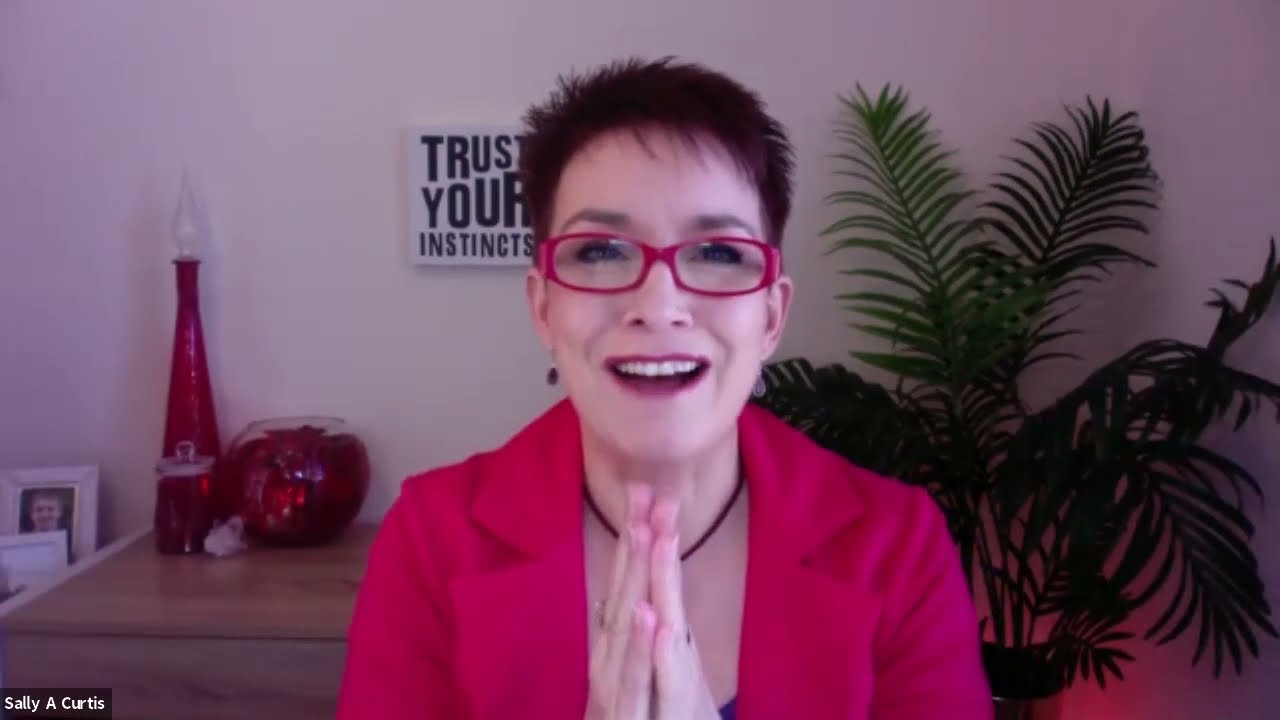
Sally A. Curtis teaches coaches and consultants how to turn old content into new revenue. She walks through a seven-step framework to extract and transform existing assets like books and talks into graphic tiles, ebooks, mini-courses, and bundled products. One client's book became 300 tiles and 32 videos.
Chapters
G'day, it's Sally A. Curtis here from Australia, your marketing problem solver. And today I want to go through with you and share how you can repurpose your old content into new profits. So let me share my screen with you. And if you do see my eyes darting between a couple of different spots, I do actually have a couple of screens here, so you will notice me checking the different screens from time to time as we go through. Super excited to be with you and really excited to be sharing today's topic of how to repurpose your old content and turn it into new profits. Bit of an early warning sign, as I said, a little bit crazy, and I do tend to be quite fast-paced. So do take notes and listen in so you can keep up with me. So the very first things that I want to be going through with you today is walking through each of these 3 fundamental skills that I'll go through with you today. The first one being amplification, the second one being transformation, and the third one being profit creation. So they're the skills that I'm going to walk you through today and help you understand And what that is for yourself so you'll be able to do it as well. Why? Because I believe life is for adventure, for discovery, and having fun with those that you love. And it's about the impacts that we create for others whilst we're on that journey. However, I've seen enough of you, and I've certainly been this myself, I've seen enough of you fatigued, stressed out, and struggling when you've been stuck behind your computer for too long and you're at the point of pulling your hair out because your marketing's not working or you're not getting that return on investment that you actually expected, which certainly means you are not in your happy place. So as a result of that and experiencing that myself, I am really, really passionate about saving you time and getting you out from behind the computer back into doing what is meaningful fulfill for you in your life, whether that's being with your family more, being on stages more, or just generally connecting with people. It is certainly getting you out from being stuck behind the computer. So typically I work with writers who speak. What that means is I work with coaches, consultants, and speakers who utilize their written content through the craft of speaking, as well as creating content, creating programs, and running workshops or trainings, both on a public stage as well as a corporate stage. So what I want you to do right now is imagine, imagine how much gold you are currently sitting on. A goldmine of income and a goldmine of opportunities from content and collateral that you have already created, but at this point you're blind to see. And part of what I do— will do today is help you see more of those opportunities. Over the last few years as a content repurposing specialist, I have helped thousands of writers, coaches, and consultants just like you Who have walked past hundreds of thousands of dollars? Let me say that again: hundreds of thousands of dollars whilst you were looking for the next best thing. So what I'd like you to do right now, and this means it's a bossy moment. What I'd love you to do right now is to grab a pen. A sheet of paper, or if you've been able to download the audit checklist, then do download that worksheet, and we will be going through that in a minute. The other thing that I want you to get is a book. If you've written books yourself, grab one of your books because that will be advantageous into helping you amplify your book. But if you can grab a— any book will be fine, and even grab an article if you've got one. So a couple of things to just grab really, really quickly, and then we can jump into our treasure audit. So I'll give you a couple of ticks to grab that. So let's grab a pen, a sheet of paper, one of your books if you've got them, or any old book will do just to walk through this exercise together to give you the learnings, and an old article because we'll be utilizing that later. Great. What we're going to do now is we're going to go through a treasure order, and what I'd like you to do is either tick your worksheet or write or do ticks on a sheet of paper that you actually have there in front of you. Let me just go back and share the screen. So what we're going to do here is I'm going to rattle off a whole range of content pieces, and what I'd love you to do is put a tick next to any of them that you have, or just collate a series of ticks for these content pieces that you have. So have you written books, or are you writing a book or got a manuscript? Do you write articles, blogs, Do you have PowerPoint presentations? Do you have Zoom recordings, podcast recordings? Are you a prolific journaler? Do you have lots of notes and thoughts written in a journal? Do you have brain dump notes on sheets of paper or, or big sheets of paper? Do you have photos of yourself? Do you have Post-it notes stuck on your computer like I do? Or have you peeled them off and have got them tucked in a drawer because they still mean something to you? Do you have checklists, case studies, training manuals, workbooks, interviews, USBs, both old and new, old files, or half-written content? What I'd love you to do now is just take a bit of a moment and actually have a look at your worksheet or your sheet of paper. How many ticks did you actually write down? How many ticks did you create? Imagine the possibilities, the sheer potential that you have just started to bring into view already today. So today what I want to do is share with you some ideas that can help you to save time, to increase your visibility and profitability as well as credibility, and create new profit opportunities for you with the content that you've just started to acknowledge. Because I believe that opportunities are a daily occurrence and they're often hidden in plain sight. And once you know how to see them and take advantage of them, you can make profit from them through repurposing them. And that's what we'll go through towards the end of today's session, the real profit creation elements. What I'd like to do now is just give you a little bit of my backstory and how and why I discovered repurposing. Now, my mum there at the top of the screen, or my mum and dad there at the top of the screen, my mum was the absolute epitome of a wonderfully resourceful woman. And if you want to take me for a wine one day and talk about— let me chat to you about the dishes and meals she created through repurposing. Repurposing, more than happy to do that. Won't do that on today's session. However, my mum was brilliant, as I said, at being resourceful. As a result of that and being the youngest child, I lived in hand-me-downs being the youngest. In my 30s, I went on to create a children's craft gift box online business, and this business online business also had a large element of recycled materials in it as part of the craft elements. And that image of Rory there in the middle dressed up as Johnny Torch was some of the elements that we repurposed and had around the house. So always been a repurposer, etc. And the photo in the very bottom corner, and there is a very unimpressed Rory in a hand-me-down tank top of his granddad's. So just a little bit of humor and insight into the background of Sally. Now, 7 years ago, one of my mentors challenged me and said to me, Sally, you have enough content for 6 books. And I absolutely thought he was nuts. And the reason I thought he was nuts is because personally I'm a speaker more than I am a writer, meaning that I don't enjoy writing as much as many of you do on the session with us today. So I was not even contemplating writing books. However, he did challenge me, as I said, and I love a good challenge, especially when it's thrown at my feet. So I did listen to the possibilities, and I accepted the connection to one of his ghostwriters. And we took a 45-minute presentation and a training manual, and that presentation was on a DVD, so the content goes back a while, and, and we turned it into the 2 books that you also actually see on screen there as well. At the time, I didn't realize I had actually repurposed. I just thought I'd become published. And this is where I find many of the speakers that I work with and writers that speak don't realize that they've got content within their book or books. So over the following years, I started helping clients see all of the golden nuggets that were in their books that could be used for social media posts and social media graphics. And this is where our Book Amplifier product actually came from. So if you sort of think turning a book into 2 years' worth of content, and we used graphic tiles to do that, and you'll understand a little bit more about what that is as we go along. What came out of me unpacking the steps and the processes that related to helping others was that I needed to duplicate myself and create a team. And when I did this, I realized that I was able to train others to do it, able teaching others to content repurpose and bring that into the practice of their business growth strategies as well. It's become a proven model that is both duplicatable, repeatable, profitable, and you will also be able to do that for yourselves in the same way that I have for others. So today, as I mentioned, we're going to go through the 3 fundamental skills: amplification, transformation, and profit creation. The very first skill is amplify. And the fastest way to amplify your voice, your message, and create the impact that you desire is by helping your audience. So how do you help your audience? You do that by being easy to consume, being consistently there for them and visible on the social media platform that they are on, And by helping them make sense of their world. And this is very, very important in our fast-paced world where people are already overwhelmed with information. It's important that you become their sense maker. And if you're wondering what a sense maker is, I'm really glad you asked. What I'd love you to do is actually just write this down because it's really, really important. A sense maker takes today's chaotic information overload and turns it into simple-to-understand chunks. That are both meaningful and relevant to the individuals, communities, or organizations that they serve. I'll just repeat that and actually read it this time. A sensemaker takes today's chaotic information overload and turns simple-to-understand chunks that are meaningful and relevant to the individuals, communities, or organizations that they serve. So how do you make it simple, meaningful, and easy to consume? You make it bite-sized. And for those that were wondering what graphic tiles meant, There on the screen, you'll see a variety of examples of what a graphic tile looks like. If you think of photo, which is why I use the analogy, a picture paints 1,000 words, and that's something we'll be going over shortly as well. The reason we want it to be simple, meaningful, and easy to consume is because most people consume their content on a mobile device. They want to be able to see it. They want to be able to scan it, and they want to be able to share it with ease. And we want them sharing it as well. Bite-sized makes their life easier in that moment, and they then can consume it and can get closer connected to you. HubSpot defines bite-sized content as straightforward, short-form, easy-to-digest content that is passively consumed and shared on social media. It is visually engaging, which is why we talk about a picture paints a thousand words. And it can be posted consistently through the repurposing process, and it is used to support overarching campaigns. So I'll go into that in a little bit more detail shortly as well. I believe that it is effective, and the objective is to offer immediate enrichment education and entertainment to your community that it prompts sharing and it generates leads for you. And we all want more leads in our business, don't we? So bite-size helps you amplify your larger promotions by making it easy to consume, so it keeps them coming back for more. It's used to reinforce your lessons, those teachable moments that people would experience through training or coaching with you. It also helps to highlight and increase those teachable moments and create the outcomes and build intrigue and curiosity about you. And this in turn amplifies trust curiosity, and engagement. And the key thing that I love the most when you're repurposing your own content is that it amplifies your own unique inner genius. And put simply, it's all about turning your long-form content like your books and articles and turning them into bite-sized digestible pieces of content in a variety of different forms. I just find the graphic tiles are the easiest example and the easiest way to do that, as I've shown here on this slide. So let's do a walkthrough of the amplification process. What I'd love you to do now is just grab your book, the one that we grabbed a little bit earlier, And we'll just do a walkthrough together so you can understand how to amplify yourself through books, through a book. So the very first thing, as per the screen on this slide on the screen, is grab your book and have a look at what the overall theme is. As shown in the slide, my finger's pointing to mine, and mine is networking. So that's the overall theme of the book. So that would be the topic that we'd be looking at from a series of tiles. The next thing I want you to do is turn to your contents page, again just shown on the screen there for simplicity. And what I'd like you to do here is just scan it for some of the chapter titles that are a little bit more interesting than most. And you can see in my example I've actually highlighted a number of them. So what you're going to do then when you find some of those chapters that jump off the page a little bit more than most, a little bit more interesting, you're going to then go into the article— sorry, into the chapter within the book and have a look within that chapter for elements that are potential takeaways, teachable moments. Quotes or key phrases. If you have a look at mine on the screen there, at the top of the page we've got a key quote, then the second chapter has a highlighted statement in it, and then the third chapter both has a fact and a bit of a story and another key takeaway. On the second page underneath the diagram, there is a section that's numbered, which usually indicates that it's tips or steps. So there's a really quick demonstration of how you can grab a book and just look at the index page to find some golden gems that you can turn into Post-it Sorry, into content tiles or short media posts, social media posts. And a short post or a graphic tile is designed to amplify your visibility and build your credibility. Plus, it enables you to create a library of reusable assets that you can then increase your frequency and consistency with ease on social media. So really quickly, here's an example of what we did. Just going through, talking you through that process, we were able to create at least 9 pieces of new content. And here's my examples. So lots of graphic tiles, as you can see there, with simple messages on it, and a slightly larger one up in the top corner there, which I'd call more of a bit of an infographic. So that was the content tiles that we created just from looking at that index page in that book of mine, as I hope you perhaps have been able to identify very quickly in yours as well. Now, here's a few examples from some clients that we've created as well. You've got again some very strong branded. It's all about your personal brand, some key elements to capture through there, and it's all about just amplifying you and your message. So let's have a look now at transformation. Now we're going to move to our second fundamental skill, the transformation element, and this is about transforming your old content with the 7 steps of excellence. HubSpot tell us that content marketing strategy— that phrase content marketing strategy— is the most common search term relating to content marketing today. And in my experience, this is because we lose focus of why we create the content. Which is to drive sales, and we get stuck in creation mode and have no clear strategy, which is why the reason many of us struggle with fatigue around marketing and return on investment issues with marketing, which we've all experienced at one time or another, and many of you may be still experiencing now. Right at this point in time, I don't have time to go through content marketing as a strategy today, other than that to give you this golden takeaway, this golden nugget, and that is content comes in 2 forms. It's both relationship building and it's revenue driving. So relationship building refers to the what we mostly know as that real marketing element. And that has 2 forms within it as well. There's the planned content, which is really what we're talking about today, creating content that's got more of a planned approach to it. It's more evergreen. It's more around what you're always doing. And then there is that in-the-moment or on-the-run content. That's the bit where you see a news article and you decide to write a bit of a post about it, or you have a client that day, so you write a bit of of a post about it. That's those in-the-moment or on-the-run posts. One lot's planned, meaning it's choreographed, and one lot is on the run spur of the moment. Revenue driving is more around business development. So think it's more about strategic directional. It's more choreographed. It's what's designed to approach and lead Sorry, it has a more choreographed approach to it and it leads them to something. So revenue driving is leading them to something, to something that you're selling for the quarter, a workshop that you're running, a webinar, those sorts of things. So content in its purest form is both about strategy and efficiencies to help you win business and gain speed into new markets or greater market share without burning yourself out. So let's have a look at step 1, Eagle Eyes, and this is about focusing through the lens of both strategy and your ideal target market. So who is your ideal target market? Do you know what they want, what they desire, and what is currently challenging them? What I'd love you to do now is just write down what comes to mind. Take a few minutes to write down what comes to mind about your ideal target market. Who are they? What are their problems and challenges that you help them with? And what desires are they looking for? What's the transformation that they're looking for? So I'll just give you a couple of minutes to do that. Great. Now what I'd like you to do is ask yourself a couple of key questions, and the first one is, what am I selling this quarter? And what events do I have coming up? Those 2 questions help you to focus on revenue-driving content. What am I selling this quarter? And what events do I have coming up? Again, revenue-generating content. So let's have a look at step 2, which is the extraction process. Now, we did demonstrate this a little bit when we went through your book version a little bit earlier, and I want to just go through a quick demonstration now of how you can actually do this with an article and a highlighter pen. But your key takeaway moment in this section is it's It's all about scanning intuitively. It's looking for what jumps off the page. Don't overcomplicate things. All right, so let's have a look at this example together. This was just a 3-page article. So 3 pages, as you can see there on the screen as well. And basically same process. The theme of the article was motivating team members. So the theme, just like the book, was motivating team members. The green highlighted section is a numbered dot point section, and this usually indicates that it's something of importance to the reader. The next section that was highlighted was a key question that was posed within the article. The highlighted section in yellow were tips that were provided within the article, and then the pink highlighted section were foundational elements that were mentioned within the article or the content of the article, and the blue element were coachable principles that were suggested that needed to be adopted as it related to motivating your team members. So as you can see from the highlighted areas, there was lots of content chunks, bite-sized elements within those content tiles— sorry, within that article, which could be created into content tiles as you see there on the screen. See, I get super excited about content and creating them into tiles, as you can tell. So there is another demonstration of the opportunities and the gold that sits within the content that you have already created. So now let's have a look at step 3, evaluate. And the key element that you need to understand here is that it's evaluate with fresh eyes. Fresh eyes based on the needs of your ideal target market, because it's not about you. It's about what they want. It's about their needs in the moment right now for them. It's about where they are at, not potentially where we are at. So let me explain a little bit further. We are— we often grow or have grown faster than our clients. If we're in the coaching, consulting, or training game, we are often further down a path or a journey that our clients are on too, but we're just further along than they are. So this is why it's important to evaluate the content based on their needs. So my suggestion here is to think in terms of educational— what's going to be educational to them, what's going to connect with them, what are they going to find aspirational, what tips, tools, and teachable moments will be meaningful relevant to them right now? As well as what stories could you share in simple short posts on social media? So that's evaluating it with fresh eyes with your clients' needs in mind. The fourth step is evolution, and this phrase here will become very important in the understanding of content creation. And profitability, profitable opportunities. The money is in the boring, and I know that sounds a little bit confusing and a bit weird, and that's okay. So let me explain it a little bit further because it ties into what I said with the last slide. The money is in the boring. What does this mean? It means, as I said before, we have grown and we have evolved. We've got lots of newer insights, new information, and we naturally want to share that new content. However, there are opportunities and profit that lies in that old, older content that we've become bored by. It's not that the content's boring. It's that we now find it boring because we're further along our journey. And as I said, this is because our clients are often further behind us in that journey. Sometimes they're 2, 3, 5, or 10 years further behind us because we've evolved or they're just starting their journey. So that content that was boring to us is actually still incredibly new, incredibly innovative and insightful for them, and it's what they are in need— they are needing right now to progress their journey further. And here's a tip for you from a profitability point of view: if you don't want to deliver it anymore, package it up and collaborate with somebody that does want to deliver it And this is how that older, boring to us content can actually open up new markets for you, or it can bring in new audiences for you through another person. So now let's have a look at step five: educate. And for those that know me well will know that I stand at the front of the room going, "Educate, educate." educate, and it's one of my bossy soapbox moments. And the reason for that is I have an influence diagnostic on my website which is designed to help people identify and determine what is missing in their business and their marketing growth strategies. And out of the 10 elements that the diagnostic looks at, The number one element that is most often missed by speakers, coaches, and consultants, believe it or not, is the educational element. They forget to educate their clients. And again, educate in bite-sized, easy-to-digest chunks. The reason education becomes so important is because our goal is about giving our clients forward movement without us. Giving our clients forward movement without us. What that means is they don't have to buy from us straight away, but they can get an insight from us that makes such an impact in their life that they have forward movement without us through the content that we're sharing, the content that we're repurposing to help them have forward movement. Now, the reason that we do this is if you help them have forward movement, you'll actually be rewarded with their loyalty, their referrals, and their business, often in that order. So let me repeat that: you will be rewarded with their loyalty, their referrals, and then their business, often in that order. So let me share with you a couple of examples of educational tiles. So if you have a look there on the screen, there's some of Nancy that's just recently launched a newer version of her book, and she's got some key takeaway messages on there. Be the one. What the one philosophy stands for, and the quick one there is that never never gossip. And then the purple ones are obviously mine. It's from my social selling series, and it's dos and don'ts. So let's now have a look at the next step, which is step six, and we're going to have a look. At a motive. Now, as you've heard me say a couple of times already, a picture paints a thousand words. Pictures connect to stories, stories connect to emotions, and images bring them closer to connect with us. It helps build a connection with them and to them that creates a connection of, oh my God, I She or he, they get me. Bam! You have trust. It helps them imagine their possibilities. It helps them see their aspiration. Images help them envision their transformation, and most importantly, it helps them identify themselves as a potential client. Let me repeat that. It helps them imagine the possibilities, see their aspirations, envision their transformation, and most importantly, it helps them identify themselves as a potential client. Let me demonstrate. Who do you think Alexandra's clients are? One simple message: assess, don't guess. 3 very different target markets and 3 very different image groups. What the image is doing when it's a motive is it positions the viewer. When it's a motive, it positions the viewer. Yes, I am an athlete. Yes, I am a CEO or executive. Or yes, I am a caregiver. That is the power of having the right image on your graphic tile. That is the power of a visual graphic tile to get your message out there and gain cut-through in a crowded market. So now let's have a look at step 7, engage. All social media graphic posts and short copy post on posts on social media are designed to lead to a destination. That's the revenue-driving strategy, the business development elements. It's about having an experience with you and more of you. So remember that content is both relationship building and revenue driving, and it's designed to help them consume and connect with more of you and more of your content. So engaging or engage is about adding your call to actions, your invitations to do something, your instructions of what to act and what to act on next, your directions to do something next, to lead them with simple instructions. Engage is all about your call to actions. So you lead them on a journey and you get to converse with them more. And conversing and engaging is also about, um, if they comment on your content, converse with them, respond, say thank you, start a conversation that you can take offline so you can build a real relationship with them So they can become a client of yours as well. So that was the 7 steps of transformation. What I'd like to do now is take you through the 3rd fundamental skill, which is profit creation. Just juggle the screen. And if you'd like a copy of my content repurposing checklist, then do jump on that URL that's on the screen, get.at/checklist. Now, the reason I've done that is that's me demonstrating that I can give you forward movement without me. So now what we're going to do is we're going to move on to your books and articles, more of the larger sort of collateral and content items that you have that you identified when you had the ticks at the beginning of our session together. Things like your training materials, your videos, your podcasts, etc. So did you know, as an example, a 45-minute talk can be turned into an ebook, A half-day training, 4 articles, and 15+ social media posts or tiles. So let's now focus on the 45-minute talk being turned into a half-day training. What price could you sell that for? What I'd like you to do is actually write that figure down on your worksheet or on a sheet of paper that you've got as alongside you. What could you sell a half-day training for? Would it be $100, $500, $1,000, or $5,000? Because what we're starting to do now is start to look at all of the other potential profit opportunities that you've got within your content and your old collateral so we can turn it into new profits. In my example, I had an ebook, we'd created articles, and I'd created some tiles. So we were able to do a quick short video to go with these elements, and we were able to turn them into a mini program by just adding a few video snippets of walking people through those steps. What we did in essence was productized. We actually created productization of our content and made it as a simple product that can be added to a shop or added to a website, and the resources can be simply stored in a Google Drive. And I'll talk a little bit more about that in a minute. So a really quick example of how a talk can be created into a product and therefore creating recurring income for you through productization. So now let's have a look at a crazy client outcome that we had late last year. Now this was a client who had just launched his new book and he decided that he wanted to be interviewed around that book, around the 6 brand stories. And those 6 videos or interviews that were videoed turned into 3 hours worth of Zoom recordings, for example. Now, those 3 Zoom recordings we were able to turn into 32 short-form videos, and from those videos and the book, we were able to create 300 tiles and short social media post That's why I've got the numbers on the screen, because it's pretty impressive. Now, what was most impressive to me was when the client said to me, done. Excellent, Sally. I've just created 2 years worth of content. And that was when I truly understood the power that we all have as content repurposes. And that power is in your hands too. So now let's have a look at old USBs. What gold could you dust off a USB that's been sitting in a drawer forever, just like me? Especially now that technology has made it easier, um, thing easier for us digitally to actually repurpose things. Here's an example of mine. I did a 90-minute presentation to a small group, and this presentation was video recorded as a live event. Directly after that live event, we actually did transcribe the video, which was really expensive back then because it was about 8 years ago, and it's super inexpensive now. That transcript enabled me to create a 2-day masterclass because I was able to step out the processes that I discussed within that 90-minute presentation. What we then did was combined the original videos and the workbook from the masterclass, and we turned it into a mini online program. We kept it really simple. We packaged it up. We added it to a website. We put all of the assets into a Google Drive for people to access and download once they'd made payment through a payment gateway. Folks, it's all about imperfect action. It's getting this stuff together and putting it out there. And my tip to you is when you sell bucketloads of it, then you can perhaps upgrade to something fancy if you don't already have something fancy. And that's simply my mum coming back in with her resourcefulness message again. So keep it simple for yourself. So what I want to talk about now is the steps to creating profit: revamping, transforming, building, and bundling. So revamping— this is about discovering the possible content pieces, and I've certainly tickled your fancy enough today about all the possibilities and all the gold that you've got sitting around you already. And it's now about revamping and looking for those opportunities. And seeing what can be turned into something new. It's also about trialing your ideas. It's practicing the repurposing elements to increase your ability to see, to see all of those new opportunities and act on them. Because by acting on them, you are going to develop these fundamental skills that we've been talking about into daily habits and leverageable skills for yourselves. The second step is transforming, and we've gone through that. That was, in a nutshell, was the 7 steps that we went through. The key being it's about creating it to be visually appealing, visually engaging, and relevant to your ideal target market. Now building— this is when you've repurposed your content a few times, you actually start to build a library of assets, a progressive library that increases. And by building a library, you're going to create more opportunities for yourself and save yourself a lot of time and create new profitable opportunities. Bundling. When you've got all of those things built, you can actually start to bundle into new offerings. You can create lead magnets, you can add things to your programs to make them more attractive or more relevant to the audience, or you can have them as pre-training elements that people can consume before they start working with you. The other great thing is you can package these content elements up into new offerings and create cross-promotional opportunities with your collaborative partners. So here's another quick example of possibilities, and you just never know what's hiding at the bottom of a drawer. This is one of my examples that I only just discovered recently, so it's still in, in progress, but I found a really tatty sheet Word docs, 2 sheets of paper with some significantly mapped out steps of a process of how to go about unpacking your inner genius. So what we did was I stepped those steps out and created a keynote presentation around the steps and then we video recorded the instructions around those little snippets. And we will be able to create a mini course. Again, another way to productize content that you've already created. So what I'd like you to do now is actually have a review of everything that we've gone through, and I know it was quick. I want you to review the treasure that you can now see the potential of. A lot easier. And on your sheet of paper or on the back of your worksheet, I'd like you to write down what you have seen that was hidden in plain sight that you can now amplify and transform into new profits for yourself. So I'll just give you a few moments to do that. What I'd like you to also write down is what have you seen for yourself in today's teachings? What opportunities have you got? What can you turn into programs? What can you turn into content tiles? And if your mind is racing, I'm super excited for you. That's fantastic. And if it's racing with the possibilities of, oh my God, that's great, and at the same time you're crying, oh my God, how do I do it? Then the answer is we can actually do it together for those of you that would like to, because on the 30th of August I'm actually going to launch the first Content Repurposing Academy. So we'll have an opportunity to go through and work on it all together. You'll be able to bring your VA or your business manager with you at no charge because obviously it's all about teamwork. You'll also get lifetime access to the content and all of the material, and you'll be able to drop in and drop out. In other words, come and go as you please. Now we'll be both doing live sessions with me. I'll be there with you walking you through the process, as well as there'll be online and self-consumption videos, etc., there as well. One of the things that I'm super excited about is being able to do hot seats where you'll send me some content and we'll unpack the opportunities together as a demonstration for the entire group. We'll only be working with small groups, and through that small group you'll get the opportunity to mastermind with others about what they're doing with content, what's working for them, and what's working for them to scale their business, to increase their profits. And we'll be able to do this in real time. So I'm super excited. If you would like to join me on the Content Repurposing Academy, I'd love to invite you. You can see the URL to join us, so if you click on that URL, you'll be able to jump on and jump into the Content Academy with me. There is a discount code which you can also see there on the screen, which is COEVIP. So I look forward to helping you in any way that I can. If you would like to connect with me through my social media platforms, you're more than welcome. You'll find me that I'm as equally chatty as I am offline as I am online, and I would like to say thank you very, very much, and I look forward to hearing about all of the profit that you've created for yourself. Thank you. Have a great day. Bye.
More from Sally






The Coaches Results Express: How to Build a Thriving Coaching Business That Actually Works


