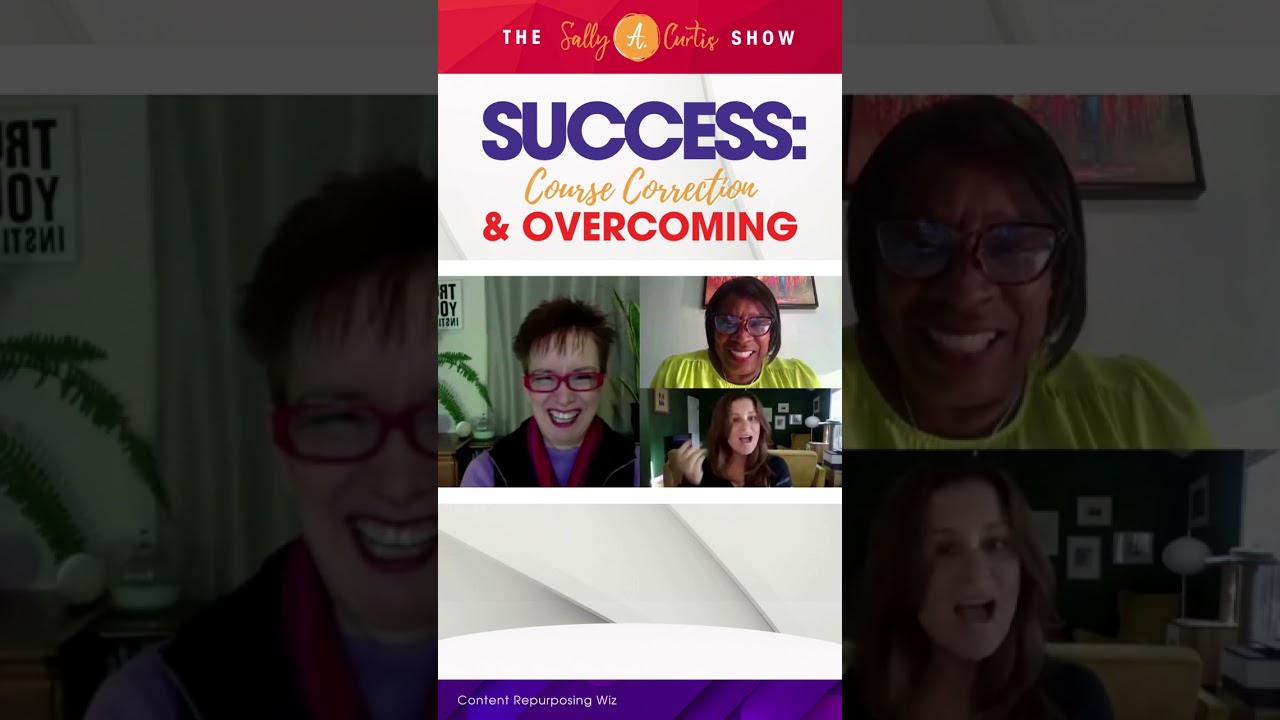
Three speakers discuss how course corrections are inevitable, but your response to them is a choice. They share an improv rule about saying yes instead of no, and suggest that deliberately choosing your attitude in small moments—like smiling or reframing a slow driver—shapes how you handle change.
Chapters
We all know that our websites and our LinkedIn and all those things change constantly because we change constantly. And I think that in itself is the celebration, is to acknowledge and accept that change and course corrections is constant. So I'd love, you know, as we get towards the end, your sort of final words on that as well, please.
Yeah, it's, it's so good. And I just want to note, improv class, so proud of you, because also what you cannot say The answer in an improv class is no. You have to say yes. It's scary. It can be really scary. But anyway, yes, we are constantly course correcting. Another term for that is growth. Get up in the morning. I had an acting coach actually say to me one time, I was just very concerned. I felt very stagnated in what I was doing. And she said, Mary, get up tomorrow morning. Just wake up and try not to grow. Try not to grow in some way. You can't do it. It's impossible. You will breathe. You will get out of bed. You will make coffee. So I think, again, we're going— I hate to sound like this merry-go-round, but we're going back to self-awareness and intentionality with that awareness and being really honest with ourselves and knowing that we have the value to move forward and take that next course correction.
Yeah. Brilliant.
Being intentional is key. Um, and then the word growth. You are correct about growth, but being intentional, we have to stay intentional because it's inevitable. Change is inevitable. And either we're going to get stuck in change. That's right. Either we're going to get stuck in it or we're going to, you know, go with the flow. You know, if it's flowing instead of staying stuck, you know, let's just go and go with it. You know, who moved my cheese? We can go back to as far as that. Uh, which is because it's that constant and we have no control over change. There's nothing that we can control over change, although I know all of us are A-type people, so we have a little—
I was just gonna— I was just feeling the disagreement there. I could—
well, I mean, the only— I think that's a great point because the only constant is change. But what we do have control over to a certain degree Is our choices.
Yes,
I can choose to react or respond.
That's right.
The two are very, very different, right? So the language is important, but that choice in what I do right now in this moment— do I experience road rage, or do I maybe consider that maybe the person in front of me is trying to drive really slowly because they've had too much to drink? Or is there a— is somebody giving a baby— they're having a baby in the seat next to them? Like, I don't know what's going on. So that choice that I make in those moments is really the only thing that I can kind of— that's what I've got permissive will in.
That's right. And be intentional. Be intentional about, um, maybe I'm not happy today, but I don't want to bring everyone down into my spirit. So I'm going to be intentional about smiling. If I don't do anything else today, I'm going to smile, especially when I'm around other people. You know, if you just smile somehow, You'll have a hard time not making things a little better, even if it's just in that moment. We have to stay intentional when we're talking about change. We have to be intentional about our attitudes, about the way we're moving, the way that we're flowing, the way that we're having contact with other people, building relationships. That comes with being intentional.