From Rome to Fundraise Up: Salvatore Salpietro's journey from tech to impact

Podcast interview (RKD Group Thinkers) featuring Salvatore Salpietro discussing his career path from IT work in Rome through roles in London and New York, co‑founding/working at startups, moving into nonprofit digital work (Child Mind Institute), and joining Fundraise Up where he served as Chief Community Officer. Themes include the intersection of technology and human-centered work, passion for nonprofit impact, product-led fundraising improvements, and a brief planned sabbatical.
Chapters
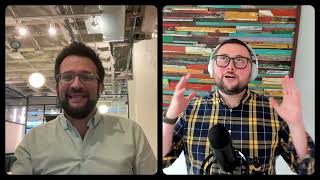
Welcome to the RKD Group Thinkers Podcast. I'm your host, Justin McCord. With me, Semi clean shaven, by the way.
We haven't.
I haven't seen your face in a moment.
I hadn't seen it in probably three years, I think. Yeah, I just got bored and shaved it. That's how story. It's exciting.
You got bored and so you changed your face.
Yeah.
Ronnie Richard. For those that are not watching this in video, good old Ronnie. Clean shaven Richard. Actually you're not clean shaven anymore, but little scruff, you know.
Yeah.
Ronnie didn't know what to expect going into this conversation. Highly anticipated it and we deliver Goosebumps as a part of it. How about that?
You gotta like that. Yeah. So our guest today, Sal, Sal Pietro, he's chief community officer at Fundraise up he. We walked through his career path and it really was fascinating. I always love hearing, like I said, people's origin stories and, and when we talk to people and we bring up these memories. Yeah, it's always, it's always fun to see them kind of reliving their career path. But the, the thing that, that I was drawn to was there's almost this certain. And we talked about it in the episode, like a restlessness in his career and it's like, it's like the intersection of that and his passion for what he's doing. You could see how it leads from the one thing to the next. And, and, and that's like, really excited to see where he continues to go in his career.
Every time that I have time with Sal in person, he, he brings this light and this joy to the room that he's in. And I referred to it in the, the episode of Zeal and, and it's just the way that he shows up. And so to be able to learn somewhat of how that came about, how that has manifested in multiple circumstances was a real pleasure. And you know, just the fact that his restlessness has not prompted him to shave his beard is a good thing.
So.
So without any further removal of facial hair, here is Sal. Sal Pietro from Fundraise up on the RKD Group Thinkers podcast. Sal.
Dustin.
Oh, man. Okay, I'm really torn on where to start, so I'm gonna give you the choice. In my left hand, I have option number one, and in my right hand I have option number two. So you get to pick.
Okay, I'm going to go with. Right.
All right.
Right hand. You did it in Rome. Like you, you, you had a part of your career working in Rome.
In it, wild throwback. And I'm heading to see that place of employment in about eight days, which is a wild thing that you mentioned that. I was an it. I was an instructional IT technician at the American University of Rome. I was there for about four or five years. From there I went to work at the University of California, managing the IT for their Rome, their Italy campuses. And yeah, that was kind of like my first toe dip into the dynamics of nonprofit institutions.
Sure, let's go that. Sure. You're in the higher ed space, right? Yeah. What took you to Rome? Like how did you there. Yeah, like.
Yeah.
I. Wow. Let's go. Let's go in. Let's do it. I was raised a Jehovah's Witness, so I, in my late teens, I left that and all of my friends were in their late teens getting married. And they were, you know, in very much that. That mindset of, you know, if I got to get married before I do the thing. And, and that was what everybody was doing. And I was like, that's not my life path. And my only way to really get away from that and change that trajectory was to take myself out of that completely. And I did that through a study abroad that led to full time employment at the American University of Rome. So that was the catalyst. It was like, gotta get out.
Yeah.
And what's a good path that makes sense and doesn't, doesn't kind of, you know, have much blowback? And it was, let me study abroad in Italy. And then I went and saw that I had a pathway for Italian citizenship, got my passport, did an interview at like 3 in the morning with the American University of Rome. They called me a couple days later, said, can you be here at the end of the month? And I went there, told my parents I was going to go for six months, ended up staying for almost six years. Wow.
Were you a techie as a kid?
Yeah, I mean I started on Commodore 64s, like the brown ones, right. Because there's the Commodore 64, then there's like the white ones that kind of look nicer, right?
Yes.
And then you had the floppy drive that had. That were like belt driven. Like there were more belts and mechanics in those floppy drives than like a car today. So yes, I was a techie. I was doing BBS's bulletin board systems for those that are aware, midnight pseudo hacking as a 15 year old and all that stuff. So yes, techie took them apart, built them all that stuff.
You are legitimately the most charismatic techie. I think that I'VE ever encountered. Learning your IT background really stumped me. And then to hear you even like to get so specific on the machines that you worked on and the tinkering, that's. Oh, yeah, yeah.
It's wild. It was wild.
Yeah.
And I love all that stuff, all the tech side of it. I was a network admin. I did all the IT stuff. I had my Microsoft certifications in system administration. All that stuff had. They're outdated by now. But when I got to Rome, I really realized I loved humans and psychology and anthropology, and that led me to stop pursuing my undergrad in computer sciences. So I had my associate's in computer science. And then I said, let me shift this to sociology and start seeing how I can marry those two. So it kind of weirdly led to this place that I'm at now and this point in my career that kind of does marry those two things quite.
Beautifully, you know, Listen in. In my view of our studio right now, you're in the middle of the Oreo, right. And so what. What you don't realize is.
Yes. Yeah.
Oh. Oh.
Yep. What you don't realize is Ronnie is firmly in the STEM camp. Like, Ronnie is camp stem and Justin is the arts kid. And so, like, you're. You're in a good spot in between us. Right? So.
Right. And that's. That's been a bit of my calling card through was like, I can talk to both sides of this, and I can kind of bridge some of that sometimes.
So you're in Italy. You're six years there working in it. You had this moment of, I want to move more into the human side. How did that take shape and how did that. Your career path change from there? Where did you take it?
Great question. I took it to London, where I then lived for a couple years, and my progression from just core tech into some human components was project management. So I started looking into how do I get project management certifications, how do I build team communication, motivation, all that stuff. And then I worked at a company in London for a couple of years where I was a. Essentially a digital project manager. And that was a fun ride. They were acquired. My boss, who was like a boots on the ground kind of guy, super salt of the earth kind of guy, one day I went to work and he was gone. And it was sort of a hostile takeover, and he was just ousted. And he said, let's meet for lunch. And he said, I want to start a business one day. I'll call you. And he called me a year later, and I Had. By this time I had moved back to New York and I was working at a tech startup called Web Collage, which has now been acquired. It was acquired by answers.com it was acquired by Syndigo, went through a few iterations and that was E commerce optimization technology. So we were building dashboards and software to improve E commerce. So that's where I started getting this E commerce thread in my career where I started thinking like transactions, how do I get people to buy, how do you smooth that experience, what makes them do it and all of that. So I did that for a couple years while I was waiting for this phone call for my old boss to say, hey, I want to start a company with you because you were doing something that I didn't encounter much in my career and I want to do something with you. And then we did and we started a company called Icebox which was fun. That was running, I think it's still running. And I was a co founder of that. We did big projects for Procter and Gamble, Nike, Bill and Melinda Gates foundation. But ultimately the direction he wanted to take that went somewhere different than where my life needed to go.
You've used the word calling a couple times. So let's get to the calling that took you from Icebox, you know, through a couple of other tech oriented and then non profit oriented things. And so let's Fast forward to 2019 and, and the, and the calling that took you to fundraise up first in a consulting format but then, you know, longer term in that relationship grew. Just unpack that, that version of a calling. Yeah, and that's part of your journey.
So I can't talk about fundraise up without talking about what's just prior to fundraise up, which was my role as director of digital at the Child Mind Institute, which was my first full on nonprofit exposure. I at that time had a daughter on the way and just prior to childmind student I said I need to, I want to do something that gives back, that makes a difference. And Icebox was cool but you know, we were selling shampoo and sneakers and I wasn't getting fulfillment from that and I wanted to do something that would be more meaningful. You know, I think we're all dads here and you know, when you start, when you become a father, some of your perspectives of life and your objectives change. And I wanted to do something more meaningful. So I got a phone call from Dwayne Flintrum and he said, hey, I started a CMO here at Childline Institute. I'd like you to come run digital. I said, well, I don't know nothing about nonprofit. He said, figure it out, because that's kind of why I want you here, because you don't know nonprofit. And I want you to take a different perspective. So I jumped in, had a great time. I had a, I did have a very stark, I'm going to say a guy's holy shit moment. When I got there and saw the tech and what they were working with. And I just kind of like, wait, wait a second, this can't be right. Like, where's the actual one? Because I just came from, I just came from a company that, you know, is in the business of helping other companies take money more easily, right? What's happening here? And there wasn't something better. Not remarkably, that website was fantastic. We optimized. We're getting a million unique visitors a month. 1.3, 1.5. It was a strong content destination for parents that have children with mental health issues and challenges. And that was very fulfilling.
So.
Around that time, I get an email from fundraise mail.net and it's the CO founders basically spamming every nonprofit in the New York area saying, please, can we talk to you and can you try this? The gist of the email was something like, we have an idea that we think will work and we just need someone to try it. We're a couple guys in Brooklyn. We don't know anything about the nonprofit space, but we know a lot about being donors and it's really hard to be a donor. And for me it was a sliding doors moment. It's like, do you delete the spam? The spam or do you hit reply and say, throw me a login? And I hit reply, I said, throw me a login. And literally, guys, I get goosebumps. Literally. As I, as I just said that, like it's a life changing moment, right? It maybe even not just my life, many lives. Or if it didn't, you know, if it wasn't the impetus for many things, it was certainly an accelerant for what happened after that. So I got the login. I again remember I'm from the for profit space at this point, right? And I'm not asking for permission, I'm not going to the board. I'm not running a show of hands, should we change this? My job was improve digital, get donation revenue up. And I said, I'm just deleting this other thing we have and putting this in and we 5x star donation revenue 1 day to the next. Like Literally one day, like, because we had a lot of visitors, remember? A lot of clicks, a lot of articles, you know, selective mutism, Anxiety in Children, how to handle divorce. People are coming there to read. And I'm like, this donate button, I can click it while I'm reading the article and give while I'm reading the article without going somewhere else. That's huge. It's not disruptive of the donor experience. And that just led to an explosion of revenue for the organization. And that's kind of where things kind of took off from there. I just was rapid firing product feedback every day to the guys, like, you need to do this. Designations are a thing you don't know about xyz. And they were literally just making changes as I was asking for them, which was nice. And it's not that way anymore, but it was nice while it lasted.
So then how does that translate to, you're at Childmind Institute, you're working with them. How did the conversation go? Did they ask, why don't you come join us? Or did you think, why don't I jump over there and help even more? How did it go from there?
Yeah. So I googled fundraise up, and the first thing that popped up was a We Funder campaign. If you're familiar with We Funder, you go up there to raise a few bucks for a startup from family and friends, and it was at some ridiculous valuation, and it was super tiny, and they were raising like, you know, 50. 50 grand or something from. From friends and. And I threw a couple pennies in there. I didn't have much. I had a new kid and a nonprofit job. But I was like, I think this is going to change the game. And when they saw that go through, they're like, oh, crap. A customer and a nonprofit have invested in us. Like, that's weird. Maybe we should talk to this guy a little more. And then, as the story will have it, like, you know, they invited me to dinner. I rolled up on a Vespa, and they were like, that's the guy. And.
Such a Roman thing to do.
Bringing that Italian side with the Vespa.
Keeping it with me, man. Keeping it with me the whole time. Yeah, but it was.
It was.
It was actually about a year from that point because they said, one day, we'd love to start a company and we'd love to have you join us. Kind of what I already had done about seven years prior with my other boss. Right? And they said, we'll give you a call one day. And it didn't happen right away. And then I remember my cousin who lived in London, he wanted me to be a CTO for his company that he had there. And I went over to London, I had a wife and a two, three year old daughter and I went over to London and we talked and I came back from that trip and I said, I'll do it. I'll be the CTO in London for your company. Got on the plane, sent an email to Peter and Yuri over at Fundraise up, the co founders. And I said, love you guys, you're gonna do great. I'm here if you needed me as a sounding board. But I took a job offer and I'll be going to London. And the response came back within minutes. And that while again, I'm at 30,000ft and they say, can you meet for dinner when you land? So I literally land guys, get my wife and daughter home, check on my Vespa, the tires flat because I was gone for a week or two, stop and get the flat fixed. And then I get to the dinner spot. And they basically said, what do we have to do to make. To make you not do. To have you not take that and start this with us? And that's it. And then that was it. And I think it was like a couple months later where they said, well, we have an employee, I think we need an office. And we got a third floor walk up in Brooklyn on top of an old firehouse, working next to a kitchen sink and a toilet. And it was just, it was like the classic startup kind of, kind of story that you hear, you know. Yeah, it's pretty crazy. It gets us to there. That gets us to there.
Yeah, right. Sal, you. We've known each other for a couple years and, and your zeal, your passion, just, it just, it's so natural and you know, and that's what, that's one of the reasons why, you know, when I refer to thinking about Sal as the IT guy, it doesn't immediately click. But like in your role, and not just in your role, just the person that you are, your passion is, feels very central to how you lead and how you champion. And I'm curious if you can kind of like just unpack that for us a little bit.
Like, what role.
What role do you think? Not compassion, but what role do you think passion plays for today's modern non profit leader in this very complex ecosystem of technology and humanity? And with all the things that are coming at folks like where does that fit into the mix?
The first thing I thought about when you said that about passion, I realized that I always think and have present not even in the background, almost in the foreground, the mission behind the metrics and the numbers and when and if you're able to keep that foremost and at center, the passion is inevitable. Right. When I look at stats like 25% of nonprofits offer Apple Pay for giving and 85% of e commerce do I. The passion comes. Look, the passion is masked frustration and anger sometimes, right? Because I know that it's way easier to buy pizza or sneakers than it is to give. And that fills me with some sort of rage frustration that I have to work to channel into passion and championing and trying to build confidence in the space to meet and close that gap. Does that make sense?
Yeah.
Yeah. Passion for change.
Yeah. And I, you know, I was on a call this morning with an environmental organization and I'm telling them, like, you guys are planting trees and protecting nature. Like, I got a kid, we got kids, many of us. Like, I want her to see the polar bears, the forest, the coral reef. Like, get it together. Let's get that, let's close that. Let's get Apple Pay at 85% and meet the rest of the world. Why are we so why is it different? Why is there is carved out niche? So that's where the passion comes from. I think it's important is always to keep that in the front.
Right.
If we increase the metric. I never see on dashboards when, you know, nonprofits are working a column that says impact, you know, how many trees, how many kids are we getting mental health treatment for? How many polar bears are we going to sit? Like, where's that column? And I think if that were there, we'd have a lot easier of a time building passion.
Speaking of passion and looking at your career path a little bit like there's, there's a certain almost restlessness I want to say, like your passion is driving you to the next thing. It seems like, so what right now? What's the next thing? What are you working on? What are you thinking about?
Look, I think right before we started the call, I told you guys I'm taking a bit of a five week break. It's been a sprint and a marathon. That's hard to maintain. I feel like the last six and a half years fundraise up has instigated a lot of change in advancement. That's satisfying. It doesn't have to be. You're using fundraise up me at a broader scale. I'm like, the space needs to be aware and let's all step up. So that five week break really Ronnie, is for me to figure out where to take it from here and, and see where that goes. So I don't know. I don't know. But I do know when I see it it'll be very evident and kind of just like, you know me, that decision to move to Rome or that decision to start a company or move into the non profit space, that those were very clearly the steps that I wanted to take. And I don't have that clarity at the moment, but I know that what I'm doing, I still enjoy it.
I was reading a book last night and books about resiliency and some of the psychology behind resiliency. And one of the things that it noted was that one of the perils of anxieties is that the realization that you're anxious can be a fuel for being anxious. So like think about it almost in a meta sense, like the, the idea recognizing that you're anxious can sometimes be an accelerant to being anxious.
Right, right.
And I think the same thing is probably too true around restlessness. Like the recognition that you're, you're sensing. Restlessness can, can sometimes be an accelerant. And so I'm, I love that you're, you're taking this time and that you have this chance to, to exhale.
Yeah.
And, and I know that the sector is going to be better on the other side of this five weeks with whatever.
I, I hope so. I mean, and to reference a book that you gave me, the soundtracks book by John Acuff. You know, I, I think the, the, one of the key takeaways is the, the antidote to anxiety is action. So you gotta, you gotta do something. Right? And for me that is this break that is this like the action, the action is almost inaction. Right. So action is like I'm going to Italy. I'm going to sit in Sicily in a little low key villa in the mountains and, and chill and just take in the greenery and the beaches. So that's going to help me to pull back a little bit and look at it from a different lens. It's awesome, man.
You know, the place that we like to land a lot of times is talking about some of the people that have made an impact on you. And so I'm going to eliminate Peter and Yuri. You can't talk about them but like just who are the people that have, that have left an indelible impact on how you show up and that.
Have.
Just, you know, helped put a dent in Sal's journey so far.
One of the biggest influences in my journey was that guy named Mark Delou that started Icebox with me. And it was really his leadership style and his approach was always, I'm here alongside you, I'm not here above you, and I'm here to support you and help you be successful, not tell you what I need for me to be successful. And that has become a core for how I work with others, how I approach anything that I'm talking about or researching or learning. My teams that I have had the privilege of working with over the years here at Fundraise up or other places. It's what do you need from me? Not here's the metric I need you to hit. And I learned that from him. And I found a few other folks over the. Over the years that. That have embraced the Adam Johnson, who was our president for a key period in the company, and some others. That's who I'll reference for that because I feel like it was the biggest influence in how I approach a lot of things.
It's awesome. Okay, very last thing, we were going to get to the left hand eventually.
I was gonna ask about that. I was gonna hold you accountable. I want to know what was in the left.
We talked about the right hand. So in the left hand is a yellow mandolin. And I need you to explain the heck out of. And I know this story, but I just. Other people don't understand it. And so first of all, you're gonna have to like, set up what the heck that means. But then tell the. Tell the yellow mandolin story, please.
It's so wild, guys. Every conference I go to, people ask me if I'm gonna play the mandolin, the ukulele. If I'm gonna play something, I don't play that instrument. I play this guitar. I have about four of them up here that I've collected over my life. That was an off the cuff photo at HubSpot Inbound conference where they set up a LinkedIn booth and they had a bunch of props. I picked up a couple things, took a photo, uploaded it from my phone. And that's like three years ago. And I'm like, so afraid to change the photo. Like, like, because I'm like, nobody will know who I am if I change that photo. So it's still there. I mean, you know, if you guys give me permission one day, maybe, maybe post sabbatical, it'll be. That might be a trigger to change it to reflect the new sound changes in me. Yeah. Changes in me. It could be.
It also might be, you know, you know, Jamie and. And other team members that might be listening to this and thinking about, you know, DXS and other events. Maybe there's a need for a photo booth with props that are, you know.
Yeah.
Help send other people on their own self branded.
Sure.
Journey of tiny instruments that are green.
Pay it forward and I get funny people. Grab that photo now and they'll use AI to put me in different costumes. So I have, like, me with that. I have me with that as Indiana Jones. I've got me as like a rebel pilot in Star Wars. It's ridiculous, but people are just, like, taking it now and they put it through AI Put this in a costume.
That's fantastic. Awesome.
Sal, keep doing your thing, man.
Keep.
You know, we're excited for you to get to have this break in this moment with your fam to. To recharge, but just know that there's a lot of us that are expecting that battery to be full in two months and so.
All right.
No pressure.
Okay.
But, you know, but we appreciate you and thanks for hanging out with us today.
Thank you for inviting me. This is awesome. I appreciate it. Thanks, guys. Sa.
More from Salvatore
Salvatore Salpietro — How mobile and express payment option impact online giving
Paving the Path to Give: Reducing Donation Form Friction with Fundraise Up | NHS
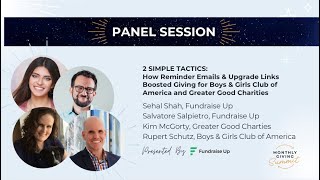
Simple Tactics: How Reminder Emails & Upgrade Links Boosted Giving with Fundraise Up