Reducing Donor Friction: A Chat with Salvatore Salpietro of Fundraise Up
Salvatore Salpietro of Fundraise Up explains why donors quit faster than shoppers do. Nonprofits have historically built friction into giving, but mobile optimization and small data-driven changes can raise online donations.
Chapters
If you are a nonprofit leader, here's a stat you just cannot ignore. Nonprofits that switch to Fundraise up see an average of a 30% increase in online revenue. That's why Cosmic favorite online giving platform is Fundraise Up. And today, I'm super stoked to be chatting with Sal, the chief community officer at Fundraise up, who I've spent a lot of time in New York bodegas with, but who will also be speaking at the nonprofit HubSpot summit, happening March 18th through the 20th in Portland, Oregon. His session will be unpacking a donor's friction tolerance threshold, AKA how much hassle a donor will tolerate, before abandoning their gift. Spoiler alert. It's a lot less than you think. I asked Sal to come here to talk, to give us a little preview of what he's going to share. And because you're here listening to this now, you get 50% off your summit pass. And that includes lodging, meals, and the actual summit sessions with the code. Wait for it. Sal. That's Sal.
The code is Sal, and it's out there in the universe. Sal, that's.
That's a better deal than I got.
It's a lot better deal. It's a lot better deal than you got. Sal did not get a discount, but he's here to drop his knowledge box nonetheless. Man, Sal, thanks for taking the time.
Out of your busy schedule. And can we just get right to it?
I'd love to.
Okay, so you're here to talk a little bit about. I. What is this phrase that I've seen you've been posting on LinkedIn about? What is this term, this catchphrase?
Friction tolerance threshold.
Friction tolerance threshold, I love.
Okay.
To the fundraiser.
What does that mean?
What is. Right.
Define that for us.
Yeah, I was. I actually, I was on a call with the folks from Stripe. They're doing their annual letter, and they're putting some information together, and they asked me for some. Some. Some tidbits, and I used that phrase off the cuff, and he goes like, is that trademarked? Like, did you. Is that. Like, do you have a copyright on that? And I said, that's when you know.
You'Re onto something when Stripe.
Way to flex.
Way to flex Out. So I was like, oh, okay. So I was on this meeting with this chief revenue officer at. At. At Stripe, and I dropped this. Now it's trademarked.
Okay, yeah, now it's trademarked. Now it's got, um. But. No. And then it hit me. I'm like, I. It's a concept that I always talk about. But I that phrase isn't there. So friction tolerance threshold. Premise of that is we've got a tolerance threshold and it's a different one when you're buying than when you're giving. All right, so let's start with buying. When I'm buying. E commerce platforms can get away with a little bit more than nonprofits because there's a thing that they need to get and therefore need to finish the purchase and transaction.
I need that flight. I'm willing to key in my. Whatever it is.
Yeah, I need that flight. I need those Bombas socks. I need those Taylor Swift tickets. Right. Whatever it is. And I say Taylor Swift specifically not just for clickbait. Also for clickbait. But also because the amount of friction that was put in front of getting tickets was insane. Right. Sign a list, get a code, get a link, refresh your screen a hundred times, but they will do it.
Yep.
And if I'm getting those socks, I'm getting that flight. We'll go through it even. So e commerce companies know, remove the friction, auto complete the address, give them Apple pay, make this thing easy. You make it a mobile optimized versus mobile responsive and so on and so forth. So my tolerance as a buyer is higher, but interestingly, the friction that is in e commerce is low.
Yeah, yeah.
Right. So now let's put on my donor. Donor buyer. You know, I say this all the time. Same person. It's a human. It's not a different person. It's the same person. You know, now as a donor, my friction tolerance threshold is a lot lower.
Because I'm buying nothing but a feeling.
Basically, I'm, I'm buying nothing but a feeling. I'm going to double click onto that before I go to the next part. I get the feeling when I click donate, not when I finish.
Right, right.
I, I came to the party when I got the email or I clicked the ad on social or search. I came because I wanted to feel generous. I wanted to confirm that I'm altruistic and I'm a good person and a.
Good peak is happening. Or like is is happening during the giving process is what you're kind of describing. It's like, oh, it's, I've hit that high. I'm hitting donate now.
Actually the pain is starting, starting to come in. It's not like a package is coming in the mail.
That's right. Because I got my dopamine hit up front when I click donate. Yeah, right. And that's the thing that Nonprofits have to give the emotion and we're giving, we give it away. There's no other way. At the beginning, right when I click donate. But if I get to that four form and your donation page and I'm on my phone and you don't have Apple pay or you don't have Google pay or I have to type my entire address out, which I haven't done in 20 years online right now that friction starts. That tolerance threshold gets chipped away at very quickly and I give up. And if I give up because I see an unclear error message or I give up because I don't have my credit card on me and I do have my mobile wallets.
Yeah.
That the blame of that the responsibility is passed from the donor to the organization. It's your fault. I tried. I'm generous.
Yep.
You didn't deliver. Okay. And we have a lower threshold. But nonprofits have way more friction in the donation process than E commerce.
Why is that? Why is that? Why is it that they have such a high friction in the donation process? Are they like out there trying to make it hard to give or what's the, what's, what's been your read on that?
There hasn't been much of a push or a demand on the technology companies providing that service. And there's been a business model. This is where I go a little off script. There's a business model that prioritizes license fees, not performance.
Yeah.
So it's give me 20 grand for the year and good luck. It's like that because A the technology doesn't evolve fast enough in this space until recently and B, it's compounded by nonprofits being risk averse and low resourced and saying changing that tech is going to be a lot of work and I don't have enough time and I've got other things to do now. Little do they know that by doing that they're going to add a lot more revenue and make their lives easier through automation, through donor self service. A lot of problems are solved when you get there. So it's really a chicken and an egg kind of problem.
And maybe, maybe just a hunch that the same people who are making those decisions today about whether or not to like implement fundraise up for example to try and create a better user experience, remove the friction as you're describing. But they're thinking about the process that they've gone through in the past with other, other technology that they've implemented and thought that was painful.
There's some trauma there. Yeah.
Exactly. And so they're kind of comparing it to that. And so it does feel like, well, why would we make this shift? What's the. It's sort of like the devil you don't know.
Right?
Yeah. That's interesting.
So, so it's, it's, it's, it's. I feel like there's a movement starting. We, you know, we're, we've grown like, you know, bananas. And that's a lot of nonprofits that are saying, let's get modern, let's innovate, let's get those processes in place. And I hope and listen, fundraise up or what, I've got an eight year old daughter. I want the world to be a better place. I don't really care in the large scope how this, these things get solved. Let's solve it. Like, it pains me when I hear a nonprofit say, we tried to add Apple pay to our insert legacy tech here, but it took us eight months and we spent $15,000 and we still couldn't get it to work. That's absurd. That's absurd, right?
Yeah. I mean, okay, so there's so many, like you were throwing out different parts of like friction, if you will, through that giving experience you talked about not having Apple pay or not being optimized. I haven't heard that before. I liked what you said there. It's not just mobile friendly, it's mobile optimized.
Right.
But like if you could wave a magic wand, like, what do you think every nonprofit needs to just fix if it was just like one thing about their donation form? Yeah. What do you think that should be.
First, the difference between mobile optimized and mobile friendly.
Yeah.
A very easy way to understand that difference is why do you use the Amazon app and not the Amazon responsive website in your browser?
Oh, I love that.
Yeah, that's it. Right. Like, is it an experience built for the mobile device explicitly or repurposing a desktop experience to work on a phone? If you gotta do it that way. Yeah, right.
Yeah.
And the things that come into play there are like, does the UI take into consideration your thumb position where it lays on the phone? Naturally the screen dimensions, you know, do I have to reach for the donate button or is it where my thumb's going to hit? Automatic? These kinds of things. Right. So that's the difference there now.
Oh my gosh. But you're describing something, Sal, that feels totally out of reach for a nonprofit budget. So how does a tool like fundraise up like in the. I know you have an engineering team and they're designers and they're thinking about maybe where the thumb lands on the, on the screen. Like honestly, how can a nonprofit even be thinking about that sounds so expensive, what you just described.
They shouldn't be doing it. They don't need to do it. They need to partner with Matt. McDonald's does not develop their own. Yeah, endless resources, tons of money. They're like, we're going to stick to fries and burgers. Let's outsource this to an agency. Google it, GPT, search it, whatever you got to do. McDonald's does not build their own app. And then I see nonprofits with 15 people. Like, we really gotta build our own tech.
Yeah.
And I'm like, is that, are you becoming a tech company or are you here to solve Mission X? So to respond to your question, no, like don't do it. Find technology that's already doing that for you and let them partner with you to do it. Yeah, let them, you know, they gotta be incentivized for the same gains that you are not. Here's a software license.
So. Yeah, I, I totally agree. And I think I've heard you describe like the, the development process at fundraise up and how. Well a few things. Like first off, you're just, you all have been so focused, relentlessly focused on the, on the, on the giving form because there's all these other ways that a supporter can engage with your organization. But you kind of were looking around and thinking, well there's, there's low hanging fruit and we can, there's so much room to improve that one thing. But it's been a long, it's been a long road where you have gone through a lot of development and optimization and you have access to like troves of data that go across all these different clients. So I guess I'm making the case to, to, for people to take seriously the work that you just described. Because 15 people, one organization, even if you could pull it off, even if you could design the perfect giving form, which I think you look at like someone like Charity Water was really early to that. Right. Like they actually their own platform because there wasn't anything out there to do what they wanted to do.
Right.
But in the best of situations, they're restricted even to, and Charity Water is crushing. Right? They, they, they set the, the ground in motion there, but they're still only working with Charity Water data. Like you actually have access to all this other stuff. So what's like one stat or insight that you think that Would really surprise people that from all the data that you all have at fundraise up, I.
Think, I mean, not a specific stat, but what I'll say is like from, you know, in the five years that we've been around now if you look at the checkout, then it doesn't feel like it, but the checkout then our modal donation checkouts compared to today, they're quite different. And it's happened so gradually because we've got a hundred engineers, right, that are working on product and code and testing and this. And it's hundreds, if not thousands, thousands of micro adjustments that we're able to do based on all of that data that we're seeing in human behavior. Yeah, right. It's more about human behavior than it is, you know, anything else. And we're making those adjustments piece, we're changing it from a drop down to a radio button or we're going to round the edges here. We're going to stack it differently because data showed us that it works better that way. Everything we do, we run a test first on a small slice of the audience. We see what the result is. And if it's significantly net positive, it goes out to every nonprofit. Now that's something that a is not the model of. Most other companies are like, here's the form. Go optimize and, and fine tune it. You know, until your heart desired.
Yeah.
Yourself, right. Here's the API, here's the docs, et cetera. Go nuts. And we're taking a different approach. We're saying, hey, we know we're looking at all the data. We're going to make micro iterations. You don't have to worry like you're just gonna get the benefits. So that's the interesting part. It's just that it's, it's a micro iteration.
So when you all like, you know, you are not a CRM, you are not a marketing automation platform. You are giving form. When you looked out in the landscape, why was HubSpot selected for a really robust integration? Cause you all have focused on that. What, what about HubSpot really made that.
A priority for you, A leader in this in, in the software space, in the tech space in general. We all know Julia Ford. She really was the, the catalyst for that for us. She said, hey, HubSpot really, you know, is hoping to support Martin nonprofits and grow in that space. Would you guys like to be our first certified integration for that? And for that we jumped on that. We said, yeah, like let's, let's place a bet on HubSpot. They're good everywhere else. They can't not be good for nonprofits. So let's support that movement. And you're on that movement. A lot of others are huge HubSpot fans.
Do you all use HubSpot at fundraise up for your actual CRM or do you use something else?
We use HubSpot for all of our marketing. Yeah.
Yeah. So I'm listening to you share about testing and like, it was a mindset, like. Right. You weren't. Like, there isn't any one data point. It's actually an approach, a methodology. And I think what I found with nonprofits that are adopting HubSpot, they are looking for this easy to use, powerful marketing automation platform that allows them to be data driven in a world where that's really hard. And I think Fundraise up similarly is like, oh, I want to be optimized. I want to be tech forward. I want to reduce friction. Like, your whole presentation is going to be about. And you make it easy.
Absolutely. You know, we, we take our cues from the for profit space and we work to see, hey, if Netflix is doing it, if Amazon's doing it, it must be good. Let's translate that to our space and that, that's from the UI and the technology all the way through to the business models that we adopt and our methodology and how we develop the software.
Yeah, totally. Well, if someone does attend your session at the nonprofit HubSpot Summit, what is kind of one takeaway that they'll be able to apply immediately to improve their giving experience?
From my session, the one takeaway that I'll hope everyone kind of comes away with is double down on mobile. I think if you look at MNR, some other reports, somewhere between 20 and 28% of donations happen on mobile devices, but 60% of web traffic is on a mobile device. 60, 70%. When you mobile optimize, when you build for mobile and give an experience to donors, that is for their device. Yep. Essentially it's a level of personalization. That number from 20, 25% goes to 50, 55%. The percentage of donations that happen on mobile devices across all of our orgs is 51.7%.
Yeah. So what you're saying is people are looking at your nonprofit all on their mobile device and not giving and not giving.
It's.
Yeah, that's, that's.
And then, and then we're all, we all grumble and go, numbers are down. I'm not hitting my numbers. I'm not getting the growth I want. This is a tough space. And go, I'm gonna tell you where the money's at. You just gotta take the moves to go get it for your mission. Do it. Do it for the kids, do it for the animals, do it for whatever it is. But like, I truly get a little upset when it's like, oh, we're not doing it because it said one integration. And I go, that's like, okay, that's lives lost. Sorry.
Yeah.
You know, yeah.
What you're describing is when, when you've got an IT team who is basically saying you need to pick one all in one solution and like build your fundraising approach against what that functionality is. And I think that's another, that's another example of what you're like a mindset is like, okay, it's a tail wags dog, right? Yeah, totally. Versus letting the strategy drive. Oh, I want to increase online fundraising, I want to increase membership, I want to increase recurring giving, whatever. I want to go out and shop for the best platform I can to do that.
And I think that this might be a bit of a stinger for some, but I think it requires, requires that the entire organization really actually believe in its mission statement. And if mission statement is alleviate hunger in our neighborhood and then it says one API integration only, but we can do the mission more thoroughly if we have two API integrations, then the mission should dictate that decision, not Tailweg dog.
Interesting. Yeah. Yeah. And that's. That is a real challenge. I think in a resource constrained environment, people get a little scared about what that's going to mean to manage all those different things. And again, they're kind of like we were talking about earlier. They're, they're maybe basing that off of legacy experience of what was it like to be managing a really bad integration? I think if you're on a CRM, that's update doing major updates a couple times a year and you have 15, 20 platforms and you got to, you have to have a review cycle. Right. And actually go figure out did this break.
So.
So yeah, it makes sense. Okay, so two more questions for you. Where can people go to learn more about fundraise up and the great frictionless giving experience that you all have been creating?
Find me on LinkedIn or go to fundraiseup.com or we'll be at one of the conferences. Your event. We're around. I'd love. I can't wait to meet. I love Portland. Can't wait to meet.
Yeah. And so why should nonprofit leaders in particular make sure that they don't miss the nonprofit HubSpot Summit in March.
Because it's going to give you courage and confidence to look at technologies that are going to empower your organization and help you make a bigger difference. While. And the upshot is making your job a little easier, Better tech's going to make your job a little easier. And we're all on the brink of burnout at some point. So yeah, help yourself, help others.
Plus a chance to actually meet the one and only Sal. And here's the thing. If you use the discount code Sal to get your pass to the nonprofit HubSpot Summit, which is March 18th through the 20th in Portland, Oregon, and remember, this pass already includes lodging, all of your meals, and the summit, then Sal will actually be able to know that that he inspired people to take action. So that means something to him, I think.
And let me know, I'll buy you a coffee, I'll buy you a drink, whatever it is like, we'll hang out. Even better. By the way, I forgot I had this little trick. If you text SAL SAL to 83100, I'll hit you back with my LinkedIn URL, a few report downloads, some other good stuff.
Oh, my gosh. Come on. That is amazing.
You have your own short code.
I did it.
That is awesome.
You did it.
You heard it here. So awesome. Sal, thanks for taking the time to chat with me. It's always a pleasure and I look forward to seeing you in New York in like a couple of weeks. We're going to be do. Are we gonna have one more late night sandwich run? I feel like iou a sandwich though.
This time I mandatory. We're gonna make it. Yeah. Yeah. For sure.
Yeah. Awesome. Thanks, man. Really appreciate our conversation.
Can't wait. All right, man. Thank you.
More from Salvatore
Salvatore Salpietro — How mobile and express payment option impact online giving
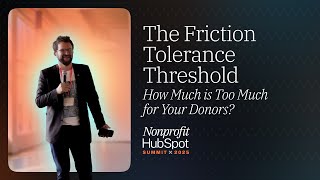
Paving the Path to Give: Reducing Donation Form Friction with Fundraise Up | NHS
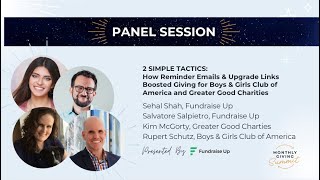
Simple Tactics: How Reminder Emails & Upgrade Links Boosted Giving with Fundraise Up