Masterclass Sam Feldt: The Business Behind Being an Artist @ Spinnin’ Academy XL Live 2022
Sam Feldt talks about building his career from childhood DJ to running Heartfeldt, his ecosystem of radio, label, and events. He covers finding mentors early on, launching Fangage to connect artists with fans, and how he balances making music with running a business while staying sane.
Chapters
Ladies and gentlemen, welcome to the next. Yeah, how do you call. Master class of the spinning academy here at ade. I'm very proud to sit next to this man because besides, he's one of the nicest guys I know in the industry. He's also one of the biggest businessmen in the industry. Ladies and gentlemen, please welcome the one and only Mrs. Sam felt.
Thank you. Thank you.
Hi, Sam. Welcome. Here.
Thanks.
Let's start off at the beginning. How did you start?
Well, I started as a DJ when I was around 8 years old. I think that's when I. Every birthday I asked for money to buy a new smoke machine or buy a new amplifier or speakers for my drive in show. I used to play birthday parties of my friends for €50. I would play the whole night and then I could buy a new video game. That's how I started. And at the same time, I started getting into music production a little bit. I tried a different couple of courses at my musical school, including the clarinet, which is not my thing. The drums, which were my thing, but you can play any songs with them. And then the piano, and then the piano kind of caught my attention. But I didn't really like playing music off a sheet. And then I switched to keyboards. And keyboards was at that time still a new thing. And I quickly realized that if you link a keyboard to your computer, you can actually make music. And back then the logic was still on Windows. And that was my first production software that I got into together with my keyboard teacher. And that's kind of how I got started in the very, very beginning. Yeah.
All right, so you got started and you starting making music. I know from my beginning, in the beginning, everything sounds shit. How do you keep motivated? Like, okay, I'm gonna get that. I'm gonna get it right now.
My first film I made was a masterpiece, so. No, just kidding.
You still have it, right?
No, no, I know. It really sounds like shit. You're right. I mean, what helped me the most, I think out of everything was being in a studio together with simply people that were better producers than me. I used to spend a lot of time in the studio with Jay Hardway. And back in the days, like, he was so far ahead of me because he'd been producing for way longer than I had. And just sitting in a studio together with him and making music together and seeing how he did certain things and tricks and shortcuts in FL studio helped me tremendously. And it also helped me boost my self, you know, my self worth a little bit, you know, because if you don't know something, there's a trusted friend that you can ask instead of having to, like, go on YouTube or a forum and ask stupid questions, you know.
So it's definitely cool than a competition. I want to be better than him.
Or no, for me, it was never like that. But since the beginning, we always made different styles of music, so it was never really a competition. It was more like, hey, how can I learn from you? So that's how I got started and learned quickly. And yeah, I feel like obviously my piano lessons, my keyboard lessons help with that. And after that, it's just a lot of messing around, as everybody knows.
All right, and another thing for a lot of people here, so you got your first song finished and you're like, very happy with it. And then what? You go like, okay, Jay, or Yopka, as we call him. Do I have to send it out to Yorn or do I have to send it out to. How does that. I think it's nerve wracking, like sending your song that you believe in to others to, like, listen to it.
Yeah, I mean, when I started, at first, I didn't even know about music labels. There was. I was making Jump Style at the time and there was a forum back in the days called Jump Forum. And I would just. When I finished a song, I would just post it on the forum and get feedback from gem style lovers and other producers. So that's how I got my first fame, you know, like in that forum. And then, you know, now the music industry has changed. Like, you can distribute your music by yourself on Spotify and all the platforms. But back then I didn't have a label. I didn't even send it to a label. I think when I was about 17 is the first time I actually sent music to a label. Of course I tried to hit up Spin in. Of course they never replied because the music was shit. And so, like, back then I thought it was pretty stupid. I didn't reply because I had an amazing song that I worked so hard on. But, you know, looking back on that song and that period in time, I think it made a lot of sense that they didn't sign it then.
A small question in between where you're like, ever like, oh, I'm gonna quit. It's anyway.
Yeah, yeah. Many times there were a lot of points in my journey where I said to myself, okay, you've tried this now for a year, two years, three years. If people don't want to sign your music, if you don't get bookings if you. Yeah. Continue to have to beg for everything, are you good enough? Like, is it your. Is it your thing? Like, should you not just stop and pursue something else? And the last time I gave myself an ultimatum was the moment I finished my university degree. I was like, okay, either I'm going to go pursue a full time job or music, but one of the two, or at least, you know, significant amount. And then finally, I think a week before I graduated, I got my first publishing deal with the Music All Stars Publishing, and that was just enough of a spark to keep me going. And then, you know, a year later, I signed my first records to spin in. But it was, you know, almost. It almost came to a point.
It was almost the end of.
Yeah, yeah. And I just, I wouldn't say just. And it sounds very cliche, but if you just don't give up, man, like, it's. It's around the corner.
All right, so we're going to make a few steps further. You got signed, you got massive, massive hits. Especially your first ones were like huge. So you're assigning artists and then you got like the brain session. Okay, now I want to label. How did, how did that occur to you?
Yeah, I mean, for me, it was always logical to create a platform where I could support other artists and producers. That's how Seinfeld started. Actually, Seinfeld did not start with me releasing music. It started with me putting out mixtapes on SoundCloud featuring other people's music. So I didn't even produce a song back then. It was just me on SoundCloud doing mixtapes. So that's at the very core of what Seinfeld is. It's, you know, me finding great songs and showing that to people. That's basically how it started. So then to have a label, it's just kind of like an extrapolation of that.
And I think you still do that because when I look at Hartfeld, you still are looking for new people to support that aren't even there yet.
Yeah, no, 100%. And. And it's just nice to have another channel. So we have the radio show, which is kind of like what my mixtapes move into. We got the playlists, we got now Heartfelt Records, so we can even release the songs. Now we take it one step further. We launched Heartfelt Publishing so I can actually help people make better songs instead of just like releasing them on my label. I can actually help with, you know, vocals, top lines, production, all that stuff. So, yeah, I feel like it's nice to have this heartfelt family. We have a discord now as well. We do like two times, three times a month. We have events there, demo drops, ask me anythings. Because I feel like, you know, I've come at a point in my career where I like to give back a little bit of knowledge about you know like how it can help people that I was once in their shoes to not make their the same mistakes as I did. Yeah.
And besides like helping people, it's always, it's also a business to be. To be honest with that as well. Is it like now a combination okay, you're an artist but you're also a businessman. Is that like time wise like difficult, like split yourself up between being an artist and being a label owner. Being like a supportive being doing discord twice a week, is that like okay, I got a schedule now and I'm like a hardworking businessman or are you still an artist?
I think it is challenging. I think what helps is working with the right people and getting the right teams involved around it to make sure that as an artist you can continue to focus on what an artist should do, which is the creative part. And that counts in a business but also in your own artist career. I feel like as long as I'm producing, making, creating, building in the business instead of working inside of the business and having to do a lot of day to day work, I think my time as well spent and I think where it goes wrong is that people cannot let go of certain parts or outsource certain parts. And that's true both in the music industry as in any other industry and therefore they want to do everything themselves and they have zero time and get overworked and also don't get to the best end result. Like a high paid CEO isn't still doing customer support emails. So and that counts for every industry. So letting go, finding the right people to support you and then yeah, making sure that you spend your time on the right stuff.
No. And of course I, you know a CEO doesn't do the customer support but you're still the face of the label of the you do the discords. Are you also always in the end of which track? Whatever. You're the one who decides, okay, this is good or not.
On the label side it's me, it's Michelle who co runs the label and it's also of course Anar's from the label side. It's also the artists themselves. Of course. I mean if an artist feels very strongly about a song then of course that counts as well. It can count, you know, we can also tease the track. We can play to different people that we know and trust to get an idea of is this, you know, is this a good thing to release or not? And in the end, it is a collaboration between us and the artist. It's not like us saying this is gonna be how it is, you know, of course we're not gonna release music that we do not stand behind. But on the other side, artists should also have creative freedom.
Alright, then we take the bridge. Okay, Heartfelt, what does it stand for? Like music wise?
I think it stands for? Well, if you really make it very factual, I think it's more of like a dance pop slash club label. So it's definitely not a lot of heavy EDM music. It's definitely not dubstep, defin, not bass house. Like it's a lot of things that. Not hard style. It's a lot of things that it's not. And I feel like if you remove all those things and then you sprinkle a few key ingredients like good melodies, strong vocals and uplifting sound to it, I think you got a pretty good description of what we release.
All right, and then now you have like Heartfelt Publishing. What can people expect from the publishing side? Do you support them like throughout the whole journey or how can we see, like, what's publishing for you about?
Yeah, so for me it's about the process that kind of happens well on the creative side before the song gets released. So in the making part of the song, usually a label gets involved when the end product is done. You know, maybe they help you with the master or they help you with a clearance or an artwork, but they're not involved from the start, which is logical because everybody needs to do what they're good at. But I like to be involved also from the creation side because I feel like I've got a lot to add. I got so many cool songs that I cannot release myself that are written by amazing top liners that are just going to be thrown in the trash if I don't place them elsewhere. And not only that, just having a little bit of help, I think for a lot of producers that are, for example, very skilled producers technically, but do not have access to the right songs or songwriters, I can really help them elevate their productions into hits, you know.
All right, like something in between. If you have any questions about Heartfelt right now, now is the time. So you can raise your hand if you have anything questions about publishing Heartfelt Records or whatever.
We got a Question.
I got a question here. Can she have a microphone, please?
Do we have a microphone?
She has actually very good questions. Oh, we're like, really good prepared because we got a microphone.
Are you hired?
No. She had really good questions.
You're not hired? No.
That's Asia. Right. They go like, hi, Ty. Oh, you're paid. Yeah, yeah, that's all right.
That happens.
It's not on now.
Yeah.
Hi, I'm Inamar from Switzerland, from Zurich. You said before that you need to focus on more the creative part. I wish I could be more focused on that, but how to find the right people to support you, how to find them?
So what do you do? Maybe a quick introduction.
What do you do? I'm a producer. I'm producing melodic techno.
Got it, got it. And you feel like you don't.
I'm DJing as well.
And what is taking up most of your time right now?
That you know, emails, videos, social media.
I have all the bullshit.
Yeah. And I. I wish I could focus more on the creative part, the part that I really love. That's producing.
Yeah.
And that's the problem for me.
Yeah.
How to handle it.
That's.
That's a fair problem at the moment right now.
Yeah. I mean. Yeah, 100%. I think you're right. And I think what it comes down to is a little bit of time management where you make the creative process the first priority and way you could do that is, for example, to block 30 minutes or 60 minutes in your day when you do emails, and block maybe 30 minutes a day when you create content, but do not do that the whole day. Don't let it distract you throughout the creative process. So do, for example, when you wake up, don't look at your emails in the first thing.
No.
Don't even look at your phone. Get a cup of coffee, hit the studio for three, four hours, and the emails can wait, you know, and one good trick also is if you. And if you answer your emails at the end of the day, you will only get a reply the next morning. So it will be a little bit slower. You can control the process a little bit, and you won't be overwhelmed too much with all the things that are happening around your creative work. So isolate yourself. It's not like something's gonna burn down if you don't respond immediately. And you should, like, without the music, the rest doesn't matter. So that should always be the first priority.
Wow, what an answer. That's really nice. Any more questions about Heartfelt or the publishing? Yeah, sorry, you Gotta work now.
Hey, what's up? Jordan from Miami? Yeah, actually we had an interview on my radio show and I wanted to talk about what you spoke on that interview because there was a lot of your identity that's not, you know, music you mentioned. He's also a great businessman, but you also do a lot of like, charitable stuff. So how. Why is that so important for you, especially as an artist? And how do you find time for that? Because, like, again, you know, a lot you're bogged down on the bullshit, like social media producing, but you seem to like, I don't know, master time manager or like just general badass. So talk about that, you know, talk a little about that, you know, charitable stu side.
Maybe we should ask Michelle, cuz do you see him anyway somewhere during the day or is like he's always gone?
Yeah, I think it's. I think it's a little bit about prioritizing. Once again, I think why? The first question I think was why? And, and why is it important? I think it's because I. Look, I. I reflect on my life quite often and then I see certain things that are not necessarily in line with who I want to be. And then I did that a couple of years ago before I launched that Heartfelt foundation. And I saw that I was doing a lot of things that didn't really, you know, resonate with how I was brought up, how I was raised and who I want to be. You know, I was traveling the world, I was flying in, sometimes in jets, I was. Sometimes I was at least flying once a day. I was doing all these things that weren't really good. And then I looked at myself and I was like, hey, okay, how can I make sure that I continue to be able to spread joy and happiness around the world with my shows and with my music, but do it in a way where, you know, if I ever have kids, that they would be also able to still enjoy it. So it's. It's kind of selfish, to be honest. It's like, why? No, but like, I mean, like, sustainability. Sometimes it feels like in the end it's too sustained. Right. So how can we make sure that we can sustain what we're. What we like to do? And that's kind of like how I. How I started this whole project looking at, okay, how can I continue to do these shows, but do it in a way where it's sustainable? So flight offsetting other modes of transportation, things like CO2, that's hydrogen instead of CO2, which, you know, funnily a company from Boxtel, my hometown, has developed so, like, things like that, like confetti that when you shoot it, then it lands on the floor, dissolves instead of creating trash, like all these smart technological things that can help us continue the party also for our future generations. Yeah. So that's why it's important. And how I manage it is, once again, is teams, like having people that support you and also partners.
All right, then I will also have a question, and then we finish this side of the masterclass. Because I understand her as well, you know, because you're saying, okay, I got a team and I got the right people in the right places. But when you start, you want to go like, okay, I want to do socials, I want to do. I want to send emails and, yeah, okay, time management is one side, but it's always also the. Well, to be honest, the pressure for the young kids right now, like, if you want to. There are like. Like you. There may be like tens of thousands like her trying to get the music out, you know, trying to be some. How do you. Of course, everybody has to believe in themselves and whatever, and time management is a part. But how do you cope with the pressure? You also should feel pressure, like, okay, you got a label, you got publishing, you got your shows, and you want to be on top, like, all the time. How do you cope with that?
I think when you start, you don't want to be doing a lot of different things. And I think when you start, you want to be making great music because that's, in the end, the only thing that matters. And if you don't have that key ingredient, the rest, whatever you're going to try to set up or do is not going to be successful. You're not going to be successful in touring if you don't have the music. You're not going to be able to be successful as a curator or like, maybe as a label owner if you don't have your own good music. Because why would people want to release on a label that's owned by somebody who makes shit songs like, so start with that. And then it's about focusing purely on your craft at first until you get to a point where you feel like you've got enough breathing room that you can do something else and then set that up yourself or with the help of a few others, and then make sure that it kind of runs on an automated pace. But that's not the pressure question. That's more. Yeah, how do you. How do you start things when you're at zero or when you're just starting off. And I think the pressure question is actually I struggled with it for a long time and still do. So it's not like I can give the definitive answer. But what helps for me is letting go of any expectations of what the future should hold. So, of course, you can dream, and you could say, this is where I want to go, or I want to have a number one hit record. But, you know, put that out into the universe and then let it go and watch how the movie unfolds instead of saying, okay, it has to go in this order or these steps have to be completed, and that's the road to Rome, you know? Yeah. So. So. Because life always unfolds in ways that you didn't expect and sometimes even for the better. Yeah, Right. So you still get to that point. You still probably, you know, get to your point of success, but you don't force it as much.
No, I think that's correct. And I'm gonna take a little bit back because you said, like, step by step. I'm not gonna do a TikTok. But I heard a great quote, like, a couple of weeks ago. There was, like, a deer and a bear in a forest with, like, all foggy. And then the bear said, I cannot see how far I want to go because I need to go there. And then the deer said the nicest thing. Can you see your next step? And then the bear said, yes, I can see the next step. And then he said, well, there you go. Take the next step. So I thought it was a good quote, like, for the pressure you can put yourself in pressure. I need to go there. But can you see your first next step?
I think the only time you can actually help yourself become more successful is right now. So not in the future, not in the past. And I myself lived in the future for a long time, and therefore, I missed a lot of the great moments that were happening in the present. And also, if you're planning about the future, if you want to build an empire, the only time you can do something about that is right now. So either do it, go and put in the work right now, or do something else, but not think about it. Not, like, worry about it, because there is no use. There's literally no. You're not going to get close to your goal. You're just going to waste the present.
Yeah, yeah, I think you're probably over. You're absolutely right with that one. So you have, like, you're an artist, played medicine, square garden, like, a couple of weeks ago. At Kygo Massive, you go into Australia, like next month, you have your label, you have your publishing, and now you have something new again. Well, it's not new. It's already in the first steps. Can you tell us something about your new project, Fangage?
Yeah, I mean, Fangage has been around for a long time. It's definitely evolved over the years. Like, I started in 2016 already, so wow, it's very new. And that was because I couldn't find a way to engage with my audience anymore, or at least not in the way I wanted to. So with all these algorithms popping up on Instagram, then after that also on Twitter, I felt like my followers were getting worthless. You know, it didn't really matter anymore if people clicked on the button and said, I want to follow him, I like his music. No, that didn't matter. What only what matters was the algorithm and, you know, and the ad spend that you put into it. So it's very transactional and I don't like that. So I figured out a way to easily collect data on my audience and then use that data to be able to always reach them, basically. So a phone number, an email address, instead of having to rely on Mark Zuckerberg in Silicon Valley to decide on how I can interact with my audience. So that's how it started the idea. I built it first for myself as just like a tool to use to promote shows mostly. So once you have an audience of like 500 people in a city that went through the motions and, you know, registered on your website and left the data and everything that you need, you kind of know that they're, you know, a fan. And then when you play in at city, send them an sms, they'll probably come to your show if they're, if they're there. So that was an easy way for me to grow my touring. Now, fast forward to now, we've just been acquired by another company. Yeah. So congratulations. So it's actually not my business anymore. I'm still involved with it and I advise on it. And now right now you can build your website with it, you can grow your Spotify with it, you can charge money, you can run memberships, all sorts of things. So it's kind of like an all in one system for creators and artists to become an independent brand.
All right, and is it also like for new artists or new people that are building on the road? Is that interesting as well for them?
I think so, because we just made it free for everyone. So that's also good. Before you had to pay like 80, $80 a month to get access. So it definitely removed that barrier. And yeah, I mean in probably an hour you can set up a website, link your domain, put your content on there, create like an exclusive gated content kind of funnel where, you know, if you have a track or a free download, you can host it on the website. People have to leave their emails or their phone numbers. You can collect data very easily. You can, you can make some money, you can accept donations. I mean, it probably takes an hour to go. Yeah, yeah. So I mean it's been six, seven years of constant development and we're constantly adding features too. So yes, I think if you're an artist and you want to do want to take your marketing seriously, check it out.
Fangage.com and if I, as high as I see it, like it makes it easier because we just talked about, you know, how do you have to do a lot of things. Emails, reach out to your fans, socials, is it like all a little bit combined in one?
Yeah, we don't allow you to run your social media from it, so you still have to post through your socials, but anything kind of below that we do. So once you get your fans to the website, they sign up and in the admin you can see their fan profile. You can literally see who they are, where they're from, how much they've spent, how engaged they are and you can use that data to engage them. So you can say, okay, give me all my fans that are 18 plus in Amsterdam that have shown interest in my shows before and then you can send them an email and a text message and say, hey, I'm performing in the Q Factory tonight. And that'll be an easy way to engage with them. And we're also building that out to a more smart inbox where there's easy two way communication. And by the way, just another feature, I'm rambling a little bit, but it also runs my demo drop, for example. So if people send me music on Heartfelt Me, there's a demo drop feature that I can actually run through my demos and reply to all the producers that have submitted one. So it's too much to go into right now. Yeah. But definitely check it out. Check it out.
Fangage. I checked it out. I'm not that good of an artist so I don't have any stuff to do there. That's not right. You could check it out. Please do. Because it's like, as you can hear, unlimited the options that you have. Making a bridge, because I think that's also part of a marketing strategy. You know, getting engaged with your fans as well. Can you tell us about something about Heartfelt? You know, where did it come from? How do you market it? Is there, like the branding of it, logos? How do you. How do you start it with that is like a brainstorm session. You got a good friend that's like a great visual guy. How did. How did that process start? Feel like, marketing wise?
Yeah. So Heartfelt. Well, first of all, the name comes from Felt, obviously Hanhart. That makes sense. And the reason I called it that is. Was Sam Feld was a project that I started from my own heart. You know, my previous DJ name.
Yeah.
And I was not gonna say it right. Dr. Papasov.
Yeah.
Now you know why I never made it.
Well, you were actually good.
Well, I mean, I played a decent set, but I never got to a point where people actually, you know, booked me and appreciated what I did. But that's also. That's not just the name. It was a terrible name, but it's also the music. And maybe a little sidestep is why I started Sam Felt was because I felt under Dr. Papasov, I was just, you know, releasing the music I should be releasing. So I was looking at, okay, what's. What's the best song to get signed to Reveal, or what's the best song to now top the beatboard charts? And it's good to do market research, but if you're always imitating, you're always one step behind. And with Semfeld, I said, fuck it, I'm going to make and release music that I like from the heart. So that's why it's Heartfelt. And it started basically with that website at first. So Heartfelt Me, which runs on Fangage as kind of like a center point, a community where all the content would kind of appear. And then quickly after was Heartfelt Radio. So Heartfelt Radio is basically a weekly radio show broadcasted on, I think, close to 100 FM stations, millions of listeners. So that became a platform where I could promote my own music, but also, once again, promote the music that I love. And then there's a couple of things that, you know, kind of came in the years after Heartfelt events. We did a lot of pool parties. We did Ade, we did Miami. We did like, a lot of these, like the cool, cool, cool parties. We, of course, launched the label Heartfelt Records, in collaboration with Spin in that was during lockdown. So, like just that Covid hit. So it was a little bit of an interesting time to start A label, but definitely worked out publishing.
Was that always the idea? Like, okay, this is the road I want to travel, like marketing wise. Did you have like a plan from A to Z? This is how I want to roll it out.
Well, I always knew that Heartfelt was going to be everything that is around Seinfeld, but it's not Seinfeld. Right. So it's kind of like the umbrella brand. Just like Don Diablo has an hexagon. And I thought that it would make a lot of sense for me to create a brand that could be a good name for our little fan family, producer family, and also be a lot of different things. I wouldn't call it Sam Feld, the label, for example, that would be a little bit weird. So, yeah, I think it's good that we made that decision because it gives the brand unlimited potential like Sam felt publishing would. Like I said, it sounds weird, you know, and I think it shouldn't always be about me. I'm an artist, but I feel like the Heartfelt brand can be anything. It can be clothing, you know, it can be brand partnerships. It can be maybe a management company in the future while we actually like sign artists to help them. Like hands on. Like, it could be a lot of different things and that would have never been possible if we would have not created that brand.
Great, great. All right guys, we got the last 50 minutes coming up. Are there any questions right now from the audience about Fan Gauge Heartfelt? All right, then I'll have a question. And it's also like an introduction because I got massive respect to you. I know you for 15 years, 10, long time. I think you're one of the hardest workers in the industry. Not that others are not hardworking, please. And respect wise. But again, how do you do it? Because you got and I know a lot of other companies you also are involved in. Or does your creative mind like go all day? Do you never. Are you never tired or how do you do it? Are you like sporting a lot? You have a great support as well. But how do you like keep your energy level that high?
Yeah, that's a good question.
It's just secret.
Yeah, I mean, no, I don't really have one secret. I think what is important in everything is that you're passionate about the things that you do. And it's very cliche to say that, but I think it's very true. Like if you don't get energy from something and instead it drains you, it's unsustainable. You can maybe do it for a day or A week or maybe a year, but sooner or later you're gonna face a burnout or depression or whatever. Like if you do something that's not in line with your purpose and you can feel that, you can physically feel that. And I think that is important. And it's also something that I had to learn because I did do a lot of things that were not in my purpose. And I pushed through relying solely on, I don't know, discipline or whatever. It's like thinking you should do it and that didn't end up in the right place. So once you feel that something is not for you, drop it. And it sounds very easy. But like, and, but listen. Listen. Yeah, listen to your heart. And I think that is really important because especially if you do so many different things and if you're busy and an artist does a lot of things because you simply have to do a lot of things, make sure that everything you do gives you energy instead of drains you, because that's going to be very difficult.
So it's like shows for you then also like a get out, like getting new energy, seeing the crowd, seeing your fans, to get new energy to do all the rest that you do as well.
Yeah, shows recharge me. So it's weird because I spend a lot of energy and a lot of flying and getting tired and yeah, I think it's like thousand calories per hour once you're up on that stage. So it's definitely, definitely not, you know, relaxing. But it is, you know, it is for me. You know, once I get off that stage, it feels like you're on this, you know, natural high where you're once again, you're recharged. What drains me still is the traveling, the jet lag, the time differences, which are pretty horrible. And I haven't found a way to cope with it yet, so.
Oh, you're going to Australia, so.
Yeah, bro. Yeah, but Australia is difficult. But like, even like I play in Vegas a lot. So I get to Vegas on Friday, I leave here in the morning, arrive there in the same day, in the afternoon, still have the whole day ahead of me, nine hours time difference, play the show, super tired. When I get to the show, show's finished, I'm wide awake and it's nine in the morning here and I can't sleep. So like that, that's like my start of my weekend. So that's something that, you know, like, you don't really have any cure from and it's like a side effect of what you do. But overall, yeah, I Mean, I can say that you have to eat healthy and go to the gym, but I don't do that. I don't do that often myself. So I don't know. I shouldn't be preaching here. Of course. Yeah, it definitely helps.
You look freaking healthy, man.
Thank you. It does help, definitely. But you have to have the energy, the discipline to do it. And also, you know, sometimes if you're already tired, you make the wrong decisions. So you do go to McDonald's instead of eating a salad, and that's. You shouldn't. I think it's also important that you don't bash yourself about those things. Like, it's very natural. It's just your body saying, hey, I need some. Some calories, or I need. And that's also logical. Maybe you haven't slept, you know, so don't be mad at yourself. Don't. Don't push yourself into the ground if you're. Yeah. If you make decisions that are not optimal.
All right, so, like, doing, like, the whole recap. You have Sam File. You have Heartfelt Records. You have Hardfell Publishing. You have Fan Gauge. What's next?
I think nothing. I think right now, like I said, Fangage has just been sold. I'm still going to be involved with that on, like, an advisory kind of level, and I like that a lot. But I feel like I've done maybe too much over the last couple of years.
But I'm going to interrupt you there. I know you that well. You're not going to sit on a couch and just like, okay, it's good like this.
No, no, that's not what I'm saying.
I know your brain, how your brain works. What's next?
Yeah, I think what's next is focus. And I think, you know, I've got plenty of projects to dedicate more time and energy into that still have a lot of potential to grow. And I think that's what I'm going to do instead of launching something from the ground up, because there is still a lot of things that can, you know, exponentially scale if I dedicate myself to it.
Wow, that's great. Last time. Any more questions for Sam? No. Wow. It was good. I think they don't know anything.
Answered every. Everything.
Then I'm going to close it off. Ladies and gentlemen, please give a warm welcome and make some noise. So, Mr. Sam felt.
Thank you.
Thanks, man.
Thank you. Appreciate it.
More from Sam

We are almost SOLD OUT for Faces of Fitness Miami🔥 get your tix before theyre gone #facesoffitness


10k likes and I'll wear this hairstyle at my next show (for real) #challenge #grwm #tokyo #djlife
This one is special to me. NEED THAT LOVE has finally dropped🫶 Tap the link to listen #newmusic
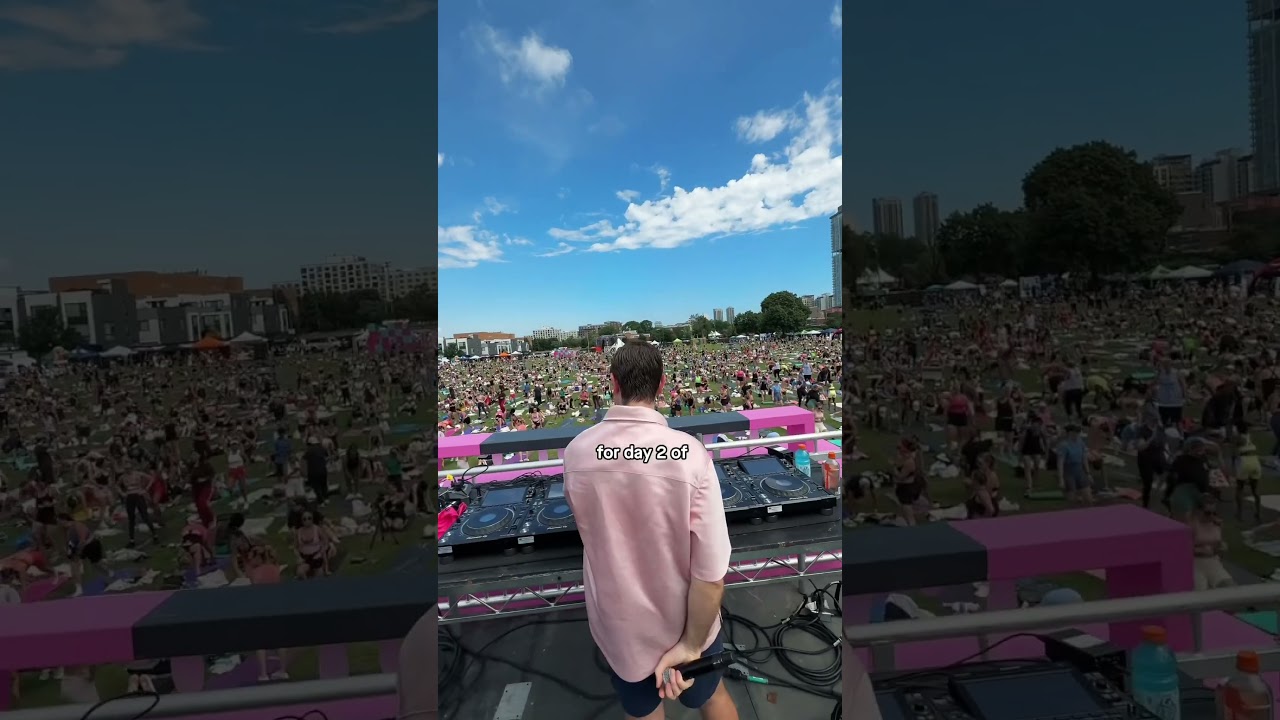
MIAMI 🌴 Join me on October 25th for another round of Faces of Fitness Miami🔥 #fitness #djlife

Drop a track from that era you still know every second of. Wanna see if we remember the same ones 🤍