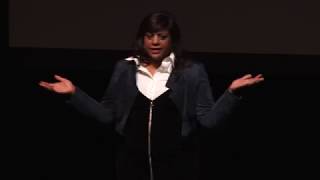
In this talk, Ami Mehta, Director of Product Design at Evernote, shares three pivotal moments that defined her sense of self as an Indian‑American woman and shaped her professional and personal trajectory. She frames her life as a non‑linear labyrinth, with each turning point acting as a compass for navigating oppression and identity. The first turning point occurs in childhood when she confronts gendered patriarchy within her Indian family, rejecting the expectation that women remain confined to domestic roles and vowing to excel on her own terms. The second turning point follows the September 11 attacks, when she experiences overt racism and xenophobia, realizing the depth of anti‑Asian bias in America and reaffirming her resilience against such hostility. The third turning point unfolds during her master’s program at Stanford, where she discovers a purpose‑driven community of diverse peers committed to educational technology and humanitarian impact, providing her with a sense of belonging and a collective identity. Throughout, Mehta uses the labyrinth metaphor to illustrate the cyclical, twisting nature of personal growth. She concludes by urging the audience—especially women—to recognize their own labyrinths, seek supportive mentors and allies, and build coalitions that counteract patriarchy, racism, and other forms of oppression.
Chapters
Hello everyone, my name's Ami Mehta, and— and I'm the director of product design at Evernote. So I'm the last speaker here this evening, and feel really honored to be here. So today I want to ask you guys to take a journey with me, a journey into the past, where I had 3 sort of significant turning points in my life. These turning points were points that helped me to get deeper in my own sense of identity and helped me to understand who I was on deeper and deeper levels. The first one was when I realized that I was an American girl in an Indian family. The second one was when I realized that I was a minority in America. And the third one was when I found a purposeful community, like-minded individuals. So, as we take this journey, I want you to know that for me, the journey was not linear. It was actually much more like a maze—twists and turns, darkness and lightness. It was a mixture of all of these things. And the maze was circular in nature, where there was a beginning, a discrete middle where the realization would take place, and a retracing of the steps back to the beginning again. And what we call this maze is a labyrinth. So these 3 journeys helped me to not only understand my own identity more deeply, but they served as a compass to help me navigate life experiences. So the very first one, I was born to Indian parents in Boulder, Colorado. And we used to go back every summer to India. And as I got older, I remember this time where we went to my uncle's house. My dad was one of 16 brothers and sisters. And I remember that we were going there for dinner in Bombay, and my brother and father were escorted into the living room to have the intellectual conversation. And my sister, mother, and I were gently escorted into the kitchen to make sure that the the food was prepared for the men to eat. So as I was helping to roll the rotis and make sure that the food was all hot, I was really angry inside. I thought, "Why do they get to be in the living room having the intellectual conversation, and I have to make the dinner in the kitchen?" So we served them the food that evening, and we made sure they had enough to eat, and we cleared the table. And we basically went back to the kitchen and sat on the floor and ate on the floor. Because that's what you did in this particular family. So, at a very young age, I thought, "If this is what it means to be Indian, I don't want any part of it. No thank you." You know, I would— I want to be American. I want to live the American dream. I want freedom, I want equality. A few years later, when I was in Colorado, and yet again my mom was like, "We got to make dinner, and your dad and brother have to eat." And we were making dinner and doing the dishes, and I just got really angry. I kind of threw a fit. And I got my sister, who was younger, who's here in the audience right now, and we went downstairs, and I said, "Let's make these signs." So we wrote out these signs, and we wrote on them, "Ladki ka Inka love." So we went around the house, and we added these little sticks to the bottom of the sign, and we went around the house and we picketed. And we said, me in front and her, my younger sister, right behind me, "Ladki ka Inka love, ladki ka Inka love, ladki ka Inka love," which means, for those of you that don't know Hindi, Women's revolution. So, I was 11 years old, and my sister was 9, and I realized it wasn't about being Indian or being American that I was resisting. It was being a girl growing into a woman in a patriarchal structure, in a patriarchal system. And all women and all people actually are part of this patriarchy. And so what I was resisting was patriarchy. And what I did about this was decide not to buy into it. I decided that I was going to be as good as any man or better, I was going to succeed at all costs, I was going to be self-sufficient, and I was going to make my way through life. And I decided that patriarchy was not going to get the best of me. So the second turning point that I went through was 9/11 in 2001. It's when the Twin Towers went down in New York. I remember I was working in the corporate world, I was in Palo Alto, I was in my apartment, and I saw on the TV the towers go down, and I remember being so scared. I'd never been so scared in my entire life. And I remember going to the closet looking for the biggest blanket that I could find to try to wrap around me to feel safe. But nothing was going to make me feel safe. Nothing was going to make anyone— any of us feel safe from something like that. So the next day, I got a call from a friend who had told me a very good friend of ours from school happened to be working in the towers that day, and he passed away. He died. And so I couldn't leave my apartment for a couple days. I was so afraid to just go outside. I was so afraid to face the world if this was what the world was like at this time. And I remember finally getting the courage and got on my jogging shoes and I jogged from my apartment to Molly Stone's, a small grocery store nearby. And when I got to the grocery store, and I got to the doors, and I was about to walk in, an older white man across the parking lot was looking at me with this hateful look. And he started to scream out at me, and he said, "Why don't you go back to the country you came from? We don't need you terrorizing us here." "America." And at this moment, I just didn't even know what to say. I was already devastated from everything that had happened. I didn't respond. I didn't know how to respond. I walked into the grocery store, and I started walking down the aisles, and I just started crying and crying and crying. And I kept thinking, "But I am in my country. I am American." America is a melting pot. This is my country too. But what I realized there was these were deep, deep forms of racism that I felt not only that day, but I think this was the day I truly acknowledged it. I think I've experienced racism, as many people of color and other people have, throughout my life, but what I realized was that I wasn't going to let this get the best of me either. As I continued to walk through the labyrinth and take twists and turns, I was going to be better than this. I was going to be resilient. I was not going to buy into small minds. I was not going to let him or anyone else take my power away. So, the third turning point that I experienced was when I went back to grad school. I went to Stanford, and I got my master's in education, in learning design and technology. And I loved it. I loved the program, I loved every book I was reading, I was the biggest nerd in the class, I sat in the front row, I got straight A's that year. But I met people in this program that cared about the same things I did. Making a humanitarian difference, thinking about educational technology and ways that we could be instruments to serve to something greater. And so, this tribe, this community of people that I met during this program were just like me. I found identity in them. But it was because we had the same purpose, we had the same goals. We wanted to make that difference in the same way. And so I started to finally find a sense of identity, and yet all of these friends, who are still lifelong friends, are from every culture around the world, every race around the world, and very different mindsets, yet a common goal. So today, I finally feel like I have been able to understand, accept, and embrace what it means to be Indian American, my identity as an Indian American, and as a woman who will not let anyone steal her power. As you guys think about your lives, I just want you to take a second and close your eyes. Think about the labyrinths of your lives. Where are you right now in your journey? Are you running into mentors and teachers and friends? Or are you running into tricksters and monsters and people that want to steal your power? The only advice I can give around this is if you keep on going and you persevere and you don't let racism or— or— patriarchy or different forms of oppression get the best of you, you can continue to find deeper levels of yourself. So what I wish for today, and as you can see, you heard the journey and the journeys of many other women here tonight, is that we, as women, can come together. We can come together as a community. We can come together with different perspectives and yet a commonality in terms of experiencing different forms of oppression. We can come together as a coalition to support one another, especially today, especially in these times. Thank you.