Andy Puddicombe and Rich Pierson Dish on How They Built Headspace – Hustle Con 2016
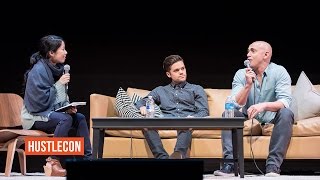
Headspace co-founders Andy Puddicombe and Rich Pierson explain how they built the meditation app from live events to a $40 million company. With $50,000 left in the bank, they pivoted to a subscription model after a chance suggestion, generating £36,000 in their first month through a Guardian giveaway and word-of-mouth.
Chapters
Given we have limited time to really sort of mine the wisdom on the stage here. So, Andy, your mom showed sort of meditation to you when you were younger, like 10 or 11 years old. How did that sort of inspire your journey to becoming later on becoming a monk, sort of a decade later, and spending the journey traveling the world. Share a little bit of that with us, given it's a very unconventional path to running one of the best startups today.
It is. And very good afternoon, everybody. It is, and it's a long story to fit into just a few sentences, but yeah, I learned meditation when I was about 11 years old with my mom, very progressive kind of Mum and a bit of a hippie. And it wasn't until really kind of my late teens that I found it— I really understood how valuable and useful it could be. I think when I was younger, it was always a nice thing to do. It was quite relaxing. I think it was only later on when my mind started to get really busy and my, you know, emotions started to overwhelm me a little bit more that I really understood kind of how powerful it could be. And yeah, it was, you know, it was a couple of really difficult sort of situations, events unfolding, friends, family that I lost in my late teenage years that really kind of spurred me on to think, okay, I want to understand the mind not from a textbook, not from other people's opinions, but really to kind of look at the mind and understand it. And that's what drove me to quit my university degree and go away and become a monk. Yeah.
Pretty wild. How do you guys— do you guys like this voice here? How many of you guys use Headspace? I know it's dark out there. You guys recognize this crazy voice?
Thank you for using Headspace, guys. Thank you.
This is what he looks like right here. So I think it all sort of really began when you ran into this person here, Mr. Rich. So when you guys met each other, you were an ad agency exec. How did it— what was that sort of meeting like and the subsequent meetings? How did this all come about in terms of you guys deciding what you wanted to solve?
Hi everyone. Yeah, so we got introduced by a mutual friend and I'd been working in advertising agency, like you said, and I'd burnt out pretty bad and was in a really not in a good spot, would be fair to say, and my friend said, 'You should go and meet Andy. He's been teaching me meditation.' And my friend was like the last person that I ever thought would do meditation, so that in itself was kind of surprising. And he said, 'Yeah, he used to be a Buddhist monk and he's got a clinic in London teaching people one-on-one.' So it all sounded very normal. And we met each other and I think we kind of— we both got on immediately and I started practicing meditation. We did a bit of a skill swap. And he taught me meditation. I came up with a few ideas for his clinic, and it was very organic. Like, we'd go over the road, there was a coffee shop over the road, and we'd spend an hour together and we'd just chat. And about 6 months, you know, about 6 months went by and we kind of both decided that, you know, actually that we should try and do this. And Andy's pitch to me was, "I can't afford to pay you, but do you want to come and work?
Do you want to come and do this?" And that remained our pitch to all the people we took on for a long period of time as well. But thankfully they came anyway.
Yeah, that's right.
So when you said, "We're gonna do this," what is this? How did it start?
Well, the original— I think the original idea that we talked about was like, how could we create the kind of Nike Plus of meditation? That was the original kind of brief. I thought it was an interesting parallel that they'd taken running, which had been seen as a kind of boring pursuit, and they'd made it social, they'd made it engaging, they made it fun again. And we kind of felt that meditation, there was something in that, but I'd let you tell the story about the digital thing versus the event piece.
Yeah, so Rich has some fun with this, you know. As you can imagine, coming out of a monastery, I didn't know a lot about technology. Truth is, I didn't really know much about anything other than meditation. I knew how to sit quietly with my eyes closed, which as an entrepreneur, I personally, I still think is quite a valuable skill, but Rich was less sure. And we were talking about kind of how to scale it, and Rich was telling me about this Nike Plus thing, you know. And I had no idea what he was talking about. And I'm not even sure I had a mobile phone at the time. I was a very late adopter. And so, for me, I'd only— I'd come from a lineage and a tradition where it was always handed down sort of person to person. So I couldn't imagine it another way, you know. So I said, okay, well, instead of doing that, why don't we do events? And we actually ran, you know, we ran events for probably 2 years before we even considered making an app. So we, you know, I know the theme of the conference is hustle. Like, we really, it really felt like for the first 2 or 3 years, that's all we did was hustle. And we were hustling to get people to events, and we were hustling to get meetings. We were saying yes to anybody that would offer us a meeting or an audience and not laugh at us for what we were trying to do. And we, you know, we really— that was a massive part of how the app, you know, came to be.
So it seems like many entrepreneurs and many in the audience, it was a period of experimentation, a period of ramen noodles and not making a lot of money from the events. There was a point in time where it kind of took off. Tell us what that point was and how did you arrive at that point?
Well, I think it— I'm not sure whether— yeah, there was definitely a point when I think we kind of felt that it changed. We, we were down to our last like $50,000 and the events, although they were fantastic because they were kind of an amazing chance to see people face to face and talk about what they wanted, and I think that affected the product that you kind of see today and the one that was before that. But basically, we'd gone to do an event in New York and we'd met someone. They said, have you ever thought about doing this as a subscription? And the business wasn't working, no one was going to give us any more money. And so we had $50,000 left and we begged, steeled, and borrowed basically to get that thing made. All the animations got done for free, all of the audio— this is all my friends and family really, but all the Audio got recorded for free, or the video got recorded for free. The agency that built the website and the app did an 80% reduction just because they kind of believed in kind of what we were doing. And then we convinced The Guardian, which is a big paper in the UK, to put a million booklets on the front of every single Guardian newspaper, and it had an offer for the subscription. And in that first month that we launched in January, you know, we took— I'll never remember, I'll never forget, because I was watching the money kind of come in, like, by the hour. I kept refreshing it, going, oh my God, we've got a business that actually works. And we took £36,000 in that first January. To put that in perspective, that is about as much money as we'd made in the previous 18 months. So I think at that point we thought there's something there's something in this from a business point of view that could work.
I mean, those are great lessons for true bootstrapping. So going from with less than $50,000 cash in the bank to $40 million recently of a raise. Both of you are non-technical founders. How did that happen? Like, how did you accomplish that?
I have no idea. Still to this day, you know, I'm not even going to try and answer that. I'll let Rich answer it from a technical point of view, or how it's actually happened, but I do believe that if you have a passion, we never set out with the idea of like, let's make a billion-dollar company. That wasn't kind of what we were setting out to do. We set out because we believed in something and we had a passion about something. We knew that it had the potential to be commercially sustainable and even successful. But that's not what we were kind of doing and why we were doing it. And I still believe now that if you set out with that in mind and you— there's no fear because what have you got to lose? There is nothing to lose. So I feel like we've always kind of worked in that way and believed that anything is possible. And I think still to this day, both of us, we are naively optimistic and we really do kind of live day to day as though anything is possible. And I think when you live like that, there is at least the opportunity or possibility for anything to happen.
Yeah, and I'd say the other thing is that the support around the mission and kind of what we're trying to do, the people that have been willing to help, Eva, you're a classic kind of case in point. I think people have really rallied behind what we've been doing because they believe in what it's actually putting out in the world, and I think that has— that's made a huge difference, like the amount of help that people gave us in those early days, especially. Not just with giving us stuff for free, but their time and their contacts and, "You've got to meet this person." And like when Andy got his TED Talk, that was, you know, really driven by, you know, a friend that really kind of pushed for that to happen, and it did. And it was a big thing for us at that time. That was a huge, huge deal. So, and I could list millions of things, but I do think that that has really kind of helped propel it more than normal.
And I think the other bit— and all of you guys will relate to this, I'm sure— is recognizing what our strengths are and also our lack of in many different areas. And so finding the right people. Just from the very beginning, we didn't want to do everything ourselves. And we knew we couldn't do everything ourselves. So really working hard to bring in the right people who could do the job much better than we ever could dream of doing. And it's a team thing, you know? It's nice that people come up and say, "Hey, I love Headspace, well done and congratulations," but it's not us, you know? There's a team of 100 people kind of doing this, you know, and it's growing every week. And so it's the team that kind of make it happen.
You two are always super humble. I mean, I think there's element of a little bit of luck in everybody's life, but certainly I don't think you guys arrived here accidentally. It's not what you guys are saying, but in terms of thinking of the scale you're at today, over 7 million users, almost 200 countries, and it's wonderful in the backstage to see all these folks walking up and saying, "Hey, oh my God, it's you guys, it's your voice." It's quite an amazing accomplishment. Talk to folks out here who are just getting started, who are working, who are hustling, who are trying to bootstrap. Give them some nuggets of how did you, what are some things that you would say? I mean, you guys never had a big team, never hired people before, never led a big project. Give us some things of how we got here.
I mean, personally, I'd say, look, go off to the Himalayas, shave your head, become a monk, a nun for 10 years. It's easy. No, I, look, I think there are so many different ways to this, but I would say And I did kind of maybe the clarity element. Unless you really kind of are clear, unless you know what it is you want to achieve and where you want to get to, it's highly unlikely you're going to get there, you know, same for all of us. And I do think so often we start with an idea, but— and the idea is great, but the idea is also very vague. And we kind of— we set out on this journey, and unless it's really— of course we want to be open and open to possibilities along the way, but we kind of really need to where we're heading for, whether that's in 6 months, 1 year, 3 years, 5 years. And I really believe kind of in— if you refine that from the very beginning, of course it's going to change along the way. It sounds obvious, you know, but for me, it's something I've had to learn as we've gone along the way. You know, we started off with a very general idea, but we've had to really refine that destination again and again and again, and it's still being refined. But unless that's clear in the mind, then I think it's really difficult to pull it off.
And yeah, I think that piece around passion, like for us, the, you know, both personally, this is, it doesn't really feel like a job because the meditation bit is the thing that we're most passionate about, you know, inside of work and outside of work. So it doesn't ever feel like work. And I know that we're really lucky that we have that and we talk about that a lot. I do think there's a lot of frivolous stuff that gets made in the world, not just in tech, just generally. And I think there's some amazing stuff that is trying to, you know, deal with really big issues that need to be fixed and solved by really smart people like yourselves. And I think trying to match that kind of passion with kind of something that's going to have genuine impact, and I do think that there's so many areas that need help. That for me feels like something, because it's so hard doing this every day and keep doing it, that I do think you have to have that to keep that kind of hunger and passion going. Otherwise, I think it's really, really difficult. We were talking about it, like, if we were selling widgets, I'm not sure that we'd be very successful because we're terrible at selling widgets.
In terms of just Along the way, you've been around for about 6 years, your business. Are there specific people, books, resources that you've relied on for both education on how to be a leader, how to be a founder, or just for inspiration? Are there things that you guys lean on?
Yeah, I mean, I don't know if I can talk for both of us. I think I probably can. The truth is we probably should read a lot more, about, well, just generally, but a lot more about entrepreneurship and about leadership and all of those things. We don't. Richie's definitely better at it than I am. We both take our inspiration from books about great meditation masters, and it might sound strange, and you might kind of think, well, what's the relevance, you know? But actually, so much of not only understanding kind of where we want to go is understanding our own mind, But so much of understanding our own mind helps us understand the minds of others. And when you're trying to build an organization and when you're trying to kind of create a culture, hopefully of kindness and creativity and authenticity, which for us are the 3 kind of key parts of that team, and it becomes really relevant to what's going on in your mind. And I really feel like, read those stories, you know, and reflect on those ideas. For both of us, we try and bring those into the workplace every single day. They might feel at first when you read them a bit sort of esoteric and a bit kind of, you know, they belong somewhere else in another part of the world, but actually if you really take them and you spend time to understand them, they're incredibly relevant and incredibly useful. So I don't know if it's appropriate or not, but there's just a couple, you know, that I really would recommend. Regardless, even if you're not interested in kind of meditation and that kind of thing, there's one called Zen Mind, Beginner's Mind by a Japanese Zen monk called Suzuki Roshi. The guy was a genius, and he basically introduced meditation to the West in the way that we know it now. And in fact, he was local. He was up in San Fran, and I think he made a massive impact. And if ever your mind feels really kind of busy and you're just too caught up in thinking that's a great book to read where he just helps you kind of zoom out and you just get a very different perspective on your own mind and on whatever's going on around you. And the other one is, it's a little more challenging, but it's called Cutting Through Spiritual Materialism, and I think it's brilliant for a Western audience, and it's by a Tibetan teacher, and he just blows away all the myths that we might have around kind of meditation and spirituality and all these things. And just says, how is it relevant to what's going on in your life right now? And I think for entrepreneurs, that's a, it's a really useful book.
It's great to hear. How about you, Rich? Anything?
Well, as Andy says, these are the books that we kind of talk about and discuss a lot. And I think when, when Andy first taught me meditation, these were the, the places that he directed me. And at first I found them, they were quite, um, they're quite difficult at first to kind of to, to to kind of understand some of the language and does it make sense. But, you know, one of those books in particular, I've just, I've reread maybe 20, 30 times. Like, I read it, a chapter out of it every single morning before I practice. And it's been a huge, huge help to me, not just in work, in everything. And I think that's the type of inspiration. And it's the type of stuff that we try and tell the team to kind of look at. So it's not so traditional. But it's, for us, I think it's really important.
I just think that so often, like, we tend to separate our work life and our personal life, and we think, okay, what do we need to read for work, and what do we need to read— like, I don't know about you guys, but the mind that I have at home I take into work, and the mind that I have at work I take home in the evening, you know, and mine's not separate, you know, and the work we do on it, and then we When we train our mind, you know, we do it at home, we're also kind of impacting our mind at work and vice versa. So I think it's whatever kind of helps you find that sense of calm and clarity and contentment, and for us it's those kind of books.
I mean, I guess you guys could see very clearly that these guys really live sort of what they teach, and I think as an investor myself, as I look at startups and founders, this is the trait I'm looking for. This is what you can't— this is the story you can't fake, right? Like, these guys are deep in it. It comes from really deep inside. It's very clear. I mean, you can see it very clearly up here, which is amazing to see. One more question before we jump into the audience. You've been doing this for 6 years. A lot of people would say you've made it. I guess you could argue whether that's true or not. But as we know, as businesses grow, the intensity in general increases. The challenges may change. But it's fairly challenging. You work very long hours, and we were having dinner last night talking about this. Like, do you ever take a break for yourself? And if you do, how do you relax? How do you reward yourself for quote-unquote success, if you want to call it that?
Well, surfing has been the thing that has kind of saved me on a number of occasions, and we take regular surf trips together. In fact, when we're kind of struggling with a big problem at work, we often go away and kind of do a bit of a retreat based around surfing. So that, that has been a huge thing, um, for me. And just, just generally getting out in nature and getting away from the, the normal routine that you find yourself in, I find kind of frees something up. Um, so it's pretty simple. I lead a pretty boring life, is the truth. Um, but it kind of works. That's the simple things that I add around my work that kind of make it manageable, I think.
Super cool. It's great that you share in your outside life, you share very similar interests, so there is a nice merging, if you want to call it, of the—
for sure. I get to— just to be clear, I— now we have a child, I get to do a little less surfing these days. These surf trips do exist, but they're not as frequent. My wife used to be very enthusiastic about me going away Now a little less so. So yeah.
I totally understand. I know we are maybe out of time, but I wanted to— I know you guys probably have a lot of questions in the audience. It's very dark. I'm not sure how we want to run this, but I want to have some questions out there.
Over this way, guys.
Over this way, guys.
Andy Rich, thanks. I'll be brief. Hopefully backstage I can tell you I came out here from Orlando, Florida to tell you thank you One year ago, my father had a bypass surgery on his heart and his life was at risk. He, very much like me, was always getting upset, very tense, very stressful, of course, as a surgeon. And for the first time in our lives, we did a father-son goal. And for the last 125 days, we've been meditating together across the country through your app. And it's saved my father's life and my life as well, and I wanted to just personally thank you and hopefully shake your hand to say thank you for changing my life. One quick note to what Andy Dunn said about self-awareness. It's very important. Andy, I forget what you say every day, but I never forget the way you guys make me feel and the way I feel at the end of the day. When I do your practice. So thank you.
That's amazing. Thanks for sharing. Thank you.
Good afternoon, Rich and Andy.
My name is Abir. You know, the cultures of mindfulness and cultures of commerce can be at odds with each other at times. I was wondering if you had any experience you can share where you really helped define a culture at Headspace that honors both of these heritages which you've integrated.
Well, there's a few things. I think one, it's, it's about how can we encourage practice without forcing practice. I think that's the key to getting that kind of cultural bit right internally. So at 10 o'clock every morning in our kind of large group space, we do a Take 10. We do it together. Again, at 3 o'clock in the afternoon, we do that. And then we've got these meditation pods that we've got there that anyone can use anytime in during the day. And it's all optional. And I think that helps to set a kind of culture, like if we can get people kind of taking time out and actually practicing the content, I think it has a huge impact in how people are in their day and how they kind of respond to one another. I think at the same time, our mission is to improve the health and happiness of the world, which is big, and I'm not sure it will ever be finished, which is kind of part of the reason why we like it, but it also means that that's going to take resources and we need to be able to build a successful business so that we can attract the best talent. And I think, I think it's, to be honest with you, it's something that we kind of, it's a really, it's a point of tension that we, that we're constantly kind of working at. Um, and I'm not sure that we've got it perfect, would you say?
Absolutely. I think one of the, the biggest things for us that, um, we landed on probably a few years ago. We actually started out kind of thinking it was going to be a charity and we kind of worked at how to make it a little more quick-moving than a charity, but we started something called Get Some Give Some a couple of years ago, which means that we were able to balance that kind of commercial with also the culture of mindfulness and actually making it more available to others. So every time someone buys a subscription, we're able to give one away to someone who otherwise wouldn't be able to afford it or have access to it. So it's— but as Rich said, it's a constant balance trying to find that sweet spot, I think.
Hi, I'm Chris, and first I really wanted to say thanks to you and your team because after hundreds of mindfulness sessions through Headspace, it's helped me and my mental health as well as inspired the product I'm trying to build. And one thing I see though is I recommended to a lot of hustlers, you know, oh, you you're feeling kind of stressed, well, you definitely, you got a lot on your mind, you could use some Headspace. But I still see a lot of people who have a really hard time, especially with the hustler mindset, of integrating mindfulness into their daily practice. So have you found anything that could help all of us, you know, do that a little better?
Sure, yeah. It's, one, thanks for using Headspace, and I'm really happy it's had that impact for you. In terms of integrating it into your everyday life, like building any routine, same time, same place is really helpful. If you can do it first thing in the morning before the day's really got up and running. If you can do it even before you check your emails, I know it's a big ask, but if you can, it's 10 minutes. I think that will make a massive difference. Try tying it to something else. So it's called coupling. and it's when you might have a shower and then meditate, or you have your cup of tea and then meditate, or breakfast and meditate. So something that you already do on a daily basis, you just simply add meditation to it. And because it's already part of your routine, you're that much more likely to do it. I think the biggest kind of— often for many people, you know, it is a time thing, and I don't have an extra 10, 15 minutes to spare in the day. I'm very busy. And maybe it feels as though that's wasted time, as though it's unproductive time, as though you're not doing something valuable towards achieving your goal. But the truth is actually the other way around. As a result of taking that time out, you will be clearer, you will be more focused, you will be more productive, and you'll probably achieve way more in the day than you otherwise would have done.
Yeah.
Thanks so much.
No worries.
That's all the time we have.
Thank you guys so much.
Okay. Thank you.
Thank you.










