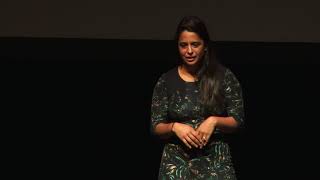
In this keynote, Anneka (Anika) Gupta recounts her 10‑year trajectory at LiveRamp, beginning as a software engineer in a 25‑person startup and rising to co‑CEO of a 400‑person organization. She describes how she moved across product, marketing, and recruiting roles—often stepping into positions without prior expertise—to gain a broad, generalist skill set. Gupta details her product leadership during LiveRamp’s hyper‑growth phase, where revenue jumped from $30 M to $200 M and the team expanded dramatically. When the founding CEO announced his departure in 2017, Gupta was thrust into the co‑CEO role, confronting intense fear, self‑doubt, and scrutiny from senior leaders. She explains the early paralysis she felt, the morale challenges that emerged, and the concrete actions she took: ruthless time prioritization, revamping executive communication, actively seeking help, and openly sharing her vulnerabilities in an all‑hands meeting. These steps helped restore trust and direction. Throughout, Gupta reflects on the ongoing tension between confidence and fear, emphasizing that true leadership is defined by acting despite uncertainty. She closes by encouraging listeners to step into leadership roles even when they feel unready, highlighting self‑reflection, courage, and the willingness to ask for help as essential qualities.
Chapters
Hi everybody, my name is Anika Gupta and I'm really honored to be here tonight to share my story amongst 7 other incredibly inspiring women. I started at LiveRamp as a software engineer back in 2010 after I graduated from college. Little did I know that 8 years later, I would be at the same company leading an organization of almost 400 people as co-CEO. Back in 2010, we were just a 25-person startup trying to find product-market fit. And as a software engineer, I spent my days hacking away on different projects, pulling all-nighters when our sales team decided to sell something that we didn't actually have. And through this product— process of experimentation and iteration, we finally found a product that was going to take us on our first wave of growth. LiveRamp is a marketing technology company, so I'm not gonna get into the details of what it is we do or what our initial product was. But when we hit that stage, I decided that I wanted to move into product management. Without a very clear idea about what product management really was. So I did everything from handling customer support to troubleshooting engineering issues to developing the roadmap of what we were going to build. It was super exciting, and this was an early time in the company when we were starting to get a lot of customers, starting to get a lot of feedback, and really starting to grow. And I would have continued down that path had it not been for about a year later, The woman that was running our marketing team left the company, and I really wanted to learn about marketing because as a product manager, I had come from a technical background. So I had the technical side of, of being a product manager down, but I didn't feel like I had the external market-facing side of product management down. So I went to the leadership of our company and I offered to help on a few of the marketing projects that were in flight. And I had worked with the marketing team before on setting up our website and setting up some of our marketing tools to run campaigns. And our leadership team came back to me and said, hey, you know, you can either run a few of these projects, or you can run the marketing team while we look to hire someone. So I thought, OK, this is a great— could be a great experience for me. I'm going to learn a lot. So I jumped wholeheartedly into running marketing without really knowing, again, what marketing did or was. And we were trying to make a hire, and First, we thought that we were gonna make a hire for the team in about 3 months. It ended up taking us a year to hire someone for the role. So I ran marketing for a year, and about 3 months into the role, our CEO came up to me and he said, "Hey, you know, we really need someone to run recruiting." And recruiting's a lot like marketing. Instead of marketing to specific, or to potential customers, you're marketing to potential candidates and people that are gonna join the company. So again, I thought that this might be a great learning experience for me, so I dove into running the recruiting team. So I ran marketing and recruiting in this early stage of growth for about a year. And at the end of the year, we hired a VP of marketing who could really scale our marketing programs and take them beyond the guerrilla marketing programs that I had created. And the leadership team came back to me and said, hey, what do you wanna do next? You can stay on the marketing team and You can continue to be working in marketing and growing your skill set there. You can run our customer support team. You can run our HR and recruiting team, or you can run our product team. And product was really where my heart was at. I really enjoyed my year as a product manager, and that was really, even when I was in college, that was a role that sounded just super exciting to me, 'cause you got to be at the intersection of technology and strategy and, your market message. So I decided to take on this role running the product team. And I ran product for 3.5 years. I ran product through our acquisition and subsequent hypergrowth stage where our revenues grew from $30 million to $200 million and our team grew from 30, or from 70 people to close to 400 people. And during that time, it was, Lots of fun. I learned a lot. And the product was wildly successful. But I started to think to myself, what do I want to do next? Where is this going to take me? And I knew I could continue down a career in product management. And there's a lot of roles now and a lot of opportunities to lead product teams. But deep down inside, I was not a specialist. One of the things that I'd really enjoyed about everything, all the twists and turns that my career had taken me, was the fact that I got to do so many different things. And I got to explore, and I got to be a generalist. And even in college, I didn't want to be siloed to a single major, so I chose an interdisciplinary major where I could work on many different, take classes in many, many different subjects. So I started talking to mentors, and they asked me, "Have you considered maybe thinking about being a CEO?" And at first I was a little hesitant, and then I started saying, "Yeah, okay, that's, that's what I want to do." So I started telling people, "I want to be a CEO." But deep down inside, I had huge misgivings about my ability to do this. I looked around me at the CEOs I knew, the founder CEO of our company, his predecessor, CEOs that are wildly revered like Jeff Bezos or Mark Zuckerberg or Steve Jobs. And I looked at them and I felt like they were not like me. I felt like I had a different personality and I looked at them and they seemed so bold and self-confident and fearless and willing to bet their whole company on a vision of the future that was potentially controversial. So I was, you know, all of this was going on in my head, and then in August of 2017, about 6 months ago, I got a call from our CEO. And he told me that he was going to take a position as a CEO of a startup company, a company that he'd been on the board of, the company that had just raised a lot of money from SoftBank, and he felt like that was the right time to move on. And my first feeling at that moment was fear because I knew what was coming next. We had talked about succession planning and our CEO told me that he wanted me and our Chief Operating Officer to become co-CEOs of LiveRamp. And I remember the day that we announced this to our executive team. I was so anxious and so scared. I was and still am the youngest person on our executive team. And I knew that other members of the executive team would think, or would ask themselves, why were they not chosen as a successor? And why was I chosen over them? I also looked at all of them and I knew that they could all do their job much better than I could do their job. So what did I really have to offer? In the first month and month and a half after the transition, I was paralyzed by fear. I felt so insecure about what I could do and making any changes that I basically didn't do anything. I mean, I did my job and I kept things running, but I was afraid to make any major changes. And then we started to hit a point where morale was beginning to slip within the company. And this was due to a lot of things, mainly growing pains. We had a bunch of longtime live rampers leave the company. We had a bunch of product stability issues. We got feedback from people that there was, it was hard to make decisions and it was hard to figure out who to go to to get things done. We got more feedback that people felt like the leadership team wasn't being transparent about the challenges in the organization. And on top of that, I got feedback, some pretty harsh feedback from some of our executives that now reported to me. One executive told me that I was micromanaging him and that if I continued this, no experienced leader would want to work for me. Another executive told me that I was perpetuating politics within the organization. So all of a sudden, all of my fears and insecurities were becoming very, very real. And I realized that I had to do something. So I started acting. And I made a bunch of changes. I started ruthlessly prioritizing my time. I started changing the way that our internal communications were being managed and how we were leading our executive meetings every week and helping us focus on really the big issues at hand versus just the small things that come up every day. And the biggest change I made was I started reaching out and asking people for help. And this was a big change for me. I restarted reaching out to people to help me even if I felt like it was outside of the scope of their job. Even if I felt like I was imposing on them by asking for help. And even if I felt like I was being incredibly selfish by asking them to do something that I could do myself. The last thing I did was I started being very open about my fears and vulnerabilities. And this culminated in an all-hands meeting that I led for the company where I was supposed to share my takeaways and learnings from the first 90 days. And I decided to stand up in front of the company and talk about the fact that I was really working on trying to ask for help. So I went through the top 8 concerns that I'd heard from the team, and it was all the things I talked about, like, are we losing our culture? Why are we having a hard time retaining people? All of these things, and for each item, I talked about what we were gonna do as a leadership team to solve this, and I made an ask to the rest of the company about how they could help solve that problem. And that was a real turning point, because the organization felt heard, and I felt like I was really making a difference. Since then, it's not been all rainbows and unicorns. There's been a lot of moments of, pure joy, and there's been a lot of moments of hardship. I've had to make really difficult decisions about where to take the company, decisions that were incredibly gut-wrenching. I've had to hear through the grapevine that people disagreed with some of the ways I did things and attributed that to me being an inexperienced leader. However, the sum total of these experiences had— has made me a better person. It has forced me into a continuous cycle of self-reflection. Of self-improvement, and it has forced me to face my deepest fears and insecurities. My hope in sharing this story with you is that you will be inspired to step into leadership roles that you may not feel ready for. Even to this day, at least a couple times a week, I hear the voices in my head, that— voices of self-doubt, voices that question my self-confidence, voices of fear. And in those moments, I tell myself that while the great leaders are remembered by the bold decisions they made, their courage is defined by acting in the face of fear, not in the absence of it. Thank you.