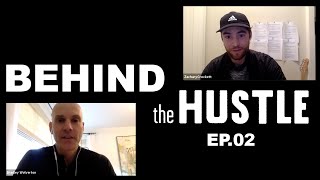
Brad Wolverton and Zach Crockett survey small-business owners who survived the 2008 recession to find lessons for COVID-19. Some cut costs to $5 a month; others doubled down on growth. A furniture designer became a cabinet maker. A car dealer expanded used inventory during the downturn.
Chapters
Hey everyone, I'm Brad Wolverton. I head up the editorial team here at The Hustle, and today I'm joined by Zach Crockett, who's our senior editor of our Sunday stories. Welcome, Zach.
Hey, how you doing, man?
I just wanted to, um, talk to Zach briefly to tell you all about this amazing story he's working on for this Sunday. If you've enjoyed our coronavirus coverage, you're going to really be impressed with what Zach found this week. So a couple weeks ago, he did a survey of our audience and was looking for people who had survived the Great Recession and wanted to find some stories of lessons that they had learned to share with our audience. So tell us a little bit about the survey, Zach, and what kind of response you got.
Yes, so I mean, I mean, just to start off, I mean, Everyone knows the Great Recession is a totally different crisis. Every recession and crisis is totally different. Obviously, this is a health crisis in addition to a potential financial crisis. But there— it is interesting talking to some small business owners who've been through— basically been to hell and back. There are a lot of lessons, and sometimes it changes your business in a permanent way. So we were kind of curious to reach out to small businesses that went through it last time around and hear about some of the universal lessons of what it takes to survive a rough time in general. We, you know, got a couple hundred responses from all over the place. I've basically spent the last two weeks talking to, you know, lotion makers in Scotland and farmers in the middle of the country, uh, car dealership owners in small town Illinois, uh, cabinet makers in Tucson, Arizona. Just all kinds of— all over the map, all kinds of small business owners, entrepreneurs, inventors. Um, no matter what the size of your business is, uh, some of these struggles are universal. Recessions and crises hit businesses in very different ways, but it was so interesting to see just the very response of how people got through this, what it was like for them. Some people thrived during the recession, other people it was fighting tooth and nail to just keep your employees on board and pay the rent. There was just a really incredible varied response from people all over the place.
Anything really stand out to you in a big picture way, Zach, that you found that could be universal— universally applicable or helpful for people?
Well, a couple things. One of the questions we asked in the survey was whether people were defensive or offensive during the recession, and the response was actually pretty interesting. It was almost a 50-50 split. It was about 60-40 offensive, defensive. So I didn't really see a major trend with, with strategy, with the fundamental strategic approach. You know, I also asked what they would— how, what kind of characteristics they had to adapt to survive. We saw a lot of cost, like severe cost cutting down to $5, $10 monthly expenses. Just total redlining of budgets and going through things with a fine-tooth comb. We saw a lot of pivoting, flexibility was really big. That cabinet maker from Tucson I mentioned considers himself an artist. He's one of the preeminent furniture designers in the area, really respected, very high-end furniture. During the recession, he pivoted to build cabinets. He basically became a cabinetmaker. He became kind of a general contractor more than an artisan. In the grand scheme of things, that might sound like a small cost to pay to survive, but it took a tremendous amount of time and energy and effort to be able to to make that pivot. It's like me, a tech reporter, just being, having to learn how to report on science overnight or something. It's a completely different thing. So, yeah, we also saw, you know, some people took, made a very difficult decision to go, to double down and go all in and expand during the recession. Like the car dealership owner I mentioned, the auto industry was hit incredibly hard. Used car sales dramatically decreased, which is one of the biggest revenue drivers of any car lot. And instead of cutting costs, he decided to double down on his used car inventory and use it as a time to bulk things up. And then when things started to shape up again, he was able to outbid a lot of his competitors on the price of used cars. So It's one thing I learned in the last few weeks just talking to so many people is it's hard to find universal lessons because business is just so personal and subjective and it's such a labor of love that every situation is different. But I think that there were a lot of things that came out of this that Even hedging that this is a very different situation and that there are all kinds of businesses, many people could apply to their own situations right now.
Makes sense. Well, I don't want to spoil it for you because you have a lot more you're going to tell in your story. You're going to talk to a lot of people and tell their stories. Make sure you open our email on Sunday. I did want to tease one more thing. There are lots and lots of people who've told their stories, and we have a database of these people, and we're going to do something pretty special with it too. So we've got some plans for that, not exactly ironed out yet, but we're going to be able to offer that to people to learn some of these lessons as well. So anything else you want to say, Zach? What do you want to tell me about what's behind you there besides that beautiful guitar? Is that your outline taped up to the— to the wall.
Yeah, these are— sometimes I'll print out my outlines, my stories, and just go over it physically. It helps a little bit. It's just hard to organize everything in your head sometimes when it's all on a screen, toggling back and forth between tabs and spreadsheets. It's nice to hold something in your hands sometimes and look at a physical document.
Very cool. Well, although we have— you have a ton of fans out there, maybe we should do a separate segment on how you actually put one of these stories together sometime. So That— we'll save that for another time. But thanks for joining us today, Zach. And everybody, make sure you open the email on Sunday.