Bootstrapping A Small Agency Into A Billion Dollar Business Empire
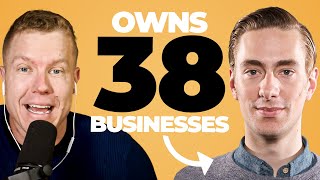
Andrew Wilkinson bootstrapped a digital agency into a multi-billion-dollar empire by reinvesting 70% of profits and hiring leaders who build their own teams. He credits compounding, aligning incentives with risk, and execution over market timing as the core drivers of growth.
Chapters
I don't know if you know this, but Warren Buffett made like 97% of his wealth after the age of 55. Um, so, so it all happens very slowly. He started in his 20s or whatever, and he wasn't really well known until the '90s. And the same thing happened with us where we didn't really talk about what we did. People would meet us and they'd be like, oh, you're some schmoes from Victoria who owns some digital agency. You seem to own all these really boring businesses, you know, whatever. And so it requires being kind of underestimated and dismissed and playing a very boring game. While watching everyone else go and make, you know, tens of millions, billions of dollars taking risk in startups. Meanwhile, we're just going, how do we take, you know, $100 grand and make $10,000, $15,000, $20,000 a year on that money and just keep compounding? And so basically the mental model was take 70% of our profits and constantly reinvest, take the other 30%, live a nice life. And that number went down over time. And, uh, yeah, you do that for 17 years and it turns into a, you know, a big number.
And something that you wanted to talk about today was whether it's better to own 100% of something and bootstrap it or to give up equity for partners, whether that's for sweat equity or money or money. But you, uh, we were talking about that and I asked my audience, companies that were bootstrapped and quite big. And there's a few that are doing billions, uh, a year in revenue. And I know, noticed two commonalities. One, a lot of the things that were bootstrapped to be really big, they were things that were easy to take bank loans against. So it's a lot of restaurant stuff. So maybe they took like loans against some equipment or they took loans against, um, a building they owned, things like that. The second thing was I've noticed that there's a lot of agencies that were bootstrapped and became pretty substantial size agencies or agencies or service-based businesses. So like recruiting, uh, companies, um, um, IT services, things like that where it's basically you bill out people's time for $100 and you charge $300 or something like that.
Well, think about it. You don't need, especially if you're a young person and you can cut, you got enough money to live for a year. You can go and start an agency because at the end of the day, it's you go and sell, you win a contract. As soon as you win the contract, you go and find a developer or you do the work yourself. And then before you know it, you're cash flowing and you're always able to hire people just in time for the work. And so at the end of the day, there's really no burn and it's very capital efficient and you don't need, uh, you don't even need an office anymore. I mean, we, we almost never had an office and, oh, you know, over time we had, you know, a couple small ones or whatever, But the big fuck-up a lot of these big agencies make is they start starting like these fancy, humongous $5 million offices in New York and San Francisco and Spain and, you know, whatever. Um, they're, they're great businesses if you run them right.
And how many people work at MetaLab now?
Uh, I think it's about 170.
How often do you say to yourself, I'm not sure if the, the headache is— the headache of having 170 employees is always worth it?
Well, it's very abstracted for me, right? I haven't been in the business for 5 or 6 years, and the way we run Tiny now is that we meet with the CEO once a year, and otherwise they check in whenever they need help with anything. And so when I was running it, like, first it's exhilarating. Running an agency is awesome. When you're starting out, you get a seat at the table in all these places you don't deserve to be, right? Right? I was like a 22-year-old pipsqueak and I was meeting the founders of Pinterest and Slack and, you know, all these amazing places. And they were asking me for my opinion, right? It was, it was crazy. But at a certain point you get so exhausted, you're making a good amount of money. You don't want to get on a plane to San Francisco every second day to go and sell. And at that point, you know, it starts to become a much more intensive business. And for me personally, I don't enjoy running businesses after about 15 or 20 people. And so once I hit that point, I knew I needed to transition to a CEO.
So when we were in the document, you say the pros and cons of bootstrapping and owning 100%. What do you have under those?
Well, I mean, I think that I've changed my opinion a lot on this. Like when I first started, I was like a Jason Fried, David Heinemeier Hansson acolyte, like 100%, every business should be bootstrapped. I now think that's crazy and stupid, and I think there's certain businesses where it's insane not to raise money, right? Like if you have an opportunity to grow your business, it's like the analogy I always use is if you own a bakery and there's a line out the door and you have a single oven and you need to buy 3 more ovens, but you don't have the money, and in order to service the people in the line, you need to buy 2 more ovens. It's crazy not to raise money or go get debt or something. I just was never in that position. Um, and I think, you know, owning 100% or owning majority in your business, it's like a dictatorship. And dictatorships can be very good, uh, like Lee Kuan Yew from Singapore, or they can go terribly like Kim Jong Un. Right. And the question is, what's your personality and what's going to work for you? I mean, you can move insanely fast. There's no board, there's no committee. You don't owe anyone anything. You don't have an outcome. You know, you don't have to IPO, you don't have to sell. And you have total integrity. Like when Chris and I buy a business, we can look people in the eye and be like, we're cutting a check. Like, this is us, right? That's very different. On the cons, I mean, you're on an island. You don't have anyone to really who's aligned and cares and can tell you you're being an idiot. And so you can really drive your business off the rails. And then you also think in a limited way. I mean, I know so many entrepreneurs who could 10x their business, but they're they're so addicted to their dividends or they're conservative, and so they don't. So it's just very nuanced.
What about this conversation?
I raised money for our podcasting software company, Supercast. I'm going to raise money for our news business. There are situations where it's logical. All right.
And then I forgot to tell you this, but this is the most important thing. I can't believe we didn't talk about this earlier, to be honest with you, because if you're listening to this and you like what you're hearing right now, and you haven't gone and subscribed to the My First Million podcast wherever you get your podcast, then that's the thing you gotta do. There's nothing more important than doing that right now. And don't do it cuz I said to do it. Do it because you want to do it. Do it because that's who you are.
What about that conversation of employees, employees saying they want equity and you don't give equity?
Well, it's just, there's certain businesses, there's certain businesses where we do and there's certain ones where we don't, right? And the big question is, What I always say to a, to an employee is equal risk, equal reward. And if the business is going to sell at some point or we think it can IPO, great. We'd love to talk about equity, but there's a cost to it, right? If you want to make $300,000 a year and you don't want to give up any of that $300,000 in order to get stock options or buy equity, then doesn't matter. So I love, I love giving people the option and saying, look, you can either give up some of your comp or upside or whatever, and we'll give you stock options, or you can get the big salary and prioritize cash. And a lot of people prioritize comfort and cash, I find, at least, you know, outside of the Bay Area.
By the way, Andrew, you mentioned the guy from Singapore. Sam, do you know this guy Lee Kuan Yew?
I know a little bit about him. I didn't realize he was a dictator. I thought they called him like the CEO or something.
Now he's literally a dictator, but like a good— the good dictator.
Andrew, can you give us like the 2 minutes 2-minute kind of summary of who this guy is and why he's awesome.
So effectively, he took over— Singapore is like an island, tropical island state in Asia. And at the time it was like rice paddies, poverty, like a bog. And he literally took it over, you know, had an autocracy, had total control. And he basically thought like a businessperson and was like, okay, how do we make this the most business-friendly place? How do we optimize taxes? How do we ensure we have hyper-competent government? How do we pay government really, really well? Uh, how do we incentivize the whole world to manufacture and export, uh, you know, their products from here and basically built it into Asia's kind of outside of Hong Kong. I think it's like the central banking and finance hub in Asia. So it's a pretty incredible story.
And I think he, his background is like, he's like a math and computer science guy, right? Like, he doesn't come from kind of this like, you know, uh, political background. Like he came from a different sort of background. And I think that's why you got different ideas from, from a leader in charge.
Totally.
Uh, you want to tell me, you also had something you—
I was going to say you had one thing you tweeted out, uh, that's related to how you run the business at Tiny, which is this, this hire one, hire 10, uh, framework. What, what is that? Because that sounded interesting to me. And I think that that's like a, from what I understood, it was a pretty useful concept. So, so explain that.
Yeah. So our CEOs get super annoyed because I say this all the time. It's probably the number one thing I say. Uh, and it's probably the biggest hack that enabled us to build Tiny over the last 8 years. Um, so I mean, think about it like this. So if you had an army general who is commanding 1,000 troops, but he's still telling individual soldiers what to do and he's personally restocking their ammunition and and he's shuffling people around, you'd be like, what the hell is this guy doing? Right? But I think a lot of people operate their business like this. I mean, I certainly did in the early days. I would swoop and poop and, you know, instead of hiring a VP of marketing, I would go and I'd hire a whole bunch of marketing people and just kind of become the VP of marketing. And, or I'd bypass people and tell people what to do. And what I realized is you should never ever hire the 10 people. You should always focus on hiring the one person. So that could be a CEO who will then go out and hire all the executives, Or it could be hiring an executive who will hire an entire team. But, uh, it's just, it's such a hack, right? It's like 80/20. How do I do 20% of the work for 80% of the result? Um, and, uh, yeah, I mean, it took me ages to figure this out. I feel like I've only cracked this in the last like 5 years and I still, Chris will still catch me in this. He'll be like, hire, you know, hire 1 to hire 10.
Then, then, but when you hire that mistake all the time, and when you hire that one person, how much? So let's say your business is doing, let's say, $1 million in revenue. It's small. No, let's say a little— let's say $10 million in revenue, $2 million in, in like actual cash flow. You have— you hire that one person, you pay them a lot of money, $250,000. Do you only hire that $250,000 person when you know for a fact you've got budget for like 2 more people?
Yeah, that— I mean, that's my approach. That's why I've shifted to is like I hire Here's an example is like we hired the CEO of Aeropress and he asked me questions, oh, what do you think about this hire or that hire? And I just said, that's your hire. I hired you. I trust you 100%. You make those hires.
Right.
And so it's complete delegation of when I buy a business, I make two decisions, who runs it and how are they incentivized? And unless they do something dirty or horrible or the business goes to shit, You know, I just leave them to it.
What's the trick on the, uh, how are they incentivized? So, so what's the, how do you think about that when you buy a business and you say, all right, the business today is here.
It is.
And I think naturally it's gonna get to there. And I'm bringing on this person to get it to be some inflection above that. And I also know that things could go wrong. So how do you think about that incentive structure? Is it con— is it case by case? You're coming up with very unique patterns or very unique, uh, you know, packages, or do you have kind of one base that you, that you go off of?
It's so different. I mean, like everyone's incentivized differently. There's, there's certain people where, for example, they need to be able to say they're a partner and they have equity. There's other people who don't care about that and they want just targets to hit. Uh, I mean, we've done everything from saying, okay, let's say the business makes $100 million and it's growing at 15%. You, anything you do over 15% growth, you get 5% of, right? That's in its simplest. We've also done things where it's like, you know, hey, when the stock price hits X, you get a payment. And I remember, um, I got to have dinner with Charlie Munger like 2 years ago and I was like, what's the perfect incentive structure? And he just said, I've done hundreds and everyone is different and I still don't know what works. I think it's really an art, not a science. Cause you know, different people are just so differently motivated and you actually like stake.
So you, sorry, one more, Sam. When it's usually, usually when it's like, ah, it depends, there's, there's that, what that usually means is the winning formula is different a lot, but there's usually a common losing formula. So what is the common losing formula for incentives?
The common losing formula is them not being aligned on risk. So for example, if they're able to use my money and I can keep injecting money into the business, but it in no way hurts them. So for example, they don't get diluted or they don't have to pay a high interest rate, or, you know, if it goes bankrupt, they don't lose anything. That's a huge problem. And I've learned that over the last 5 years. And so now what I try and do is if somebody wants equity, I always make them write a check, right? Or, or I loan them money and it's literally a personal loan guaranteed by their house or something.
Right.
And it's got, it doesn't, I don't want it to be so much money. It's going to ruin them or be a problem. But I, if someone wants equity, I'm like, okay, you gotta put up something because if the business fails or goes down, you gotta have a sense of loss. People feel a lot, people feel loss more than they feel gain.
I just imagine the Wilkinson moving truck coming in front of the house. They're like, no honey, it's all gone wrong. You have to come and you put your own furniture, your own art on the walls. They get to live there, but they have to know that it's your house now. And they truly have fucked up.
We have done it. We, I obviously, you know, I never want to do that. And it's always structured in a way where it's not, we're not going to have to take their car or something. But I just want— I want a feeling of like, there's got to be some downside, you know?
Sam is going to take this way too far. He's going to take their car and it's like a punch. I get to punch you just because if you lose my money, I'm going to punch you.
Yeah, I love this, Gabe. You, you also, speaking of that, of risk, you also hire people really early. You told me— I don't know if you talked about this, but you were tinkering around with this bake— do you want to talk about the bake? Can you mention the bakery or no?
Yeah, well, the bakery is kind of sad.
No, sorry, not the bakery. The, the, uh, the ghost kitchen.
Ghost kitchen.
You tinkered with this thing where you hired a baker and you were making stuff to sell on DoorDash and Uber Eats. And I don't know if it was entirely legal, so we don't talk about it. But the point I'm bringing up is, is that—
oh no, I can, I can, I can tell.
Well, tell the story and then let me ask my question.
Sure. So basically, you know, I'm pretty interested in health and stuff and I was trying to get off sugar. And so I went to a baker friend and I was like, look, can you try and make like, like sugar-free cookies using modern— you know, there's always like crazy modern sugars like stevia. Magic Spoon.
Yeah.
Yeah. Like Magic Spoon uses allulose and stevia and monk fruit and stuff. So he started making these and I was like, okay, these are like not as good as a chocolate chip cookie, but they're like 90% there. And I bet you a lot of people would be into this as like a replacement. Like, think about Halo Top. It doesn't taste as good as ice cream. You can eat a fuckload of it and it's not bad for you in the same way. So I basically made that. We started making all these treats. We were cooking it out of our office, which is not technically legal. Um, and what happened was, um, I got a call from Island Health, which is like the local health authority. And they just said, hey, you're using an ingredient that's not approved in Canada. And unfortunately, allulose is not approved in Canada. And so you just legally can't serve food with it, even though it's generally regarded as safe and everything. Um, so I'm still going to do it at some point, I think, but I just legally can't. It sucks. And I've never— it's insane to me. You can hit up against these regulatory issues. Like, imagine being a real estate developer and like you have this amazing vision and then city council is just like, nope.
Yeah.
Like, that is insane to me as an internet entrepreneur.
And that's what I was going to ask. So you like hired a baker to do it, but then also with your, newsletter business, your local news business. You hire— I forget the guy's name, but he's, uh, I've talked to him a bit. He's a nice guy. You've hired him to be the CEO. And so you, you hire people pretty— yes. And you, you hire people pretty early on. And hiring someone to do something to me is a huge risk because in my head I'm like, man, if this guy's got a kid, like, I'm like, his kid's now kind of my kid too. Um, you know, like it's like a big risk if he's quitting it. That's how I felt when my, when my, one of my first employees got married. I was like, oh, I've got a family now. Because I was like, some of the decisions I make are going to impact this entire family. And that's really stressful. And it's also a huge conversation to convince someone who's in their 30s, 40s or whatever, and they're even in their late 20s to leave their fancy gig at Salesforce to bail and come to my company that I'm going to pay them $45,000. That's a huge thing. I go— when I go to bed at night, that stresses me out. But you seem like you overcome that pretty easily. You hire people relatively early and you're like, yeah, it's no big deal. I'm just going to hire this person. What's that like? Like, what are you thinking when you do that? All right, what's going on? Just a quick break, a quick interruption. Scroll down into the description box on YouTube and you're going to see a link to The Hustle. The Hustle is a daily email that gives you all you need to know about business and tech news. I started it years ago and it's awesome. It's kind of how this podcast got started. So check it out. The Hustle. Scroll down. Do it.
Well, I've lost— I've, I've messed that up a lot. And I think you guys know my whole story about losing $10 million building project management software. Like, that was a perfect example where I got ahead of myself. The business didn't make sense, and I threw a bunch of spaghetti at the wall and none of it stuck. And I had to let a whole bunch of people go, and it was really horrible and sad. And, you know, it was like a 10-year slow death, right? So I've been through that. So now it's more with the amount of scar tissue I have, I've enough, I have enough signal where I can be like, okay, I'm gonna try this. And with the bakery, I was just contracting a friend, right? Yeah.
That was the best example.
I said, this is an experiment. With the news business, I actually ran it for 3 years before I partnered with Farhan and he took over as CEO. And by that point there was enough signal, it was slapping me in the face. I was like, this is a big opportunity.
And is that the case with all, with all the things? That you start? Retake that.
Yeah, usually, like, if I, if I go in, I hire a CEO, I'm pretty high conviction that there's something there or there's already a business that supports, has cash flow. What I would never do is be like, hey, there's a, you know, I have an idea for this. I'll just go hire a CEO. Like, I would never do that.
Andrew, I feel like you've reached this point. And I used to be like, how did these motherfuckers do this? Where I remember I was doing a startup And it was so hard to get my one thing to work. And then I would meet people who were like, oh yeah, so I have that past success, then I have my current success, and then here's my 3 side successes that, oh yeah, I had this idea and then we just started doing it and then guess what? The line's out the door. And then this other one, it's like kind of cool. We just started it, you know, like I accidentally, you know, my hand just fell on my keyboard and I accidentally wrote this app. It was amazing. It went viral. And then there's other thing that I just tweeted about and then this all coming together nicely. And I just remember being like, what do they know? Something I don't know. Is there just like extreme luck component? And I felt that way for many years, 5, 6 years straight when I was pushing the boulder up the hill with my startup. And then I now have experienced exactly what the thing that I was most jealous of. And I have no idea what switched in between where like the last 5 things I've tried have all worked and all worked pretty much immediately. And it doesn't matter how big or small, like, you know, whether it's like the podcast or the course or, Um, you know, the, uh, my e-commerce business or my, the new Milk Road newsletter business. Like each of these has just worked straight away in a bigger way than anything I'd ever done before. Um, with less work and less stress than like the old stuff I used to do. And I have no idea what changed or I have a kind of an inkling, but I don't really know. Sam, have you ever thought about this or do you know what I'm talking about?
And what do you think? I know, I know exactly what you're talking about and I completely agree. You're on a roll right now. Um, and What's your inkling? I have a feeling my, my, my answer is it's kind of like a shitty— it's like a mindset, like abundance attitude and being on, being on offense versus defense. But what's your, what's your, what's your inkling?
So my inkling is that I switched up my situation. So like I was in one situation for a very long time, like, and it was a nice situation, was a very nice situation. but it was like where I was going to this office every day, working with these people in this hierarchy with this boundary box of like what project or projects we can work on and like what success might look like. And as soon as I got outta that and I was just me, I was like, oh, okay, so now that it's just me that I have to look out for, I guess I could just do a podcast. I didn't have to have like this big venture billion dollar outcome. I didn't have 20 engineers to go tell what to do. I had no engineers. So I just did what I could do with no engineers, which was like, I'll do a podcast, I'll do a course, I'll do— I'll just try to get big on Twitter. Let's just see what happens. And oh, you know, like 5 tweets go viral and boom, got 200,000 followers. It's like there's these things that I just wasn't doing before because I think before I had a really set thing of like, here's what I need to do. Like, here's the only way to win. And I had like almost too much ammo. I had like too many people at my disposal, too much funding, too much everything. And because of that, I had a very narrow window of what could work. And so I was just trying to come up with ideas that might work versus, oh, let me just try this because I'm, I just kind of want to try it. And then when, once I got into, I just kind of want to try it and I didn't have it, I didn't have to worry about what other people thought or I didn't have to come in and manage anybody in that day and tell them what to do. I didn't have like investors to go pitch to. I just did the thing. And then all of a sudden I feel like, you know, sort of like all the talents and skills that I had been building up over the past 10 years, like finally got to just do them.
Yeah.
Don't you think it's like dating or something though, where it's like, you, you know, you date a couple crazy girls and it's really exhilarating. And then over time you're like, wow, that was horrible. And there's pattern matching. You're like, okay, when I go to a restaurant and a girl's rude to the waiter, that's a no, right? And in the same way with business, you go, oh, okay. Like, I used to think I wanted to build all these kinds of businesses, but those were 10-foot hurdles. I don't want to jump 10-foot hurdles. I want to jump 1-foot hurdles. And so if you think about it, all the stuff you're doing, they're in your circle of competence and they're relatively simple to execute. They don't require a lot of people. They don't require funding. I think learning that is like a 15-year overnight success kind of thing where it just clicks suddenly. Right. And I'll catch myself occasionally getting pulled down rabbit trails of like, Oh, what if I did this crazy, you know, drone AI startup, whatever? But then I always go back to Base Hits.
And I, and I, and I think there's a, I think there's this third component. Uh, well, go ahead. You go ahead. All right. There's this, there's, oh my God, what's going on?
So we're like fucked up.
All right, I'm gonna go. There's this third component of, of confidence. And so I think that because of like my work, I've been more confident and I understand like Well, if I invest a dollar here, I think I can make at least, uh, $3 the next 2 years. So like just understanding how machines, like money-making machines work, investments. But then also I think Sean, because we get to hang out with pe— we hang out with each other, we hang out with Andrew, we hang out with our circle of friends, we hang out with all the people we've had speak at our events, we hang out with our, um, podcast guests. It becomes more normal. Like succeeding has become far more normal than not succeeding actually. And not succeeding is just like, Oh yeah, it's going to happen. But then you just move on and you do the next thing. And it's like, and then inevitably it works. So it's not if it's, or it's not when it's if. And I think that confidence has actually helped a ton where, so for example, now if someone wants to like real estate's an easy one because it's so predictable, but with real estate, you're like, oh man, putting $100,000 down on this house is a lot of money. That's a, you know, that's 6 figures. It's like, well, dude, but it's going to make 12%. It's like, well, I don't know that. And I'm like, yeah, I know, but it's going to do that. So you actually want to invest more. So like that confidence of just knowing the motions and knowing the routine and process has actually helped a lot.
Totally.
Yeah. The other thing I was going to say is, uh, which is what you guys both just said, but framed differently is I was taking a shitload of market risk before, and now I basically take almost no market risk. I just take execution risk. And before, even if I felt like I executed great, which I did, I feel like I did in a couple of the projects that we had done. And during my, like, kind of like the, the, the previous startup, um, the market risk was too high. Like there was just no, it was like inventing a new fucking, like a new science, you know, on a new land. And it was just, the market risk was way too high. Now I'm just doing things that are like, oh, I knew, I just know that this works and I just need to do it well. So it's like e-commerce is nothing, there's no fancy science to it. Um, and I had buddies who did it and I just used their model and I just did my own in my own lane of their model. Milk Road is The Hustle, but in the crypto lane, which is the crypto lane I like, right? It's like I just took your blueprint for The Hustle and I just copy-pasted over here, and then it's execution risk from there.
I know, dude, I saw that you literally copy and pasted the Twitter handle. It was hilarious. Your Twitter description is literally copy— I sent you some old resources from The Hustle, and we called ourselves this— your smart, good-looking friend or something who tells you everything you need to know about— and you just copy that and you put— instead of Business of Tech, you just put like delete crypto or something like that.
And actually the thing is, it wasn't even, you know why it did that? Uh, I remember 7 years ago or 8 years ago when you first said that to me and the very first, like, you know, like you, you kind of sat me down. You're like, look, people are not, people are aged. Like we don't watch MSNBC and like CNN and this stuff for our, our information. That's not the brand we trust. And you, you said it, you're like, I just wanna be like, they're smart. And I remember you said it, I just want to be like your smart, no-bullshit friend who just explains and tells you what's going on. And I was like, I like— it clicked with me 8 years ago. And so when it came time to do this, I was like, that's the exact description, the smart, no-bullshit friend.
I think one more thing, Andrew, is that I look at— I, I used to— you kind of said that Andrew, and in terms of like financial success, which is a big but not only, uh, measure of success, Andrew, you're like a grand slam at the moment. You know, you're, you're, I imagine you're incredibly wealthy and you've built businesses that are incredibly large. So by that measure of success, you are like way out there. And for a while, I think I like, you were like mystical to me where I'm like, how is he doing this? Now it's changed to where I think I acknowledge that you definitely have talent that makes you special. You for sure have skills that make you special, But really a lot of it is also, I don't know what percentage of it is each, but let's just say a third, a third, a third, a third of it is, well, he's just been doing it for like 15 years now or a certain amount of time. And he just like took the risk of raising or, um, building the business. And then he raised the money a little bit for the fund. And so it's not a matter of like, how is he doing, doing this? It's just like, well, if I want that life, like I probably could do it. I just have to dedicate 15 or 20 years and go through the same motions that he does. And that may or may not fit the— what I like.
The interesting thing is, I don't know if you know this, but Warren Buffett made like 97% of his wealth after the age of 55. Um, so, so it all happens very slowly. He started in his 20s or whatever, and he wasn't really well known until the '90s. And the same thing happened with us where we didn't really talk about what we did. People would meet us and they'd be like, oh, you're some schmoes from Victoria who own some digital agency. You seem to own all these really boring businesses, you know, whatever. And so it requires being kind of underestimated and dismissed and playing a very boring game while watching everyone else go and make, you know, tens of millions, billions of dollars taking risk in startups. Meanwhile, we're just going, how do we take, you know, $100 grand and make $10,000, $15,000, $20,000 a year on that money and just keep compounding? And so basically the mental model was take 70% of our profits and constantly reinvest, take the other 30%, live a nice life. And that number went down over time. And yeah, you do that for 17 years and it turns into a big number. Ironically, I still feel just as at risk and terrified as I did 15 years ago.
I think that's real.
And I think it's the classic thing of—
You're not actually scared, are you? Because I have liquidity now and I'm I'm scared, but I'm like, am I as scared as when I only had $20,000 in my bank account? I can't decide.
No, no, no. But it's, it's maybe it's different for me because, you know, I have a, an un— for if you told me 10 years ago how much, you know, cash we have or what our cash flow is, it would blow my mind. And I'd say, how could you ever feel at risk? The problem is that the stakes are bigger. You know, we have almost 1,000 employees now, right? So there's a lot more, um, You know, there's the stuff that can go wrong. Do I feel that I've built out a castle with a whole bunch of moats and stuff? Yeah, absolutely. And I'm better diversified than I was 10 years ago, but there's still that kind of Dust Bowl farmer mentality. Right. It's actually something I want to talk about. Um, like just, we all kind of have this feeling of like, the way I'd put it is I started chopping wood just because I was anxious, right? Like 15 years ago in my backyard. And my neighbor pokes his head over the fence and he's like, hey, can you chop some wood for me for my fire? I'll give you $20. And I'm like, okay, amazing. I didn't know this was a business. And then before I know it, I've hired 3 or 4 buddies. We're all chopping wood in the backyard. We're a merry band. We're selling to the whole neighborhood. It's awesome. I love it. And then one day, 15 years later, I wake up and I'm in a sawmill and I own 15 sawmills. And all I do all day is file papers, but there's still this part of me that beats myself up for not chopping wood.
Right.
I still have this mindset, even though all the machines do all the labor, there's still this part of me that's constantly saying, you need to chop wood, you need to chop wood. And so I think you're going to, you know, you, you guys have this for sure. Like, it doesn't matter how much you have, how diversified, whatever it is, you have a need to do labor. And there's an anxiety that you're harnessing to perform.
That's a good-ass analogy.
I'm not gonna lie, the first 30 seconds while you're explaining it, I thought you legitimately took up wood chopping as a hobby, and I was like, oh, that's cool, it must be, uh, cathartic. And then I realized I was inside of a Charlie Munger, uh, or Warren Buffett analogy, like parable. Um, you have this thing on here that's, that's pretty cool. Bad guys usually win. As a bad guy myself, I would love to hear how this, uh, how this, what you mean by this.
Oh man. Okay. So do you think you're a bad guy? I've got a story. I don't think you're a bad guy.
Go ahead.
I think a bad guy is a full-on con artist who lies.
I call myself a bad guy rather than calling myself a good guy and having all the comments on YouTube tell me I'm a bad guy. It's easier just to call myself a bad guy and have people tell me the opposite.
Or bad meaning, uh, not bad meaning bad, but bad meaning good. That's how it is.
So I'm sure you guys have had this experience and I'll kind of anonymize this story. In this case, it's a bad girl. Bad girls usually win. But so this, this happened to me like almost 10 years ago. I was really overwhelmed. I was running like 5 businesses. I got introduced to this older woman and she had just sold her business for $20 million, super successful. And she kind of says, hey, I'll mentor you, I'll help you out. And so she comes over to my office. We start whiteboarding and I'm just like, holy crap, this person is a genius. She could help me so much. And so first she's an advisor and mentor, and then eventually she's like, hey, how about I come in and I'll help you with marketing and sales? And so I inject her into the business. She starts killing it. Like, business takes off, everything going great. Um, but I did zero diligence, right? She legitimized herself. By being this super successful person. And because she was so successful, I was just grateful to have her. She was like a miracle and made all these problems go away for me. And then suddenly the cracks started appearing. So people started saying she was lying. She was spending money in weird ways. You know, her expenses were out of control, you know, staying in crazy hotels, all sorts of stuff. And it turned out that she was lying and like falsifying documents. She hadn't sold her business. She wasn't rich or successful. And when I called a bunch of people that she'd worked with in the past, like a bunch of them had terrible experiences, right? So we fired her. We move on. And I'm in this very odd spot where ethically, you know, I want to be like, okay, this is a bad person. I want to shoot up a flare and I want to be like, everybody watch out, right? And I'm thinking like, okay, you know, people will diligence her. They'll call me. You know, she, she won't be able to keep, you know, pulling this off. But legally, I don't know what it's like in the US, but in Canada, when someone calls you for a reference call, you're quite limited. You can basically just say, you know, I wouldn't work with them again and do your diligence.
And so I usually say, yeah, and I just feel like I'm not allowed to talk about it and they get the hint, right?
That's smart. I, I said a bunch of stuff like that. Like, you know, I, I would never work with this person again. It's one of the worst professional experiences of my life, whatever. But almost always those people go on to work with them and you realize these people are just incredibly charming and they always assume you're the bitter ex-girlfriend, right? Because they've obviously buttered you up and told some story. And so this woman, you know, I see her on LinkedIn and she's still succeeding and going every year. She's somewhere new. And, you know, people like this, they don't get super rich. They're so short-term. And if they only knew how much money you could make by not being a crook. They would probably be ethical. But it just— it was so sad to me. And I wanted— my sense of justice was like, I got to put a stop to this. And you just realize, like, no, like, you just have to let go. Never wrestle a pig. You both get dirty, but the pig will enjoy it. And so, you know, these people are out there and they continue to succeed. And unless they're Elizabeth Holmes and they get, you know, in The Wall Street Journal, they're fine.
I want to know who the person is.
I will never say.
You had another example of a guy at a famous company who, you know, you had some fraud or you had some issues of people not being honest as well. Remember you told me that about that one, Folk?
I don't know. I don't know which one that is. I mean, look at like you guys talked about Naveen Jain on a podcast maybe like 10 episodes ago. And I mean, like, there's a perfect example, right? There's this guy who basically did a pump and dump. That's my understanding. Alleged, alleged pump and dump. But these people go on, right? Unless they're criminally indicted. And even, you know, people who are criminally indicted, look at Michael Milken. Michael Milken was literally front-running his own investors, committing tons of like outright fraud that if you were his investor, you would hate, went to jail for 10 years, and now he's lauded as a philanthropist. I mean, or how about, um, always win?
I mean, you know, the guy, do you guys know, uh, I think his name is Gurbash. He's G is what people would call him. He's, uh, I think he's Indian, an Indian guy, Indian American. And he started a thing called Gravity something. What was it called? Gravity 4. Gravity 4. And then he started another one called like Radium, Blue Radium. Is that what it was? And Radium One. Yeah, Radium One. And he got arrested. He was on Oprah as this like, you know, $150 million man under 30 or something like that, like the best bachelor, most available bachelor, all this stuff. He's a good-looking guy. He got in trouble 3, 2 or 3 different times. Both times he basically locked his girlfriend in their apartment and it was, there was a camera there. I don't know what he was thinking. And he was hitting her and just being an a— I mean, just horrible guy, got arrested, spent time in, in, in, uh, jail months, got out, raised money again for starting the same company. Now he's overseas because he's kind of burned all of his bridges here in San Francisco, in America. He's overseas. I think he raised money again for another ad tech company.
This is the hard part is if someone is a, I mean, typically someone who does bad things, like truly unethical things, they're either a psychopath or a narcissist. And they're very, very charming. They're very compelling. They're fun to hang out with. They're fascinating. They're great to listen to. It's hard not to like them. I mean, one, one actually heuristic after having that experience is I actually had a company that I looked at investing in and I liked the CEO so much and he was so compelling that I didn't invest because it made me suspicious, right or wrong. I was just like, I left the meeting and I was like, I would buy anything from this guy. And I just want to give them all my money right now. And I stopped myself and I was like, this is that feeling. Don't invest. Right. I probably made a mistake, but you know, maybe I'm too concerned, but it's crazy.
I'm the same way. And I'll, I'm willing to throw out the good with the bad just to steer clear of the bad, because I know how intoxicating that type of grifter is. Um, and you know, I've actually put in some, like you talk about air gapping for like, you know, security purposes. I've now done that on, on decision-making for some investments as well. Like, so Andrew, you sent out an email to, to us and me, Sam, a couple others about a business that you're raising money for. And it's a really great email. Like it's a truly great email. I gotta give you a lot of credit. And I actually wanted to ask you, Sam, Sam helped me with it.
Oh, okay.
I was gonna ask you what goes into writing an email like that?
I hired the master copywriter.
You had a secret weapon.
Okay. Um, but for the record, for the record, which is I barely touched it.
I barely touched it. I read it. It was actually great.
And it wasn't, it wasn't like, oh, the writing, wow, this, this, uh, sentence structure was so fantastic, right? Obviously that helps, but it was the thinking. It was the way of framing the business and the opportunities, telling how you stumbled into the opportunity, what type, you know, like your, your analogy to, you know, you can bleep this if you want, to Chipotle. Like you really did a good job of framing this business. And it was so good, in fact, that I said, I am not gonna reply to this for like at least 48 hours because if I read this email, I'm gonna say, give this person my money instantly. Like, it was almost like whatever out of 10 the business opportunity was, it was a 10 outta 10, like pitch. And I actually, when I look back at businesses that, that I invest in that, that go on to do well, it's usually actually a 9 outta 10 business opportunity. With a, you know, sort of 5 out of 10 pitch. And in fact, it's only midway through the conversation with this person that I'm like, oh wait, so you basically have X? And they're like, yeah. I'm like, well, why didn't you just say that? And they're like, well, I did kind of, right? And I was like, oh dude, you have no idea how to pitch your own business. But that to me, once that happens, I know, wow, I'm actually like, I underweighted the opportunity because the pitch was so bad versus overweighting a business opportunity because the pitch is so good. And that's become like a, a standard practice. Yours was just one example, but that's become a standard practice for me of like, beware of the 10 outta 10 pitch. Beware of the 10 outta 10 charm person that you wanna hire, or that's gonna help you with your business.
The biggest one that I've seen is you get this uber charming pitch and then you say, okay, what could go wrong? And they say nothing, right? And you're just like, no, this is insane. This is terrifying. I've had like 5 or 6 different pitches where that was the one signal and it went to zero or bankrupt or criminal.
How's the news business going?
Um, it's good. It's really good actually. We just, uh, hit a profit in my hometown in Victoria, our first market. Uh, we're now in 8 different cities and I'm super stoked about it as you can witness, uh, based on that email, that email, but how How quickly—
because you might have a knack for just understanding and framing businesses. That's probably a superpower of yours.
I think he has that.
How quickly did that come together for you?
How quickly did I write it? Well, I mean, it's something I've been thinking about and kind of talking about a little bit publicly for 2 or 3 years now. So I had all the analogies and stuff formed. But I mean, I wrote that in like an hour or 2, and then Sam just helped me touch it up. And then my typical writing structure is I'll write something. First draft and then I'll sit with it for 2 weeks or something like that. So I sat with it for a week and then finally I sent it out. Um, but it's crazy. Like, I don't know if you guys get this. Something that drives me insane is I get all these emails from people who are raising money and it's literally just a template. Like, it almost looks like they're sending it out with Salesforce or something. The formatting is wrong. It's generic. It's not properly addressed to me. And I always think like what I was trying to do with that email is I wanted the first sentence to hook you. And so I think the first sentence in that email was, in 2019, I was pissed off, right? And then they, you know, line one, you're like, what's he pissed off about? What's going on? Right. There's a bit of a hook. Nobody knows how to use those copywriting tools to pitch in written form. I think a lot of people are very good at pitching, um, you know, in a, in an actual pitch setting or whatever. Um, but yeah, it's been, it's been a great tool to be able to do those tweetstorms and emails and stuff.
The most important sentence of anything you write. It's the first sentence. This is something I love.
That one. What's the line that you said? Let me be very clear.
Right.
And you're just like, oh, shit. Like, this person means business. What's going on here?
Yeah, Sam is fucking good at this. And in fact, I made the criminal mistake when I asked you this question, which is if you go to Michael Jordan and you say, Mike, how do you jump so high? He'll, if he's being nice, he'll try to answer something, something, but it's not gonna actually tell you. And the same thing, how do you know Steph, Steph Curry, how do you shoot your jump shot to be, and how do you shoot better than anybody else? Uh, people who are truly great at something, they have very low awareness to the actual, like how, why, and what is making it so great. Um, and there is a way to ask questions about greatness. But it's not, how do you do the thing you're great at? Uh, because people will sort of fumble around and they'll try to tell you something, but it's, it really has nothing to do with, with how they do the great thing. Like for example, what you did great in that, uh, email was first you decided to not make it a template. That decision probably comes from you, some view, your, some way that you view the world and like that you, uh, observation you had about pitches that were coming to you that most people just don't have. The second thing was, when you framed the business, you knew, you used the analogy of like these local franchises. That was because you had studied other, other great businesses just for fun. You probably studied the business of Chipotle and McDonald's and other businesses. Not that you were ever gonna start a restaurant, but you stored that somewhere in the recesses of your mind. And so when you saw something else that was a local franchise, you knew how to like apply that. And, and so like, you know, it was very hard to actually describe What goes into the art of making that happen?
Right.
Um, well, not only that, but being able to communicate a moat, you know, why does this have a competitive advantage? And in this email, I kind of go through the history of the news business, local news, why local news is so much more, uh, why it has a better moat, right? And you think about it and you go, why would that be interesting? You know, 50,000 people to 300,000 person cities. That seems like a small market. But in reality, it's the stuff nobody wants. You're fishing where the fish are off the beaten path, and you can dominate a local market.
You've always done this. So I actually read your email, um, when I was— when you sent it to me in Google Drive, and I was like, oh, this is really good. I'm gonna— because I was putting together this course where I just like aggregate good writing and I send it to people. And I was like, oh, I gotta— I'm gonna use some more of his stuff. Let's see what's out there. And I went and read all your stuff on Medium, and I think there's like 10 or 12 things or something. And you follow the same format over and over again, which you, it's, it's, you clearly are influenced by Warren Buffett and, uh, you're influenced by like traditional storytelling tech techniques. But if you go to your Medium, you're actually, uh, pitching your business on Medium constantly. You're just not actually, there's just no call to action. So you don't actually care if it seals the deal, but there's like things where you're ca— you're, you have a headline called So you didn't mean to do this, but you could have done this. So it could have been, we're raising $1 million for our company, but instead you made the headline, we're, um, uh, you, you, the headline was Joe Rogan could be the world's first podcasting billionaire. Is that what it was? That was that it?
No, it was, he got ripped off.
Joe Rogan first is Joe Rogan got ripped off, which is funny because he just signed $120 million.
Yeah, that's what it was.
Already was counter.
So that was, it was a good-ass headline. And then you explain. So the emotion there was shock, which always does really well. So you're shocked, like, what the hell? You're saying that he got lowballed? $100 million is so much money. And you're like, no, you see, it's nonsense. You see, Howard Stern does this. Rogan could have done this. It just so happens that we have a company that does that. That's how I know about it. And then like, if you wanted a call to action, so you have your attention, interest, desire already there. If you want your action to make this a full AIDA formula, you could have been like, P.S., of course you can't do this. It's illegal. But you could have said, P.S., we're raising money for our company.
And see, this is, this is like you've, you've always said like the most valuable skill is copywriting. I think both you guys have said that like 100%. I chalk up the only reason Metalab worked was because we would pick fights, we'd write these controversial articles and we knew how to like, we, I, if there's one thing I'm good at, it's just like taking, taking a boring topic and just finding a wedge and getting people going on it. And that always results in people knowing of you and passing your name around and you become a topic of conversation. And it led in our case to lots of client work and other stuff. So I think everyone needs to read the book Made to Stick. That was the book that like really clicked for me. I don't know if you guys ever—
Dan and Chip Heath out of Stanford. It's awesome.
They talk about this totally. And it's that one, that first line, the first line just has to hit you.
The, um, the best thing you do. So, so I think, uh, if I was going to break it down, the middle of your writing is, is like inspired by or influenced by, you know, some, some ways Warren Buffett, but you're, he, his stuff is very dry, right? Warren Buffett grew up without the clickbait generation. He doesn't need to, to do that. Uh, but like 37signals, so like DHH or Jason Fried, like to me, your writing is so similar to theirs that I can tell, you know, that was like a, you know, pretty major influence on it. And one thing that they do amazingly well is they, they will basically pick a fight while simultaneously taking the moral high ground. And I think you do that amazingly well too. What I mean by that is you'll say like, you know, Joe Rogan got ripped off, but you're not, you're not criticizing Joe Rogan. You're actually saying, uh, you know, Joe, you, you sold yourself short. And an artist and a creator like you should not sell yourself short for some, to some company who's gonna take advantage of you here. And so you're taking the moral high ground while picking, you know, going against the grain and like sort of doing a call-out, which is amazing. Most call-outs just basically it's somebody, you know, slingshotting from the crowd and, you know, they're sort of a sniper that's like, you know, angry at them. And so I've never been able to do this, but I've noticed that you do this and 37signals does this amazing. They'll say Facebook is overvalued and they'll talk about why Facebook is overvalued. And then they'll talk about, you know, like we are sorry, we're, we're just the kind of guys that like businesses that have actual revenues and profits, but, oh, you know, call us crazy. And so they're taking the moral high ground and they're saying that this Facebook valued at the time, remember, it was famously like billions of dollars.
I would argue, I would argue those guys would not be where they are today without copyright.
Not a doubt.
And I think that's like the sawdust from their sawmill, right? It's like, hey, we got fucked on the App Store. What would most people do? Okay, we'll just go in with Apple. They use that as the biggest marketing opportunity ever. They were on every talk show. They were— their names were everywhere. I mean, they also got kind of canceled as well. So there's a cost to that, but, um, they've done an amazing job and that's 100% where I learned it. I worship those guys for years.
I call it like the Malcolm Gladwell effect. So with Malcolm Gladwell, you, um, read his books and you have to remember that a lot of what he's saying is just theory. There's no, there's some proof that it's real, but it's not proven. And, um, but he's such a good storyteller that you think like, oh, what you're saying is just a fact. Like, is, have you heard a story about David and Goliath? It's wonderful. And he likes to, he's like, actually David and Goliath wasn't that hard of a contest because it turns out Goliath was like mentally challenged or like had some issues where he like, and he's also blind. He couldn't see. He had like, he had this thing where he was so big that it ruined it. He had like giganticism or something like that. And so, and then also like David was a shepherd and they're actually so good at throwing these rocks that they could take a bird out of the sky. So it's really like basically taking a big dumb blind giant and shooting him in the head with a gun. That's not hard. And like, that's his argument about— he's like, David and Goliath, it's nonsense. And is he right? I don't— there's no proof. Who knows? Is David and Goliath even real? We don't even know that. But you like hear this story and it changes you. But the problem that I have with Basecamp and other good writers, and this is something that you have to be really careful of, I work on all the time. I'm like, I can be such a good storyteller that I can get you to think that something's real, even though like I'll tell you, but there's no proof. But like, I'm gonna write it in such a way, and Basecamp does this all the time where they say, well, they'll write something and I'm like, oh, this is the truth. This is how the world is. Where it's like, well, no, let's, let's not forget this is an opinion.
Right. Totally. And there's lots of nuance. And going back to what we were talking about with bootstrapping, I, I read all their stuff, I drank the Kool-Aid, and I, you know, I love those guys. They've built an amazing business, but you can't just have that perspective. It's very nuanced. There's, there's, you know, Like I said, there's so many situations where it is logical to raise money. And if you talked to DHH 10 years ago, he'd say Salesforce and Facebook will be bankrupt in 10 years, and this doesn't make sense. And again, I love these guys and I know them both. They're awesome guys, a huge fan, wouldn't have built my business without them. But, um, I do think they, they present everything in a very black and white way, which I think benefits them in a, because it makes it more compelling. No one wants to hear nuance.
This has been a good pod. What do you think, Sean?
Yeah, it was good. There's, I mean, there's a couple others we wanted to do, but we're way over, so we should, uh, we should wrap it and do another one soon.
I know we didn't get—
yeah, I think we got like, we have like, we have like 20 topics to do.
So there's just, it's like, here's the 5 pillars of happiness. Like, do I want to be happy? I should probably ask about that one. Like, I would like to be happy.
And then the Jamie Dyson thing, there was the whole, you wanted to come on because you're like, I read this book about Dyson. I want to come talk about it. We didn't even talk about it.
Oh man, I'm so excited to talk about him. He's incredible.
All right, well, let's do, let's do another one. Unless you have time. I don't know. We can, we can keep going if you want, but otherwise let's do another one and, uh, we'll do Dyson and some others.
Yeah, I gotta, I gotta roll. I gotta lunch in 12 minutes.
All right, man. Good, good seeing you.
Okay. See you guys. That was fun.










