Covid 19 Business Problems! What Are Businesses Doing During Coronavirus? | Behind the Hustle E.01
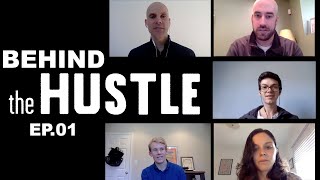
Brad Wolverton and The Hustle reporters discuss how small businesses pivoted during early COVID shutdowns. A makeup studio moved to video calls, a photo-booth company started selling subscription boxes, and a sushi chain became a grocery delivery service. DeskMate saw demand surge as remote workers bought standing desks.
Chapters
¡Hey, everyone!
Welcome to our first Hustle Chat. I'm Brad Wolverton. I oversee the editorial team at The Hustle, and I'm joined today by several of my esteemed colleagues who've been covering this coronavirus crisis and doing such an amazing job. We've gotten really an outpouring of positive feedback from our audience, from all you guys, in recent days, and I just thought it'd be interesting to take a little bit more of a behind-the-scenes look to tell you a little bit about how we've found the stories and what we're working on going forward. And before we get started, I thought I'd just kind of introduce each of you. I'll start with you, Mia. You are holed up out in San Francisco with a couple of roommates, including your fiancé, and I'm curious about your wedding plans and how this whole moment has affected you.
Yeah, so we're on, I believe it's day 11 of shelter-in-place in San Francisco. San Francisco. Yeah, it's going okay. We have a nice backyard, so I've been just like taking my dog for runs and hanging out in the backyard. I feel really grateful though that we do not have a wedding date and it will stay that way until this all passes.
Seriously, that's smart. Connor, you went from sort of San Francisco, which was the epicenter of the crisis for a while, and moved across country to the now new epicenter of the crisis, the New York City area. What's that been like?
Yeah, I left San Francisco 12 days ago, right before they called the shelter-in-place for San Francisco, and I came back in time for them to call one in New York a few days later. So I've been holed up with my two younger siblings and my folks in New Jersey. So we've gotten terribly close in the past couple weeks, which has been fun.
That's awesome. Playing a lot of card games and stuff, I think, is what you said, right?
That's right.
That's nice. Michael, you've also moved from the West Coast back to the East Coast, but for a different reason. You were— you're our editorial intern this semester, and you were in college your senior year, and now you're back home with your family. What's going on with you?
Yeah, I'm in a very strange place where my graduation officially is not gonna happen, but but I am not fully graduated. I'm still doing like Zoom classes. So it's just a very weird in-between space to be that I think like myself and a lot of my peers are stuck in or at home. We're sort of still in school. We're sort of supposed to look for jobs. It's very odd.
That's a strange time. I feel sorry for you. That was like one of the best moments in life was that last semester of college. Nick, you and I are in the DC area. And you're basically— DC is kind of shut down right now, right?
It is. We're all sheltering in place. And I've basically been, you know, working from home and trying not to move around too much for like— it's basically 2 weeks for me now. One of the things that is helping me cope a little bit is springtime. This time of year is really nice in DC, and spring is great. The one thing that's a little odd is we're sort of at peak cherry blossom season here in DC, but nobody can go out to see them. And they had to shut down all the roads down on the mall to keep people away, which is a pretty surreal thing to see this time of year.
Yeah, I hear you. I mean, I am in the same spot. I'm just, I've got, I'm in a neighborhood where there's lots of noises during the day, so please forgive me if I don't hit mute fast enough on this call, whether it's leaf blowers across the street or barking dog or teenager screaming. You might hear some of it. So anyway, I wanted to sort of get us to have a quick discussion about the things that we've seen in the last couple weeks of our coverage, and maybe I'll start with you, Nick. You oversee our daily email, and you've kind of taken a sweep of all the news that's happening, but in looking broadly, we sort of asked our audience, what are stories of things that have impacted you? You found something that was really close to home. Can you tell us about that?
Yeah, you know, I think there are two themes that we've talked a lot about in terms of What we've done so far and what we wanna continue doing is we wanna tell stories of resilience in this moment, 'cause people are facing really tough times personally, and if you are involved in a business, these are really challenging times as well. And pivots, where for a lot of people individually, and if you are leading a business, you might have had to pivot overnight. And one of the businesses that I spoke to their founders maybe a week ago now, they had to do just that, where they actually opened the business on Valentine's Day, that weekend of February 14th, and then the pandemic set in and they had to close up shop a month later. And it was a really interesting, really interesting story because they have an interesting, they fill a unique niche. And Brad, I think you can probably speak to this as somebody who has a couple of kids. It's really challenging, I think, for new parents to have places where they can go out and the whole family can have a good time. One of the things that the founders talked to me a little bit about is if you go out, say, to a brewery, that's a thing that's going to appeal to the new parents, but not to the kids. Or you can go to an area where there might be, you know, a park where there's slides, or you go to an indoor spot where there might be a ball pit, and that's all for the kids, but there's not really a lot for the parents. So the idea here was to sort of combine the two. The idea behind their business is they're going to have all sorts of options and ways to entertain young children, but they're also going to serve coffee and beer and wine and smoothies and salads, and hopefully create a little bit more of an experience that is relevant for the whole family. And one of the things that was super interesting since they're sort of in my backyard is that you could tell right away that the business was gonna be a hit because I remember hearing stories from friends who live nearby like they had lines wrapped around the building, I think, on opening weekend. So they were super successful and they said that they had had on that first weekend like more than 700 people through the business on one day in that opening weekend. And then a month later they were completely shut down and they overnight had to pivot to entirely virtual offerings where they're now doing, you know, virtual dance classes and trying to put together activity kits to keep kids entertained if they're cooped up with their families and their parents who might be working from home, and it really, the whole thing really changed overnight. And I think, you know, in speaking to them, the pivot to virtual was something they had considered over the long term, but was something that they had to spin up like in the course of 24 hours.
That's pretty interesting. Speaking of virtual pivots, Connor, you talked to a company that does like, they do make, it's a makeup business. Can you tell us a little bit about the Sparkle Bar and what you heard from them and how they pivoted?
Yeah, of course. It was one of the interesting features of talking to folks was we tried to cast a wide enough net to get not only businesses like the one Nick was just talking about that are trying something fairly new, but also businesses like the Sparkle Bar, which is a makeup studio. So doing something that's been around for quite a while. Um, this particular makeup studio is in the Scottsdale area and and they got closed down about a week or so ago. But before that, there was already a huge dip in the number of people who were willing to come into the studio because you obviously are getting really close with other people and there were concerns there. So we talked to the team over there and Alex Bradbury, who is the operator of the studio, showed me that even people who are working in industries that seem kind of inflexible, like a makeup studio, are doing some pretty innovative things when it comes to coming up with, you know, teleconferencing ways of getting their business done. And in this particular case, the Sparkle Bar takes a lot of pride in its relationships with its customers, and they work with the people who come into their studio beforehand and check up on them afterwards to make sure that they got exactly what they wanted. They do a lot of work for special events like weddings and stuff like that, and What they're at work doing right now is making sure that they're able to replicate that kind of one-to-one personal touch over teleconference. And so they've already begun to do that. They bought themselves a little bit of wiggle room with gift cards and some other kind of cash flow tricks that a lot of small businesses are trying. And now they're hard at work as an entire staff. I think there are 13 people under employ there. Shifting their entire business model so that they can actually send someone makeup and work with them to, you know, have kind of a styling session over video conference and then check in with them afterwards to make sure it went well and things like that. They're very much working as they go, but it's pretty cool to see how even an industry like that was able to make this switch.
So you've done— you did another piece on this company, I think it's called Snapbar. Totally different circumstances and a much sharper pivot, which is probably one of the more interesting ones I've heard.
Yeah, Snapbar was really cool. They're a business that normally sells photo booths for events, and given that all events for kind of the foreseeable future are canceled, they had to really find an entirely new business model if they were gonna keep all their employees afloat. And the way that they went about doing that was actually something entirely different than their existing business. And what they did was, they're based up in the Seattle-Tacoma area in Washington, and they worked with a bunch of local vendors to put together direct-to-consumer boxes highlighting soaps, foodstuffs, all kinds of local Seattle goods from producers that otherwise would have struggled to keep their own lights on. And they said, hey, we have a customer service team, we have a sales staff, Let's use all of our, you know, internal resources in terms of these talented employees and have them sell a completely different product. And in doing so, you know, hopefully we can keep our lights on and, you know, keep these other producers engaged and make sure that their business is still moving. So they came up with this really cool solution. I think it's available not just in Seattle but in San Francisco and several other cities, and they're working on expanding that.
Very cool. And also finding a way to keep the employees they have. They have like 40 people on staff in various roles. And so many people right now in this moment have lost their jobs. It was like yesterday, what was the news, Nick? Like 3+ million people filed unemployment claims, which is one of the largest, if not the largest ever. Pretty amazing pivot for them. Hopefully they can be successful. So the other one I found interesting was Michael, talked to this company called— I think they were called Fusion, and they're basically like a chain of sushi restaurants in Ohio. Tell us the story of what they're doing and how other people can learn from that.
Yeah, exactly. So Fusion, there are 10 different locations throughout the state of Ohio, and basically what happened with them is Ohio was the early states who shut down all non-essential businesses. And so this happened about 2 weeks ago, and it totally took Fusion by surprise. There was no warning from the governor that it was about to happen. And so the company truly just pivoted in 3 days to becoming basically like a part-time grocer. And the way they did this is super interesting to me, and it involves understanding some of the logistics of how supply chains work in the US. But basically, there's a separate supply chain for grocery stores as for restaurants and bars, etc., just because they have different needs in terms of bulk orders, like what customers expect out of them. And what Fusion realized is that while grocery stores were sold out of items like tofu, which they had access to abundant, that was not because all tofu in the Ohio area was hard to access. It was because grocery store-specific supply chain system didn't have enough tofu, whereas Fusion, because they use a different supply chain, could easily just source that. And the idea is that obviously, of course, they would originally source tofu like for their meals that they would sell to people, but what they realized that they could do is they could just sell it as a grocery store. And so now Fusion will deliver sushi to your home in Ohio. It will also deliver groceries. And they've had a lot of success doing that.
Well, I'm standing at a standing desk right now. It's a fully standing desk, which I love. And I was also intrigued to hear the story of DeskMate, I think is what it's called, right, Nia? They were struggling a couple months ago, and they've actually benefited. So we have some businesses in this moment that have figured out that this is a time when they can really thrive. So tell us a little bit of the backstory of what happened with them and what they've experienced.
Yeah, so DeskMate is a standing, standing desk company. So they make these like little portable cardboard standing desks that you can flip up on your desktop. They're really inexpensive. I think they start at €30 or £30. And they were really struggling before COVID-19. They had some supply chain issues that seemed to be unrelated to all of this. but their manufacturer shut down and they basically couldn't fill orders for a month because they couldn't get their stock from their, their manufacturer and warehouse. So they, the two co-founders, it's just the two of them, they were like, okay, we're going to sell. They found a buyer, but the buyer ended up backing out because of market instability. And I think this was mid-February, so kind of right before COVID-19 kind of came to the world in an intense way. But the guys just rolled up their sleeves and were like, okay, we're going to try to, we're going to try to make this work. We actually now have this great opportunity because so many companies are trying to figure out how to outfit their employees at home. And these desks, I mean, it seems like they could have started this company right now that the idea is so perfect for the moment. So Their biggest issues right now are that they just don't think that they can make enough for the interest. They're getting so many orders. They're getting orders around the world, especially in like Spain and Italy and in the US. So what they're trying to do is find a manufacturer that they can actually produce the desks in the US too. So they don't have to, they won't have to ship overseas. They want to ship everything overseas. But yeah, they have an exciting opportunity.
Very cool.
So before we go, I wanted to just sort of tease some of the things we're working on to help people get, you know, get people excited about things that we have in the works. Mia, you're working on a piece about a straw company that was about to launch a travel fork, and tell us a little bit about what you're finding with them and what you're planning to write.
Yeah, so this company is called Final, and they're new. They started their business in 2018, and their product is a final, it's called the Final Straw. It's a reusable stainless steel travel straw. They did super well. They did $5 million in revenue their first year. Kind of, they launched kind of in the midst of the anti-plastic-straw craze, and they were working on launching a travel fork. They were supposed to launch it actually on Earth Day, But because of all this, you know, like no one really wants a travel fork right now. So they made like an incredibly quick pivot to reusable disinfecting wipes. So it's basically like these bamboo rags and you have this cleaning tablet that you put in them. You can use them and then you throw the rags in the dishwasher. Or sorry, not in the dishwasher, in the laundry, and then you can put a new tab in them and keep using them. So I think that kind of, they obviously meet a need because if you guys have gone on Amazon recently, you can't get disinfecting wipes very readily.
So awesome, man, send me some of those. I could use a bunch.
Yeah.
Same with you, Connor. You've got this thing on this company called, I think it's called LifeAid. Um, and, or maybe it's, yeah, I think it's coming out soon. We've worked on it. We haven't, we haven't published it yet, but tell us a little bit about that or anything else you're working on you wanted to share.
That's right. Yeah. Um, this company LifeAid, um, they're based in California. They are a beverage company that makes healthier alternative drinks for athletes who otherwise might be inclined to grab a soda post-workout. Um, they've done quite well. They've been around since 2011. And they actually, you know, like Mia mentioned with some of these other businesses she's been looking into, they're doing fairly well in the crisis. They've had a bunch of their distribution channels just blow up. On Amazon they've been selling, Walmart, all their major retail partners, they've been kind of blowing up. So that's been really great for them, but the company actually grew into its own by partnering with a lot of local gyms, and all of those original partners have since closed. But LifeAid has made the decision not to turn its back on those original partners, but rather to invest the unexpectedly high revenue they've been getting from Walmart and Target and Amazon and create a bunch of partnership and affiliate programs with these gyms to help keep them open through the crisis. So it's a really cool example of a kind of community business episode where the way that the founders of LifeAid will tell you, they wouldn't have gotten to where they are today without those original smaller partners, and so they feel a sense of pretty deep obligation to them today when they're going through a difficult time. So it's a pretty cool story of both how kind of business distribution works and which channels are rewarding whom right now, and also just how community can kind of come together in moments like this and help each other out.
Very neat. I don't want to give away too much on this yet, Michael, but we talked a couple days ago about having you do a piece on your experience as a, as a graduating senior now entering the crazy job market and what you're seeing and what you're feeling and experiencing. Anything you want to tease on that story?
Not too much yet, but I do think that I already know from anecdotal experience and from talking to people so far is that like what this moment means a lot just in terms of like where people see themselves in the future, obviously, and especially just in terms of different industries. Like for instance, like people have relied so much on service work as a bridge into acting or something or into these like as funnels into these larger like the field, and that goes for all sorts of industries. And so people are definitely starting to rethink like where they want to head, but I do think one thing that I found personally to be, I don't know, kind of cathartic is this, all these like different Facebook popped up, like these Facebook meme groups where people are just sort of trying to make sense of this moment through like very bad jokes. And I feel like that has been so much, because I said at the top, like, it's a weird place to be. And I think especially, I feel this much more strongly than I am too. And it's good to know that there's at least some like sort of communal understanding about it, even if that may not make a difference in terms of the actual jobs.
Exactly. Lastly, I thought I'd turn back to you, Nick. We had this discussion this morning about the long tail of the pandemic. No one obviously knows how soon any of this stuff's gonna end, but we're starting to think about some of the industries that are gonna feel pain for a long time. Is there any parting thoughts you want to share about things we're looking at or thinking about covering in that way?
Yeah, I mean, certainly I don't want to be in the business of making predictions because we're not even at the, you know, the height of the pandemic here in the US. I think it's gonna get a lot worse worse before it gets better. But I think these are questions that people are starting to think about. And I'm reminded of earlier this week, there was even a poll that went up on our company Slack that was sort of about, have your views on working from home changed in light of what's happened in the last couple of weeks? And one of the things that people were quick to point out is that this is not normal working from home. Yeah, you know, normally you can, you can actually leave your house and you might go get dinner or you might do something else in the middle of the day. But I think that sort of question is a reflection of what people are going to be asking in the coming months. To what extent is this pandemic going to sort of turn the world of work inside out? And what are some of the long-term impacts that maybe we don't see right yet, but we're now starting to see signs that this is going to change certain industries permanently? That's definitely a thing that, as I said, I don't think any of us can be in the business of making strong predictions about, but it's definitely something that we're going to be watching for and trying to tease out a few of those themes in the coming weeks.
Also, what we've done really well, I think, is we found, as troubling and difficult as this moment is for many people to navigate, we found some moments of levity that we can share. So we're going to continue to try to do that, whether that's hashtag some good news in this this mess that we're all in or other things. So keep your ideas coming to us. Thanks for listening in on our first little Hustle Chat today, and look forward to seeing y'all soon. Thanks, everybody.










