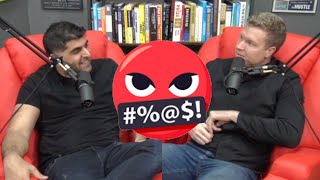
In this segment of the My First Million podcast, Sam Parr interviews a guest (Speaker B) who recounts his experience writing a blog post titled "The First Curse Advantage," which argues that being the first person to swear in a meeting can signal confidence, establish power, and create informal rapport. Both speakers discuss their personal discomfort with swearing, noting how it can feel trashy or crude, and differentiate between casual profanity and offensive slurs. The conversation shifts to a personal anecdote where the guest, nervous about his Catholic wedding, accidentally swears on a phone call during a meeting with the priest. The priest lets it slide, but the incident highlights the social stakes of profanity in formal settings. Throughout, the dialogue remains informal and reflective, exploring the trade‑offs between authenticity, professionalism, and the social dynamics of language in business and personal contexts.
Chapters
Whatever you want to give me.
I had this, uh, blog post. I used to try to blog about business back in the day, uh, when we were doing our very first startup right outta college. And none of my posts got read by anybody. Nobody cared. But one post went semi-viral and it was called The First Curse Advantage. And basically I was saying how in a meeting, the first person who, uh, who uses a curse word, sort of establishes themself as the person who just doesn't give a fuck about the— they put themselves in a position of power. And it also builds a different level of rapport because you're obviously using informal language with somebody else and you're demonstrating that you're not seeking their approval in a way. And so I always in meetings, I do this, I try to be the first to curse in a meeting.
But can I say I don't love that?
And I'm like, because you don't like cursing in general or—
I mean, I actually, when I hear myself curse, I'm like, man, I sound kind of trashy.
I agree. I don't like when I hear myself do it and I think I do it too much. But I've noticed in meetings it changes the dynamic like instantly and for better or for worse. But I've—
but I think there's a difference between being crude and cursing actually. So like saying bitch, I fucking hate. Right. Oh my God. Did you just hear that? That wasn't on purpose. So I don't like when people say that. I don't— quick, quick story before we get into this. I went, I got married in September. Yeah. And I had to go, I got married in a Catholic church and you gotta go meet with the priest ahead of time. And I was really nervous because I don't, I don't, I'm not practicing. I don't go to church. And, but I wanted, I, the whole wedding was, they have to approve it and the whole wedding was on the line. Right. So I had to like be a good Catholic and, or at least appear like one. And I remember I was sitting there and the guy was asking, the priest was asking me and my wife, my future wife about like, so do you guys agree on children? What do you think about birth control? All this stuff or whatever he was asking. And I would just say whatever I thought. Had to be the right answer. I was very nervous. I was like, yes, sir. Yes, we go to church 3 times. Like, I just said everything. And then my phone rings and I was so nervous. I go, I go, oh, fuck, sorry. It went really loud. And then he looked at me and I was like, shit, my bad. I didn't mean to cuss. And I was so embarrassed and mortified.
That's amazing. Yeah, but he let it go.
He let it go. Good guy. Yeah, he let it go. And then I made a joke about how I was asked him what school he went to, and he said he had a lot of student debt. And he said, uh, uh, he's like, yeah, but the church— a young guy, like young, like in his 30s, maybe late 30s. And he said, uh, but the church pays for it. And I made like a joke like, ah, so that's why you joined. And he didn't, he didn't appreciate that. He didn't like that.