Fireside Chat with Sam Parr, CEO @theHUSTLEbaby - Interviewed by Andrew Warner, Founder @mixergy
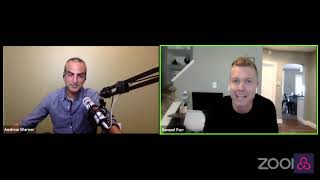
Sam Parr, CEO of The Hustle, discusses moving his 150-person company fully remote during COVID. The newsletter and research business generates $10-25 million annually. He shares how they cut costs by relocating to Austin, invested in employee mental health with paid therapy, and built community through virtual pods and book clubs.
Chapters
This is Linda. She has a remote team in 14 countries. Before, she would get bogged down with a ton of different apps and payment methods to manage her employees. Then she found RemoteTeam.com, an all-in-one platform where you can pay your remote employees and contractors and find all the apps you need to run a successful remote company.
Welcome back to Running Remote Online. My name is Danny Page, winding down what has been an absolutely fascinating day. And to say the least, we have a pretty incredible conversation coming up momentarily. Momentarily. Let me put it this way, these two guys will potentially talk— if you heard about what we were talking about in the green room beforehand, they're going to talk about the ROI of the steak you ate last night. No, I'm I'm joking, fellas. But, but, you know, we do want to remind you, these are the last couple hours to connect with the other attendees that are a part of this event, right? Whether that's speakers, whether that's hosts, use the Swapcard app and get the most out of this experience. I do want to thank one of our sponsors. They spoke last time. They have a huge presence in the remote workspace and that's SafetyWing. And if you're basically anywhere but Canada, hello, Healthcare is complicated, right? Understanding your coverage, getting what you need is really hard. I've been through this, you know? Have you ever traveled while working remotely? Healthcare is complicated. So SafetyWing provides insurance for nomads and is fully equipped with COVID for the specific challenges of what we're going through in COVID-19. Let this serve as a wake-up call. Everyone, absolutely everyone, you need proper healthcare coverage when you're at home, while you're abroad. We spoke to one of the co-founders of SafetyWing, Sarah. She's a nomad. You can trust her and the team. Visit Safety Wing for your nomad-related healthcare needs. All right, welcoming in the gentlemen, Sam Parr, CEO at The Hustle, and Andrew Warner, founder at Mixergy. Are you guys gonna talk? Are we gonna get that far out today? Are we gonna do like, you know, real estate? Are we gonna talk about ROI on stake? Like those type of conversations?
Mm-hmm, I'm up for that.
Yeah, we can. I'm gonna let you two take it away and just get out of the way.
Okay, Andrew and Sam, I'll be back in to help out with some questions in a bit. Okay, cheers, boys.
All right. Hey, Sam, before we get into what you do and all these great things about running remote, I gotta tell you, I thought you were gonna be telling me that you love being remote. You're in a new city. What city are you in right now?
I'm currently in St. Louis. I gave up my San Francisco house last week, 2 weeks ago. Now I'm just traveling all over the country.
So I thought you'd say, Andrew, this is the best thing to ever happen. Why not? Why don't you think that?
Okay, so there's a lot of pros and cons here. I mean, there's a lot going on. First of all, when I started my company a handful of years ago, like, I did it for a— I listed 4 reasons, and one of the reasons was I wanted to physically be around people who inspired me, people who made me happy and gave me energy. And I like, I like wanted, you know, like that scene in Wolf of Wall Street where he like walks into the office and it's like a roar, or like imagine like a newsroom, imagine like a newsroom at like old CNN, or we walk in, there's people typing and like, hey, give me that thing, come on, let's go. Like I wanted that. And but as I built my company, I realized like it's just a bunch of nerds on computers being real quiet and like with headphones on. So it's not really like that. But I wanted that energy. And so we don't have that anymore. Definitely. That's for sure.
You kind of created that for yourself in a few different ways. One of the things that you did that I thought was really innovative was you, you had extra desk space here in your office in San Francisco. And what'd you do with it?
Yeah. So I started my company in this place called the Founders Dojo. And if you go to YouTube and you Google real life Erlich Bachmann, you'll see a video I made on this place. And I started there, uh, it was like, it was my friend Dave started that. He just had a spare office and it was like probably the size of that kitchen right here. It was really small. It was probably 800 square feet or smaller. And I started there. My friend, uh, Moi started there and my friend, uh, Roman started there. And Roman's company does about $150 million a year in sales. Moi sold his business for $100 million. It probably does $150 as well in sales. And then my company started there. And I was the guy who started it. He let us 4 work there. And I was like, why are you doing this? He goes, because it's awesome. I just am going to steal all your guys' ideas for my business. Like, I see how you're doing Facebook marketing, I see how you're doing this, I'm just going to apply to my thing. And it's like, all right, fair trade. We get free rent, you get new ideas. And so that's what we do at my office. So we have 4— we had 4,000 square feet in San Francisco, and I would let, uh, I had a vitamin company there that makes vitamins for kids, like Flintstone gummies. We had Kevin Lee, our friend Kevin Lee, who started a ramen business. And then we had a few others and they would work. I just gave them desks for free. And the best part of the day was I would buy lunch for everyone. And I just got to eavesdrop and be like, oh, else, what are you guys doing today on Facebook? And they would tell me, I'm like, Scott, let's do this. Let's try this. You know? And that was great. That was really fun.
Or why is that better than just seeing a YouTube video or coming to I don't know, an online conference.
Because serendipity is one of the best parts of life, and it creates massive amounts of serendipity. Um, it's also great, like, Andrew, if we're in the same office and you looked over my, my shoulder as you were just walking by and you saw me doing some Excel stuff, you'd be like, wait, whoa, what is that? You know, and I can be like, oh, you never— you've never done this? Uh, so that stuff was pretty amazing.
Yeah, you know, there's something about watching somebody do their work. We naturally as human beings look over people's shoulders. Even in setting this up, I think Danny was looking over your shoulder and asking, what's this? What's the poster behind you? I was trying to get a sense of where you work in your environment. And I get it now. When you're working with someone in an office, you get all that. By the way, before we get into what happened post-COVID, and now that you guys are remote, what is the hustle?
Yeah. We are an information company. We started as a chain of, or a line of conferences called HustleCon where tens of thousands of people would come. And then we parlayed that into an email newsletter. So we have a business newsletter that goes out to millions of people, over 1.5 million people. And we, so we have a large-ish 8-figure advertising business through that. And then we own Trends.co, which is a subscription company, a research company that looks at cool businesses that are growing quickly.
And you didn't start the conference, right? Didn't you just take over a conference that was being run here by Eric, this guy who said, I want to move on to other things, right?
Yeah.
So I started one business and sold it. And then after I sold it, I was talking to Eric, what should I do now? And he was like, well, I'm doing this conference thing. You want it? It's just like a little hobby. I was like, yeah, sure. Give me it. And then I just used the profits from that to start the media business.
What's the revenue now on this? I love the email newsletter business because it's so simple. I don't want to oversimplify it, but it's like having a Mailchimp account where people subscribe, and once you pay ads to get them subscribed once, you get to reach them on a daily basis, and you make money from the ads you serve up to them. I saw Remote— Running Remote, the conference— paid an ad to, to be in your list, which is phenomenal, right?
Yeah, it's a great business.
What's the revenue from that?
So there's way more moving parts than people realize, but I mean, it's, it's 8 figures. So over $10 million. Yeah, we'll say between $15 and $25 million.
Wow. All right. And Adam, who's listening in the audience, by the way, if you guys are listening to us live, just say hi in the chat. I want to make sure that you can figure out the chat and then we can talk to each other. Yeah, check out trends.co/remote.
Great. I want to watch the chat too. Is that a—
It's in the swapcard.com site.
Yeah, you'd have to jump in Swapcard specifically. Now make sure you mute your, you mute that window, 'cause otherwise you're gonna hear yourself talking to yourself and that's like my life every day, but not the way we want it to be for you, okay? So make sure you mute the window in case you're listening in.
There's good, and I see Danny, I see Adam, I see Sam in there, and I'd love to see even more people in that chat. Okay. So then COVID hits, you have how many offices at COVID? But just before COVID how many offices did you have that were full of people?
Two. Where? Two. So we have an office in downtown San Francisco, right where Andrew has his office. And that's where I started the company. We probably had 10 or 15 there for a little while. And then slowly everyone has moved to Austin. So we have an office there and there's another 10 or 15 people.
And do you remember when you decided to go remote, what's the first thing that failed on you? And we're going to get to the things that worked, but Let's talk about some of the challenges for a company your size.
Yeah. So a lot of people were like, first of all, as a business owner, I was like, are people actually going to work? Are they going to slack off? I mean, that was like my immediate— I'm like, I cared first about productivity and like ROI. And I was like, I definitely was nervous about that. Um, but I don't think that has been a problem. I think, but I was, and probably still am a bit afraid of that. The second thing that happened, I remember that when the NBA got canceled that day, I was like, uh-oh, everyone take all your stuff, like, you're probably not going to come back to the office. But like, we were able to fendejo it, so we got out of our rent a little bit and like end the lease on that. I think a lot of people had to redo their homes because we're in San Francisco, right? So yeah, a lot of people have 800 square foot 2 bedrooms that they share with their wives or their husbands or their roommate. And it was like, people were embarrassed to have their home on display. And that was actually a far bigger deal. But the biggest thing has been like, a lot of people got super depressed. Like they were like, "Ugh, I just get up at 8:00 AM and I work till whatever time and then I just go to bed and I'm doing that over and over and over again. I hate this." So that has happened a lot.
What do you do about that, by the way? We'll get into the business tools, but when someone's telling you that they're depressed or you're sensing it, What can you do?
We've offered to pay for online therapy. Uh, like what's it called? BetterHelp and Talk— what's it called?
Talkspace.
Talkspace. And I think BetterHelp, uh, we paid for it. In San Francisco, therapy, which I go to, is like $250 a session. It's so expensive.
And I was like, did you go into session live? No, I used to, but now you know what, I switched to digital before all this. For couples therapy. I so prefer it. Going into the therapist's office for some reason just felt a little too stuffy and not me. And then my therapist let me just take my call from wherever I wanted. It was great. There was one time I said, I don't want to even sit in an office. I want to walk around and talk to you because I think better when I'm walking.
She said, I do it while driving.
Yeah, it's great. For some people, I could see it being a distraction. For me, I walked around with a selfie stick through San Francisco talking to the therapy with my wife on the other end. What is Who am I married to? But it worked really well. And so you pay for Talkspace for people so they could have these kinds of experiences with their therapist, though they don't all have to be driving.
Yeah. Our rent in San Francisco was $15,000 a month. And so if everyone goes to therapy and uses Talkspace, we still save a lot of money. And so it works out well. I mean, like, I think that I look at the, the, this remote stuff and like what tools we're going to use to It's all like strictly ROI, ROI. And I'm like, well, if they go to therapy, they're going to be happier and they won't quit. So it makes sense to me. So we do it.
It looks like it's $260 for unlimited messaging, uh, for, for Talkspace. Uh, and then it goes up from there if you want to have more calls and want to have a couple— wow, they have couples too. Olivia and I might need that. All right. What other tools did you find that helped you get through this?
So we use this thing called Lattice. It's for performance reviews, and it also asks people, it does like a thing called like a pulse, I think it's called, where you can ask how they're feeling. And we look at, I look at it on a weekly basis. And then we use Slack, which I hate. I cannot stand Slack. I've deleted it from my phone. I hate it. But before we had, before we, this all happened, we didn't even have Zoom. We use like this high-five thing or something else. So we had to get Zoom. What else? I mean, can you believe that Google Docs or Google Drive is free? So we use that a ton. What else do we use? You know, we don't use that much stuff, but I'm trying to create the culture of where I just will message someone and be like, hey, what's going on? And like, so at first people are like, what do you want? Like, what did I do wrong? And I'm like, nothing, what's up? Like, I'm just, I'm just saying what's up. That's it.
And so can people tell you, leave me alone, I'm working on something?
Yeah. So that's like a, that's like a rule that I have had to implement, which is like, what's it called? Radical candor or something like that, where, uh, I encourage people. I'm like, you have to tell me, are you busy right now? And so they'll be, I'll be like, hey, can I talk to you? And they'll say, uh, no, I'm, I'm in the middle of something. And so you don't, you don't even, I don't even respond. Say, or I'll say, okay, that's it.
You're just texting people now because you don't want to use Slack?
I text people a lot. People, people know that if I, that I probably won't answer their email or Slack, they have to call me. Um, it's been way better. Also, like, have you know, like, me personally, I'm kind of a blunt person and my writing is very straight to the point. It's definitely caused fights. Like, have you had any fights caused because, like, It's like when you're texting someone and they just say, okay, you're like, well, did they say okay? Or did they say okay? You know what I mean?
It's hurt feelings and then people blame themselves, which is terrible. I don't, if I'm writing fast, it's because I care about your time and mine, but I get it. I think for many, we had one customer who complained. She said, Andrew, I really feel disappointed in your company. I said, why? She said, you guys, when you email, you don't even say hi. You just get right to the point. I thought that's the way we can talk online. I have to say hi? That's not something that I'm prepared for.
Yeah. So I've had like, we've had some issues with that where I've had to like make sure I only talk to people on the phone.
Oh, just to avoid that kind of attitude where somebody feels insulted because you said okay. And when you meant, okay, great. But they thought, okay, fine.
That's it. Yeah. Yeah. Or I'll say, what's the deal with these numbers? and like that could be like a variety of tones and that would significantly change things.
What happened to— I want to get to Lattice in a minute and a couple of other tools, but let's talk Shop. Your business went up, more customers signed up for Trends.
Yeah. So we have two things that we're known for, the daily email, which is supported by advertising and then Trends. And there's like, I don't know, I can't pull the chat up, so I can't see what people are saying, but I wonder how many people are in like the paid information business because they will have seen this as well, which is companies like ours, Trends, people that are our customers are people buying information. That's going crazy. It's crazy how fast that's growing. And then Gumroad, me and Andrew's friend owns this thing called Gumroad, and he tweets out the image and it's just like exponential growth. Also our mutual friend, Ankur of Teachable, he's like, it's like 2 or 3 or 4 times or something large, much larger than the year before. It's like going through the roof. So in one regard, like our advertising business definitely got hurt a little bit because people are like, when all this happened, they're like, I don't wanna spend money on anything. So B2B sales, definitely, there was, people were afraid, but trends and communities, like, exploding.
It's like, don't you feel trends to talk about what trends people are paying to see trends that they could capitalize on and sell more based on what people are excited about or start businesses based on upcoming trends. And so I could see that if they're stuck at home, they're thinking, how do I grow my side hustle? How do I grow my business? What else can I do while I'm here? And so I understand why they, why they'd be signing up. But the other part is there's a community component of trends. And it does feel like people are looking for more people, more conversations with people. And the online stuff is so— it's not exactly a replacement, but it's what we got. And so you're selling access. I'm looking at your face as I'm talking and it looks like you're, you're stunned. Are you trying to get into that Swapcard thing? The chat?
I'm trying. I'm trying. I want to see what people say, but I'm listening to you.
Yeah. Don't sweat it. I'll keep bringing it up as, as they say things like, I just saw a message from Jared who says that you're the only email that he has not unsubscribed from. Subscribe from. Yeah, right on, Jared. So I get that sense of community. I wonder, why aren't you giving your team more of a community? If you guys aren't really loving— if you're not loving Slack, you're so good at creating communities for your free members, for your ambassadors, for your customers.
Great idea.
Yeah.
I didn't even think about that. I didn't even know that.
And it could be like your advisors and your team and a couple of other things. Like, you're so—
Anyway, I didn't even think about that. That's a great idea. I should— like, I just Googled, um, how to do a remote happy hour, and there was like something where you like— where my assistant's gonna like upload, um, everyone's home address and it's gonna like mail them a cocktail kit. Yeah, try to like do a hangout. Um, man, it's hard. Um, like there's this guy I follow on Twitter named, uh, Biology. You know him?
Balaji, I think.
Yes, Balaji. And he was like, with remote work, people are going to work at your company anonymously. Like, you're not even going to know their name. And I'm like, huh, I can actually see that working. That's going to be kind of cool. And, uh, that's kind of how it feels sometimes, is like they're just like— have you ever had a friend who you've only talked to via texting, like whether it's Messenger or email or something like that? That's like how it— that's how it feels, is I don't A lot of these new people we hire, I barely see them, but I get to know their personality via some type of writing. Uh, and it's quite interesting.
I don't buy that though. I really think that yes, we could all become like Upwork employees where people are expecting just a little bit of interaction and it all has to do with what they want from us and what we want from them. But every once in a while I'll see somebody treat a remote worker like someone they see on Upwork who's supposed to do a $200 project like a real person by checking in on where they are, on who they are. And that goes a long way to creating a relationship that then pays off later on. And if it's on that small level important, I think what you're thinking about with, um, with happy hours and sending people stuff in a world where we're all expecting everything to be digital, I think there's a lot there.
Yeah, it's just been challenging. I mean, because we'll like hop on a Zoom call and there'll be 30 people on there and it's like one person has to talk and everyone has to listen. And so we, but what we've seen in trends is all these people creating all these, like everyone is trying to create an event for online and they're trying to create a way to have happy hours online. That's like the thing that everyone's doing.
Because happy hours are just so good for getting to know people, for talking to them. You know who I saw that did something well there? There's a guy named Michael Alexis who's been listening to my podcast for years. He used to run this Museum Hack company where you can pay as a company to have your people go and get to a museum. Yeah, that's the guy who founded it. It was phenomenal. Obviously it died once COVID hit. Museums shut down, companies don't want their people together. He started doing online team building. That's gone through the roof. He's been sending me numbers on that. It's, it's doing really well. Teambuilding.com. Companies pay him to do not happy hours because I think some companies don't want to send liquor to their people, um, but he'll do like a little camping set where people can make s'mores at their desks, and then he hires a facilitator to keep the conversation going, a stand-up comic from New York, and suddenly this thing becomes an experience that you couldn't have in the real world that isn't better than something that tries to replicate what we did have in the real world.
Yeah, I'll, I'll use that. I'll use that for sure.
We'll use it. Or are you going to try to copy it? Would you just say, let me see if I get some s'mores and I'll make interesting conversation?
TeamBuilding.com, baby. I'm going to use it.
Are you someone who's so— I remember you when you used to keep track of every dollar you had. Are you still doing that?
Um, yeah, I used to track every single cent. Uh, I don't track, uh, it on a daily basis, but on a monthly basis, and I spent way less money.
Me too. Post-COVID, what, um, what have you done for your company to spend less money?
Uh, well, rents has saved us $15,000 a month. Um, we don't have groceries anymore.
Were you able to get out of your rent?
Kinda. So what we did was I emailed the landlord and I was like, look, I know you're going through hell right now. I'm going to make life easy for you. We have 8 months left on our rent. I'm going to pay only 50%. I'm going to pay it all up front today. And he said, okay, sounds good.
Great deal. Yeah. What other deal-making did you make?
And then we, I actually rented an office in Austin in July because I was like, in Austin, I'm like, they're gonna come, it'll come back, but I think I can get a screaming deal. And so we just lowballed the broker or whatever it was. I'm like, yeah, well, they like asked for $12,000. We're like, we'll give you $5,000. And it worked out. And then we had some, no one moved into the office, but we had construction done. We had them build walls and stuff and build it out. And it was really cheap. So things are good. Um, and then with like a lot of software renewals happening, uh, at the end of the quarter, we were able to negotiate and get those and make that work. What else have we saved money on? Um, we used to pay for people's commute, not anymore. Um, and we've hired a handful of people, but they are not California-based where the salaries are way higher.
Oh yeah. What was the average salary that you're seeing in California?
Yeah, I mean, look, like if you don't come to the table with at least $150,000 for even a low-end job, I mean, you're not going to get someone. So you have to pay a lot of money. But like someone in Texas or someone in Missouri or someone in this other state, Tennessee, $80,000 a year is great. And so we can do that. One thing we're struggling with, and I don't know how we're going to solve this, is what do we do with healthcare? Because we had Kaiser, which is, uh, we had Kaiser and UnitedHealth, which are Texas and California based. And now we have our renewals coming up in October and I don't know what we're going to do.
I think there are companies that handle it. I'd love to hear from somebody in the audience, Liam Martin, who organized this conference. He's listening to us. Liam, do you have a recommendation for that? And I know that you guys are working with, um, insurance for digital nomads. I wonder if you've got something for companies to offer their people. Liam is asking a question. He's saying, where do you see remote work in 18 months? You're trying to plan ahead.
Yeah, so I think that everyone felt the same. Many people, particularly either single or childless people, felt the same thing, which was like, this is awesome, this is amazing. Now we're at the stage where people are saying it's not perfect, I need human contact. So I think that we'll probably get a WeWork in major cities. And I think that will probably be the future for a while. But me personally, I don't want to be around anyone still. I think that a lot of the people in technology, a lot of people at this event are like dorks like me who like are like afraid of like, who like are typically like reading into this whole virus thing and probably overthink it. And I'm very nervous about going into crowded spaces still. So I, I personally don't want to do that.
Do you think that— so you're going to give your people an opportunity to go into an office if they want to, but no more requirement to come into your office?
Well, yeah, for sure.
How are your people feeling about that? Do you have some that are just waiting for the office to come back and willing to deal with— they are willing to deal with the crowds and everything if that's what it takes?
A lot of people want that way more. I bet you there's more people that want that than don't.
Wow, I'm surprised by that. Um, Mark, uh, Liam Martin is saying, uh, LOL, I'm looking at buying a co-working space right now, ironically. Uh, and Jared Wakefield, who's listening to us, says we've started making small groups in our company to go through books together, interest-based, but you know, it's done like an assignment, basically a book club that's remote. You guys started as a book club, didn't you?
Kinda, yeah. The company I had, or not the company, I just would blog for fun. It wasn't a business. It didn't make money. It was called The Anti-MBA and it was a book club. And I started as in-person, but a lot of people would follow along online, thousands of people. And we actually did a book club here when the whole George Floyd thing went down. We read a book on that topic and we would discuss it. And that's not a very fun topic to discuss. So it was not as fun as it could be, but we did a book club. Yeah, it was challenging. We did a book club and we will continue to do that. Book clubs are freaking awesome. The thing about book clubs, and everyone who is in a book club knows this, is only one person actually reads it and they do the work for everyone. And so we—
I kind of feel like we don't even need a book club. It could just be a Blinkist club. Look, we all know all you need is the key ideas and then we'll start talking about it. If you want to go a step beyond and read the actual book, boom, go do it. But Here are 3 pages from Blinkist.
I'm down. I would do that. That would be way easier. I've noticed that I don't read nearly as much. Like, I think I'm more productive work-wise, but for some reason I still feel busy. Um, I don't know what it is, but like, I definitely feel busy, maybe even busier. But it's nice to have an excuse to lie to people, like, I can't hang out because of this reason. It's like, now I, now I have a A legit excuse.
All right. You're the trends guy. What trends are you seeing that are starting to hit now for people who are working remotely, for people who are—
or work—
non-alcoholic beer. You think that's a trend?
Oh yeah. That is going to be huge. Non-alcoholic beer. Yeah. Massive.
I felt like it was a trend before when people wanted to go out and didn't really want to drink. This was an opportunity to replace the alcohol. With non-alcoholic alternative that didn't stand out. Why now?
Uh, Gen Z is not drinking as much. I think people are at home and they kind of want something maybe a little bit more to do. But I, I have numbers that show this is growing like crazy. And if I ever go to the store, I see they're always sold out. So I'm very bullish on that. Um, what else am I bullish on? Um, we, uh, did we talk about this? Like the amount, the growth rate in like some C and B-level cities is astounding at the moment. Andrew and I both lived in San Francisco, and in many places, like where I live, it's a ghost town. It's just crazy how much people have left, or how many people have left San Francisco, to the point of like rent might be down, might be down 30%. I mean, it's down a lot. I do think there'll be a resurgence. Like even when I see that, I'm like, oh shit, I should go get in now. But like cities like Asheville, Greenville, North Carolina, Tahoe, things like that, like places in Idaho, like Boise, where our friend Nathan Barry is. Those places are exploding. And I think that there's going to be a ton of homebuyers in those areas, in those areas. A lot of city people are buying cars. I'm very— like, the car companies, they're gonna have some huge quarterly earnings next quarter, I think.
Tulsa, Igor is asking, do you think that's gonna be big?
Yeah, yeah, Tulsa. Uh, I've hung out— I'm not— I'm bullish on cities that are incredibly beautiful but people normally didn't move there because of their job. So I just, I just spent time in Salt Lake City. Salt Lake City is a place that when you go there, I spent a week there, you're like, wait a minute, why do I not live here? Like, this is like pretty amazing. Same with like Park City, I was there. So Tulsa, I have family that I've hung out there. It doesn't have the beauty requirement, though it is cool. I'm currently in St. Louis, it doesn't have the beauty requirement, but Boise, Asheville, Athens, Georgia, maybe Chattanooga, where else? Places like that. Man, those cities I think are gonna change forever.
What do you think about, well, what's working for you for being productive personally from home?
Um, I have a pretty strict routine, um, where I, I'm, I'm, I'm working at 8:00 AM and I'm probably done at 7 or 8:00 PM.
Um, and as soon as you get up, are you going to work?
Get up at 7, I'm working at 8. Okay. I exercise, I exercise at night. Um, Uh, my diet has been quite bad. My meal routine hasn't been normal, um, and that's been a huge struggle. So I gotta get that done. But, uh, uh, I would say keeping it like 8 AM, like not sleeping in for sure, and just having like a normal work schedule.
Yeah, I feel mine is just terrible because the kids are home from school. That changes everything. It changes everything. Level of responsibility.
I can't imagine that. You're a superhero. I can't imagine that. That's shocking. One of— I'm curious about how children, particularly special needs kids, people with Down syndrome and really bad autism, things like that, what's gonna happen with them. My mother was a special school teacher for years, for 40 years. I'm trying to— I'm wondering what's gonna happen with that. Jason Kalkanis is trying something called micro-schooling. I think that's gonna be quite interesting. I'm curious to see how children are gonna adapt to that. How the hell is an 18-year-old gonna like date and do normal stuff? Ugh.
Yeah.
I'm seeing a lot of people forming pods. You know what? In some religions, you can see that people have these pods where it's, here are the people you're supposed to take care of, right? If you don't show up to church, someone from this pod is going to come and get you, right? I feel like now I'm watching these parent groups, they're pods coming in. I was about to dismiss one this morning because I saw a message and I said, bug off. And then I realized, no, it's not someone trying to push themselves onto my podcast. When they said pod, they mean like a family pod. And I looked at the details of it. It makes a lot of sense. And like you said, Jason Calacanis wants to hire a teacher and then put a few students in his backyard to learn from. That makes kind of sense to learn from that teacher. It doesn't even cost that much. How much does a teacher get paid? We know they're not getting paid enough. Bump their salary up to something meaningful, split the cost among a few people, do it in the backyard. These kids can handle it. And now you've got an experience that's more customized to the kids, that's smaller form, and just works and creates these family connections that I think if somebody gets sick, if something— if there's some difficulty, you've got now a group of people who care for you and are going to help you out, right?
Yeah, I'm very interested. I'm—
that is really exciting.
I, I don't have kids So I can't, I can't, I can't imagine the weird stuff you're going through at the moment, but I'm very thankful that I don't have kids right now.
I do find though that even people without kids are creating pods. It's like, I trust this group of people, we're gonna have our barbecue, we're gonna get together for drinks, we're gonna get together for meals. We're the ones that we trust, and it's going to be 4 or 5 families, and that creates another level of bond that's really helpful. And online, you're seeing that in places like your Facebook group for trends, people are going in and bonding more, and it feels like now the community aspect of your product is probably even more important. I saw one person who's going through financial hardship. He came in and said, I signed up for Trends because you guys offer some $1 discount or something. And he goes, now I can't pay for it because I don't have a job. And I forget the details of it. And then what happened?
They— someone paid for it. I don't know who paid for it, but they were like, oh, well, we got you. Like, you'll owe us one, but we gotcha. And so people paid for their membership. I, um, when I was in Salt Lake City, there was a Trend subscriber who I met in the group named Ryan, and I've never met this guy in my life, but we just started shooting the shit and he heard I was going and he was like, hey, I've been quarantining, have you been? Like, yeah, I don't see anyone. He goes, well, get a test if you want and then come and stay at my house. And so that's where I stayed for a week. So it's pretty amazing, like how people are bridging the gap. I think that I read a study that showed that like, Yes. Physical touch is incredibly important for bonding, but a lot of studies, uh, they think that us communicating like this is as impactful in terms of relationship building as, uh, in person. So, or sorry, you know, in person and digital are equal. Um, and I've noticed that to be true in trends.
And you finding that for yourself? I don't find that. That this doesn't seem like enough. If we were just hanging out by ourselves over your fake beer, me with, I don't know, whiskey, that'd be so much fun.
Yeah, but you're a touchy-feely extrovert. You bond with people a lot more. I think for the introverts—
I'm an introvert, yes.
Yeah, you are very passionate about people. I am passionate, but not as passionate.
I remember running remote last time, it was so good. In Bali, we would just all get together randomly and go have dinner. We'd get together, I remember, Being with the founder of, uh, Help Scout for breakfast, just because I happen to be going out for a run. He happened to be finishing his breakfast. I sat down for coffee with him and we had a conversation about depression and about challenges of just maintaining your sanity in this, uh, area.
Are you using Twitter, by the way?
I am using Twitter, yes.
Oh my God, Twitter is like the— Twitter is the conference right now. Twitter DMs is where it's at at the moment. Twitter is like the coolest best thing ever. I've been—
I've been doing so much more on Twitter. You've been on Twitter before, but now you're using Twitter and it's to build your reputation, to build your audience, and you know that people are paying attention and that they're reacting more to what you're saying.
Well, no, no, no, no, no, no, no, no. I do it for those reasons, but that's not the main reason. I do it because I want to express myself. I want to share. I want to— it's art to me. Like, it's, it's my— I'm connecting with human beings, and it just so happens that it does all those other things. I'm not doing it to to make money. I'm doing it because I need to express myself to people and I don't have them. And so I'm using Twitter for that reason. And I have made so many friends in my DMs, like people who I'm like, hey, you're cool. You want to just hang out on Zoom? And this sounds weird. Trust me, I know it sounds weird saying this, but it's been awesome.
So if someone's listening to you right now and sees you on Twitter, responds to a couple of tweets, you dig each other, you'll do a Zoom session with the person?
Yeah, dude, I met the founder of Palantir the other day on Twitter and we just hung out on Zoom.
Wow.
Um, yeah, because you can like see what people are tweeting and you're like, oh, we kind of like think similar— similarly, you just want to like shoot the shit. And it works, it works so good.
I'm going to talk to the founder of the rideshare guy. He's just made a huge name for himself. One of the things he does is he has this list of reporters that he wants to have cover him, he just keeps pinging them and then they remember him and when it's time for him to pitch a story, he's got them in his friends circle.
Yeah. It's awesome. Twitter's the new lobby.
I just want to jump in and say, so I followed Sam on Twitter and I love like what you said 2 hours ago, Sam. I'm putting together a small 2-hour brainstorm with 6 to 8 people who own/run medium companies, media companies, for us to share ideas. DM if you're interested. Like, hey, let's, let's make this into an open collaborative environment. And, and I, I, I'll be interested to hear how that call goes.
Uh, I'll show you. Let me put up— I've got, uh, 8 attendees already confirmed.
Okay. And have you vetted these attendees? It's just anybody?
Boom.
And are you also— are you managing this account yourself?
Yeah, what do you think? I'm not like fucking Bono. Sorry. I'm not— my bad.
At this point in the day, I don't think anybody cares, man. Let it rip.
I was gonna say, I'm not Bono. I'm not like some famous guy. I don't need like an assistant running my Twitter. I, I mean, yeah, I do it, uh, like, I mean, here I posted— how many messages? There's like a lot of messages. And what I do is the way that I vet them is I just click on their profile and they say, I do this, this, and this. I'm like, okay, that person's legit.
So you're not looking at like follower numbers or anything like like that.
No.
And I think that that's sort of like open mentality in terms of networking business. It just, it just can take you so far. Sorry, Andrew, I'm stepping on your interview here.
No, no, go for it. And then I should respond to Ryan's question in a moment too. Go ahead, Ryan. I think he's, uh, he and a couple of other people have been asking, what are you going to do about HustleCon? When's the date? When's the location?
Yeah, it got decimated. There is nothing. We just lost all that money. We did a course and that made a lot of money and that made up for the revenue. But, uh, there is no conference. The last thing I want and other people want is 3,000 people in a theater.
So the course made more money than the in-person conference? No.
More profit. Yeah. More profit.
Wow.
Yeah. I mean, it had zero costs other than my time. Yeah.
And the founder of Sprig and a couple of other companies, Udemy, he's the one who who did the course on ideation. You guys sold it to your audience, split the revenue.
Yeah, exactly.
Yeah, great. Well, thanks for having us on here, and, uh, it looks like you already have a bunch of people from The Hustle in the chat. I think the next step for them is to just keep, uh, following along on Twitter and see what next bombshell you'll be doing, just because it's your art. Yes, you, you picked it up by saying don't buy a house.
I love that declaration.
That is amazing. Yeah, I just tweeted, I think it's a stupid financial decision to buy a home. It reached a million people. So many people disagreed with me. Works well, whatever.
Yeah, I mean, I don't see that as a bombshell. I see it as sensible. We'll be sure to follow you there, Sam. Andrew, where can we follow you, please?
Uh, I'm still here in San Francisco, but I'll see you online at Twitter, Andrew Warner, and of course my podcast Mixergy, where I just recorded a fan-freaking-tastic with Sam, and I just kept pounding him with questions about where his money is coming from where he got it from, what he's doing with it, it's all in whatever podcast app you're listening on. Just look for Andrew Warner.
When is that one going to be released? That's out.
It was just a few days ago.
Out now.
Super. Gentlemen, thank you so much. Great energy and outstanding interview. Sam, we wish you and everyone at The Hustle, first of all, we wish you the best of luck in the nationwide home search. We know that cities are bidding for you like they were for Tulsa and Amazon, and Andrew, your podcast is phenomenal. Thank you so much.










