How BloomThat Created An Amazing Customer Experience – David Bladow @ Hustle Con 2016
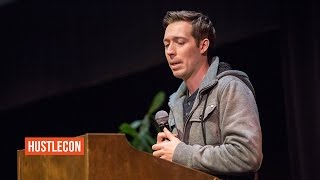
David Bladow, CEO of BloomThat, took the flower delivery startup from burning $500,000 a month to $15,000 by narrowing markets, extending delivery windows, and exiting unprofitable cities like Los Angeles. He argues founders must act as "guardians of simplicity" to prevent complexity from eroding margins as they scale.
Chapters
Thank you for the introduction, Sam. I'm excited to be here. This is like— I feel like I'm wrapped in a warm blanket of musical history. This is just fantastic. So my name is David Blaidow. I am the co-founder and CEO of a company called Bloom That. And basically, BloomNet is the best way to send flowers. It's pretty simple. We make it incredibly easy to make you look incredibly good. So we basically approach this by saying, like, let's improve the customer experience, let's deliver an awesome product, and let's build a brand that makes flowers relevant and fun and engaging. And being thoughtful is like something you can think about 365 days a year. The topic of today's presentation is doing more with less, and scaling with simplicity. If there's one thing that I want you all to sort of take away from today's conversation, it's sort of like just this one thing, and that is that you are the guardians of simplicity within your organization, and it is a whole hell of a lot easier to add complexities in than it is to take them out. So you have to be incredibly vigilant to say, like, uh-uh-uh, no complexities into this flow. And so I just want you to take away that one thing from this talk. So I'm a simple guy. BloomThat started as a simple concept with a simple question. If sending flowers was as simple as sending a text message, would you send more often? And so we sort of We started a company with this question, and our customers answered, and the answer was resoundingly, "Yes." So we basically started BloomNet as a bigger, broader gifting idea and narrowed it down to flowers, because we identified that there was this massive gap in the experience of sending flowers, and I'm sure that a lot of you in the audience can relate to this. You've used 1-800-Flowers, you've used FTD, You know that feeling when you're like, "Oh shit, I've got an obligation coming up. I gotta use something to send something thoughtful." Um, you don't know what— if what you're sending is gonna look like the picture, and just generally it's a piss-poor experience. So we said, "Let's solve this. We can do better than this." So basically the story of Bloom That goes like this. Um, I moved to San Francisco maybe 4 years ago or so. Um, I bought a bunch of tulips from Whole Foods. I threw up a Shopify website, and I bought $100 in Facebook ads around Valentine's Day and decided, you know, Bloom That should be a thing. Let's start this off of my patio. We were able to turn that traction into enough to get accepted into Y Combinator. We were able to turn that traction into enough to raise a seed seed round. We parlayed that into raising a Series A, and now we're delivering nationwide. And so you see the sort of the, the progress there is from back patio to nationwide in 3 years. So not too bad. So things are going very well today. Um, as Sam Parr said, I've mentioned we're delivering nationwide. We do same-day delivery in the Bay Area and Manhattan. Um, a couple fun facts up here: we're attacking an $8 billion industry, and we're growing it because there are tons of use cases to be thoughtful. It's just that the services provided as sort of the vehicle for that thoughtfulness are pretty shitty. Um, our team is about 45 people, and then you'll see up here there's an icon there that says 53 proposals. Um, there are two things I want to talk to you about with that, is that one, people trust you enough to say, "Will you marry me with your service?" You know that you're doing something right. Um, and then second, I'm actually not even supposed to be here today. My co-founder Matt accepted this speaking gig, and then he forgot that he's getting married tomorrow. So that, you know, you're stuck with me, so, you know, let's deal with it and move on. So, you know, things are going really well today, but that wasn't always the case. In fact, if we rewind even 9 months ago, we were staring into the abyss. So 2 years, 2+ years into, you know, founding a company, you're standing in my shoes. You started very simple and you wind up— fast forward, you're burning over $500,000 a month. You've got 4 months of cash sort of left in the bank. What do you do? How did we get here? And sort of the topic of— or the top line of this slide is sort of self-explanatory, but expansion is really hard. Um, you know, we started simple, uh, 90-minute delivery within San Francisco 7x7. Then we expanded, 90-minute delivery over to the East Bay, then down to the South Bay, then 90-minute delivery in Los Angeles. And not just part of Los Angeles, we did all of Los Angeles. And you know what Los Angeles is like at 5 o'clock rush hour, it's a tough thing. Um, and then we expanded to Manhattan, 90-minute delivery. And before we knew it, this simple concept had morphed its way into this beast that, you know, the assumptions that we had made, how this is going to work and how the unit economics played out, um, they were— the realities were completely different once we allowed this thing to sort of snowball into this massive complex operation. And then the other thing that we found is that we were eventually running 3 companies. You know, we're fairly well capitalized, but we were running a delivery company, so we had a delivery app, managing a delivery fleet. We were a marketing and merchandising company, and we were a flower building and manufacturing company. And at that point, like, you know, we're diluting. What are the things that we do really well? I'm probably not gonna beat FedEx and Uber and whoever else is experts in getting things delivered, so why would I spend, you know, my precious seed capital doing something that is not my core competency? So we were sitting in a situation where it's like really questioning our survival. Is this a feasible business? Can we get this done? We know that we set out to really accomplish this objective of like we wanna make sending flowers better, but is this something that we can scale? And can we streamline our operations to make the gross margin side of things, the contribution side of things, I guess equivalent to the user experience side of things. So we had to sort of, I guess I'd call it a coming to Jesus moment, but we basically looked into the abyss and said, what do we gotta do to turn this into a business that makes sense again? And what that involved was getting back to the basics. So the board deck, after saying, you know, hey, guess what guys, board of directors, we're gonna be out of business in 4 months if we don't do something. I said, don't worry, we've got a plan. Basically, the plan was we've got to fix our gross margins, we've got to streamline our operations, we've got to retain our top-line revenue, and we've got to do this in a really fast turnaround time. So the way that we approach this first is we sort of evaluated how can we do this without disrupting the user experiences. That was sort of paramount in what we set out to accomplish to begin to begin with. And so we evaluated where were we over-optimizing for speed, or things that maybe were not absolutely necessary from a customer standpoint in order to fulfill this promise that we had of an amazing flower delivery experience. So we looked at, as an example, I'll give an anecdote, South Bay. We were delivering in 1-hour windows. It was costing us a fortune to cover that area and deliver in 1-hour windows. We looked at, well, what if we pushed it to 2 hours? Can we do that? What's the impact on user experience? Well, making a small change like that reduced our delivery costs by over 25%. We also looked at Los Angeles and said, "Yo, we think this is gonna be a phenomenal market, but not right now. We don't have the resources to spread ourselves that thin." So we closed that market. And these are things that I would say that we had to break down in order to regroup and build back up. The other thing that we had to do was we evaluated our pricing structure. So again, I said that as we expanded geographies, we lost track of our gross margins. And sort of by the end of it, clearly we were, we were not making money on any of our deliveries net. So basically, we, we decided, hey, I know we've been fighting this, but we got to add delivery fee. And, you know, that's something that we've been fighting the whole time. But it's really important how you go about it. If you're talking to your customers, you know, you know, you've got to break some hard news. And your initial instinct is to sort of make the change and hope no one notices. But that is the worst thing you could possibly do. Thankfully, we didn't do that. So we wrote a letter to our customers saying, hey, you know what? Our priority is providing you an exceptional customer experience. To be as transparent as possible, we've tried to avoid including delivery prices or delivery fees into the price. Price of your BloomNet deliveries. But it's not feasible any longer. We're committed to providing an exceptional experience, and we've got to charge to do that. So I think I'm going a little bit long, and I've got a hair trigger. Basically, we wanted to become default alive. And I think through the steps of what we did, we landed in that place. And how well did it work? 3 months later, we landed ourselves in a position where we took ourselves from $500,000 a month to $15,000 a month in burn. And that is something that I think you'll see is very relevant to startups in today's environment. The steroid era of startups is over. Um, and I'll tell you that, like, you know, this is not something I'd wish upon my worst enemy. However, there's a silver lining. Our team is so much better as a result of going through these changes, and the filter that has been sort of ingrained in the DNA of our company now is gross margins matter. And that's something that I think if— especially if you're delivering things, you're delivering offline, and you're a revenue-generating business, gross margins matter even in the beginning. So I'm gonna sort of blaze through the key learnings here. Start narrow. Start focused. Do a couple things really well. You can always add verticals beyond that. Don't mask things that don't work. You raise venture capital dollars, you're expected to experiment. Some of those experiments are going to fail, but don't cover up mechanical problems within your business. Face them head on. Talk to your customers. We know this is an iterative process, but it's also how you talk to your customers. Be human, be transparent. They're going to appreciate it. If we look at the evolving role of a founder, pre-seed stage to seed stage to A to B, your role is going to evolve. If you're self-aware enough to know no matter when you are, where you are, it's gonna be a lot easier to make those transitions. And I have clear filters here, but I wanna skip to the one that I said in the very beginning. You are the guardians of simplicity within your organization. No one else is going to be Dikembe Mutombo up there going, uh-uh-uh, uh-uh-uh. So that is what you need to do, is be aware that there's a compounding impact of complexities, and especially as you scale, you're gonna find that you look back and go, how did I get here? You want to avoid that. You are the guardians. So what's next for BloomThat? We're going to continue to launch same-day cities. Next time it's going to be smarter. Our goal here is that we are changing consumer behavior around sending flowers. So we want BloomThat to be a verb. So when someone thinks about, you know, hey, it's so-and-so's birthday tomorrow, we want the response to be, oh, you should send a BloomThat. We want to be synonymous with thoughtfulness. So we're delivering Bloomz across the country. I think we're doing it better than it's ever been done before. If you guys need help being thoughtful, we're the company for you. Follow us on Instagram. We, I think, have a world-class Instagram feed. Go to Bloomznet.com or download the iOS app. Thank you so much for being here today. We're gonna have a fantastic event. Thank you. And I think what's next is I think we've got Soylent potentially, right? It's And maybe some— this is D Squared. We haven't— his name's David, so it's David and David. Don't get confused. I'm going to pass this over to Sam. Thank you guys. Have a great day.










