How Getaround Got Started with Jessica Scorpio, the Founder of Getaround - Hustle Con
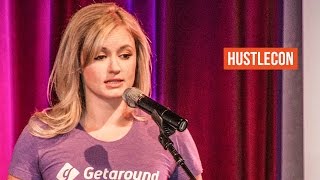
Jessica Scorpio, co-founder of Getaround, built a car-sharing marketplace from a 10-car pilot to a $40 million business in three years. She navigated insurance, lobbied for legislation AB 1871, and built in-house hardware to make it work. The company now has 1,000+ instant cars and 250,000 users across multiple U.S. cities.
Questions this video answers
We considered other verticals but chose to focus on cars because the opportunity is larger; aviation startups exist but are few, and cars offer higher utilization and mass‑market potential.
We partnered with incumbents (even competitors), pitched legislators on the Hill, helped draft the law, and worked with stakeholders to write the legislation; we were not officially a lobbyist.
Getaround offers no membership fees, a broader variety of vehicles (from Teslas to pickup trucks), cars are often parked in neighborhoods or driveways, and revenue goes directly to owners, making it more scalable and owner‑centric.
We filed many patents and trademarks early on, covering both business methods and technical hardware circuits, to protect our innovations.
Chapters
¡Hola! So today I'm gonna talk to you about how to turn an "oh shit" moment into a quickly growing product-market fit company. I hope you've all heard about Getaround, but if you haven't, we're gonna be giving out $50 driving credit to anyone who hasn't tried us. You'll get to experience it soon, I hope. All right, so we started Getaround back in the day at Singularity University in 2009. If you haven't heard about it, it's a phenomenal school. I got the great opportunity to be in the inaugural class with 40 other students, and it's all focused about taking accelerating technology and applying it to humanity's greatest challenges. So back at Singularity, my co-founder Sam Parr was also accepted, so we packed our bags, we left Canada, And we knew that we were in for big things coming out to Silicon Valley. This was just post-recession, and so it was a really cool time to come out here. And then pretty much on the first day, we met Larry Page, who gave us this big challenge. He said, OK, Jessica, your mission here is to come up with an idea that can positively impact 1 billion people in 10 years. And so we really took that 10 to the 9 challenge to heart. You know, when Larry Page says go, you really go hard. And so we did. We jumped in. And we decided to focus on the global transportation industry. We felt that this was one of the most broken problems that we're facing today. And the stats are really astounding. So there's a billion cars on the planet that sit idle 22 hours a day. So that's 22 billion idle car hours. It's pretty much a necessity. Everyone wants or wants access to a car. But really in this day, you shouldn't need to own one. So we really saw an opportunity to kind of leap towards the self-driving car and to kind of propel what we helped to foster, which was the sharing economy. So with this problem, you know, 22 billion car hours idle every day, second biggest household expense, and cars that are just available for use. Oh, shit. Big idea. This is a game changer. And so we decided to call it Car Overpopulation. Essentially, there's too many cars on the planet. So if you can get cars to be used more efficiently, you can take cars off the road. In fact, each share car takes 10 cars off the road. You could stop cars from being in landfills. You can stop the emissions needed for manufacturing. And really, it seemed like an amazing problem to work on. And so we took kind of a long-term mission around this. We knew it would take us a while to kind of tackle it. But Getaround, as some of you know and love today, is really a simple concept. It's a marketplace for sharing cars. So you have cars that are instantly available from your phone by the hour, by the day. You can unlock it and you can drive. But when we started with Getaround, most people that we told about the idea, they said, "That's crazy. It'll never work." Sounds cool, but there's gonna be too many hurdles. Don't take that on. But of course, we were really committed. We got this 10 to the 9 challenge, and so we kind of dove in. And, you know, we, we knew we were gonna have a lot of hurdles to overcome, so I'm gonna talk to you guys about that in a minute. But at first, you know, we wanted to get proof of concept fast. Even though this was a huge idea, we wanted to get it to work on a micro level. And so we actually took advantage of the fact that we had about 200 students on campus with us. We had the Singularity University and the International Space University together at Moffett Field. And so we thought, okay, well, let's try to see if we can get a handful of cars and a handful of people that'll share them. Because really, you know, when you start— you have this great idea, the first thing you have to do is you have to go and talk to people and see if people like it or people don't like it, people think it's dumb, or people would use it. And so we went around, and a lot of people said, That's crazy, why would I share my car with a stranger? But like any sound founder, you just ignore that and you keep going, right? So we did, and luckily what we did with this small beta, or super small alpha, is that we saw that people were willing to share. So let me give you the stats around this. We had just 10 cars, which, you know, small number, but 10 people really said, I'll share my car with strangers. And we had about 100 people sharing over a 1-month period. So with that, we felt like we had enough to go off of that there was something here. And to give you the background, it was a very manual process. So nothing like Getaround today, which is all powered by the app and the hardware technology. It was completely manual. So you had to basically text an owner, meet up, exchange the keys, return the keys at the end of the trip. But still people loved it. They thought, I'm stuck, I don't have a car, and this is really making my life better. And so we thought we were really onto something. So I'm going to sum this up in lesson number 1. And I don't know if anyone else has done this, but what I was hoping to do in the time we have left is with our 3 lessons, I wanted to say them all together so we can kind of lock it in. So let's go to the next lesson. I'll tell you what it is. I'll explain it. And then we can kind of say it together. And I'll lead you through it. There— oops. Okay. Lesson number 1 is start small, launch big. So we just talked about this. It's super important to get something working on a micro level before you try to scale it. This applies to a ton of different scenarios. You know, you don't want— if you start in one market, you don't want to expand to more markets before you really have it working. You wanna really invest in a big launch, and if the first launch doesn't work, try again and try again and try to do it in a big way. So find the right venue, hire the PR firm, do whatever you need to get a big launch. But really have a good story, have users, just a handful of people that can speak to a positive experience. So we really felt like this was true with us. Our story was that we started small at Singularity, and then we worked really hard to get insurance, hardware technology, and our iPhone app and everything together, and we ended up launching at TechCrunch Disrupt about a year and a half later. So we had to do a lot of work to do that, and then we won it, and we got thousands of users and over 5,000 people that said they would share their car overnight. So that was a huge win for us, 'cause everyone said this is a crazy concept, it's never gonna work, and then you launch with this concept of hyper-credibility, or super credibility where it's super buttoned up. Every question someone would ask, you have an answer to. You have top investors or you have top academics on your side supporting it. And so when you launch big, then that's where you can get your, you can get off the ground, you hit the ground running and then you get propelled really quickly. One thing to say about that is that if you start at a really high point, then you're almost always likely to go down. So it's really hard to keep going up if you start really high. And so that's another fun story for another time. But lots more lessons out of there. All right, so lesson number 1 is start small, launch big. Let's say it all together. Start small, launch big. Thanks, guys. Great job. I'm really, really sorry about my voice, but we're doing it. So all right, let's move on to the next story. So I already alluded to this a little bit. About some of the huge hurdles we had to overcome. I can't tell you how much hustle we had to put into all of these areas, and, um, I'm just glad we did it, 'cause it was a lot of fun. So we, um, we had to overcome 3 major hurdles, uh, just to even get to market. So, um, the first one was insurance, the second one was legislation, and the third one was hardware technology. In a way, a lot of this was us taking a long-term, uh, vision on the market opportunity, and the basically wanting to make sure we were launching above board and not in a gray area since it's such a cutting-edge disruptive idea. So the major thing I wanna talk about here is how hard we had to work to get an insurance product. So essentially, you all get the idea for Getaround. You have people sharing cars. This had never existed before. It's such a basic idea. Why can't you share your car when you're not using it? But the insurance industry doesn't see it that way. So basically, you want insurance, you do what anyone would do. Call an insurance company, say, "This is what I need. I'm willing to pay for it. I have money." And then they say no. So not only do they say no, they say, "I have no idea what you're talking about, and this is never gonna happen." And we thought we were set up. You know, we worked it from every angle. We networked. We got in with VCs, CEOs of big insurance companies. We looked at— commercial insurance companies, we looked at little tiny insurance companies, and so we cold-called, we sent like packages in the mail, we did pitches. We did really, really pounded the pavement on this one. And, you know, of course you're getting commercial brokers, and that broker didn't seem to work out, so getting a new one. And at the end of the day, we probably were had cold-called like 200 insurance companies trying to get insurance. And probably around the 172nd rejection, and we got formal packages responding, so people liked us enough to say, "I wanna talk to you again in 12 months." So that was a positive indicator, but we still couldn't even, launch our product because we want to have insurance so people feel comfortable and this is all legit. So basically, one kind of way we ended up getting it done was to actually pass legislation to clarify how the insurance would work. So basically, it's a simple concept. We ended up passing what's called AB 1871 in California and then in a number of other states. So when you're driving your car as an owner, that's your insurance. When you're renting it out through Getaround, that's Getaround's insurance. Where the insurance companies were all concerned was, well, what happens when there's an accident during a Getaround rental? Who's going to cover that? And we said, well, you guys, that's what we're paying you for. And they said, well, that's not clear. So basically we passed this law, then they couldn't ignore us anymore. Then they really felt like, hey, these Getaround guys are doing something. They're passing laws. And so then we were able to get a big partnership with Berkshire Hathaway, and since we've had a lot of other insurers approach us. So that was one major hurdle. One other thing I want to mention is that we also developed hardware technology in-house. So that was a big investment early on, and it's ended up paying off a ton because that's what's enabled us to do a completely on-demand, completely seamless product. It took us a few years to develop, and we tested off-the-shelf products as well. And that was a big hurdle, but it's now a big asset. So one thing I want to say about this lesson is to focus and keep fighting. So if you really believe in something, don't give up no matter what. And just keep pushing really hard. Keep trying different angles. I'm sure a lot of you guys have been in a similar situation. In your career where you didn't know how you could get something done. For me personally, getting this insurance was a big win for Getaround. For me personally, it was an interesting learning where you realize one thing that we're told and we all know, which is think outside the box. So this legislation was a really strong example of that where, you know, we'd been working as hard as we could, trying everything we could try, And then it just so happened, because I have a political background, where it was just like, okay, well, why don't we go on this angle? And it happened to just make all the difference. So don't forget to think outside the box if, you know, you're really stuck on a problem. And yeah, so the lesson here is to focus and keep fighting, because that really paid off for us. And, you know, we focus on a few key hurdles, and then, of course, we focus on other hurdles later on. Keep fighting for what you believe in. So let's lock this one in together, guys. Focus and keep fighting. Awesome. Thanks. All right. So moving on to a little bit more of our story. I already told you guys how we launched at TechCrunch Disrupt. This was an amazing honor and a ton of fun, especially to go from this crazy idea to, you know, a very hot startup that a lot of people believed in. I think we were the first company ever to win both the grand prize and the audience choice award, which was kind of fun. I think the story here is actually about how we had this big vision for enabling people everywhere to share cars. And we actually had the vision very, very early on that it was going to be a mobile-first product, and that you could unlock the car from your phone. And then when we— And when we launched, we decided, okay, well, we want this to be kind of possible anywhere. So we actually decided to start without requiring the hardware. And early on, we thought it was very important to allow owners to specifically accept and request people they wanted to share with and specific times they wanted to share. So early on, we made the product very owner-focused with a lot of owner control. And the reason this— lesson is all about failing fast and listening, is that we weren't achieving the objectives we want. We weren't getting the growth we wanted. We weren't, you know, we were hearing feedback that people loved it, but they couldn't get a car as often as they wanted. And I think there's definitely the gold standard now in transportation around, you know, having a car just pick you up. And now with Getaround, you can just get a car whenever and wherever you need it. But early on, it wasn't that easy. So we kind of had a realization that we weren't achieving our vision for Getaround in terms of it being extremely convenient and easy. And so we kind of— after launching TechCrunch Disrupt, we raised our Series A, and we were kind of off to the races, rolling out to new markets, developing products, hiring people. But then we still had this kind of lurking feeling that maybe we didn't have product-market fit. Maybe it wasn't quite there. It was working enough, but was it really the right thing to scale with? And so, here's a second slide to this here. So when we announced our Series A, we decided to roll out a new product called Getaway, which was kind of an answer to figure out how could we get more reliable supply out there. So for any of you guys in the audience doing marketplaces, you know all about supply and demand. Supply is always a growth driver. It's harder to get typically. So if you figure out how to get more supply, it's very beneficial to the healthiness of the marketplace. So yeah, Getaway was— we basically wanted to figure out how can we make the experience better. And one thing we tried was to manage cars for people. So a lot of people were approaching us and saying, "Hey, I love what you're doing. I live in Nevada and I'm going abroad for a year. Can I give you guys my car?" I'd love for it to be part of your car-sharing revolution. And so we thought— for a little while, we were turning those people away, and we said, "No, we got to be focused on the business we're running here." But then we realized that this might be a good opportunity to test different product features we have in mind. And so we announced this, and a lot more people with similar stories— living abroad, working abroad, traveling— came to us. And so we ended up having a pretty cool flow fleet of 50 cars very quickly, and we kind of shut it off there. We had lots more people that wanted to give it to us. We also had people, which is also a positive indicator for any marketplace business, is around power users or investors. So we had a bunch of people wanting to give us cars to manage that they just counted as investment vehicles, literally investment vehicles. So what's cool here is it was really a learning for where we wanted the product to go. And we started getting the type of growth that we, until this date, hadn't really even— had only really heard of. So very quickly, we got to 600 Instant Cars. And we had 1 million rental hours. And then we were booking 100,000 hours a month. And so this came from taking the learnings from Getaway and deciding to open it up to the broader platform. And eventually what we've done today is we only allow the on-demand option. So the real story I have to tell you here is about deciding to kill certain products. So we launched Getaway. It worked really well. But we decided that we didn't want to be in the business of managing cars. So we didn't set out to become a rental car operator where we had lots and when we had thousands of cars, or tens of thousands of cars, or millions of cars that we're managing. So we actually had to, we ended up killing Getaway, and we've always been very open with our community, and so they understood it. We had to develop a lot of product features to set up for the on-demand model, like screening users quicker, and having better calendar management, and having kind of all kinds of different little mechanisms in the experience that would make it possible. But basically by killing Getaway and then most recently killing off Request, it's been amazing way to focus the product and also just be able to sell an experience that people want. So previously people would ask, you know, "How does it work?" And when you have 3 different product experiences, You can't get into specifics, but now how it works is extremely easy and extremely simple. But in that change, we shut down specific markets. We had to make a lot of changes. And so over time, your strategy changes. But I think the most important thing is— I should get into the lesson side. Lesson number 3 is to make bold choices. So we've learned a ton from this. Being bold has really carried us a long way. Being bold enough to test Getaway even though it was going to cost us a lot of work and we had to do a lot of things manually to support it, then killing it, then rolling out on-demand to the whole marketplace, then convincing— Originally when we rolled that out, owners were used to the control, so they said, "Hey, I don't know about this," but we got 20 people who said they'd try it, and then on instant, The owners were making so much more money that they were just screaming from the rooftops like, "This is amazing, get on board, I love it." And so they became great champions for kind of the new model. And eventually then, you know, then you just say this is the only way, and if you lose 10% of people, then you just take that loss because it's better for everyone. So yeah, make bold choices. Let's lock it in, guys. Make bold choices. Alright, so Getaround today. I was supposed to give you a bit of an update at the beginning, but I'll just go into it all now. So here's some of our lovely team. We are 80 people today. We've raised over $40 million from top investors. We are here in San Francisco in SoMa growing a ton. We have over 1,000 instant cars, and we have 250,000 users, And we're growing— expanding out to various cities now. So we're in most of the Bay Area. We're in Portland. We're in Washington, D.C. And we're launching a few major East Coast markets this year. So getting excited about that. We are hiring. So check out our jobs page if you're interested, or tweet at me and talk to me. And I hope you guys have learned some interesting stuff from this talk. I like to try and end a little bit early so we have more time. For questions.
Okay, so a couple questions actually. First, curious if you've ever looked at the aviation market in addition to cars. And second, what all went into getting AB 1871 passed?
Uh, so a lot of people have approached us to do different verticals. It was actually a focus kind of priority to just focus on cars. We thought the opportunity was big enough. And we, you know, in the future, we have big goals. We want to be global and, you know, be available everywhere, but we are focused on cars. So I know there are a couple aviation startups. I don't know them off the top of my head, but not that many people are doing it. People are doing boats. Basically, I think—
Yeah, I'm a new pilot, and the industry is in decline.
Oh, yeah, yeah. Yeah, well, they're big assets. It's just— For us, cars can be— you can use it more frequently, and it's basically— there's a lot more of them, so it's a more mass market opportunity, I think. But yeah, there are a couple.
So what all did you have to do to get the boat license?
AB 1871. So yeah, we actually partnered with incumbents in the industry, in a sense competitors, to work on that. It's kind of a process, but you just kind of pitch people on the Hill, and then you kind of work with someone to write the law, and then—
Lobby legislators, or—?
Not officially a lobbyist.
You can't officially do that.
Yeah, good questions. Thanks. All right, come on up, guys. We have a little bit of time. Hi. Thank you for talking despite being sick. I'm curious how Getaround differs from other car share platforms like Car2Go or Zipcar. Yeah, great question. Really great question. Now, like I said, now that the product's streamlined, I can answer that very clearly. So basically Getaround is quite similar in a way to those services in that you can rent cars by the hour or day. In general, we have a very broad variety of cars. We have a lot more locations. We hear that they're, you know, in someone's building or on their block or in someone's driveway. So the car variety can vary quite well from anywhere from Teslas to Audi R8s to Priuses or Mini Coopers or pickup trucks. We also don't charge any membership fees. So, you know, it's— we've lowered all the barriers to trying the service and entering it. Me personally, when I came out to the Bay Area, I looked at the sign-up fees and I thought, "Hmm, I don't know how long I'm going to be here," so I never signed up. So we want anyone who comes to be able to try it, because as soon as you try car sharing, your whole perspective around cars and car ownership changes. As well, I think we're a lot more scalable, and the big thing is the money goes to people who own cars. So it's really giving it— we obviously make a business out of it too, and we get a cut, but the money goes to helping your neighbors keep their cars and, you know, do things they want to be doing. Thank you. Thanks. Last question. Just wanted to ask you quickly about intellectual property and your intellectual property strategy. Great question. Like I said at the beginning, we kind of took a long-term view on the opportunity. And we worked on passing— or sorry, I'm in the political brain right now— filing a lot of patents in our early days, as well as trademarks. So luckily we have a pretty tech-savvy team that has done that for both business patents and also kind of the technical, all circuit, from the hardware to the whole experience. All right, thanks guys, have a great day.










