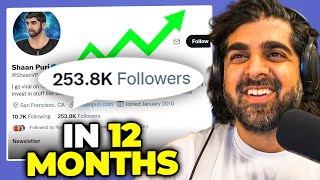
In this interview Sam Parr talks with an unnamed guest (Speaker A) about how reputation, brand equity, and rapid audience growth are cultivated. The guest explains that true credibility stems from two pillars: (1) face‑to‑face interactions with influential people, where you add value, give feedback, and earn respect, leading to endorsements from respected figures (e.g., Josh Elman, Balaji, Tim Ferriss). These endorsements act as a credibility‑hack, allowing a broader audience to inherit the trust placed in the endorsers. (2) Consistent, high‑quality content creation that delivers original, interesting insights. The guest illustrates this with a concrete growth hack used at a teen‑focused social app: creating private, school‑branded Instagram accounts, mass‑following students, and releasing a flood of follow‑requests at a set time to generate a viral download spike. Sharing such tactics publicly (via podcasts, Twitter threads, or memos) signals expertise, prompting further endorsement and network effects. The conversation underscores that reputation precedes product success, but the reputation itself must be earned through genuine, valuable contributions and compelling content.
Chapters
I sold my startup for less than what my investors had put in. Now, you know, the way it worked, you know, the team still did well and I made good money off of it. But like, that's not— that's the— that's not the definition of a successful business because there's a lot of people that have sold their companies for a lot of money.
We have a— we have a handful of buddies that are like uber rich. No one fucking knows who they are. And like, even if they told you that what they did, you'd have to like— they'd have to beg to speak at a conference. Whereas guys like you, you've got like The Daily Show reaching out to you, you've got celebrities reaching out to you who want to like get on board with you. And what I want to know is you can use example and then you— how does someone— I guess I'm asking for myself because how do you create so much of this like brand equity like you guys have?
Well, I think in both cases it's basically you put out— you put your thoughts on blast. So, you know, there's a real— the real answer. And by the way, I say that not to make fun of any shit app. I think it did sell for a profit. So good, good for them. I'm saying I know that I've gotten disproportionate credit for my track record of success when in reality, like, the best thing I've built is this D2C company that I don't tell anybody the name of. That's the profitable business that's doing 8 figures a year. But like, that's not actually why people— my reputation came before that. So, you know, that's kind of weird, right? So where does the reputation actually come from? It comes from two things. One is you meet people in real life. So like you go meet, you know, the investors at these different big funds or CEOs of different companies. And when they're talking to you, they're making an independent assessment of your, your caliber, your based on your thoughts. All right. So, so first it's like a hand-to-hand combat thing. You meet a bunch of people, you earn their respect one-on-one by, by, you know, when they're talking about some deal they're doing or a company they're building, you You actually contribute by adding value, by pointing out things or giving them criticism or giving them feedback on what's really great or identifying to them other things that are really cool. And they say, wow, this guy really, you know, I got a lot out of this conversation. So you do that with like 300 people and those people matter, right? Because they have themselves influence and trust. So for example, you know, like Josh Elman is a good example. This guy was, he was early on at LinkedIn, at Facebook, at Twitter, at Robinhood, earliest on, meaning he was head of growth at a bunch of these companies.
Yeah, yeah, yeah. He's a big deal. He's been on our podcast.
And so he's got, people have a tremendous amount of respect for him because he's had a tremendous career. Well, both Tim Ferriss and I have on separate occasions met with Josh when we're talking about our startup and whether our startup succeeded or failed, Josh knows, look, You're playing in the sort of like the startup lottery, startup Olympics. A startup could fail and an entrepreneur can still be really great. And if out of that conversation, Josh, Josh walks away thinking, oh, this person's really smart. And then they connect you to some other people that they, they know. And, and those people say, wow, Josh, thanks for the intro. Sean was really great. You develop a reputation amongst people who have a reputation. So that's the first step. Through real life interactions, you develop a reputation with people who already have a reputation so that they will retweet your stuff so that they will vouch for you when you have a project or you're doing something. And that goes a long way in the marketplace. So for example, I've had Josh or Balaji or different people who have their own big following and their own respect. If they share me or they say this person's great, then a whole bunch of other people just inherit that reputation. They just say, "Oh, okay, if Josh says he's great, he's great. If Balaji says he's great, he's great." It's such a unique way of—
it's almost like credibility hacking or something like that.
But that's the thing I think is important is I'm telling you how the mechanic works, but the thing you can't just— the reason it's not a hack is because your thoughts actually have to be interesting. You have to actually—
Oh, I don't mean hack like you're a hack. I just mean like you're getting the desired— the process of getting to the desired outcome.
Right. The second thing is we both created content. So now tweets are mostly making fun of people who create content and threads and teach courses. But before that, he was doing it himself, right? He was— he himself was saying, you know, when you're building a social app, blah, blah, blah, or here's how we grew inside high schools for TBH. And why did I respect him? Because he released this— this memo actually got leaked from inside Facebook.
Oh yeah, yeah, yeah.
And the memo basically said, he was like, hey guys at Facebook, here's some of the stuff we did to grow amongst teenagers. And I know Facebook wants to grow amongst teens. Here's some stuff we did at TBH. For example, for every high school, we would create an Instagram account. Branded to the high school. So it'd be like, you know, McKinley High, uh, you know, Secrets. And that's the Instagram account. And it would be locked. And we would follow anybody who had McKinley High in their profile. Then they would follow it. You know, 40% of people would follow us back. They would request to follow, but we were private. We wouldn't approve anybody's request. Then at 4:00 PM when everybody got outta school one day, we would accept all the requests. So everybody simultaneously would get a notification about our account. So they would all go check it out and then they would all see the link to download the app and then they would download the app and then we, and then as they were downloading the app, they'd be get notifications that their friends are all downloading the app today. And it felt like a big deal. And that's how we hacked distribution into high schools. I similarly have told actually a very similar story about how we would go get, our goal was always to get half of a high school to download our app in one day. We did it a completely different way, but I've shared that on podcasts, different places. Or on Twitter threads and people read that and they're like, oh fuck, this guy's smart. That's a really smart growth tactic. This guy really understands growth. This guy really understands teens. This guy really understands social. And so if you just, if I like, it's that quote my buddy Jason Hitchcock told me once, he goes, you say one interesting thing, I say, huh, that's interesting. You say two interesting things, I say, huh, those are interesting. You say three interesting things, I say, fuck, this guy's interesting. And that's really what you gotta do with content is you have to, if you say three original interesting things, around one topic, whether it's Bitcoin or media or robotics or whatever, if I get 3 interesting things from you, I will— in my brain, I will assign that tag to you. This guy's interesting, worth watching. And then if other people endorse it and say, this is interesting, it goes even faster.