How Indiegogo Drives Revenue Through Company Culture – Danae Ringelmann @ Hustle Con 2016
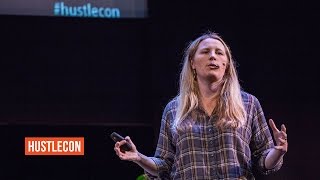
In this keynote, Danae Ringelmann, co‑founder of Indiegogo, recounts the company’s origin, its role in inventing crowdfunding, and its impact on entrepreneurs worldwide. She highlights how Indiegogo has funded over 100,000 campaigns across more than 200 countries, distributing nearly $1 billion, and notes that 41 % of successful entrepreneurial campaigns are run by women—far higher than the <10 % representation in venture capital. Ringelmann argues that building an industry without a blueprint hinges on three ingredients: diversity, mission, and values. She explains why a diverse team drives creativity and productivity, offers practical low‑budget hiring tactics for startups, and stresses the importance of a clear, irrational‑but‑deeply‑held mission. Culture, she says, is not perks but shared values such as fearlessness, collaboration, authenticity, and empowerment. Indiegogo codified these values through a six‑picture exercise, distilled daily behaviors, and instituted rituals like quarterly “Iggys” awards and monthly employee NPS surveys. She presents data showing a strong correlation between engagement and productivity. The talk concludes with a reminder that entrepreneurship and innovation are means to a larger mission, and she invites listeners to connect for further support.
Chapters
Really good to be here. This is Indiegogo. We're on— oops, there we go. We're on a mission to empower people to unite around the ideas that matter to them and together bring those ideas to life. What we stand for is we believe every idea deserves a shot. If you're willing to work hard, if you're willing to hustle. It's not luck, it's not privilege that should matter, it should be how hard are you willing to work to bring your idea to life. And the reason I'm really passionate about this is— this is a fun clicker— the reason I'm really passionate about this is because I grew up watching my parents struggle for 30 years trying to bring their business to life and grow their business from a small business into a larger business. And it sucked. It was hard. Hurdles every step of the way, funding being a huge one of them. And then when I got to New York and started understanding money and started working with actually filmmakers and theater producers producers on the side, I ran into the exact same challenges. I actually had this event where we got a theater like this with an audience like this. We put up a one-night event of an Arthur Miller play about racial profiling. This was right after September 11th. I got investors there to witness the whole thing so that they'd love it and write the check at the end of the night based on the audience response. And everything went perfect except that last moment when they said, "This was amazing. We're not investing. Good luck. Not our cup of tea." And it was in that moment that I realized why entrepreneurship was so frickin' hard. It's because the people who wanted something to come to life, in this case the actors and the audiences, they didn't actually have the power to make it happen, and they were completely dependent on these other third-party gatekeepers. So that's what we changed. I've teamed up with my co-founders, which is a whole other story, and together we launched Indiegogo. Today we've had over 5,000— 100,000 campaigns in every country of the world. I didn't even know there was more than 200. And almost $1 billion distributed. And we're actually two sites now. We have indiegogo.com, which is really focused on all of our entrepreneurial ideas, filmmakers, Startups, drones, whatever you want to bring to life, we help you. Coffee shops, it's all there. And Generosity, which is our free sister site for personal causes, nonprofits, people doing stuff more focused on, um, on bringing good into the world. And so, in the process of starting Indiegogo, though, we actually ended up inventing an industry, as Sam called it, and we have people like the prior speakers come up and have enormous success getting their businesses off the ground this way. And in the process, we've also done something amazing, which I'm personally proud of, is we have removed the requirements of luck and prejudice and all that in your success. Now it just means you have to hustle. And for that reason, we have things like on Indiegogo, 41% of all the campaigns that reach their funding target that are entrepreneurial are run by women, but in venture capital world, that's only less than 10%. A lot of bias there, but what Indiegogo's proving is that women hustle just as much as men, and we're just as entrepreneurial, and because of that, we're just as successful. And in the process, now what we've realized is we're actually doing it again. We're doing more than just funding. We invented crowdfunding almost 10 years ago, and now we're actually branching out. We're actually helping customers all throughout the entire journey from start to finish. We're doing work with partnerships like with Brookstone and manufacturers to help products, once they get their funding, to go all the way to the finish line and become really big businesses, which is amazing. And we're doing it again. So what I want to talk to you guys about today is The challenge for us is there's no blueprint for inventing industries. We're not trying to be a better, faster, cheaper version of something else. We're trying to do something a whole new way. And for that, the way you solve that is it all comes down to your team. Who's your team? And the 3 ingredients of a team that can innovate and figure this out are diversity, mission, and values. Diversity. The statistics are out there. Oh, something's not popping up, but it has been proven time and time again, the more diverse your team, the more productive you are, the more creative you are, the more engaged they are, the more innovative you are. So the key is, when you're starting a company, make it diverse. At Indiegogo, almost 50% of our team is women. That's crazy in the tech land, but I think it's because of that that we've been so effective of actually serving our customers, and maybe that's why women are so successful at Indiegogo. The key tips here on how do you become diverse, there's a lot of great research. You want to cast your wide net. You want to make sure you remove all unconscious bias from the hiring process. But you guys are startup. You're hustlers. You're teams of ones and twos here. You don't have massive budgets to go recruit and hire anybody you want. So my tip here is the way to— ah! Okay. Sorry about that. The way to kind of get around that is just start diverse. When you start diverse, Basically, your recruiting strategy is who are your friends? Who's in your network? Who's your friends on Facebook? And so if you start diverse, then you actually will recruit diverse. And you'll build a team that actually is a bunch of people who think different, act different, come from different backgrounds, believe different things, have different skill sets, look different, all that good stuff. Plus, unconscious bias is something that's really, really freaking hard. We all are biased. I'm biased. Just admit it. We spend a lifetime understanding what are our biases and let's be conscious to them. But at least when you start diverse and have a group of people with all kinds of biases, it evens out. So no one bias can, can trump the others and send you on a path to building a non-innovative company. The second ingredient to building an innovative team is having a really strong mission and hiring people that are mission-driven. So clearly we've done a lot of work to really focus on why we exist. That's to unite people around the ideas that matter to them and empower them to bring those people, those ideas to life. Notice funding is not in this title because we're doing more than funding. But because of that, we've attracted the most amazing mission-driven people. And the reason why you need mission-driven people is because when you're innovating and creating something, you don't have this blueprint, and you have all these diverse people that have lots of different ambitious ideas. What brings them all together and what focuses them is your, is your mission, is your guiding light. Plus, when people are purpose-driven, they are far more productive, far more creative, and far more innovative. So that is what you want to do. And they're really good at opportunity spotting, which is what innovation is. Again, it's— you're not following any blueprint. So my advice to you on how to make sure you have a good mission is just ask yourself the 5 whys. Why are you doing this? Ask yourself again, and again, and again, and get yourself to a point where The answer to why you're starting this business or this company that you're doing is literally an irrational belief. It's just what you believe. There's no rationality involved. And if you can get to a place like that, you know you've got a strong why, and that will be the guiding light for your company. The third ingredient of an innovative team is culture. The culture is what brings everybody together. And culture is not ping pong tables, it's not free food. Yes, that's part of it, maybe a lot here in Silicon Valley, but that is not what culture is. Culture are your values. When you have a diverse group of people who are ambitious about trying to achieve something really massive, which is your mission, this is— on the left is what happens. They will want to go every different direction, but it's your values, it's your culture, which is, I think, one and the same, that bring everybody into alignment. For us, fearlessness, for example, is one of our values, and what that means is that— fearlessness at Indiegogo means turning challenges into opportunities to innovate. When people share their values, even though they have different opinions and different backgrounds and look different, but when they share their values, they actually can get something done together. Imagine if you're someone who likes to innovate, and every time you see a challenge, and you see that as an opportunity to do something new, and you're trying to work with someone who runs into a challenge, and they see it as a reason to give up. That's very frustrating. So when you have— when you're clear on what your values are, people, when they're working together, spend more time actually getting work done than figuring out how to work together. And it's clear, companies with strong cultures, once again, completely outperform, are more innovative, create way more value than companies without. A lot of data. So how do you do that? We put ourselves through an exercise— OK. We put ourselves through an exercise very early on in Indiegogo, and that's where we basically sat ourselves down and asked ourselves to draw 6 pictures that answer the questions, "I love coming to work at Indiegogo because..." And in that process, We did a little show and tell. It was really funny. I learned that design was not a strength on our team and that we're going to have to figure that out soon. But we learned that we all came to work for the same 4 reasons, and that was: we wanted to change an industry, we weren't afraid of doing it— fearlessness— we wanted to bring our whole selves to work, not wear any kind of physical or metaphorical uniforms anymore. We wanted to be authentic. We wanted to work with others and win with others. Playing alone, solo sports, not our thing. We liked winning together. We liked to collaborate. And empowerment. We wanted to spend our waking days helping people that wanted to be helped. You guys, wanting to bring your ideas to life. Empowerment. And then the next step we did, which didn't happen right away, but took a few years, and this is why I'm sharing, this is our learnings, is then once you start to hire people and get to dozens, you know, we're now over 100 people, you need to actually articulate what behaviors that must people embody every single day to truly exhibit and embody these values. And so we did work and got the entire company, we went through in a painstaking way and really distilled from us what is it that we do, when we're performing at our best, being the most creative, most innovative, most collaborative, all this stuff, what is it that we're doing that makes it worth it? And we clarified those behaviors, we put 'em on paper, and we hold ourselves to it. From there, you then hire for this fit. You don't just hire for skills fit, but you get really ruthless about hiring people for culture fit, which is literally those who authentically embody your values. You don't wanna change anybody once they hire, once you hire them. You want them to bring their authentic self And if they're getting to be themselves and feel whole at work, they will be, again, more alive, more engaged, more productive. And then you want to recognize people for it. We have— it can be very heavy. I don't recommend that. It can be a very lightweight way to just honor the people. When somebody really shows their fearlessness or shows their collaboration, we honor it. Every quarter we have Iggy's. It's at an all-hands. People just give awards out to each other for folks who are examples of embodying our values. And when you do that, the last thing you want to do— I know culture and all this stuff feels very soft. It's really not. This is, again, crucial to growth and actually innovating and build something meaningful. And you can actually measure it, and we do. So again, the point of innovation is you have to be— you want people engaged, and the more engaged they are, the more productive. And we measure both. For example, we've created an employee NPS survey that everybody takes once a month. And we do report cards on ourselves and our productivity. How well are we achieving our goals quarterly? And ironically, I actually just did a quick R-squared correlation analysis. The better we perform, the more productive we are, the more engaged we are. The R-squared is quite high. The correlation is quite high. So I just want to leave you with my final thoughts here. It's all, you know, hustling here. We're trying to start stuff. We're trying to innovate. We're trying to build new things. Just want to remind you that the point of all of this, the point is not just to be innovative. The point is not just to be entrepreneurial. Don't become an entrepreneur because you want to be an entrepreneur. Don't become an entrepreneur because you just want to innovate. Always remember that innovation, your entrepreneurship journey, is a means to a greater end. It's a means to that mission. And if you remember that, you actually can do something great. And if you forget, you'll get lost and you won't be successful. And then people like this will start talking to you— stop talking about you, which this just happened. So thank you for your time today. Good luck. We are all about empowering entrepreneurs. We have a team in San Francisco that will help you, all kinds of resources. Email me at denae@indiegogo.com if you want to get connected to anybody. Thank you.










